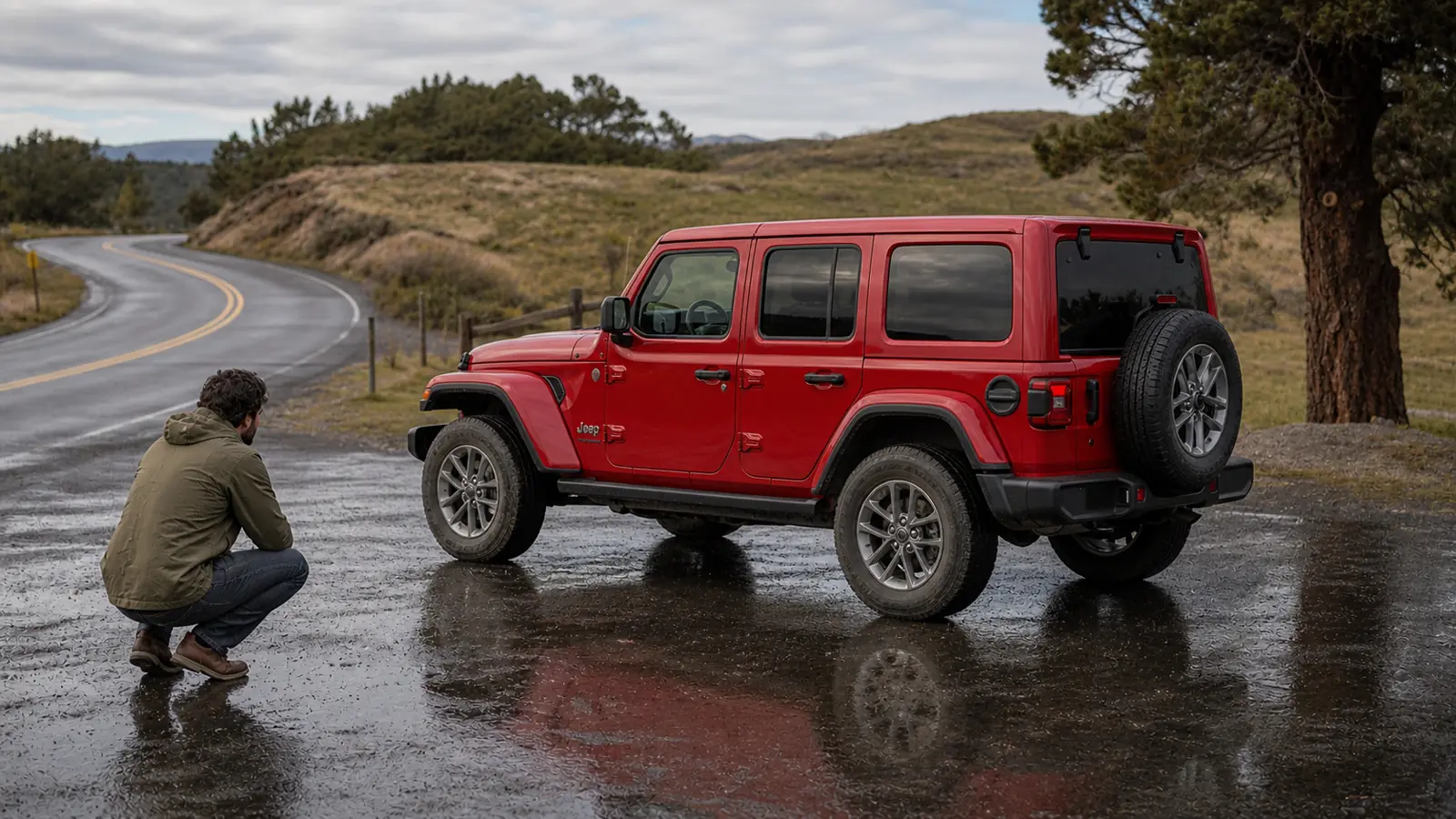
Which Jeep Wrangler years should you avoid?
Put 2007, 2012, and the 2018 JL at the back of the list when equally clean alternatives are available. The years mark three different resets rather than one repeating Wrangler weakness.
The 2007 is the first JK model year and has a TIPM software recall tied to engine stalling. The 2012 is the first Wrangler year for the 3.6-liter Pentastar and falls inside a left cylinder-head warranty extension, while 2018 includes the first JL production and its steering-related track-bar weld recall.
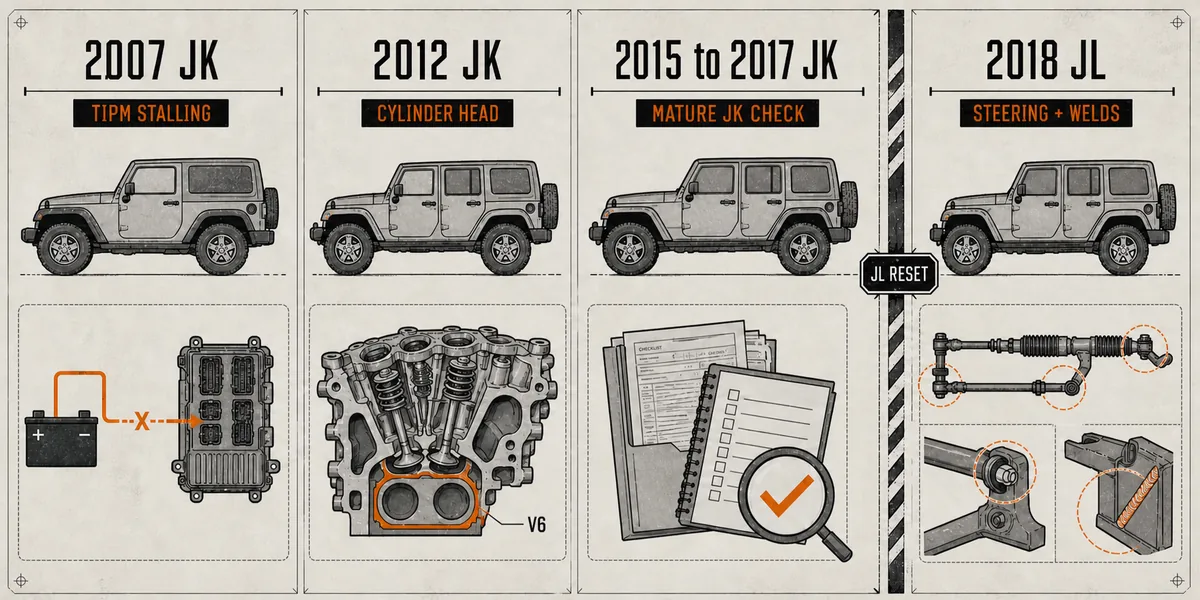
A well-repaired vehicle can be better than a neglected example from a quieter year. The model-year screen decides which questions come first, then the individual vehicle must earn its way to a pre-purchase inspection.
The 2007 JK combines age with a documented stalling recall
The 2007 Wrangler introduced the larger JK platform and now carries nearly two decades of use. NHTSA currently returns 1,056 complaints and 10 recall campaigns, so both first-year history and normal age-related deterioration deserve attention.
NHTSA campaign 07V-291 covers certain 2007 Wranglers and Dodge Nitros. The filing says Totally Integrated Power Module software could permit the engine to stall under certain operating conditions.
- 2007JK launches with the documented TIPM stalling campaign
- 2010 to 2011Later 3.8-liter JK production moves beyond the first launch year
- 2012Wrangler adopts the 3.6-liter Pentastar and five-speed automatic
- 2015 to 2017Mature JK production follows the launch and first Pentastar years
- 2018JK and new JL overlap in one model year, so platform identity matters
Verify the VIN campaign result, then inspect work added after the Jeep left the factory. Winches, auxiliary lights, stereos, trailer wiring, and dual-battery systems can introduce splices, overloaded circuits, loose grounds, or water paths that have nothing to do with the original recall.
Start the engine cold and operate lights, blower, windows, locks, wipers, charging outlets, and every added accessory. Scan all modules, repeat the check after a full drive, and investigate a stall, reset, voltage drop, hot connector smell, or unexplained no-start history.
A closed TIPM recall cannot certify twenty years of later wiring work. Buy an early JK only when the factory campaign and the installed electrical system can both be verified.
Why does the 2012 Pentastar need cylinder-head records?
The 2012 Wrangler replaced the older 3.8-liter V6 with the 3.6-liter Pentastar, raising output and changing the powertrain decision. FCA warranty bulletin D-14-12 extended left cylinder-head coverage to 10 years or 150,000 miles on certain 2012 and 2013 Wranglers.
The related service path identifies misfire codes including P0300, P0302, P0304, and P0306. The technical bulletin directs technicians to measure cylinder leakage and replace the left head when an applicable cylinder reaches the specified threshold.
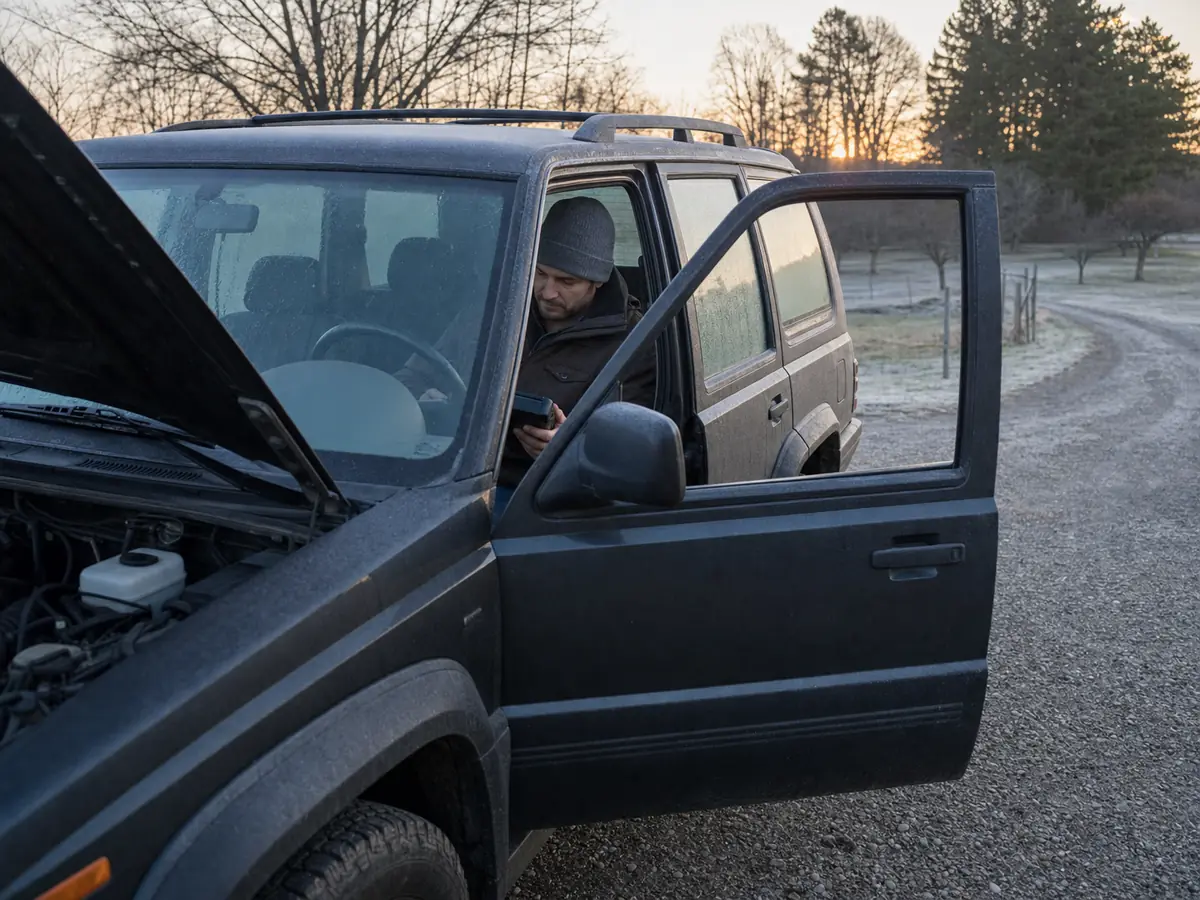
Listen from the first cold start rather than arriving after the engine has warmed. Note uneven idle, a flashing check-engine light, persistent valvetrain noise, coolant loss, exhaust smoke, and any history of coils or spark plugs being replaced repeatedly without a diagnosis.
Coverage from 2014 may now be expired by time even when the mileage is low. The useful evidence is a repair order naming the cylinder head, affected bank, diagnostic result, date, and mileage, followed by clean current operation.
The 2018 JL needs a steering and weld inspection
A 2018 Wrangler can be a late JK or the new JL, so confirm the platform from the VIN and body details before applying any advice. The current NHTSA API returns 1,794 complaints and 14 recalls for the combined 2018 Wrangler entry, the strongest report concentration in the modern range.
NHTSA campaign 18V-675 covers certain 2018 and 2019 JL Wranglers whose front track-bar frame bracket could have an off-seam weld. FCA estimated 18,055 vehicles in the recall population and warned that bracket separation could reduce steering response.
| Observation | Possible source | Evidence required | Buying response |
|---|---|---|---|
| Brief feedback over one bump | Solid axles, tires, pressure, road surface | Vehicle settles immediately and tracks straight | Continue the test |
| Persistent oscillation | Tires, steering joints, track bar, alignment, geometry | Specialist diagnosis and measured repair | Do not accept as normal |
| Loose or delayed response | Steering gear, joints, track bar, weld, alignment | Dry-park inspection plus road reproduction | Hold purchase |
| Visible bracket weld concern | Recalled or damaged frame area | VIN campaign result and qualified frame inspection | Reject until resolved |
NHTSA later investigated wider frame-weld and steering allegations in PE19-012. The agency closed the investigation after reviewing complaints and manufacturer data, which does not mean that every weld allegation proved a safety defect or that the specific 18V-675 recall can be ignored.
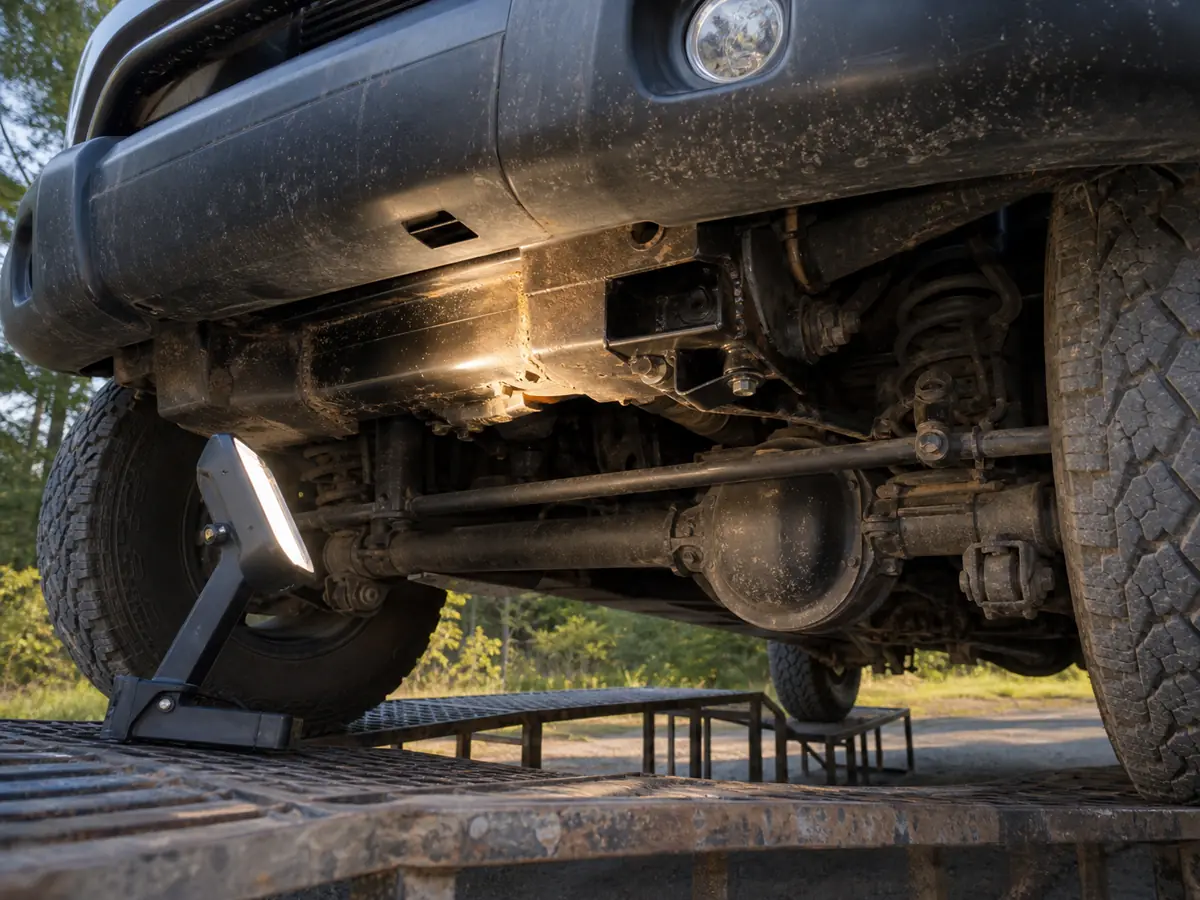
Inspect the bracket, track bar, steering linkage, ball joints, wheel bearings, tires, and frame for impact or repair. Do not let a seller describe persistent wandering, clunking, or oscillation as normal Wrangler character.
Can a road test separate normal Wrangler feel from a defect?
A solid-front-axle Wrangler sends more road texture through the steering than a car-based SUV. Normal feedback should still be predictable, and the vehicle should hold its lane, respond promptly, return toward center, and settle after one pavement seam.
Persistent side-to-side oscillation, repeated steering correction on a level road, a dead zone, delayed response, or a clunk through the floor needs diagnosis. Tire pressure, aggressive tread, wheel balance, caster, toe, track-bar joints, tie-rod ends, ball joints, wheel bearings, and steering-gear play can combine.
Use the same safe road section in both directions, then repeat at a different speed. One patched seam or bridge joint gives a more useful comparison than deliberately striking potholes.
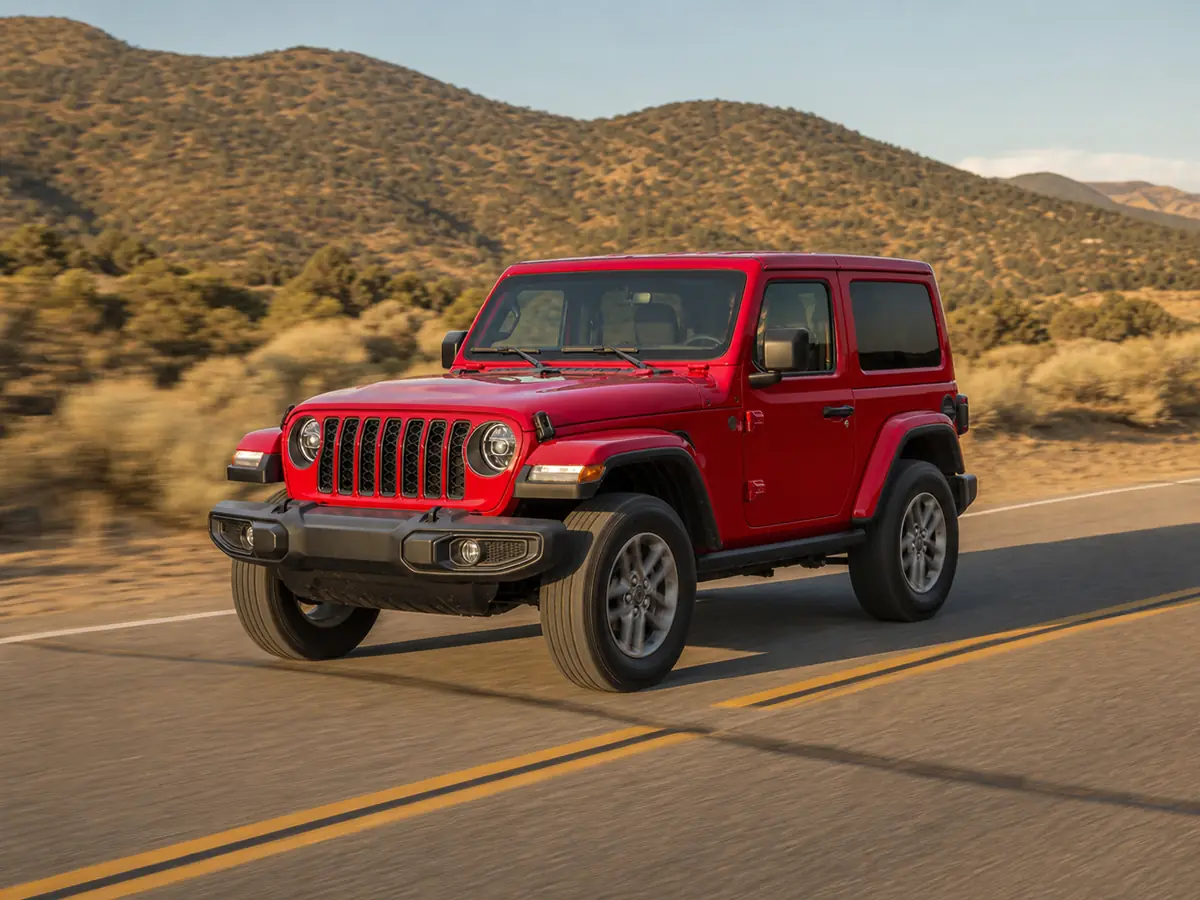
Make slow full-lock turns on dry pavement with four-wheel drive disengaged, then test the transfer case only on an appropriate loose surface. Binding on dry pavement in four-wheel drive is expected driveline wind-up, while binding in two-wheel drive points elsewhere.
Record speed, road surface, steering input, and how long the motion continues. A reproducible description lets an independent specialist inspect the right joints and geometry instead of replacing parts by guesswork.
Are 2015 to 2017 JK Wranglers better used bets?
The 2015 to 2017 JK range is a sensible place to start when you want the older platform. These years come after the 2007 JK launch and the 2012 introduction of the 3.6-liter engine, while staying clear of the first JL model year.
Current NHTSA counts provide context rather than a reliability score. The APIs return 458 complaints and 3 recalls for 2015, 454 and 5 for 2016, and 306 and 5 for 2017, compared with 1,056 and 10 for 2007 and 1,794 and 14 for the combined 2018 entry.
The figures do not normalize sales, age, mileage, body style, or how each Wrangler was used. Their value is the same as elsewhere in this article, which is to direct questions and show that the mature JK years begin with less launch-specific uncertainty.
A later JK can still be a poor buy after hard trail impacts, water entry, neglected fluids, incorrect lifting, oversized tires, or unsafe wiring. Compare vehicles with similar body style, engine, transmission, mileage, modifications, and maintenance before allowing the year to break the tie.
Prefer a documented 2015 to 2017 JK over an unresolved 2007 or 2012 when the configuration and condition are otherwise comparable.
Modifications can outweigh the model-year verdict
Wranglers invite suspension lifts, larger tires, different wheels, armor, recovery gear, and electrical accessories. Good parts installed with measured geometry can serve a clear use, but an impressive parts list does not prove correct caster, steering travel, brake-line length, driveline angles, wheel clearance, gearing, or calibration.
Modification evidence
- Suspension lift
- Brand, height, control arms, caster measurement, bump stops, and alignment sheet
- Large tires and wheels
- Size, load rating, offset, balance, rubbing clearance, and speedometer calibration
- Steering parts
- Torque records, joint condition, track-bar centering, and no contact through full travel
- Axle gearing
- Gear ratio, installer invoice, break-in service, and quiet operation
- Electrical accessories
- Fused circuits, relays, clean grounds, sealed penetrations, and removable wiring
A lift can reduce positive caster and make the Wrangler wander if the geometry was not corrected. More wheel offset and tire mass increase load on steering joints and wheel bearings, while oversized tires can hide poor gearing behind slow acceleration and frequent downshifts.
Inspect for polished contact marks, stretched hoses, driveshaft interference, damaged skid plates, bent brackets, loose fasteners, mismatched axle ratios, and water or mud inside connectors. Trail use is not automatically abuse, but the vehicle must show maintenance that matches its workload.
Aftermarket wiring deserves the same scrutiny as suspension work on a 2007. A direct battery lead without a nearby fuse, twisted-and-taped splice, loose ground, or cable routed against an exhaust part can create a new failure unrelated to Jeep's factory campaign history.
Pay for modifications only when their parts, geometry, calibration, and workmanship can be verified. Otherwise, price the cost of returning the Wrangler to a known baseline.
Which Wrangler should move to a pre-purchase inspection?
First confirm whether the vehicle is a JK or JL, which engine and transmission it has, and which campaigns apply to the VIN. Then compare that factory identity with every installed modification and every invoice the seller provides.
A 2007 needs stable electrical operation and tidy accessory wiring. A 2012 needs clean misfire evidence and cylinder-head records, while a 2018 JL needs straight tracking, sound front suspension mounting, and completed weld-related campaign work where applicable.
A mature-production 2015 to 2017 JK with ordinary wear is often a better value than a cheaper launch-year Jeep with several unresolved systems. Low mileage cannot offset years of poor storage, hard trail impacts, incorrect lifting, or missing service.
Choose the Wrangler whose factory history and current build can both be proved, then let a specialist confirm the condition before money changes hands.