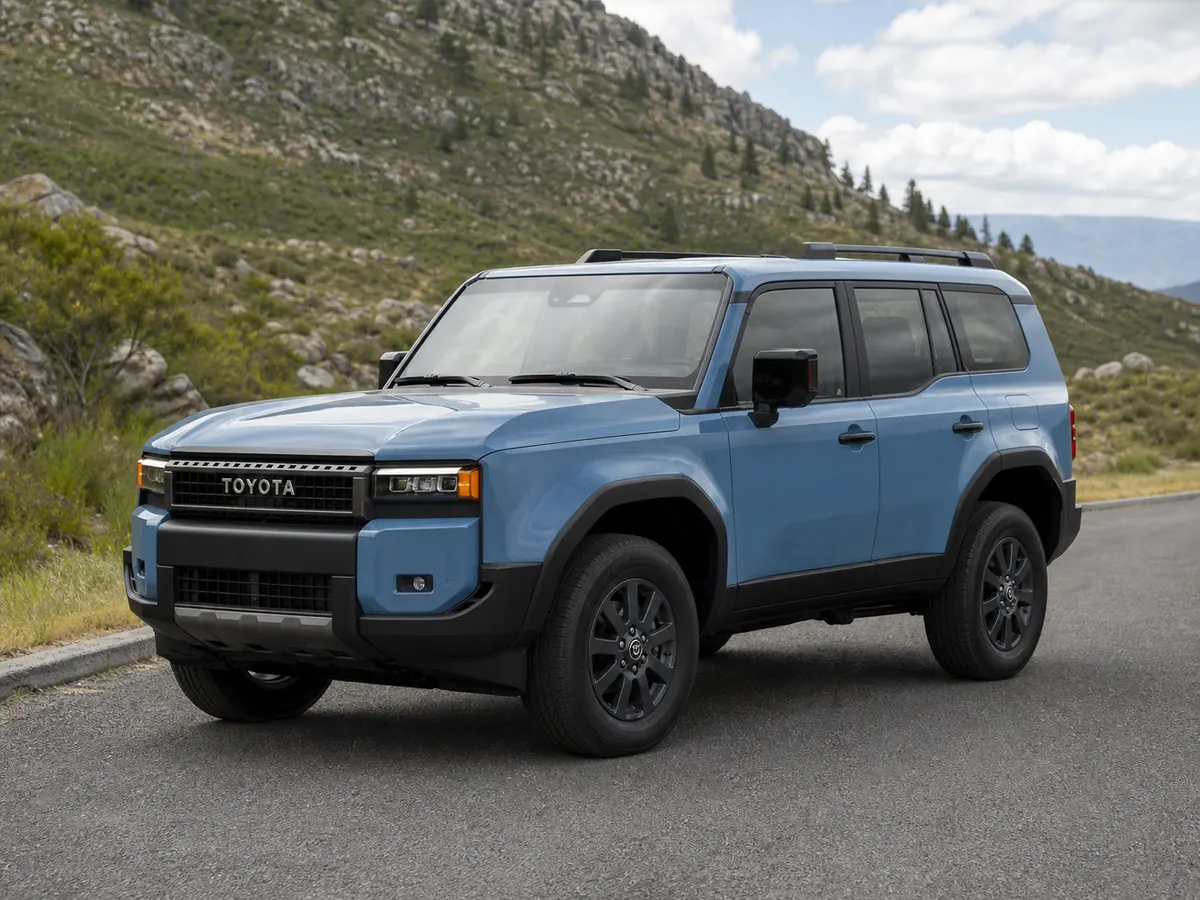
The 1958 grade already carries the important hardware
The 2026 Toyota Land Cruiser is offered in two U.S. grades, 1958 and Land Cruiser. Both use the same 326-hp turbo hybrid, full-time four-wheel drive, two-speed transfer case, center locking differential, and rear locking differential.
The lower grade therefore contains the main mechanical reasons to buy the vehicle.
The 1958's round headlights, simpler cabin, and lower equipment level are not a capability penalty. A shopper who needs low range, lockers, and a 6,000-pound tow ceiling can perform those jobs without buying the upper grade.
The savings can fund suitable tires, recovery instruction, underbody protection, insurance, and a repair reserve.
The Land Cruiser grade adds comfort, visibility, and trail-convenience features. Those can be worthwhile when the driver regularly uses cameras to place a wheel, needs heated and ventilated seats, or spends long days on the road.
List the weekly use for each upgrade before comparing payments.
Toyota lists a starting MSRP of $57,200 before destination for 2026.
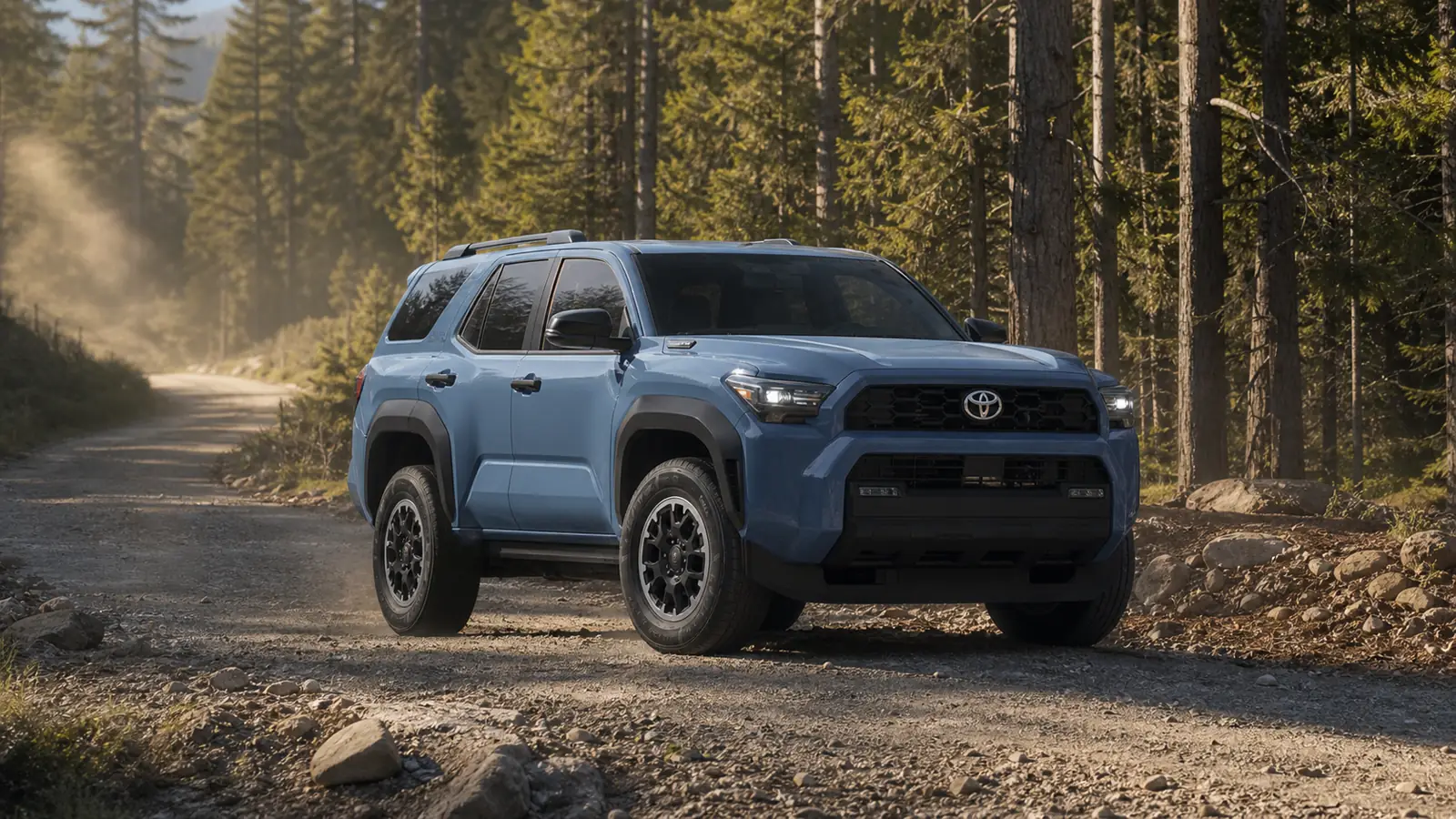
At that price, nameplate appeal is an expensive reason to buy. The vehicle needs to prove a route that a Toyota 4Runner, Toyota RAV4, or family crossover cannot handle as safely or comfortably.
Use the 1958 as the default because it already includes the powertrain, low range, and two lockers that define this Land Cruiser.
The hybrid supplies low-speed torque, not silent EV travel
Every 2026 U.S. Land Cruiser uses Toyota's 2.4-liter turbo i-FORCE MAX hybrid.
The system produces 326 hp and 465 lb-ft through an eight-speed automatic. Its electric motor fills torque at low speed and supports smooth movement over obstacles or away from a stop, but this is not a plug-in vehicle and it cannot be charged from the wall.
Toyota lists 23 mpg combined. Tire changes, roof gear, accessories, cold weather, high speed, loose surfaces, and towing can reduce the result.
A rooftop tent and aggressive tires may suit a trip while increasing noise and fuel use during every commute.
Compare the stock vehicle before accepting a modified dealer package.
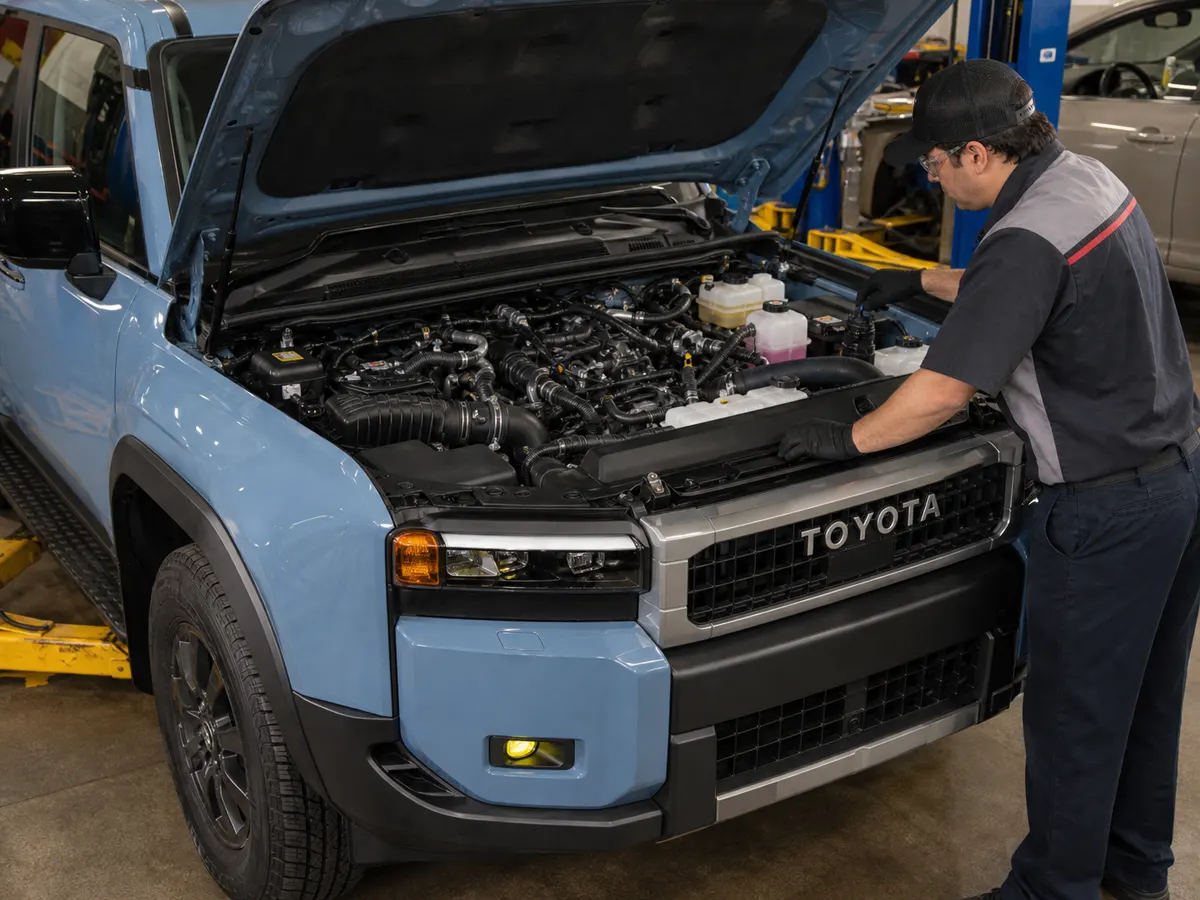
Start the exact SUV cold. Listen through the first engine start, check warning lamps, observe electric-to-engine transitions, and test the eight-speed at parking speed, steady cruise, and a firm merge.
On a grade, hold a safe low speed and confirm the response is predictable rather than judging only full-throttle acceleration.
The hybrid SUV hub contains more efficient road-focused choices. Land Cruiser's hybrid is valuable because 465 lb-ft arrives in a controllable truck system, not because it behaves like an electric commuter or delivers compact-SUV economy.
Full-time 4WD, low range, and two lockers define the vehicle
Full-time four-wheel drive manages normal paved driving without requiring the driver to select 4WD only after traction is lost.
Low range multiplies control for slow obstacles, steep descents, difficult launches, and certain recovery situations. The center lock connects front and rear driveline behavior, while the rear lock helps both rear wheels turn together when one has little grip.
| System | Practical job | Misuse to avoid |
|---|---|---|
| Full-time 4WD | Everyday changing traction | Assuming it shortens braking distance |
| Low range | Slow control and torque multiplication | Using it at unsuitable speed |
| Center lock | Loose surfaces with axle slip | Binding on high-grip pavement |
| Rear lock | One rear wheel loses traction | Turning tightly on firm ground |
| Crawl Control | Managed very-low-speed progress | Treating it as autonomous driving |
| Multi-Terrain Select | Adjusted control response | Using a mode instead of reading terrain |
The driver should know the sequence and conditions for every control before leaving pavement. Read the owner's manual, then have a qualified person demonstrate engagement on a suitable surface.
Confirm indicator lamps, listen for abnormal noise, and make sure each system disengages as expected.
Ground clearance, approach angles, and traction hardware cannot protect against poor line choice, water depth, unstable soil, or a hidden drop.
Check the route, weather, communications, recovery points, tire pressure limits, and travel partner.
Never enter water because an advertisement shows the vehicle doing it.
Suitable tires remain essential. A locker can help forward motion, but it does not create side grip or improve braking on ice.
Price a tire set that fits the real surface and retains adequate road, rain, load, and speed performance.
Buy the Land Cruiser only when you will learn and use its low range and lockers on repeated routes where ordinary AWD is not enough.
Five seats and a raised cargo deck shape family fit
The U.S. 250-series Land Cruiser is a five-seat SUV and does not offer a third row. That can simplify passenger access and leave the rear area dedicated to cargo, but the hybrid battery and body-on-frame packaging create a raised deck.
The boxy exterior does not guarantee that every tall object, crate, or sleeping platform will fit as expected.
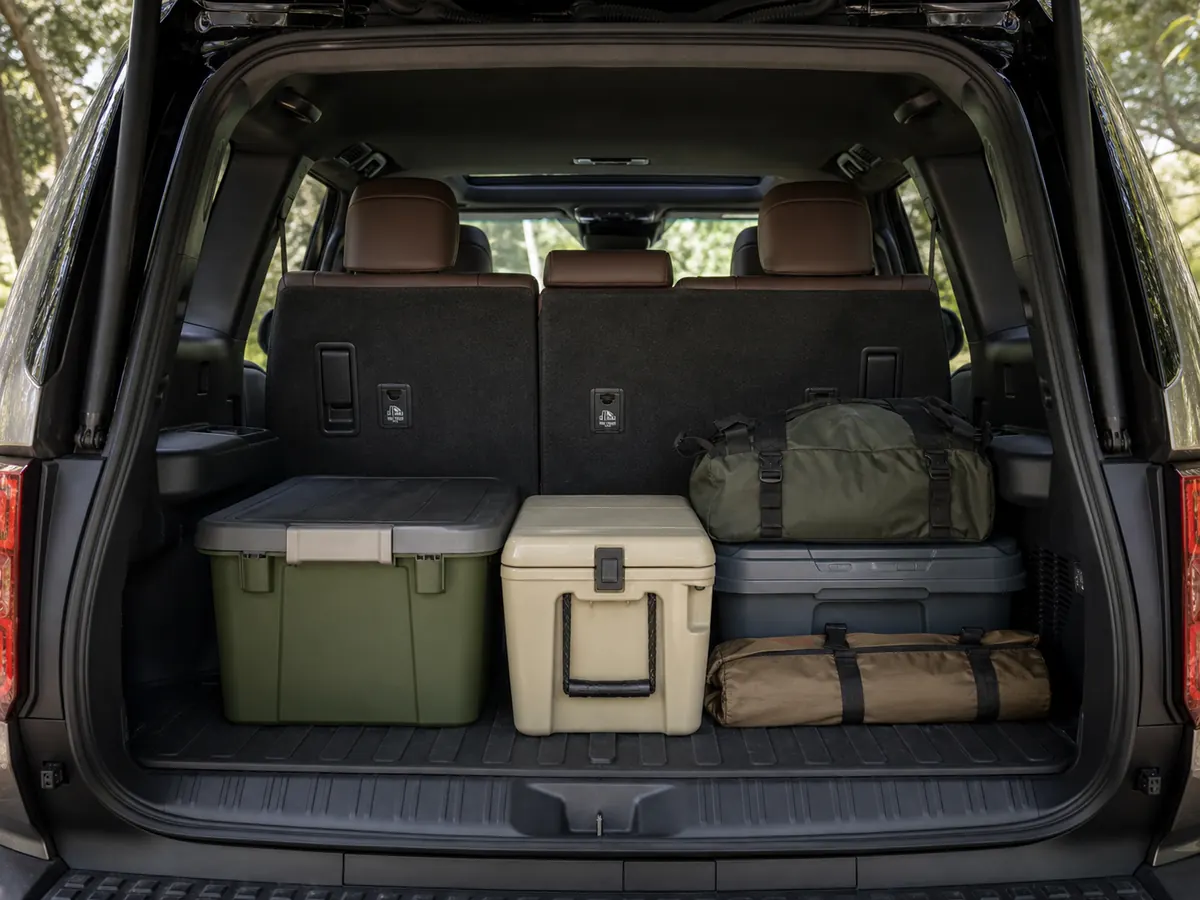
Set the front seats for the regular drivers, place the tallest rear passenger behind them, and install every child restraint. Check knee room, foot space, head clearance, buckle access, top-tether locations, door opening, and whether the rear passenger can sit comfortably on a two-hour trip.
Load recovery boards, cooler, luggage, pet crate, mobility gear, tools, or sports equipment in their normal containers.
Secure heavy objects so they cannot enter the cabin during a stop or rollover. Verify rear-window visibility, tie-down access, tailgate clearance, and where muddy or wet equipment will be stored.
- Measure cargo height at the opening and under the roof
- Check folded-seat steps and gaps
- Keep recovery equipment reachable without unloading everything
- Confirm a full-size spare and tools remain accessible
- Test the home garage with the rear door open
A Toyota Sequoia adds a third row and much more towing mass, while a Honda Passport may package five road-going passengers with less truck hardware. The Land Cruiser works for five only when the rear seat and raised deck fit the actual people and equipment at the same time.
A 6,000-pound tow rating still answers to payload
Toyota lists a 6,000-pound maximum tow rating for the 2026 Land Cruiser when properly equipped. The rating is useful for a boat, utility trailer, or moderate camper, but it does not allow every 6,000-pound trailer with every passenger and accessory.
The exact payload label and all other limits still control.
| Load | Counts against | Proof |
|---|---|---|
| Driver and passengers | Vehicle payload | Real body weights |
| Luggage and recovery gear | Vehicle payload | Loaded scale result |
| Hitch equipment | Vehicle payload and rear axle | Installed weight |
| Trailer tongue load | Vehicle payload and rear axle | Tongue scale |
| Whole trailer | Tow and combined ratings | Certified loaded scale |
| Roof and trail accessories | Payload and handling | Invoices and scale |
Off-road accessories can consume the same payload needed for people and tongue weight. Steel protection, winch equipment, drawer systems, fuel, water, and a roof tent add up quickly.
Weigh the finished vehicle before selecting the trailer, not after every accessory is installed.
Use suitable trailer brakes, mirrors, hitch equipment, tire pressures, and load distribution as Toyota and the component makers require.
Test engine braking, low-speed control, crosswind response, and a safe firm stop on the normal route.
Full-time 4WD helps traction but does not increase the legal load limit.
The tow rating is useful only after the completed trail build, passengers, and loaded trailer fit inside every measured limit.
Daily comfort depends on tires, noise, and parking
A vehicle can be excellent on a trail and tiring on the road that leads there. Drive the Land Cruiser on broken pavement, a concrete freeway, a crosswind-exposed bridge, a steep garage ramp, and the tightest normal parking space.
The upright body and truck structure should be judged over an hour, not one smooth dealer loop.
Steering response, body motion, brake blending, and tire noise matter more during a commute than a locker. Compare the stock 1958 tire with the upper grade's setup and any dealer-installed all-terrain tire.
Aggressive tread can increase hum and stopping distance in some wet conditions, while a larger wheel can increase impact harshness and replacement price.
- Park nose-in and reverse-in beside another large SUV
- Complete the tightest regular U-turn
- Drive at the speed of the normal rough road
- Test a highway merge with passengers
- Check mirrors and cameras in darkness and rain
- Measure garage height with roof accessories planned
Listen for wind around roof accessories, rear-cabin resonance, loose cargo, and driveline vibration. Verify seat support, steering-wheel reach, screen glare, physical control access, and climate output.
A comfortable first ten minutes may not reveal pressure points that appear after an hour.
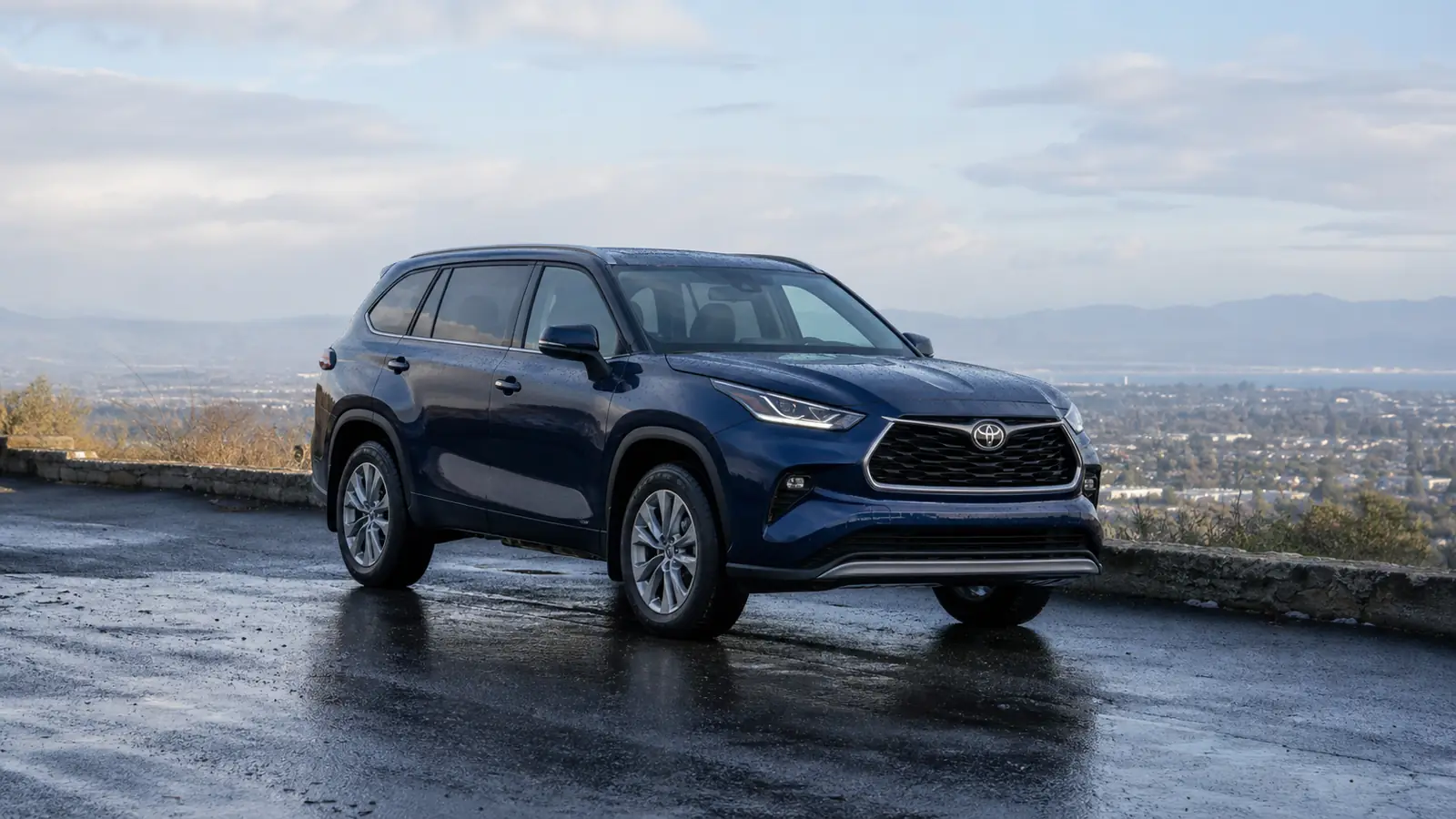
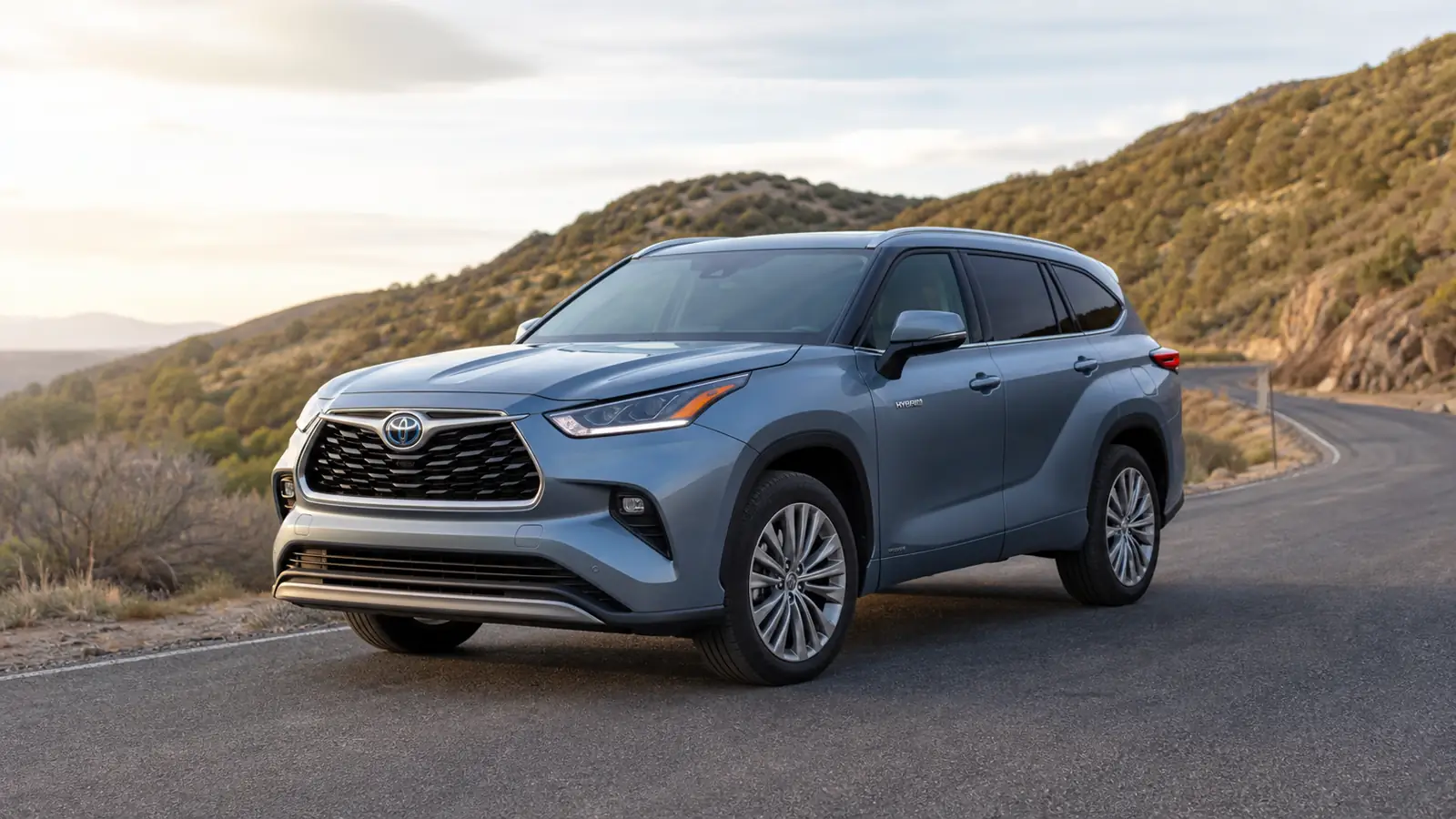
Compare the same route with road-focused 4Runner and a road-focused Toyota Highlander. The Land Cruiser earns daily-driver status only when its tire package, body motion, visibility, and parking burden remain comfortable on ordinary routes.
The upper grade buys convenience more than capability
The Land Cruiser grade adds equipment that can make a specialized SUV easier to live with. Depending on configuration, cameras, displays, seat features, audio, lighting, and trail-view information can reduce fatigue or help place the vehicle.
None changes the 326-hp output, standard low range, or locking differentials shared with 1958.
Upgrade test
- Cameras
- Used on a narrow trail or garage every week
- Seats
- Comfortable after a one-hour drive
- Lighting
- Proven on the normal night route
- Display
- Information visible without distraction
- Audio
- Valued enough to justify total price
- Wheels
- Tire cost and sidewall checked first
Build two written quotes with matched destination, tax, accessories, finance term, and trade value.
Then add insurance and a replacement tire set. A feature package that looks modest on a monthly payment can cost thousands after interest and raise future repair or tire expense.
Avoid paying twice for dealer accessories that duplicate factory hardware or interfere with sensors, cooling, airbags, jacking points, warranty coverage, or payload.
Require part numbers, installation invoices, and written warranty terms. Have a qualified shop inspect wiring for lights, winches, refrigerators, and communications equipment.
The upper grade is worthwhile when its visibility or seat equipment solves a repeated problem. Appearance alone is a weaker reason because the base vehicle already carries a high purchase price.
Move above 1958 only after a specific camera, seat, lighting, or display feature proves useful on the route you actually drive.
The 2024 to 2025 camera campaign has a strict year boundary
NHTSA recall 25V744 includes certain 2024 and 2025 Toyota Land Cruiser vehicles equipped with specific Parking Assist ECU software.
The official report says the rearview image may briefly freeze or fail to display during backing. The listed production period runs from November 29, 2023 through June 10, 2025 for the involved Land Cruisers.
For a used vehicle, start it several times and test reverse after different screen operations.
Look for a frozen scene, delayed picture, black display, warning, or other camera fault. A successful demonstration does not replace the VIN search, and campaign completion does not prove that every camera, sensor, or previous repair is sound.
Compare Toyota's campaign status with the dealer repair order. The invoice should show the VIN, date, mileage, and completed operation.
If an official search and seller record disagree, stop until a Toyota dealer resolves the status.
A planned Land Cruiser recall guide can follow later campaigns. For a 2024 or 2025 used Land Cruiser, require exact VIN and software-remedy evidence while keeping the 2026 profile clear about the stated model-year limit.
Current-generation reliability needs condition evidence
The 250-series Land Cruiser returned to the U.S. for 2024, so long-term evidence for this exact turbo hybrid, eight-speed, electronics, and supplier set is still developing. The historic name and Toyota's broader hybrid record do not certify a used example with hard trail use, modifications, collision repair, or weak maintenance.
Start cold, scan all modules, and inspect oil, coolant, leaks, warning history, hybrid transitions, boost response, transmission behavior, brake blending, 12-volt battery, climate, cameras, seat controls, glass, and every key. Verify the hybrid battery warranty start date and keep its cooling path clear.
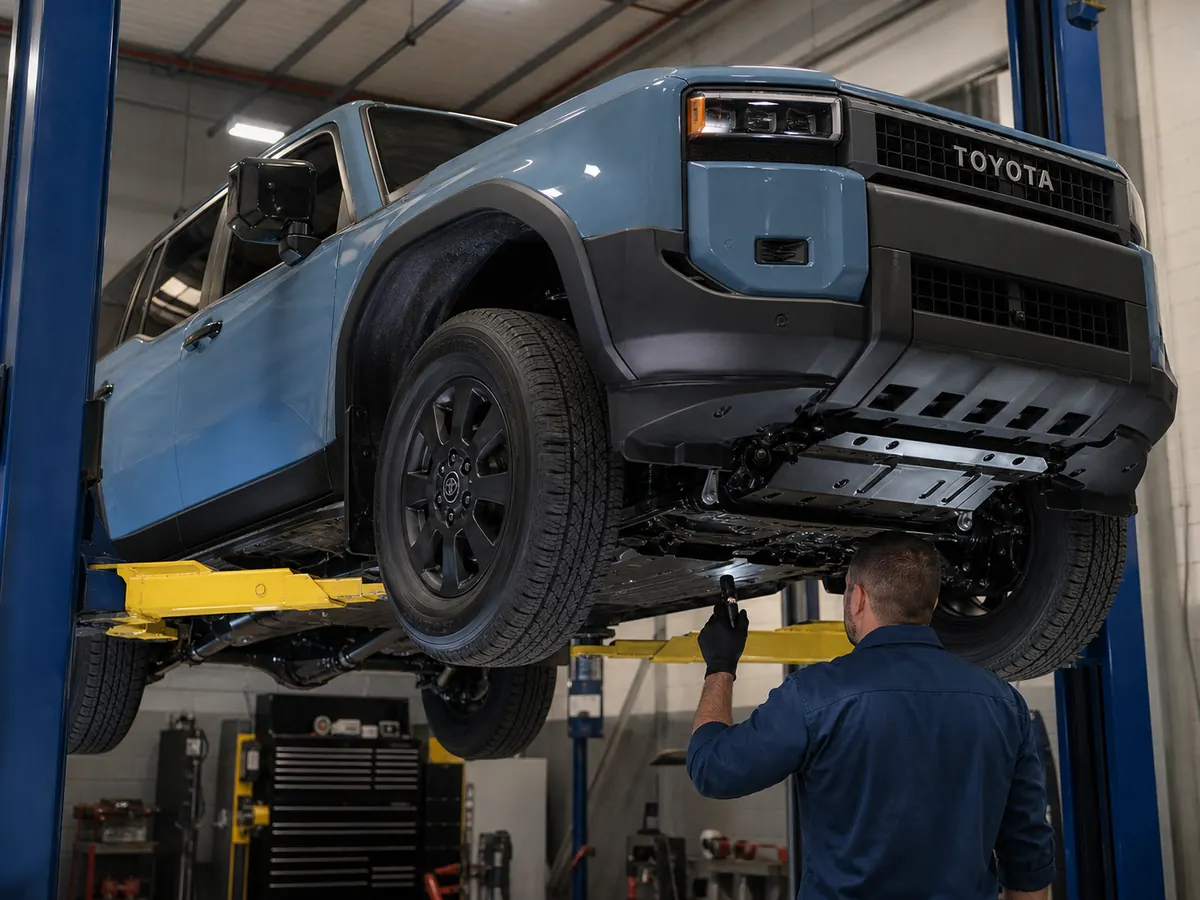
Operate low range, center lock, rear lock, Crawl Control, and terrain modes under the manual's permitted conditions.
Inspect skid plates, frame, suspension, differential housings, exhaust, recovery points, steps, and bumpers.
Fresh paint or bent fasteners can hide an impact. Water lines, damp carpet, silt, or cloudy lamps need an explanation.
- Run Toyota and NHTSA VIN checks
- Review factory and accessory invoices
- Scan before and after the drive
- Test every traction system correctly
- Check inner tire wear and matching sizes
- Inspect roof and body mounting points
- Obtain an independent pre-purchase inspection
The planned Land Cruiser reliability guide can separate years as data grows. A short model history calls for stronger diagnostic, service, modification, and underbody evidence rather than a prediction based on the badge.
Trail tires and accessories can erase the MPG advantage
Build the ownership budget around the finished Land Cruiser, not a stock advertisement. Include price, destination, tax, total interest, insurance, registration, fuel, tires, brakes, service, repairs, recovery instruction, accessories, travel, and resale.
Compare that total with other vehicles in the premium price range. The 23-mpg estimate applies to the certified configuration, not every heavy build.
| Cost | Evidence | Buyer action |
|---|---|---|
| Fuel | Annual miles and realistic modified MPG | Calculate stock and planned build |
| Tires | Exact road and trail specification | Price a complete matching set |
| Accessories | Installed weight and invoice | Protect payload and warranty evidence |
| Insurance | Quote by VIN and modifications | Confirm declared equipment coverage |
| Trail damage | Inspection and cash reserve | Keep money after the down payment |
| Finance | Total of payments | Do not compare monthly amount alone |
At 23 mpg, 15,000 miles require about 652 gallons before accessories or towing reduce economy. Calculate the same miles at 20 mpg to see the consequence of tires, speed, and load.
A small change matters each year because the vehicle is likely to cover long highway distances to reach a trail.
Buy recovery equipment only after training identifies what the route requires. Unused steel, drawers, and roof equipment consume payload and fuel on every trip.
Remove seasonal gear when it is not needed and inspect mounting points regularly.
Price insurance with disclosed modifications. Some accessories need separate coverage, while others may complicate a claim if installation is undocumented.
The financially sound Land Cruiser keeps enough payload and cash for safe tires, training, maintenance, and repairs instead of spending the entire budget on the vehicle and accessories.
Choose Land Cruiser only when the route proves the case
Land Cruiser is a focused five-seat SUV with standard hardware that many buyers will never use. Its full-time 4WD, low range, center lock, rear lock, 465 lb-ft, and 6,000-pound tow ceiling create a strong case for repeated remote access or moderate towing.
Its price, raised cargo deck, short current-generation history, and truck expenses create the counterargument.
Pros
- Full-time 4WD, low range, and two lockers are standard
- Strong 465 lb-ft hybrid torque
- 23 mpg combined is useful for a body-on-frame SUV
- Up to 6,000 pounds of towing
Cons
- Five seats with no third-row option
- High starting price
- Short U.S. history for the current generation
- Tires, accessories, and trail damage can raise cost quickly
Choose 1958 when the mechanical package is the reason for buying. Choose the upper grade when cameras, seat comfort, or visibility equipment have proven value.
Keep stock wheels in the comparison and add modifications only after the route demonstrates a need.
Drive 4Runner, larger Sequoia, and a road-focused road-oriented Highlander on the same route. Choose Land Cruiser when its standard trail hardware solves a repeated access problem, not because the name makes unused capability feel necessary.
The final verdict should survive a stock-vehicle weekend
The final verdict should come from a stock Land Cruiser before accessories change the result.
Ask the dealer for an overnight or extended drive when possible. Use the home garage, commute, rough road, cargo load, and steep access point that created the need for low range or lockers.
A short trail demonstration cannot prove daily comfort, and a smooth commute cannot prove specialized hardware is necessary.
Record observed fuel economy without treating one weekend as a long-term estimate. Note seat pressure, tire noise, crosswind correction, camera usefulness, rear-passenger comfort, and how often the trail controls were actually needed.
Measure the loaded cargo deck and remaining payload before pricing a roof tent, drawers, protection, or recovery gear.
- Keep the test vehicle on its factory tires
- Carry the normal passengers and equipment
- Park in every regular location
- Engage low range and lockers only where permitted
- Compare the same route with a Toyota 4Runner
- Price insurance and a tire set before deciding
Write one sentence that names the repeated route an ordinary AWD crossover cannot handle. If the sentence stays vague, the 1958 grade's excellent hardware may still be unnecessary.
If the route is specific and the stock vehicle completes it with comfortable road behavior, the Land Cruiser has earned its high starting price.
The purchase is defensible when a real route proves both the trail need and the daily comfort, before modifications add cost and weight.