The hybrid is built for torque rather than city-car economy
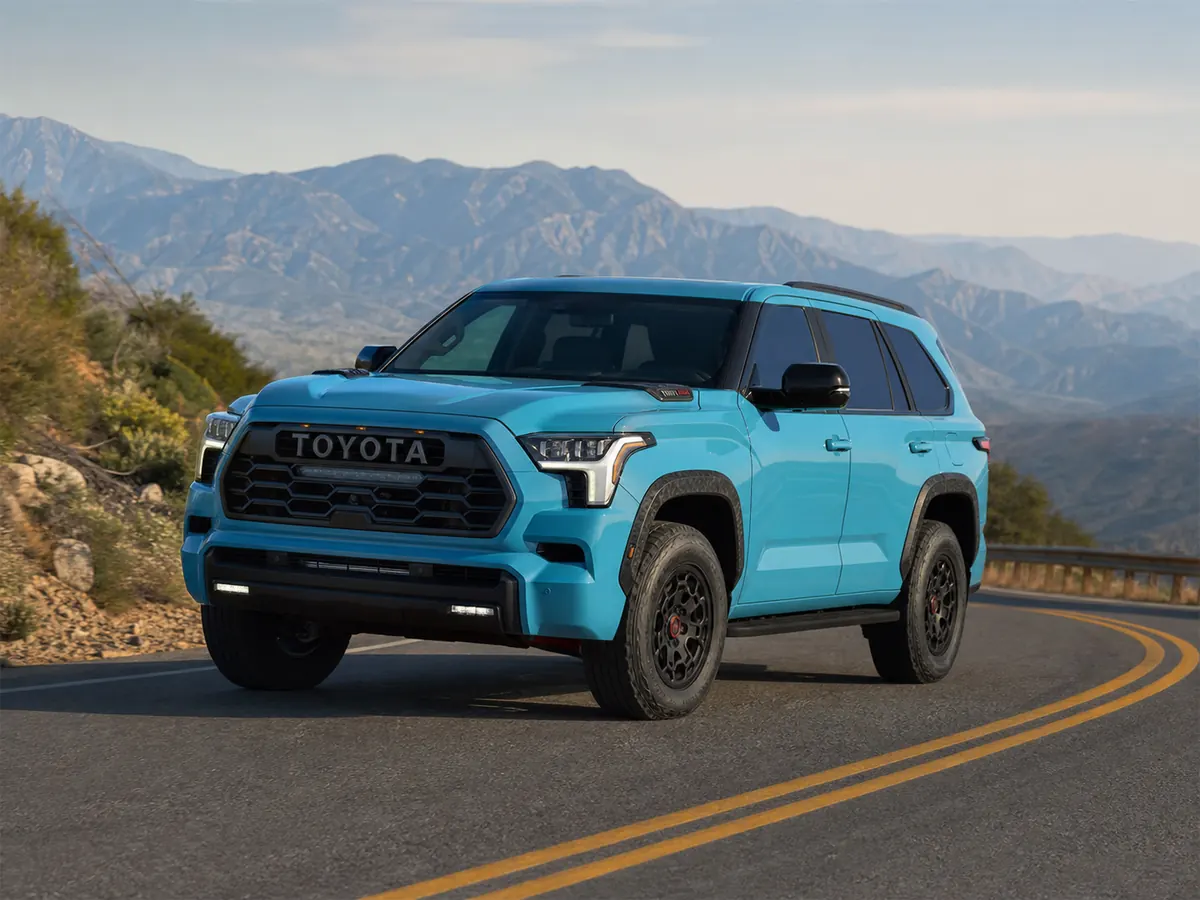
The 2026 Toyota Sequoia uses one powertrain in every grade. Its 3.4-liter twin-turbo V6, electric motor, and 10-speed automatic produce 437 hp and 583 lb-ft.
That torque figure explains the vehicle better than the hybrid badge. Toyota engineered the system to move a large SUV, passengers, and trailers with less strain, not to deliver compact-hybrid fuel use.
Toyota lists up to 22 mpg combined, and drivetrain, trim, tires, speed, weather, and trailer use can lower the result.
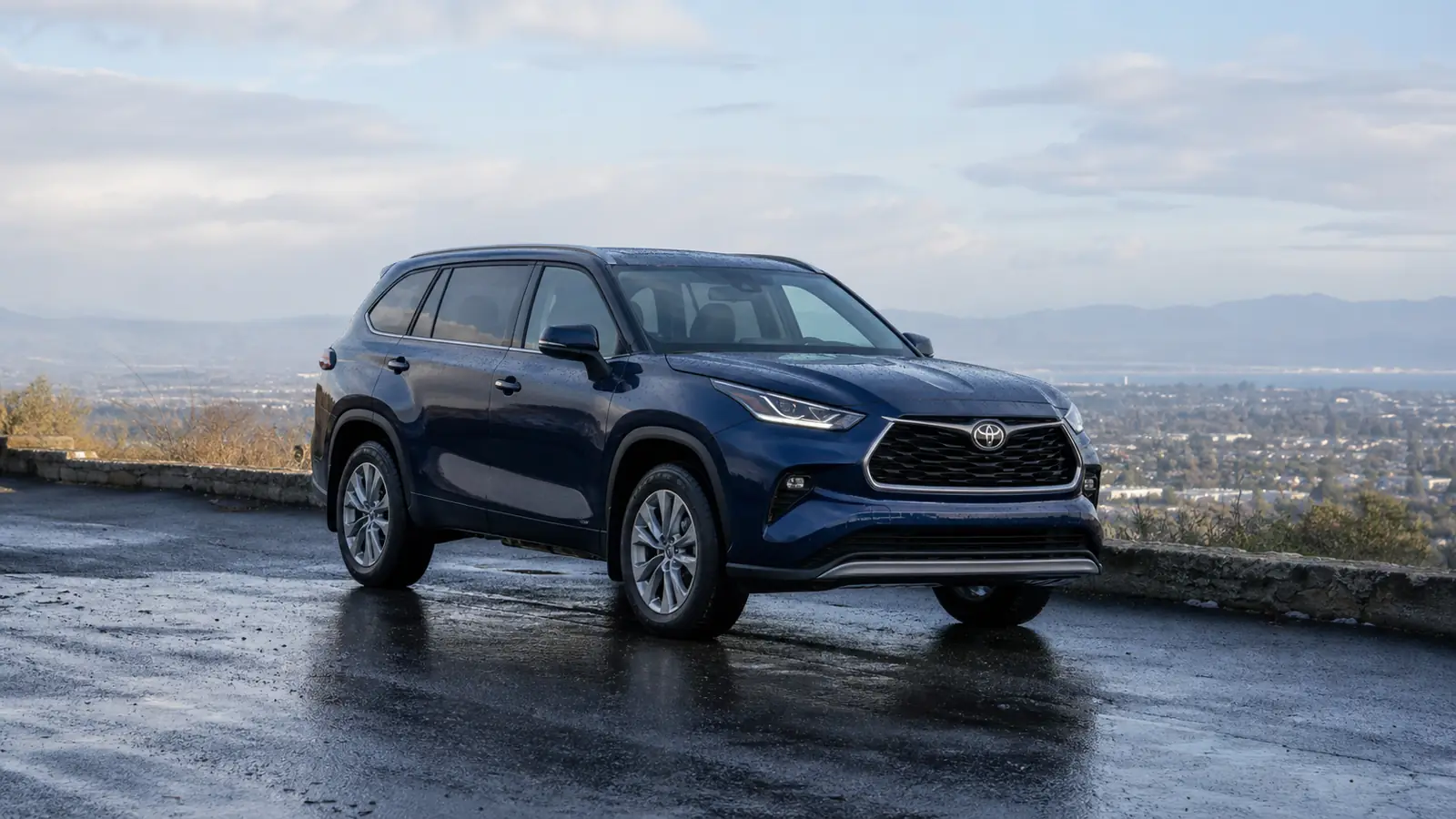
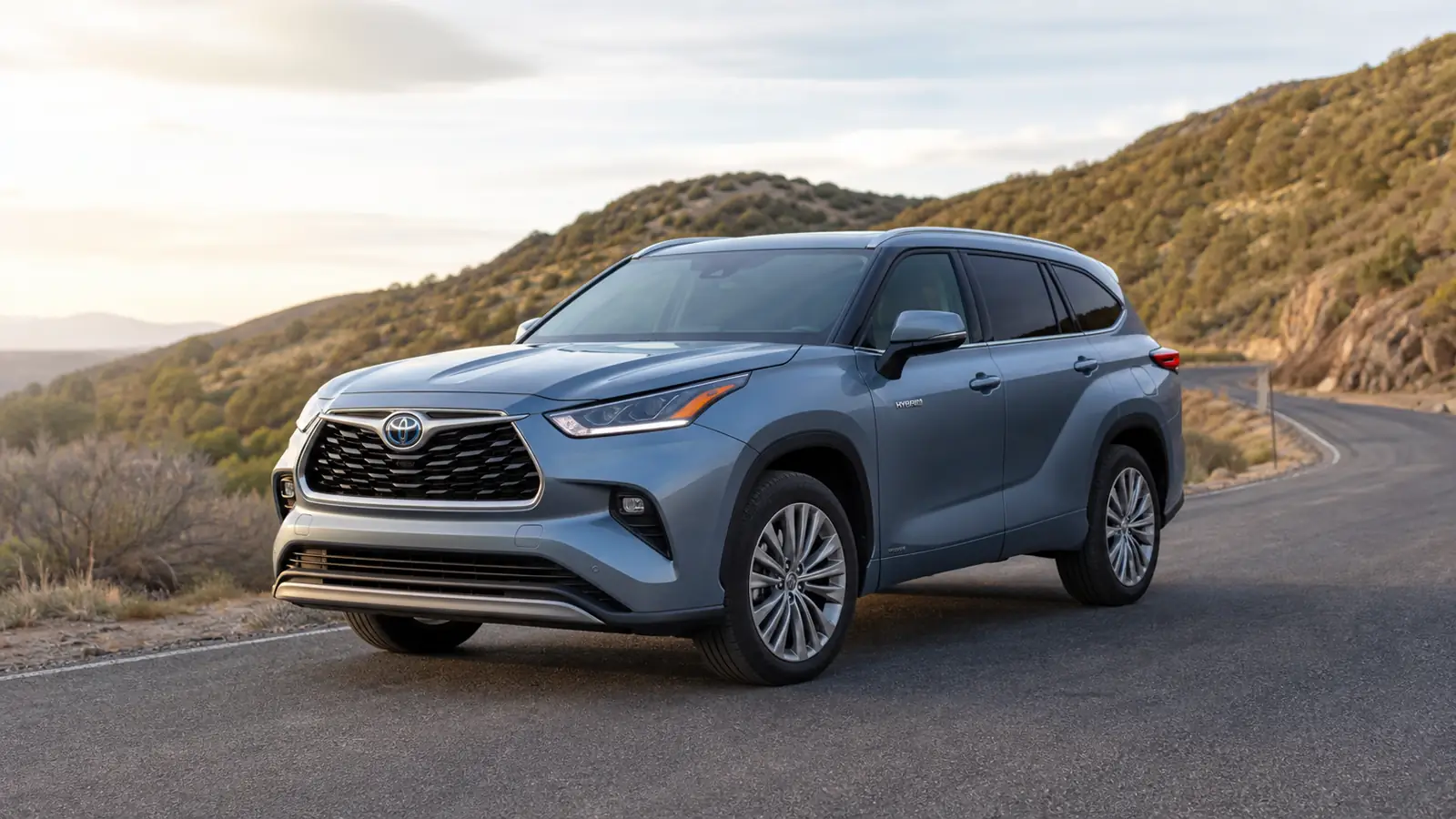
A buyer moving from a midsize Highlander Hybrid should not assume the Sequoia will return similar fuel economy.
The body-on-frame structure, full-size dimensions, and large tire packages carry a continuing fuel cost.
Drive the exact trim from a cold start. Check the transition from electric assistance to engine power, low-speed response, 10-speed shift quality, brake blending, and acceleration on the steepest normal grade.
Repeat the test with the regular passengers aboard. A quick empty test can hide how much mass the powertrain must manage.
The powertrain makes sense for repeated trailer work, a full cabin, or routes where strong low-speed response matters.
Buyers who mainly commute alone are paying for hardware they rarely use.
Treat the Sequoia hybrid as a high-torque truck system with a modest efficiency benefit, not as a fuel-saving family crossover.
The cargo floor is the family-space tradeoff
Sequoia seats seven with second-row captain's chairs or eight with a bench, but seat count does not prove useful space.
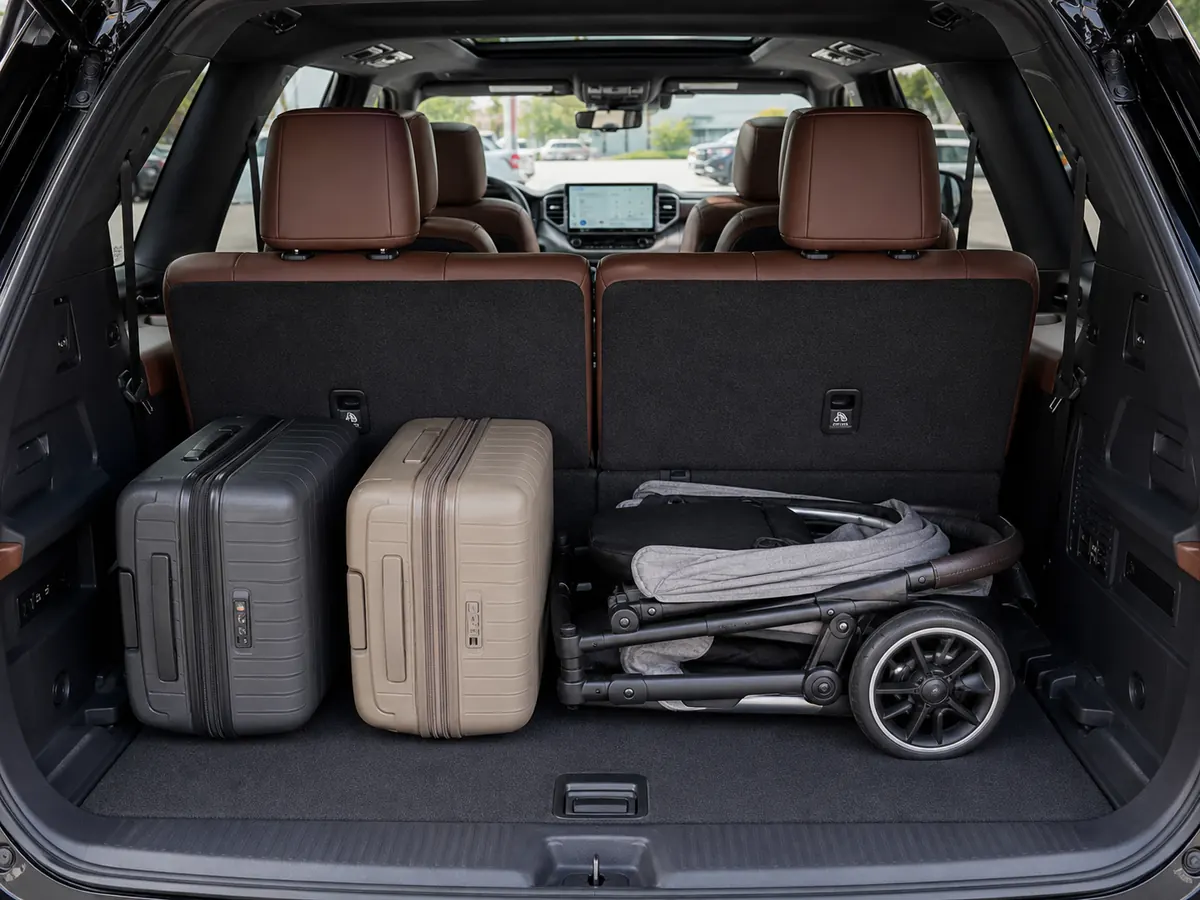
The solid rear axle, hybrid battery packaging, and folding mechanism create a raised cargo floor. Adults may accept the third row for a short trip, while the stepped load area can make bulky luggage harder to place than the exterior size suggests.
Set both front seats for the regular drivers. Install every child restraint, slide or fold the second row as it would be used, and ask the tallest rear passenger to enter from both sides.
Check knee angle, foot room, head clearance, air vents, cupholders, seat-belt reach, and whether an installed child seat blocks the aisle.
Load the largest weekly objects with every occupied seat upright. Use the actual stroller, sports bags, cooler, pet crate, mobility equipment, or work cases.
Check whether the adjustable cargo shelf creates a useful flat surface or simply reduces vertical room.
Secure heavy items low and never stack cargo where it blocks the rear window.
- Rehearse entry with the normal child seats installed
- Load bags while the third row remains occupied
- Check liftgate clearance inside the home garage
- Measure the height of crates and strollers, not only their floor area
- Confirm the powered third row works from every intended control
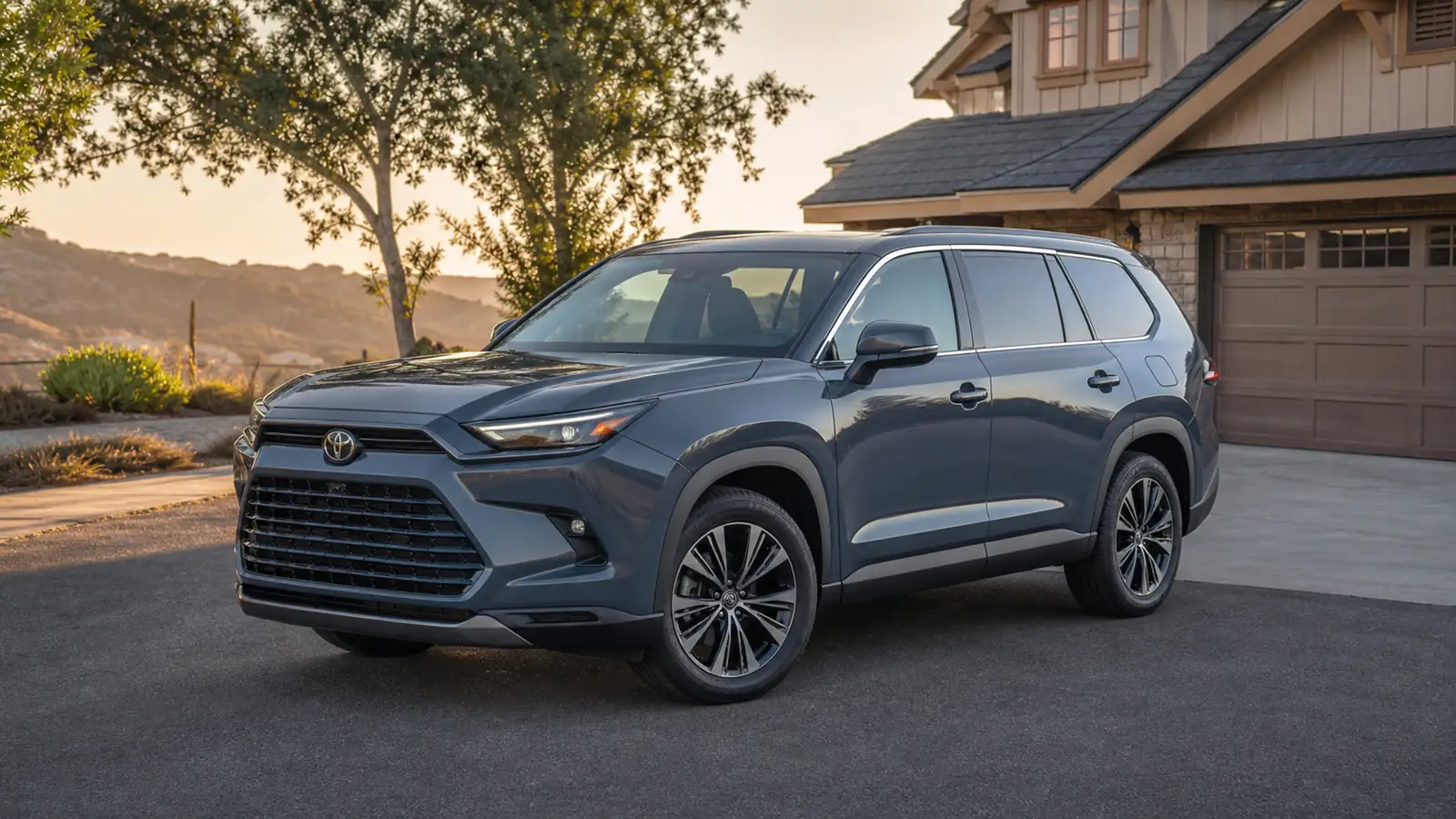
A Toyota Sienna has a lower floor and easier side-door access, while a Grand Highlander uses space more efficiently. Buy Sequoia for truck capability with three rows, not because its large body guarantees the best passenger-and-cargo packaging.
Towing capacity only works inside the payload math
Toyota lists a maximum Sequoia tow rating of 9,520 pounds for the right configuration.
That headline is not a universal allowance. The exact door labels, owner's manual, hitch equipment, axle limits, tire ratings, gross vehicle rating, combined rating, and trailer-brake requirements control each vehicle.
Trim, drivetrain, passengers, and accessories can change the usable margin.
| Item | Where to verify | Why it matters |
|---|---|---|
| Tow rating | Manual and configuration guide | Changes by trim and drivetrain |
| Payload | Driver-door label | People, cargo, hitch, and tongue weight consume it |
| Tongue weight | Loaded trailer scale | Presses directly on the SUV |
| Axle loads | Certified scale | Protects front and rear limits |
| Tire limits | Sidewalls and labels | Must cover the actual load and pressure |
| Trailer brakes | Manual and local law | SUV brakes cannot manage every trailer alone |
Add the driver, every passenger, luggage, aftermarket steps, roof gear, recovery equipment, hitch hardware, and loaded tongue weight. A large travel trailer may stay below the advertised tow rating yet exceed payload or a rear axle limit after the family climbs aboard.
Weigh the complete combination, not an empty trailer brochure.
Trailer shape also matters. A tall camper pushes much more air than a low utility trailer of similar weight, which can raise fuel use and transmission load.
Test the normal highway grade, crosswind exposure, brake response, mirror coverage, and low-speed maneuvering before a long trip.
The planned Sequoia towing guide can handle configuration detail. The correct Sequoia is the one whose measured loaded combination stays inside every limit, not simply the one advertised at 9,520 pounds.
Two-wheel drive and four-wheel drive serve different routes
SR5 and Limited allow rear-wheel drive or part-time four-wheel drive, while off-road and upper configurations concentrate on 4WD.
Rear-wheel drive can lower purchase price and may improve fuel use slightly. Four-wheel drive adds low-range capability and traction hardware for loose surfaces, steep ramps, snow-covered access roads, and certain trailer launches.
Part-time 4WD is not a set-and-forget system for dry pavement. The driver needs to understand when Toyota permits each mode, how to shift ranges, and why locked driveline operation on a high-grip surface can cause binding.
Read the manual and perform every mode change during the test drive in an appropriate location.
Tires remain the contact with the road. A 4WD Sequoia on worn all-season tires can brake and turn worse in winter than a correctly equipped vehicle on suitable tires.
Price a full matching set in the exact size, inspect the spare arrangement, and check whether the chosen trim's wheel size limits winter-tire options.
Prove the need with a route. Include the steep driveway, unplowed street, muddy jobsite, boat ramp, or trail entrance that prompted the purchase.
If the route is theoretical, the added mass, price, maintenance, and tire obligations may never return practical value.
Choose 4WD for a repeated low-speed traction or low-range job, and choose 2WD when normal paved use is the honest workload.
Choose the hardware before the leather
The Sequoia range moves from SR5 and Limited through Platinum, TRD Pro, 1794, and Capstone. All receive the same output, so higher prices buy seating, cameras, audio, materials, wheel packages, suspension tuning, and specialized trail equipment rather than a stronger engine.
Start with the lowest grade that can safely perform the work.
Shopping order
- Cabin
- Bench or captain's chairs
- Drivetrain
- 2WD or part-time 4WD
- Towing
- Exact configuration and payload
- Trail use
- Standard setup, TRD package, or TRD Pro
- Visibility
- Camera equipment needed for the normal route
- Trim
- Comfort features used every week
Limited is the sensible baseline for many families because it combines useful comfort with access to 2WD or 4WD.
TRD Pro adds equipment intended for repeated rough-surface use. 1794 and Capstone focus more on materials and road comfort.
Large wheels can look appropriate on a full-size SUV while increasing replacement cost and reducing tire sidewall on broken roads.
Sit in the exact seats and test every camera in daylight and darkness. Check screen reach, physical controls, console storage, third-row switches, climate operation, mirror coverage, and the position of trailer controls.
A feature has value only when it removes a repeated inconvenience or safety problem.
Get insurance quotes by VIN before choosing a high trim. The financed amount, wheel value, repair sensors, and specialty equipment can change premiums.
Compare the total transaction after destination, tax, interest, accessories, and dealer products rather than the advertised monthly payment.
The Toyota brand guide shows less specialized family choices. Select seats, drivetrain, towing configuration, and trail hardware first, then buy the lowest trim that contains the comfort equipment the household will actually use.
A road test must expose its size and brake feel
Sequoia's length, width, height, and turning path affect every ordinary trip. Drive it through the home garage, school pickup lane, parking ramp, grocery lot, narrow street, and fuel station.
Check front-corner judgment, mirror blind areas, camera clarity, liftgate height, and whether another vehicle can pass after the doors open.
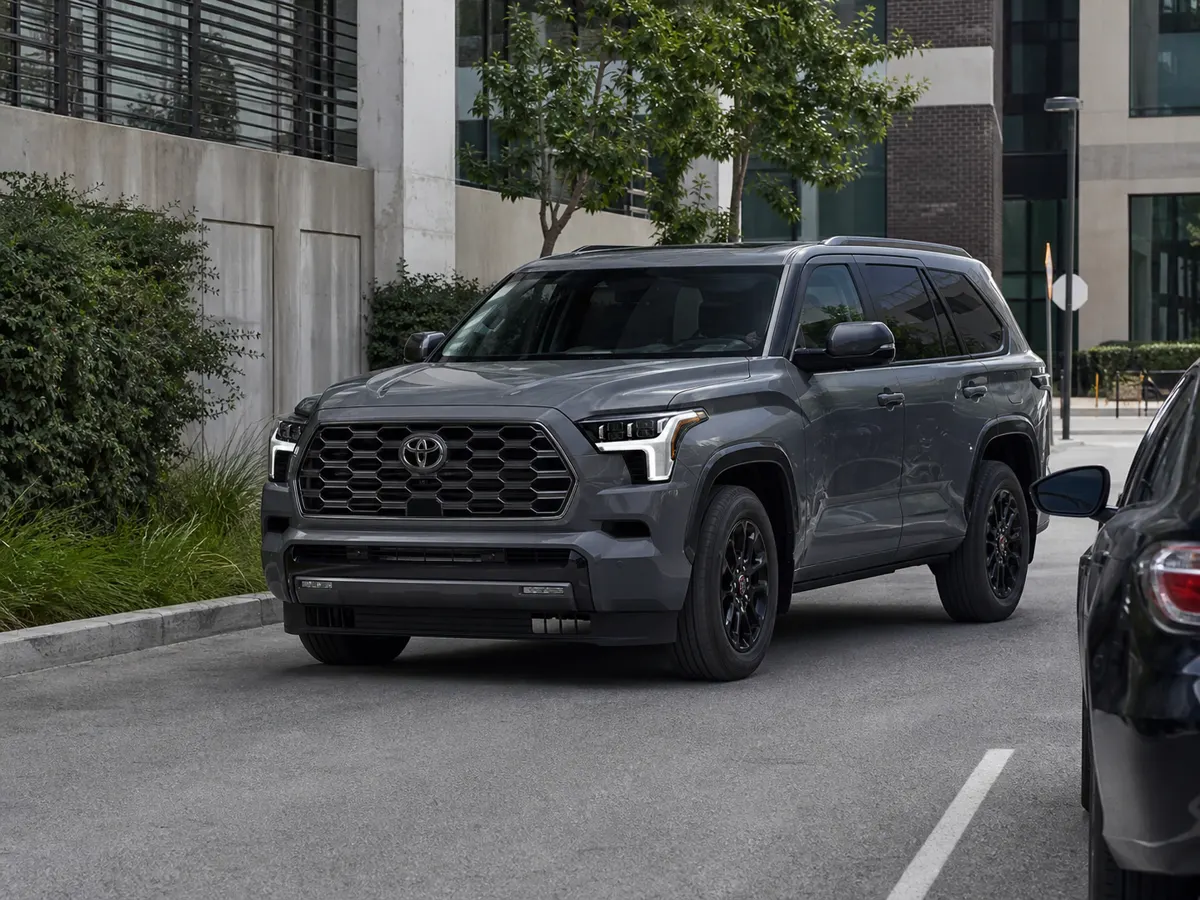
The hybrid can move the SUV quickly, but acceleration is only one part of control. Test low-speed brake blending, a firm highway stop, lane placement, crosswind response, and steering corrections on patched pavement.
Repeat with passengers because load changes body motion and stopping feel.
Drive the chosen wheel and suspension package. A TRD setup, large luxury wheel, and standard Limited configuration can respond differently to sharp edges and freeway grooves.
Listen for tire roar, wind noise, loose interior hardware, and trailer-hitch movement. Check whether the driver can maintain a relaxed posture without leaning forward to judge corners.
- Reverse into the tightest regular space
- Complete one narrow U-turn
- Drive a rough road at the normal speed
- Merge with passengers aboard
- Stop firmly from highway speed in a safe place
- Test headlights and cameras after dark
A Chevrolet Tahoe and other full-size SUVs deserve the same route, while the smaller Honda Pilot can reveal how much maneuverability the family would give up. The Sequoia fits only when its driver can place, stop, and park the exact trim calmly on the routes used every week.
Current IIHS results are mixed by test and headlight
IIHS results for the 2026 Sequoia should be read one procedure at a time. The institute reports Good small-overlap front and updated side results, while the updated moderate-overlap front result is Marginal.
Standard vehicle-to-vehicle front crash prevention is Marginal, and pedestrian front crash prevention is Good.
| Area | Result | Buyer action |
|---|---|---|
| Small-overlap front | Good | Review injury and restraint details |
| Updated moderate front | Marginal | Compare rear-occupant protection |
| Updated side | Good | Still inspect collision history |
| Vehicle front prevention | Marginal | Driver remains responsible for braking |
| Pedestrian prevention | Good | Do not treat assistance as autonomy |
| Headlights | Good or Poor | Verify the exact trim and drive at night |
Headlight performance varies sharply. IIHS rates the projector setup available on certain upper trims Good, while reflector headlights on SR5 and some Limited configurations are Poor because of glare in the tested setup.
That difference gives a night drive more value than a general safety label.
Toyota equips the 2026 model with Safety Sense 2.5 and includes features such as pre-collision assistance and lane support.
Assistance systems have operating limits. Dirty sensors, weather, road markings, speed, tire condition, and driver attention affect outcomes, and no feature replaces correct restraints or an alert driver.
Install every child seat and inspect LATCH access, buckle reach, head restraints, and belt routing. On a used SUV, examine airbags, belts, seat tracks, glass, body seams, paint edges, and calibration invoices after windshield or collision repair.
The source methodology explains why named tests matter. Sequoia has strong results in several crash tests, but the Marginal updated front result and trim-dependent headlights belong in the purchase decision.
The camera recall applies to certain earlier current-generation SUVs
NHTSA recall 25V657 covers certain 2023 through 2025 Sequoia Hybrid vehicles equipped with a 14-inch multimedia display. The official report says software can cause the rearview image to appear green or black after reverse is selected.
Toyota's remedy is a free software update. The listed campaign does not identify the 2026 model year as an involved Sequoia.
For a used 2023 to 2025 vehicle, start it repeatedly and select reverse after the display has fully booted and during another startup cycle.
Test in daylight and darkness. A camera that works during one demonstration does not prove the software campaign is complete, and a completed campaign does not certify unrelated cameras, sensors, or body repairs.
Ask the seller for Toyota service history and campaign invoices, then compare them with the official VIN results.
The dealer should explain any open status and complete the free remedy when available. If records disagree, pause the purchase until Toyota or NHTSA resolves the VIN status.
The planned Sequoia recall page can track campaigns without turning the profile into a recall catalog. For 2023 to 2025 used examples, verify recall 25V657 by VIN and paperwork while keeping the 2026 model outside that specific stated scope.
A short generation history raises the inspection standard
The third-generation Sequoia began for 2023, so it does not yet provide a decade of evidence for its twin-turbo hybrid system, electronics, interior hardware, and supplier parts. Toyota's wider hybrid experience is useful context, but it cannot prove the condition of an individual SUV or predict every long-term repair.
Start the vehicle cold and scan every control module before and after the drive. Check oil and coolant condition, leaks, warning history, engine transitions, boost response, 10-speed shifts, brake blending, 12-volt battery health, climate output, screens, cameras, seat motors, liftgate, and every key.
A cleared warning history needs an explanation and supporting invoice.
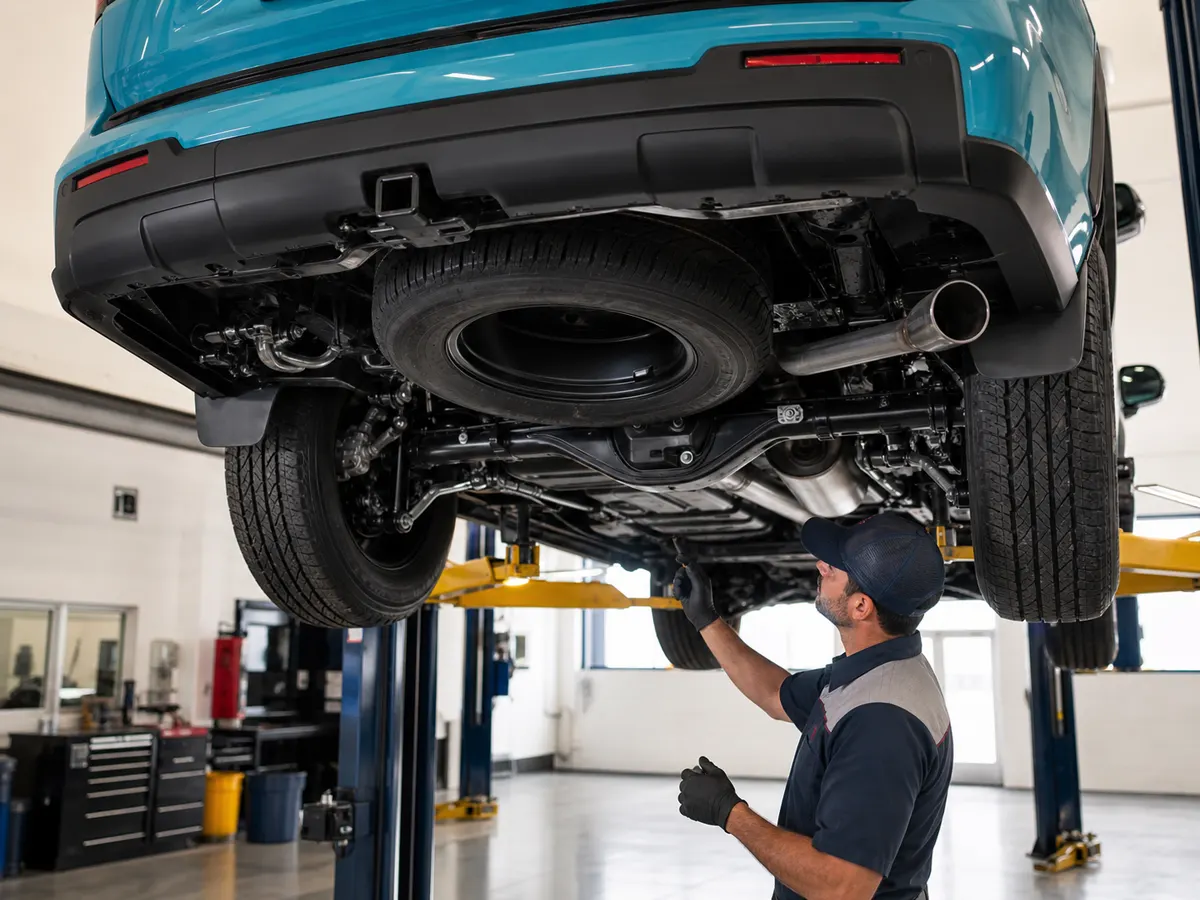
On 4WD vehicles, operate high and low range according to the manual and test any locking or trail systems in a suitable place.
Inspect skid plates, frame, suspension, exhaust, cooling components, wiring, and recovery points for impact or incorrect modification. Look for hitch wear, controller installation, overheated brakes, mismatched tires, and sag that may show heavy towing.
- Verify Toyota and NHTSA VIN records
- Require cold-start access
- Scan before and after the road test
- Test every 4WD mode correctly
- Inspect inner tire shoulders and wheel damage
- Review towing, accessory, and collision invoices
- Obtain an independent pre-purchase inspection
A planned Sequoia reliability guide can separate model years as evidence grows. A short history is not proof of poor reliability, but it makes service records, diagnostics, and a physical inspection more important than brand reputation.
Fuel, tires, insurance, and trailer gear set the real budget
Build the Sequoia budget from the exact configuration. Include transaction price, destination, tax, total finance interest, registration, insurance, fuel, tires, brakes, scheduled service, repairs, trailer equipment, accessories, and resale.
A generic monthly estimate hides the cost differences between an SR5 2WD, Limited 4WD, TRD Pro, and Capstone.
| Cost | Evidence to collect | Common mistake |
|---|---|---|
| Fuel | Annual miles and observed route MPG | Budgeting from the best trim estimate |
| Insurance | Quote for the exact VIN | Assuming all grades cost the same |
| Tires | Installed size and load rating | Ignoring large-wheel replacement price |
| Towing | Hitch, brake controller, mirrors, service | Counting only trailer purchase price |
| Finance | Total of all payments | Comparing monthly payments alone |
| Repairs | Inspection and cash reserve | Treating warranty as full cost protection |
At 22 mpg, 15,000 miles require about 682 gallons before towing or severe weather lowers economy.
Use local fuel prices and repeat the calculation at a conservative MPG result. The dollar difference against a smaller hybrid can persist every year, even when the Sequoia's hybrid system saves fuel relative to another full-size truck.
Large tires and brakes cost more than compact-SUV parts. Specialty wheel sizes, off-road tires, and towing use can shorten replacement intervals.
AWD systems also need correctly matched tires. Price the exact set before delivery and inspect the spare and roadside plan.
Keep a cash reserve after the down payment. A high purchase price plus maximum financing leaves less room for a tire set, insurance increase, trailer brake work, or out-of-warranty electronic repair.
The affordable Sequoia is the configuration whose full yearly cost still leaves room for safe tires, correct towing equipment, and unexpected repairs.
Buy Sequoia for repeated truck work, not occasional extra seats
Sequoia is strongest for a household that regularly combines three rows with a heavy trailer, low-range access, or truck-based durability needs.
Its 583 lb-ft, high tow ceiling, and 4WD choices are genuine advantages. The raised cargo floor, full-size parking burden, fuel use, and purchase price are equally genuine costs.
Pros
- Strong 583 lb-ft hybrid torque
- Up to 9,520 pounds of towing in the correct configuration
- Available low-range 4WD and specialized trail hardware
- Seven- or eight-seat layouts
Cons
- Raised cargo floor limits bulky family loads
- Up to 22 mpg combined is modest for a hybrid
- Large tires, insurance, and fuel raise annual cost
- Current IIHS results are mixed by procedure and headlight
Start with Limited 4WD if the route requires low range and the household wants a broad comfort set.
Move to 2WD when paved use is dominant. Move to TRD Pro only for repeated rough-surface work, and move to 1794 or Capstone only after pricing the comfort and wheel upgrades over the ownership term.
Compare the same load and route with three-row Grand Highlander, Sienna minivan, and Tahoe. Buy the Sequoia when towing and truck hardware are weekly needs, not when an occasional extra passenger is the only reason for choosing a full-size SUV.