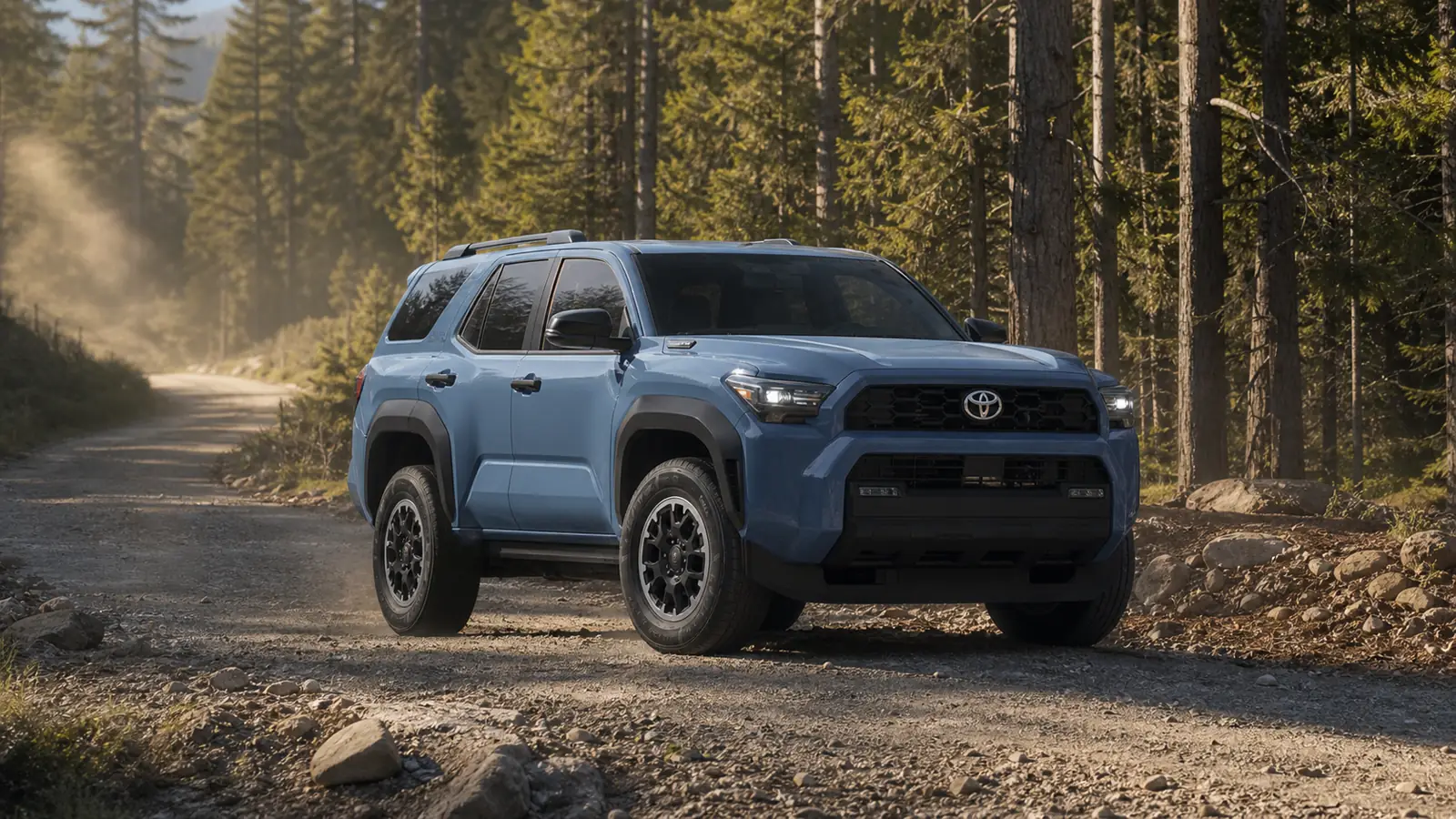
Is the Toyota 4Runner reliable?
Yes, the Toyota 4Runner can be a highly reliable long-term SUV.
The strongest evidence belongs to the 2010 to 2024 fifth generation, while older and newer trucks require different qualifications.
A durable engine does not certify the whole vehicle.
Frame condition, cooling, four-wheel-drive operation, suspension hardware, tires, prior trail contact, and accessory wiring can create costs that an engine reputation does not reveal.
The fourth generation sold from 2003 through 2009 with a 4.0-liter V6 or an available 4.7-liter V8. Its powertrains have a long service record, but corrosion and age now control many purchase decisions.
The sixth generation arrived for 2025 with a turbocharged four-cylinder, an available i-FORCE MAX hybrid, and an eight-speed automatic. Those systems may prove durable, but two model years cannot supply the same evidence as a 15-year production run.
The useful verdict is therefore conditional.
Fifth-generation trucks provide the most mature evidence, fourth-generation examples can still be strong when the frame and service history pass, and sixth-generation buyers are accepting more uncertainty.
Why is the 2010 to 2024 4Runner the clearest reliability bet?
Toyota kept the fifth-generation 4Runner's basic mechanical package unusually stable. The 4.0-liter V6 and five-speed automatic avoided the yearly expansion of turbochargers, hybrid cooling circuits, and new transmission designs seen in many newer SUVs.
A long production run gives technicians more experience with the platform and buyers more comparable used examples. It also makes parts, service information, and normal operating behavior easier to recognize.
| Generation | Main powertrain | Evidence maturity | First inspection question |
|---|---|---|---|
| 2003 to 2009 | 4.0L V6 or 4.7L V8 | Long history, now age-sensitive | Is the frame structurally sound? |
| 2010 to 2024 | 4.0L V6 and five-speed automatic | Most mature modern evidence | Do condition and records justify the mileage? |
| 2025 onward | 2.4L turbo gas or hybrid and eight-speed | Early ownership only | Are campaigns complete and systems behaving normally? |
Stability does not stop time.
A 2010 truck is now old enough for cooling hoses, seals, wheel bearings, steering joints, brake components, rubber bushings, and air-conditioning parts to matter even when the engine and transmission remain healthy.
Four-wheel-drive equipment also needs exercise and service. Confirm that the transfer case enters its commanded ranges, the indicators finish their sequence, and the driveline does not bind or protest under the conditions allowed by the owner's manual.
Certain 2018 and 2019 4Runners fall under NHTSA campaign 20V682 for a low-pressure fuel pump that can fail and stall the engine. A completed free remedy addresses that defined defect, while an open campaign remains a delivery condition rather than a reason to condemn every fifth-generation truck.
The best fifth-generation candidate starts cold without abnormal noise, shifts consistently after a long drive, holds stable coolant temperature, tracks straight on matched tires, and has an underbody that agrees with the seller's use story. Its long-running design makes those observations easier to interpret, not optional.
What should you inspect on a 2003 to 2009 4Runner?
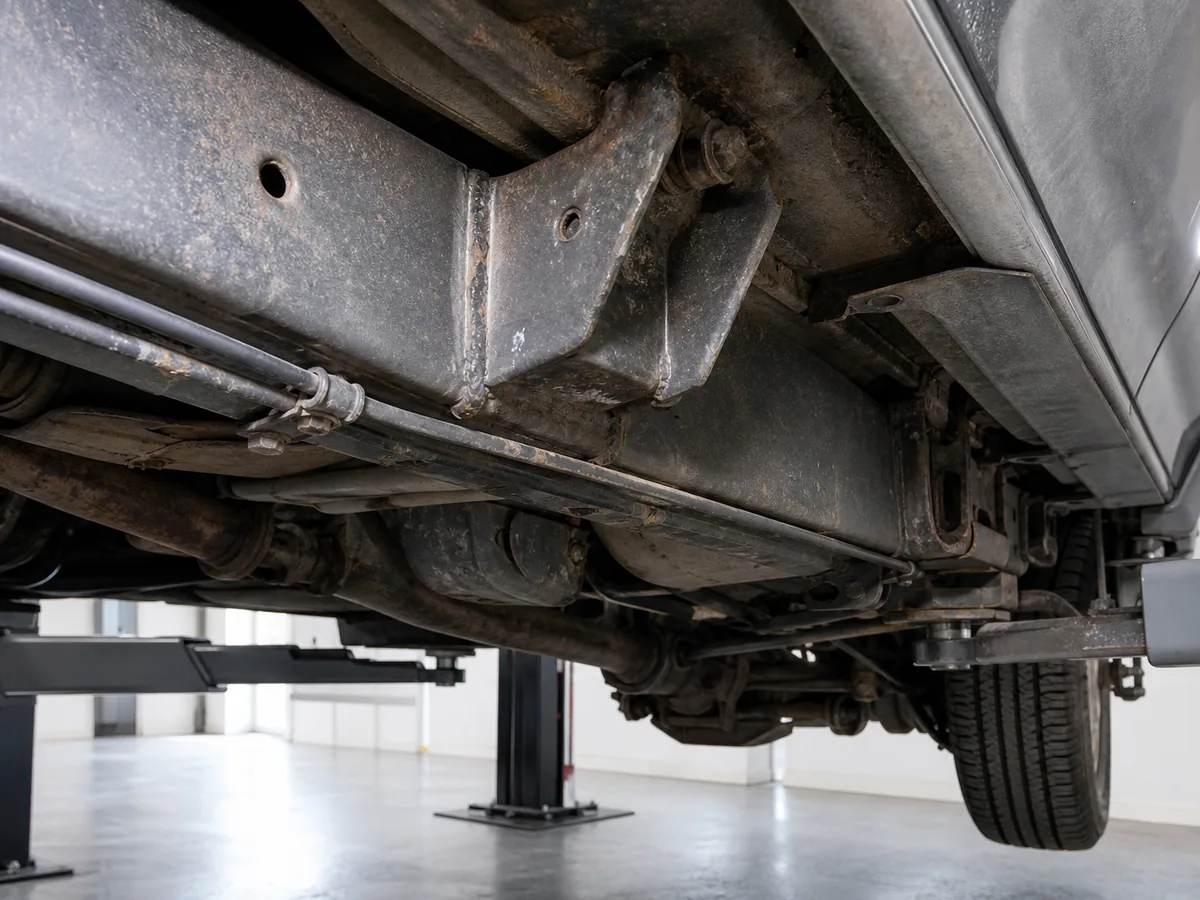
Start with the frame before discussing the engine.
A strong drivetrain has little purchase value when corrosion has deeply scaled a rail, opened a seam, weakened a suspension mount, or hidden under fresh coating.
NHTSA complaint records show why this check deserves priority. For the 2005 model year, 240 of 424 complaint records in the agency data contained a frame, rust, corrosion, or corroded reference when queried for this article.
That concentration is an inspection signal, not a failure rate.
Complaints are voluntary reports, vehicle populations differ by year, and one record does not prove that every similar truck has the same condition.
A lift, bright light, and small inspection tool reveal more than a clean body. Examine the inside and outside of the rails, crossmembers, control-arm and suspension mounts, tow points, fuel-tank supports, brake and fuel lines, drain areas, and seams where dirt and road salt remain wet.
Surface oxidation is not the same as swelling scale or metal loss.
Walk away when a qualified inspection cannot establish sound structure, especially near suspension, steering, body, or hitch attachment points.
The engine choice changes the service evidence. The 4.7-liter V8 uses a timing belt, so its replacement history belongs in the purchase file, while the 4.0-liter V6 uses a timing chain and shifts attention toward oil condition, cooling health, leaks, and cold-start behavior.
Test every four-wheel-drive function using the procedure and surface conditions in the owner's manual. A blinking indicator that never completes, an actuator that has not moved in years, or driveline binding needs diagnosis before price negotiation.
A dry cabin matters too. Check the sunroof drains where fitted, rear-window operation, hatch seals, carpet edges, spare-tire area, and electrical connectors for water marks or corrosion.
What are the most important common Toyota 4Runner problems?
The most important concerns are generation-specific rather than one universal engine defect.
Older trucks concentrate the decision around corrosion and age, while later fifth-generation trucks add campaign checks, optional suspension hardware, and tire-sensitive steering behavior.
NHTSA campaign 20V682 is the clearest fifth-generation mechanical campaign. It covers certain 2018 and 2019 4Runners whose in-tank low-pressure fuel pump may fail, causing an engine stall and increasing crash risk.
Toyota's remedy replaces the fuel-pump assembly with an improved unit at no charge. Ask for the VIN result and repair record because model year alone cannot prove that a particular vehicle was included or repaired.
Older fifth-generation trucks also appear in Takata airbag campaigns with year and registration-zone rules. These are safety defects with defined remedies, not evidence that the 4.0-liter V6 or five-speed automatic is unreliable.
Suspension concerns depend on equipment. Limited models with X-REAS and trucks equipped with KDSS carry linked hydraulic hardware that simpler SR5 configurations do not have, so inspect for leaks, uneven stance, warning signs, and mismatched replacement work.
A steering-wheel shake around highway speed deserves a tire-first diagnosis before anyone labels it a chassis defect. Tire uniformity, balance method, bent wheels, alignment, tread wear, wheel bearings, and steering joints all can produce similar behavior.
The road test should begin cold and continue until the drivetrain, tires, and suspension are fully warm. Include steady highway speed, braking without traffic pressure, tight turns on a suitable surface, a warm restart, and a scan for current, pending, and recently cleared codes.
The reliable candidate is the one whose symptoms have an identified cause.
A seller's claim that a vibration is normal or a warning light only needs a reset transfers diagnosis and cost to the buyer.
Can a 2025 or 2026 Toyota 4Runner already be called reliable?
It is too early to give the redesigned 4Runner a high-mileage reliability verdict. Toyota replaced the old 4.0-liter V6 and five-speed with a 278-hp 2.4-liter turbo and eight-speed automatic, while i-FORCE MAX models add an electric motor and produce 326 hp.
The redesign brings stronger torque, current safety hardware, and a modern platform.
It also adds turbo plumbing, more electronics, a new transmission application, and hybrid cooling and high-voltage equipment on applicable trims.
- 2025 launchSixth generation begins with turbo gas and i-FORCE MAX hybrid powertrains
- 2025 campaign 25V595Instrument-panel software may hide speed, brake, and tire-pressure warnings at startup
- 2026 campaign 26V282Certain Gulf States vehicles receive corrected load-carrying labels
NHTSA campaign 25V595 matters because the instrument panel may fail to show vehicle speed and critical brake or tire-pressure warnings. Toyota's filing describes a free over-the-air software update for non-plug-in vehicles, with a phased notification process.
The 2026 load-label campaign is narrower and concerns certain Gulf States distributor vehicles. An incorrect capacity label can lead to overloading, but the campaign does not establish a universal engine or transmission defect.
Check the VIN, software status, warning-lamp self-test, 12-volt charging health, coolant levels, turbo response, eight-speed shift quality, and every drive mode. Hybrid buyers should also verify smooth engine-motor transitions and have high-voltage concerns inspected by a qualified technician.
Shared engineering with other Toyota trucks provides context, not proof.
A new-generation 4Runner can be a reasonable purchase, but its durability remains an open question rather than inherited certainty.
How many miles can a Toyota 4Runner last?
Many 4Runners can reach very high mileage, and fleet research supports the nameplate's longevity reputation. The 2025 iSeeCars study analyzed almost 400 million vehicles and predicted that 32.9 percent of Toyota 4Runners would reach 250,000 miles.
The study describes a model population rather than the remaining life of one VIN. Older generations dominate the high-mileage sample, so its result cannot yet predict the redesigned turbo and hybrid generation with the same confidence.
Mileage also records distance, not severity.
Twenty thousand annual highway miles can be easier on some systems than short cold trips, deep water, heavy towing, road salt, long idling, or repeated low-speed trail use.
Service records should show more than oil changes. Cooling-system work, brake fluid, transmission and driveline fluids, spark plugs, suspension repairs, wheel-bearing work, timing-belt history on the V8, and corrosion prevention explain whether the rest of the truck can support the engine.
At high mileage, calculate remaining life by system. A sound frame, stable cooling, clean shifts, functional four-wheel drive, dry suspension, matched tires, and controlled oil consumption matter more than an odometer milestone by itself.
The longevity data justifies considering a well-kept 4Runner after other SUVs might be dismissed.
It does not justify paying a premium for deferred maintenance or structural damage.
Does off-road use make a 4Runner less reliable?
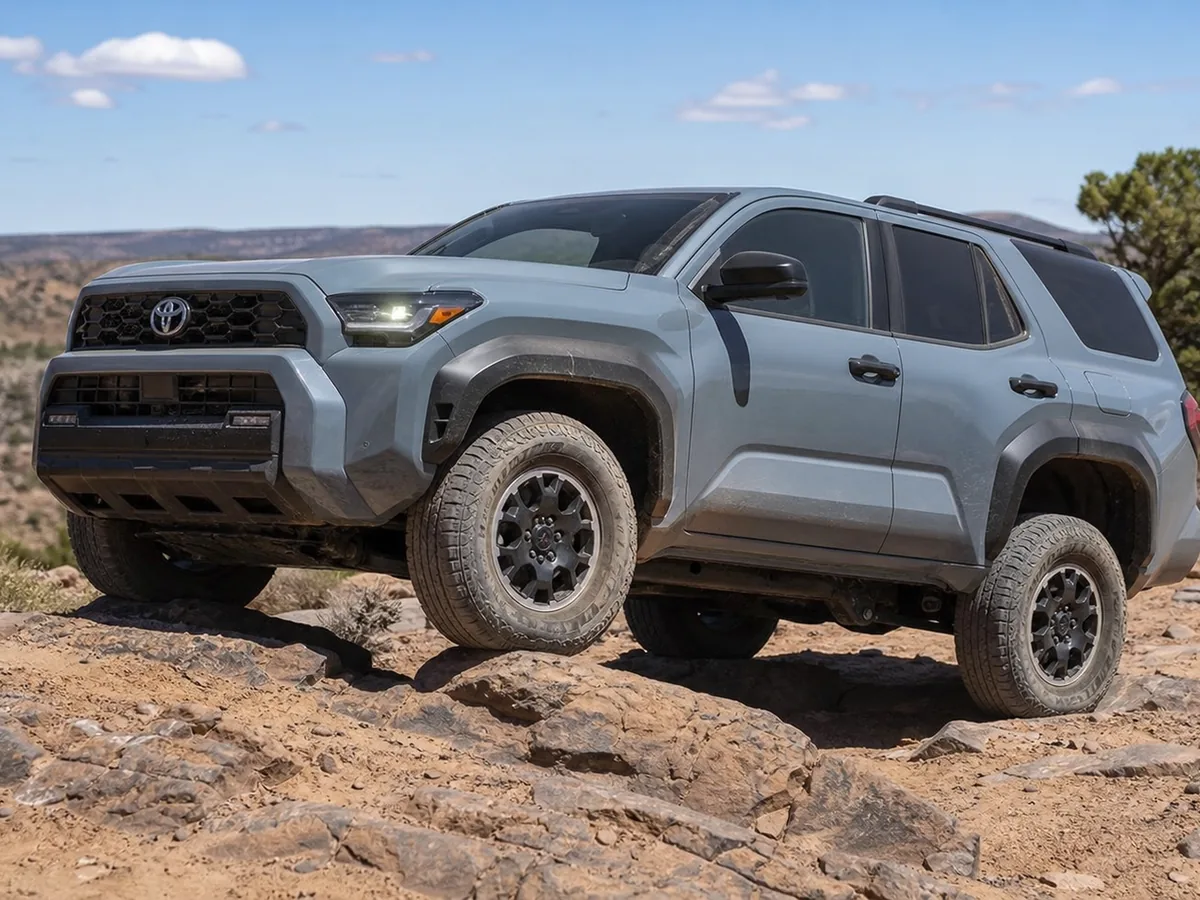
Off-road use can shorten component life, but use alone does not make a 4Runner a bad purchase.
The important distinction is whether the vehicle was operated within its limits, cleaned and serviced afterward, and repaired correctly when contact occurred.
Scraped skid plates and light pinstriping can show ordinary trail use. Bent mounts, crushed seams, damaged recovery points, leaking dampers, torn boots, dented exhaust or fuel protection, and fresh coating over impact areas point to a different level of stress.
Look for mud retained inside frame rails and crossmembers because it traps moisture. After water crossings, the service history should address the fluids and breathers identified by Toyota for the actual conditions rather than relying on the normal-use schedule.
Tires tell part of the story.
Uneven tread, mismatched sizes, sidewall cuts, bead damage, or one new tire can reveal alignment problems, trail damage, or a repair made without treating the set as a system.
Lifts, larger tires, heavy bumpers, winches, roof tents, drawers, and skid plates change more than appearance. They alter alignment, braking, steering effort, bearing loads, payload, cooling airflow, center of gravity, and the amount of weight the suspension must control.
Inspect accessory wiring from the battery outward. Each light, compressor, refrigerator, winch control, trailer circuit, or communications device needs appropriate fusing, a secure ground, abrasion protection, weather-resistant connections, and routing away from heat and movement.
Drive a modified truck on the road before evaluating its trail equipment. Steering that requires constant correction, tires that rub, driveline vibration, weak braking, or a body that does not settle after a lane change can make an impressive build expensive and tiring.
A stock truck with honest trail marks may be a better reliability prospect than a polished one with undocumented suspension and electrical work.
Maintenance quality and installation quality decide what the use history means.
Should you buy a high-mileage Toyota 4Runner?
Buy a high-mileage 4Runner when the structure is sound, the powertrain behaves consistently cold and warm, the four-wheel-drive hardware works, and records explain both scheduled service and major repairs.
Mileage becomes acceptable only after those conditions pass.
Reject structural corrosion that compromises mounts or rails, unresolved overheating, contaminated fluids, slipping or harsh shifts, persistent warning lights, serious collision or trail damage, and modifications that cannot be inspected or documented. These conditions can consume the apparent savings before ordinary maintenance begins.
Price the immediate work before making an offer.
Five tires, X-REAS replacement, a V8 timing-belt service, cooling repairs, suspension work, wheel bearings, fluid service, or correction of accessory wiring can materially change the deal.
A specialist pre-purchase inspection is especially valuable for a modified, rust-belt, V8, or heavily used example. Ask the inspector to identify what is normal wear, what needs near-term service, and what should end the purchase.
The fifth-generation V6 remains the easiest version to recommend because the evidence is mature and the mechanical package is familiar. An older V8 can still be compelling when its frame and timing-belt record are strong, while a sixth-generation truck should be bought with new-design uncertainty priced in.
Choose the individual 4Runner whose condition earns the reputation, not the one whose asking price merely charges for it.