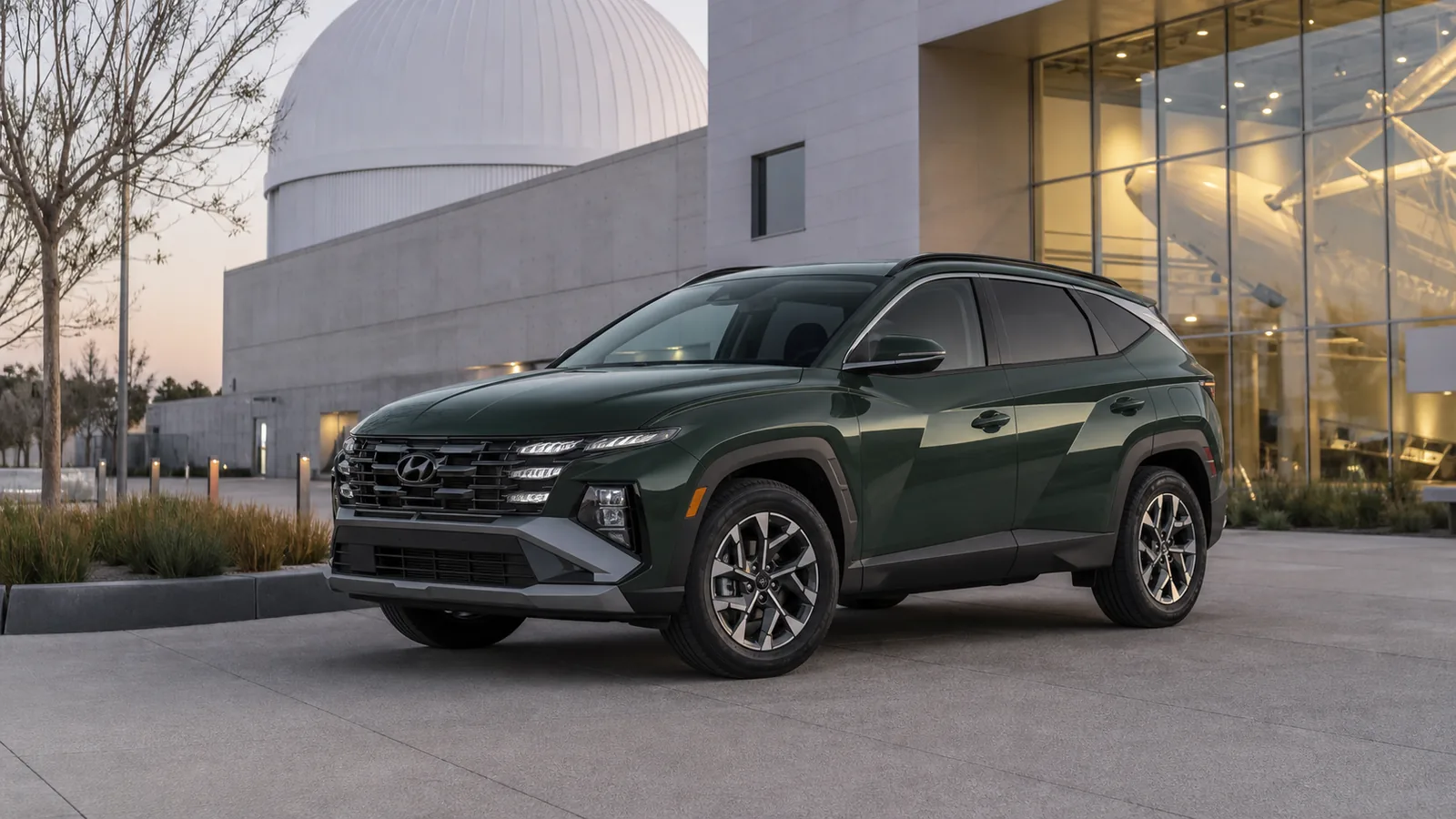
Is the Hyundai Tucson reliable?
Yes, a carefully selected gas-powered Hyundai Tucson can provide dependable service. That verdict is conditional because the U.S. nameplate spans four generations, several engines, and three very different transmission approaches.
The first-generation 2005 to 2009 Tucson is now primarily an age and condition decision. Corrosion, dried seals, cooling-system condition, suspension wear, electrical repairs, and the quality of past maintenance can matter more than its original reputation.
The 2010 to 2015 generation adds specific oil-pan and anti-lock-brake campaign evidence. The 2016 to 2021 generation then divides between conventional automatics and a 1.6-liter turbo with a seven-speed dry dual-clutch transmission.
Hyundai reset the gas powertrain for 2022 with a 2.5-liter four-cylinder and conventional eight-speed automatic. That configuration avoids the earlier dry-clutch mechanism, although it has less high-mileage history and still requires a current recall lookup.
Safety campaigns are important evidence, but they are not a failure rate. A recall that covers a defined production population proves that an included VIN needs a remedy, while it does not prove that every Tucson from that year has the defect.
The strongest candidate identifies its engine and transmission clearly, behaves the same from cold to hot, carries complete campaign records, and passes a full-module scan plus physical inspection. The weakest candidate relies on a clean dashboard after the vehicle has already been warmed for the appointment.
The Tucson is reliable enough to consider, but only after its exact generation tells you which expensive questions to ask.
The transmission label matters more than the Tucson badge
The redesign matters because it changes both the hardware and the amount of evidence available. A newer vehicle can remove an older failure mechanism without yet proving how it behaves after fifteen winters or 180,000 miles.
The first-generation Tucson sold in the United States for 2005 through 2009. Its simple age does not make it low risk, because rubber, cooling parts, wheel bearings, suspension joints, wiring, and corrosion continue to deteriorate even when annual mileage is low.
The second generation covers 2010 through 2015. Gas models used naturally aspirated four-cylinder engines with conventional automatic transmissions, so its most consequential documented checks center on oil retention, engine condition, and multiple ABS campaign populations rather than a dry DCT.
The third generation arrived for 2016. Buyers could encounter a 2.0-liter or 2.4-liter engine with a conventional automatic, while some versions paired a 1.6-liter turbo with a seven-speed dry dual-clutch transmission.
That transmission fork is more important than trim lettering. Two similar-looking 2017 Tucsons can require different low-speed tests, repair records, and price allowances because only one has clutch packs that engage like an automated manual.
Hyundai's official 2022 Tucson launch information describes the redesigned gas model's 2.5-liter engine and eight-speed automatic. The change separates the current gas model from the earlier 1.6T DCT, while the hybrid and plug-in hybrid use different hardware and need their own reliability analysis.
| Model years | Main gas-powertrain question | Mature evidence | First proof to request |
|---|---|---|---|
| 2005-2009 | Age, cooling, corrosion, suspension, automatic operation, and prior repairs | Long age history but little value in broad current ratings | Cold start, fluid stability, rust inspection, scan, and coherent invoices |
| 2010-2015 | Oil retention, engine condition, conventional automatic, and ABS campaign history | Oil-pan and ABS actions for defined populations | VIN campaign printout, cold oil level, leak inspection, oil-pressure behavior, and ABS remedy record |
| 2016-2021 | Conventional automatic versus 1.6T dry DCT, engine-bearing scope, and ABS action | Detailed recall and DCT bulletin evidence plus growing high-mileage history | Engine and transmission identification, cold-to-hot road test, full scan, and campaign invoices |
| 2022 and newer | 2.5-liter gas engine, conventional eight-speed, accessory campaigns, warranty, and limited long-term history | Strong specification and campaign records but less mature lifespan evidence | VIN lookup, warranty status, accessory list, cold and hot shift test, and post-drive scan |
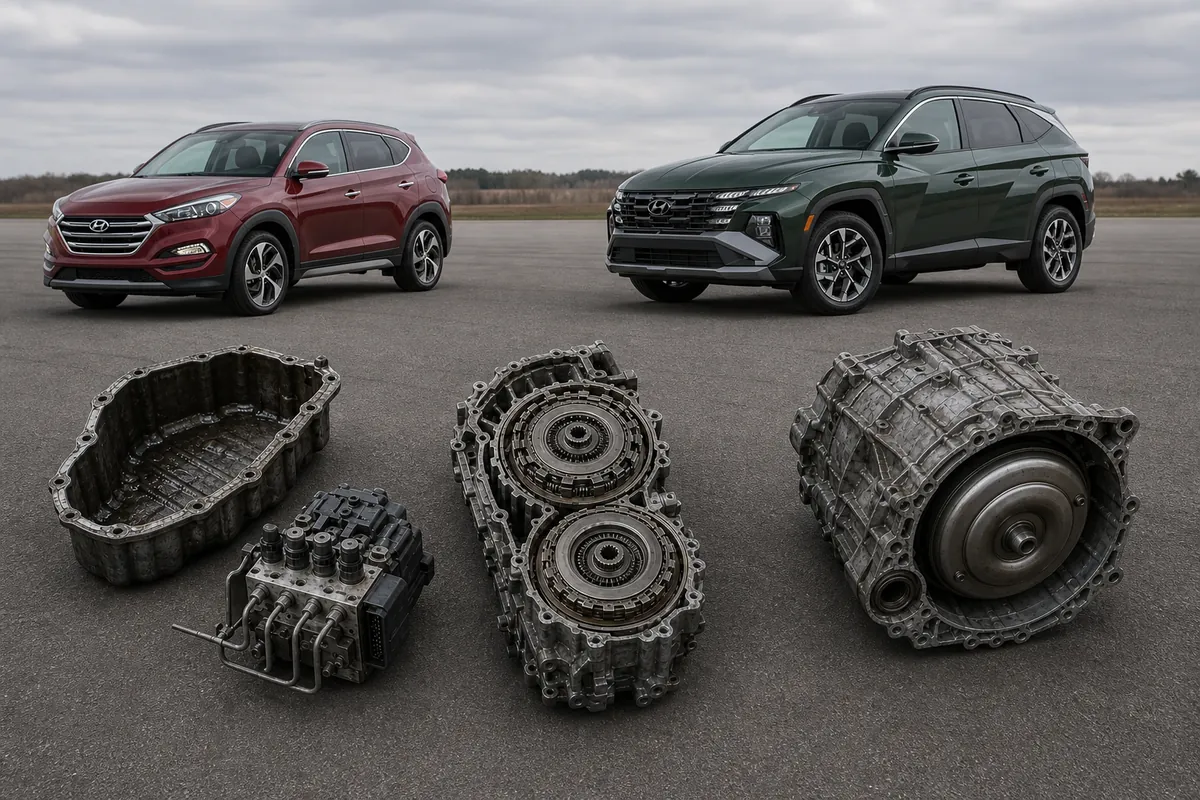
A model-year label is still only a filter. Production date, VIN, engine code, transmission, drivetrain, accessories, and prior campaign history decide which evidence actually belongs to the vehicle.
Do not carry a problem across the 2022 redesign unless the installed system and official scope carry it too.
Two fire risks define the 2010 to 2015 inspection
An older Tucson can have an oil-related engine risk and an ABS electrical risk, but the mechanisms, vehicle populations, warning signs, and repairs are different. One completed campaign does not clear the other.
NHTSA campaign 19V063 applies to certain 2011 through 2013 Tucsons with the 2.4-liter engine. The notice says an improperly sealed oil pan can leak, reduce engine oil, damage the engine, and lead to a stall or fire.
The dealer remedy begins with an oil-pan leak inspection and repair when necessary. It also addresses the oil-pressure warning system, so a useful invoice should identify the campaign and the work performed instead of saying only that an oil leak was checked.
Inspect the vehicle completely cold and on level ground. Record the dipstick level, look along the oil-pan seam and underbody for fresh oil or recent cleaning, then monitor the oil-pressure warning through startup and a complete warm drive.
A dry parking spot does not prove that the oil level has remained stable. Recent cleaning, a slow leak under load, or fresh oil added before the appointment can leave the driveway clean while the underlying condition remains unresolved.
The ABS actions involve an electrical short and fire risk rather than engine lubrication. Campaign 23V651 includes certain 2010 through 2013 Tucsons, while the separate 22V056 action includes certain 2014 and 2015 vehicles.
NHTSA and Hyundai instructed owners of included, unrepaired vehicles to park outside and away from structures because an ABS electrical short can occur while parked or driving. Follow the current VIN-specific instruction until the required remedy is complete.
| Vehicle scope | System | Possible consequence | Evidence that matters |
|---|---|---|---|
| Certain 2011-2013 2.4-liter Tucsons | Engine oil pan and oil-pressure warning | Oil loss, engine damage, stall, or fire | Campaign 181 invoice, repaired leak source, stable oil level, warning-system check, and clean post-drive inspection |
| Certain 2010-2013 Tucsons | ABS module electrical circuit | Short circuit and engine-compartment fire while parked or driving | Campaign 251 completion, correct fuse remedy, and current VIN result |
| Certain 2014-2015 Tucsons | Separate ABS module population | Electrical short and fire while parked or driving | Campaign 218 completion and current VIN result |
Do not open an ABS module or probe a live high-current circuit during a driveway inspection. Ask a Hyundai dealer to print the campaign history, then have a qualified shop check for warning lights, damaged wiring, overheated connectors, fluid contamination, and evidence of an incomplete or improvised repair.
A fuse replacement can reduce the current available to the module, but a random fuse with no campaign record does not prove the specified remedy was installed. The invoice should name the campaign number, date, mileage, and performed operation.
Resolve an open oil-loss or ABS fire-risk action before purchase, then verify that the physical warning signs are absent after the repair.
What should the dry DCT do in hot traffic?
The seven-speed dry dual-clutch transmission behaves more like an automatically shifted manual than a torque-converter automatic. One clutch carries odd gears while the other carries even gears and reverse, and the control system alternates them as the vehicle accelerates.
A clutch must slip briefly to pull away from a stop. You may feel a small engagement event during parking, a hill start, or very slow traffic, especially when the transmission is cold.
Normal behavior remains proportional and repeatable. The Tucson should move when requested, build speed smoothly, and settle after engagement without a continuing shake, warning, overheating message, or strong burning odor.
A fault shows a different pattern. Delayed launch, engine speed rising while the vehicle does not move, repeated judder at the same speed, loss of drive, harsh engagement, or worsening behavior after heat builds needs diagnosis.
Hyundai recall campaign 149 applies to certain 2016 Tucsons with the 1.6-liter turbo and seven-speed DCT. The related NHTSA record describes delayed clutch engagement after a stop under higher ambient temperature and defined operating conditions, with revised control software as the remedy.
That software action does not answer every later clutch concern. Hyundai bulletin 22-AT-007H applies to certain 2016 through 2018 1.6T Tucsons and gives technicians a measured judder inspection, TCU update, reinspection, and double-clutch replacement path.
The bulletin matters because it does not prescribe one repair for every vibration. A measured result can lead to software work and reinspection, while a clutch that remains outside the limit follows a replacement path.
What a Tucson DCT record proves
- Campaign 149 completion
- The applicable 2016 control-logic recall was recorded, but current clutch condition still needs a road test
- Judder measurement
- The shop measured clutch behavior under the bulletin procedure rather than guessing from a short drive
- TCU update and reinspection
- Revised logic was installed and the clutch was evaluated again under the defined test
- Double-clutch replacement
- The clutch assembly was renewed, while mounts, actuators, gears, fluid leaks, and current calibration still require verification
- Post-repair scan and road test
- The original event did not return under the recorded test and the modules remained clear afterward
Begin with a true cold start and scan every powertrain module before the test. Select Reverse and Drive on level ground, make several gentle launches, then include parking-speed turns, an uphill start, stop-and-go traffic, a moderate merge, steady cruising, and another set of launches after the transmission is fully warm.
Do not hold the vehicle on a slope with the accelerator because that deliberately slips the clutch and adds heat. Use the brake, allow a clear gap in crawling traffic, and stop the test if the vehicle will not move promptly or displays a transmission-temperature warning.
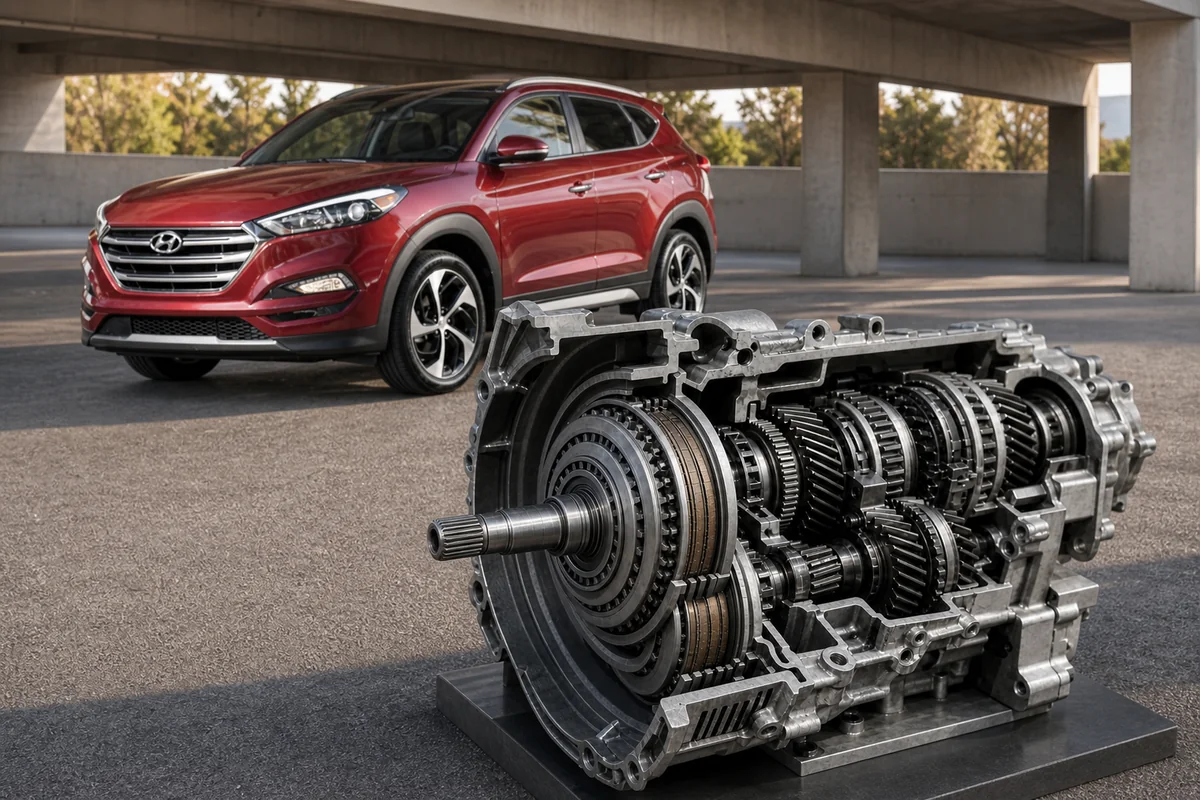
Repeatable cold and hot results matter more than one smooth launch. A recently cleared module, disconnected battery, warmed vehicle, or five-minute dealer loop removes evidence instead of adding confidence.
Buy the DCT only when its behavior is predictable through heat and the repair record identifies the measured condition, software, parts, and verification test.
A 2017 engine receipt and an ABS fuse prove different repairs
The third-generation Tucson has two separate high-consequence campaign groups. One concerns connecting-rod bearing wear on certain 2017 vehicles, while the other concerns an ABS module electrical short on certain 2016 through 2021 vehicles.
NHTSA campaign 21V727 says connecting-rod bearings in certain 2017 Tucsons may wear prematurely. Engine damage can cause a stall and increase fire risk.
The listed remedy begins with engine inspection. Dealers replace the engine when bearing damage is found and install Knock Sensor Detection System software intended to identify abnormal bearing noise.
A KSDS software receipt is therefore not the same as an engine replacement record. Ask which inspection branch the vehicle followed, whether bearing damage was found, what engine work occurred, and whether the dealer can associate the current engine with the VIN history.
Knocking that rises with engine speed, an oil-pressure warning, reduced power, hesitation, a malfunction light, smoke, or fresh oil discharge is not an invitation to continue the road test. Shut the engine off when it is safe, move away from a fire hazard, and arrange professional transport and diagnosis.
The ABS action uses different evidence. Hyundai recall 195 covers certain 2016 through 2021 Tucsons whose ABS modules may develop an internal electrical short and increase engine-compartment fire risk.
The remedy installs a fuse kit in the ABS circuit and can include ABS or electronic-stability-control software, depending on the vehicle. An engine inspection or KSDS update does not complete that work.
Ask for both campaign numbers when both might apply. Match the invoice dates, mileage, fuse-kit or software operation, engine inspection outcome, and any replacement parts to the dealer's current campaign printout.
After documented repairs, inspect the engine oil cold, listen through warm-up, scan the engine and ABS modules, confirm that stability-control and ABS warnings prove out and extinguish normally, and look for heat damage or nonstandard wiring. A seller's statement that all recalls are done is weaker than the current VIN result plus the actual invoices.
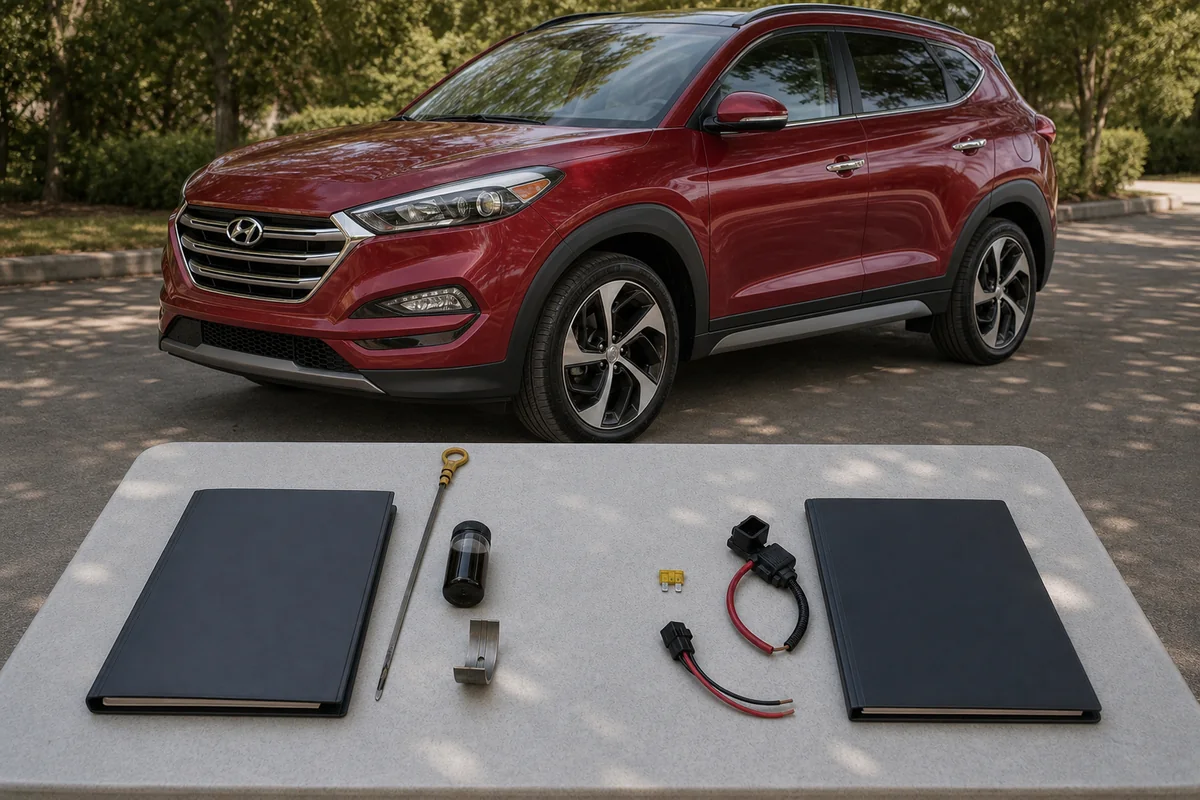
Software can improve detection or control, but it cannot retroactively prove that damaged hardware was absent. The remedy branch and present condition must agree.
The 2022 gas model trades mature history for simpler hardware
For many buyers, the current gas Tucson is the easier configuration to evaluate because it does not use the earlier dry dual-clutch transmission. Its 2.5-liter engine and conventional eight-speed automatic still need evidence, and the younger platform has not accumulated the same high-mileage history as the older generations.
Current gas-generation evidence
- Gas transmission
- Conventional eight-speed automatic, not the prior seven-speed dry DCT
- Long-term history
- Shorter than the older generations
- Tow-hitch harness
- VIN-specific and accessory-specific campaign evidence for certain 2022 to 2024 vehicles
- Powertrain warranty
- Ownership status and original in-service date determine remaining coverage
A healthy eight-speed should engage Reverse and Drive consistently, shift without repeatable flare or bang, hold a selected ratio under load, and remain warning-free after reaching operating temperature. A stored incorrect-ratio code, recurring slip, delayed engagement, or a symptom that worsens hot needs diagnosis before price negotiation.
Do not turn one transmission bulletin into a population claim. Hyundai's multi-model diagnostic information gives technicians a path for defined incorrect-ratio codes, but it does not establish that every current Tucson transmission has that fault.
Optional equipment can change the safety record. NHTSA campaign 25V893 covers certain 2022 through 2024 Tucsons fitted with an optional Mobis tow-hitch wiring harness that may have been installed incorrectly.
Water can enter the control module, disable trailer lighting, or create an electrical short and fire risk. Owners of included, unrepaired vehicles are instructed to park outside and away from structures until the harness is replaced.
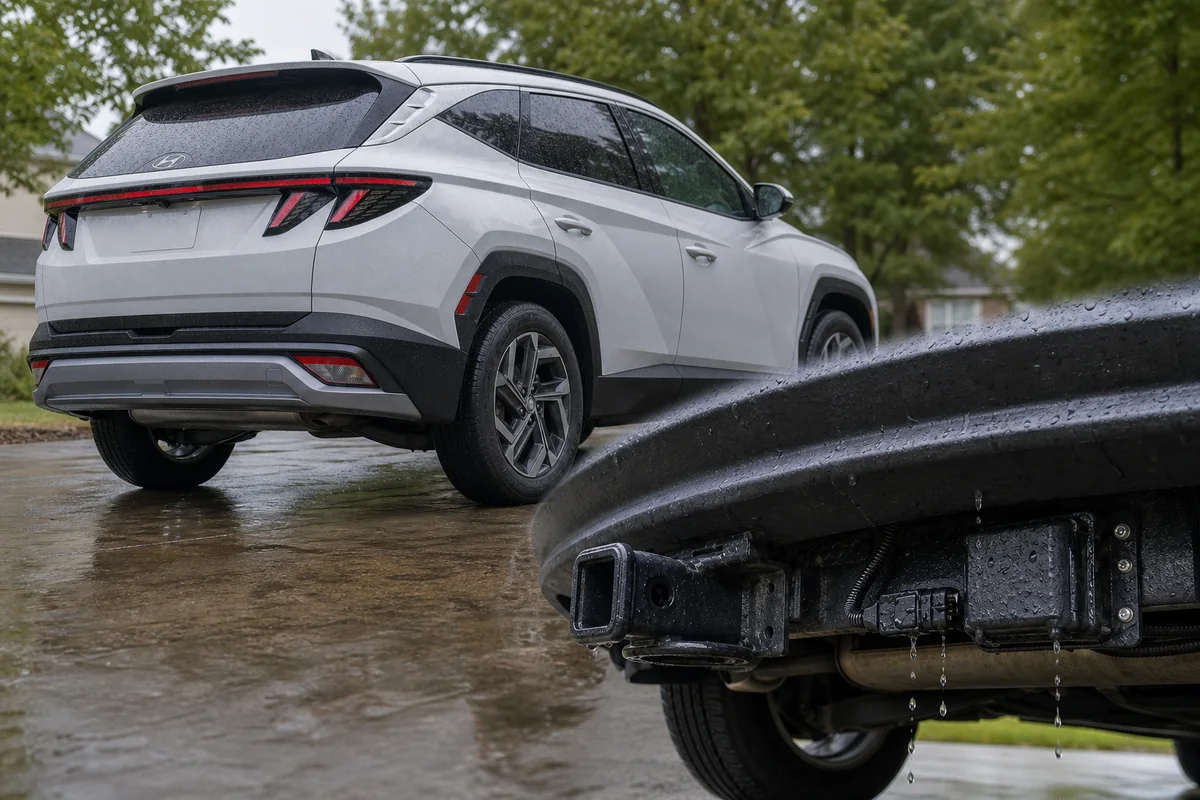
A Tucson without that harness is not included merely because it shares the model year. Inspect the accessory label and wiring, run the VIN, and request the replacement record instead of assuming that a hitch receiver proves which electrical kit was installed.
Warranty status also changes the financial risk. Hyundai's 2026 warranty handbook describes powertrain coverage up to 10 years or 100,000 miles for the original owner after the new-vehicle term, while ordinary subsequent owners receive powertrain coverage under the 5-year or 60,000-mile new-vehicle warranty.
Check the handbook for the exact model year, original in-service date, ownership category, commercial-use history, and certified-used terms. A seller repeating the 10-year figure does not establish that the coverage transfers with the vehicle.
The redesign is therefore a cleaner starting point, not a durability guarantee. A current gas Tucson earns the safer-bet label when its VIN is current, the eight-speed behaves consistently cold and hot, the accessory wiring is correct, and the remaining warranty actually belongs to the buyer.
What does 200,000 miles mean on each Tucson generation?
A Tucson can reach 200,000 miles, but no official source can promise that outcome for one vehicle. The number also says nothing about how many engines, clutches, transmissions, ABS repairs, suspension parts, or electronic modules were needed to keep it moving.
Survival and low-cost ownership are different results. A vehicle can remain registered after a repair bill that another owner would consider economically unreasonable.
Mileage needs context from time and use. Long highway trips can reduce cold starts, while repeated short trips, hot stop-and-go traffic, towing, winter salt, rough roads, and long idle periods create different oil, cooling, clutch, brake, suspension, and corrosion exposure.
For a 2010 to 2015 Tucson, stable oil level and pressure, completed ABS actions, cooling integrity, rust condition, conventional-automatic behavior, and coherent repair records describe remaining life better than the odometer. A low-mileage example with unexplained oil loss is not automatically the safer car.
For a 2016 to 2021 vehicle, identify the transmission first. A conventional automatic needs smooth cold and hot operation, while a DCT needs repeatable launches, controlled heat, correct campaign work, and evidence that any judder was measured rather than dismissed.
A 2017 candidate also needs its engine campaign branch documented. An updated knock-detection system with an unexplained current noise deserves diagnosis, not credit for having a recall receipt.
For a 2022 or newer gas model, the main limitation is time. Clean early service, a complete VIN record, stable fluids, consistent eight-speed operation, correct accessory wiring, and meaningful warranty coverage support the decision, but they cannot create fifteen years of field history.
All-wheel drive adds a tire and driveline check at every age. Four tires should match in specified size and be close enough in circumference and wear to avoid continuous driveline stress, while tight low-speed turns should remain smooth and free from binding or repeated clunks.
Build the service chronology by date and mileage. Oil changes, cooling work, transmission diagnosis, brake fluid, tires, battery history, campaign work, and major repairs should form a plausible sequence rather than a stack of undated receipts.
Judge useful life by the systems that remain healthy and the repairs the vehicle still needs, not by a promised mileage ceiling.
Record the VIN, model year, build date, engine, transmission, drivetrain, tow-hitch wiring, original in-service date, and ownership category before the inspection. Those details define both the technical test and the warranty that may remain.
Run the VIN through the NHTSA recall lookup, then ask a Hyundai dealer for the current campaign printout and the repair history it can release. Compare each campaign number with the invoice, performed operation, date, mileage, software, and installed parts.
Arrange a true cold start, full-module scan, complete warm-up, varied road test, post-drive scan, fluid inspection, and lift inspection. Reproduce low-speed DCT operation only on a vehicle that has the DCT, and do not assign that mechanism to a conventional automatic.
Safety blockers come first. Unresolved fire-risk work, oil-pressure loss, engine knock, loss of drive, smoke, major structural corrosion, or a seller who prevents a cold inspection should stop the purchase until the uncertainty is resolved.
Ordinary wear can be priced afterward. Tires, brakes, a weak 12-volt battery, scheduled fluids, worn dampers, and cosmetic damage can support a lower offer when the engine, transmission, structure, electronics, and campaign record are sound.
Do not pay a premium simply because a major part was replaced. The invoice should name the original cause, supporting work, installed part, warranty, and test that confirmed the symptom did not return.
The lower-risk Tucson is the one whose evidence matches its generation, not automatically the newest or lowest-mileage one.