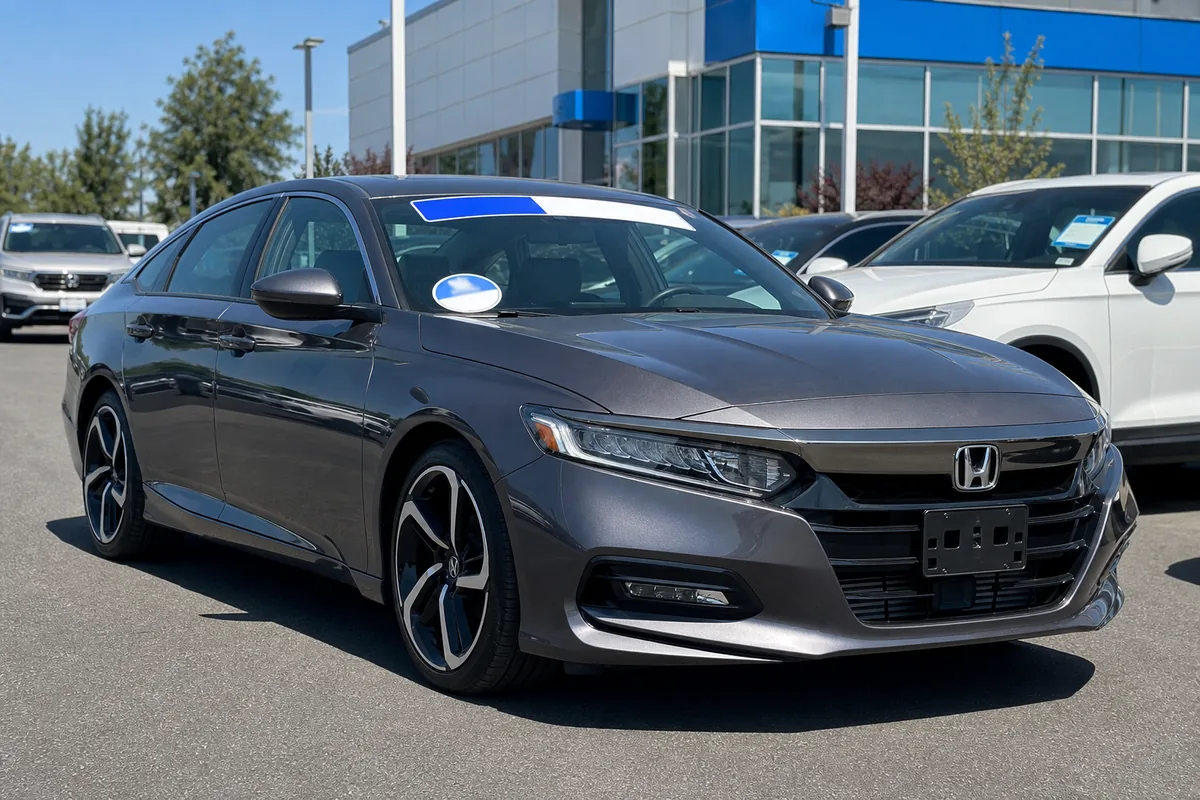
Certified pre-owned bundles an inspection and an extended warranty onto a used car for a $1,000 to $3,000 premium.
It pays off on an expensive-to-repair car you will keep, and wastes money on a cheap, reliable one.
Insist on manufacturer CPO, not a dealer's own label, and confirm the warranty dates before you pay.
What makes a car genuinely certified pre-owned?
Certified pre-owned sits between a used car and a new one on both price and peace of mind. A CPO car is a used vehicle that a manufacturer-authorized dealer has inspected against a set checklist, repaired to standard, and backed with an extended warranty, so the certification is a bundle of protections rather than a single feature.
- It has passed a multi-point inspection, often 150 or more items, and been reconditioned to the manufacturer's standard
- It carries an extended warranty that continues past the original factory coverage
- It usually adds perks like roadside assistance, a loaner during repairs, or a trial subscription
Eligibility is limited, which is part of what the badge signals. Most manufacturer programs only certify cars under a certain age and mileage, commonly within about 6 years and 80,000 miles, and with a clean title and no major accident history.
A ten-year-old car with 150,000 miles cannot be genuine manufacturer CPO, so the label itself tells you the car is relatively young and low-mileage before you check anything else.
The important word is manufacturer. Certification done to a carmaker's program and backed by the carmaker is a real, transferable protection, and that is the version worth paying for.
Everything that follows is about whether that protection justifies its price, and how to make sure the certification in front of you is the real thing.
None of this makes CPO a scam or a sure thing. It is simply a priced product like any other, one that transfers a specific risk, the cost of an unexpected repair, from you to the manufacturer for a fee.
The buyers who do well with it are the ones who treat it that way and ask whether that particular risk, on that particular car, is worth that particular price.
It helps to think of CPO as the manufacturer renting you some of the confidence of buying new.
A new car comes with a full warranty and a spotless history because no one has owned it yet; a CPO car tries to recreate part of that with an inspection and an extended warranty on a car someone has already driven.
How close it gets, and whether that is worth the premium, is exactly what a buyer has to judge car by car.
What a CPO warranty actually covers
The warranty is the heart of the CPO value, and it usually comes in two layers with different lengths. Understanding both is how you judge whether the coverage matches the premium.
| Layer | What it covers | Typical term |
|---|---|---|
| Powertrain | Engine, transmission, drivetrain | Often to 7 years / 100,000 miles from original sale |
| Comprehensive | Most systems beyond wear items | Often 1 to 2 years / 12,000 to 24,000 miles from purchase |
| Perks | Roadside assistance, loaner, trip interruption | Varies by program |
The powertrain layer is the long one, frequently extending coverage to something like 7 years or 100,000 miles measured from the car's original sale date.
The comprehensive or bumper-to-bumper layer is shorter but broader, covering most of the car's systems for a year or two beyond your purchase.
Between them, a CPO car is protected against most expensive failures for a meaningful stretch of ownership.
The perks are worth a quick look because they vary more than buyers expect. Some programs include roadside assistance, a loaner car during covered repairs, and trip-interruption coverage that pays for a hotel if the car strands you far from home; others include almost none of that.
None of these should decide the purchase on their own, but on two otherwise similar CPO cars they can be a real tiebreaker, so it is worth asking exactly what a given program includes rather than assuming.
The warranty clock starts before you buy
One detail trips up many buyers: coverage runs from the original in-service date, not from the day you buy.
A car first sold three years ago has already used three years of its powertrain clock, so a 7-year term leaves you four years, not seven.
Always confirm the dates against the car's original sale, because a certification on an older CPO car can have far less warranty left than the headline number suggests.
A useful habit is to translate the warranty into the years you will actually own the car. If you plan to keep a CPO car for four years and the comprehensive layer expires in eighteen months, then for most of your ownership you are relying on the powertrain layer alone.
That is still worth something, but it changes the picture, and it is the detail that separates a premium worth paying from one that mostly covers a period you will barely use.
How much more does a CPO car cost?
The premium is the number you are weighing against all that protection, so it helps to size it plainly. A certified car generally costs more than the same car sold as ordinary used, and the gap is real money.
The CPO premium at a glance
- Typical premium
- About $1,000 to $3,000 over a comparable used car
- Luxury brands
- Larger premium, because covered repairs cost more
- Mainstream brands
- Smaller premium, sometimes a few hundred to about $1,500
- What you are paying for
- Partly the warranty and inspection, partly dealer margin
On a mainstream brand the premium might be a few hundred to around $1,500, while on a luxury car it can run $2,000 to $3,000 or more.
Part of that is genuine value, the inspection and the warranty, and part is simply the dealer's margin on a product that sounds reassuring.
Separating those two is the whole task of deciding whether CPO is worth it.
One way to size the margin is to look up what the same car sells for as ordinary used from a private seller.
The difference between that figure and the CPO price is what you are paying for the certification, and seeing it as a single number makes the decision concrete.
A $1,200 gap on a reliable sedan is a very different proposition from a $3,000 gap on a luxury SUV, even though both are called a CPO premium.
It also matters that the premium is negotiable like any other price. The certification adds real cost for the dealer, so they will not give it away, but the total price of a CPO car still has room in it.
Treat the sticker as a starting point the same way you would on any car when you negotiate the price, rather than accepting the premium as a fixed surcharge.
Is the CPO premium worth it?
Whether the premium pays off comes down to one comparison: the extra you pay now against the repairs the warranty is likely to cover later. That balance swings hard depending on the car.
On a luxury or complex car, the math often favors CPO. A single repair to a German luxury SUV's suspension, electronics, or transmission can run $2,000 to $5,000, so one covered failure can exceed the whole premium and the coverage pays for itself.
Buyers of these cars are also the ones most exposed to a surprise bill, which is exactly what the warranty exists to blunt.
There is also a resale angle that buyers rarely price in. A CPO car often holds its value slightly better and can be easier to sell later, because the certification and clean history reassure the next buyer too.
That does not fully offset the premium, but it means some of what you pay is not purely spent, which tilts a close decision a little further toward certified on a car you may resell rather than run into the ground.
On a mainstream, reliable model the calculation flips. A car with a strong dependability record and cheap parts may go years without a repair the comprehensive warranty would cover, and by then that layer has often expired.
Paying $1,500 extra to insure against repairs that were unlikely and inexpensive to begin with is a poor trade, which is why the CPO decision is really a decision about the specific car's repair costs, not about the badge.
Manufacturer CPO and dealer certified are different products
This is the distinction that separates real CPO value from a marketing sticker, and it is where careless buyers overpay. Not every car called certified is backed by the automaker.
| Type | Backed by | Honored where | Coverage |
|---|---|---|---|
| Manufacturer CPO | The automaker | Any franchise dealer nationwide | Full program warranty and standards |
| Dealer "certified" | Only that dealership | Usually only that dealer | Often a limited, in-house guarantee |
Manufacturer CPO is backed by the carmaker, honored at any of its franchise dealers across the country, and held to the program's inspection and warranty standards.
A dealer's own in-house "certified" label is backed only by that dealership, often with a thin guarantee that means little if you move or the dealer changes hands.
The two can sit on similar-looking cars at similar prices, and only one carries the protection worth paying for.
The confusion is deliberate on some lots, because certified is a word that sells.
A dealer may display a car with a large certified banner that refers only to their own inspection, priced close to what a manufacturer-certified car would cost, and a buyer who does not ask the question pays a manufacturer-CPO premium for a dealer guarantee.
The banner is marketing until you have confirmed which program stands behind it, so treat the word as a prompt to ask rather than an answer.
The word certified on its own means nothing until you know who stands behind it. When a salesperson calls a car certified, the only useful next question is whether it is the manufacturer's program or the store's own, because the answer changes what you are buying entirely.
If it is a dealer label, the premium is much harder to justify, and the car is better evaluated as a regular used car with the full checks that implies, which is what buying a used car properly involves.
What CPO does not protect you from
Certification is real protection, but it is not a force field, and treating it as one is how buyers get caught out. Knowing the gaps keeps you doing the checks the badge does not replace.
- Wear items such as tires, brakes, wiper blades, and the battery are usually not covered
- The inspection does not erase a car's accident history or hidden prior damage
- Many CPO warranties carry a per-visit deductible, often $50 to $100, that you still pay
- Certification does not guarantee the car was never in a flood or poorly repaired before the dealer got it
The wear-item gap surprises people most, because those are the parts most likely to need attention on a used car.
A CPO badge does not mean new tires and brakes, so budget for them as you would on any used car.
The deductible is another quiet cost: a warranty that pays for a repair but charges you $100 each visit is still real coverage, but it is not the free repairs the pitch implies.
The inspection also has limits worth respecting.
A multi-point checklist done well is valuable, but it is performed by the selling dealer, who has an interest in certifying the car, and it does not undo a branded title or a botched earlier repair.
Run the car's history yourself and, on anything expensive, still consider an independent look, because certification narrows the risk without removing it.
It is worth remembering who performs the inspection and why. The selling dealer certifies the car, and while the manufacturer sets the standard, the same dealer profits from the sale, so the inspection is not a fully independent audit.
A well-run program still catches most problems, but pairing the CPO inspection with your own history check, and an independent look on an expensive car, closes the small gap the dealer's incentive leaves open.
Who should buy CPO, and who should skip it
The right answer depends more on the buyer and the car than on the program, so it helps to sort yourself into one of two camps. CPO is a strong fit for some situations and a waste of money in others.
The clearest case for CPO is a buyer of a luxury or complex car who is not in a position to absorb a surprise $3,000 repair.
For them the premium buys genuine peace of mind and can easily pay for itself, especially if they keep the car through the warranty term.
A cautious first-time buyer of any car may also value the inspection and the backing enough to justify the cost.
The clearest case against is a buyer of a proven, inexpensive-to-repair model. On a reliable mainstream car, the premium often exceeds the repairs the warranty would ever cover, and the money is better kept as a repair reserve.
A buyer paying cash for a car they will sell in a year or two also gains little, since much of the coverage will expire unused.
In those cases a well-inspected regular used car is the smarter buy.
Time horizon is the quiet factor in this decision.
The longer you plan to keep the car, the more of the warranty you actually use, so a buyer who keeps cars for six or seven years extracts far more from CPO than one who trades every two.
If you know you churn cars quickly, much of the coverage will expire on your watch unused, and the premium is largely money spent to protect someone else's future ownership.
How to verify a car is genuinely certified
If you decide CPO is worth it, make sure you are actually getting it, because the label is easy to claim and harder to back up. A few checks confirm the certification is real before you pay the premium.
Confirm real certification
- Inspection record
- Ask for the completed multi-point checklist with the items marked
- Warranty documents
- Get the written CPO warranty terms, not a verbal promise
- Manufacturer lookup
- Confirm the certification by VIN on the automaker's website where possible
- Coverage dates
- Verify the term starts from the original in-service date, not the sale

Start with the paperwork. A genuine manufacturer CPO car comes with a completed inspection checklist and formal warranty documents, so a dealer who cannot produce them is selling something less than they claim.
Where the manufacturer offers a VIN lookup, use it to confirm the car appears in their certified inventory, which is the most reliable check of all.
Then confirm the dates, because this is where the real value is won or lost. A certification is only worth what remains on its clock, so verify how much powertrain and comprehensive coverage is actually left from the original in-service date.
A CPO car with most of its warranty already spent is priced like protection you will not receive, and catching that before you pay is the difference between a fair deal and an overpriced one.
Do not let the certification talk you out of the ordinary checks either. A genuine CPO car should still get its VIN run for history, and you should still test-drive it properly and look it over the way you would any used car.
The badge lowers the odds of a problem; it does not remove your responsibility to look, and the buyers who lean entirely on the certification are the ones most surprised when a wear item or an uncovered issue turns up soon after purchase.
In the end the CPO decision rewards the same discipline as any car purchase: know what you are buying, price the alternative, and match the choice to how you actually use a car.
Do that and certified pre-owned becomes a clear yes or a clear no rather than a vague sense that the badge must be worth something.
The badge is worth exactly the repairs it will cover minus what it cost, and that is a number you can estimate before you sign.
Compare CPO with self-insuring a regular used car
Before you pay the CPO premium, weigh it against the obvious alternative: a regular used car plus coverage you arrange yourself. Sometimes that path costs less for similar protection.
| Option | Cost | Coverage and catch |
|---|---|---|
| Manufacturer CPO | Premium of $1,000 to $3,000 | Manufacturer-backed inspection and warranty in one |
| Used + third-party warranty | Often lower total | Coverage varies; read exclusions carefully |
| Used + self-insurance | Lowest if nothing breaks | You bank the premium and pay repairs yourself |
A non-certified used car with a separate third-party warranty can sometimes match CPO's coverage for less money, though third-party plans vary widely and hide exclusions in the fine print, so they demand careful reading.
Self-insuring, where you buy the cheaper used car and set the saved premium aside for repairs, works well on a reliable model and badly on an unpredictable one, since a single big failure can wipe out years of saved premiums at once.
Where CPO holds its edge is the manufacturer-backed inspection and the single, standardized warranty honored anywhere. A third-party plan does not include a carmaker's inspection, and self-insurance offers no inspection at all.
So the honest comparison is not simply about price: it is whether you value that manufacturer backing and one-stop coverage enough to pay for it, or whether a well-checked used car and a repair fund get you the protection you actually need for less.
If you are still choosing between new and used more broadly, the new-versus-used tradeoff frames where CPO fits, and running your affordable price first tells you whether the premium fits the budget at all.
A final way to check yourself is to ask what you would do if the certification did not exist.
If you would still buy that exact car at the non-certified price, then CPO is a modest add-on you can weigh calmly.
If the badge is the main reason the car feels safe to buy, slow down, because that usually means the underlying car or its history has not been checked closely enough, and no warranty is a substitute for knowing what you are buying.