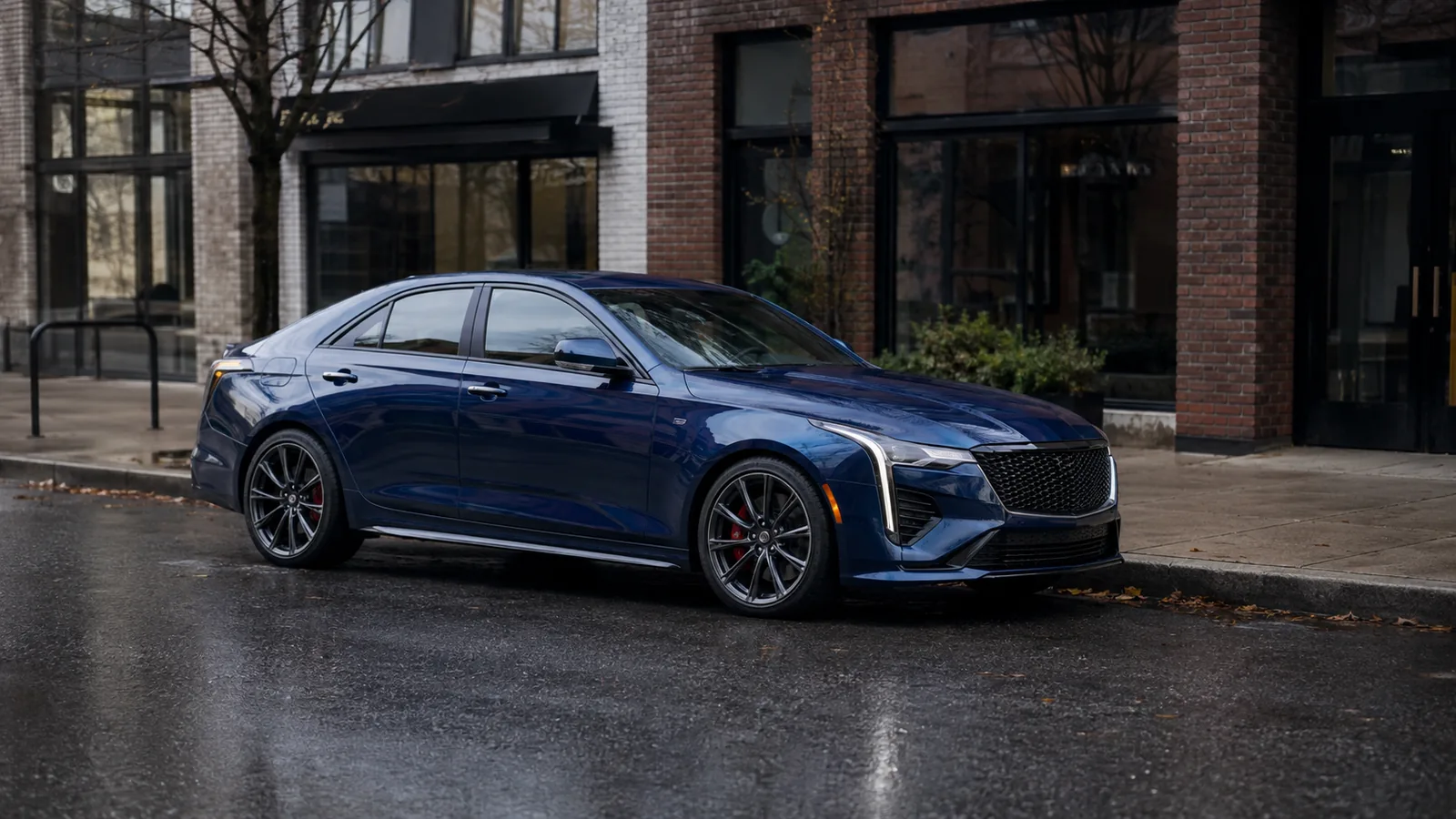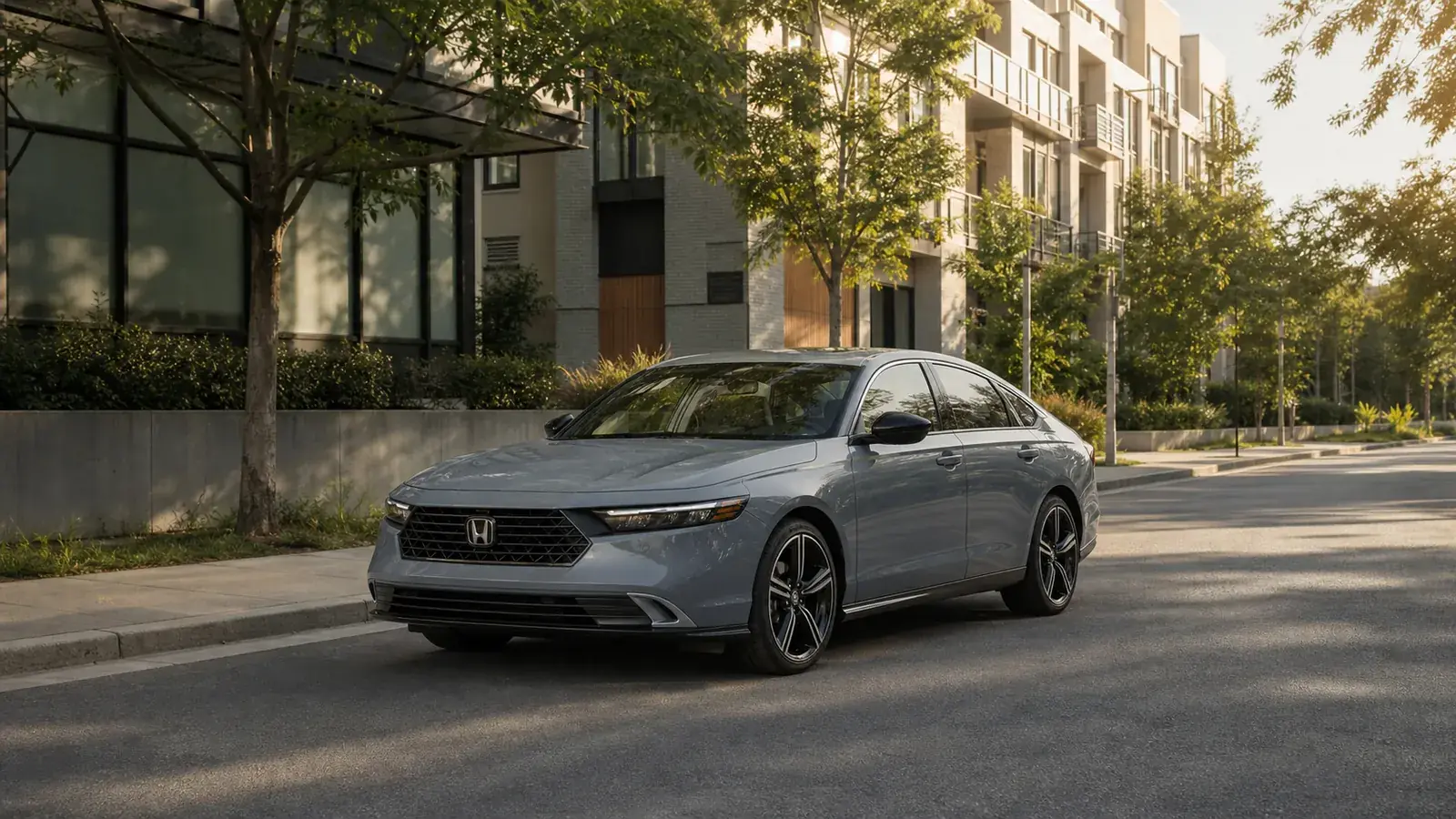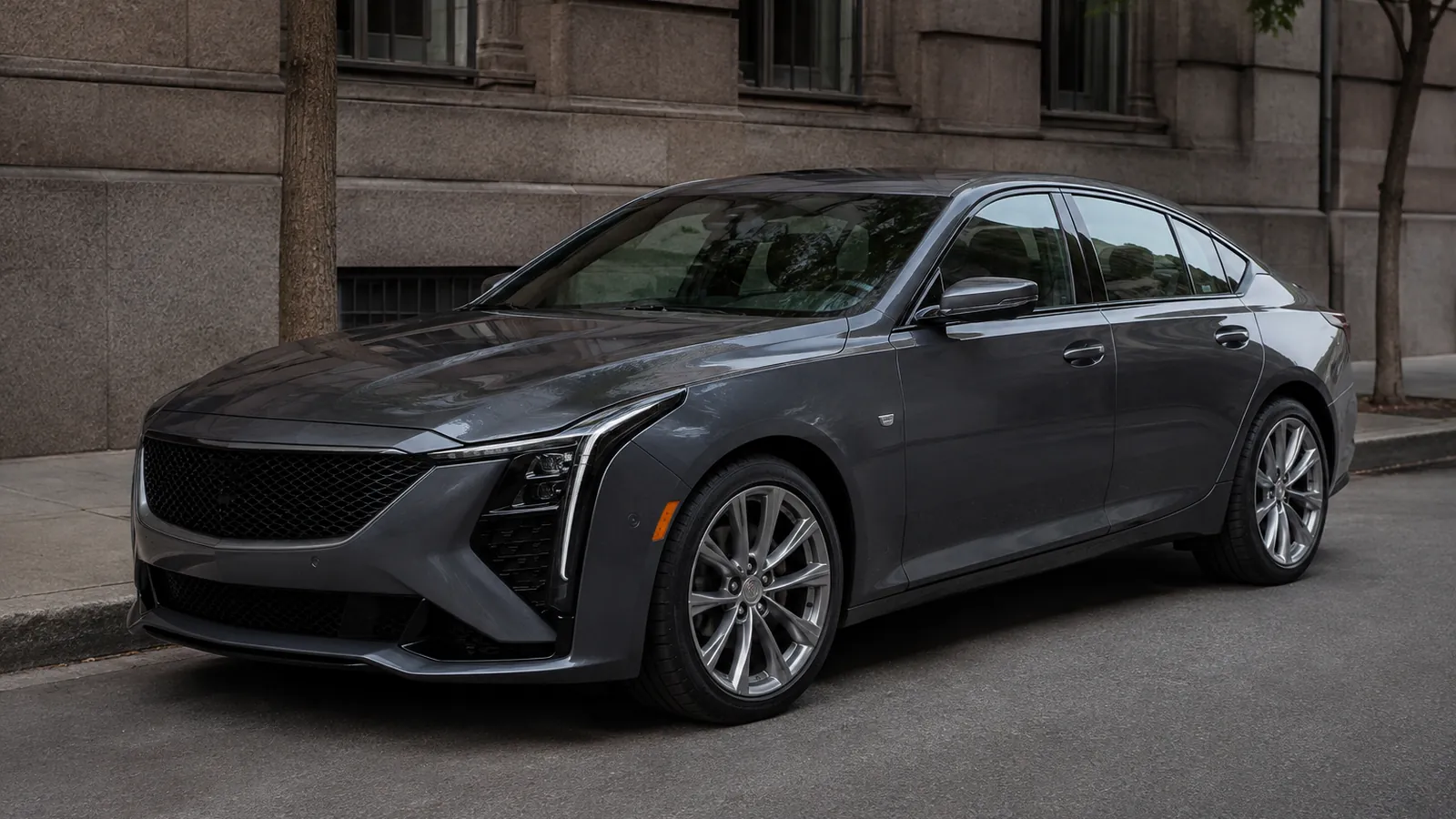
This is the last CT5 of its generation, and the next one is already confirmed
The 2026 Cadillac CT5 is the final year of the generation that was reworked for 2025.
Cadillac has said this bodyshell ends after 2026, which is what most coverage reports.
What the same coverage usually runs together is the part that changes the decision.
Nothing follows the CT4 beside it, while a next-generation CT5 with a petrol engine has been confirmed for the Lansing Grand River plant.
That distinction is worth holding onto. Buying the last of something with a confirmed replacement is a timing question, and buying the last of something with no replacement is a different question about parts, dealers and resale.
- 2025The current generation arrives, reworked inside and out
- 2026The final model year of this generation
- After 2026This bodyshell ends production
- ConfirmedA next-generation CT5 with a petrol engine, built at Lansing Grand River
So the run-out price is real and the orphan risk is not.
Judge the 2026 CT5 as a run-out car with a successor coming, which makes waiting a genuine option rather than a way of missing out.
A $50,095 start becomes a different number on the window sticker
Premium Luxury with rear-wheel drive starts at $50,095, and Sport with rear-wheel drive starts at $51,095.
Neither figure is what anyone pays, because the destination charge sits outside it.
That charge is $1,795, and it rose from $1,495 in December 2025.
The increase is small in isolation and it is the reason published starting prices for this car disagree with each other by more than a thousand dollars.
Delivered price, rear-wheel drive
- Premium Luxury
- $50,095
- Sport
- $51,095
- Destination, added to both
- $1,795
- Premium Luxury, delivered
- $51,890
- Destination this replaced
- $1,495
A listing still carrying the old charge understates the delivered figure by $300 before a single option is added.
An aggregator page quoting a lower starting price is usually quoting a different trim, an earlier model year, or a figure with no destination in it at all. Fifty-two thousand dollars delivered puts this car among luxury sedans rather than below them.
The practical move is to stop treating any published starting price as the answer.
Take the trim MSRP, add $1,795, and check that total against the window sticker in front of you.
Build the delivered number from the trim price plus $1,795 and use it to test every listing, rather than trusting a headline figure.
Four cylinders or six, rear drive or all
The standard range is two trims, Premium Luxury and Sport, and both carry a 2.0-litre turbocharged four making 237 horsepower as ordered.
It is the engine most CT5s on a lot will have.
The 3.0-litre twin-turbocharged V6 is the part worth knowing about, because it is easy to assume it went away with the older cars.
It did not, and with only two standard trims it can be specified on either of them, making 335 horsepower.
| Engine | Output | Trims | EPA rear drive | EPA all-wheel drive |
|---|---|---|---|---|
| 2.0-litre turbo four | 237 hp | Premium Luxury, Sport | 22 / 31 / 26 | 21 / 30 / 24 |
| 3.0-litre twin-turbo V6 | 335 hp | Premium Luxury, Sport | 19 / 28 / 22 | 18 / 27 / 21 |
Rear-wheel drive is the standard layout and all-wheel drive is the option, on either engine.
All-wheel drive costs about two miles per gallon combined: 24 against 26 with the four, and 21 against 22 with the V6.
Every configuration also requires premium fuel, which is the running cost this car's specification sheet is quietest about. Put your own annual mileage through the fuel cost calculator before the four-cylinder saving decides anything, because six miles per gallon is worth less than it sounds.
The V-series cars sit outside this decision and are a separate purchase with their own case. Both engines here run on petrol, which is also what the confirmed successor is promised to use.
Decide the engine on how often the extra hundred horsepower would be used, then decide the drivetrain on winter rather than on preference.
A 37.9-inch rear seat sits in front of an 11.9-cubic-foot trunk
Rear legroom is 37.9 inches, which is genuinely good for the class and is one of the better reasons to look at this car.
Adults fit behind adults without negotiation.
The boot is 11.9 cubic feet, and it is that on every trim.
Those two numbers describe a car packaged generously for people and tightly for their luggage.
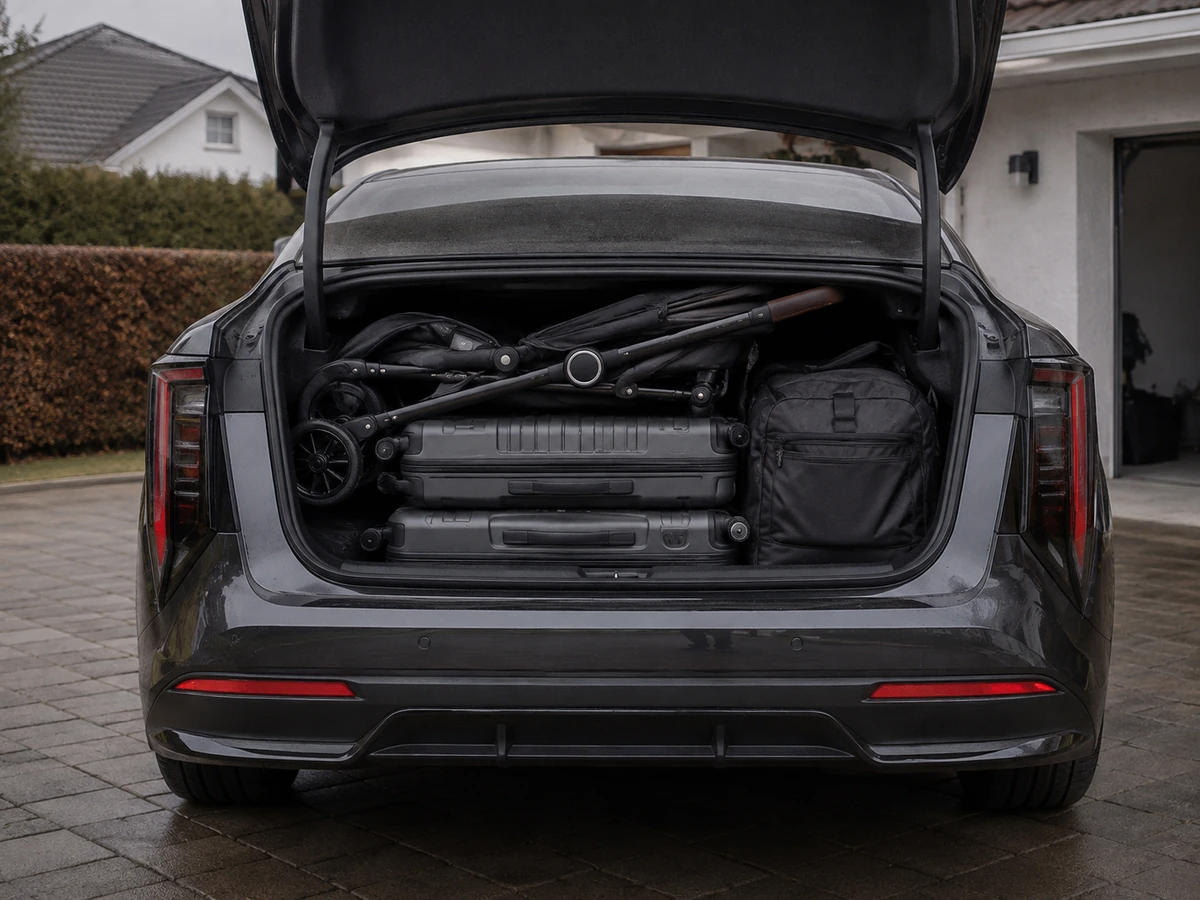
A volume figure says nothing about the shape of the opening or the height of the lip, and on any saloon those two decide whether a pushchair goes in flat or diagonally.
The boot above holds two hard cases, a holdall and one folded pushchair, and there is nothing left over.
A buyer whose load fails that test is usually looking for the XT5 rather than a different trim of this car.
So the test is physical and takes ten minutes.
Bring the largest things the household actually carries most weeks, and put them in the boot of the specific car before agreeing to anything.
A roomy back seat invites you to carry people, and this boot is what has to carry what those people bring.
Super Cruise is standard, and the screen still has to earn its place
Both 2026 CT5 trims have Super Cruise as standard equipment, along with a 33-inch curved display running Google software.
On paper that is a strong equipment list for the money.
Two things about it are worth pinning down in the car rather than in the brochure.
The first is that the included OnStar Super Cruise plan runs three years, after which keeping the system working is a subscription decision rather than a feature you own.
Run these in the car, not in the showroom
- Pair your own phone and start navigation to a real destination, timing how long it takes
- Change the cabin temperature and the fan while moving, without stopping to look
- Find the setting that turns off whatever the car does that annoys you within ten minutes
- Use Super Cruise on the type of road you actually commute on, if the test route allows it
- Ask what the Super Cruise plan costs after the three included years
- Check what the display does in direct low sun, which is when reflections show
A screen that is large is not the same as a screen that is quick, and only the tasks a driver repeats every day settle the difference.
A parked demonstration settles none of them.
Treat the display and Super Cruise as equipment to test on your own commute, and treat the three-year plan as a cost that arrives later.
How it drives is the part you have to test yourself
Rear-wheel drive, 237 or 335 horsepower and a ten-speed automatic describe the hardware, and none of it tells you how the car feels on your roads.
No published road test settles that for the specific example on the forecourt either.
What the evidence in this article does is tell you which parts of a test drive are worth spending time on.
Two of them are unusual, and both come from the crash record rather than from the chassis.
A drive that tests this particular car
- Set the seat before you moveGet the seating position you would actually keep, then check where the belt crosses your shoulder and how much space is above your head. The side test result turned on the driver's head reaching the windowsill, so how you sit is not a comfort question here.
- Check the belt reminderThe reminder system rated Marginal, so find out what the car does and does not tell you when a belt is unbuckled, including in the back.
- Drive a road you know badlyTake a surface you already have an opinion about, because that is the only way to judge ride quality in twenty minutes.
- Make the ten-speed downshift twiceOnce on a gentle roll-on and once on a real overtake. A transmission with this many ratios either finds the right one quickly or hunts.
- Park it onceThe boot lip and the rear visibility are easier to judge in a bay than on a test route.
- Turn the assistance offFind out what the car drives like without lane keeping and adaptive cruise, because that is how it behaves when you switch them off on a bad road.
The Sport trim's larger wheels change ride quality, and a demonstrator on one wheel size tells you little about the other.
Drive the wheel and tyre package you are actually buying.
The hardware is settled and the feel is not, so use the drive to test the two things the crash record raised rather than to confirm that a luxury sedan is quiet.
The 2026 crash record fails a different occupant in each test
The Insurance Institute for Highway Safety rates the 2026 CT5 Poor on the updated moderate overlap front test and Poor on the updated side test.
That is the sentence every other page prints, and on its own it hides what actually happened.
In the front test the structure and safety cage rated Good, and every driver injury measure came back Good.
The rating is Poor because of the rear passenger, whose head and neck measures rated Poor and whose chest rated Marginal.
The side test reverses it.
There the rear passenger measures were all Good, and the driver took a Poor head and neck result with the structure rated Marginal.
| Test | Structure | Driver measures | Rear passenger measures | Overall |
|---|---|---|---|---|
| Moderate overlap front | Good | all Good | head and neck Poor, chest Marginal | Poor |
| Side | Marginal | head and neck Poor | all Good | Poor |
The side result has a mechanism behind it rather than a shrug.
Under a 4,300-pound barrier striking the driver's side at 37 mph, the driver dummy's head passed below the side curtain airbag and reached the windowsill.
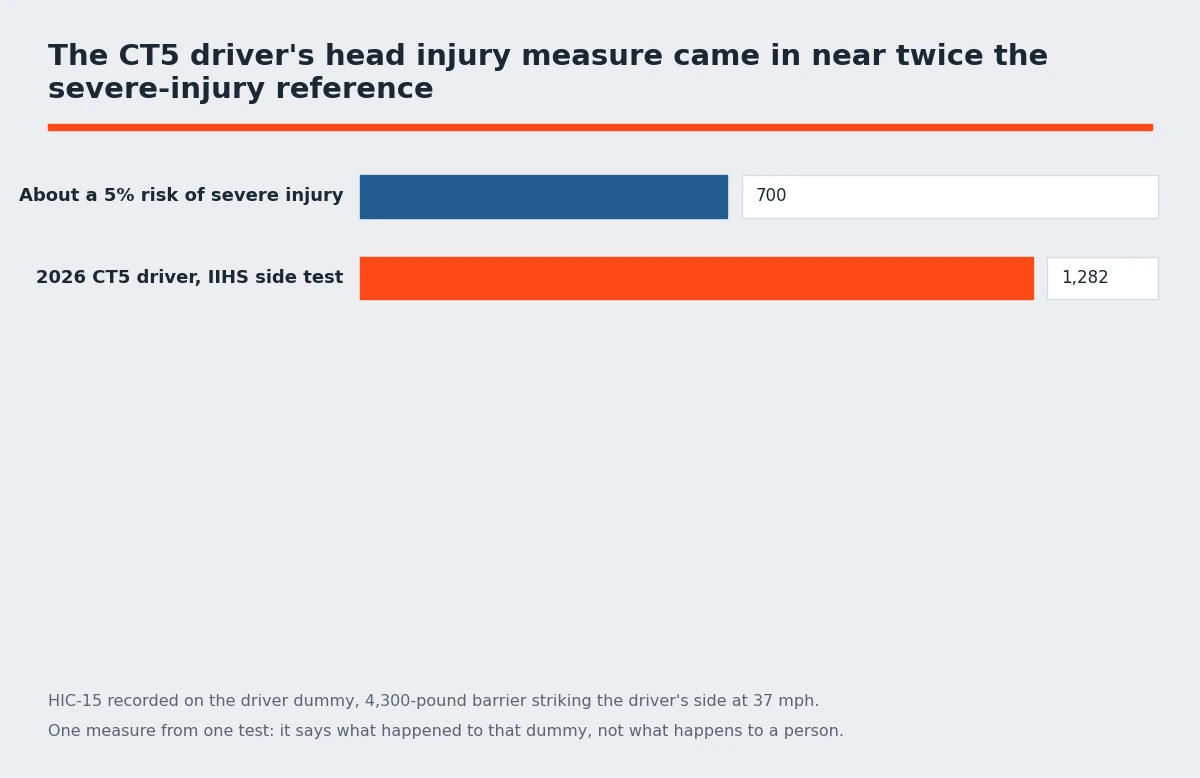
The recorded head injury criterion was 1,282, against roughly 700 for what is described as a 5 percent risk of severe injury.
That is one measure from one test on one dummy, and it is still a long way from the reference.
The rest of the record is mixed rather than uniform.
Vehicle-to-vehicle front crash prevention rated Poor, pedestrian front crash prevention rated Acceptable, headlights rated Marginal or Poor depending on configuration, and seat belt reminders rated Marginal.
Read this record by seat: the front test failed the back row and the side test failed the driver, so who habitually sits where decides how much of it applies to you.
One campaign, four complaints, and a warranty that outlasts both
Coverage runs four years or 50,000 miles for the basic warranty and six years or 70,000 miles on the powertrain.
That is the boundary inside which a problem is the manufacturer's rather than yours.
The field record for the exact model year is small.
One 2026 campaign is open, 26V114000, and it concerns owner documentation across several General Motors models rather than a mechanical defect.
Coverage and the exact-year record
- Basic warranty
- 4 years / 50,000 miles
- Powertrain warranty
- 6 years / 70,000 miles
- Open 2026 campaigns
- 1, covering owner documentation
- Complaints filed, 2026
- 4
- Complaints filed, 2025
- 8
Three of the four complaints filed against the 2026 car name forward collision avoidance.
That is the same system the Institute rated Poor, arrived at independently by owners rather than by a test.
A model-level reliability score cannot tell you any of this, because it averages years and systems together.
What ownership confidence does this evidence justify? Enough to buy inside the warranty, provided you run the vehicle identification number for open campaigns and test the forward collision system deliberately, because that is where the two independent records agree.
Buy the run-out CT5 only after the boot and the back seat are tested
The case for this car is real and it is narrow.
Rear-wheel drive, a 37.9-inch back seat, standard Super Cruise and a run-out price make a strong package for a driver who mostly travels alone or with one adult.
The case against it is equally specific and it is about the back seat.
The car's most attractive dimension is the one the front crash test failed, which is an uncomfortable place for a family car to sit.
Pros
- 37.9 inches of rear legroom, genuinely good for the class
- Rear-wheel drive standard, with all-wheel drive available on either engine
- A 335-hp V6 is still orderable on Premium Luxury and Sport
- Super Cruise standard, with a three-year plan included
Cons
- Poor on both updated IIHS crash tests, for different occupants
- Poor vehicle-to-vehicle front crash prevention
- An 11.9-cubic-foot boot behind a large cabin
- A destination charge that rose in December 2025
Waiting is a genuine alternative here in a way it is not for the CT4.
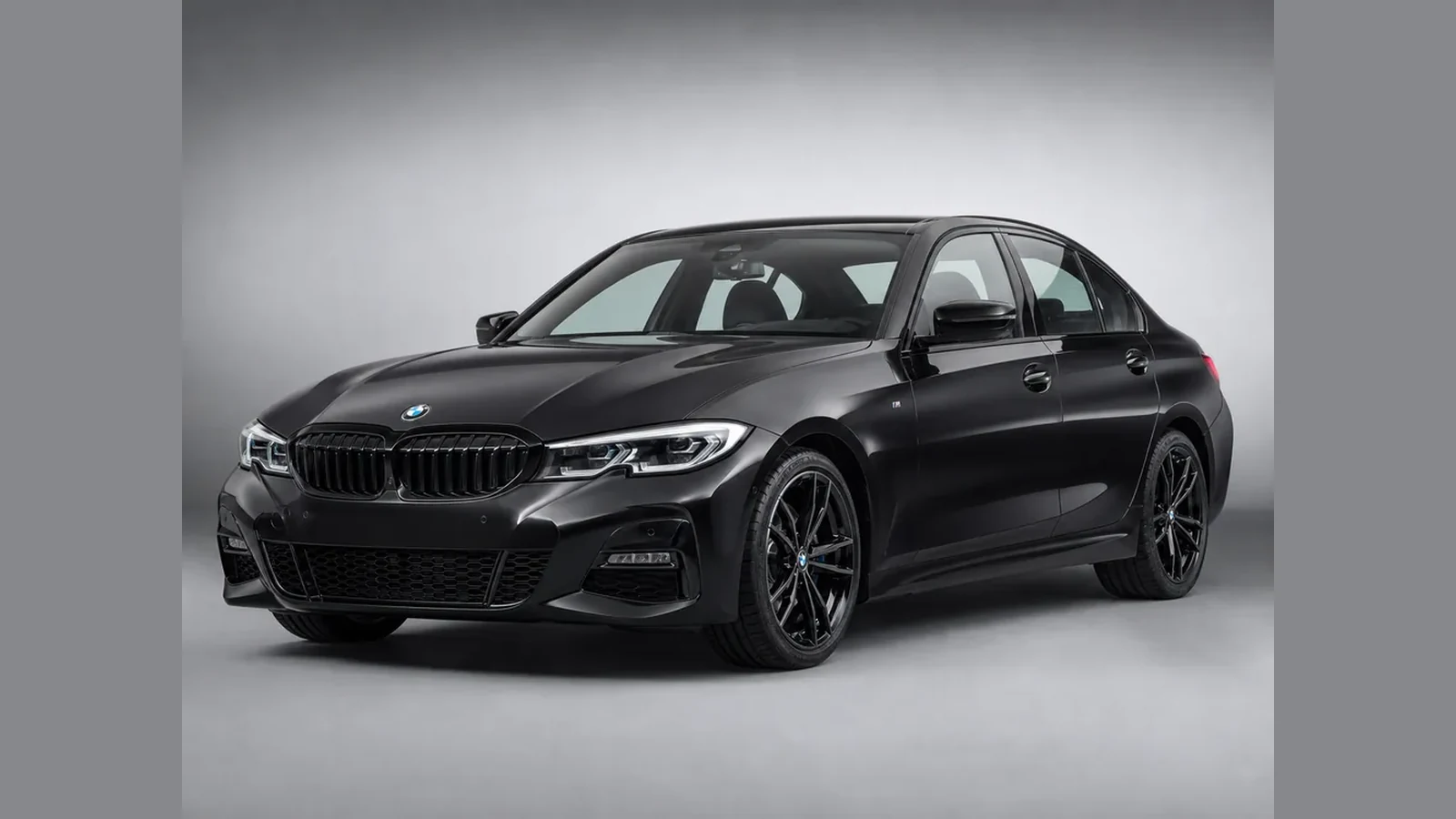
A next-generation car is confirmed, so a buyer who is unconvinced by the crash record can wait for one rather than leave the nameplate. Cross-shopping the BMW 3 Series is the other obvious move, and the rest of Cadillac's range answers the space question with a taller body rather than a longer boot.
Buy it for the driving position and the price after the boot and the back seat have both been tested with your own things and your own passengers, and wait for the next one if either test fails.