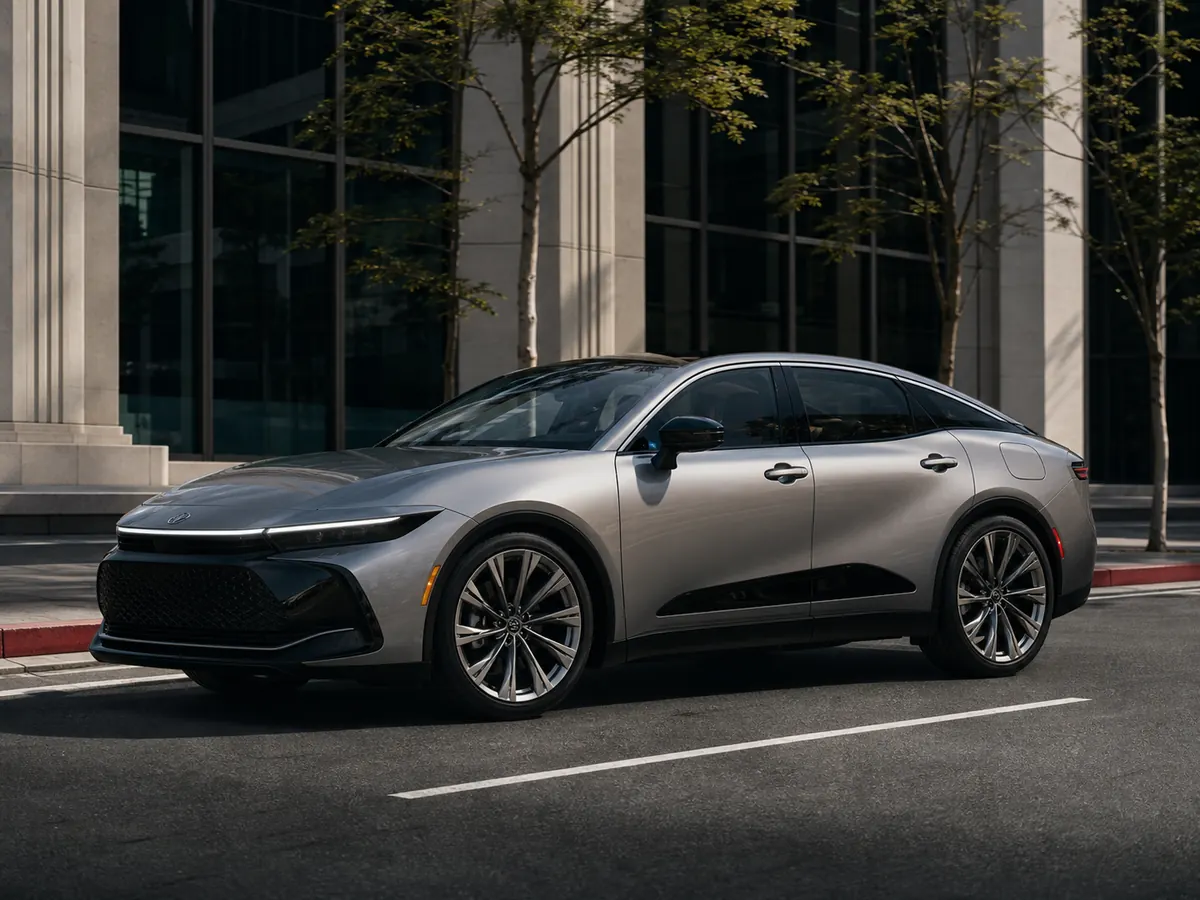
Crown is a raised sedan, not a crossover substitute
The 2026 Toyota Crown is a four-door sedan with a separate trunk, standard AWD, and a higher seating position than a typical car.
Toyota says the hip point is about 25 inches, which can make entry easier for drivers who dislike dropping into a low seat.
The fixed rear structure still limits tall cargo compared with a liftgate.
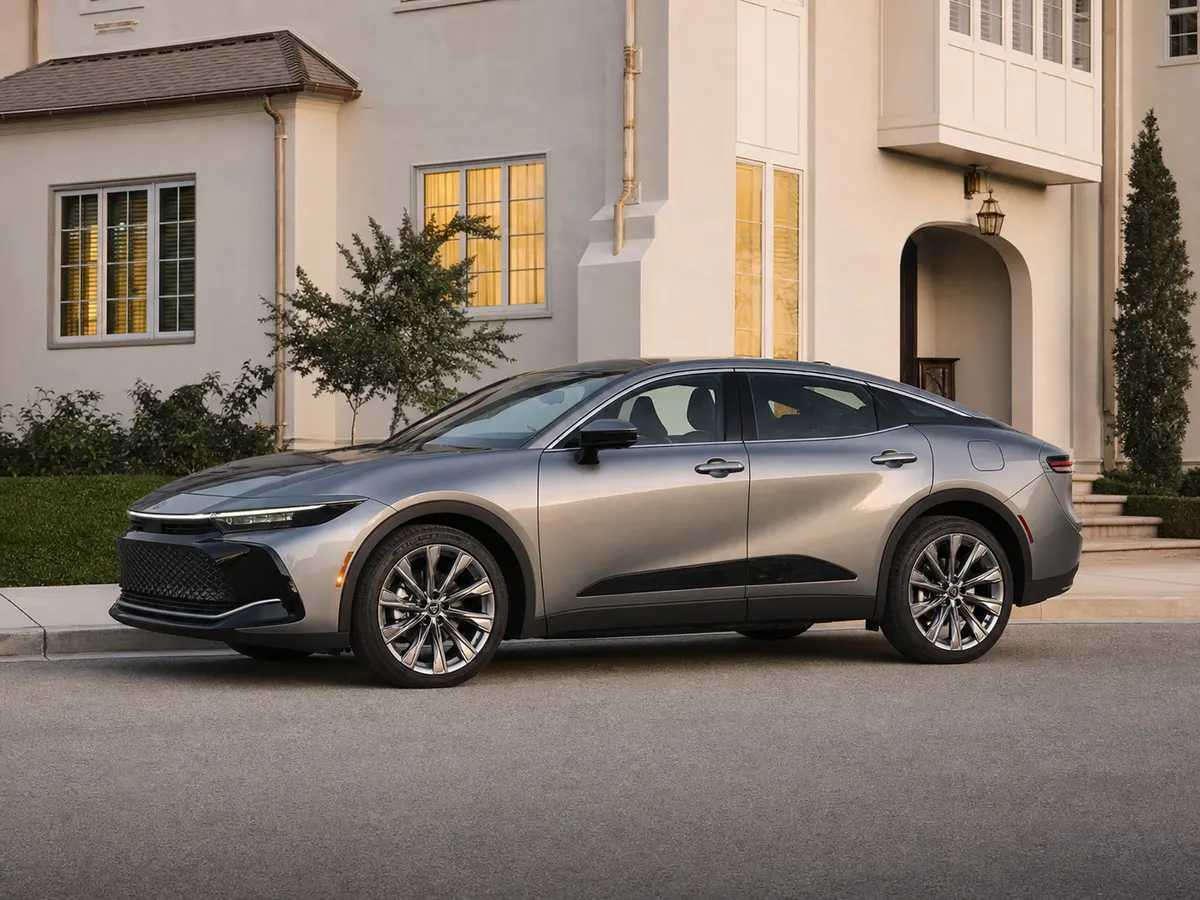
Enter without using the steering wheel as a grab handle. Check hip and knee movement, roof clearance, seat-cushion height, door opening, and whether the driver can swing both feet out comfortably.
A 25-inch hip point is a useful reference, but individual height, mobility, and seat setting determine the result.
Then load the tallest weekly object. A box, walker, pet crate, bicycle, or plant may have enough total volume but fail at the trunk opening.
The Crown Signia or Toyota RAV4 is a better answer when vertical cargo and a hatch are repeated needs.
The Crown makes sense for someone who wants an easier step-in than a low sedan and does not need SUV cargo access. Judge it as a raised premium sedan because the seating height is useful while the trunk remains a real, permanent limit.
The 41-mpg hybrid is the rational starting point
XLE, Limited, and Nightshade use Toyota's 2.5-liter hybrid system with front and rear electric motors.
Toyota lists 236 combined hp, standard electronic AWD, and an EPA-estimated 41 mpg combined. This system provides the Crown's strongest mix of quiet low-speed response, fuel economy, and all-weather launch traction.
The standard hybrid uses an electronic continuously variable transmission. It can raise engine speed during hard acceleration without the stepped shifts some drivers expect.
Drive it from a cold start, through city traffic, onto a short highway ramp, and up the longest normal grade before deciding whether the sound and response feel natural.
At 41 mpg, 15,000 miles require about 366 gallons under the estimate. Use local fuel prices and a conservative real-route result in the budget.
Tire pressure, cold weather, speed, short trips, and passenger load can change consumption.
One dashboard average is not a guarantee.
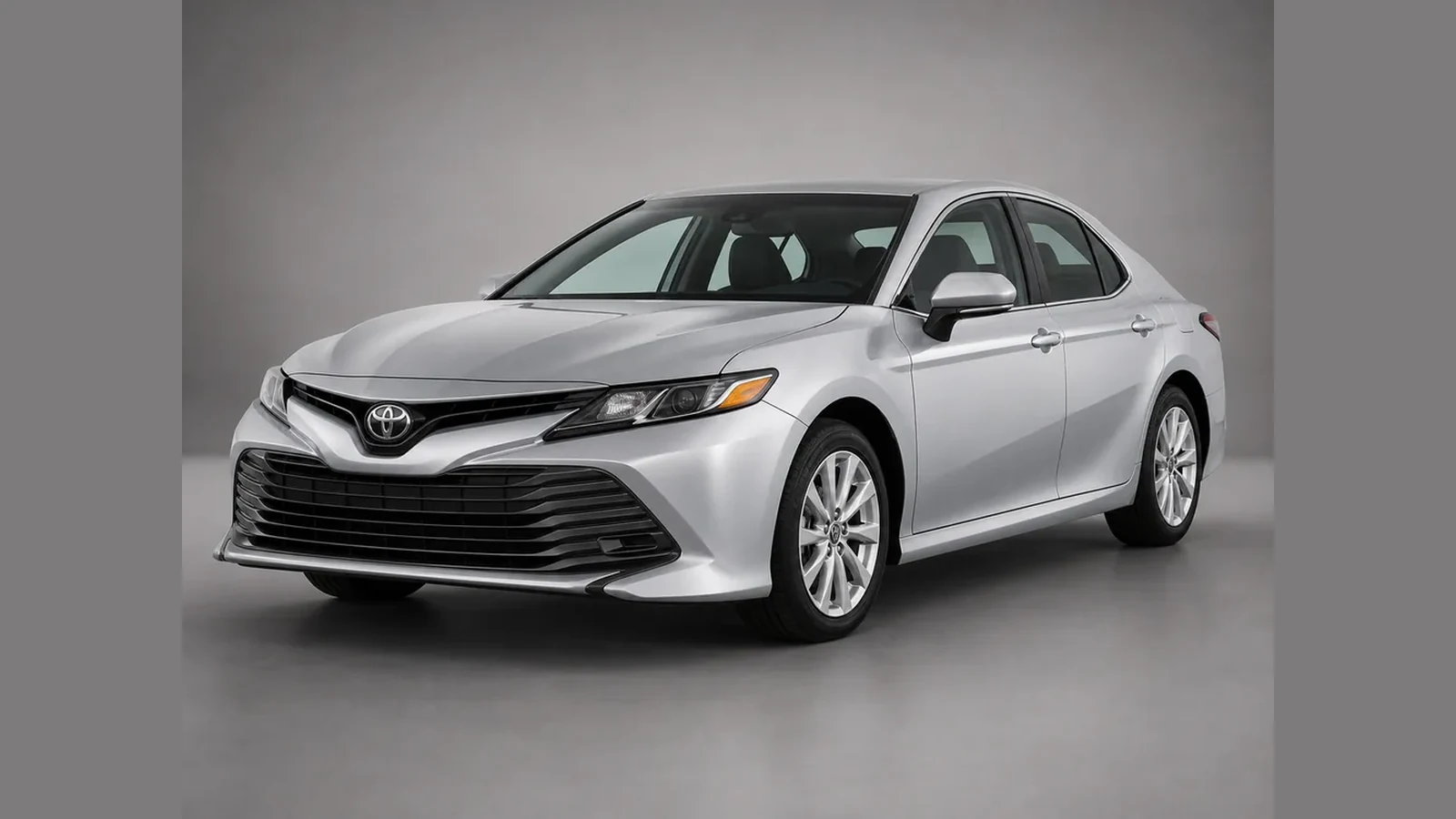
The system suits a driver who wants calm response and low fuel use more than maximum acceleration. A Toyota Camry Hybrid can cost less, so Crown still needs to justify its higher seating position, cabin treatment, and AWD.
Start with the 41-mpg hybrid because it preserves the efficiency and comfort that make the Crown distinct.
Hybrid MAX changes the car and the fuel budget
Platinum replaces the standard system with Hybrid MAX. Its 2.4-liter turbo engine, front and rear motors, and direct-shift six-speed automatic produce 340 hp and 400 lb-ft.
Toyota lists 30 mpg combined, an 11-mpg drop from the standard hybrid in exchange for much stronger acceleration and a more direct transmission feel.
| System | Grades | Output | Torque | Combined MPG | Transmission |
|---|---|---|---|---|---|
| 2.5L hybrid | XLE, Limited, Nightshade | 236 hp | Not the buying focus | 41 | eCVT |
| Hybrid MAX | Platinum | 340 hp | 400 lb-ft | 30 | 6-speed automatic |
| Difference | Platinum decision | 104 hp more | Stronger low-speed response | 11 mpg less | Stepped shifts |
At 15,000 miles, 30 mpg uses about 500 gallons under the estimate, roughly 134 more than 41 mpg.
Multiply that difference by local fuel price and every planned ownership year. Then add Platinum's higher purchase amount, insurance, 21-inch tires, and adaptive suspension complexity.
Drive Hybrid MAX on the actual route. Strong acceleration is valuable for short merges or frequent passing, but an occasional burst may not justify years of added cost.
Check low-speed smoothness, shift quality, brake blending, tire noise, and ride over sharp edges.
Platinum should be treated as a separate performance purchase rather than the top version everyone should reach. Choose Hybrid MAX only when its 340 hp improves a repeated drive enough to accept the large fuel, tire, insurance, and purchase-price penalty.
Easy front entry does not guarantee rear-seat fit
Crown's raised hip point can help the front occupants, but its sweeping roofline still shapes rear headroom and entry.
Set both front seats for the regular drivers before anyone evaluates the second row. A tall rear passenger should enter from both sides and remain seated over a rough 20-minute route.
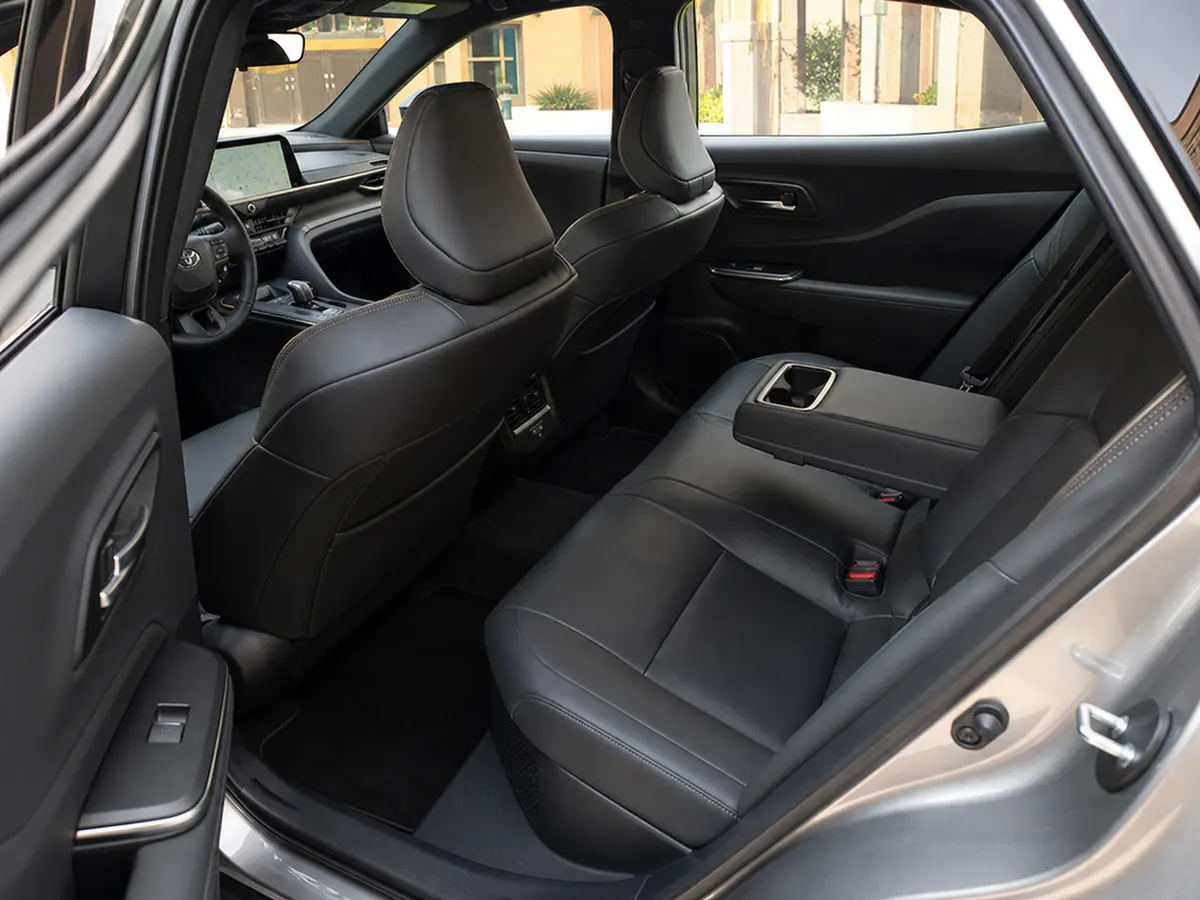
Check head clearance during entry and after sitting, knee contact, thigh support, foot room, door opening, belt fit, head restraint, and outward view. A passenger may have enough measured room but still bump the roof while entering or feel enclosed by the high beltline.
Install every child restraint according to Toyota and seat-maker instructions. Check rear-facing clearance, buckle access, top tether, head-restraint rules, and whether another passenger can use the remaining width.
Rehearse loading a child without striking the roof edge.
- Set the driver's seat first
- Place the tallest adult behind it
- Enter without ducking into the roof edge
- Install the actual child restraints
- Check vents and temperature at the rear
- Drive broken pavement with all passengers aboard
A Toyota Camry Hybrid offers a more conventional sedan comparison, while Crown Signia changes the roof and cargo shape. Buy Crown for easier entry only after every regular rear passenger proves that the sloping roof and seat position work in motion.
The trunk is the hard boundary against an SUV
A separate trunk isolates luggage noise and can keep valuables out of sight. It also creates a fixed opening and parcel shelf that a crossover does not have.
Crown's unusual height cannot help an object that will not pass between the trunk lid, floor, hinges, and rear structure.
Bring the largest weekly item or make a rigid outline of the same dimensions. Test a mobility device, stroller, golf bag, large suitcase, musical instrument, pet equipment, or work case.
Keep the rear seat occupied if that is the normal use. Check whether hinges or arms move into the luggage space when the lid closes.
- Load the tallest normal object
- Keep required rear seats upright
- Check the pass-through with seats folded
- Protect the hybrid components and trim from heavy cargo
- Keep emergency tools accessible
- Confirm the lid clears the home garage
Long items may fit through the folded seatbacks, but the opening can be narrower than the trunk itself.
Secure every item so it cannot strike passengers during a stop. Do not carry cargo that prevents the lid from closing or interferes with rear visibility.
A Toyota Crown Signia is the natural comparison when a hatch, taller roof, and more flexible load area matter. The Crown is the right body only when the separate trunk accepts the household's largest normal load without sacrificing required passenger seats.
All-wheel drive is standard, but wheel choice still matters
Every 2026 Crown has AWD. The standard hybrid uses an electric rear motor, while Hybrid MAX uses a performance-oriented rear eAxle.
Both can support launch traction and balance, but neither eliminates the need for suitable tires or careful speed in rain, snow, and ice.
XLE and Limited use 19-inch wheels, while Nightshade and Platinum move to 21-inch packages. Larger wheels can change appearance and response while increasing tire price, reducing sidewall, and making pothole damage more costly.
Platinum's stronger power can also increase wear when driven hard.
Chassis choice
- AWD
- Standard, not an optional value decision
- 19-inch wheels
- Better baseline for comfort and tire cost
- 21-inch wheels
- Appearance with less sidewall
- Nightshade
- Styling choice on standard hybrid
- Platinum
- Adaptive suspension and Hybrid MAX performance
- Tires
- Exact size, rating, and full-set price required
Drive both wheel sizes over the same sharp-edged road. Listen for impact noise and tire hum, check steering tracking, and inspect whether the route contains potholes, curb exposure, or seasonal damage.
Price a full set and one damaged wheel before choosing the appearance package.
AWD systems benefit from appropriately matched tire circumference. Rotate on schedule, maintain pressure, and ask Toyota about replacement limits after a puncture.
Keep the 19-inch wheel as the comfort and cost baseline, then accept 21-inch tires only when their appearance or Platinum hardware is worth the continuing expense.
XLE and Limited make more sense than appearance or power upgrades
The 2026 range includes XLE, Limited, Nightshade, and Platinum. XLE already provides the 41-mpg hybrid, AWD, leather-trimmed seating, digital instruments, and the core multimedia system.
Limited adds comfort and audio equipment. Nightshade changes appearance, and Platinum changes both chassis and powertrain.
Start with XLE and identify one weekly problem that each upgrade solves. Limited can make sense for seat or audio equipment that improves long trips.
Nightshade needs an appearance reason strong enough to accept 21-inch tire cost. Platinum needs a performance reason strong enough to accept 30 mpg and the higher transaction price.
Build written quotes using the same destination, tax, trade value, down payment, finance term, and dealer products.
Add insurance by VIN and a replacement tire set. Compare total payments rather than allowing a longer loan to hide the price step.
The premium vehicle hub provides alternatives with different body and powertrain tradeoffs. XLE is the default, Limited needs a comfort case, Nightshade needs an appearance case, and Platinum needs a performance case.
The road test should focus on calm control and visibility
Crown's main road advantage should be relaxed travel. Toyota uses a MacPherson-strut front and multilink rear suspension, with adaptive variable suspension on Platinum.
Test whether the chosen grade keeps occupants settled over long waves, sharp patches, expansion joints, and a rough corner.
Run the regular commute, not only a smooth demonstration loop. Check steering corrections in crosswinds, brake blending, tire noise, engine sound on a grade, rear-seat motion, and seat comfort after an hour.
The standard hybrid and Hybrid MAX should be compared separately because their transmissions and output change the experience.
- Start in a tight parking space
- Reverse using mirrors and direct view before cameras
- Drive the roughest normal road
- Merge and pass with regular passengers
- Test a safe firm stop
- Drive after dark to check lights and screen glare
The raised body can improve forward view, while the sweeping rear roof and pillars can limit the view behind.
Test mirrors, rear camera, parking sensors, front corners, and rain performance. Assistance systems support the driver but do not remove responsibility for observation.
Compare Crown with Toyota Camry Hybrid and Toyota Crown Signia on the same route. The Crown earns its premium when the exact seats, wheels, powertrain, and visibility create a calmer hour-long drive than the less expensive alternatives.
Recall 25V744 requires exact VIN and software proof
NHTSA recall 25V744 includes certain 2023 through 2026 Toyota Crown vehicles equipped with specific Parking Assist ECU software. The official report lists Crown production dates from May 30, 2022 through April 4, 2025 for the involved population.
The rearview image may briefly freeze or fail to display during backing.
The report says the condition depends on the specific ECU software and operating circumstances. A vehicle inside the broad production range may not be an involved U.S. vehicle, while a successful camera demonstration cannot prove that an applicable campaign was completed.
Use the VIN result.
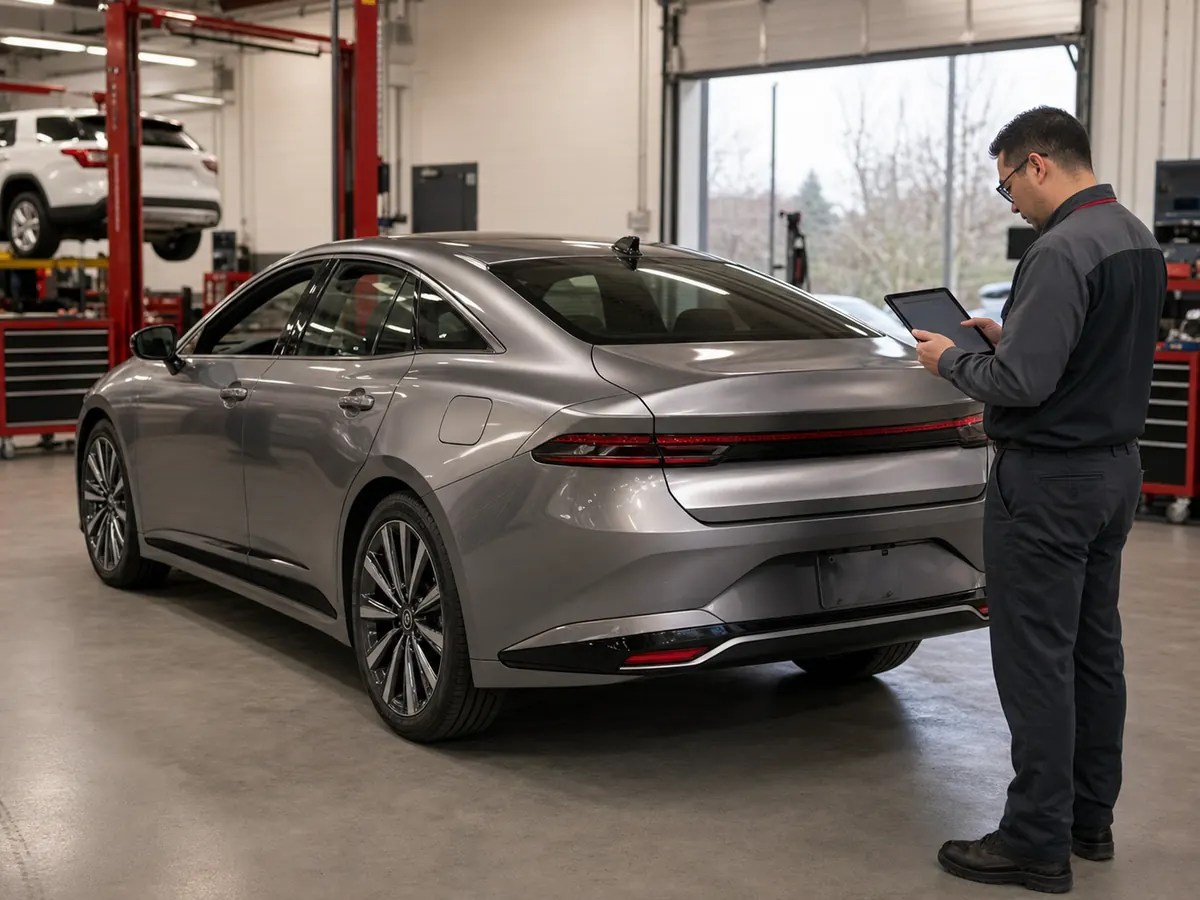
Start the car several times and select reverse after different screen operations.
Watch for a frozen scene, delay, black image, or warning. Inspect the camera lens, rear body repair, wiring, and calibration records because the recall remedy covers the named software condition, not every possible camera fault.
The planned Crown recall guide can track later changes. A Crown purchase should not close until recall 25V744 status and any required free software remedy are documented for that VIN.
Short U.S. history makes condition more important than reputation
The current Crown returned to the U.S. for the 2023 model year. That provides only a short history for its raised body, electronics, 21-inch wheel packages, and two hybrid systems.
Toyota's wider hybrid experience offers context but cannot predict every repair or certify a used car.
Start cold and scan all modules before and after the road test. For the standard hybrid, check engine transitions, eCVT response, brake blending, battery cooling, and fuel-economy history.
For Hybrid MAX, add turbo response, six-speed shift quality, adaptive suspension operation, and evidence of hard tire use.
- Verify Toyota and NHTSA VIN records
- Confirm hybrid warranty start and service history
- Test 12-volt battery and both keys
- Inspect all wheels for bends and curb damage
- Measure tread across all four tires
- Check cameras, screens, roof, trunk, and drains
- Review body and windshield calibration invoices
Look under the trunk floor and carpets for water, repair, or impact evidence.
Examine body seams, paint edges, lamps, glass dates, and underbody panels. A fresh wheel or tire may be routine, but it can also hide a pothole strike that affected alignment or suspension.
The planned Crown reliability guide can separate years and systems as evidence grows. A good used Crown proves normal diagnostics, complete campaign work, correct hybrid behavior, sound wheels, and intact body structure instead of relying on a general Toyota assumption.
Choose Crown when easier entry matters more than cargo height
Crown suits a specific buyer. It offers easier entry than a low sedan, standard AWD, a quiet premium cabin, and 41 mpg in the sensible grades.
It also carries a separate trunk, an unusual shape, higher prices than Camry, and expensive 21-inch tires on some versions.
Platinum adds power while losing 11 mpg combined.
| Cost | Standard hybrid | Hybrid MAX |
|---|---|---|
| Fuel | 41 mpg combined estimate | 30 mpg combined estimate |
| Tires | 19-inch on XLE and Limited | 21-inch on Platinum |
| Insurance | Quote by exact VIN | Higher output and value may matter |
| Finance | Calculate total payments | Larger price step |
| Repairs | Hybrid and electronic reserve | Add turbo and adaptive chassis exposure |
| Cargo | Sedan trunk | Same trunk boundary |
Pros
- Easy-entry raised seating position
- 41-mpg standard hybrid
- AWD on every grade
- Calm road-focused cabin
Cons
- Trunk limits tall cargo
- Rear roofline needs a passenger test
- 21-inch tires raise cost on Nightshade and Platinum
- Hybrid MAX falls to 30 mpg combined
Build a five-year budget with transaction price, total interest, insurance, fuel, tires, service, repair reserve, and resale.
Keep XLE as the baseline. Limited is justified by repeated comfort use, and Platinum is justified only by repeated performance use.
Compare Toyota Camry Hybrid, Toyota Crown Signia, and Toyota Prius using the same passengers and luggage. Buy Crown when easier entry and sedan road manners matter more than vertical cargo, and keep the 41-mpg hybrid unless performance is a repeated need.
The final verdict needs one hour with people and luggage
The final verdict should follow a one-hour drive with every regular passenger and the largest normal load. Start by entering without pulling on the steering wheel, then set both front seats and check the rear roofline.
Load the trunk before driving so the body format is tested as a complete household tool.
Use the sedan guide to compare Crown's easy-entry position with lower cars, and use the AWD guide to keep tire grip and braking separate from launch traction. These links support two decisions already being made rather than adding unrelated reading.
Delivery proof
- Entry
- Driver and rear passengers clear the roof
- Cargo
- Largest object passes the trunk opening
- Road
- Seats remain comfortable for one hour
- Tires
- 19- or 21-inch replacement price recorded
- Camera
- VIN campaign status matches dealer paperwork
- Budget
- Fuel and total payments fit five years
Review the exact VIN, insurance quote, tire size, total finance cost, and camera-recall record before leaving a deposit. The Toyota model guide helps compare the final number with Camry Hybrid and Crown Signia without changing the core question.
XLE wins when 41 mpg, 19-inch wheels, and easier entry solve the need at the lowest Crown price.
Limited wins when its comfort equipment matters every week. Platinum wins only when repeated acceleration is worth 30 mpg and 21-inch tire cost.
Buy Crown when passengers and luggage prove the raised sedan works, then choose the least expensive grade that preserves that advantage.