The hybrid is the default
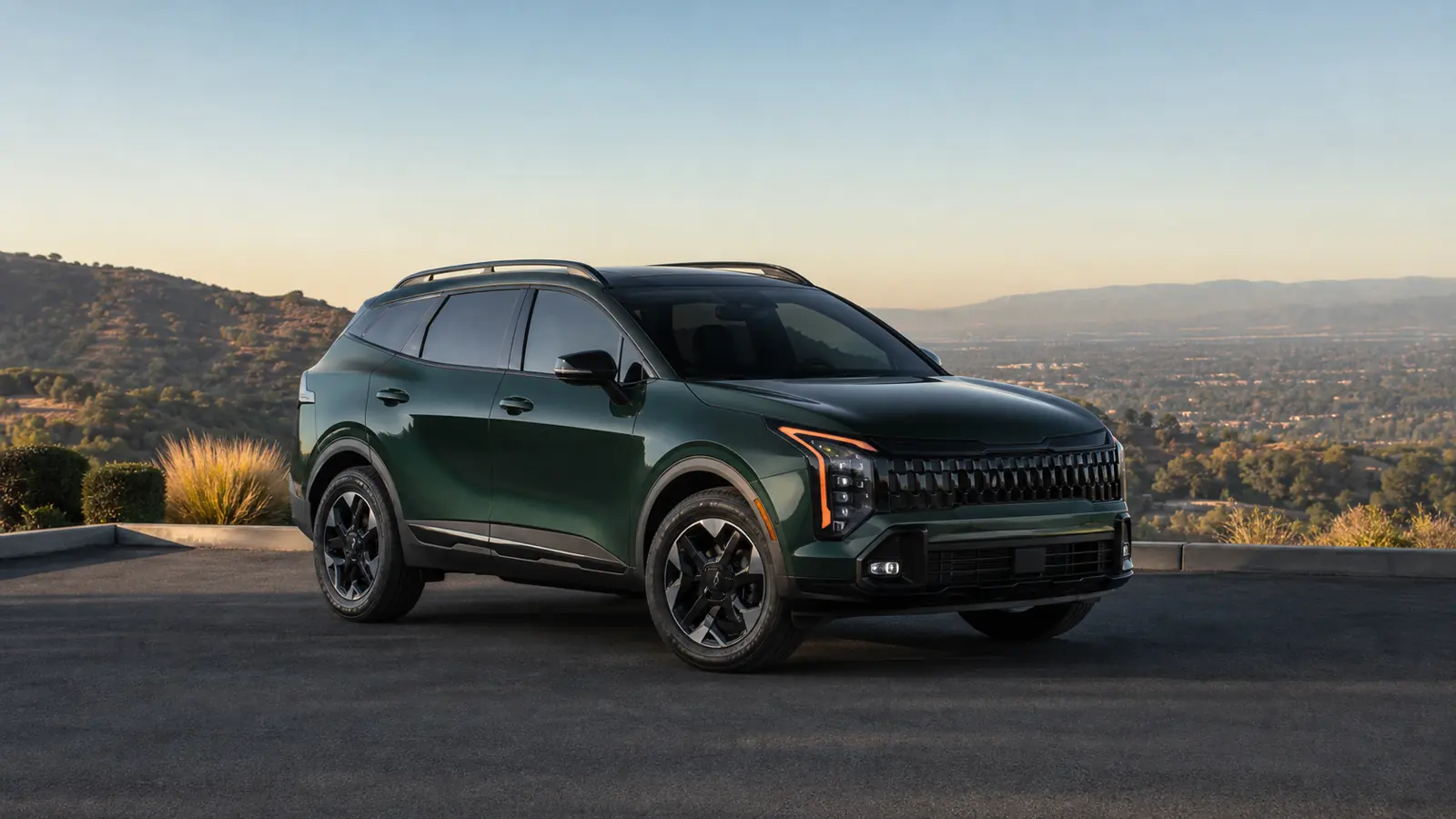
The 2026 Kia Sportage asks buyers to make the powertrain decision before choosing color, wheels, or cabin equipment. The regular hybrid is the best starting point because its 232 hp system is stronger than the 187 hp gas engine and does not require a charging routine.
It also keeps normal refueling for long trips.
Price the Sportage Hybrid EX first, then make the gas or plug-in version prove why it fits better.
The gas Sportage still has a clear job. It starts at $28,790 before destination and can be sensible for a lower-mile driver who receives a strong out-the-door discount.
The plug-in hybrid has a different job. It serves a driver who can charge at home, covers many ordinary days on electricity, and will keep the vehicle long enough to use that advantage.
Do not compare the cheapest gas LX with a loaded hybrid and call the difference a powertrain premium.
Match equipment as closely as possible. Quote gas EX, Hybrid EX, and the least expensive plug-in trim.
Include destination, dealer accessories, tax, finance interest, insurance, and any home charging work. The monthly payment can hide several thousand dollars when the loan term changes.
The hybrid also deserves a real traffic test. Drive away from a stop, merge at the speed used on the normal commute, and climb the grade that makes the gas engine work.
Listen for engine flare and watch how often the transmission changes gears. A driver coming from a quiet sedan may value the hybrid response more than its fuel math suggests.
Compare the same exercise in the Hyundai Tucson and Honda CR-V Hybrid.
Tucson offers a closely related gas-and-hybrid choice. Honda gives the Sportage Hybrid a strong benchmark for smoothness, economy, and resale.
The Kia has to win through price, cabin fit, equipment, or warranty value that the buyer can verify.
Start with a written use case. Record annual miles, city share, highway speed, winter temperature, charging access, trailer weight, and planned ownership years.
That page is more useful than a list of favorite features because it shows which drivetrain can actually return value.
When does gas cost less?
The 187 hp gas Sportage can be the lower-cost answer when annual mileage is modest and the purchase discount is real.
It uses a 2.5L four-cylinder and an eight-speed automatic, a conventional combination that does not ask the owner to charge.
Its weakness appears when a full cabin, air conditioning, a grade, and a short passing gap arrive together.
| Measure | Gas Sportage | Sportage Hybrid |
|---|---|---|
| Output | 187 hp | 232 hp |
| Transmission | 8-speed automatic | 6-speed automatic |
| Refueling | Gas station | Gas station |
| Best use | Lower miles and lower price | Traffic, mixed miles, stronger response |
| Main test | Loaded acceleration | Price premium and brake feel |
Calculate fuel with the ratings for the exact trim and drivetrain, not the best number on a banner.
Divide annual miles by expected MPG, then multiply by a conservative local fuel price. Repeat the calculation with a difficult year that includes winter, roof cargo, or higher highway speed.
Subtract the annual results and compare that savings with the actual price difference plus interest.
A $3,000 gap is not repaid by a few hundred dollars in one year. A driver covering 18,000 urban miles may close it much faster than a retiree traveling 6,000 mostly highway miles.
The gas model can therefore be correct for one household and false economy for another. Use the gas vehicle index and hybrid SUV choices to compare similar routes rather than different body sizes.
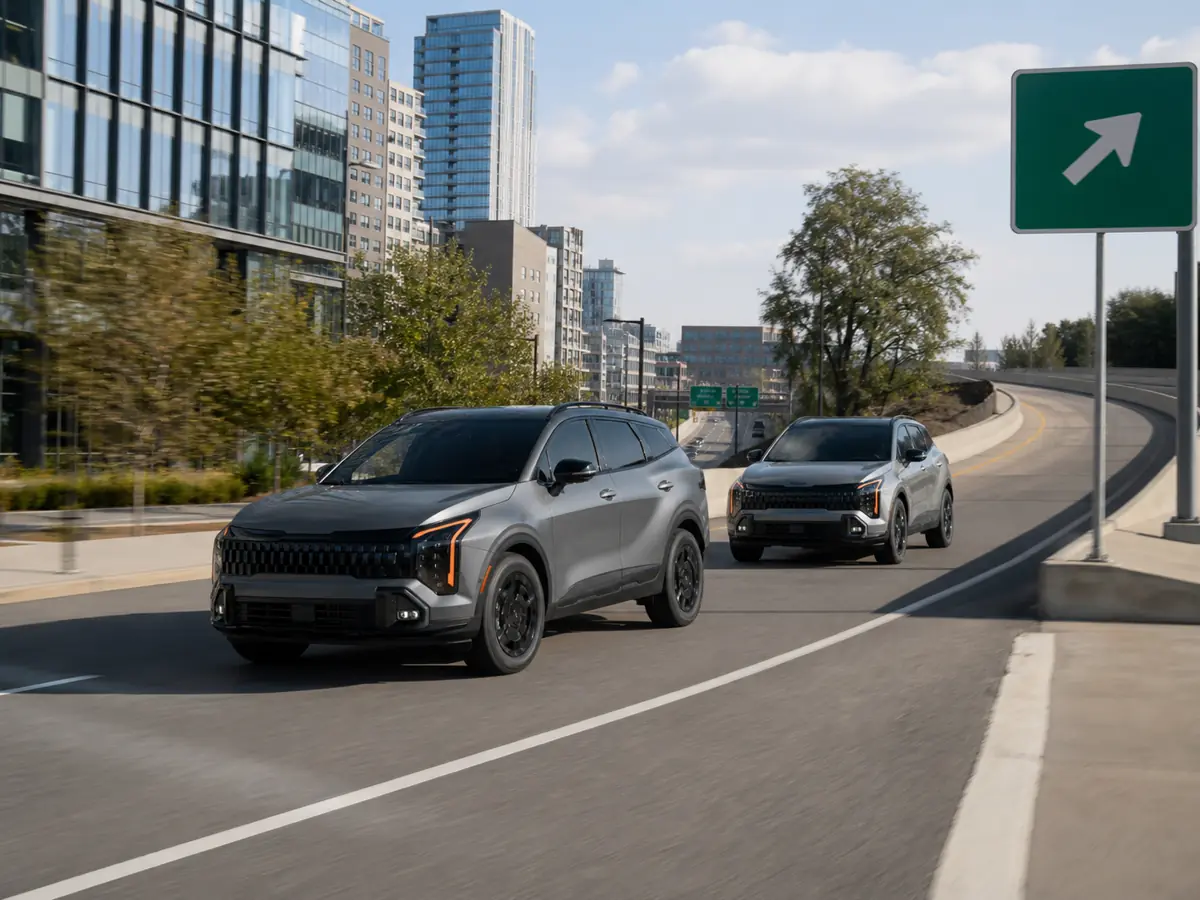
Load the gas version with the people and objects that travel weekly. Start on a slight incline, cross a busy road only with a safe gap, merge onto the highway, and hold speed up a grade.
The gas Sportage does not need to feel quick. It must respond predictably without making the driver plan every merge around its limits.
Pay attention to the eight-speed at parking speed. It should engage drive and reverse without a long pause, harsh thump, or repeated surge.
On the road, downshifts should be consistent. A noisy engine under a full-throttle test is not automatically a defect, but hesitation, warning lights, overheating messages, or inconsistent response need diagnosis.
Gas value also depends on trim restraint. Smaller wheels usually cost less to replace and put more tire sidewall between the rim and a pothole.
A panoramic roof, premium audio system, and large display may be enjoyable, but none improves the 187 hp response.
Choose gas only when its complete five-year cost stays lower and its loaded performance is acceptable on the hardest weekly road.
Can you use the plug?
The Sportage Plug-in Hybrid is a narrow but useful choice. Its higher price buys the ability to complete shorter trips with less gasoline, but that benefit depends on frequent charging.
A buyer without reliable home or workplace charging is paying for a battery and charging hardware that may spend most days acting as extra weight.
Begin at the parking space. Confirm that the driver controls the outlet, can park close enough without an extension cord, and can install approved equipment if needed.
Renters need written permission. Apartment residents should verify access, pricing, idle fees, and what happens when another vehicle occupies the charger.
Public charging alone rarely creates the effortless routine that makes a PHEV attractive.
Track a normal week rather than one commute. Include school runs, errands, a second driver, cold mornings, weekend travel, and days when charging is missed.
Cabin heat, speed, weather, elevation, tire pressure, and battery temperature can change electric operation. Once the engine starts, fuel economy depends on the remaining trip and charge state.
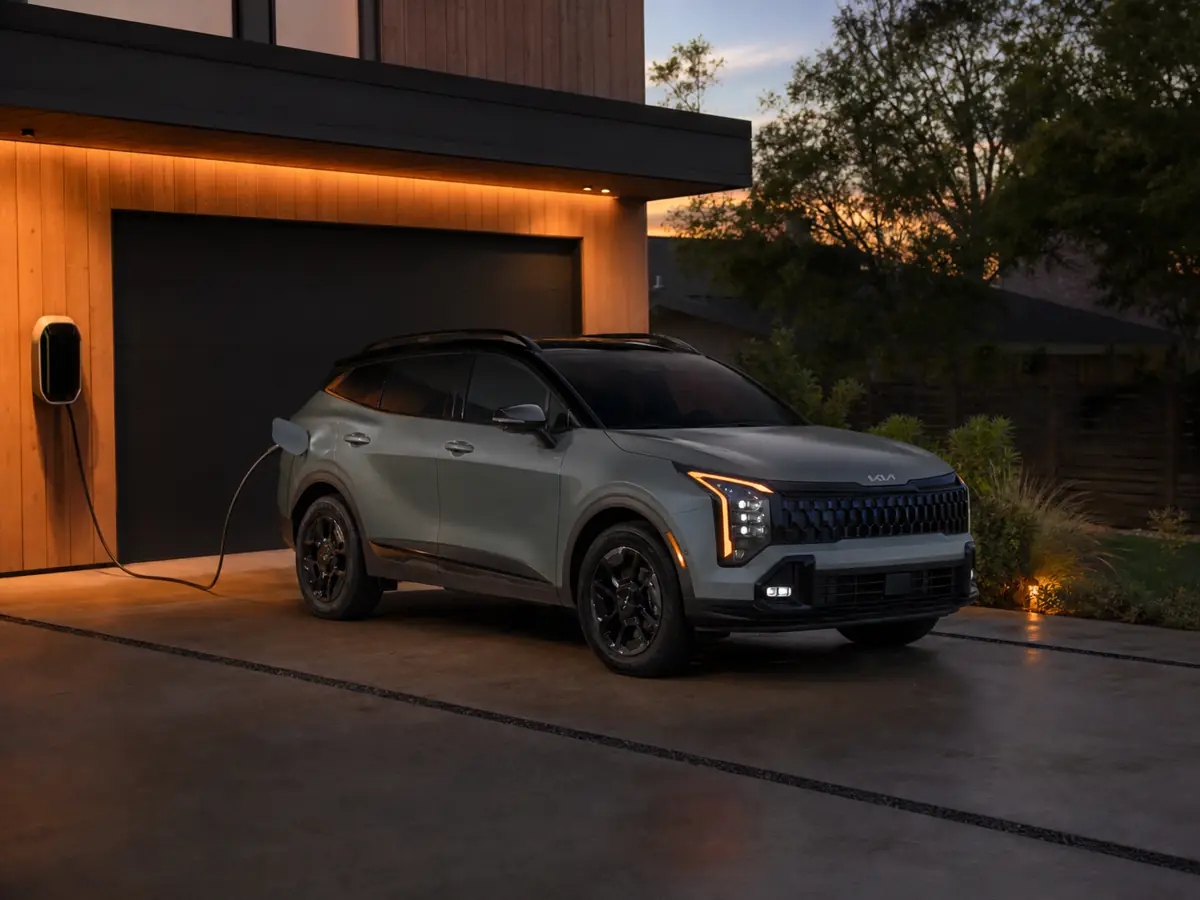
Ask the dealer to demonstrate scheduled charging, charge limits, cabin preconditioning, cable locking, and how the vehicle behaves after the displayed electric range reaches zero.
Check whether the portable cable is included and inspect it for heat damage or improvised adapters. Any home work should be quoted by a qualified electrician before the vehicle contract is signed.
The plug-in hybrid guide helps compare the Sportage with other vehicles that need the same routine.
Also compare the simpler Ford Escape PHEV if front-wheel drive is acceptable. The Kia may offer the cabin or AWD combination the household prefers, but the comparison must include purchase price and charging access.
A used PHEV needs a full charge demonstration and a scan of every module. Review charging history if available, inspect the port and cable, test cabin heat and cooling, and confirm the high-voltage warranty by VIN.
Do not demand that an old battery show a perfect new-car estimate, because the display adapts to weather and driving.
Demand stable operation with no warnings.
The PHEV earns its place only when the owner can plug in almost every useful day and can show how those electric miles repay the extra price.
Space is a Sportage strength
Sportage space is useful because the rear doors open wide, the second row is adult-friendly, and the cargo area has a practical shape.
Those strengths matter more than exterior styling when a child seat, stroller, dog crate, work case, or sports bag enters the plan.
Bring the objects that create the hardest weekly load.
Install every child restraint in the position it will use. Find the lower anchors and top tether without removing trim, tighten the seat, then check the front passenger's knee room.
If three people must sit across the rear, test buckle access with the center seat occupied. A wide cabin can still fail when a booster blocks a buckle or a rear-facing seat pushes the front seat too far forward.
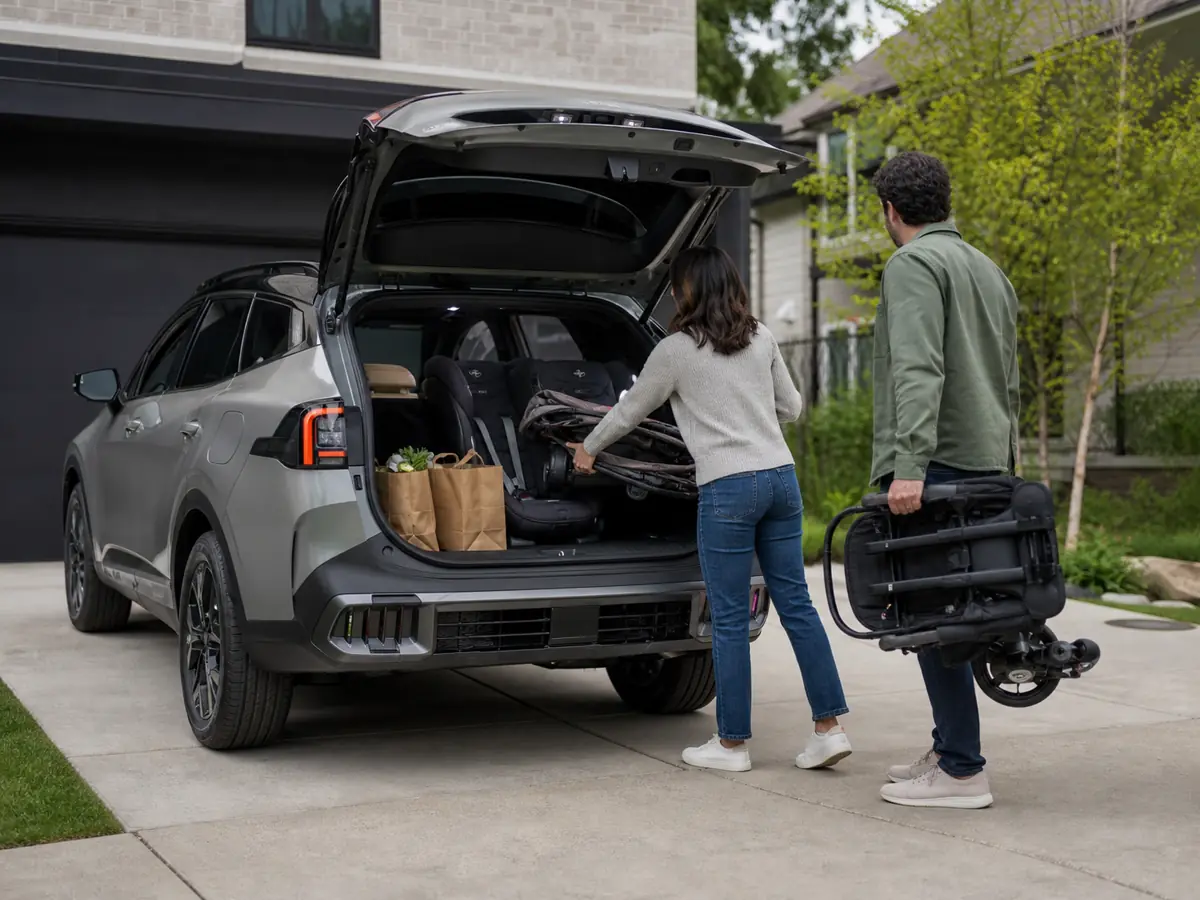
Load the stroller without folding the rear seat. Add weekly groceries or travel bags and close the hatch gently.
Check whether items press the glass, block rear vision, or sit above the cover. Fold one rear section and confirm that a passenger can remain beside long cargo.
Test the adjustable floor in every position and look for secure storage for a charging cable if considering the PHEV.
- Install the actual child seats and boosters
- Load the largest routine item through the hatch
- Check front-seat travel after the rear seat is installed
- Open the liftgate under the home garage door
- Test camera views with normal cargo aboard
- Reach climate, charging, and screen controls while parked
The compact SUV field includes vehicles with different rooflines and cargo openings.
The Subaru Forester emphasizes visibility and an upright cabin.
The Chevrolet Equinox offers a simpler gas-only choice. Sportage should remain on the list only if its space saves time or prevents a repeated compromise.
Check small storage after the large pieces fit. Phones, keys, cups, wipes, sunglasses, and cables need secure places that do not cover a charging pad or block a control.
Sit in all seats with doors closed and screens at night if possible. Gloss, ambient lighting, and display brightness can be distracting even when the layout looks impressive in a showroom.
Sportage cabin value is real when every person can enter, buckle, see out, and carry the normal load without folding a needed seat.
Towing favors the gas model
Kia lists up to 2,500 pounds of braked trailer capacity for the gas Sportage when properly equipped. That number can cover a small utility trailer or light recreational load, but it is not permission to connect any trailer below 2,500 pounds.
The vehicle, hitch, passengers, cargo, tongue weight, and trailer brakes must work as one combination.
Start with the certification label on the driver's door and the towing section of the owner's manual.
Subtract the weight of occupants, cargo, accessories, and tongue load from the vehicle's available payload. A trailer with 250 pounds on the hitch can use the same payload that would otherwise carry a passenger and luggage.
Never use a brochure maximum in place of the label on the actual vehicle.
| Check | Why it matters | Evidence |
|---|---|---|
| Vehicle rating | Changes by powertrain and equipment | Owner's manual and build data |
| Payload | Carries people, cargo, and tongue weight | Driver-door label |
| Hitch | Must match vehicle and trailer | Rated installed hardware |
| Trailer brakes | Control a braked trailer | Brake system and local rules |
| Tires | Carry load and control heat | Size, pressure, load index, condition |
Ask the dealer to identify the required towing equipment in writing. Inspect receiver installation, wiring, cooling requirements, spare-tire access, and whether a weight-distributing hitch is allowed.
Aftermarket installation should not block sensors or damage sealed body areas. A trailer shop can weigh the loaded combination and confirm tongue weight.
The regular hybrid and PHEV should not inherit the gas rating by assumption.
Use the exact manual and VIN for the powertrain being purchased. If a trailer is central to the decision, compare a vehicle with more reserve rather than operating at the edge.
The AWD vehicle hub can identify alternatives, but AWD does not add payload or braking capacity by itself.
Drive a legal, properly loaded trailer at modest speed before a long trip. Check launch response, steering correction, mirror coverage, brake feel, transmission temperature information if provided, and stability in crosswinds.
Leave more following distance. Recheck the coupler, chains, lights, load tie-downs, and tire pressure after the first few miles.
A tow rating should also change the ownership budget. Add the hitch, wiring, brake controller when required, trailer registration, storage, tires, wheel bearings, and added fuel.
Choose the gas Sportage for towing only after payload math and installed equipment show that the full family load remains within every limit.
Use exact-year safety results
Safety evidence belongs to the exact model year, build, headlights, and equipment. The Sportage has been through changes since the current generation arrived for 2023, so a buyer should not carry one award or rating across every year and trim.
Open the IIHS vehicle page and NHTSA recall lookup while the VIN and certification label are in front of you.
Read individual crash tests rather than only the overall label. Pay attention to updated side and moderate-overlap tests because they can reveal rear-passenger protection that older procedures did not measure as strictly.
Confirm whether headlight results change with trim. The safest claim is the one supported by the exact equipment on the vehicle being considered.
Install child restraints rather than judging anchor labels. Tighten each seat at the belt path, attach the top tether when required, and check whether an adjacent passenger can buckle without moving the restraint.
Test the rear door opening and roof height with the child in place.
A five-seat rating does not guarantee a practical five-person configuration.
Demonstrate automatic emergency braking, blind-spot alerts, lane support, adaptive cruise, cameras, parking sensors, and driver monitoring on a safe route.
Learn how to change settings while parked and how the vehicle reports a blocked sensor. Heavy rain, dirty cameras, faded lane markings, unusual traffic, and poor tires can limit assistance.
These systems support an attentive driver.
Use the site's research methods to understand why manufacturer specifications, government records, and independent crash tests answer different questions.
Check the buying disclaimer before relying on any rating as a guarantee. Tires, restraint installation, speed, attention, and repair quality still shape the outcome of a real crash.
Collision repairs require documents. Ask for invoices and calibration reports when the windshield, bumper, radar, camera, pillar, roof rail, airbag, or seat belt was replaced.
Watch the warning lights during startup and scan all modules. Fresh paint cannot prove that the restraint and sensing systems were restored.
Use current test evidence to shortlist a Sportage, then protect the household with correct restraints, clear sensors, working lights, suitable tires, and verified repairs.
Inspect each drivetrain differently
A reliability verdict must begin with the exact drivetrain. The 2.5L gas model, regular hybrid, and plug-in hybrid have different transmissions, cooling paths, batteries, and warning systems.
A clean body and short road test cannot replace service records, a cold start, a full-module scan, and an independent inspection.
For the gas version, check oil level and condition by the owner's-manual procedure, inspect coolant only when safe, and listen from a cold start.
Drive at parking speed, moderate throttle, and highway load. Delayed engagement, repeated hard shifts, engine hesitation, overheating messages, smoke, fuel smell, or stored faults need diagnosis before purchase.
The regular hybrid needs a smooth transition among electric drive, engine start, regenerative braking, and friction braking.
Verify that battery and power-flow displays behave consistently without warnings. Inspect the battery cooling intake and keep it free of pet hair, bags, and dirt.
Ask which maintenance items apply to the hybrid cooling system and record the answers from the correct manual.
| Area | Gas | Hybrid | Plug-in hybrid |
|---|---|---|---|
| Cold operation | Oil, idle, eight-speed engagement | Engine start and hybrid transition | Engine start, hybrid transition, charge state |
| Energy system | 12-volt battery | Battery cooling and warnings | Cooling, warnings, port, cable, charging |
| Road test | Shift quality and loaded response | Brake blending and response | EV drive, depleted-battery drive, charging afterward |
| Documents | Service and recalls | Service, recalls, hybrid coverage | Service, recalls, charging and coverage |
The PHEV adds a full charging cycle. Inspect the port for damaged pins, moisture, heat discoloration, or a loose door.
Test the included cable on an approved supply. Confirm scheduled charging, cabin preconditioning, and operation after the displayed electric range reaches zero.
A seller's estimate of battery health is not a diagnostic report.
All versions need screen, camera, climate, driver-aid, seat, window, liftgate, and panoramic-roof tests.
Inspect four tires for matching size, model, load rating, date, tread depth, and damage.
Look underneath for leaks, crushed shields, corrosion, and collision repairs. Use the new versus used guide to price remaining warranty against used-car risk.
Ask an authorized Kia service department to confirm warranty terms by VIN, owner status, in-service date, mileage, title status, and market.
Long advertised coverage can change after transfer. A warranty also does not make a current fault acceptable.
Resolve open warnings and incomplete repairs before money changes hands.
A Sportage is a sound used candidate only when its specific drivetrain works correctly, its maintenance is documented, and its electronic and safety systems pass a complete scan and road test.
Trim equipment can erase value
Sportage ownership cost is shaped by more than gasoline or electricity. Purchase price, interest, depreciation, insurance, tires, glass, roof hardware, scheduled service, home charging, and the planned trade date can outweigh a small MPG advantage.
Build the five-year worksheet before falling in love with an upper trim.
| Cost | Controlled choice | Higher-cost trigger |
|---|---|---|
| Purchase | Gas or Hybrid EX at a clean total | Loaded SX Prestige or PHEV |
| Energy | Drivetrain matched to route | PHEV rarely charged or gas used in traffic |
| Tires | Moderate common wheel size | Large wheels and low sidewalls |
| Insurance | Exact VIN quote | High replacement value and glass coverage |
| Repairs | Documented service and useful equipment | Panoramic roof, neglected warnings, collision calibration |
| Finance | Shortest affordable term | Long loan used to hide price |
Get insurance quotes for exact VINs before negotiating. Hybrid and PHEV classifications, high trim value, wheel size, windshield cameras, panoramic glass, and theft history can change premiums.
Ask how the insurer handles original-equipment glass and driver-assistance calibration. A cheap policy can become expensive when a claim leaves the owner paying for required procedures.
Price a set of four correct tires with mounting, balancing, disposal, and alignment.
Repeat for the smaller wheel available on a lower trim. The difference returns every replacement cycle and can be joined by greater pothole risk.
AWD owners should budget for closely matched tread depth rather than replacing one damaged tire without measurement.
Estimate energy from real behavior. A hybrid driven mostly at high speed may not deliver its largest city advantage.
A PHEV that misses charging can use more fuel than expected. A gas vehicle on short cold trips may fall far below its headline highway rating.
Use conservative figures and keep a repair reserve even while warranty remains.
Compare Sportage pricing with the Ford Escape and Mazda CX-50.
Ford offers several powertrains in an older package.
Mazda emphasizes road feel and standard AWD. A fully loaded Sportage can cross into a price band where a different vehicle gives more useful power or stronger resale.
Keep trade, finance, and vehicle price separate. Ask for the out-the-door total before discussing monthly payment.
Compare 48, 60, and 72-month interest. A long loan can outlast the period when the driver still likes the equipment and can leave a balance above trade value.
Sportage value survives when the owner pays for a useful drivetrain and cabin, then refuses wheels, glass, and loan length that turn a compact SUV into a premium-size expense.
Choose by the route you drive
The Sportage belongs on a shortlist for buyers who need compact-SUV space and want a real choice among gas, hybrid, and plug-in power. Its broad range is useful only when the decision stays tied to miles, charging, weather, towing, passenger load, and ownership length.
Run the decision in order.
Quote comparable trims, drive the gas and hybrid loaded, document a week of charging access, test child seats and cargo, calculate trailer payload if needed, verify exact-year safety evidence, complete a drivetrain-specific inspection, then price insurance and tires.
Set a walk-away out-the-door number before entering the finance office.
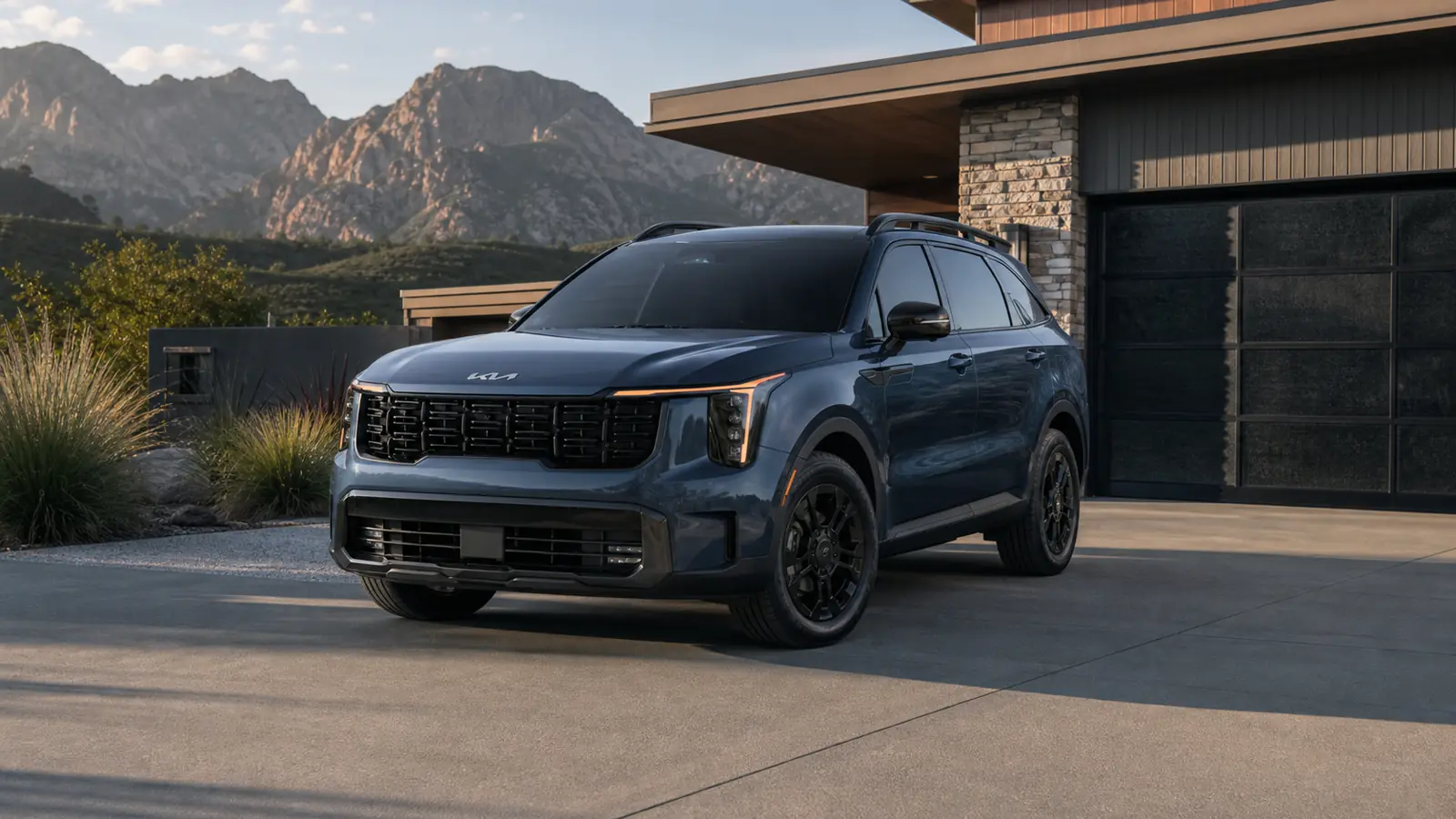
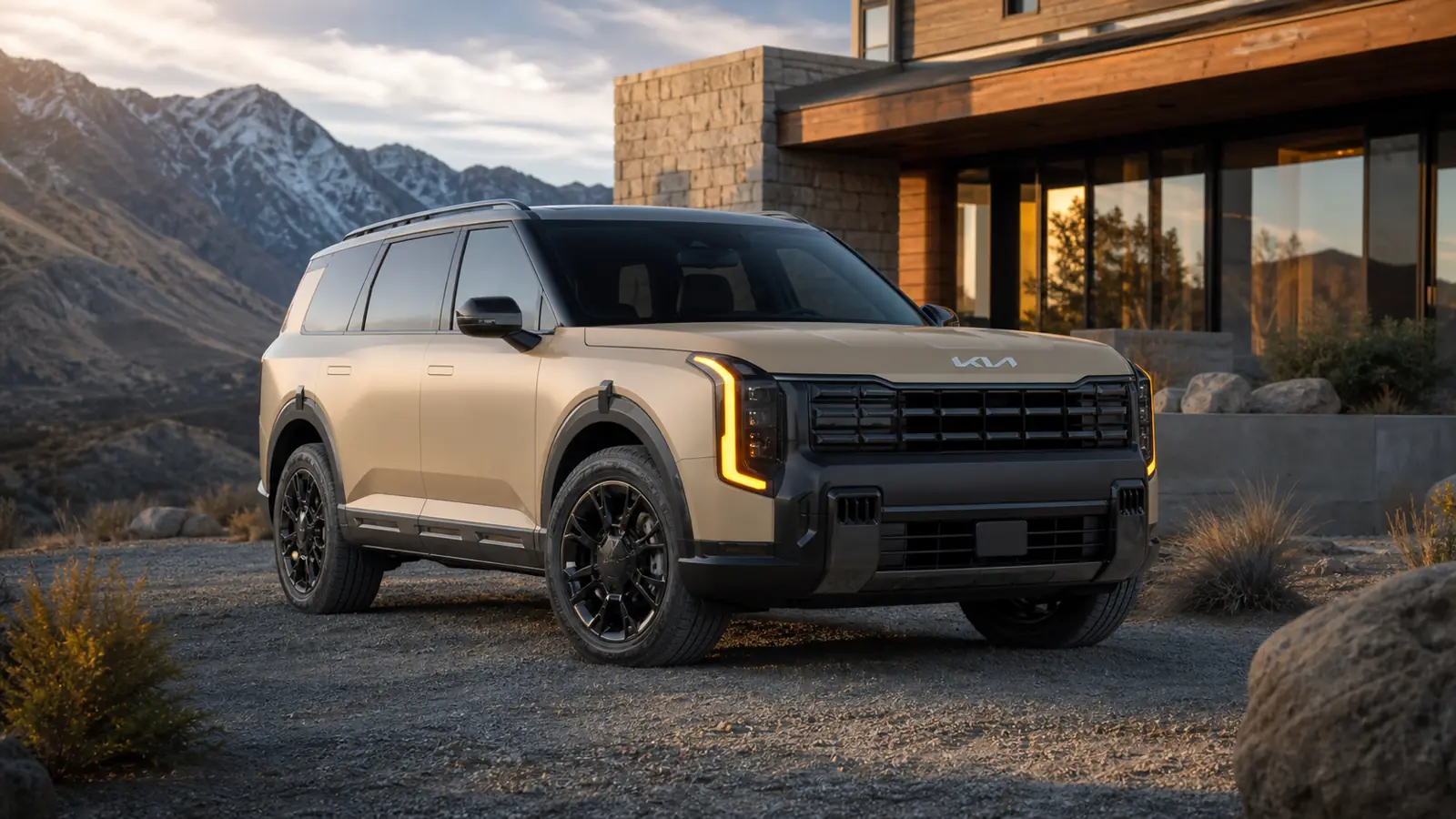
The Kia brand range also includes Sorento and Telluride for households that need an occasional or regular third row.
Do not make a compact Sportage carry seven people through roof boxes and trailers if a larger body is the honest requirement.
Do not buy the larger body when five seats and a practical hatch solve every normal day.
A high-mile city driver with home charging might still prefer the regular hybrid because it removes the plug routine and costs less.
A low-mile rural driver might choose gas because fuel savings arrive too slowly. A homeowner with a short electric commute and a long ownership plan can make the PHEV work.
Each answer is valid only when the numbers and routine support it.
Keep a one-page comparison with out-the-door price, APR, annual energy, insurance, tire set, useful equipment, cargo result, loaded-drive result, and expected resale.
Score each item from evidence collected on the exact vehicle. A dealer discount should improve the choice, not change the household's needs.
For most buyers, the 232 hp regular hybrid is the Sportage to beat. Gas wins through a real discount, while the PHEV must win through frequent electric use rather than an impressive specification sheet.