What changed for 2027?
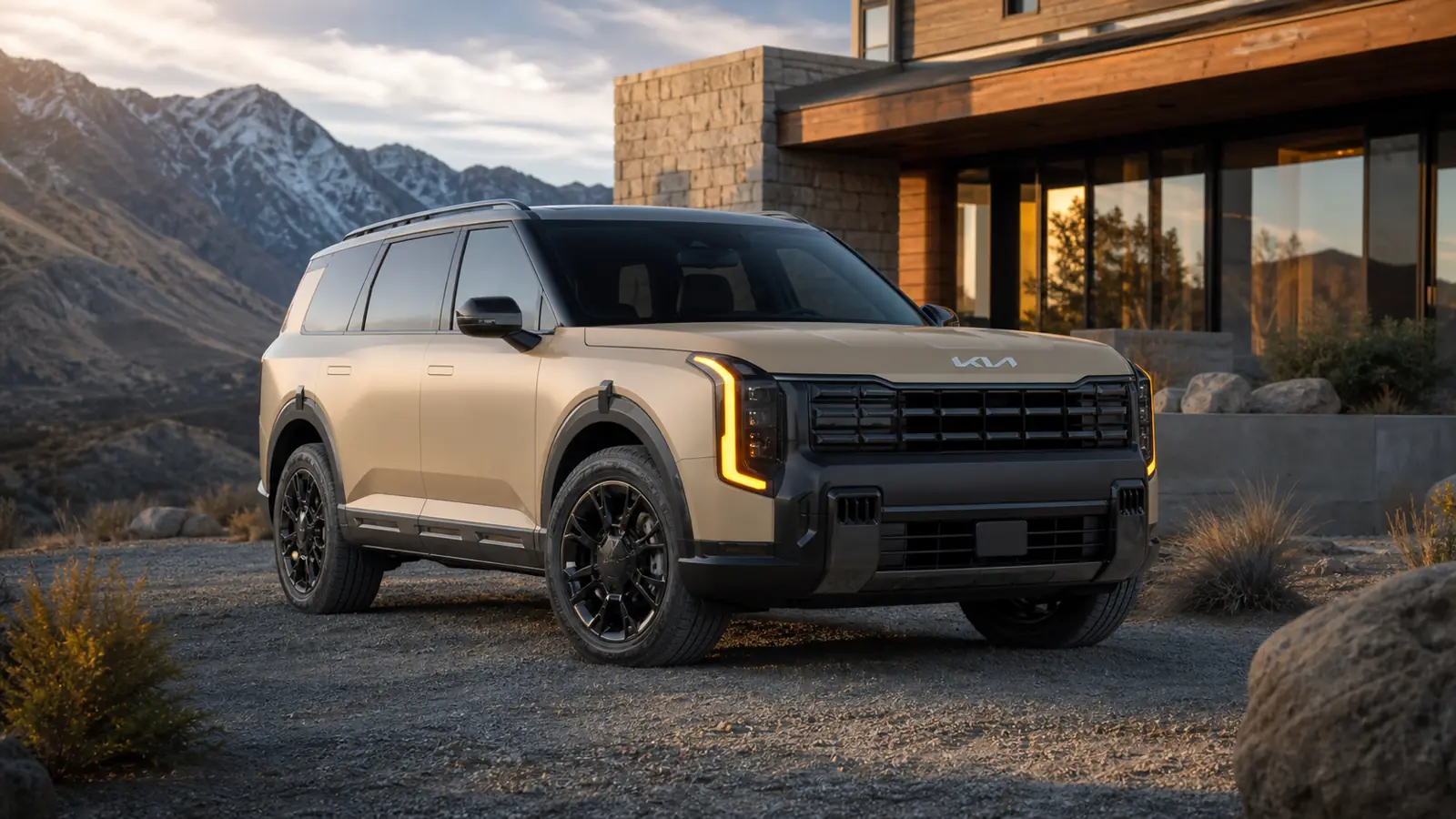
The second-generation Telluride changes the engine, body, cabin packaging, screens, controls, and safety structure at the same time.
That makes the 2027 more than a styling update, but it also means the outgoing model's long service record cannot answer every new reliability question.
A buyer should price each change by the task it improves.
| Change | Possible benefit | Proof required |
|---|---|---|
| Larger packaging | More usable passenger and cargo room | Full family load test |
| Turbo engine | Stronger low-rpm torque | Same-route drive against the V6 |
| Updated cabin | Easier cameras, climate, and phone use | Parked control test |
| New structure | Potential safety progress | 2027-specific crash evidence |
| New model year | Newer resale position | Conservative five-year estimate |
Compare the Toyota Highlander when hybrid fuel economy and a proven drivetrain matter. Drive the Ford Explorer when rear-drive balance and 5,000-pound towing are priorities.
Include the Subaru Outback only when five seats are enough and wagon-like cargo fits better. These vehicles keep the redesign from winning only because it is newer than the Telluride beside it.
Assign a dollar ceiling to each improvement. More cargo behind row three may prevent buying a roof box.
Better camera views may prevent garage stress. A new screen with no daily benefit is worth little.
Add the values, then compare the total with the complete 2026-to-2027 price gap after interest.
What changed matters only when the household can name the weekly work that becomes easier.
The upgrade starts with space
The 2027 Kia Telluride is already the current redesigned model, so the useful decision is whether its changes justify choosing it over remaining 2026 inventory.
The new body provides up to 89.3 cubic feet behind the front row, 48.7 behind the second, and 22.3 behind the third.
Those numbers matter only when the cabin solves a repeated family problem.
Pay for the redesign when its seating, access, or cargo makes normal travel easier, not simply because the model year is newer.
Bring the entire household and the objects that make the hardest trip. Set the front seats, install child restraints, fill the second and third rows, then load luggage without folding a needed seat.
Compare the same exercise in a 2026 Telluride if one is available. A few extra cubic feet have value when they accept a stroller or bag that previously required a roof box.
Measure useful access. Check rear-door opening, second-row slide range, center aisle width with captain chairs, step height, roof clearance, third-row foot space, hatch height, and camera view with cargo aboard.
Sit in row three for more than a minute. A larger specification does not guarantee better posture for every passenger.
The new displays and controls also need a task test. Pair a phone, change climate settings, move between camera views, adjust driver assistance, and find a destination while parked.
Updated technology is an upgrade only when the driver can operate it with less distraction. A screen that requires more taps can weaken the value of a more modern cabin.
Compare the new Telluride with the Hyundai Palisade and Honda Pilot using the same passengers.
The Hyundai Santa Fe is smaller and may be enough when row three is occasional. Every alternative should answer the same family task rather than win on a different feature.
Write down which 2027 changes the household actually uses. Give each one a dollar value or a clear daily consequence.
That list becomes the upgrade budget and keeps a showroom impression from deciding the purchase.
Turbo torque replaces the V6
The redesign replaces the outgoing naturally aspirated V6 with a 2.5L turbo four-cylinder rated at 274 hp and 311 lb-ft.
Peak horsepower is not the whole story. The higher torque arrives lower in the rev range and can make a loaded launch or highway pass feel stronger, while the four-cylinder sound and response differ from the old V6.
| Measure | 2027 turbo | 2026 V6 |
|---|---|---|
| Layout | 2.5L turbo four-cylinder | 3.8L naturally aspirated V6 |
| Output | 274 hp | 291 hp |
| Torque | 311 lb-ft | 262 lb-ft |
| Transmission | 8-speed automatic | 8-speed automatic |
| Buyer test | Low-rpm response and turbo behavior | Rev response and discount value |
Drive both vehicles on the same day if possible. Use the same number of passengers and similar fuel load.
Test parking-speed engagement, a moderate hill start, a highway merge, a two-lane pass where legal, and steady speed on a grade.
The new engine should respond predictably without surging, excessive delay, warning messages, or rough shifts.
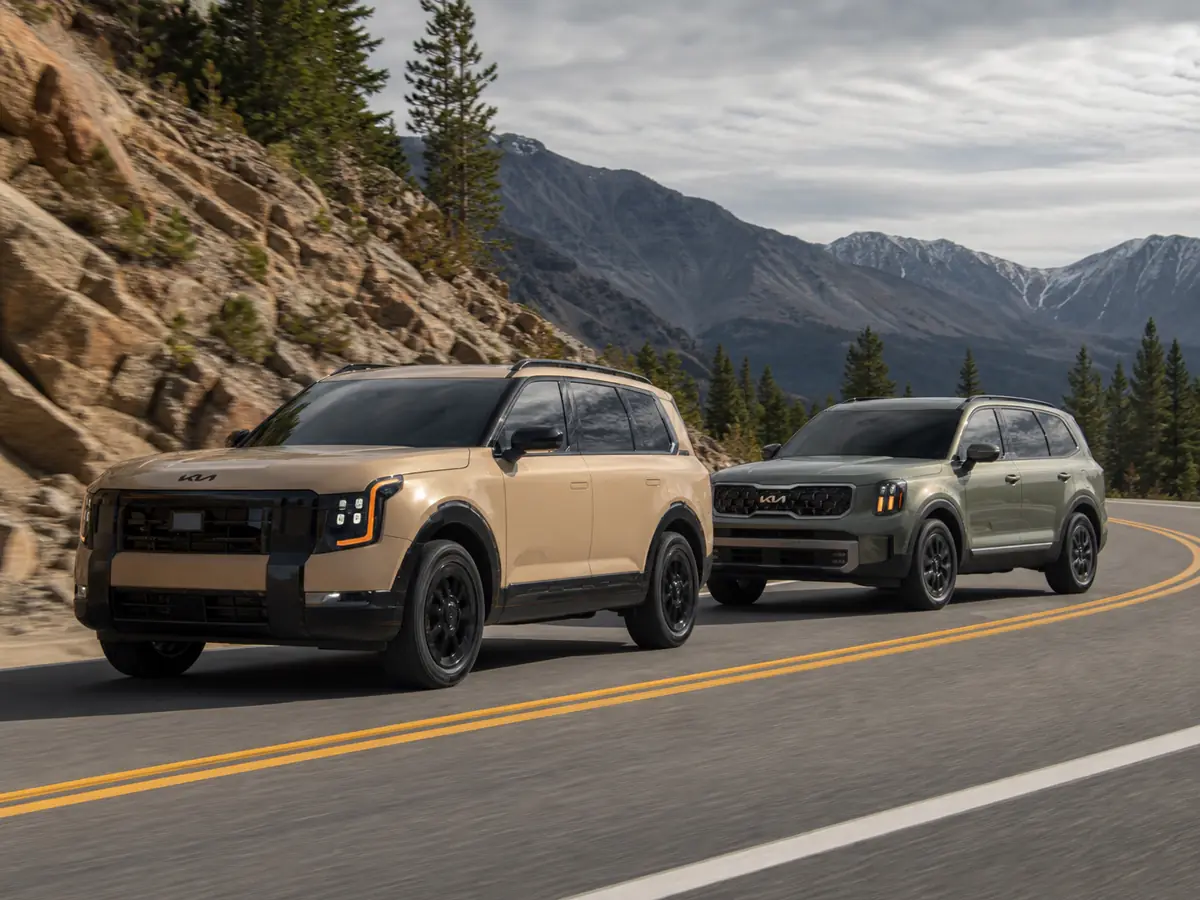
Turbo torque can reduce the need for high revs, but added complexity creates different long-term questions.
Oil quality, cooling, charge-air plumbing, boost control, and heat management deserve attention.
That does not make the new engine unreliable. It means the old V6 record cannot be pasted onto new hardware.
Early buyers should follow the severe-service schedule when their use qualifies and document every service.
The eight-speed automatic needs its own judgment. Test drive and reverse engagement after a cold start, low-speed shifts in traffic, a downshift for passing, and grade control.
Repeated hard shifts, flares, delayed engagement, overheating messages, or stored faults require diagnosis before purchase.
Fuel economy depends on trim and drivetrain. Kia lists 20 city, 26 highway, and 22 combined for the LX configuration.
AWD, tires, speed, traffic, weather, roof cargo, and towing can reduce that figure. A turbo engine can use fuel quickly when the driver asks for boost, so budget from the actual route rather than one published number.
Choose the turbo when its stronger low-speed response improves loaded driving. Choose a discounted V6 only after confirming that the older cabin and equipment still meet every need.
Use all three rows together
Telluride is bought for three-row use, so testing one empty seat at a time misses the point. Configure seven seats with captain chairs or eight with the second-row bench, then assign every regular passenger.
The correct layout keeps children in appropriate restraints, adults in workable positions, and an exit path that does not depend on removing a seat.
Install every child restraint. Use top tethers when required and check buckle access beside boosters.
Slide the second row only as far forward as its passenger can accept, then judge third-row knees, feet, head clearance, belt fit, vents, cupholders, charging, and visibility.
Ask the rear passenger to exit without another person lifting or twisting a restraint.
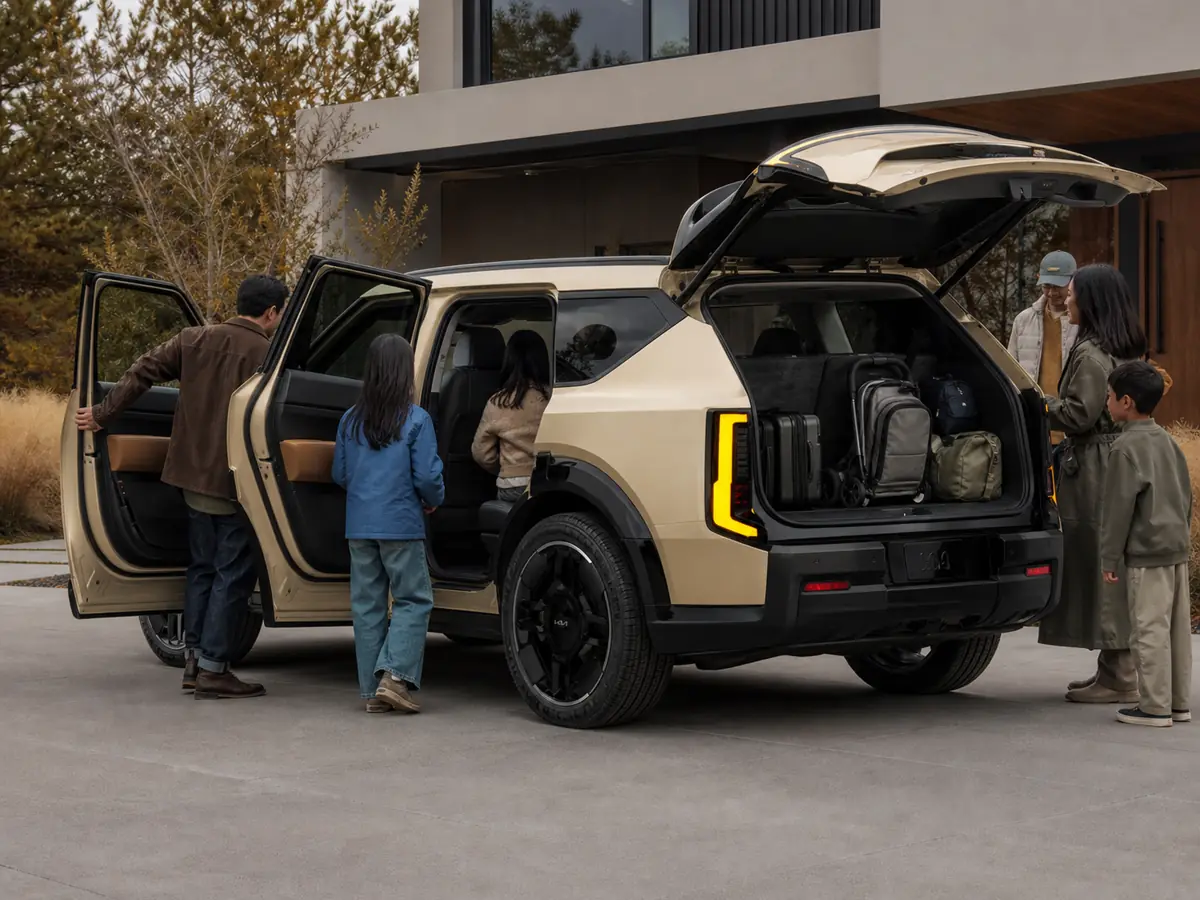
The 22.3 cubic feet behind row three is important because it represents the full-passenger condition.
Load travel bags, stroller, sports equipment, or mobility aid within that space.
Keep the rear window clear and secure loose objects. Fold one side of the third row and repeat the head count to understand which trips can use split-fold flexibility.
- Install all child restraints and boosters
- Check third-row access without removing them
- Load one bag for each occupied seat
- Close the hatch without pressing the glass
- Keep emergency gear and spare access available
- Test cameras with normal cargo in place
- Open the hatch in the home garage
A captain-chair aisle improves access but reduces the seat count to seven and can let cargo move forward.
A bench carries eight but may make row-three access harder when three restraints occupy it.
Neither is a luxury default. It is a traffic pattern for people moving through the cabin.
Review eight-seat vehicles and compare the Toyota Highlander with the exact passenger load. A minivan still provides sliding doors and a lower floor that no SUV styling can replace.
Include one if grandparents, small children, or tight parking spaces make door access difficult.
The Telluride earns its size when all occupied rows remain comfortable and the 22.3-cubic-foot cargo area still carries the normal trip.
EX is the useful baseline
The LX starts at $39,190 before destination and establishes the new Telluride entry price. EX is the useful baseline for many families because it can add comfort and convenience without immediately reaching luxury-SUV money.
The correct trim is the least expensive one that solves repeated passenger, climate, parking, and cargo needs.
Build a must-have list before opening the configurator.
Separate equipment used weekly from equipment admired once. Seat material, second-row layout, power liftgate, surround-view cameras, parking sensors, heated seats, and climate functions can change daily work.
Wheel design, dark trim, and decorative packages mostly change appearance.
Test the exact wheel and tire combination. Large wheels reduce sidewall, can sharpen impacts, and cost more to replace.
X-Line or X-Pro equipment can be useful for snow, dirt access, or towing, but road noise and fuel use need comparison.
Appearance alone does not improve payload or passenger space.
Get an out-the-door figure for each serious trim. Include destination, dealer accessories, tax, documentation, finance interest, insurance, and the first set of tires.
A $60 monthly difference becomes $3,600 over sixty payments before interest effects are fully understood.
Negotiate the vehicle price separately from trade and financing.
Upper trims also add glass, motors, sensors, and electronics that can raise insurance and repair cost. Ask how the insurer handles panoramic roof damage, original-equipment windshield glass, camera calibration, and replacement wheels.
Price one wheel and tire before choosing the largest option.
Compare the configuration with the three-row SUV field rather than staying inside the Telluride range. A high trim can overlap a different vehicle that offers more towing, space, efficiency, or resale.
EX is the right starting point when it captures the family functions of the redesign without paying premium prices for appearance.
Towing still needs payload math
Kia lists up to 5,000 pounds of towing capacity for the redesigned Telluride when properly equipped. The limit can support a useful travel or utility trailer, but the vehicle must also carry people, cargo, accessories, and tongue weight.
A full three-row cabin can consume payload quickly.
Read the owner's manual and the label on the exact driver's door. Start with available payload, then subtract every occupant, cargo item, accessory, and the trailer's measured tongue weight.
Use loaded trailer weight that includes water, fuel, batteries, food, tools, and gear.
The empty figure on a sales page is not the trip weight.
| Input | Where to find it | Why it matters |
|---|---|---|
| Vehicle tow limit | Manual and build data | Maximum trailer boundary |
| Vehicle payload | Driver-door label | People, cargo, accessories, tongue load |
| Loaded trailer weight | Certified scale | Real combination weight |
| Tongue weight | Tongue scale or weigh method | Uses vehicle payload |
| Hitch and brakes | Installed hardware and trailer | Must meet every applicable limit |
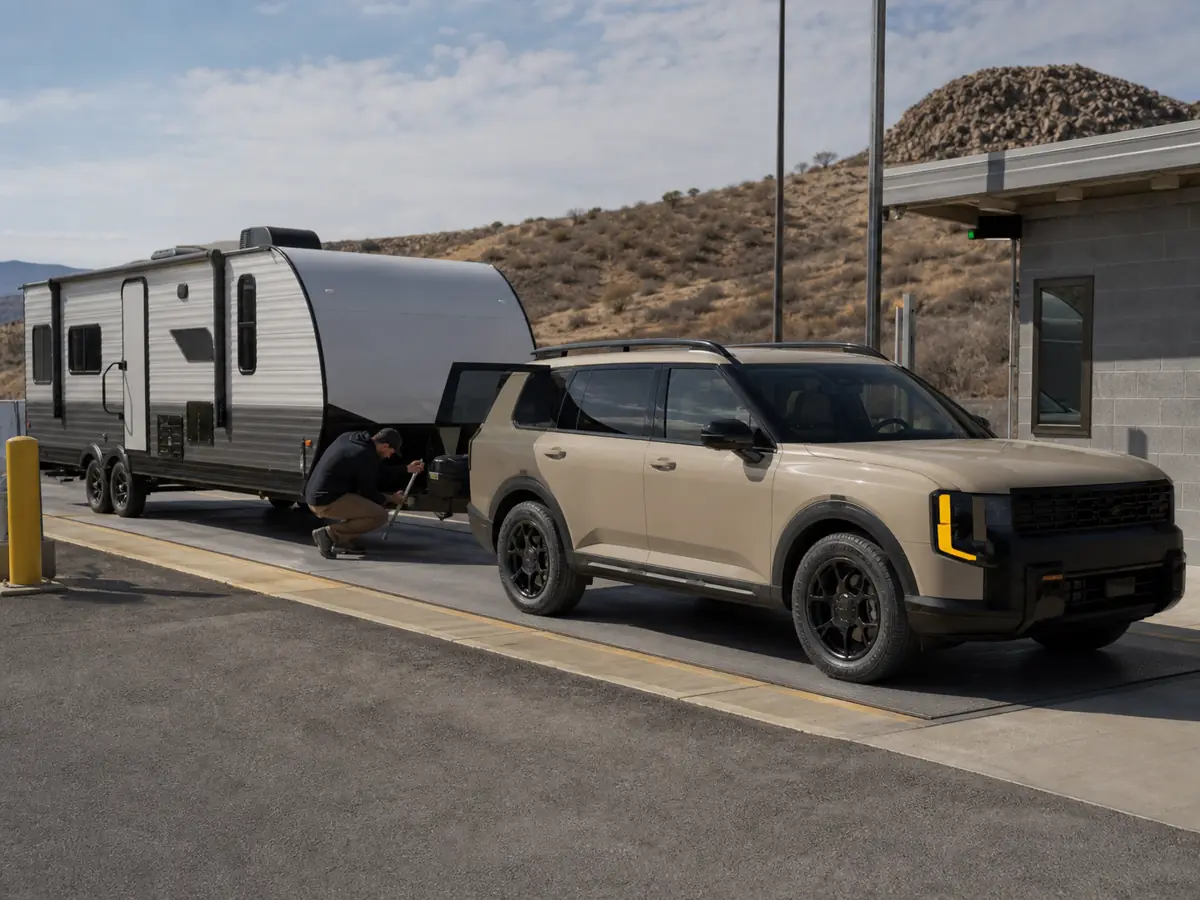
Ask the dealer to identify the required factory equipment in writing. Confirm receiver rating, wiring, cooling, brake controller needs, tire load index, spare-tire access, and whether a weight-distributing hitch is permitted.
An aftermarket receiver does not create capacity that the vehicle configuration lacks.
Drive the properly loaded combination at legal speed before a long trip. Check launch response, transmission behavior, steering correction, brake feel, mirror coverage, crosswind stability, and rear suspension height.
Stop after a few miles to recheck the coupler, chains, electrical connection, lights, tie-downs, and tire temperatures.
Compare the Telluride with the Ford Explorer and a larger truck-based SUV when the trailer approaches 5,000 pounds after loading.
More reserve can make family travel calmer and preserve payload. AWD helps the vehicle move on a slippery surface, but it does not add braking capacity or cancel an overload.
Tow with a Telluride only when the door-label payload still covers every passenger, bag, accessory, and pound on the hitch.
A redesign resets reliability evidence
The 2027 Telluride starts a new generation with a new turbo engine application, revised body, updated cabin hardware, and more software.
The outgoing model's service record is useful background for the nameplate, but it cannot prove that new components will behave the same way.
Early buyers should manage uncertainty through warranty, documentation, inspection, and prompt repair of warnings.
Ask for the build month and check whether technical campaigns or software updates apply. Use the VIN in the NHTSA recall tool before delivery and again during ownership.
A model launched without an open recall can receive one later.
Save repair orders and update receipts with date and mileage.
Start the vehicle cold and watch every warning light. Check oil and coolant by the manual, listen for unusual rattle, and inspect for smoke, fuel odor, or leaks.
Drive at parking speed, in stop-and-go traffic, on a grade, and at highway load.
Turbo response and eight-speed shifts should remain consistent.
| Area | Required check | Evidence to keep |
|---|---|---|
| Engine and transmission | Cold start, low speed, loaded highway drive | Inspection and scan report |
| Software | Current version and completed campaigns | Dealer repair order |
| Cabin hardware | Seats, releases, screens, cameras, roof | Delivery checklist with defects resolved |
| Body | Seals, paint, panels, glass, underbody | Physical inspection and photos |
| Warranty | In-service date and remaining terms | VIN printout and warranty booklet |
Operate every seat motor, fold release, window, lock, outlet, climate zone, screen, camera, phone connection, driver aid, liftgate, and roof.
New vehicles can have delivery damage or assembly faults. Record them before signing and require a written repair plan rather than accepting a verbal promise.
The first-year question is not whether every new Telluride will fail. It is whether the buyer receives enough discount, warranty support, and useful improvement to accept less long-term evidence.
A household that keeps vehicles ten years may choose to wait for service data.
Another may value the packaging now and accept documented warranty visits.
Use the new versus used guide to compare a redesigned vehicle with a proven used example. Buy the first model year only after the exact vehicle passes inspection and the redesign delivers a benefit worth accepting less history.
Verify safety by build date
A redesigned body resets the applicability of crash evidence. Do not apply a 2026 Telluride rating to the 2027 because the name is the same.
Wait for or review test results that identify the new generation, then match headlights and safety equipment to the exact trim and build.
Use the VIN for recalls and save the certification label. Read individual IIHS tests when available, including updated side and moderate-overlap procedures that focus more attention on rear occupants.
Check headlight results by equipment. A broad award is less useful than the test details that apply to the vehicle.
Install every child restraint in the intended location. Locate lower anchors and top tethers, tighten the seat, check adjacent buckle access, and preserve a safe third-row exit.
Test adult belt fit in every row. Cargo behind the third row should be secured so it cannot strike passengers during hard braking.
Demonstrate automatic braking alerts, blind-spot monitoring, lane support, adaptive cruise, cameras, parking sensors, and driver attention functions.
Learn the settings while parked. Rain, dirt, glare, faded markings, unusual traffic, and collision damage can limit sensing.
These systems support rather than replace the driver.
Ask for calibration records after any windshield, bumper, radar, camera, suspension, wheel-alignment, pillar, roof, seat-belt, or airbag repair.
Scan all modules. A dashboard without an active light does not prove that stored faults are absent, and clean paint does not prove that restraint hardware was replaced correctly.
Review KnowMotors' evidence standards for the roles of manufacturer data, government records, and independent testing. Check the site's buying disclaimer before treating any rating as a guarantee.
Verify the 2027 by its own build and test evidence, then protect every row with correct restraints, secured cargo, suitable tires, clear sensors, and working lights.
Discounts can beat new features
Remaining 2026 inventory may carry dealer discounts or lower transaction prices, while the 2027 may have stronger demand and less favorable financing.
Compare total cost, not the number printed in one advertisement. The redesign wins only when its useful improvements are worth the complete price gap.
| Cost | 2026 inventory | 2027 redesign |
|---|---|---|
| Out-the-door price | Record discount and accessories | Record new-model pricing and accessories |
| Finance | APR, term, total interest | APR, term, total interest |
| Insurance | Exact VIN quote | Exact VIN quote |
| Equipment | Older cabin and V6 | New space, turbo, and technology |
| Risk | Known generation history | Less long-term evidence |
| Resale | Older model year | Newer generation may retain more, not guaranteed |
Get written out-the-door quotes with the same trade excluded. Then obtain financing from a bank or credit union and compare it with manufacturer offers.
A $4,000 discount can disappear when the older vehicle uses a much higher APR.
A low payment can hide a longer term and more total interest.
Confirm the warranty start date on any older inventory. A vehicle that has been placed in service, used as a demonstrator, or held for months may have mileage, tire aging, paint exposure, or reduced coverage time.
Inspect it like a used vehicle even if it has never been titled.
Price five years of fuel, tires, insurance, maintenance, registration, and expected repairs for both.
Do not assume the new generation will have perfect resale. Do not assume the outgoing model will collapse in value.
Use conservative estimates and run a case where trade value is lower than expected.
The outgoing V6 may appeal to buyers who prefer its response and longer evidence. The 2027 may justify more money for cargo behind row three, updated controls, or new seating.
Assign a dollar limit to those benefits before negotiating. If the redesign's useful changes are worth $2,000 to the household, do not pay $7,000 more after interest.
Compare lease and purchase when a short ownership period makes first-year depreciation important.
A lease can limit resale risk but adds mileage, condition, and termination rules.
Choose the 2026 when its complete discount exceeds the value of the redesign.
Choose the 2027 when the new cabin solves a problem the older vehicle cannot.
Who should choose the 2027?
The 2027 Telluride fits families that use all three rows, need useful cargo behind them, and can point to a redesign feature that improves weekly life. It also fits buyers who prefer stronger low-rpm torque and accept a new generation's shorter evidence record.
Complete the decision in order.
Rehearse every seat and bag, drive turbo and V6 models loaded, quote EX and the closest outgoing trim, calculate towing payload if needed, verify exact-year safety evidence, inspect the vehicle, price insurance and tires, then compare total interest.
Set a walk-away number before discussing monthly payment.
The Kia model range includes Sorento for occasional third-row use and Telluride for a larger family mission.
Choosing the smaller vehicle because it looks cheaper can create an early trade. Choosing Telluride for two people can add fuel, tire, parking, and finance cost that never returns value.
A family that keeps vehicles for ten years should pay special attention to first-year hardware and the length of the loan.
A household that trades every three years should focus on depreciation and warranty start. Both should keep enough cash for insurance deductibles, tires, and maintenance after the down payment.
Do not let a dealer deadline replace the test.
Another vehicle will exist. The correct Telluride is the one that remains comfortable with every seat occupied, stays within budget after interest, and still makes sense when resale is weaker than hoped.
The 2027 redesign is worth the upgrade when its new space or powertrain removes a repeated family compromise. Otherwise, a carefully inspected and meaningfully discounted 2026 remains a rational buy.