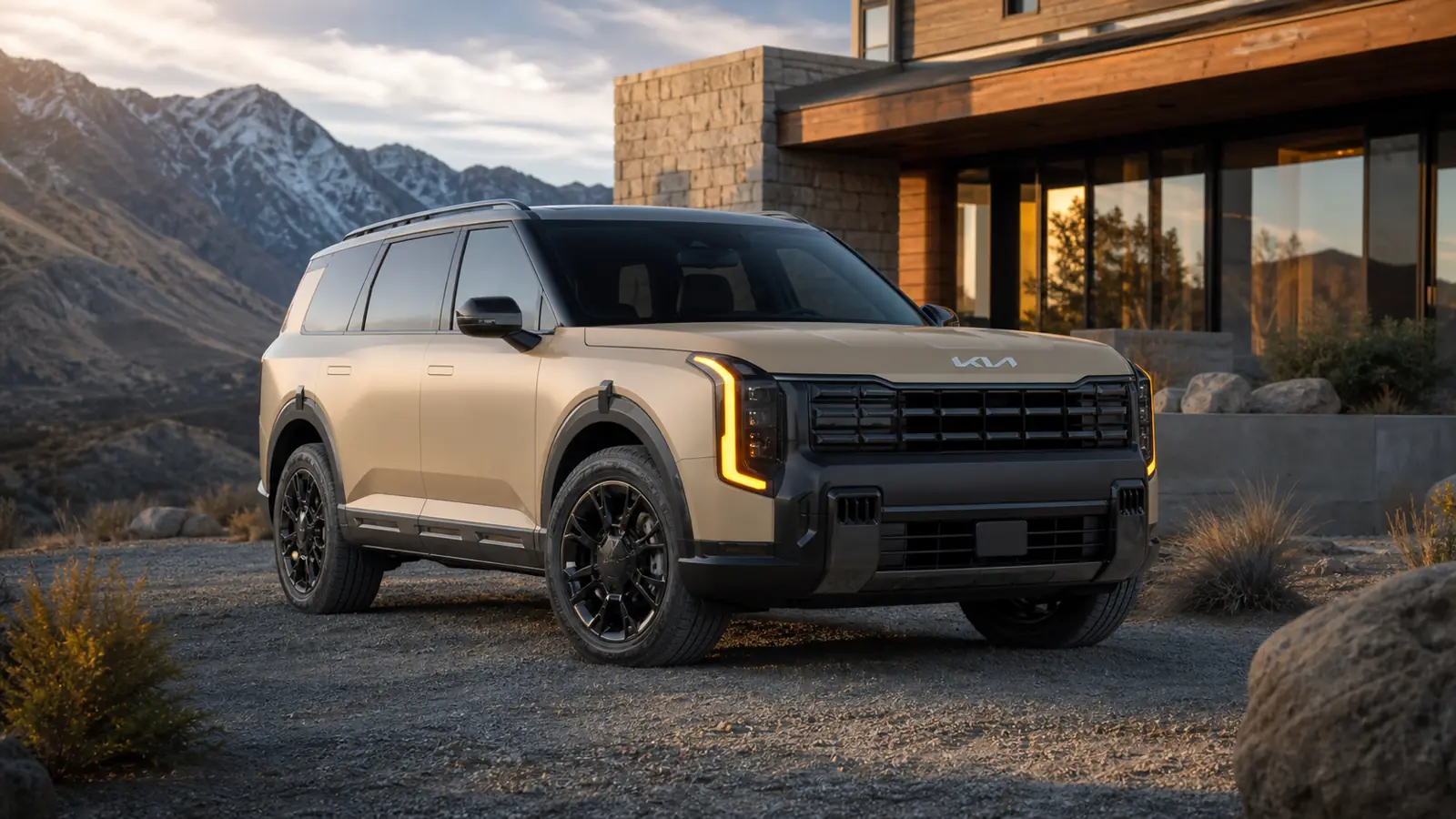
Nobody publishes a Kia Telluride reliability score
iSeeCars lists the Kia Telluride reliability score as coming soon. RepairPal states plainly that there is no reliability rating for the vehicle due to insufficient data, and offers a $573 midsize SUV segment average instead.
Both services model reliability from accumulated repair and survival data, and the Telluride launched for 2020. Six model years is not enough history for either method, so the gap is about the age of the data rather than about a result somebody is hiding.
What is and is not published for the Telluride
- Reliability score
- Not published by either service
- Safety score
- 10 out of 10 from iSeeCars
- Value retention
- 7.7 out of 10 from iSeeCars
- Annual repair cost
- No Telluride figure, only a $573 midsize SUV segment average
- Modelled lifespan
- Not published
The specific mistake to avoid is reading across from the safety score. A 10 out of 10 there describes crash-test performance, which is a statement about what happens in an accident rather than about whether the vehicle starts in February.
So the usual shortcut is unavailable. What replaces it is the vehicle's own federal record, which is unusually informative here and points somewhere most buyers would not guess.
Three campaigns tell Telluride owners to park outside
Start with the campaigns that carry an instruction rather than just a repair, because those are the ones that change what you do tonight.
Campaign 22V626 covers 2020 to 2022 vehicles fitted with a genuine Kia four-pin tow hitch harness, either from the factory or bought through a dealer. Debris and moisture accumulating on the harness module circuit board can cause an electrical short and a fire while the vehicle is parked or being driven.
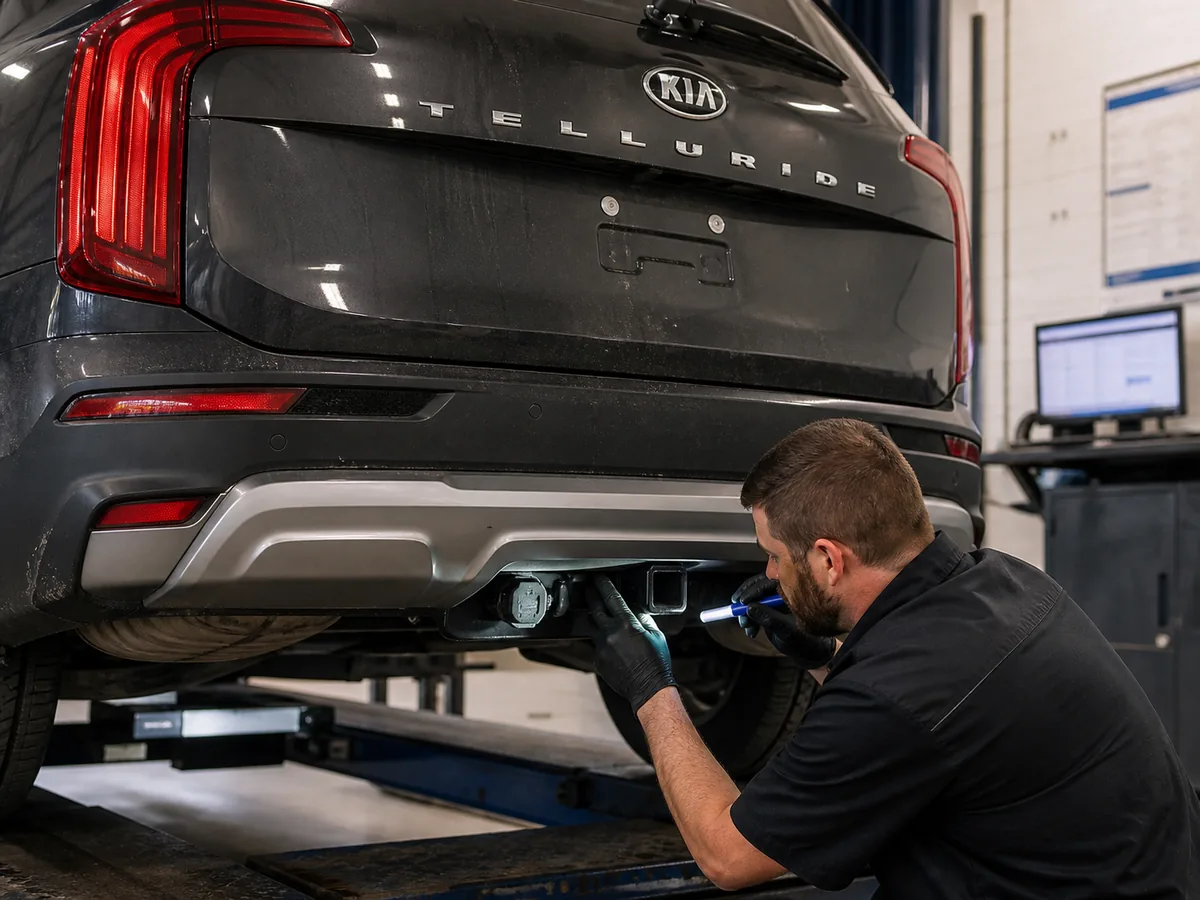
The remedy installs a new fuse and a wiring harness extension, and inspects or replaces the harness assembly where needed. Owners were advised to park outside and away from structures until it was done.
The second is broader. Campaign 24V407 covers 2020 to 2024 vehicles whose front power seat motor can overheat when the seat slide knob sticks, again with a fire risk while parked or driving, and letters went out on 30 July 2024.
That remedy installed a bracket for the power seat switch back covers and replaced the seat slide knobs. It also carried the same park-outside instruction.
Then came the third, and it is the one worth reading twice. Campaign 26V430 covers the same 2020 to 2024 vehicles where the slide knob is stuck or where the earlier 24V407 repair was performed improperly, and its remedy is different, installing an electronic fuse assembly.
All three repairs are free at a Kia dealer. What they cost a used buyer is the assumption that a campaign marked complete has settled the matter.
Run all three through the NHTSA recall lookup separately. A VIN that clears one of them tells you nothing about the other two.
What Telluride owners actually complain about is visibility
Ask anyone what to check on a used Telluride and you will hear about the V6 and the eight-speed automatic. The federal complaint record points somewhere else entirely.
The 2020 vehicle holds 746 complaints, the highest of any Telluride model year. Its largest single group is exterior lighting at 164 filings, with visibility and wiper items close behind at 121.
There is a campaign that matches. Recall 24V148 covers 2020 vehicles whose high beam headlights may fail, which is the sort of defect that generates filings from owners who drive rural roads at night.
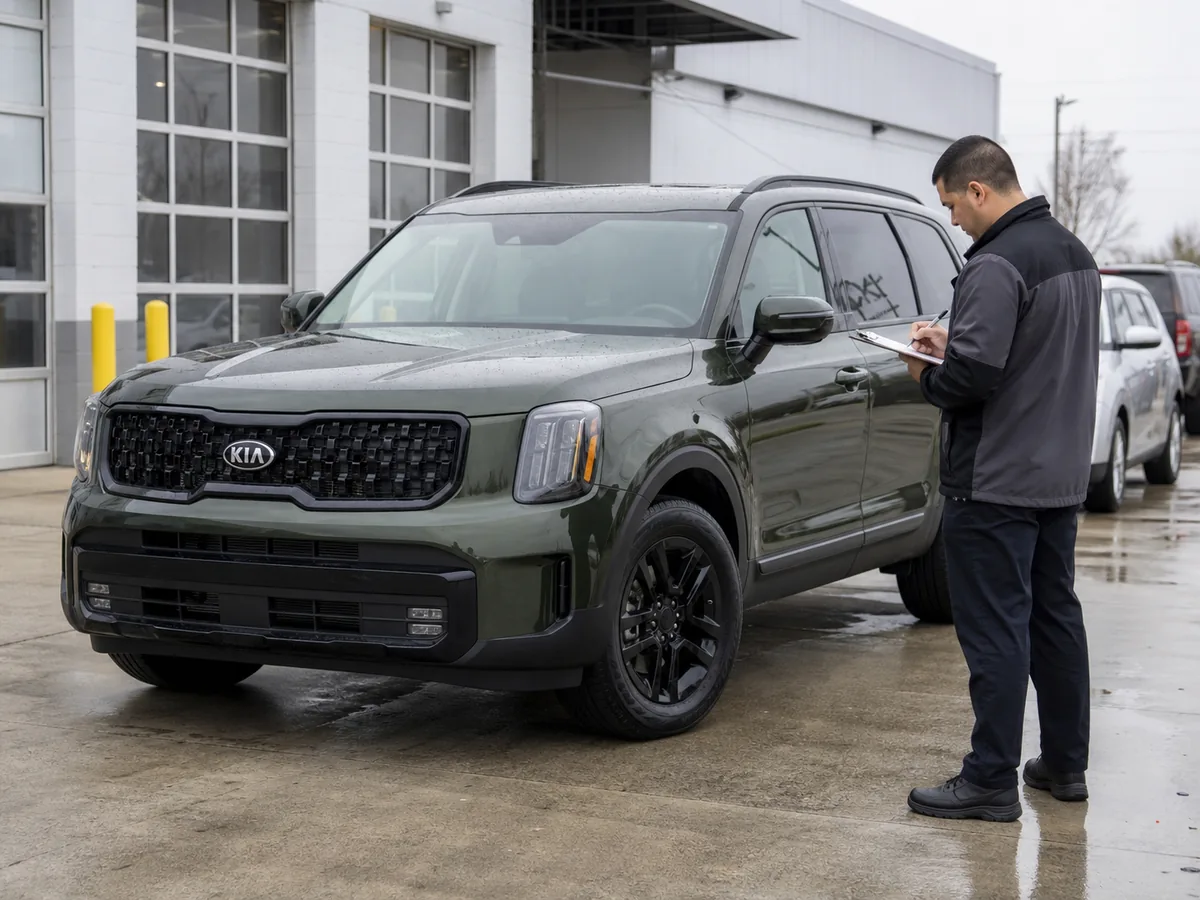
The pattern does not stop at the launch year. The 2022 vehicle holds 318 complaints and is again led by visibility and wiper items, at 65 filings, and volume then settles to 202, 213 and 97 across 2023, 2024 and 2025.
A complaint total counts owners who chose to file, not vehicles that failed, and a popular vehicle with an active owner community will always file more than a quiet one. The component those owners name is the part worth keeping.
Spend the test drive on the things you look through and with. Run the high beams, the automatic headlights, every wiper speed, the washers, the rear camera, the parking sensors and the blind spot monitors before you spend a minute listening to the engine.
Two campaigns can leave a Telluride moving after you park it
Campaign 24V214 covers 2020 to 2024 vehicles where the intermediate shaft and the right front driveshaft may not be fully engaged. The stated consequence is a roll-away while the vehicle is in Park.
Kia's interim advice was for owners to engage the emergency parking brake manually before leaving the vehicle, until the remedy could be performed.
That instruction is the part that misleads buyers. A seller who tells you they always use the parking brake may simply be describing a good habit, or they may be describing a vehicle that never had the recall work done.
| Campaign | Mechanism | Interim owner instruction | Completed remedy |
|---|---|---|---|
| 24V214 | Intermediate shaft and right front driveshaft not fully engaged | Engage the parking brake manually before exiting | Electronic parking brake software update and intermediate shaft replacement where damaged |
| 22V509 and 25V745 | Incorrect spare tire fitted at the factory | None issued | Replace the spare tire with the correct specification |
The spare tire campaigns belong in the same conversation for a different reason. An incorrect spare can impair the anti-lock braking and traction control systems if it is ever fitted, which is a defect that stays invisible until the worst possible afternoon.
So check the software update on the record, look for evidence of shaft replacement where the campaign called for it, and lift the boot floor to read the spare tire's own specification.
The V6 is the least interesting part of this vehicle
Given how much attention the powertrain gets in conversation, its campaign record is remarkably short.
One engine campaign exists. Recall 24V077 covers 2024 vehicles whose engine valve springs may break while driving, which Kia states can cause a loss of drive power and can put a hole in the engine block, creating a fire risk.
The remedy is the largest in this article, because dealers replace the engine sub-assembly. Letters were mailed on 5 April 2024 under Kia number SC296.
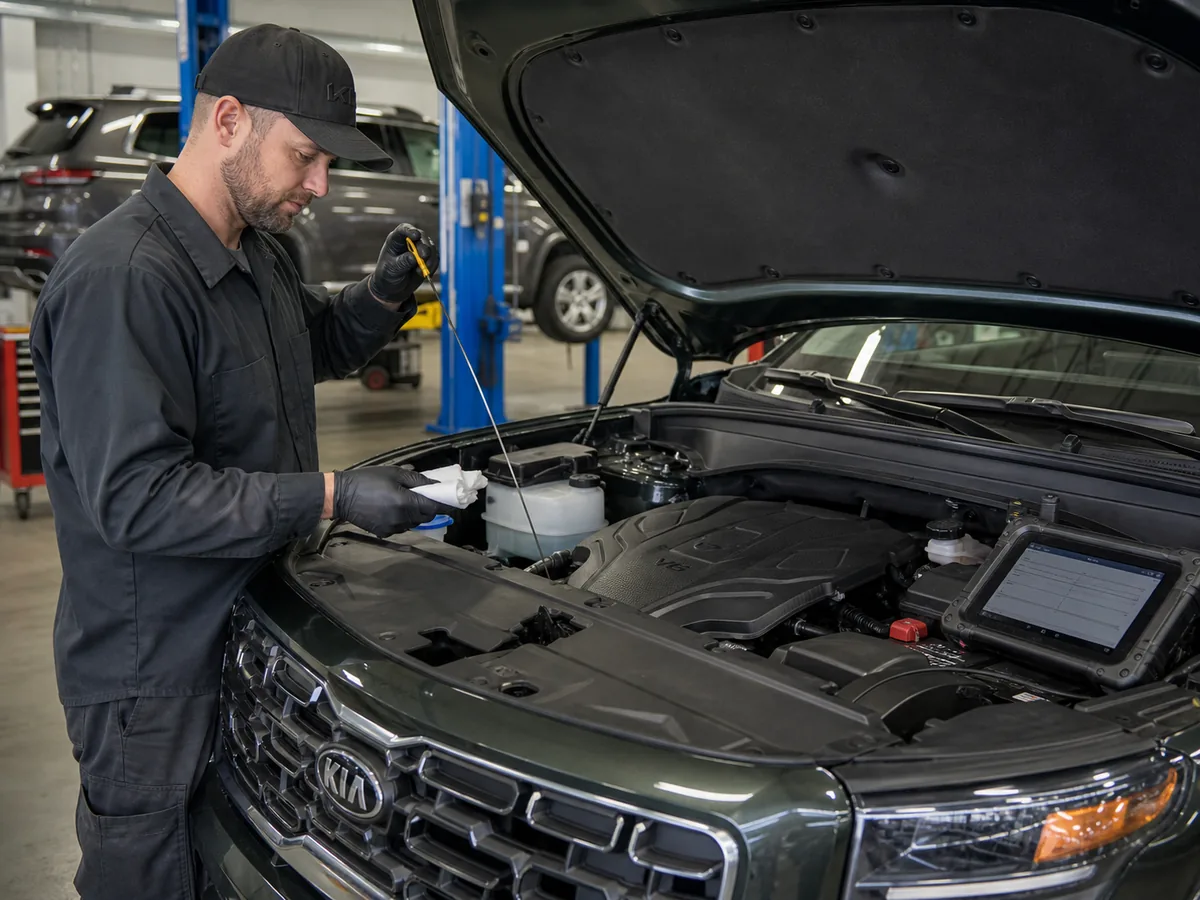
Outside that one model year, the 3.8-litre V6 and its eight-speed automatic have gone six model years without an engine or transmission campaign. That is a genuinely good record and it is the strongest single argument for the vehicle.
It does not mean skipping the engine. A cold start, honest fluid condition, no seepage around the covers, a stable temperature under load and a clean module scan still decide a six-year-old vehicle regardless of what has been recalled.
The campaigns that cover the reason you bought a three-row
A three-row SUV is bought to carry children, which makes the restraint and airbag campaigns the least skippable items in the whole record.
Campaign 19V594 covers 2020 vehicles whose front passenger, second row and third row seat belt assemblies may not tightly secure a child restraint system in a crash. Campaign 21V164 covers 2021 vehicles whose occupant classification and detection system may not detect a child restraint in the front passenger seat.
Campaign 23V035 covers 2023 vehicles where a manufacturing error may have damaged the wire harnesses for the second-row side airbags, so they may not deploy at all.
These get skipped because they read like paperwork. Nothing about a seat belt or an airbag harness announces itself on a test drive, and a vehicle with all three unresolved will drive exactly like one that has had them done.
Family-safety checks on a used Telluride
- Fit your own child seats in the positions you will actually use, and pull hard on each belt path and tether anchor
- Sit an adult in the front passenger seat and confirm the airbag status light behaves correctly, then repeat with a child seat fitted
- Check the second-row side airbag campaign on any 2023 vehicle and confirm the repair on a dealer record
- Run a full module scan and confirm no stored airbag or occupant classification faults before you agree a price
- Open the boot floor and confirm the spare tire matches the specification for the vehicle
Ten minutes with your own seats tells you more than any campaign printout. The printout tells you what a dealer says was done, and the seats tell you what the vehicle does now.
Judging remaining life without a lifespan figure
The missing number that buyers feel most is the modelled lifespan, because it is the one that answers how long this will serve.
It helps to remember what a survival model is actually made of. It is service records, duty cycle, climate, maintenance intervals and repair history, averaged across many vehicles until a single figure falls out.
On one vehicle you have access to all of those inputs directly, and in better detail than the average ever offers. The service chronology by date and mileage, the climate it has lived in, whether it towed, whether the oil intervals held, and what a full scan and an underbody inspection show today.
That is not a worse method than a published figure. It is the same evidence without the averaging, and the only thing it costs you is the comfort of a single number to quote.
Use the $573 midsize SUV segment average as a budgeting placeholder rather than a Telluride figure, and let the vehicle's own record set your expectation for the rest.
Buy it, reprice it, or walk
With no rating available, this purchase is settled entirely on records and on what you can test yourself.
What qualifies a Telluride is a clean VIN result on all three fire-risk campaigns, a completed roll-away remedy rather than a parking-brake habit, working high beams and wipers, child seats that fit and lock, and a service file with dates and mileages behind it.
What reduces the price is ordinary. Tires, brakes, battery age, suspension wear, kerbed wheels, interior damage from family use and any deferred service the file makes visible.
Pros
- Buy when all three park-outside campaigns are closed with dealer repair orders and the seat campaign has been re-checked against the 2026 reissue
- Buy when lighting, wipers, cameras and child-restraint hardware all pass a hands-on test rather than a paperwork check
- Reprice tires, brakes, battery, suspension and cosmetic family wear after the safety work is confirmed
Cons
- Walk away from any open fire-risk campaign, because the instruction attached to it is to keep the vehicle away from your house
- Walk away when the roll-away campaign is unresolved and the seller offers the parking brake as the answer
- Walk away from a seller who declines an independent scan, because with no published rating the scan is a large share of the evidence
The Telluride has earned most of what has been written about it, and none of that is evidence about the vehicle in front of you. Run the VIN yourself, on the day, and read the operation lines rather than the status column.