Test the same wheel size
Engine comparisons become unreliable when one CX-50 rides on small road tires and another uses large low-sidewall wheels. Ask for comparable wheel sizes, correct the pressure to the door label, and repeat the same rough street before judging Base, Hybrid, or Turbo.
Record impact harshness, tire noise, steering correction, and passenger movement. Price four installed tires and one wheel for each serious trim.
If the preferred engine is locked to a wheel that makes daily pavement uncomfortable, compare another trim or model instead of hoping the ride will improve after purchase.
Choose the engine only after wheel and tire differences stop distorting the road test and five-year cost.
Price the engines over five years
The base, Hybrid, and Turbo CX-50 solve different problems, so the engine decision needs one common five-year worksheet.
Base protects purchase price. Hybrid reduces fuel use.
Turbo buys torque and passing response, with peak output tied to premium fuel.
Choose the least expensive engine that completes the hardest weekly drive without creating a fuel, ride, or cargo regret.
| Engine | Cost to add | Value to prove |
|---|---|---|
| Base 2.5L | Lowest starting point | Acceptable loaded response |
| Hybrid | Purchase and finance premium | 38 mpg and enough annual miles |
| Turbo | Higher trim, fuel, insurance | Frequent passing, grades, or towing |
| Any engine | Wheel and tire choice | Comfortable ride on local pavement |
Get comparable out-the-door prices, exact VIN insurance quotes, and tire-set prices.
Add purchase, interest, energy, scheduled service, tires, registration, and a repair reserve.
Use the same annual miles and ownership period. Do not credit Hybrid with perfect MPG or Turbo with premium-fuel output when the owner plans to buy regular.
Run three route records. Note passengers, cargo, climate setting, merge speed, grade response, engine noise, transmission behavior, and fuel displayed after the same loop.
Repeat on rough pavement because large wheels can change the choice more than the engine.
A powerful trim with an uncomfortable ride is not an upgrade.
Hybrid buyers should place the break-even date before the planned trade. Turbo buyers should calculate the annual premium-fuel difference and decide whether 227 hp on regular still justifies the price.
Base buyers should price the cost of an early trade if loaded response becomes frustrating.
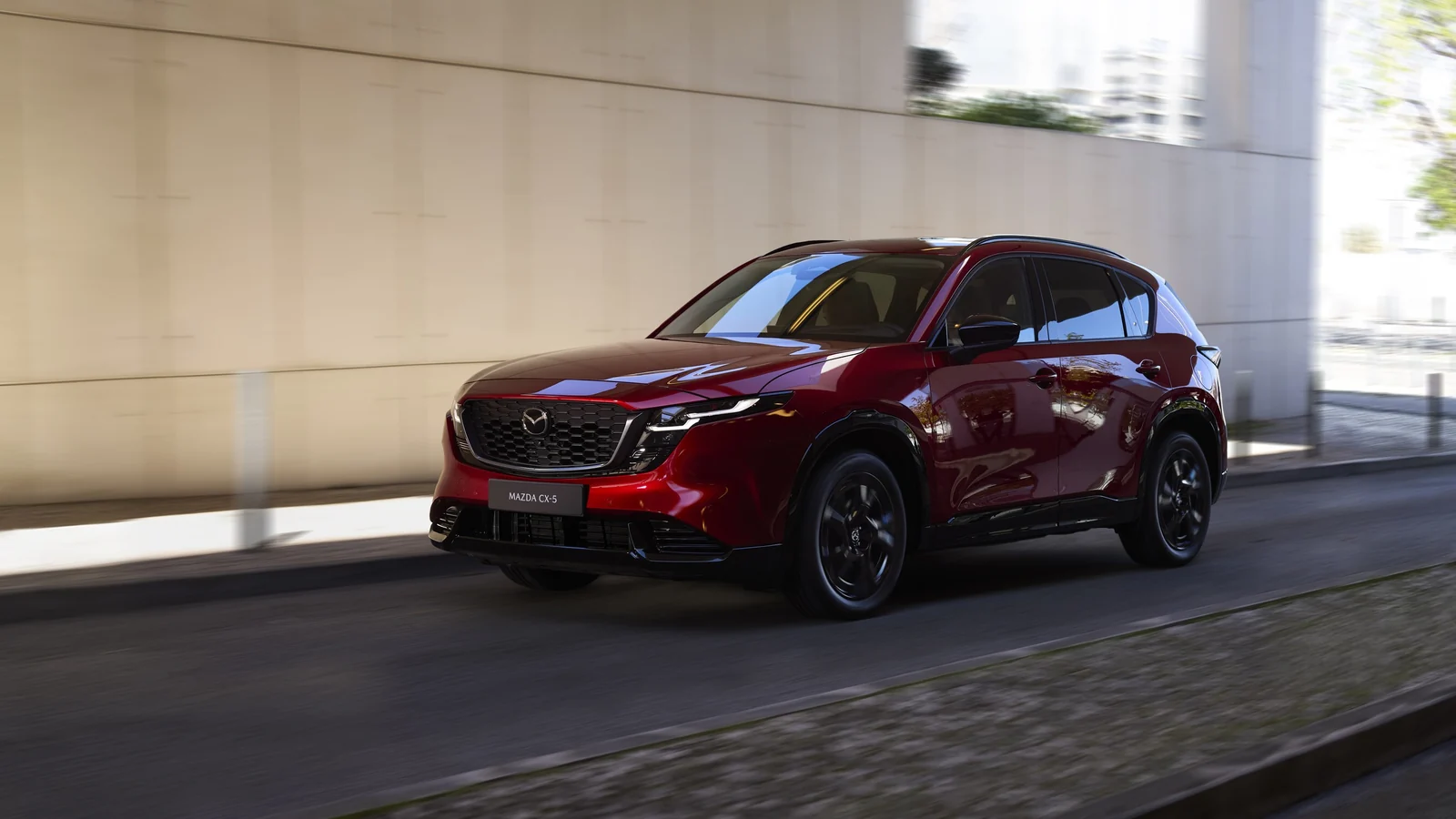
Compare the Toyota RAV4 Hybrid when efficiency and resale are priorities. Compare the Mazda CX-5 when ride comfort and familiar gas hardware matter more than CX-50 styling.
Those alternatives give the worksheet a real boundary instead of keeping every dollar inside one model.
Keep the winning price difference in the ownership budget. A base-engine buyer can reserve it for tires and maintenance.
A Hybrid buyer can preserve savings by avoiding large wheels. A Turbo buyer can shorten the loan instead of adding appearance packages.
The correct engine remains affordable after the first tank and the first tire replacement.
Start with the base engine
The 2026 Mazda CX-50 starts with a 187 hp 2.5L four-cylinder, a six-speed automatic, and standard AWD.
That combination keeps price and complexity controlled, but it must be tested with passengers and cargo.
Start with a moderate-wheel base-engine trim, then pay for Hybrid or Turbo only when the normal route exposes a clear need.
Load the vehicle as it travels weekly. Add passengers, child seats, work gear, or a full cargo box.
Start cold, engage drive and reverse, cross a busy road only with a safe gap, merge at highway speed, climb a grade, and make a legal pass.
The engine can rev. It should not hesitate, surge, overheat, or deliver inconsistent response.
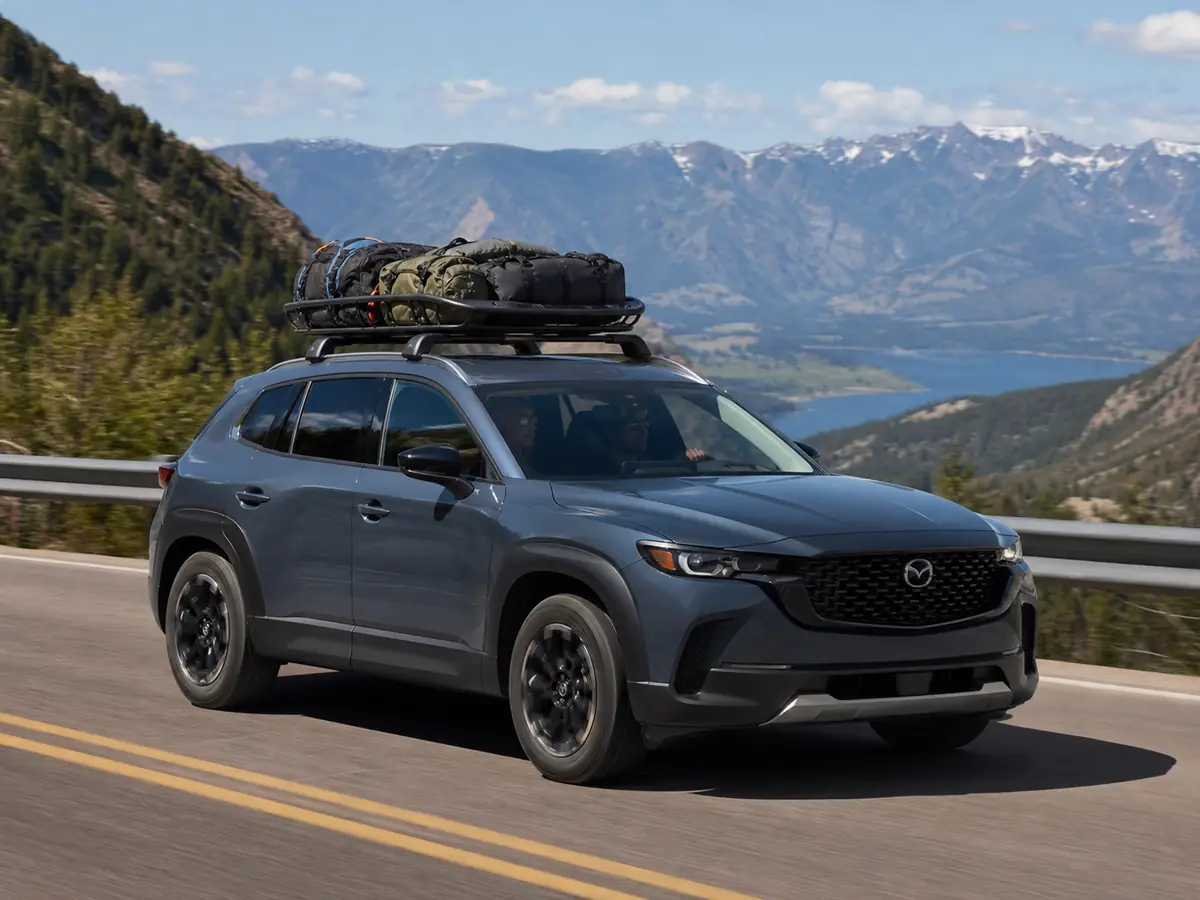
The six-speed automatic uses fewer ratios than many rivals. Pay attention to whether it chooses a gear promptly and holds it smoothly.
Test a rolling acceleration and a descent. Delayed engagement, repeated hard shifts, flares, warning lights, or a burnt odor require diagnosis.
Base-engine value also depends on wheels. Smaller wheels usually provide more tire sidewall, a quieter impact, more replacement choices, and less pothole risk.
A high trim with large wheels can make the same engine feel less comfortable without making it faster.
Compare the Mazda 3 if rear-seat and cargo height are not required.
The sedan or hatchback may be lighter and cheaper. Compare the Subaru Crosstrek when a smaller AWD body works.
The compact SUV category includes roomier options when the CX-50's lower roof becomes the limit.
Get a written out-the-door quote before testing the expensive engines.
A clear base price creates a benchmark. Turbo and Hybrid must repay every additional dollar through response, fuel, towing, or resale that the buyer can defend.
The hybrid buys fuel range
The CX-50 Hybrid makes 219 hp, uses an electronic continuously variable transmission and electric AWD, and carries a 38 mpg combined rating.
Mazda lists about 551 miles of total driving range. It is the fuel-saving choice, but its power delivery differs from the gas CX-50 and should be judged as its own vehicle.
| Measure | Base gas | Hybrid |
|---|---|---|
| Output | 187 hp | 219 hp |
| Transmission | 6-speed automatic | eCVT |
| Drive | Mechanical AWD system | Electrified AWD system |
| Fuel economy | Lower, trim dependent | 38 mpg combined |
| Best use | Lower price and modest miles | Traffic and high annual miles |
Calculate annual gallons from exact ratings and realistic use. At 15,000 miles, 38 mpg uses about 395 gallons.
A gas CX-50 averaging 28 mpg uses about 536. Multiply the 141-gallon difference by a conservative local price.
Compare savings with the actual hybrid premium, interest, insurance, and planned ownership.
City traffic usually helps the hybrid case because regenerative braking can recover some energy. High speed, cold starts, cabin heat, roof cargo, elevation, tire pressure, and short ownership can weaken it.
Run a poor-year estimate. A break-even that arrives after the planned trade date is not a fuel-saving purchase.
Drive the hybrid on the same loaded route as the base engine. Test launch, engine start, steady traffic, highway merge, grade, brake blending, and cabin noise.
The power meter and engine behavior may feel different from Mazda's six-speed gas setup.
Decide whether the efficiency is worth that change in character.
The 551-mile estimate depends on EPA assumptions and tank capacity, not a promise for every trip.
Use actual MPG and reserve rather than planning to arrive with zero displayed range.
Weather and speed can reduce distance.
Compare the hybrid SUV index and Honda CR-V Hybrid. Honda gives a strong efficiency and space benchmark.
The CX-50 must win with road feel, price, equipment, or a size that fits the buyer better.
Choose Hybrid when annual miles and traffic repay the premium, and when its different response still feels right on the same road that made the CX-50 attractive.
Turbo power changes with fuel
The CX-50 Turbo produces 256 hp and 320 lb-ft on 93-octane premium fuel.
With regular 87 octane, Mazda lists 227 hp and 310 lb-ft. The engine remains strong on regular, but the advertised peak output carries a fuel condition that belongs in the purchase calculation.
| Fuel | Output | Torque | Practical question |
|---|---|---|---|
| 93 octane | 256 hp | 320 lb-ft | Will the owner buy premium consistently? |
| 87 octane | 227 hp | 310 lb-ft | Is this still enough to justify Turbo price? |
| Either approved fuel | Follow manual | Follow manual | Use fresh fuel from a trusted station |
Drive the Turbo loaded on a highway merge, a grade, and a safe passing section.
Feel low-rpm response rather than chasing full throttle. Test the six-speed at parking speed and during a downshift.
Turbo lag can exist, but repeated hesitation, surging, hard shifts, smoke, fuel odor, overheating, or warnings need diagnosis.

Calculate the octane difference over annual miles. Multiply expected gallons by the local premium spread.
If the owner will always use regular, compare the 227 hp output with the Hybrid's 219 hp and fuel economy, not only the premium-fuel headline.
Follow the owner's manual and never use fuel below the required minimum.
Turbo value can include towing and confident passing, but capacity still depends on exact equipment, payload, hitch, trailer brakes, and tongue weight.
A more powerful engine does not increase the driver's door-label payload. A light trailer used twice a year may not justify turbo fuel and insurance every day.
The gas vehicle hub contains rivals with different turbo and naturally aspirated choices. Compare the Ford Escape 2.0T if acceleration matters more than Mazda road feel.
Compare a larger SUV when passenger and trailer load approach CX-50 limits.
Buy Turbo when its torque solves frequent loaded acceleration or towing. Decide the fuel plan in advance so the power and ownership cost are both honest.
Wheel size writes the ride
CX-50 steering and body control can feel precise, but wheel and tire choice determine whether that character remains comfortable on local pavement.
A larger wheel uses a shorter tire sidewall, which can transmit sharper impacts and costs more to replace.
Test the exact trim rather than assuming every CX-50 rides the same.
Drive moderate and large-wheel versions over the same broken pavement, expansion joints, highway concrete, and tight parking route.
Set tire pressure to the door-label value first.
Listen for impact noise and tire roar. Feel steering center, kickback, body movement, and whether passengers move uncomfortably over repeated bumps.
Get installed tire quotes with balancing, disposal, alignment, and sensors.
Check availability in the exact size. A rare size can cost more and take longer to source during travel.
Price one replacement wheel and ask whether cosmetic damage is excluded from wheel-and-tire coverage.
Tires also change handling more than many trim labels. Brand, model, tread depth, temperature, and pressure can make one CX-50 feel quieter or more secure than another.
Compare similar tires where possible. Do not credit the engine or suspension for a difference caused by one worn set.
AWD owners should maintain closely matched circumference. Measure tread on all four tires and follow Mazda guidance after one is damaged.
Replacing a single tire without measurement can create a mismatch.
Large wheels can raise insurance claims after pothole damage and may reduce snow-tire choices. A separate winter wheel set can improve seasonal flexibility but needs storage and upfront cost.
Choose the smallest wheel that delivers the equipment and handling you need. A comfortable CX-50 on correct tires is more valuable than a striking trim that punishes every damaged road.
Cargo is long, not tallest
The CX-50 cargo area favors a long floor and outdoor gear, while the roofline is lower than some upright compact SUVs.
That shape can work well for bags, skis, or folded bicycles but can frustrate a tall dog crate, stroller handle, or bulky square object.
Test dimensions with the objects, not only cubic feet.
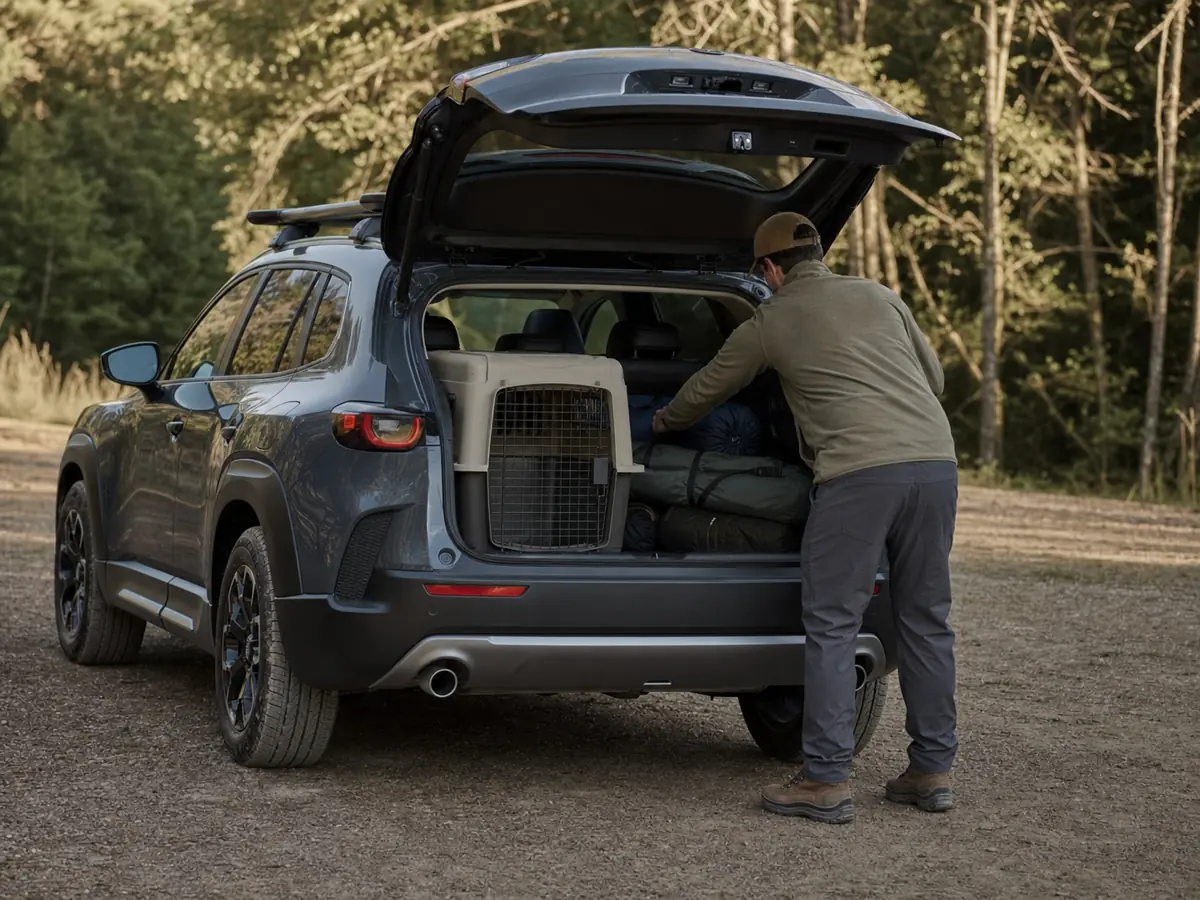
Load the largest weekly object through the hatch. Check opening height and width, floor height, wheel-well intrusion, seatback angle, cover clearance, tie-downs, and rear visibility.
Close the hatch gently and make sure glass does not press against the load. Fold only one seat to see whether a passenger can remain beside long gear.
Install child restraints before judging cargo. A rear-facing seat can reduce front passenger travel, and a wide booster can block a buckle.
Check lower anchors, top tethers, rear-door opening, roof clearance, and adult space beside each restraint.
Five seats on paper do not guarantee a comfortable five-person trip.
- Load the tallest rigid object first
- Add long gear without blocking a rear passenger
- Keep the camera and rear window useful
- Secure heavy items low and forward
- Open the hatch below the home garage door
- Reach emergency equipment with cargo aboard
Roof rails can carry long equipment but raise total height and center of gravity.
Confirm dynamic roof load, crossbar spacing, attachment instructions, and garage clearance. A roof box adds drag, noise, fuel use, loading effort, and storage work.
Compare the Subaru Forester if height and visibility matter. Compare the Hyundai Tucson for a roomier conventional shape.
CX-50 should win when its long cargo floor and lower body match the exact gear while its road behavior matters more than maximum height.
CX-50 cargo is practical for long, low objects. Buyers carrying tall rigid gear must prove hatch height before choosing its styling and handling.
AWD cannot fix poor tires
Every 2026 CX-50 includes AWD. The system can move torque among wheels, but it cannot create grip on worn rubber or shorten braking distance on snow.
Four suitable tires, correct pressure, and safe speed remain the foundation.
Inspect size, brand, model, load and speed rating, production date, tread depth, pressure, damage, and wear on every tire.
A single new tire beside three worn ones can create a rolling difference. Follow Mazda's measurement and replacement guidance rather than accepting that AWD makes mismatches harmless.
Choose tires for the roads used most. A city commuter may prefer quiet all-seasons.
A mountain driver may need dedicated winter tires. A vehicle that visits maintained dirt roads does not automatically need aggressive tread.
Compare wet braking, snow performance, noise, and replacement availability for the exact tire.
Test drive in poor weather only when legal and safe. Feel gentle launch, steering response, brake control, and system warnings.
Learn the drive modes from the manual. A mode changes calibration and cannot protect the underbody from an obstacle or cancel excessive speed.
Price a complete tire set plus mounting, balancing, disposal, alignment, seasonal storage, and sensors.
Include a plan for one damaged tire during travel.
Larger wheel sizes may offer fewer affordable choices.
The AWD category includes vehicles with different clearance and tire packages. Compare the CX-50 with the Subaru Crosstrek if snow and dirt access matter more than cargo width.
Standard AWD has value when the owner supports it with four matched tires. It cannot rescue a poor tire choice, an overload, or a driver traveling too fast for conditions.
Safety evidence follows the build
Match CX-50 safety claims to the exact model year, trim, headlights, and build.
Crash procedures and vehicle equipment can change. Open the current IIHS page, read individual tests, and use the VIN in the NHTSA recall lookup.
Updated side and moderate-overlap tests can reveal rear-passenger performance that older procedures measured differently.
Check whether headlight results vary with trim. Save the model year, build month, lamp type, and current results with the purchase records.
Install every child restraint in the intended position. Locate lower anchors and top tethers, tighten the seat, and check adjacent buckle access.
Test adult belt fit and head restraint position. Secure outdoor gear so a cooler, tool, or bottle cannot strike a passenger during hard braking.
Demonstrate automatic braking alerts, blind-spot monitoring, lane support, adaptive cruise, cameras, and parking sensors on a legal route.
Learn settings while parked. Rain, dirt, glare, faded lines, unusual traffic, windshield damage, and collision repairs can limit sensing.
Ask for invoices and calibration records after windshield, bumper, radar, camera, suspension, wheel alignment, pillar, roof, seat-belt, or airbag repair.
Watch startup lights and scan all modules. Clean paint cannot prove that a restraint or sensor was restored correctly.
Check headlights after dark. Confirm beam aim, automatic functions, low and high beam reach, and corner visibility on the actual route.
Tires and speed remain important regardless of crash ratings.
Review the site's research standards and buying disclaimer. Use exact-year evidence to compare the CX-50, then complete the safety plan with working restraints, lights, sensors, tires, and verified repairs.
Inspect road and trail damage
A used CX-50 may have traveled highways, roof-rack trips, gravel roads, or winter salt.
Honest use is not a reason to reject it. Missing records, underbody strikes, mismatched tires, alignment problems, water entry, or warning history are.
Start cold. Check oil and coolant by the manual, watch warning lights, and listen for rattle, smoke, fuel odor, or uneven idle.
Test drive and reverse engagement, parking speed, a highway merge, a grade, and braking.
Scan every module.
| Area | Check | Evidence |
|---|---|---|
| Base or Turbo | Cold response, six-speed shifts, cooling | Records, road test, scan |
| Hybrid | Transitions, brake blending, cooling, warnings | Hybrid inspection |
| AWD | Four matched tires and tight-turn behavior | Measurements and service |
| Chassis | Alignment, wheel damage, underbody strikes | Lift inspection |
| Body | Roof mounts, seals, glass, paint | Invoices and moisture check |
| Safety | Cameras, radar, windshield calibration | Scan and calibration report |
Turbo buyers should inspect charge-air plumbing, oil history, cooling, and operation under load.
Hybrid buyers should inspect the battery cooling path and test engine transitions. Base-engine buyers still need to check cylinder-deactivation behavior and applicable updates by VIN.
Do not diagnose from internet reputation alone.
Operate every screen, camera, phone connection, seat, climate control, liftgate, window, lock, outlet, roof feature, and driver aid.
Check headliner, spare area, carpet, seals, and odor for water. Inspect roof-rack mounting and underbody shields for damage or improvised wiring.
Four tires should match closely. Uneven wear can point to pressure, alignment, suspension, wheel, or collision trouble.
Price replacements before negotiating.
Use the new versus used guide to compare discount with remaining warranty. Confirm coverage by VIN, in-service date, mileage, title, owner status, and market.
A used CX-50 is ready when its exact powertrain, alignment, tires, body, and electronics match the maintenance record and pass an independent inspection.
Choose engine before trim
Choose the base engine when its loaded response is acceptable and the lower out-the-door price preserves the budget.
Choose Hybrid when high annual miles and traffic repay the premium. Choose Turbo when passing, grades, or towing use its torque often enough to justify fuel and insurance.
Run the decision in order. Load passengers and cargo, drive the base engine on the difficult route, calculate Hybrid fuel value, price Turbo on regular and premium fuel, compare wheel ride, test cargo height, verify safety evidence, complete an inspection, then compare total prices and interest.
Get exact insurance quotes and full tire-set prices. Build a five-year worksheet with purchase, interest, fuel, service, tires, registration, accessories, and repair reserve.
Use conservative MPG and resale. Keep trade, finance, and vehicle price separate.
A fully loaded Turbo can enter a price band with larger or more luxurious alternatives.
A Hybrid can lose its economic case when annual miles are low. A base model can become false economy when the driver dreads every merge.
The correct choice makes both route and budget easier.
Review the Mazda brand range before paying for a trim that changes the mission. A CX-5 may offer a different comfort balance, while Mazda3 may serve drivers who do not need SUV cargo.
The CX-50 should be bought engine first and trim second. Moderate wheels, a realistic loaded drive, and five-year math prevent appearance from deciding a mechanical purchase.