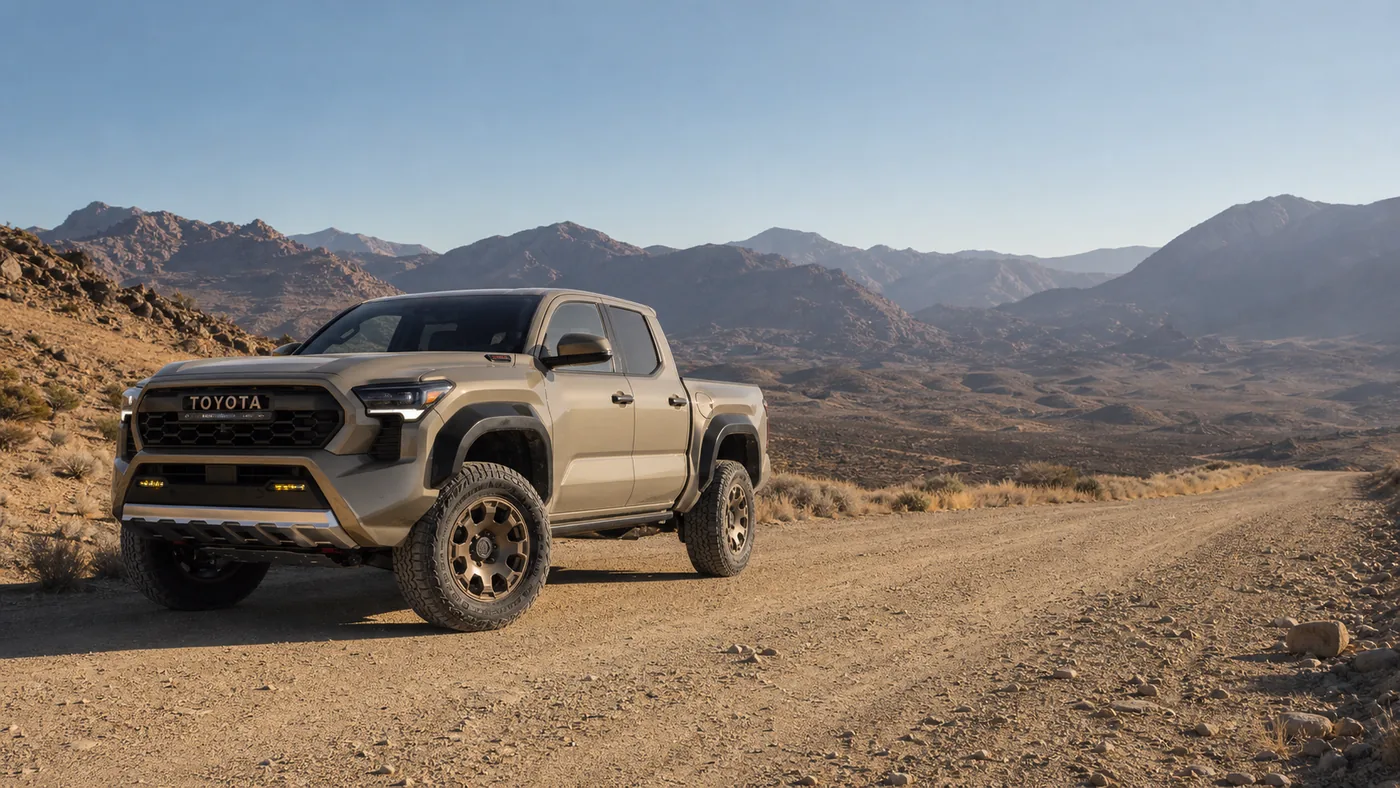
The i-FORCE V6 is the cleaner value choice
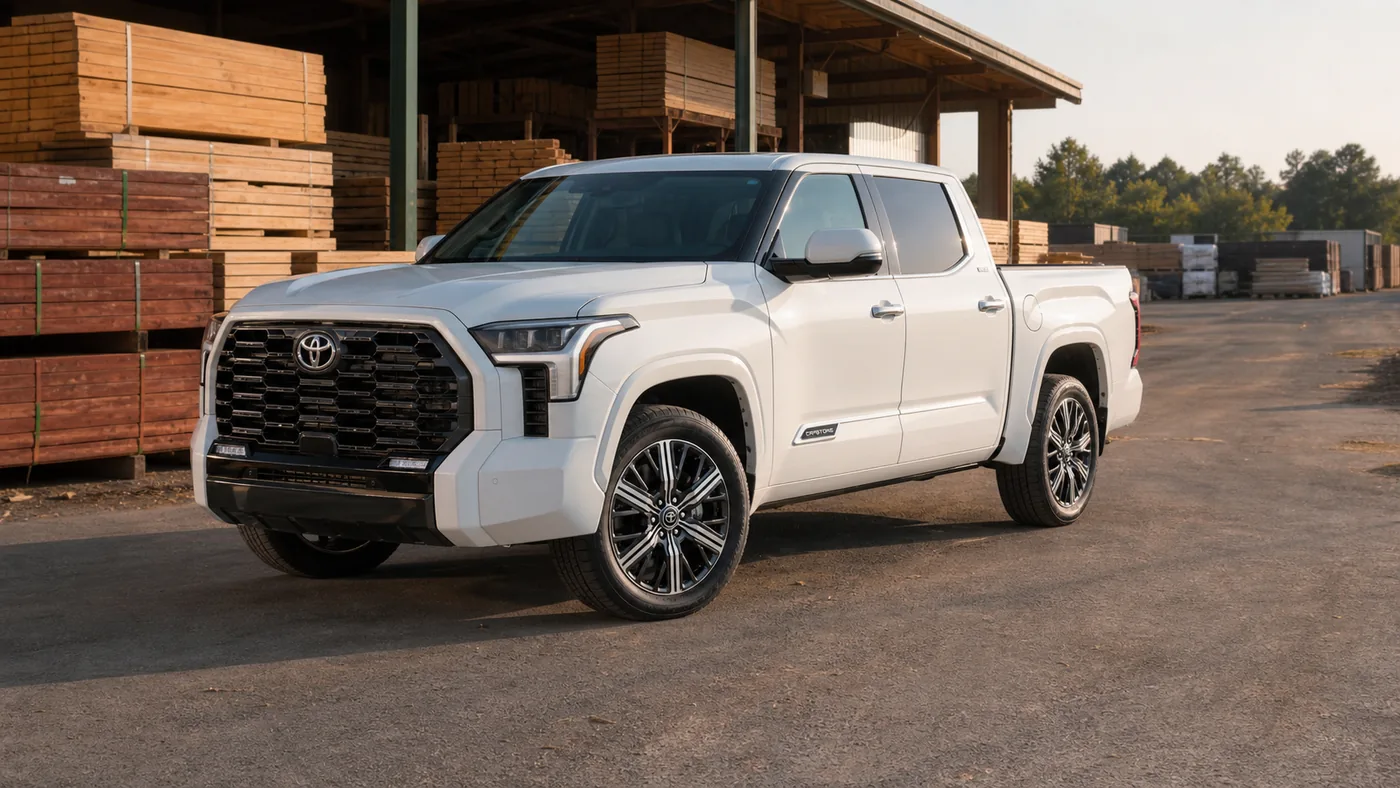
The 2026 Toyota Tundra starts with a twin-turbo 3.4L V6 rather than the V8 used by the previous generation.
SR uses a 358 hp version, while most buyers see the 389 hp and 479 lb-ft tune.
Every engine uses a 10-speed automatic.
SR5 is the sensible baseline because it combines the stronger gas tune with useful tow equipment and a broad cab-and-bed range. It avoids the hybrid premium, battery packaging, and luxury-trim cost while retaining enough torque for normal full-size work.
| Version | Output | Best fit |
|---|---|---|
| SR i-FORCE | 358 hp, 406 lb-ft | Fleet and price control |
| SR5 and upper i-FORCE | 389 hp, 479 lb-ft | Broad mixed use |
| i-FORCE MAX hybrid | 437 hp, 583 lb-ft | Strong response and equipped trims |
Drive SR5 gas before treating the hybrid or a luxury trim as the default.
Check low-speed response, a highway downshift, and a grade with passengers aboard. The gas truck should feel settled and predictable rather than merely adequate on a short empty test.
- Start with SR for strict fleet cost control
- Start with SR5 for broad private and work use
- Move to hybrid for repeated demand for stronger response
- Compare the payload label after every trim or drivetrain change
The pickup truck field includes rivals with higher maximum figures, but capability only matters when the exact label covers your load. Start with SR5 gas and make every upgrade prove a repeated benefit.
Tundra hybrid torque matters more than its MPG gain
The i-FORCE MAX hybrid puts an electric motor between the engine and transmission to produce 437 hp and 583 lb-ft.
That output sharpens launch response, grade climbing, and passing. It does not turn the Tundra into an economy vehicle.
Toyota lists up to 20 city, 24 highway, and 22 combined mpg for qualifying 4x2 hybrid trims.
A comparable gas truck can be close enough that fuel savings alone take a long time to recover the premium. Hybrid makes more sense when its torque and included Limited, Platinum, 1794, TRD Pro, or Capstone equipment already fit the purchase.
Calculate fuel cost with local prices, annual miles, and the exact EPA configuration. Then compare the hybrid premium and included trim equipment with the gas truck.
A buyer who tows or climbs grades often may value the immediate response even when the fuel calculation does not repay the difference.
- Use the same annual mileage for gas and hybrid
- Compare the exact drivetrain and wheel configuration
- Check payload after selecting hybrid equipment
- Buy the added torque only when it improves repeated trips
The hybrid vehicle hub shows how unusual this power-first setup is.
Compare it with the Ford F-150 hybrid before paying.
Buy i-FORCE MAX for response and configuration, not for a promised fuel-cost miracle.
Towing starts with the door label, not 12,000 pounds
Toyota lists 12,000 pounds maximum towing and up to 1,850 pounds payload, but those are configuration ceilings. Cab, bed, drivetrain, trim, options, passengers, cargo, and tongue weight change the truck in front of you.
A 9,000-pound loaded trailer at 12 percent tongue weight uses about 1,080 pounds of payload.
Four adults, a bed cover, tools, and cargo can consume the remainder. Photograph the loading label and calculate the combination before ordering the trailer.
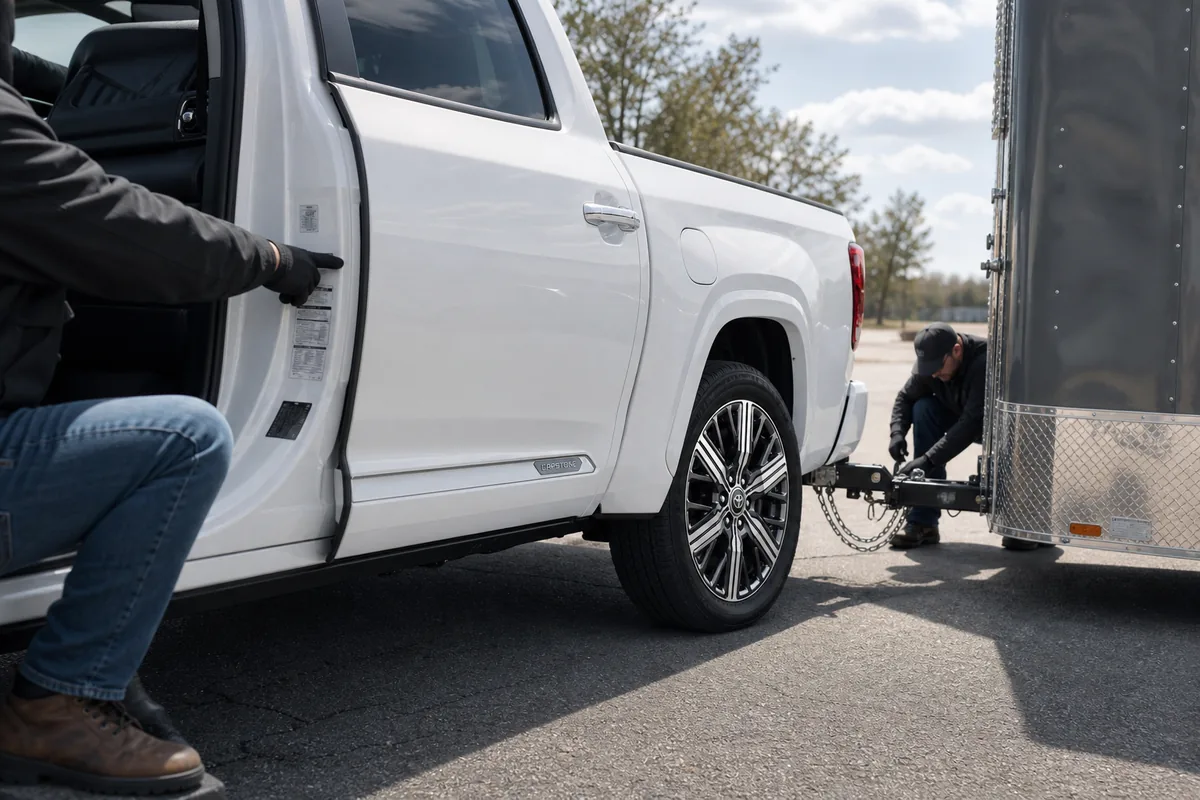
- Verify the receiver, controller, mirrors, and wiring
- Weigh the loaded trailer and tongue
- Keep tires at the label pressure for the load
- Reduce cargo when payload is exceeded
The tire-pressure procedure is a safety step under load. A GMC Sierra 1500 may offer a higher ceiling, but label-to-label comparison is the honest method.
Payload can end the towing calculation before engine power does.
CrewMax comfort and bed length pull in opposite directions
Double Cab offers more bed choice, including the available 8.1-foot bed, while CrewMax gives the rear space most families expect and offers 5.5-foot or 6.5-foot beds. The composite bed resists normal dents and corrosion, but its length still decides whether lumber, motorcycles, or camping equipment fits with the tailgate closed.
CrewMax also provides Toyota's power vertical rear window. It improves airflow and access, but buyers should test operation and inspect seals on used trucks.
Bring child seats and luggage together because a roomy cab does not create covered cargo.
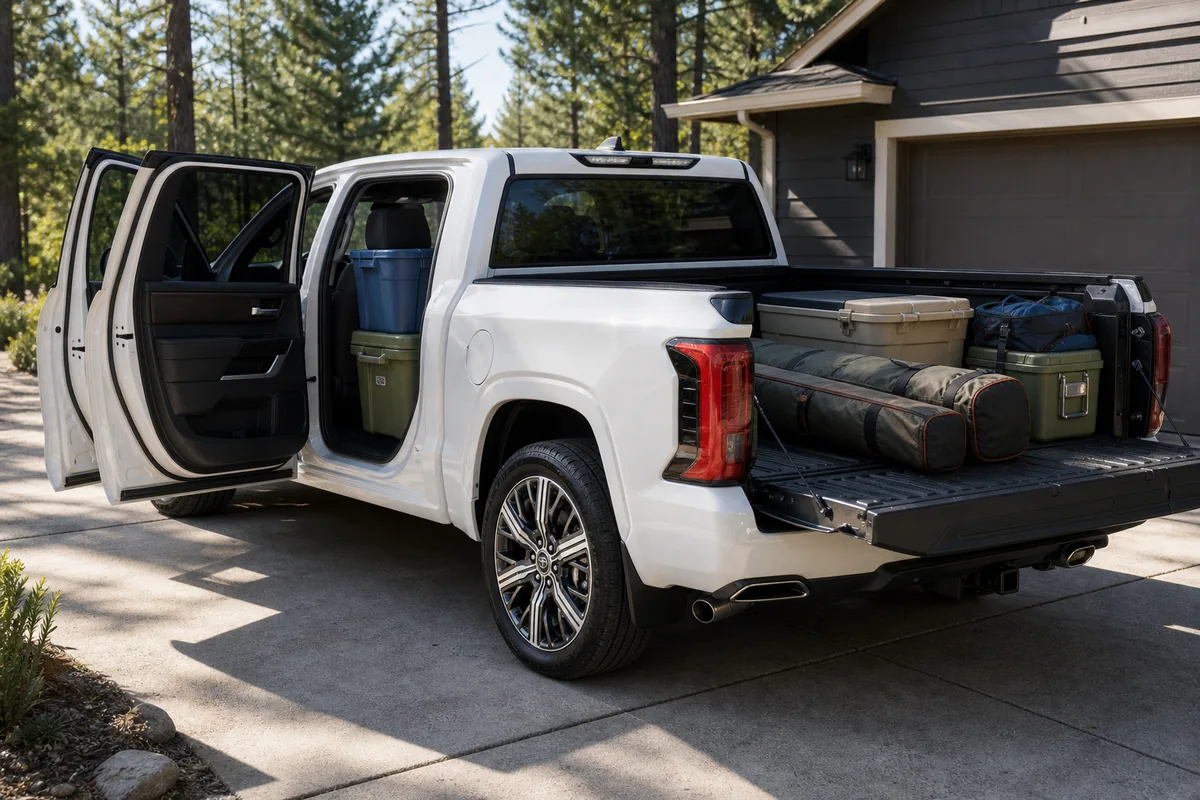
Run the fit test with the front seat set for the regular driver. Long cargo should lie in the bed as it will travel, while luggage or electronics should have a dry and secure location.
Include a bed cover or rack in the test because either can restrict cargo height, add weight, and change garage clearance.
- Install the child seat before judging rear space
- Measure the longest regular bed item
- Open the tailgate in the normal parking spot
- Include the receiver, cover, or rack in garage measurements
The five-seat vehicle group includes easier family transport. A Toyota Highlander protects luggage and parks more easily when an open bed is rarely needed.
Choose CrewMax for people and Double Cab for work length only after loading both.
Safety is a strength, but early engines need recall proof
IIHS applies Good small-overlap and updated side results to 2022 through 2026 Tundra extended-cab models. Standard lane-departure warning and prevention are listed, while blind-spot detection and rear automatic braking depend on equipment.
Used 2022 and 2023 nonhybrid trucks require special attention. NHTSA recall 24V381 covers certain V35A-equipped Tundras because machining debris may lead to knocking, rough running, a no-start condition, or loss of power.
The published population is 102,092 vehicles, but the VIN determines inclusion.
Keep recall proof and present condition in separate columns. A completed campaign shows that the listed remedy was recorded for the VIN.
A cold start, scan, fluid check, and road test show how the truck operates now.
Both are needed on an early nonhybrid candidate.
- Run the VIN through the official recall lookup
- Match dealer paperwork to the same VIN
- Start the engine cold and listen for abnormal operation
- Scan for current, pending, and recently cleared faults
- Confirm fitted driver aids and rear braking equipment
The recall report explains that the affected configuration is nonhybrid. That distinction does not make every hybrid trouble-free or every gas truck defective.
The NHTSA source policy helps separate campaign evidence from anecdotes.
A closed recall is required evidence, not a substitute for current engine condition.
Used Tundra inspection must cover turbos, shifts, and work history
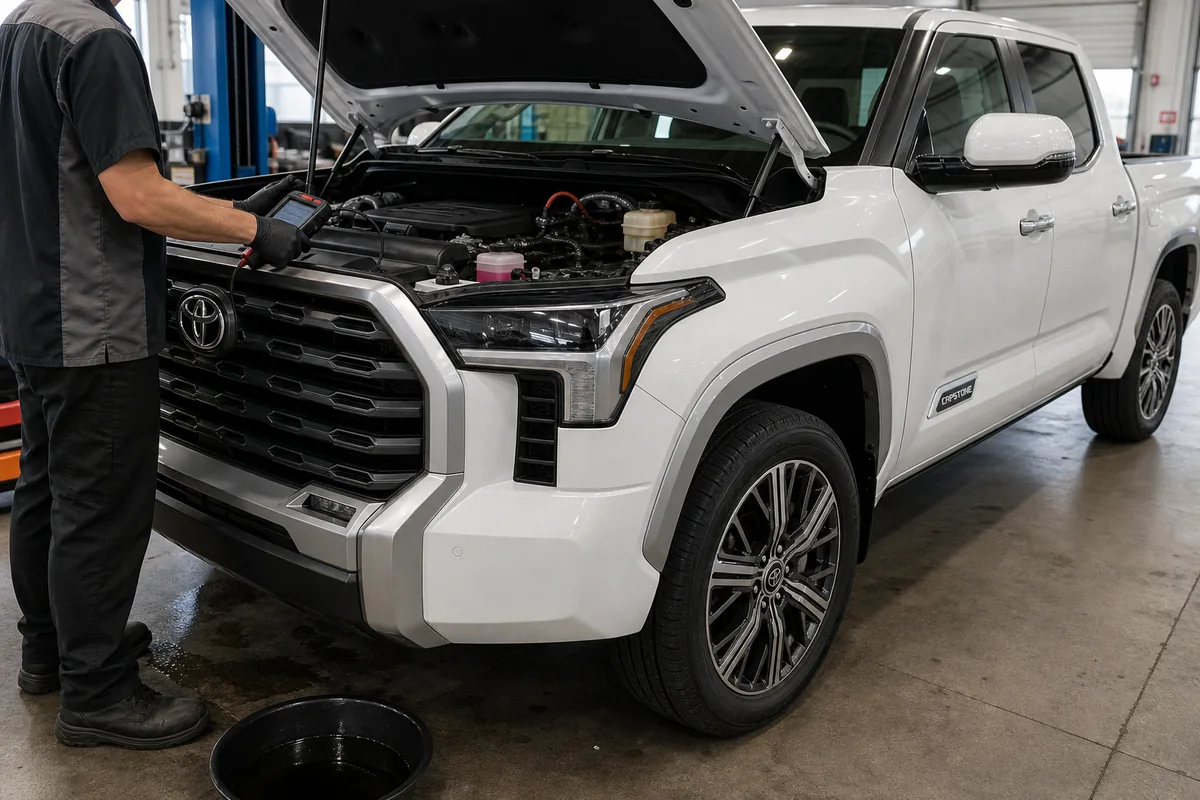
Start a used Tundra cold and listen for abnormal knock, rattle, or uneven running. Check oil and coolant, then drive through low-speed shifts, steady cruise, highway kickdown, and a warm restart.
Hybrid trucks should transition smoothly and show no battery, inverter, or cooling warnings.
Inspect the frame, hitch, composite bed, skid plates, shocks, tires, brakes, cameras, rear window, and trailer wiring. Off-road trims need evidence of underbody contact, while luxury trucks need every camera and power feature tested.
- Match oil history to time and mileage
- Confirm transmission and axle service after hard use
- Reject unexplained tuning or warning resets
- Price mismatched or worn load-rated tires
The new versus used guide covers title evidence. The Ram 1500 years to avoid offers a rival inspection perspective without deciding Tundra condition.
Buy a documented truck whose work history matches its wear.
TRD and luxury trims spend money in opposite directions
TRD Off-Road adds equipment for owners who regularly leave pavement, while TRD Pro pushes farther with specialized suspension, tires, protection, and standard hybrid power.
Limited, Platinum, 1794 Edition, and Capstone direct more of the price toward cabin materials, cameras, audio, and highway comfort.
Those paths should not be treated as a simple ladder where the highest price is always the best truck.
Bring the repeated job into the trim decision. A ranch road may justify tire sidewall, skid protection, and traction hardware.
A long interstate commute may justify quieter trim and better seats. A truck that does both needs a compromise because aggressive tires can add noise and replacement cost, while large luxury wheels leave less sidewall on broken surfaces.
| Priority | Start with | Verify before purchase |
|---|---|---|
| Work and value | SR or SR5 | Payload, bed, tow equipment |
| Mixed family use | SR5 or Limited | Rear-seat fit, cameras, tire cost |
| Regular rough roads | TRD Off-Road | Clearance, skid plates, spare tire |
| Technical trails | TRD Pro | Suspension use, payload, insurance |
| Highway luxury | Platinum, 1794, or Capstone | Wheel comfort, feature operation |
Price one replacement tire in the exact factory size and quote insurance by VIN.
Then drive over the roughest road in a normal week.
A trim earns its price only when its hardware improves a trip you actually make.
The Tundra needs a parking and daily-use test
A full-size truck can fit a specification sheet and still fail at home. Measure garage depth, door width, driveway turn, workplace structure height, and the parking spaces used most often.
Include mirrors, a hitch, a bed rack, and the extra length created when the tailgate is down. The 6.5-foot CrewMax and long-bed Double Cab deserve special attention because their useful cargo length also expands the space needed every day.
During the test drive, park nose-in and back-in without relying only on the camera.
Check the front corners, turning circle, mirror view, and the step into the cab. Load a child seat or work bag into the second row, then open the bed in the same space.
These simple tests reveal whether an attractive configuration will become an annoyance.
Fuel range also changes daily use. Compare the exact tank and EPA estimate on the window sticker, then plan stops on the route that matters.
Towing, cold weather, speed, and tire choice can reduce real range, so a brochure estimate is a planning start rather than a promise.
The full-size pickup choices should be tested on the same streets and parking spaces. Choose the shortest Tundra that still carries the people and cargo you cannot leave behind.
Five-year cost depends on configuration, not the badge alone
Build a five-year Tundra estimate before negotiating. Include the selling price, sales tax, finance interest, insurance, registration, expected fuel, scheduled service, tires, and accessories needed immediately.
A bed cover, tow mirrors, brake controller, floor protection, and suitable hitch equipment can add a meaningful first-year bill even when the truck price looks competitive.
Use local fuel prices and annual mileage instead of assuming that hybrid torque produces large savings.
Then price a complete tire set for the exact wheel size. TRD and luxury tires can cost more than the tires on an SR5, and off-road tread may wear faster when most miles are on pavement.
Insurance can also move sharply with trim and repair equipment, so quote actual VINs.
Keep financing separate from affordability. A longer term can lower the monthly number while increasing interest and leaving the loan balance above the truck's value for longer.
Compare the total paid over the same term and keep cash available for maintenance rather than using every dollar as a down payment.
Tundra cost worksheet
- Truck
- Negotiated out-the-door price
- Loan
- Rate, term, and total interest
- Road use
- Annual miles and fuel price
- Wear
- Exact tire size and replacement quote
- Equipment
- Hitch, cover, racks, and protection
The affordable Tundra is the one that leaves room for fuel, tires, and repairs after the payment clears.
Bed, tie-down, and accessory choices affect real capacity
The composite Tundra bed resists ordinary dents and corrosion, but cargo still needs to be secured within the truck's ratings.
Bring the heaviest regular item to the dealership or reproduce its dimensions with boxes. Check wheel-well width, bed length, tailgate height, tie-down locations, and the reach needed to retrieve gear from the front of the bed.
A cover protects luggage from weather and casual view, yet it adds weight and can block tall cargo. A rack can carry ladders, kayaks, or a rooftop tent, but it also uses payload and may add wind noise.
Toolboxes, auxiliary lighting, steps, and hitch accessories have the same effect. Add every planned accessory to the payload worksheet before choosing a trailer or filling the cab.
Toyota's power outlets and camera views can make a workday easier when fitted. Test them with compatible equipment and read their limits in the owner's manual.
Do not assume an outlet can start any tool or that a camera shows a hitch angle clearly in rain, mud, or darkness.
Two Tundras with the same trim can have different beds, drivetrains, tow equipment, wheels, and payload labels. Ask for the VIN build sheet and window sticker, then compare the cab, bed length, fuel tank, mirrors, hitch, controller, cameras, spare tire, and wheel size with the delivered truck.
Keep the signed purchase order tied to that VIN.
Tundra deposit check
- VIN
- Matches truck and paperwork
- Configuration
- Cab, bed, drivetrain, and engine
- Capability
- Door label and tow equipment
- Added weight
- Dealer and owner accessories
The Toyota truck range helps test whether Tacoma or Tundra better fits the measured load. A useful bed is the one that carries the actual load securely without consuming the capacity needed for people and towing.
The final Tundra buying filter
Fuel, tires, insurance, financing, accessories, and depreciation rise quickly from SR5 to TRD Pro or Capstone.
Price a full tire set and quote the VIN before choosing appearance. The hybrid's higher output can also encourage a more expensive trim than the job needs.
Use the lease versus buy guide to expose interest and term cost. Cross-shop the Chevrolet Silverado 1500 and GMC Sierra 1500 with equal cabs and loads.
For most buyers, an SR5 with the right bed, drivetrain, and payload is smarter than a hybrid chosen only because its number is larger.