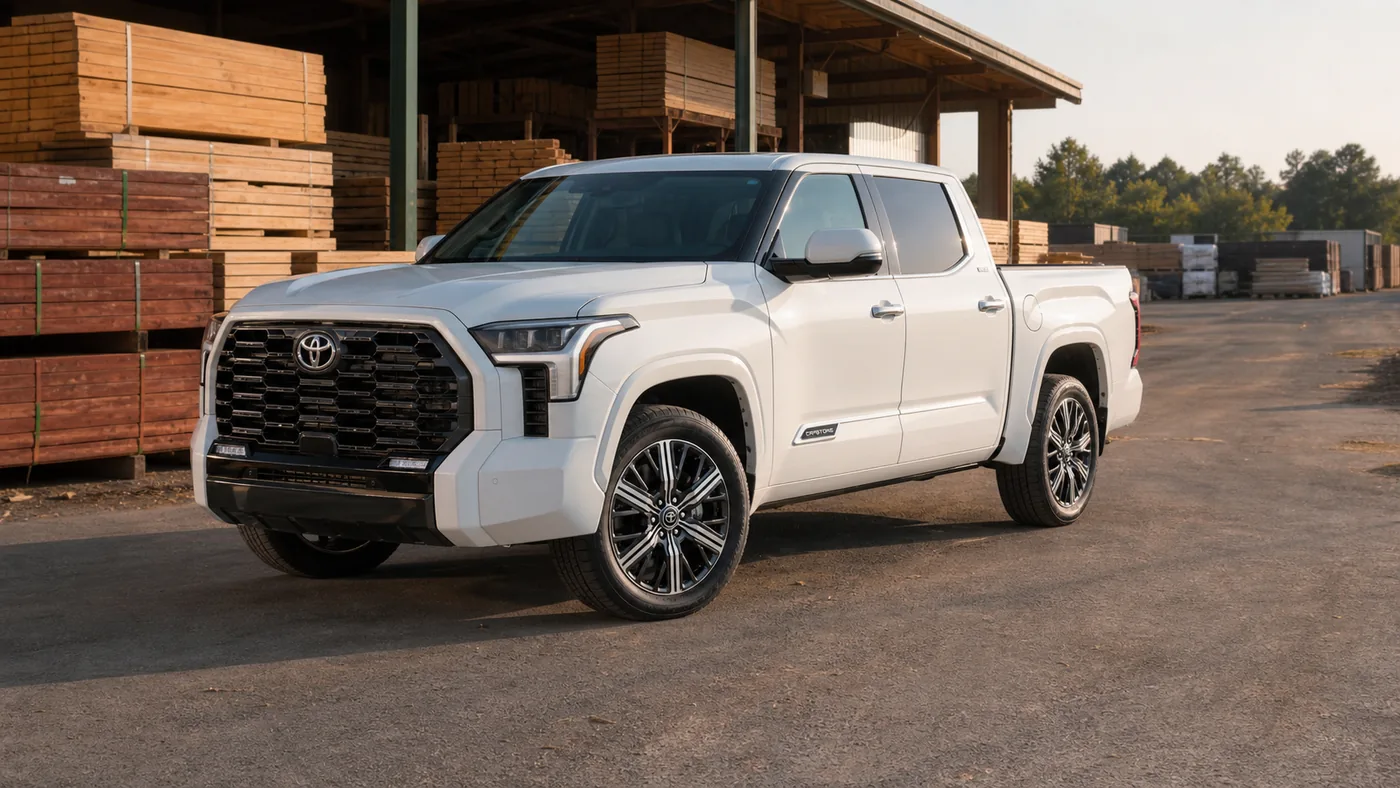
Is the Toyota Tundra reliable?
Two credible sources put the Tundra first and sixth in the same segment. iSeeCars scores it 8.0 out of 10 and ranks it first of ten full-size trucks, while RepairPal scores it 3.5 out of 5.0 and ranks it sixth of seventeen.
Both are defensible, because they measure different things. iSeeCars models how long a Toyota Tundra survives, and RepairPal measures what it costs while you own it, at $606 a year across about 0.3 unscheduled shop visits.
A truck can last a very long time and still cost more per year than a rival that quits sooner. That is the whole disagreement, and neither figure is wrong.
The gap that matters sits underneath both of them. iSeeCars publishes no reliability score at all for the 2022 to 2026 Tundra, because that generation has not been on the road long enough to model.
Every published verdict on this truck describes an engine Toyota stopped building in 2021. The generation on the lot today has to be judged on its own record.
Complaints jumped seventeenfold the year the V8 left
The federal complaint database is not a failure rate, but it is a record of when owners started to worry, and for the Tundra that date is unusually precise.
Across 2014 to 2020 the truck logged between 45 and 119 complaints a year. The busiest of those was 2016 at 119, and even that year was led by service brakes at 23 filings rather than by anything in the powertrain.
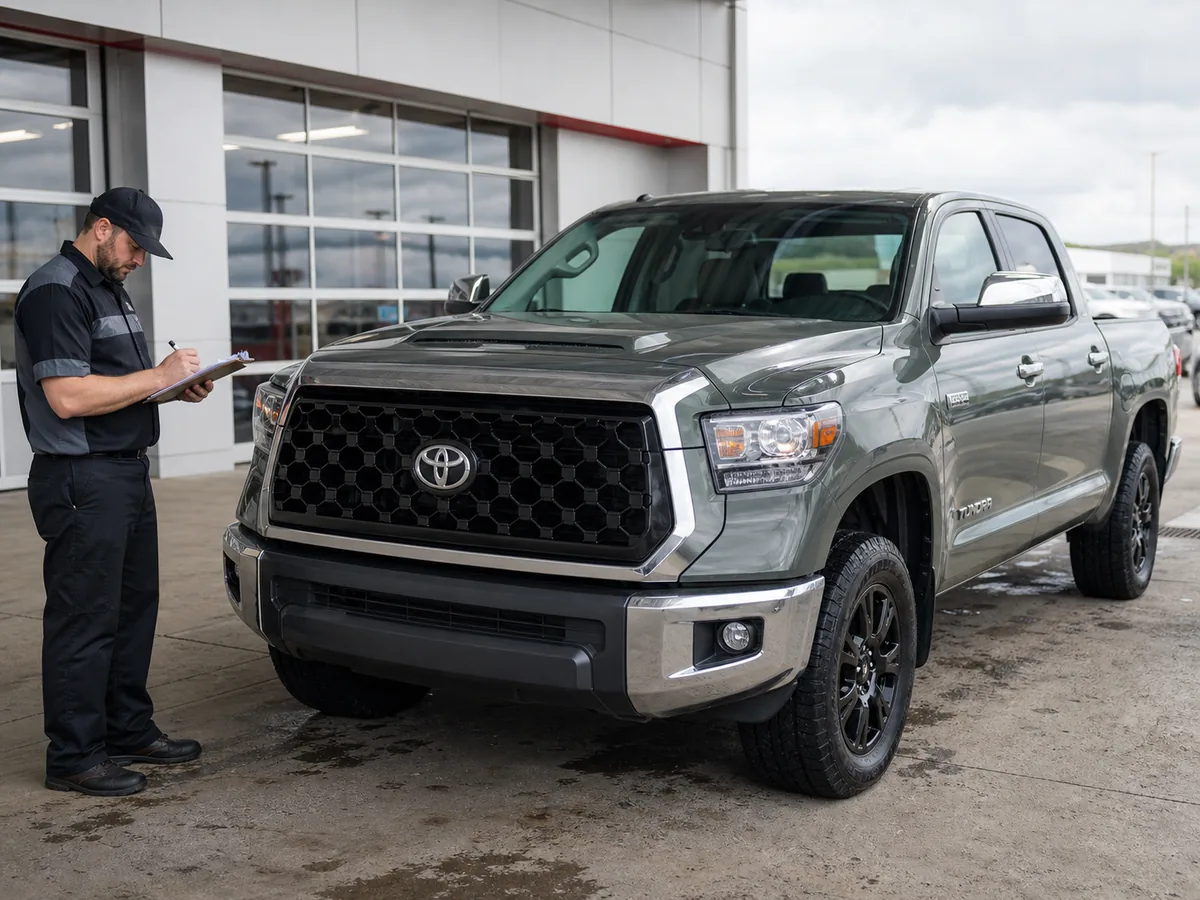
The 2021 truck, the last of the V8s, holds 24 complaints. The 2022 truck, the first with the twin-turbo V35A V6, holds 420.
- Model yearComplaints on record
- 201972
- 202045
- 202124
- 2022420
- 2023392
- 2024322
- 2025129
Discount that jump, and discount it heavily. A widely reported engine recall pulls filings out of owners who would otherwise have said nothing, so a good share of the 2022 total is attention rather than failure.
What publicity cannot manufacture is which component leads. Engine is the top-reported component on the 2022, 2023 and 2024 trucks, at 77, 70 and 69 filings, and it had never led a Tundra model year before.
The supporting components changed too. The 2022 truck's next-largest groups are power train at 37 and fuel and propulsion at 27, and the 2023 truck adds 32 filings specifically under engine cooling, which is a category the V8 trucks barely registered.
Volume is already falling as the generation settles. The 2025 model year sits at 129 filings, roughly a third of the 2022 peak, though it has also been on the road for far less time.
The break is a model year, not a mood. A 2021 truck and a 2022 truck are different reliability questions wearing the same badge.
One engine defect, three recalls, and no final fix for 2024
All three campaigns describe the same thing. Debris left behind by the manufacturing process contaminates the engine and causes the main bearings to fail, which Toyota states can result in an engine stall and a loss of drive power.
The first was 24V381, covering 2022 and 2023 Tundras with the V35A engine along with the Lexus LX600. Its remedy was blunt and generous, because dealers replaced the engine assembly, and owner letters went out between 17 December 2024 and 19 February 2025.
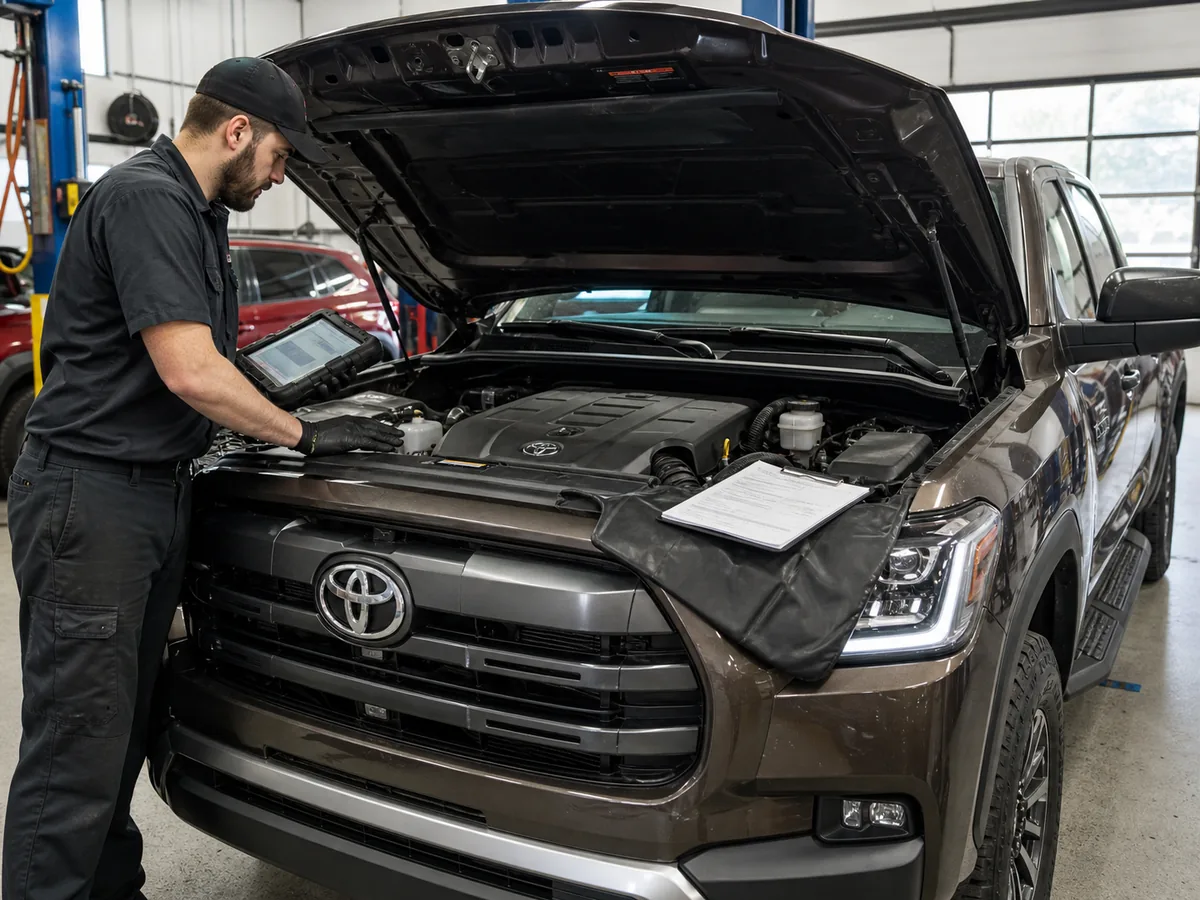
Then the scope widened. Campaign 25V767 extended the same defect to 2022 through 2024 trucks, and the remedy changed to an inspection of the number one main bearing using vehicle inspection software and drive data, with an engine replacement only where the inspection calls for one.
It widened again in 2026. Campaign 26V320 covers 2024 Tundras with the V35A engine, and its interim letters were mailed on 23 July 2026.
| Campaign | Model years covered | Remedy on offer | Notification status |
|---|---|---|---|
| 24V381 | 2022 to 2023 | Replace the engine assembly | Final letters mailed 17 December 2024 to 19 February 2025 |
| 25V767 | 2022 to 2024 | Inspect the number one main bearing, replace the engine if the inspection requires it | Interim letters mailed 16 December 2025, final remedy still pending |
| 26V320 | 2024 | Inspect the number one main bearing, replace the engine if the inspection requires it | Interim letters mailed 23 July 2026, final remedy still pending |
Read the notification column twice. On the two later campaigns Toyota has told owners that the vehicle carries a safety risk and that it will write again once the final remedy is available.
So an owner of a 2022 or 2023 truck caught by the first campaign may already have a new engine, while an owner caught by the later ones is holding a warning and a promise. Those are not the same asset.
Ask which campaign covers the exact VIN and whether its final remedy has been published, before you discuss price. A truck awaiting a repair that does not yet exist is worth less than one that has already had a replacement engine fitted.
The V35A campaigns that have nothing to do with the engine
A buyer who has read about the main-bearing recall tends to ask one question, get one answer, and stop. The twin-turbo trucks carry at least three other campaigns that the engine question never surfaces.
Campaign 22V445 covers 2022 Tundra and Tundra Hybrid trucks where the flange nuts on the axle shaft sub-assemblies can loosen over time, which can allow one or both axle shafts to separate from the vehicle.
Campaign 23V566 covers 2022 and 2023 trucks where a plastic fuel tube routed near the metallic brake lines can chafe against them and be damaged, with a fuel leak and fire as the stated consequence. The remedy is protective material and a clamp, and letters went out on 6 November 2024.
Campaign 24V125 covers 2022 to 2024 trucks for unexpected vehicle movement when the truck is in neutral without the brakes applied, remedied by a transmission control software update, with letters mailed on 8 April 2024.
Two more affect what the driver can see. Campaign 25V322 covers 2022 to 2025 trucks where moisture can enter the reverse light assemblies and cause a light failure, and campaigns 25V657 and 26V038 cover software errors that can stop the rearview image appearing when the truck is put in reverse.
The hybrid trucks matter here. An i-FORCE MAX hybrid Tundra sits outside the main-bearing campaigns, so a buyer told the hybrid avoids the engine problem can reasonably assume the VIN is clear, and the axle, fuel tube and neutral-movement campaigns all still apply to it.
Full VIN check on a twin-turbo Tundra
- Confirm which main-bearing campaign covers the VIN, and whether its final remedy has been published
- Confirm the axle shaft campaign status on any 2022 truck, then look for movement or witness marks at the shaft flanges
- Confirm the fuel tube campaign status on 2022 and 2023 trucks, then inspect the tube and brake line routing for wear
- Confirm the neutral-movement software update on 2022 to 2024 trucks, then test the parking behaviour on a slope
- Run the NHTSA recall lookup again on the day of purchase, because campaign status changes as manufacturers file
One lookup answers all of these at once. The mistake is asking about the engine and treating the answer as a clean bill of health for the vehicle.
The V8 Tundra is a different truck and a different question
If the pending remedy is the problem, the obvious alternative is the truck that came before it, and the evidence supports taking that seriously.
iSeeCars scores the 2007 to 2021 generation 9.3, well above the model's overall 8.0, and that generation's annual complaint totals never left the double digits. It is the most thoroughly evidenced full-size pickup generation available to a used buyer.
It is not campaign-free. Campaign 21V920 covers 2007 to 2021 Tundras for a power steering gear assembly that can leak oil, and 21V688 covers 2018 to 2021 trucks where the headlight circuits can power high and low beams at once and overheat the connector.
Age is the real trade. The oldest trucks in that generation are approaching twenty years old, so the risk moves from manufacturing defects to corrosion, deferred fluid service, tired suspension and whatever the previous owner towed with it.
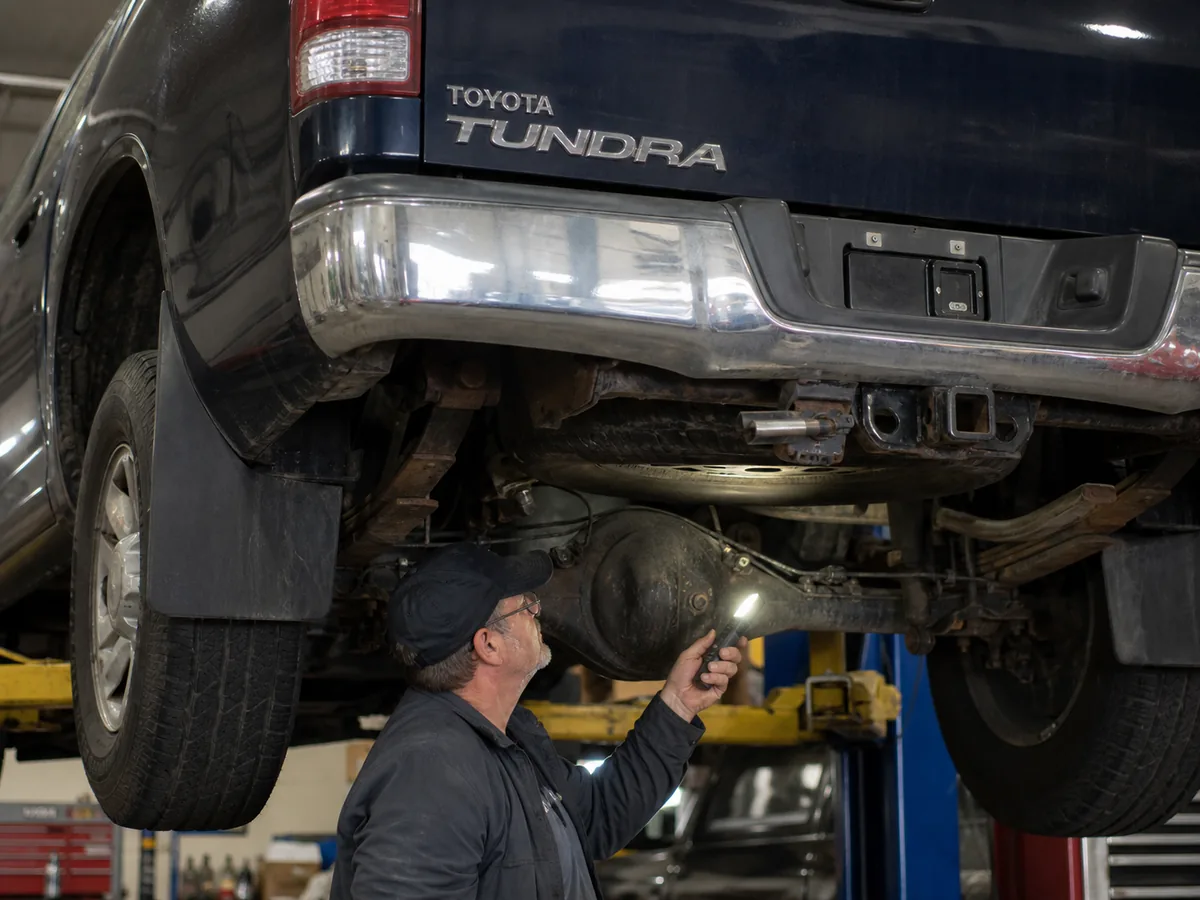
That shifts the inspection under the truck. Frame and crossmember corrosion, leaking shocks, dry driveline joints, uneven tire wear and a hitch that has clearly worked hard tell you more about a fifteen-year-old Tundra than the odometer does.
Service evidence carries the rest of it. Differential and transfer case fluid, coolant history, timing-related work and any towing-related repairs are what separate a truck that will run to 250,000 miles from one that is about to need everything at once.
That is a different inspection and, for many buyers, an easier one. You are choosing between a known truck with wear and an unknown truck with warranty, and the honest answer depends on which risk you are better equipped to carry.
What a 204,764-mile average can and cannot promise
The Tundra's reputation rests on one figure, and it is a real one. iSeeCars models an average lifespan of 204,764 miles, roughly 14.8 years, and puts the chance of any given Tundra reaching 200,000 miles at 53.3 percent.
Nothing else in the full-size segment comes close, which is why the number appears in every listing and every forum reply.
Now ask where it came from. A survival model can only count vehicles that have already lived out most of their service life, and the model assumes 12,895 miles a year over the first decade.
Work that backwards and almost every truck contributing to the 204,764-mile figure has a 4.6-litre or 5.7-litre V8 under the hood. The engine that earned the reputation is not the engine currently being sold.
That is not a prediction that the V35A will do worse. It is a statement that nobody yet knows, and the honest replacement for a longevity claim on a 2022-or-later truck is its campaign record and its service file.
Buy now, wait, or step back a generation
Three Tundras are available to you right now, and they carry different risks rather than different quality levels.
A hybrid i-FORCE MAX truck is the cleanest current buy, because it sits outside all three main-bearing campaigns while still needing the axle, fuel tube and neutral-movement checks. A non-hybrid truck covered by 24V381 with a documented engine replacement is arguably the strongest of all, since the most expensive part of it is new.
A truck covered by 25V767 or 26V320 is a price conversation, not a refusal. It keeps its powertrain warranty while the remedy is pending, Toyota has committed to writing again when the final repair is available, and the discount should reflect that you are buying an unfinished situation.
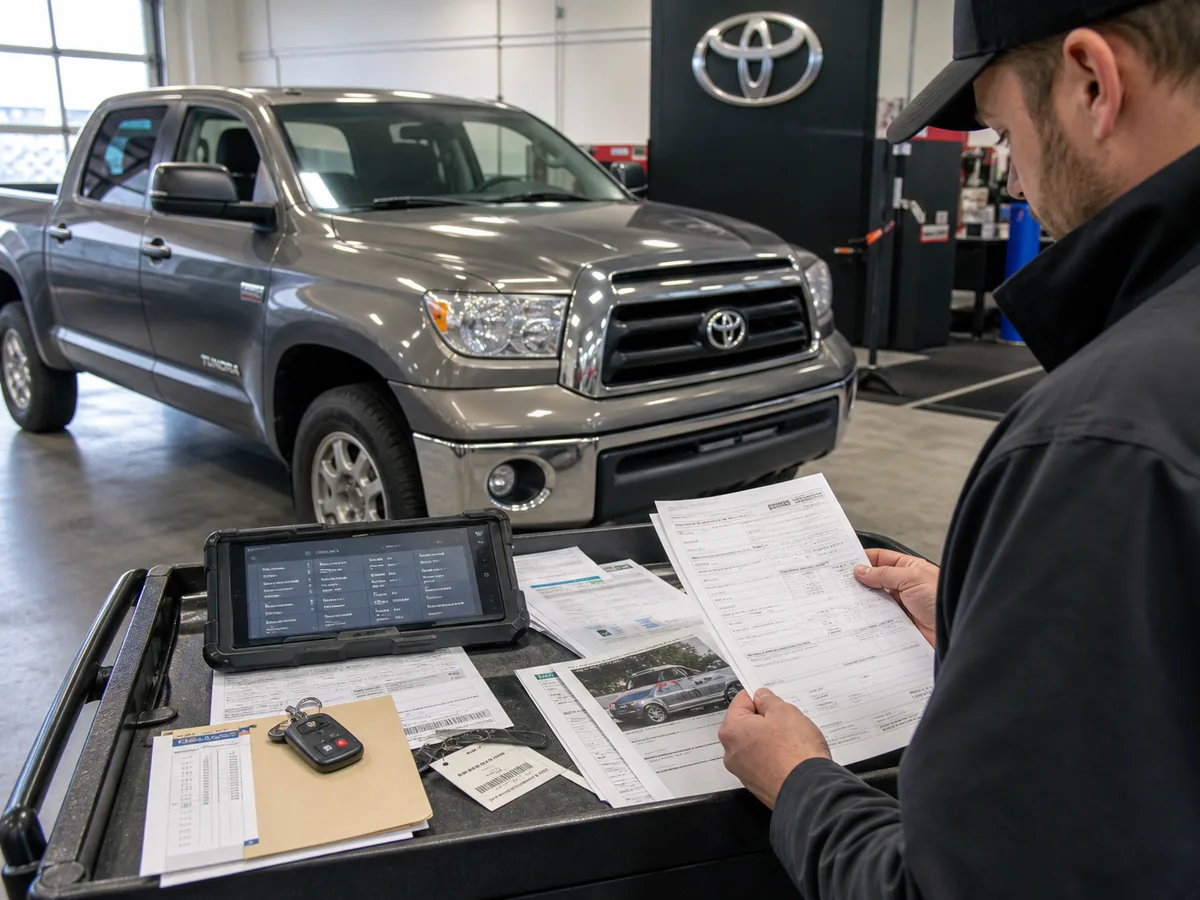
Waiting only makes sense if you can wait indefinitely. Toyota has not published a date for the final remedy, so a buyer who needs a truck this quarter is choosing between a hybrid, a repaired truck, a discounted pending one, or the previous generation.
Whatever you choose, run the VIN yourself on the day rather than trusting a report in the seller's folder. This is one of the rare purchases where the paperwork is more informative than the test drive.