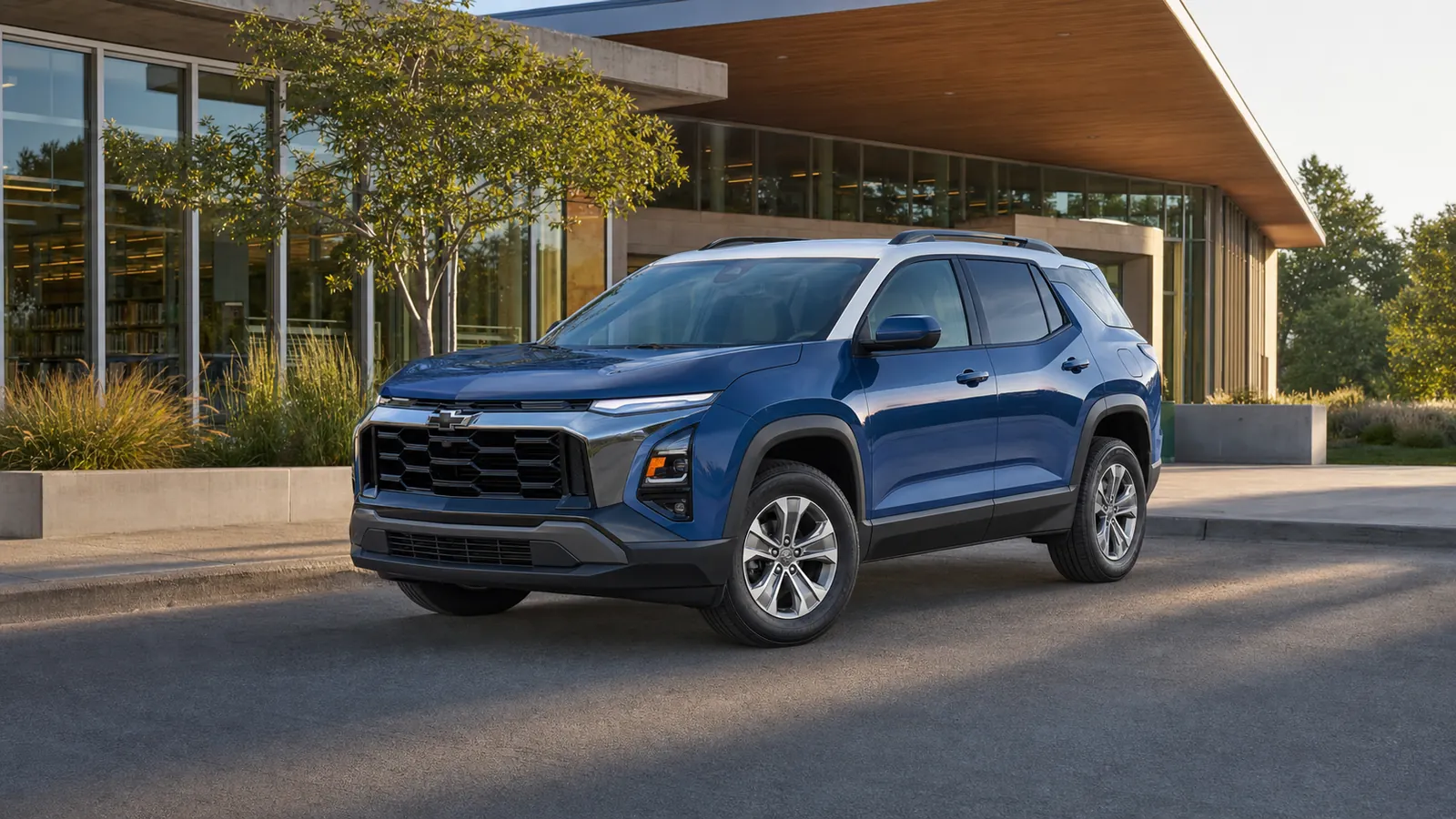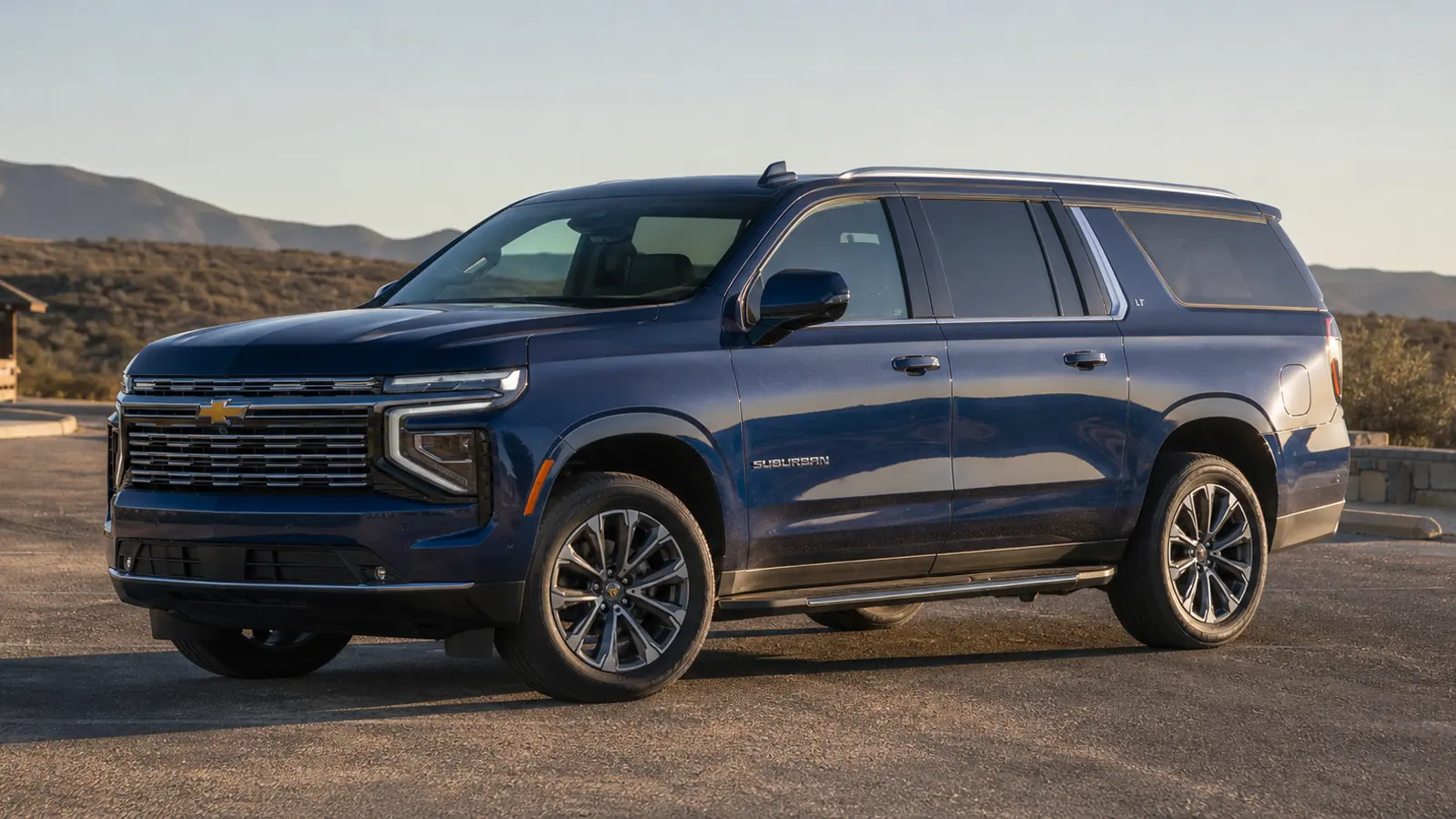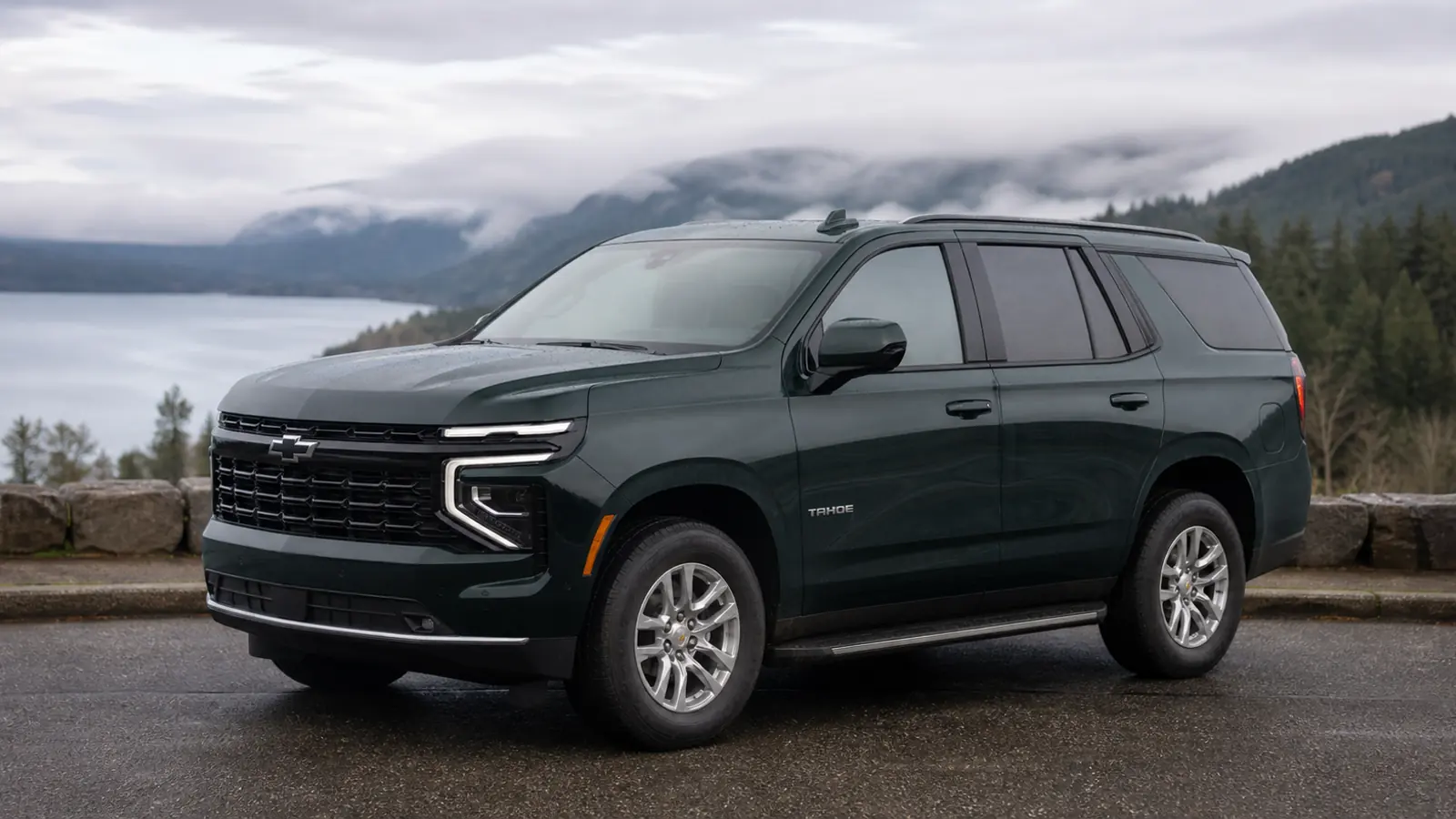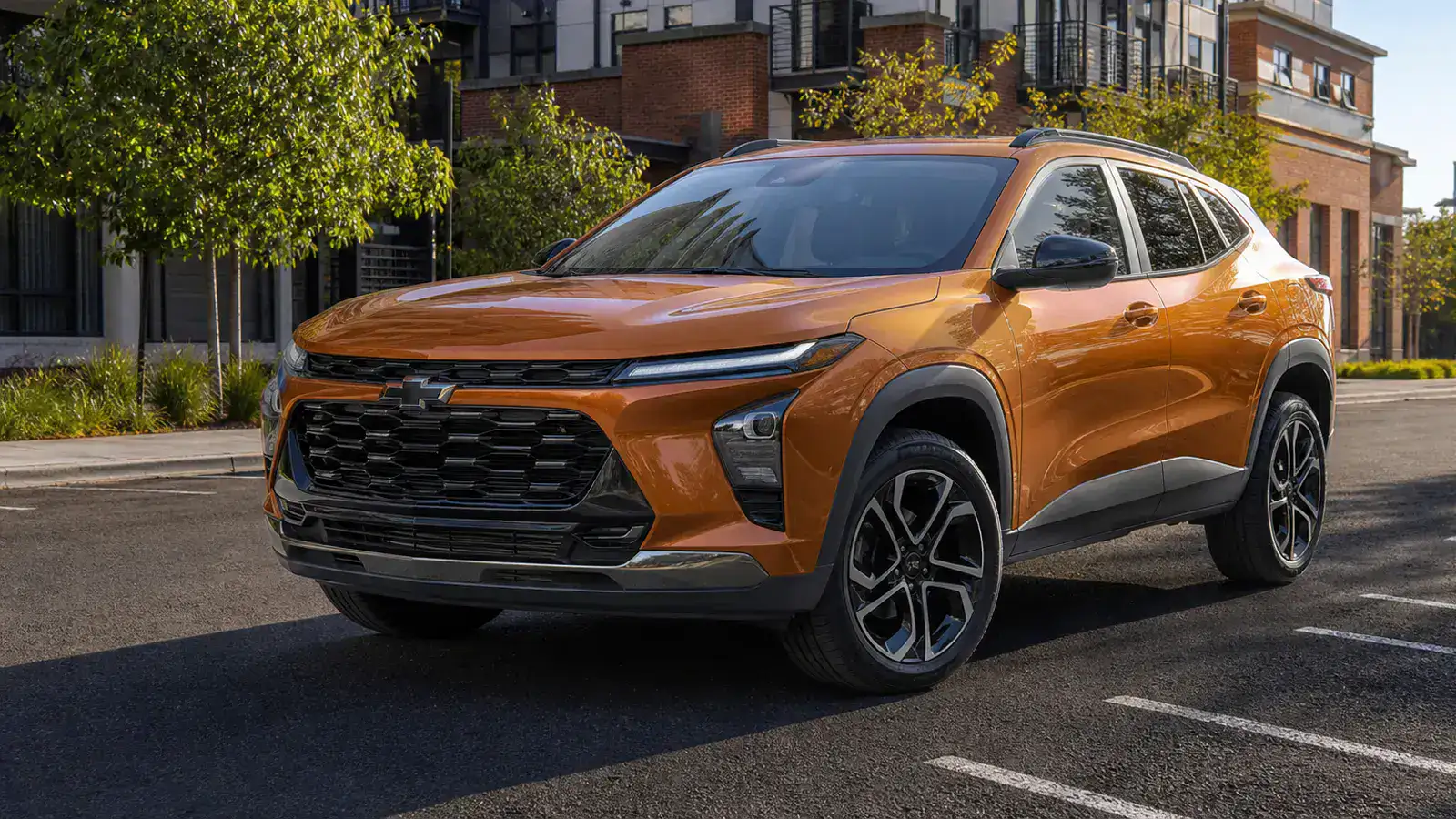
What is the Chevrolet Trax, and why is rear-seat space its strongest case?
The 2026 Chevrolet Trax starts at $21,700, seats five, and offers up to 54 cubic feet of cargo room.
Every version uses front-wheel drive and a 137-hp turbo three-cylinder.
Chevrolet does not rate it to tow.
That honest description makes comparison easier. The Chevrolet Trailblazer adds available AWD and a shorter body.
The Chevrolet Equinox adds power and width. Trax makes the most sense when paved-road space matters more than traction hardware.
Bring passengers, child seats, and weekly cargo. The long body creates useful rear legroom, but headroom, seat shape, door opening, and cargo height still need a physical test.
A low starting price can disappear through packages, dealer products, finance, and a long loan. Trax is strongest in a simple LS or LT configuration that preserves its price advantage.
Chevrolet Trax specs: 137 hp, front-wheel drive, and no tow rating
A 1.2-liter turbo three-cylinder makes 137 hp and 162 lb-ft through a six-speed automatic. The conventional automatic can feel familiar at low speed, while modest output means passing and steep grades need planning.
Trax drivetrain
- Engine
- 1.2L turbo three-cylinder
- Output
- 137 hp, 162 lb-ft
- Transmission
- 6-speed automatic
- Drive
- Front-wheel drive only
- Published economy
- 30 mpg combined
Drive with the people normally aboard. Merge, climb, pass, coast, and restart after warming.
Listen for excessive strain and watch for delayed or harsh engagement.
A solo flat-road demonstration is too easy.
Repeat one hard stop and one evasive lane change in a safe, legal place with the normal passengers aboard.
The test should reveal whether brake feel, steering response, body motion, and forward visibility remain predictable when the cabin is full rather than only when the driver is alone.
Repeat the merge with air conditioning running, then check whether a shorter on-ramp forces full throttle or an unsafe gap choice.
The acceptable result is predictable acceleration that leaves the driver time to adjust, not a fast stopwatch number.
Front-wheel drive is suitable for paved routes and mild weather. Proper winter tires can improve snow braking and turning, but buyers who repeatedly face untreated hills should compare Trailblazer AWD or an AWD crossover.
Chevrolet lists 30 mpg combined. Speed, traffic, cold, short trips, tires, cargo, and climate use change that number.
Use several fill-ups on the regular route to build the estimate.
The powertrain passes when it can merge and climb comfortably with the household's real load, not when 137 hp looks acceptable on paper.
Can adults and child seats actually share a Chevrolet Trax?
Trax uses its length to provide a generous rear seating area for the price. That makes it appealing to small families, rideshare drivers, and adults who regularly carry adults.
Seat comfort and child-seat fit still vary by body size.
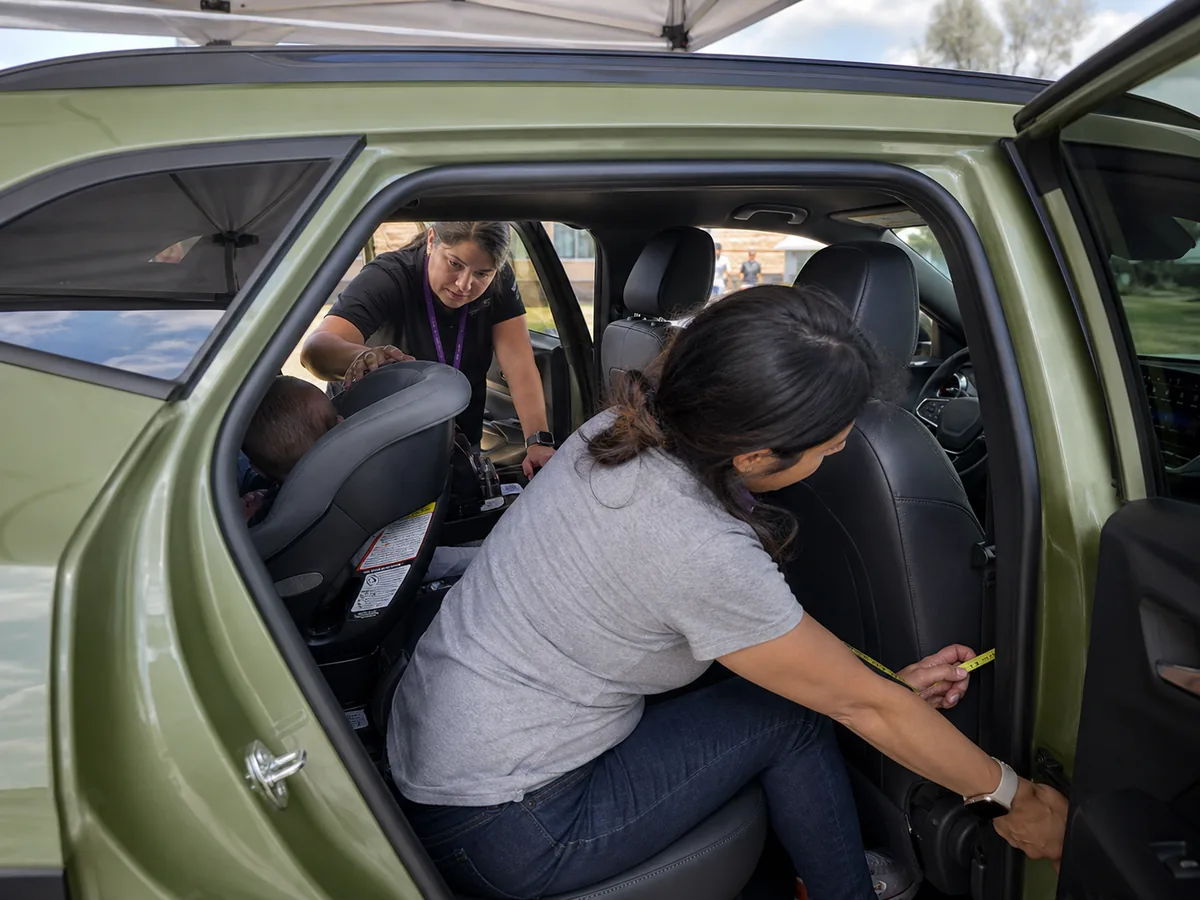
Install every child restraint. Check front-seat travel, buckle access, tether positions, door opening, and whether an adult can sit in the remaining place.
Keep rear head restraints in their correct positions.
Load groceries, stroller, pet carrier, luggage, or work bags with the rear seat upright.
Measure width between wheel housings, lift-over height, and hatch clearance.
Open the liftgate in the normal garage.
The Honda HR-V and Toyota Corolla Cross cost more in many configurations but offer different powertrains and safety evidence. Compare the exact seat and cargo trial rather than exterior measurements alone.
Trax earns its purchase when adults or child seats fit comfortably while the remaining cargo floor still holds the weekly load.
LS or LT keeps the Trax price advantage intact
LS is the price leader, LT adds useful convenience, and 1RS, 2RS, and ACTIV change appearance and equipment.
Start with LS or LT. A budget crossover loses its advantage when wheel, trim, and dealer additions push it toward a stronger vehicle.
Compare window stickers. Test camera quality, phone pairing, audio, climate controls, remote start, seats, driver aids, and every promised option.
Ask which connected services later require payment.
Larger wheels can cost more, ride harder, and offer less pothole protection.
Get an installed tire quote for each trim.
ACTIV styling does not add AWD. RS styling does not add engine output.
Chevrolet places Trax below Trailblazer and Equinox, so a heavily optioned Trax needs a fresh price comparison. LT is usually the sensible ceiling because it adds daily equipment without changing the Trax mission.
Chevrolet Trax safety results include one serious weak point
IIHS gives the 2026 Trax Good ratings in small-overlap front and updated-side tests. The updated moderate-overlap result is Poor because rear-passenger measures drove the rating, even though the structure and driver measures were Good.
Headlights are Marginal. Vehicle-to-vehicle front crash prevention is Poor, pedestrian front crash prevention is Marginal, and seat-belt reminders and LATCH ease are Acceptable.
These current results prevent an honest blanket claim that Trax is either simply safe or unsafe.
The Good updated-side result applies to 2026 models after structural and airbag changes. Do not transfer it backward without checking the IIHS applicability statement.
Run the exact VIN through NHTSA recalls and save the result. Model-level recall information adds context but cannot clear a specific VIN.
Install the household child restraints before judging the rear-passenger result. Check belt routing, buckle access, tether use, front-seat clearance, and whether the child can remain correctly positioned.
A strong driver result does not answer the separate protection question for a smaller person seated behind the front row.
Compare the same IIHS test generation for rivals. A Trax buyer should accept its low price only after understanding the Poor updated moderate-overlap and weaker avoidance ratings.
Is the current Chevrolet Trax reliable enough to buy?
The second-generation Trax arrived for 2024, so long-term evidence remains limited. Reliability evidence must separate this generation from the older, smaller Trax and avoid turning owner complaints into failure rates.
| Area | Check | Why |
|---|---|---|
| Cold engine | Oil level, noise, smoke, and warning lamps | Shows startup and care clues |
| Six-speed automatic | Crawl, merge, reverse, and warm restart | Finds repeatable engagement faults |
| Cooling | Level, residue, odor, fan, and temperature | Turbo engines need stable cooling |
| Electronics | Screen, camera, phone, HVAC, and driver aids | Finds intermittent faults |
| Tires and alignment | Tread depth and edge wear | Affects safety and cost |
| History and VIN | Service, collision, warranty, and recalls | Narrows uncertainty |
Scan every module and inspect underneath on a lift. Check for fluid leaks, impact damage, missing shields, uneven seams, and poor paint repair.
Confirm both keys and all promised equipment.
Warning lights, hesitation, screen resets, camera faults, HVAC faults, and leaks all deserve a repeatable check. A repeated symptom needs a written diagnosis.
Follow the Trax maintenance schedule for severe short-trip, heat, or dusty use when applicable. Choose the Trax with consistent oil service, a clean scan, predictable shifting, and documented history.
Ask the local service department for installed prices on the correct battery, front brakes, spark plugs when scheduled, and a four-tire set.
Confirm diagnostic labor rate and whether warranty appointments include alternate transportation. A defect may be covered while rental time, towing beyond the plan, or missed work remains the owner's expense.
Check parts availability for the exact model year before buying a damaged bargain that needs a headlamp, camera, wheel, or body panel.
Low purchase price does not make a long parts delay inexpensive.
No AWD and no tow rating define what the Trax cannot do
Trax is front-wheel drive only. It is also not rated to tow.
Those are design boundaries, not missing accessories that a dealer can fix.
An aftermarket hitch does not create a trailer rating.
A compatible hitch-mounted bike rack may still require careful calculation. Include hitch, rack, bicycles, and accessories, and follow the lowest limit among the vehicle, receiver, and carrier.
Check ground clearance and hatch access.
Roof carriers add height, drag, wind noise, and fuel use. Follow the owner's manual and accessory limits, including the carrier's own weight.
Remove them when not needed.
Buyers who need AWD should compare Trailblazer, Corolla Cross, or Subaru Crosstrek. Buyers who need towing should move to a vehicle with a published rating, such as an appropriately equipped Blazer.
Trax remains a good value only when paved-road passenger and cargo use covers the entire job.
The Trax saves money only when the final deal stays cheap
At 12,000 miles and 30 mpg, Trax uses about 400 gallons.
At $3.50 per gallon, that is $1,400. This simple estimate helps, but purchase price, loan interest, depreciation, and insurance can move the budget more.
Compare out-the-door prices and annual percentage rates with the same term.
Remove dealer products that do not provide clear value. A 72- or 84-month loan can make a high price look small while increasing interest and negative-equity risk.
Get a VIN-based insurance quote and installed tire price. Add tax, registration, maintenance, batteries, brakes, alignment, glass calibration, and a repair reserve.
Compare Trax and Trailblazer with the same mileage, fuel price, loan term, insurance, and repair reserve. The best Trax deal is a simple trim with a competitive out-the-door price and short affordable loan.
Trax budget inputs
- Annual distance
- Use the household odometer history
- Fuel price
- Use a local 12-month average
- Loan comparison
- Match cash down, rate, and term
- Insurance
- Quote the exact VIN and drivers
Run the calculation at 10,000, 12,000, and 15,000 miles if annual driving changes. A buyer who drives little may save more through a lower transaction price than fuel economy.
A high-mileage driver should compare highway comfort, tire life, and fuel use with a compact car before accepting crossover costs.
Keep repair savings separate from the down payment. A new-car warranty covers defined defects, while tires, collision deductibles, maintenance, rental gaps, and excluded damage remain the owner's responsibility.
A modest cash reserve is more useful than financing appearance equipment that does not improve the commute.
What should you inspect on a used Chevrolet Trax?
Begin a used-car review with title, service, warranty, recall, and collision records. The current Trax is often sold as an inexpensive commuter or fleet vehicle, so mileage alone does not show how it was treated.
Start the engine cold, complete a long drive, scan all modules, and inspect on a lift.
Test the automatic in traffic and reverse. Operate every screen, camera, lock, window, light, seat, and climate function.
Compare the title and service dates with tire age, brake wear, paint-depth readings, fastener marks, and scan history.
Conflicting evidence can reveal unreported collision work, long storage, or maintenance completed only for sale.
Price those findings before negotiating instead of accepting a promise to repair them later.
A cheap example with worn tires, poor repairs, high loan cost, and missing service can exceed the price of a cleaner car.
Compare the final financed amount, not the advertisement. A lift inspection and full-module scan reveal costs that photos and a short drive cannot.
Condition, records, and a clean road test matter more than saving a few hundred dollars on the listing price.
Who should buy a Trax LT, and who should walk away?
Start with a Trax LT and compare it with LS using exact equipment and transaction prices. Keep the standard 137-hp drivetrain only if it passes a loaded highway test.
Pros
- Low entry price
- Useful rear-seat room
- Up to 54 cu ft of cargo volume
- Familiar six-speed automatic
Cons
- Front-wheel drive only
- No trailer rating
- Modest passing reserve
- Mixed current IIHS ratings
Move to Trailblazer for AWD or a smaller footprint.
Move to Equinox for more power and width. Compare a used Honda Civic Hatchback when car-like economy and cargo access matter more than seating height.
Buy Trax when space and price lead the decision and its FWD-only, 137-hp limits match the route.
Make the Trax prove its value on one loaded test day
A Trax should win through price, rear-seat room, and easy daily use. Compare it with a Trailblazer and one hatchback or small SUV on the same day, using the same passengers, child seats, cargo, roads, and parking space.
Memories from separate test drives hide the small differences that decide whether a 137-hp front-drive crossover feels adequate or strained.
Run the engine test with air conditioning and the normal household load. Include a grade, a highway merge, a rolling pass from 30 mph, a rough street, and reverse parking, then repeat the low-speed work after the drivetrain is warm.
The six-speed automatic should engage predictably without delayed response, flare, or repeated harshness, and any repeatable symptom needs diagnosis before price negotiation.
Keep adults in both rows for at least 20 minutes. Check thigh support, head restraints, door openings, outward visibility, buckle access, and how far the front seats must move for a rear-facing child seat.
Load the stroller, mobility equipment, pet carrier, or work cases with the rear seat upright because the advertised cargo maximum does not describe a normal family trip.
Safety belongs in the value calculation. Read the current IIHS tests individually, including the Poor updated moderate-overlap result and weaker avoidance ratings, then compare the same tests and model years for the other candidates.
A Honda Civic is a useful check when crossover seating height is optional because a lower Trax price does not erase a weaker result.
For a used Trax, require oil records, a cold start, full-module scan, lift inspection, tire measurements, collision documentation, warranty status, and a VIN campaign check.
Low mileage does not compensate for missed time-based service, repeated short trips, poor structural repair, or an owner who cannot explain warning lights.
Photograph the odometer, wheels, glass, paint, engine bay, and cargo trim before delivery.
Price the exact trims after destination, tax, registration, documentation fees, interest, trade allowance, dealer products, and insurance. Trailblazer may justify more money when AWD is necessary, but a front-drive Trax should remain clearly cheaper than a similarly equipped Trailblazer.
Keep the trade value separate from the vehicle discount so moving money between those figures cannot disguise the same total cost.
Get preapproved financing for the same term offered at the dealership. Compare the total of payments, review cancellation terms for service contracts and wheel plans, and remove coverage already supplied by insurance or the factory warranty.
A dealer can lower the monthly payment by extending the loan without making the Trax cheaper.
Write the household limits before negotiating. Required AWD, trailer use, three child restraints that do not fit, an inaccessible mobility device, a garage the doors cannot clear, or loaded highway performance that feels unsafe should end the purchase.
No trim package can repair a mismatch between the Trax and the work the household needs it to perform.
The first year should test the original calculation. Record fuel fills, service, tire adjustments, insurance changes, subscriptions, repairs, cold starts, shift behavior, highway economy, alignment, and warning messages.
Early uneven front-tire wear may point to pressure, alignment, or collision issues, while a dated video and written repair order can turn an intermittent complaint into evidence a technician can use.
Confirm the equipment list against the vehicle before money changes hands. Check wheel size, spare or inflator kit, safety equipment, both keys, mats, connected-service trial dates, and every promised repair, then recheck the final insured and financed cost.
Buy the Trax only when its space advantage survives the loaded drive and its complete price stays well below stronger alternatives.