The premium buys electric commuting and 302 horsepower
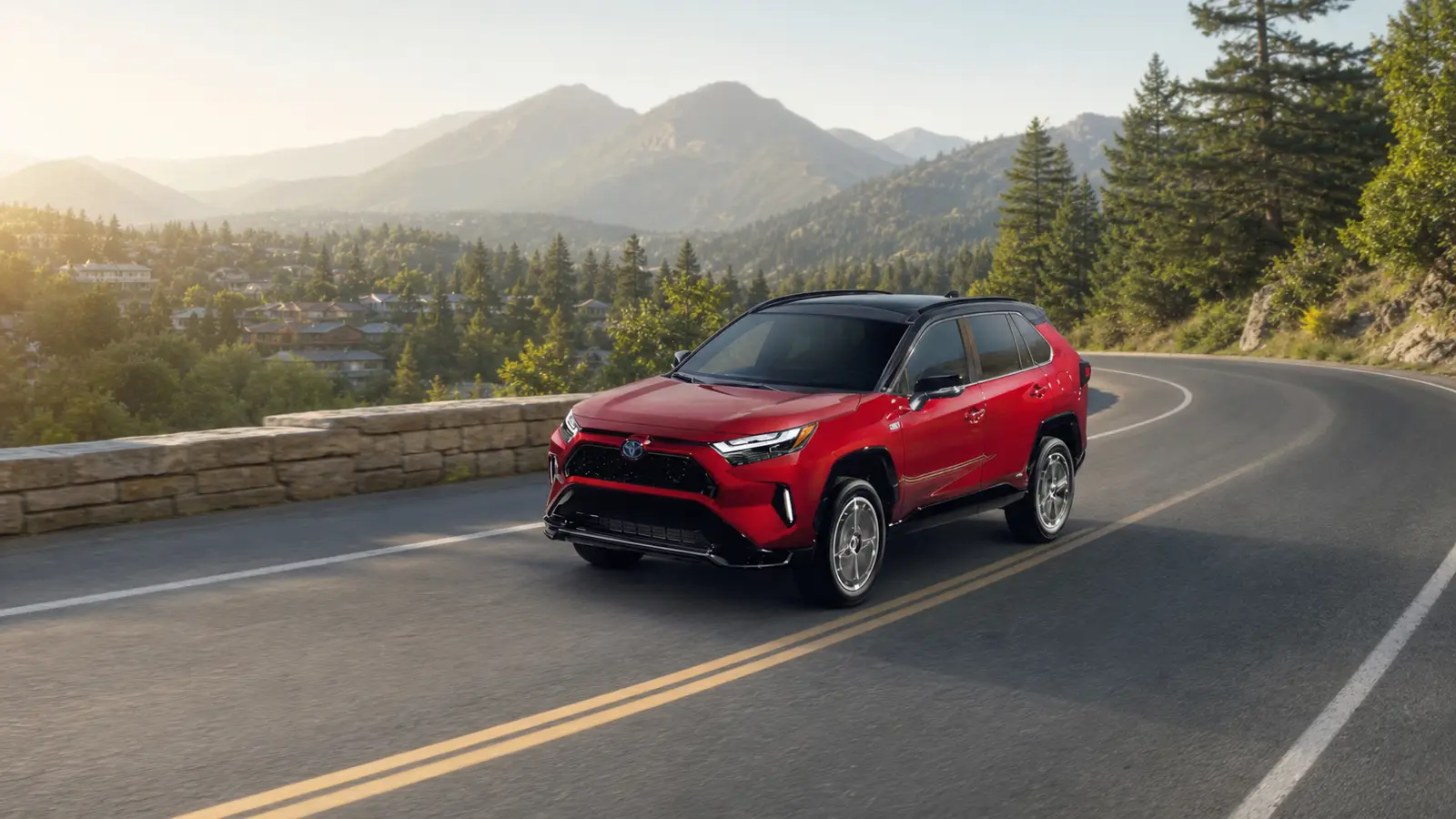
The 2024 Toyota RAV4 Prime combines 42 EPA-estimated electric miles with a gasoline engine that keeps the trip going after the usable charge is spent.
Its 302-hp plug-in system and electronic AWD also make it much quicker than a normal RAV4 Hybrid.
Those gains matter only when the owner can charge regularly or will use the added performance.
Map a normal week before entering a showroom. A household that drives 25 to 40 miles most days can avoid gasoline for much of the routine.
A 90-mile daily commute will use the engine after the electric portion. The car still works, but the financial case becomes closer to a Toyota RAV4 Hybrid.
The Prime's higher price also needs to solve a space, traction, or acceleration problem that a smaller plug-in cannot.
A Toyota Prius Prime is more efficient and easier to park. The RAV4 adds a taller cabin, easier cargo access, more ground clearance, and standard AWD.
Pay the Prime premium when dependable charging covers routine miles and the SUV body or 302-hp AWD system solves a repeated need.
The 42-mile estimate works best with a home charging routine
Toyota lists an 18.1-kWh battery and 42 miles of EPA-estimated electric range for the 2024 RAV4 Prime.
After that range is used, the vehicle operates as a hybrid rated at 38 mpg combined.
The driver does not need to find a charger to continue a trip.
Toyota estimates about 12 hours for a full charge from 120 volts and about 2.5 hours with the 6.6-kW onboard charger and compatible Level 2 equipment under stated conditions.
A normal outlet can replenish the battery overnight. Level 2 supports a faster second departure and makes scheduled off-peak charging easier.
Those two numbers set the rate that matters: 42 miles in about 12 hours is roughly 3.5 miles for every hour plugged in.
A ten-hour overnight on a household outlet therefore returns around 35 miles, which covers a 17-mile each-way commute and not much beyond it.
A driver whose day runs longer than that either adds a midday connection or accepts that the extra miles are hybrid miles at 38 mpg.
That is the test to apply before paying the premium, because it decides how much of the electric range is actually reached on a normal weekday.
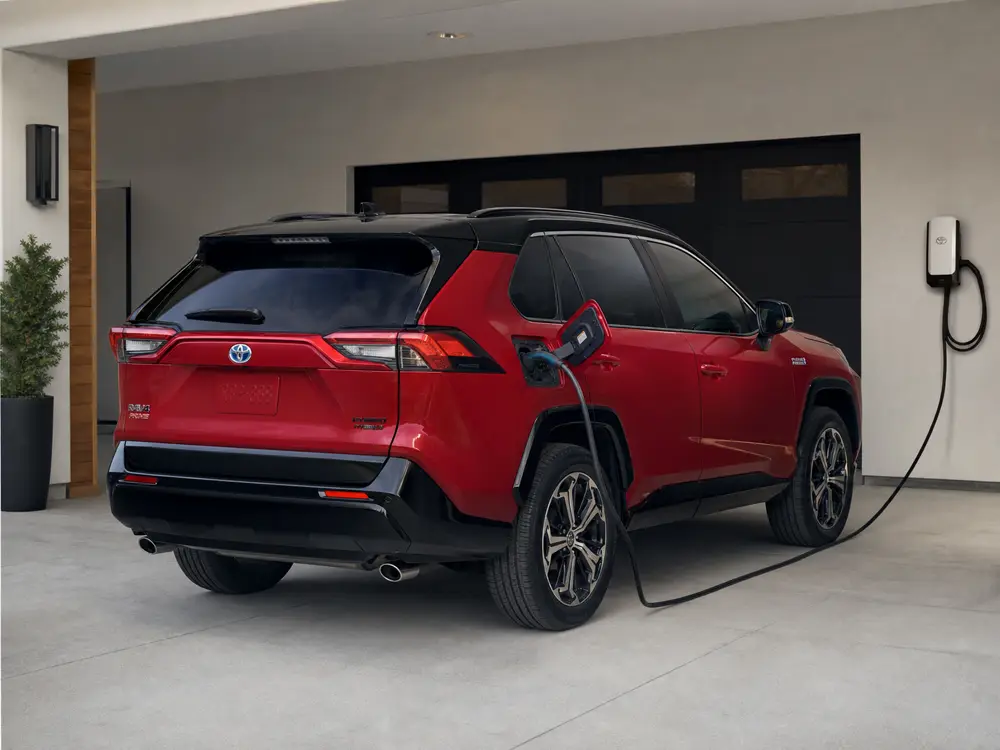
Have a licensed electrician inspect any questionable outlet or plan a Level 2 circuit. Include the panel, cable run, permit, equipment, and utility-rate work in the purchase budget.
Avoid extension cords and follow Toyota and charging-equipment instructions.
Apartment residents should get written installation approval before buying. Public Level 2 charging can help, but it may be busy, broken, or priced above home power.
Every plug-in hybrid shares the same condition: the saving exists only where charging is routine rather than occasional.
A reliable home or work connection is the first RAV4 Prime requirement because occasional public charging rarely justifies the price step.
The powertrain is quick, but AWD does not make it a trail truck
The plug-in system combines a 2.5L engine with front and rear electric motors for 302 hp.
Toyota estimates 0 to 60 mph in 5.5 seconds. The rear motor provides electronic all-wheel drive without a mechanical driveshaft, which helps launch traction and response on wet or loose surfaces.
Strong acceleration can make a loaded merge easy, but it also increases tire and insurance exposure. Check all four tires for matching size and compatible type, measure tread across each width, and price a full set before choosing a used vehicle.
Electronic AWD cannot recover grip from worn tires or shorten an icy stopping distance.
The Prime has 8.0 inches of ground clearance. That supports normal snow, gravel access roads, and broken pavement, but battery protection, bumpers, tires, cooling, and suspension remain limits.
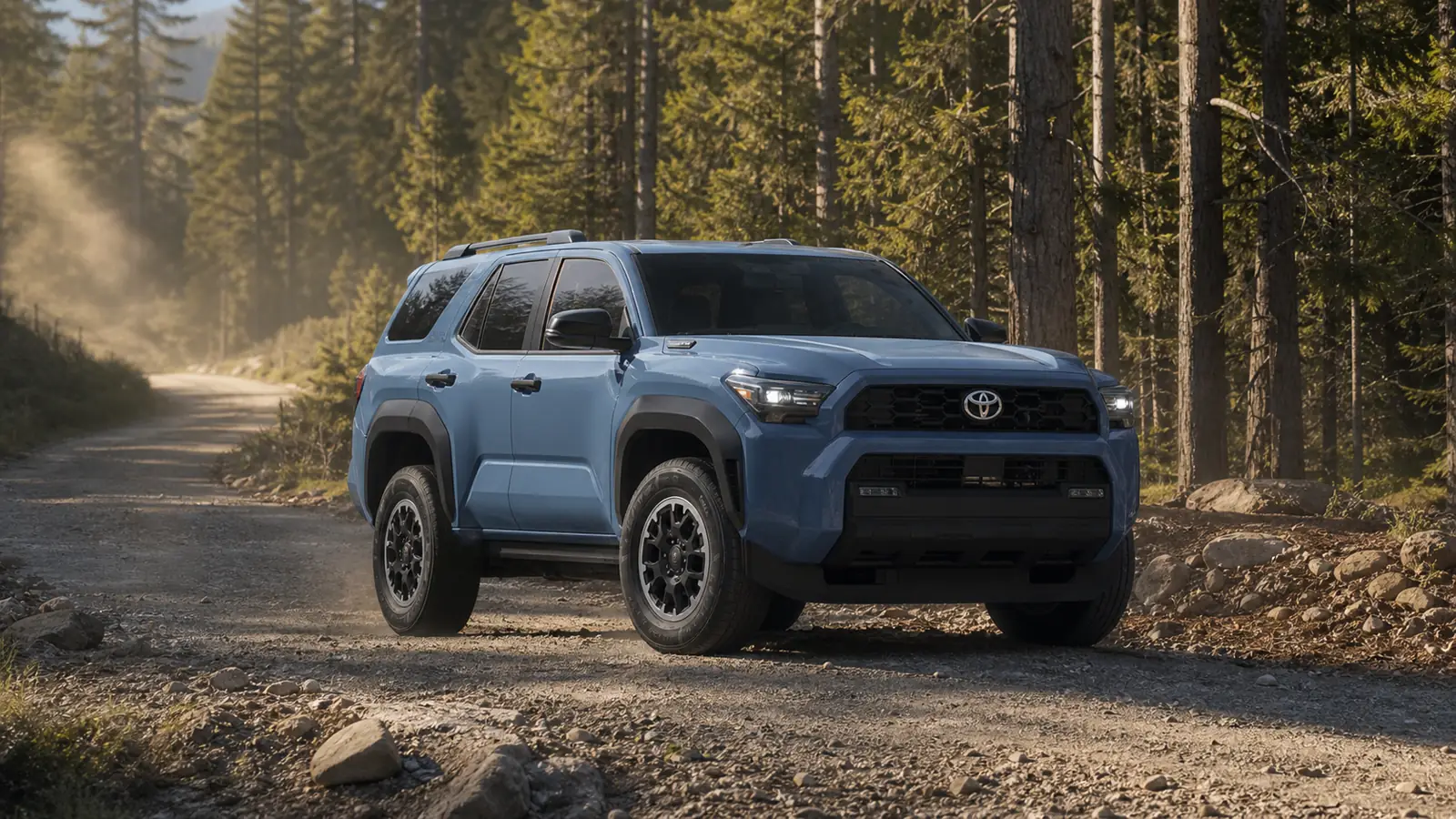
It does not have the low-range transfer case and truck hardware of a Toyota 4Runner or Toyota Land Cruiser.
Drive through a tight turn, rough patch, steep grade, and highway merge with normal passengers.
Check brake blending, engine transition, steering tracking, tire noise, and body control.
Use the Prime's AWD for everyday traction and quick road response, then choose a different vehicle when repeated low-range trail work is required.
Cargo remains useful, but the battery changes the floor
Toyota lists 33.5 cubic feet of cargo room behind the second row, which is useful five-seat SUV space. What the figure does not say is that the Prime's battery packaging and cargo floor differ from an ordinary RAV4.
What the volume figure leaves out
- Cargo behind the second row
- 33.5 cu ft
- What differs from a regular RAV4
- battery packaging and the height of the cargo floor
- What that changes
- the lift height, and whether the hatch closes over a tall load
- What else needs a home
- the charging cable, which has to live somewhere accessible
So the test is the opening, the floor height, the rear-seat position and the charging equipment, rather than one volume number against another.
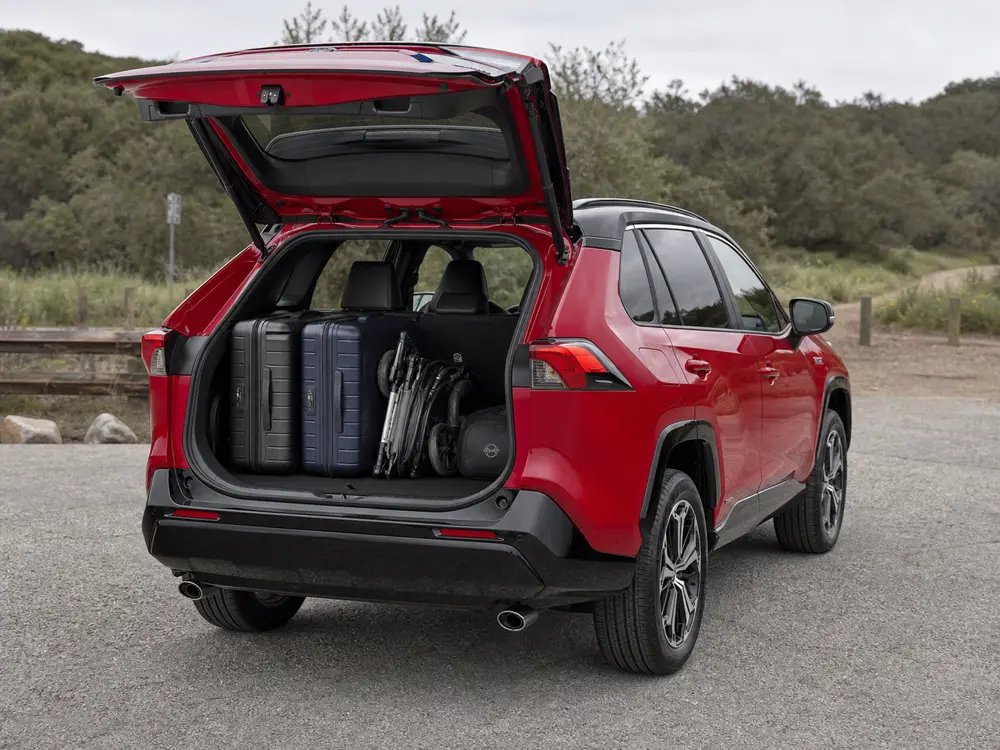
Bring the stroller, mobility device, pet crate, luggage, sports equipment, or work cases used most often.
Keep required child seats installed. Check whether the hatch closes without pressing the load against the glass and whether the charging cable has a clean, accessible storage place.
Set the front seats for the regular drivers, then test the rear with the tallest passenger.
Install every child restraint according to Toyota and seat-maker instructions. Check rear-facing clearance, buckle access, top tethers, vents, door opening, and the ability to load a child without striking the roof.
A quieter premium cabin with less cargo volume is what the Venza offers instead.
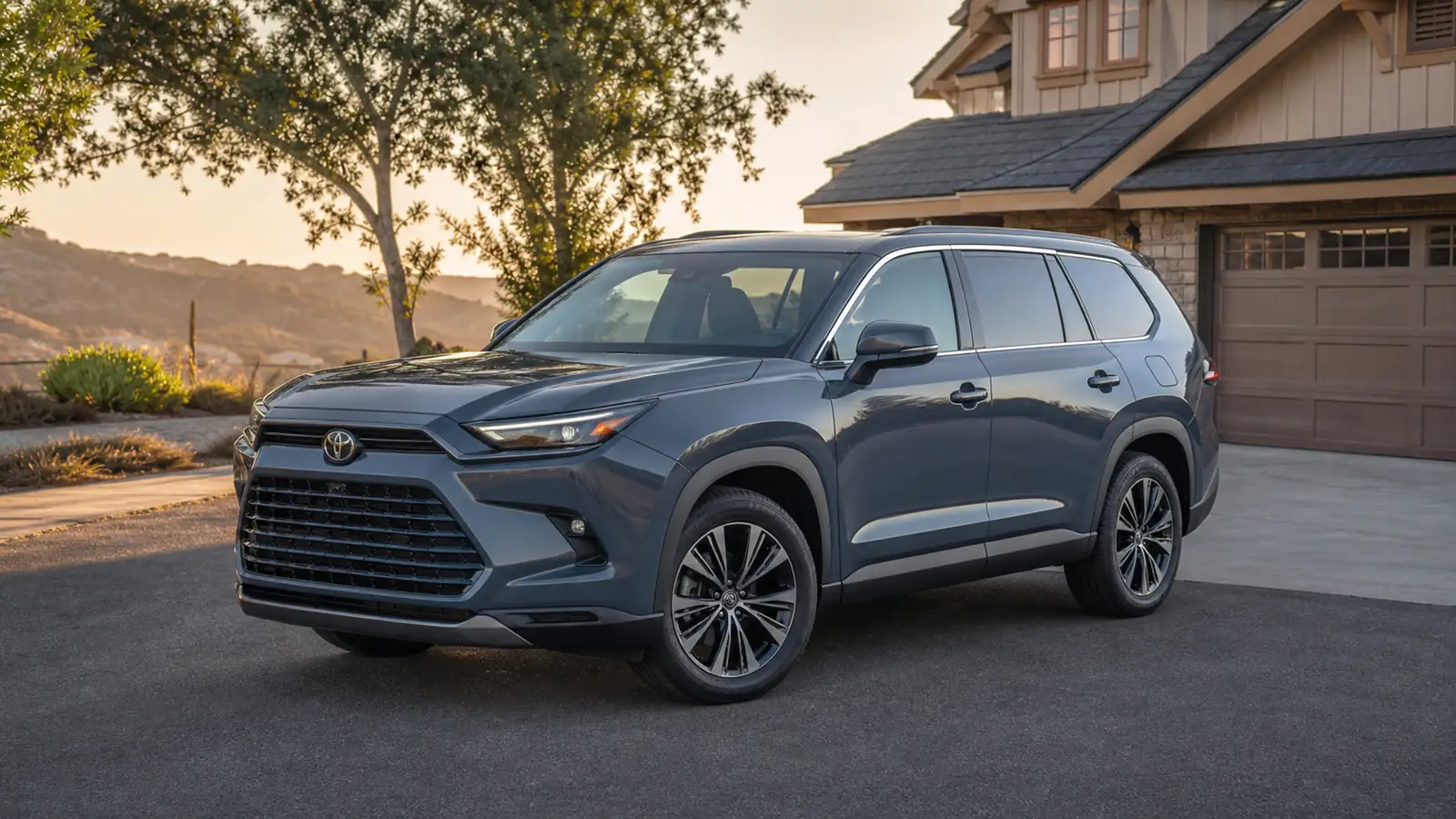
A Toyota Highlander Hybrid adds occasional third-row capacity.
Five seats is the ceiling here, so a household that occasionally needs six is looking at the wrong size of vehicle rather than the wrong trim.
The RAV4 Prime earns its SUV advantage only when the rear seat and 33.5-cubic-foot load area handle the household's normal people and gear together.
SE is the value base and XSE needs an equipment reason
The 2024 lineup has SE and XSE grades. Both use the same 302-hp powertrain, 42-mile range estimate, electronic AWD, and core plug-in hardware.
XSE adds larger wheels and more cabin and exterior equipment. Packages can push its price well above the base grade.
| Choice | What stays the same | What changes | Buyer test |
|---|---|---|---|
| SE | 302 hp, AWD, 42 miles | Simpler equipment, lower price | Start here |
| XSE | Same core powertrain | Wheels, displays, comfort and options | Name each weekly benefit |
| Premium Package | Same range purpose | High-end cabin and camera features | Compare total price with luxury rivals |
Build written quotes with the same destination, dealer products, tax, down payment, trade value, interest rate, term, and insurance coverage.
Price replacement tires for both wheel sizes. A larger monthly payment spread across a longer loan is still a larger total cost.
XSE can make sense for a driver who uses its cameras, seat features, display, or other package equipment every day.
It is weak value when selected for appearance alone. SE already contains the mechanical reason to buy the Prime.
Compare the final quote with premium SUVs and electric SUVs. A full EV may provide lower energy use, while the Prime provides gasoline backup.
Start with SE because it includes the complete 302-hp plug-in system, then add XSE only for equipment that changes regular use.
IIHS results are positive, with one updated side-test limit
IIHS named the 2024 RAV4 Prime a Top Safety Pick. Its published results include Good ratings in the driver and passenger small-overlap front tests, the original moderate-overlap front test, roof strength, head restraints, and headlights.
The updated side test is rated Acceptable.
The page also lists Good pedestrian front-crash-prevention performance and an Acceptable result for the vehicle-to-vehicle evaluation.
These are specific tests under controlled conditions. They do not guarantee that injury will be prevented in every crash, and they do not replace a condition inspection.
Toyota Safety Sense includes collision-warning, braking, lane, cruise, and road-sign support.
Test the exact equipment without provoking an intervention. Assistance can be limited by weather, dirty sensors, worn tires, faded markings, glare, or incorrect calibration.
The driver remains responsible.
Check the child-restraint anchors and install the household seats. IIHS rates the LATCH ease of use Good+, but a published score cannot confirm that a particular anchor is undamaged or that a seat fits the family layout.
The strong IIHS evidence supports the RAV4 Prime, while the Acceptable updated side result and exact vehicle condition still belong in the decision.
Recall 23V478 matters on certain 2021 and 2022 vehicles
NHTSA recall 23V478 covers certain 2021 and 2022 RAV4 Prime vehicles. The official report describes a DC-DC converter condition in which debris can cause an electrical short, potentially leading to a vehicle fire.
Toyota's remedy replaces the converter on involved vehicles at no charge.
A vehicle inside the broad model-year range is not automatically included. A car that charges and drives normally is not proof that the campaign was completed.
Do not inspect or open high-voltage components yourself. The recall check and remedy belong with Toyota and qualified personnel.
Look for warning history, charging interruptions, electrical repairs, heat damage, aftermarket wiring, water intrusion, and collision work.
Confirm that cables and underbody covers are intact. A clean visual check does not replace diagnostics or campaign records, but damage or nonfactory wiring should stop the transaction until evaluated.
Later model years still need a complete VIN search because new campaigns can be announced after an article is written.
NHTSA's recall lookup should be paired with Toyota records.
A used 2021 or 2022 Prime should not change hands until DC-DC converter recall status and any required free remedy are documented for its VIN.
A used inspection must test charging, hybrid operation, and heavy-car wear
The RAV4 Prime has an engine, high-voltage battery, front and rear motors, onboard charger, power electronics, cooling, 12-volt system, and regenerative brakes. Its curb weight and strong acceleration can also expose tires and brakes to more work than a normal compact crossover.
What a plug-in hybrid inspection has to cover that a petrol one does not
- Verify VIN, title, warranty start, service records, recalls, and both keys
- Test AC charging and inspect the inlet, cable, and control box
- Scan all modules before and after a long drive
- Start cold and use both EV and hybrid operation
- Check heat, air conditioning, cooling fans, and battery intake
- Measure every tire and inspect wheels and alignment
- Test brake blending, ABS, steering, AWD warnings, cameras, and liftgate
Inspect glass, paint, seams, floors, underbody covers, and charging-area repairs
Toyota states hybrid battery coverage of 10 years or 150,000 miles and specified hybrid-component coverage of eight years or 100,000 miles, subject to warranty terms.
Confirm the in-service date and remaining coverage with the VIN. Do not assume every used car has the full headline period left.
Ask how the vehicle was charged, whether the original cable is included, and whether home or public equipment ever caused repeated interruptions.
Review efficiency history only as a clue because temperature, speed, trip length, and charging habits change the display.
The planned RAV4 Prime reliability page can track model-year evidence.
Condition, diagnostics, charging proof, tire measurements, and recall records are stronger evidence than a broad reputation score.
The Prime name applies to one generation, not every RAV4 plug-in
Toyota sold RAV4 Prime in the United States for model years 2021 through 2024. It renamed the vehicle RAV4 Plug-in Hybrid for 2025 while retaining the same basic generation and 302-hp system.
Toyota then introduced an all-new 2026 RAV4 with a different plug-in specification.
- 2021RAV4 Prime begins U.S. sales
- 2021 to 2024Prime name, 302 hp, 42-mile EV estimate
- 2025Renamed RAV4 Plug-in Hybrid with the existing generation
- 2026 onwardRedesigned RAV4 Plug-in Hybrid with different specifications
The redesigned 2026 plug-in can reach 320 hp and up to 50 miles in specified configurations according to Toyota.
Those figures do not apply to a 2024 RAV4 Prime. A listing that uses the latest range or charging language for an older vehicle is misleading even if the seller made an innocent mistake.
Confirm the model year, VIN, grade, battery and charging equipment, wheel size, original window sticker, warranty start, and EPA label. Insurance and parts searches should use the VIN because the naming transition can confuse databases.
The older Prime does not become a poor purchase because a newer model exists.
Its value depends on condition, price, charging fit, and remaining warranty.
Separate 2021-to-2024 Prime specifications from the renamed 2025 vehicle and redesigned 2026 generation before comparing price or capability.
Run the cost calculation against RAV4 Hybrid and a full EV
The Prime can reduce gasoline use, but energy savings do not automatically recover a large purchase premium.
The size of that premium is the first thing to settle, because it moves more than any driving habit does.
This site lists the Prime between $43,690 and $47,560 and the RAV4 Hybrid between $32,000 and $42,000.
Base against base, that is a gap near $11,690; a loaded Hybrid against a base Prime closes it to under $2,000.
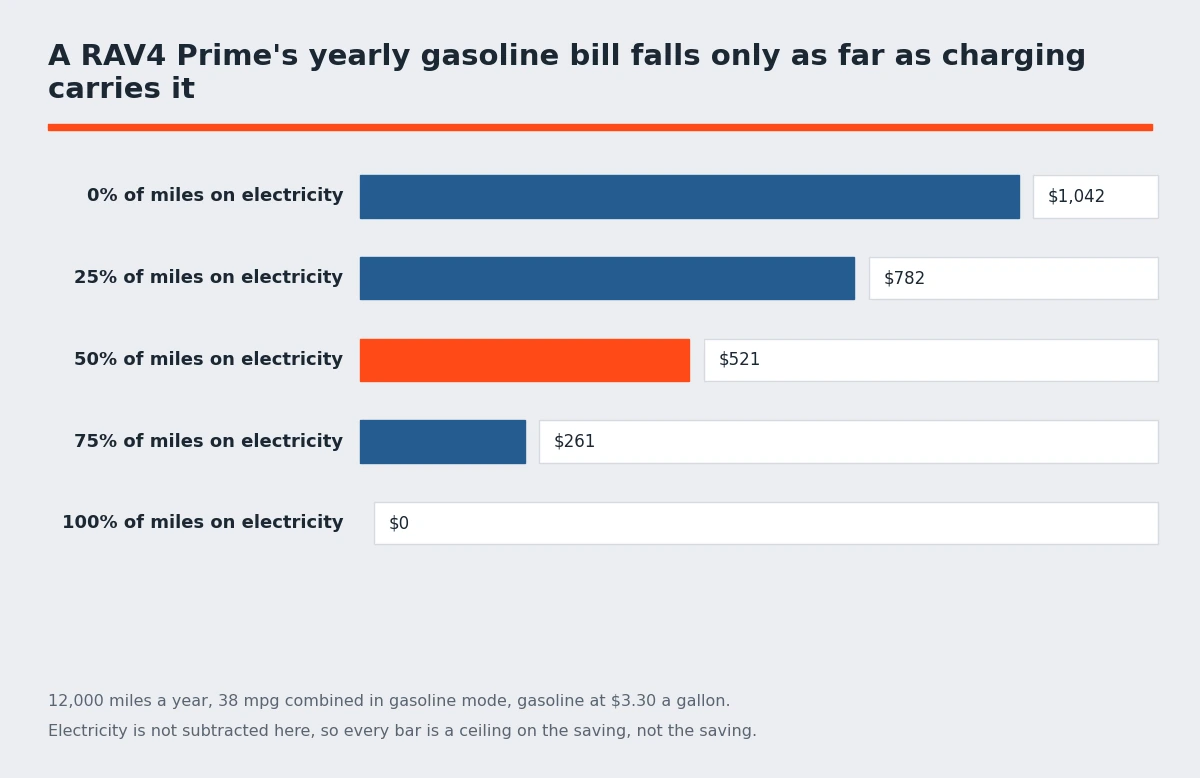
Take 12,000 miles a year at the Prime's published 38 mpg in gasoline mode, with fuel at $3.30 a gallon.
Charge nothing and the year costs about $1,042; cover half the miles electrically and it falls to about $521.
That $521 is the ceiling on the yearly saving, not the saving itself, because the electricity has not been paid for yet.
Subtract charging at the reader's own delivered rate and the real figure lands somewhere below it.
Set that against the premium and the answer separates sharply.
A $2,000 gap clears in about four years of half-electric driving; an $11,690 gap needs more than twenty, which is longer than most owners keep the vehicle.
| Cost | Prime input | Comparison input |
|---|---|---|
| Purchase | Final price after all dealer products | Same for RAV4 Hybrid or EV |
| Charging | Outlet or Level 2 installation | None for hybrid, full setup for EV |
| Energy | Electricity plus gasoline | Gasoline or electricity |
| Insurance | Exact VIN quote | Matching coverage |
| Tires | Full set for selected wheel | Exact comparison size |
| Finance | Total interest | Same term and down payment |
| Repairs | Reserve after warranty | Vehicle-specific reserve |
| Resale | Conservative estimate | Same ownership date |
Do not assume a tax credit. Program rules, assembly requirements, income limits, lease treatment, and funding can change.
Confirm any incentive in writing for the exact transaction. Include registration and insurance because high output and value can raise both.
Compare the Prime with the RAV4 Hybrid, the Venza and a full electric vehicle over the same ownership period. The Prime's financial case is strongest with many low-cost home-charged miles and weakest when its higher price is financed for years while charging remains occasional.
Choose SE when electric miles and SUV space both matter
RAV4 Prime solves a useful combination. It can cover many local days electrically, deliver 302-hp response, continue long trips on gasoline, and carry family cargo in a compact SUV body.
Its price, weight, charging requirement, and recall check keep it from being a universal upgrade over RAV4 Hybrid.
Pros
- 42 miles of rated electric driving
- 302 hp and standard electronic AWD
- Gasoline backup for long trips
- 33.5 cubic feet behind the second row
Cons
- High purchase price
- Home charging is needed to make full use of it
- Early VINs require DC-DC recall verification
- XSE packages can approach luxury-SUV prices
The rest of Toyota's range answers the same question at several sizes and prices, which is the comparison worth making before the premium is paid. Load the same people and gear into every candidate.
Buy a RAV4 Prime SE when home charging turns 42 miles into regular electric driving and the household truly needs its SUV space, AWD, or strong acceleration.