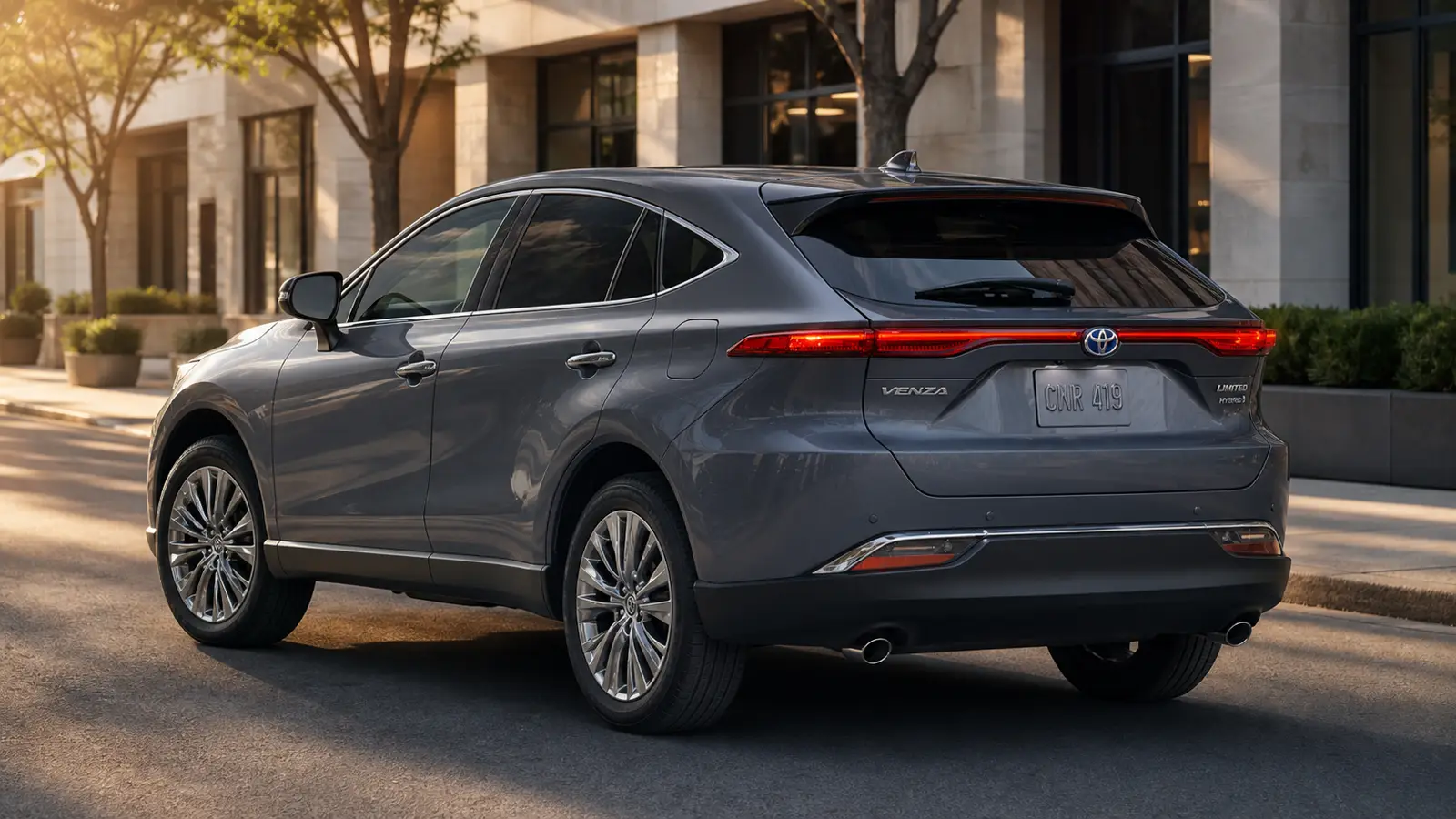
Venza is a comfort-focused hybrid with a firm cargo limit
Venza's quiet cabin and smooth controls feel more expensive than a basic family SUV, while its 28.8 cubic feet behind the rear seat trails a Toyota RAV4.
Venza makes the most sense for one to four people who carry normal luggage rather than tall, bulky household gear.
It is less convincing for a family that fills the cargo bay every weekend or needs a third row.
The low, sloping rear shape creates the boundary.
A Toyota RAV4 Hybrid provides more utility and similar hybrid logic. A Toyota Crown gives a sedan alternative with an easier-entry seating position.
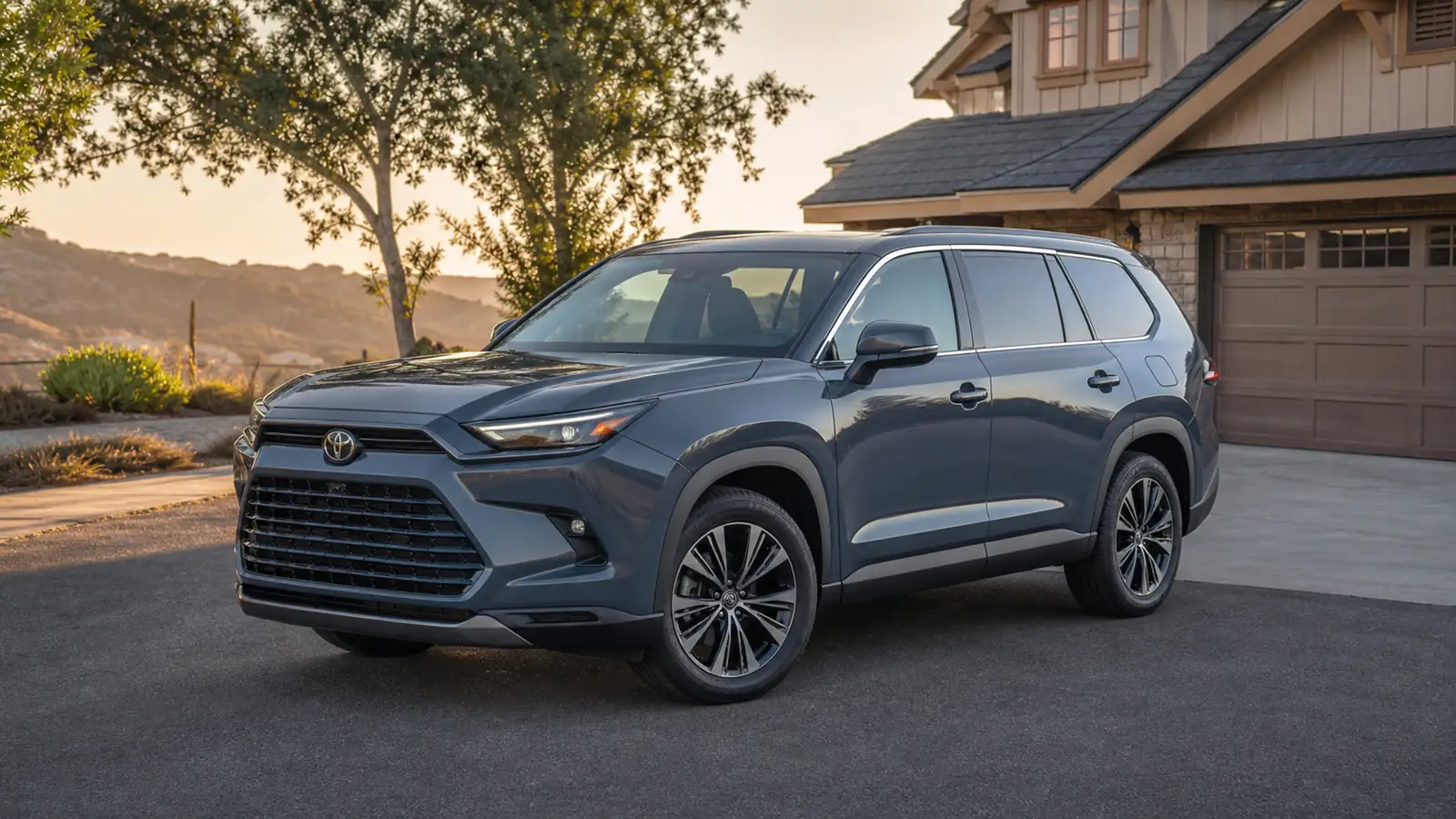
A Toyota Highlander Hybrid adds occasional third-row seats at a higher size and price.
The Venza's used value rests on condition and transaction price now that new production has ended. Buy it as a quiet, efficient two-row crossover only after its rear seat and 28.8-cubic-foot cargo area pass the household test.
The 219-hp hybrid prioritizes calm travel over quick response
Every 2024 Venza uses a 2.5L four-cylinder Toyota Hybrid System, an electronic continuously variable transmission, and an electric rear motor for AWD.
Total output is 219 hp. Toyota and EPA list 40 city, 37 highway, and 39 combined mpg for the lineup.
Electric assistance gives smooth low-speed response, while hard acceleration can hold the engine at a steady high speed.
Test the car from a cold start, through stop-and-go traffic, up a grade, and onto a highway.
The question is whether its response feels adequate with normal passengers and luggage, not whether the empty car wins a short demonstration.
Electronic AWD can power the rear motor when conditions require it. It supports launch traction, but it does not create off-road tires, low range, or extra ground clearance.
Four correctly sized tires with suitable tread remain essential.
The AWD vehicle hub provides alternatives with different purposes.
Compare dashboard fuel history only as a clue. Short trips, winter heat, tire pressure, highway speed, and previous driving change the result.
The Venza powertrain is successful when it stays quiet and close to 39 mpg on the buyer's route, not when it is judged as a performance system.
The cargo test can end the purchase in five minutes
Toyota lists 28.8 cubic feet behind the rear seat and 55.1 cubic feet with the seat folded.
Those numbers do not describe the height of the hatch opening, the angle of the rear glass, or the space left when passengers occupy the second row.
A tall object can fail even when its calculated volume seems small enough.
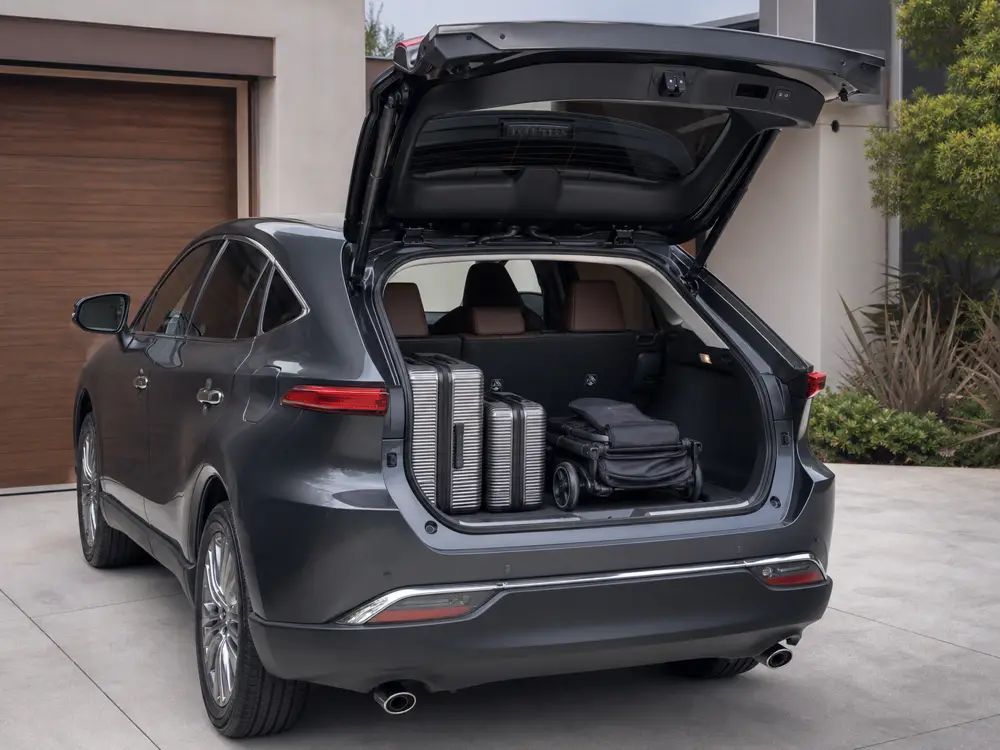
Bring the largest repeated load. Use the actual stroller, mobility device, pet crate, golf bag, work case, musical instrument, or luggage.
Keep child seats installed and the front seats in their regular positions. Check the load floor height, hatch opening, sloped glass, wheel-house width, tie-downs, and underfloor storage.
- Load the tallest object first
- Keep every required passenger seat usable
- Close the hatch without pressing cargo against the glass
- Check sight lines through the rear window
- Confirm emergency gear remains accessible
- Test the hatch under the home garage door
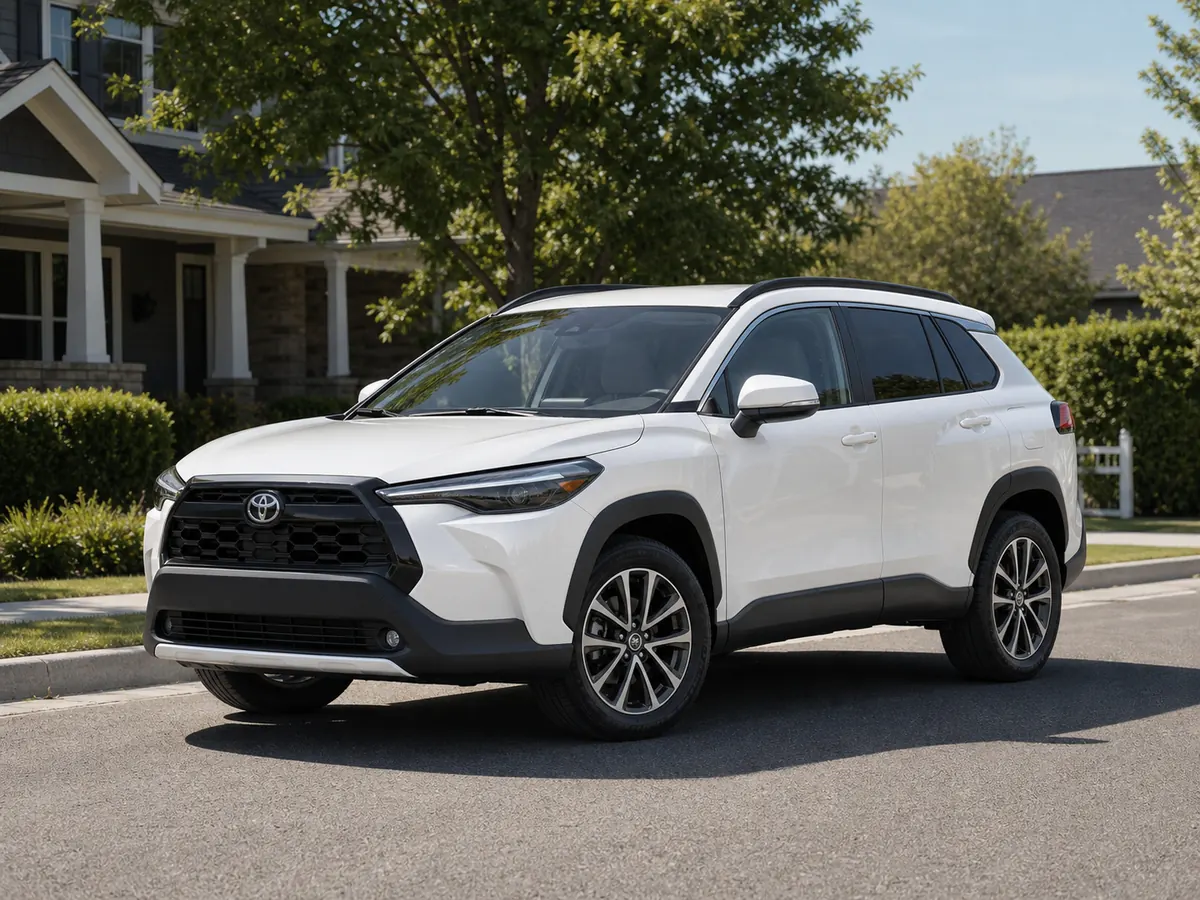
A Toyota Corolla Cross is smaller overall but should still be tested for cargo shape.
A Toyota RAV4 has a squarer load area.
Venza's premium feel cannot compensate for a hatch that rejects the household's largest weekly object.
Rear-seat comfort is better than the cargo figure suggests
The Venza uses a two-row layout and a road-focused seating position. Rear passengers can benefit from a quiet cabin and smooth hybrid operation, but the sloping roof still requires a real entry and headroom test.
Set the front seats for the regular drivers before anyone judges the second row.
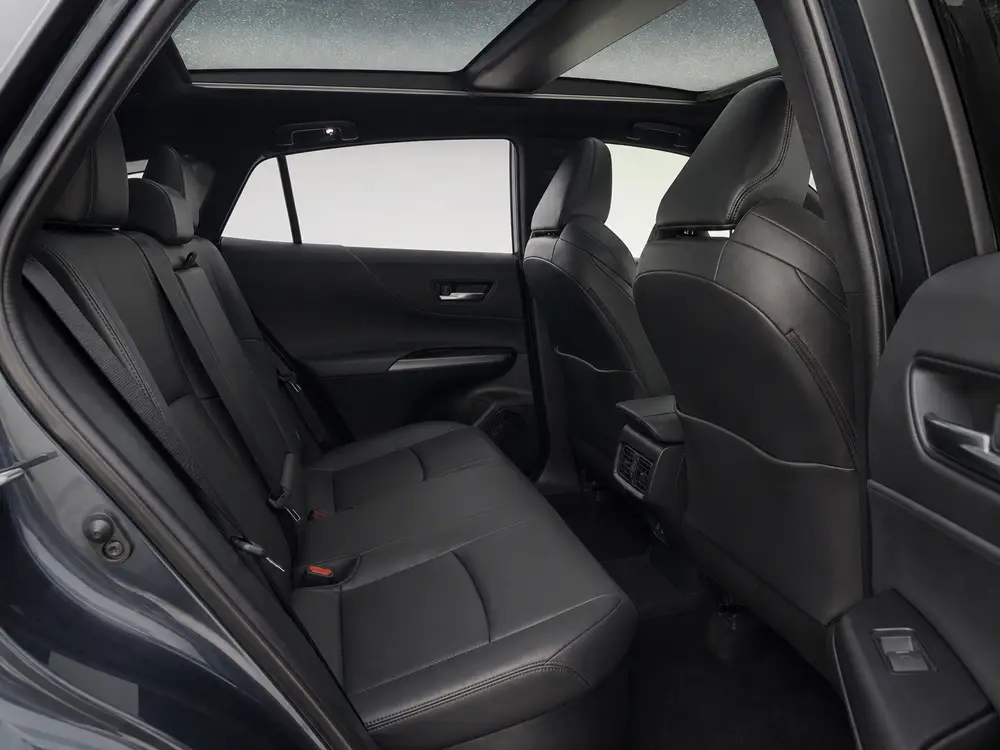
Place the tallest regular passenger behind the taller driver. Check head clearance while entering and sitting, knee contact, thigh support, foot space, belt fit, window view, rear vents, and temperature on a 20-minute drive.
A comfortable showroom posture can become tiring after the seat cushion and roof shape are tested in motion.
Install every child restraint according to Toyota and seat-maker instructions. Test rear-facing clearance, buckle access, top tether use, head-restraint rules, and whether an adult can still use the remaining seat.
Rehearse loading a child without hitting the roof or door frame.
The five-seat vehicle hub includes larger and smaller cabins. Families that regularly need a third row should compare a Toyota Sienna rather than expecting a cargo box to solve passenger capacity.
Venza works best when four regular occupants pass the entry and long-seat test without requiring the cargo area to cover a passenger-space shortfall.
LE and XLE protect the value better than a loaded Limited
The 2024 range includes LE, XLE, Nightshade, and Limited. Every grade gets the same hybrid output, AWD, and combined MPG estimate.
The price steps buy wheels, seating materials, displays, cameras, audio, lighting, and appearance rather than a stronger engine or larger cargo area.
| Grade | Main reason | Cost check | Main caution |
|---|---|---|---|
| LE | Core hybrid value | Price 18-inch tires | Fewer premium features |
| XLE | Comfort and convenience | Compare exact packages | 19-inch tire cost |
| Nightshade | Appearance | Price wheel replacement | Styling does not add utility |
| Limited | Cameras, display, premium cabin | Test every feature | Highest price and complexity |
LE is easy to overlook because used listings emphasize leather and large screens.
It keeps the mechanical package and smaller wheels. XLE can be the balance when its seats and convenience features improve repeated long drives.
Nightshade needs an appearance reason, and Limited needs a feature reason.
Obtain an insurance quote by VIN and price one replacement wheel, one tire, and a full set.
Larger wheels bring less sidewall and can make pothole damage more expensive. On a used Limited, test every camera, speaker, seat function, display, roof control, and driver-assistance feature before assigning value.
The premium vehicle hub shows alternatives with different equipment and depreciation. Start with LE for cost or XLE for useful comfort, then buy Limited only when its working equipment is worth more than simpler trim and tire savings.
Star Gaze glass is impressive only when it works and stays dry
Limited models could be equipped with Toyota's Star Gaze fixed panoramic glass roof. It changes between frosted and transparent states at the touch of a control.
It does not open like a conventional sunroof. The feature can brighten the cabin, but it adds glass, controls, trim, seals, and replacement exposure.
Operate the roof repeatedly with the vehicle running. Check whether the change is even across the panel, whether warning messages appear, and whether interior trim shows stains, looseness, or previous removal.
Inspect the outer glass for chips, impact marks, edge damage, and nonfactory repair.
After rain or a wash, check the headliner, pillars, overhead console, carpet edges, cargo floor, and spare or underfloor area for moisture.
A dry inspection on a sunny day cannot prove the vehicle has never leaked.
Review body and glass invoices.
Drivers who dislike glare or cabin heat should test both roof states in direct sun.
The fixed panel does not provide ventilation.
Choose Star Gaze only after the glass, switching function, interior, insurance coverage, and replacement cost pass inspection.
IIHS results show a strong base with two important updated tests
IIHS named the 2024 Venza a Top Safety Pick. Its published page lists Good results in the driver and passenger small-overlap front tests and original moderate-overlap test.
The updated moderate-overlap front result is Marginal, with the rear-passenger restraints and dummy kinematics rated Poor.
The updated side test is Acceptable.
The available headlights are rated Acceptable, and the pedestrian front-crash-prevention result is Good.
These details matter more than repeating only the award. The updated tests were designed to examine protection beyond older protocols, including rear-seat performance.
Toyota Safety Sense supports braking, lane, cruise, road-sign, and high-beam functions.
Assistance cannot create tire grip or correct an obstructed or miscalibrated sensor. Inspect the windshield, camera, radar area, lamps, mirrors, tires, alignment, seat belts, child anchors, and body structure.
Test child seats in the actual seating positions and confirm rear passengers can achieve correct belt fit.
Require calibration records after glass or collision work.
Venza has meaningful positive safety evidence, but buyers should keep its updated rear-passenger and side-test limits visible.
Used condition matters more than a general Toyota reputation
The second-generation Venza was sold in the United States from 2021 through 2024. Toyota's wider hybrid experience is useful context, but it cannot certify one used vehicle.
The individual car must prove correct hybrid operation, maintenance, campaign status, tire condition, electronics, and body integrity.
- Verify the VIN, title, service history, warranty start, recalls, and both keys
- Start cold and scan every available module
- Check engine oil, coolant, leaks, and hybrid warnings
- Inspect the battery-cooling intake and cabin filters
- Test brake blending, ABS, steering, AWD warnings, heat, and air conditioning
- Measure all four tires across the tread
- Test cameras, screens, liftgate, seats, audio, and roof equipment
- Inspect glass, paint edges, seams, cargo floor, and underbody panels
Toyota states hybrid battery coverage of 10 years or 150,000 miles and specified hybrid-component coverage of eight years or 100,000 miles, subject to its terms. Confirm the original in-service date and remaining coverage by VIN.
NHTSA campaigns can involve only a narrow production group or vehicles modified by a regional distributor.
Do not apply an accessory recall to every Venza. Search the exact VIN at NHTSA and Toyota on the day of purchase.
A documented, diagnostic-clean Venza with sound tires, dry interior, working equipment, and a clear VIN record is stronger evidence than the badge.
Discontinuation changes price and parts questions, not basic usability
Toyota ended the second-generation U.S. Venza after the 2024 model year. The Crown Signia entered the lineup as a different hybrid crossover with its own body, cargo, powertrain, price, and equipment.
A seller should not describe the Venza as mechanically identical to its successor.
- 2009 to 2015First U.S. Venza generation
- 2021Hybrid-only second generation arrives
- 2024Final U.S. model year for second generation
- 2025 onwardCrown Signia occupies a related premium hybrid position
Discontinuation can lower used prices, but it can also affect buyer demand and the availability or cost of model-specific trim, glass, lamps, and body parts.
Mechanical service does not disappear because Toyota stopped building the model. The hybrid system still needs ordinary maintenance, warranty review, and qualified diagnosis.
Ask a local Toyota parts department about any expensive model-specific item found damaged during inspection.
Verify lead time and price before accepting a seller credit. A rare roof panel or lamp can keep a vehicle off the road even when the repair itself is straightforward.
Compare the Toyota Crown Signia on cargo shape, seat position, and total price rather than assuming newer is automatically better. A discontinued Venza can be good value when the price accounts for age and model-specific parts exposure without discounting condition or inspection.
Build the five-year budget around used price and premium equipment
At 39 mpg combined, the Venza can control fuel use without charging.
That advantage should be calculated against the exact alternative. A RAV4 Hybrid may offer similar energy cost with more cargo room.
A gasoline luxury crossover may cost less used but consume more fuel and require premium fuel.
| Cost | Buyer input |
|---|---|
| Purchase | Final price after fees and dealer products |
| Finance | Rate, term, down payment, total interest |
| Fuel | Annual miles divided by realistic MPG |
| Insurance | Exact VIN and matching coverage |
| Tires | 18- or 19-inch full-set quote |
| Glass and roof | Deductible, exclusions, replacement estimate |
| Maintenance | Fluids, filters, brakes, alignment |
| Repair reserve | Electronics, liftgate, sensors, post-warranty work |
| Resale | Conservative value at the planned sale date |
Run the same worksheet for a Toyota RAV4 Hybrid, Toyota Crown Signia, and hybrid SUV.
Keep the ownership date and insurance coverage identical. A low purchase price can win even with lower resale, while an expensive Limited can lose despite efficient fuel use.
Do not count the battery warranty as free coverage for every fault. It has terms and does not pay for tires, glass, collision repairs, routine service, or unrelated electronics.
The best Venza value is usually a clean LE or XLE bought at a price that leaves room for tires, insurance, and model-specific repairs.
Choose Venza when quiet efficiency beats maximum utility
Venza combines a quiet premium cabin, 39-mpg hybrid operation, standard electronic AWD, and Toyota's long hybrid battery warranty under its terms.
It gives up cargo volume, current-model status, and some safety-test performance against the strongest alternatives.
Those tradeoffs are clear enough to make a direct decision.
Pros
- 39-mpg combined estimate
- Standard electronic AWD
- Quiet road-focused cabin
- Strong small-overlap crash-test results
Cons
- Only 28.8 cubic feet behind the rear seat
- Marginal updated moderate-overlap result
- Discontinued after 2024
- Upper-grade glass and 19-inch tires add exposure
Use the Toyota brand hub, SUV hub, hybrid hub, and five-seat hub to keep the choice grounded in body and use.
Buy Venza when its quiet cabin and 39-mpg AWD system matter more than maximum cargo space, and favor a documented LE or XLE that leaves money for ownership.