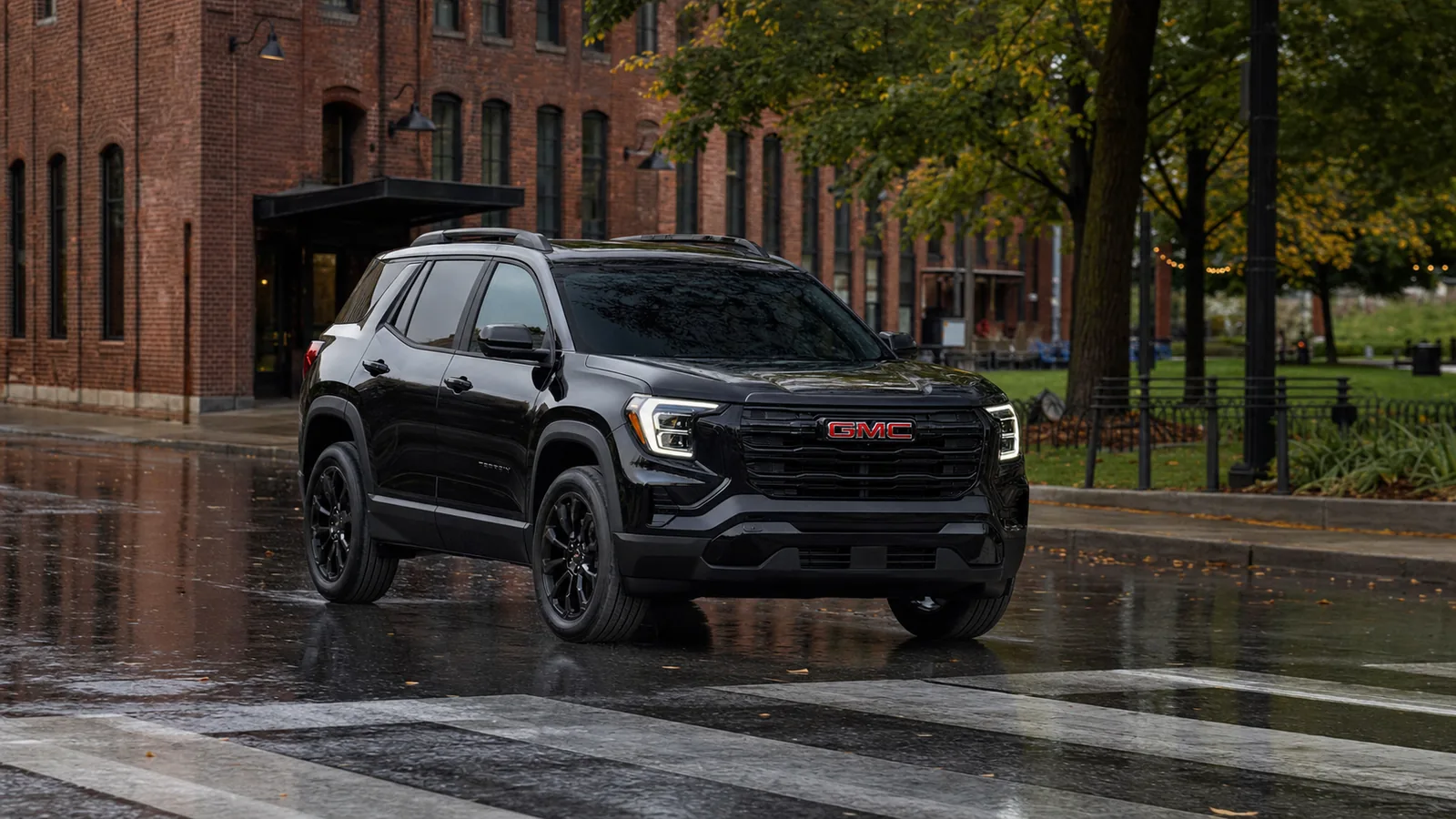
Is 175 horsepower enough for the redesigned GMC Terrain?
The 2026 GMC Terrain has enough power for commuting, school runs, and steady highway travel, but its 175-hp turbo engine is the limitation every buyer should test first.
It can merge and pass safely with planning. It does not provide the effortless acceleration, hybrid response, or towing reserve available in several compact SUV alternatives.
GMC uses a 1.5-liter turbocharged four-cylinder across the complete lineup.
Official U.S. specifications list 175 hp and 184 lb-ft of torque. Elevation, AT4, and Denali change traction, transmission, equipment, and appearance, but none receives a stronger engine.
Low-speed response is adequate because the turbo supplies useful torque before the engine reaches high speed.
Light throttle around town feels normal, especially with one or two occupants. A steep on-ramp, short passing lane, or full passenger load asks for more throttle and creates more engine noise.
The full-load test matters. Five adults and cargo can add close to 1,000 pounds, depending on the passengers and equipment.
The Terrain will still move the load, but acceleration and braking change.
Ask several people to join the test drive, then repeat a highway merge and hill that resemble the vehicle's normal route.
A roof box, bicycles, all-terrain tires, cold weather, and altitude can make the modest output more obvious. Trailer drag adds another demand even when the trailer remains below the 1,500-pound maximum.
The tow figure suits a small utility trailer more than a substantial camper.
The engine also has no electrified support.
There is no hybrid model to add low-speed torque or reduce stop-and-go fuel use. Buyers who drive many urban miles should compare fuel cost with hybrid crossovers rather than assuming a smaller turbo engine will always be economical.
Transmission choice changes how the same output feels.
Front-wheel-drive Elevation uses a continuously variable transmission, while all-wheel-drive versions use an eight-speed automatic. The next decision is therefore mechanical even though the horsepower stays fixed.
The Terrain's 175 hp is acceptable when calm daily driving matters more than quick passing or heavy towing. If the test drive requires full throttle to feel comfortable on a normal route, choose a stronger or hybrid alternative before paying for a higher trim.
FWD uses a CVT while AWD gets an eight-speed automatic
The Terrain's most important configuration split is unusual.
Front-wheel-drive Elevation uses a CVT, while all-wheel-drive Terrain models use an eight-speed automatic. The choice changes power delivery, fuel economy, purchase price, traction, and the way the vehicle responds to a hill or pass.
A CVT can hold the engine at an efficient speed and vary its ratio without conventional gear steps. Under light throttle, that can keep the Terrain smooth and economical.
Under hard acceleration, engine speed may rise and stay high while road speed catches up. Some drivers accept that behavior, while others prefer distinct shifts.
The eight-speed automatic uses fixed gears.
It can downshift for a pass, hold a lower gear on a grade, and provide the familiar change in engine speed many drivers expect. It also comes with all-wheel drive, so its feel cannot be separated from the added hardware and weight.
| Factor | FWD Elevation | AWD Terrain | What it changes |
|---|---|---|---|
| Transmission | CVT | 8-speed automatic | Power delivery feels different even with the same engine |
| Driven wheels | Front | All four when needed | AWD improves acceleration traction on slippery surfaces |
| Official city estimate | About 26 mpg | About 24 mpg | AWD uses more fuel in low-speed testing |
| Official highway estimate | About 28 mpg | About 28 mpg | The highway gap is small in the published figures |
| Trim availability | Elevation only | Elevation, AT4, and Denali | Upper trims include the AWD hardware and cost |
Front-wheel drive is the rational choice in a mild climate with maintained roads.
The front tires carry much of the vehicle's weight and can provide useful traction in rain. Good seasonal tires, sensible speed, and correct pressure matter more than an AWD badge on worn tires.
All-wheel drive can send torque to the rear when the front tires need help.
It is useful on snow, loose gravel, steep wet driveways, and unpaved access roads. It does not reduce stopping distance on its own, and it cannot overcome tires that do not suit the temperature or surface.
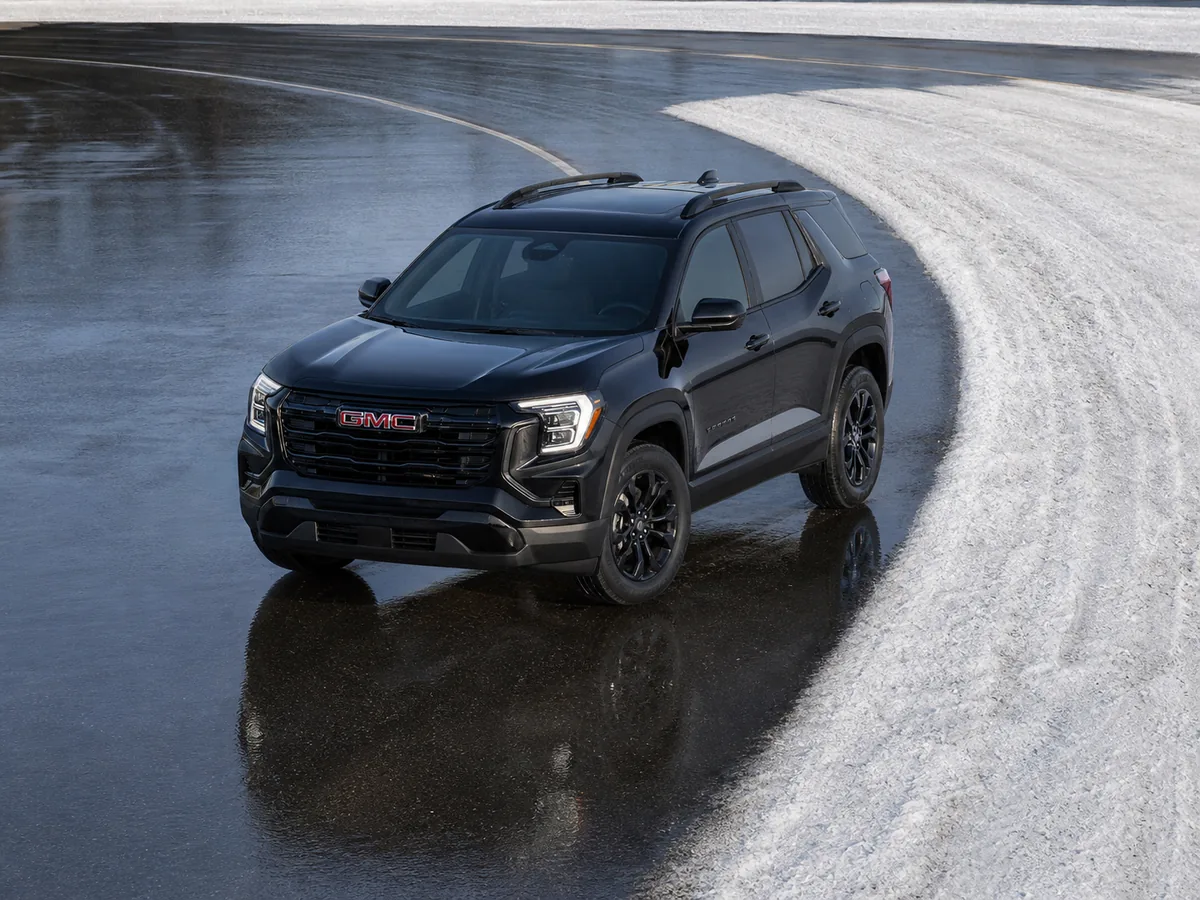
AT4 and Denali make the choice for the buyer because both use all-wheel drive and the eight-speed automatic.
An Elevation shopper can compare FWD and AWD directly. Drive each from a stop, through a steady 30-to-50-mph increase, over a hill, and during low-speed parking.
Fuel estimates should become an annual calculation. At 12,000 miles, a difference between 27 and 25 mpg combined uses roughly 36 additional gallons.
Multiply that amount by the local fuel price, then add the AWD purchase cost and any insurance difference.
Tire replacement can also cost more on an AWD vehicle if the system requires closely matched tread depth.
Rotate tires on schedule, repair pressure loss promptly, and check the manual before replacing one damaged tire. The correct approach depends on measured tread and GMC requirements.
Choose FWD and the CVT for lower cost and maintained-road efficiency. Choose AWD and the eight-speed when recurring traction needs justify the added fuel and hardware.
Make the decision after driving both transmissions because their behavior changes every trip.
Does the Terrain earn its premium over the Chevrolet Equinox?
The Terrain earns a price premium over the related Chevrolet Equinox only when its GMC-specific cabin, screens, trim equipment, or design improves something the buyer uses often. The two vehicles share core architecture and a 1.5-liter turbo engine, so a higher Terrain price does not buy more horsepower.
That shared foundation is useful rather than suspicious. It gives both vehicles access to the same broad dealer network and familiar mechanical layout.
The value question begins after the shared parts are acknowledged.
GMC gives the Terrain its own front and rear design, cabin presentation, trim structure, and feature packaging. The upright 15-inch center screen and digital display make the interior look more technical.
AT4 adds an outdoor theme and AWD hardware, while Denali emphasizes materials and comfort.
The Equinox often reaches a lower starting point or offers similar equipment through different packages. Incentives and dealer stock can reverse an advertised price gap, so compare two actual vehicles with the same drivetrain, safety features, seat functions, cameras, and destination charges.
Cabin design can create genuine daily value.
A clear camera view, useful storage tray, comfortable seat, and simple climate control save effort every day. Decorative stitching and a larger badge do not create the same benefit unless the buyer values the appearance enough to pay for it.
Resale value should not be assumed from the brand hierarchy.
Transaction price, incentives, mileage, condition, trim, color, accident history, and regional demand all affect later value. A larger discount today can also produce a lower used value later without making the purchase worse.
Insurance and replacement parts may differ even where mechanical parts are shared.
Ask for quotes using both VINs. A bumper, lamp, wheel, camera, or trim panel can carry model-specific pricing that the common engine does not reveal.
The test should remain simple.
Cover the badges mentally, set both seats and mirrors, use the screens, load the same cargo, and drive the same route. Then compare the complete out-the-door price and warranty terms.
Pay more for the Terrain when its equipment makes the exact vehicle easier or more comfortable to use every week. Choose the Equinox when the common engine, space, and safety equipment deliver the same result for less money.
Can the Terrain carry adults and cargo without feeling cramped?
The Terrain is a practical five-seat compact SUV, not a substitute for a three-row vehicle.
GMC lists 29.8 cubic feet of cargo space behind the second row and 63.5 cubic feet with the rear seats folded. Those figures suit a small family, couple, or commuter who carries bulky gear occasionally.
Front passengers receive the easiest fit.
Set the driver's seat for the tallest regular driver before evaluating the rear. The second row must then provide enough knee room, foot space, head clearance, and door opening for the people who actually sit there.
Five seating positions do not guarantee five-adult comfort on a long drive. The center rear passenger shares shoulder space and may sit over a raised cushion or floor area.
Three children can fit differently depending on booster width and buckle access. Bring every restraint and follow both manuals.
Behind the rear seat, 29.8 cubic feet can handle groceries, several soft travel bags, a folded stroller, or sports equipment.
Cargo shape matters. A tall box may hit the sloping hatch, while a wide stroller can consume the floor and leave unusable gaps around its wheels.
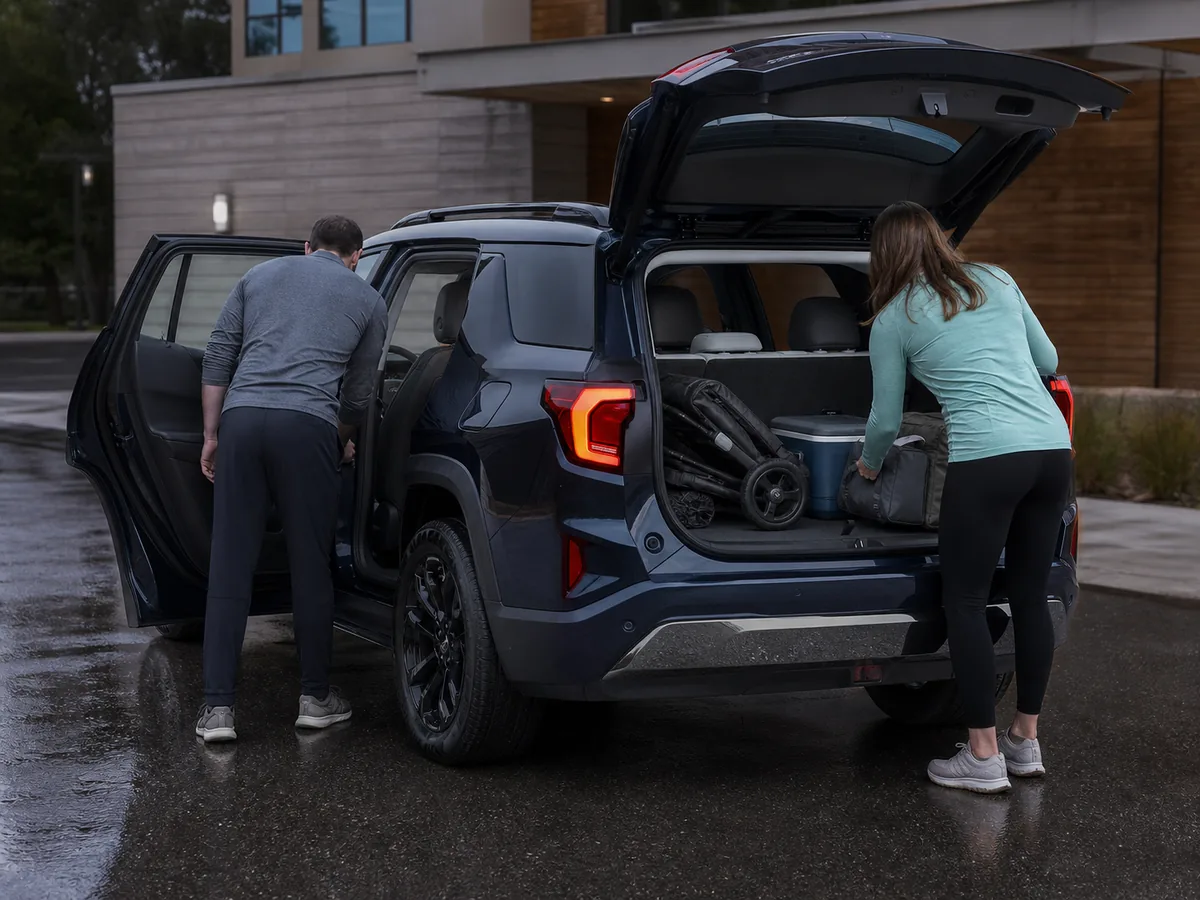
Folding the second row raises maximum volume to 63.5 cubic feet.
That state works for flat-pack furniture, bicycles with preparation, camping bins, or a dog crate. It also removes rear passenger positions, so the maximum figure should not represent normal family capacity.
The Terrain is about 181 inches long, which helps in city parking and a typical garage.
That shorter footprint is part of its appeal compared with the Acadia.
The cost is a smaller cargo floor and no third row.
Small-item storage affects daily use.
Check whether phones, water bottles, keys, charging cables, and sunglasses have stable places without blocking cupholders.
Open the center console and door pockets while seated. Storage that looks large may be awkward to reach.
Hatch clearance needs a home test.
Measure the garage ceiling and the space behind the parked vehicle.
Confirm whether the power liftgate can stop at a lower height and whether a shorter family member can reach it without standing under the bumper.
Roof rails or a hitch carrier can add capacity, but they add height or length and may affect fuel use, sensors, rear access, and payload.
Secure every load and follow rating limits. Loose cargo can become dangerous during a sudden stop.
The Terrain is roomy enough for four adults and ordinary luggage, while five adults or bulky child equipment require a physical test. Move to an Acadia when a third row or occupied-trip cargo space is a weekly need.
Is the 2026 Terrain AT4 worth the price jump?
The Terrain AT4 is worth buying when all-wheel drive, all-terrain tires, and added underbody protection solve recurring snow, gravel, or poor-road conditions. It is harder to justify for appearance alone because AT4 uses the same 175-hp engine as Elevation and does not turn the Terrain into a low-range off-road vehicle.
All-wheel drive is standard on AT4. It can improve acceleration traction on loose or slippery surfaces and works with the eight-speed automatic.
A buyer already planning an AWD Elevation should compare the additional AT4 price rather than comparing AT4 with the least expensive FWD model.
All-terrain tires can find more grip on gravel, packed dirt, and shallow snow.
They may also add road noise, rolling resistance, and replacement cost. Their winter performance depends on the exact tire and temperature rating, so an aggressive tread pattern should not be mistaken for a dedicated winter tire.
Protective hardware matters on rutted access roads where a rock, ridge, or frozen track can contact the underside. It adds less value on a paved commute.
Ground clearance and protection remain limited compared with a truck or SUV that has low-range gearing and more suspension travel.
Pros
- Standard AWD helps on snow, gravel, wet grades, and loose access roads
- All-terrain tires suit mixed pavement and maintained dirt use
- Protective equipment reduces exposure on shallow ruts and rough tracks
Cons
- The engine remains at 175 hp
- All-terrain tires may add noise and replacement cost
- AT4 costs more and does not provide low-range gearing
Ride quality should be compared with Elevation on the same damaged road.
Tire construction and wheel size can change impact harshness and steering feel. A package that looks ready for trails may be less comfortable during the 95 percent of miles spent on pavement.
AT4 appearance has value if the buyer enjoys it, but the spending should still survive a use test.
List the five worst roads or weather conditions the vehicle faced last year. If none required added traction or protection, an AWD Elevation may provide the useful part for less money.
A compact SUV also has approach, breakover, and departure limits. Deep ruts, large rocks, mud, or water can damage parts regardless of trim.
Check route conditions, tire pressure, recovery access, and weather before leaving maintained roads.
Insurance and tire quotes belong in the trim comparison. An AT4 wheel or body component may cost more than an Elevation part.
Ask whether the exact tires are widely stocked near home and along frequent travel routes.
Buy Terrain AT4 for repeated traction and protection needs, not for a promise of serious off-road capability. AWD Elevation is the better value when snow and rain are the main problems and the road surface remains maintained.
Terrain Denali costs compact-luxury money without more power
Terrain Denali asks the buyer to pay for cabin finish and convenience, not performance. GMC has listed Denali near $41,900 before destination on its model pages.
At that price, the same 175-hp engine competes with stronger mainstream trims and entry vehicles from premium brands.
Denali adds distinctive exterior details, upgraded interior materials, comfort equipment, cameras, and larger wheels depending on specification.
Those features can improve every drive for someone who spends many hours in the vehicle. They do not increase cargo volume, towing, or acceleration.
The shared engine becomes most obvious during a highway pass.
Denali's quieter appearance and richer seat do not shorten the time needed to accelerate with passengers aboard. Drive the exact vehicle on an incline and a fast merge before treating the premium cabin as a complete upgrade.
Terrain Denali value check
- Starting context
- About $41,900 before destination on GMC model information
- Engine output
- The same 175 hp as other Terrain trims
- Drivetrain
- AWD with an 8-speed automatic
- Primary benefit
- Cabin materials, comfort, appearance, and convenience
- Primary cost risk
- Large tires, cameras, powered equipment, and higher purchase value
Large wheels change both appearance and ownership.
A shorter tire sidewall can sharpen steering and expose the wheel to pothole damage. Replacement tires may cost more, and a damaged matching tire can be harder to source during travel.
A premium-brand alternative may provide a stronger engine, different warranty, or better dealer amenities. It may also have less standard equipment, a smaller rear seat, more expensive service, or a higher insurance quote.
Compare complete vehicles rather than badges.
A high mainstream trim can be another answer. A hybrid compact crossover may use less fuel and respond more quickly at low speed.
A larger mainstream SUV may add passenger or cargo room for similar money. The Denali wins only when its particular cabin and controls matter more than those alternatives.
Depreciation acts on the purchase price.
Even if Denali retains a reasonable percentage of its value, it can lose more dollars than an Elevation. Incentives can reduce the initial gap, so use the actual transaction amount in any ownership estimate.
Sit in the vehicle for at least 30 minutes.
Adjust lumbar support, use the cameras, pair a phone, listen at highway speed, and check whether the screen and controls remain easy after the novelty fades. Comfort is valuable when it survives a normal trip.
Terrain Denali makes sense for a buyer who accepts modest performance and will use its cabin upgrades every day. If power, efficiency, cargo room, or lower ownership cost matters more, its price opens several stronger alternatives.
The redesigned Terrain has useful safety results, not a perfect scorecard
The current Terrain provides useful crash-test evidence, but the results should be read by test rather than compressed into a perfect or poor label. IIHS applies the current ratings to 2025 and 2026 Terrain models.
The driver-side small-overlap result is Good. The passenger-side small-overlap result is Acceptable.
That difference shows why both sides matter. A strong driver result does not automatically describe the space where another adult or child may sit.
The updated side test is Good.
This evaluation uses a heavier moving barrier and more crash energy than the older test. The result supports the structure and restraint performance in that condition.
Front crash prevention is divided again. IIHS rates the vehicle-to-vehicle system Acceptable in its newer evaluation.
The pedestrian system receives a Good result. Performance can vary with speed, lighting, weather, object type, and sensor visibility.
Standard and available driver aids can include automatic braking, lane support, blind-zone warnings, and camera views. Verify the exact window sticker because package content can change by trim and build date.
Test every alert in a safe setting and learn how to adjust it without taking attention from the road.
Cameras are especially useful around a tall crossover, but dirt, rain, snow, glare, or damage can hide part of the image. Walk around the vehicle before moving when children, pets, posts, or low objects may be nearby.
A current GM campaign covers a defined group of vehicles whose radios were not configured correctly to download the electronic owner's manual.
The remedy is software-related, and the exact VIN determines whether a Terrain is included. The manual remains important because it holds child-seat, tire, towing, and safety instructions.
Ask the dealer for a VIN recall printout and confirm completed work before delivery.
Check the NHTSA VIN tool again during ownership because later campaigns may be announced.
Keep repair records with the vehicle.
Correct tires and pressure are part of the safety system.
The AWD badge cannot compensate for worn tread, and automatic braking cannot create grip on ice. Inspect all four tires, match replacements correctly, and use the door-label pressure when the tires are cold.
The Terrain combines Good crashworthiness in key tests with Acceptable results that deserve attention. Use the evidence to guide seating, feature selection, tire care, and a VIN check while keeping the driver responsible for the complete situation.
What should a new-generation Terrain owner budget and inspect?
The redesigned Terrain began for 2025, so a 2026 buyer has limited long-term evidence for the same engine, electronics, body, and transmission combinations.
That does not prove poor reliability. It means condition, records, warranty, and exact configuration are more useful than a confident ten-year prediction.
- 2025New generation arrives with a redesigned body, cabin, electronics, and drivetrain split
- 2026AT4 and Denali expand the range while higher-mileage evidence remains limited
- Every serviceCorrect oil, tire rotation, software updates, and documented inspections build the vehicle's history
- Before warranty endsInspect leaks, cooling, transmission behavior, cameras, screens, powered equipment, and suspension
Do not transfer every complaint from an older Terrain.
Earlier models used different bodies, software, and transmission arrangements. An older issue can suggest an inspection point, but it cannot establish how often the current design will fail.
A new vehicle should be checked for build date, open recalls, transport damage, wheel alignment, software status, and warranty start date. Operate every seat, latch, light, camera, USB port, climate function, driver aid, and power outlet before delivery.
A used 2025 or 2026 Terrain needs a cold start, diagnostic scan, warm road test, service history, tire measurement, and inspection for collision or water damage.
Drive at low speed, highway speed, and on a grade. FWD CVT and AWD eight-speed versions should be judged as different mechanical configurations.
Fuel is the most predictable recurring cost.
Use the exact drivetrain's official estimate, annual miles, and local price. Short trips, winter warm-up, congestion, roof cargo, and all-terrain tires can reduce real use compared with a calm test cycle.
Tires vary by trim and can turn one pothole into a meaningful bill. Record the size, brand, tread depth, and date code.
Ask for installed prices before choosing AT4 or Denali wheels, and confirm whether one damaged tire can be replaced without creating a tread mismatch.
The turbo engine depends on correct oil and cooling.
Follow the manual and oil-life system, use the specified fluid, and keep receipts. A severe schedule may apply when trips are short, temperatures extreme, roads dusty, or the vehicle tows.
Screens, cameras, sensors, powered seats, and connected services add convenience and possible expense after warranty.
Confirm which services require a subscription and what stops working when it expires. A feature should justify its cost in both active and inactive states.
Insurance, registration, financing, and depreciation can exceed routine maintenance.
Obtain a VIN-based insurance quote and compare out-the-door prices. An upper trim can lose more dollars even when its resale percentage looks similar.
Budget the Terrain from the exact drivetrain and trim, then protect it with documented service and a complete pre-warranty inspection. The simplest configuration that performs the weekly job usually carries the least replacement exposure.
Who should buy a Terrain instead of a CR-V, RAV4, or Acadia?
Buy a Terrain when you want a compact five-seat SUV, accept its 175-hp performance, and prefer GMC's screen layout, design, trim equipment, or dealer experience. The strongest case is an Elevation configured with the drivetrain that matches local weather.
FWD suits maintained roads and buyers focused on price and fuel use. AWD suits recurring snow, gravel, and wet grades while bringing the eight-speed automatic.
AT4 needs a repeated surface reason. Denali needs a repeated comfort reason.
A Honda CR-V or Toyota RAV4 deserves attention when powertrain choice, hybrid efficiency, resale history, or a different cabin arrangement matters. Drive the exact trims because a base rival and a loaded Terrain answer different questions.
Choose the Acadia when a third row or more occupied cargo space is required.
The larger GMC adds substantial length, price, and fuel use. Those costs make sense only when the extra passenger and luggage capacity is used.
Choose a stronger compact SUV when highway passes, altitude, or a full cabin made the Terrain uncomfortable during the test.
No trim package changes its output. Paying for Denali equipment cannot repair a powertrain mismatch.
The last test should include the tallest passengers, all child restraints, the largest regular cargo, a rough road, a highway merge, a parking space, and a VIN recall search. Repeat it in the exact vehicle being purchased.
Choose the Terrain when its modest engine is acceptable and GMC equipment improves weekly use. Choose a rival when stronger performance, hybrid efficiency, a third row, or a lower equivalent price matters more.