Did the redesigned GMC Acadia finally fix its third-row problem?
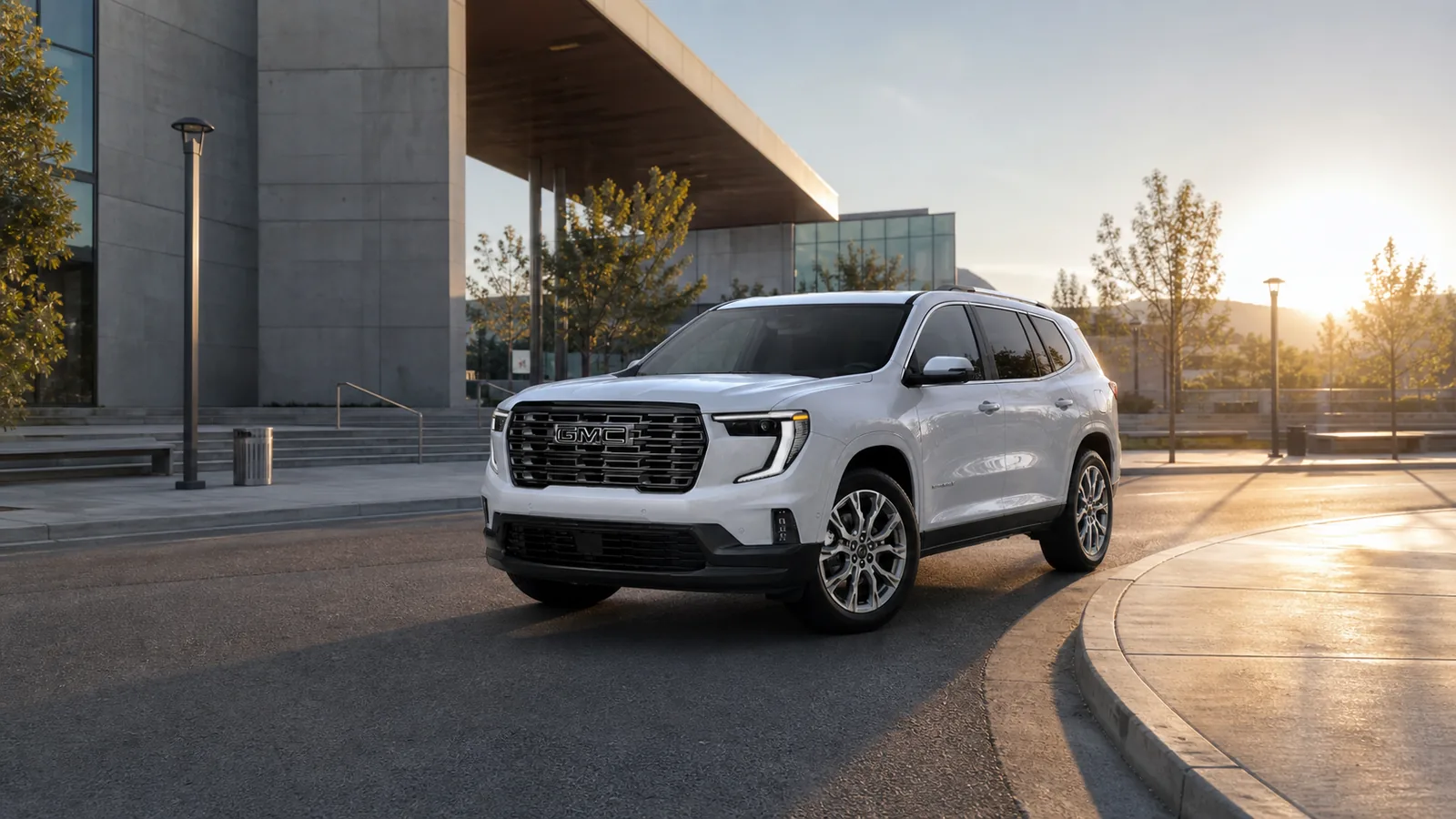
The 2026 GMC Acadia finally has the body size to work as a genuine three-row family SUV. GMC rates it for up to eight people, provides 23.0 cubic feet of cargo space behind the third row, and offers 97.5 cubic feet with the rear seats folded.
The previous Acadia felt like a two-row crossover with occasional extra seats. The current one can carry passengers in all three rows without immediately giving up the luggage area.
That change began with the 2024 redesign. GMC moved the Acadia back toward the footprint of the first-generation model, stretching the current SUV to roughly 204 inches long.
The result is a vehicle that sits between compact three-row crossovers and full-size truck-based SUVs. The extra body length is easy to notice in a garage, but it is also the reason the third row now solves a real family problem.
| Measure | Previous Acadia | Current Acadia | What it changes |
|---|---|---|---|
| Overall mission | Midsize crossover with a tight third row | Large midsize three-row crossover | Adults and growing children have a more credible rear seat |
| Maximum seating | Up to 7 | Up to 8 | A second-row bench can carry one more person |
| Cargo behind row three | About 12.8 cu ft | 23.0 cu ft | Groceries and several carry-ons can remain aboard with every row raised |
| Maximum cargo | About 79.0 cu ft | 97.5 cu ft | Bulky household loads fit with the rear rows folded |
| Overall length | About 194 inches | About 204 inches | More cabin room comes with a larger parking footprint |
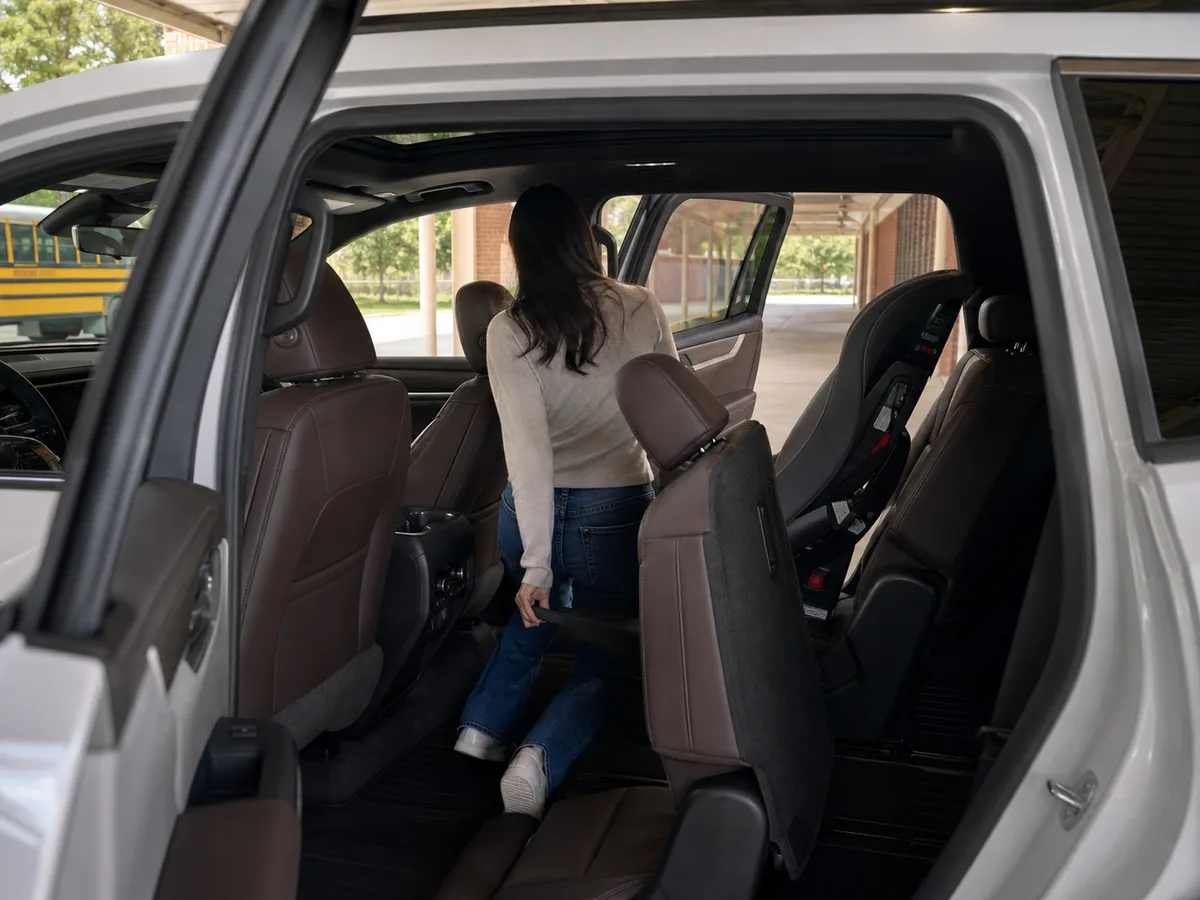
Third-row usefulness begins at the door. A second-row seat must move far enough forward for a passenger to step through, and the opening must remain usable when another child seat stays installed.
Captain's chairs create a center aisle that can be easier for children and mobile adults. A bench adds capacity, but reaching row three may require more seat movement.
The rear seat is still the last row of a crossover. Adults should check knee angle, foot space, head clearance, and how the seat cushion supports their thighs.
A ten-minute showroom sit does not reveal whether the posture remains comfortable after an hour. Put the tallest likely passenger there while the driver and second-row seats remain in their normal positions.
Cargo space is the stronger evidence that GMC fixed the old weakness.
A family can now keep all rows in use and still load a stroller, grocery bags, or several cabin-size suitcases. The floor remains shorter than the maximum-volume figure suggests, so long or rigid items may still require one third-row section to fold.
The tradeoff is permanent exterior size. The larger Acadia needs more turning room and more clearance behind the hatch.
A household that uses row three twice a year may be carrying extra length every day. A household that fills all three rows every week gains space it previously would have needed a full-size SUV to obtain.
The redesign solves the old Acadia's third-row weakness when your family regularly uses the rear seat and still needs luggage space behind it. If the third row stays folded most of the year, a shorter two-row SUV will be easier to park and may cost less to fuel.
Should you choose seven seats or eight in the 2026 Acadia?
Choose the seven-seat Acadia when easy movement between rows matters more than one extra passenger position.
Choose the eight-seat layout when the household truly carries eight people and the second-row bench can remain usable with the required child seats. The correct answer depends on access during a normal week, not the largest number on the specification sheet.
Captain's chairs leave a center aisle between the second-row seats. Children can walk toward row three without tilting a seat, and an adult can reach a rear passenger more easily during a stop.
That aisle also gives feet and bags somewhere to go when the third row is occupied.
The cost is one seating position that can never be recovered.
A second-row bench raises capacity to eight and can be useful for three children across the middle. It may also let a family keep the third row folded on short trips, preserving the largest cargo area.
The bench becomes less convenient when two bulky child restraints block the outer seating positions and the center position is too narrow for the remaining passenger.
Child-seat placement needs a physical test.
Bring every restraint that will be used, install each one according to its manual, and check the Acadia owner's manual for approved anchor positions. A rear-facing seat can force the front passenger forward.
A high-back booster can make the buckle difficult to reach. A permanently installed seat can also interfere with the tilt or slide needed for third-row access.
Adults change the calculation again. Captain's chairs give each second-row passenger a defined seat and armrest, while the bench gives the household more flexibility for short trips.
On a long drive, the center bench passenger may have less shoulder room and a firmer cushion. In row three, the center position in an eight-seat configuration is best treated as an occasional place unless the actual passengers confirm otherwise.
Luggage can reverse an apparently easy choice.
Eight occupied seats leave every cargo item behind row three or at passengers' feet. Seven occupants can sometimes leave one third-row position folded for a narrow cargo channel.
That split can hold a stroller or several long bags without removing a passenger from the trip.
Do the test with the family present.
Set the driver's seat, install restraints, place regular passengers, walk everyone into row three, buckle every belt, and load the bags that travel with them. Repeat the process without showroom staff moving seats out of the way.
Seven seats are the more convenient layout for most families, while eight seats are valuable only when the eighth position is used often enough to accept harder access. The best layout makes the busiest trip simple, not the empty cabin impressive.
Is the Acadia's 328-hp turbo four strong enough when it is full?
The Acadia's 2.5-liter turbocharged four-cylinder is strong enough for normal family use, highway merging, and properly planned towing.
It produces 328 hp and 326 lb-ft of torque, then sends that output through an eight-speed automatic. The engine has more output than the former base four-cylinder and enough low-speed torque to move the larger body without requiring constant high revs.
A full cabin still changes how the vehicle responds. Six passengers, luggage, and accessories can add well over 1,000 pounds.
Acceleration takes longer, braking distances grow, and the transmission may use lower gears on grades.
That is normal load behavior rather than proof that the engine is inadequate.
The eight-speed automatic matters because it keeps the turbo engine closer to the speed where useful torque is available. On a steady highway it can settle into a tall gear.
During a pass or climb it may downshift more than an old naturally aspirated V6. Listen for smooth changes when the powertrain is cold and warm, and test the same kind of grade the vehicle will face when loaded.
GMC lists a maximum tow rating of 5,000 pounds when the Acadia is properly equipped.
That number does not mean a 5,000-pound trailer is suitable for every vehicle or family. Trailer tongue weight, passengers, cargo, hitch hardware, and options all count against the payload label on the driver's door.
A small boat or lightweight travel trailer may fit the Acadia's limits.
A tall trailer near the maximum can work the turbo engine hard because aerodynamic drag rises with frontal area and speed. Trailer brakes, a suitable hitch, tire pressure, cooling requirements, and loaded weights matter more than the empty trailer number in an advertisement.
The one-engine lineup keeps shopping simple but removes alternatives. There is no hybrid for a buyer focused on low-speed fuel savings.
There is no V6 for someone who prefers naturally aspirated response, and no diesel for sustained heavy towing. The available all-wheel-drive system changes traction, not engine output.
Fuel economy should be calculated from the exact drivetrain and annual mileage.
A turbo engine under frequent boost can use more fuel than its calm highway behavior suggests. Load, cold weather, roof boxes, aggressive tires, and short trips can all increase consumption.
The 328-hp engine is a sound match for the Acadia when the trailer and passenger load remain within the exact vehicle's ratings. Buyers who tow near 5,000 pounds often or want a second powertrain choice should compare a larger SUV before committing.
How much cargo fits behind each row of the GMC Acadia?
The most useful Acadia cargo figure is 23.0 cubic feet behind the third row.
Maximum volume reaches 97.5 cubic feet, but that larger number applies only after the rear seats are folded and most passenger capacity disappears. Families should evaluate the smallest cargo state they use regularly.
With every row raised, 23.0 cubic feet can handle a grocery run, sports bags, or several carry-on suitcases.
A folded stroller may fit if its shape works with the hatch angle and floor depth. Tall coolers and rigid suitcases can consume space faster than soft bags because unused gaps remain around them.
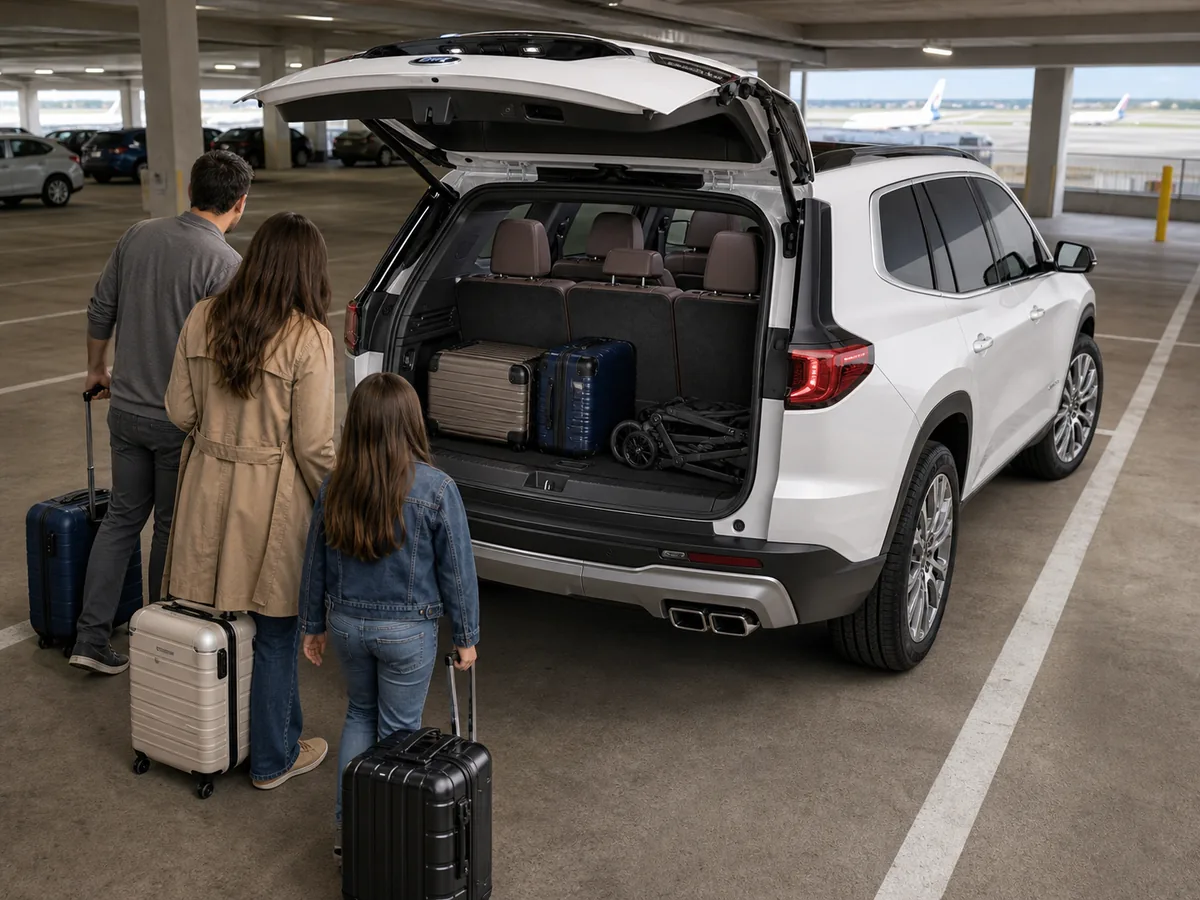
The split-folding third row creates a useful middle state.
Fold one position and the Acadia gains a longer channel for a stroller, folding chairs, skis in a protected bag, or flat-packed household items. One or two rear passengers can remain seated, depending on the split and child-seat arrangement.
Folding the complete third row turns the Acadia into a roomy five-seat cargo vehicle.
This state suits airport runs with several large suitcases, a dog crate, camping bins, or a home-improvement load. The second row stays available, so the vehicle still carries more people than a pickup with the same protected cargo volume.
Maximum capacity of 97.5 cubic feet requires both rear rows to fold.
That number is useful for furniture boxes or bulky equipment, but the load floor, roof height, wheel housings, and front-seat position determine what can actually enter. Volume does not guarantee that a long rectangular object clears the hatch opening.
Loading height matters for people as much as the number. Lift the heaviest regular item into the cargo area and check whether the bumper or sill creates an awkward reach.
Confirm that the power hatch can open under the home garage door and that there is room to stand behind the vehicle in the usual parking space.
Small storage spaces help with charging cables, wipes, straps, and emergency equipment, but they do not replace the main cargo area. Loose items should be secured because a sudden stop can send them toward passengers.
Keep heavy cargo low and forward, and do not stack luggage above a level that blocks rear visibility unless it is restrained.
A roof box can add volume, but it raises loading effort, wind noise, fuel use, and total height. A hitch carrier adds rear length and can affect hatch access, sensors, lighting, and tongue load.
Use those solutions only after confirming their ratings and the Acadia's payload.
Test the cargo area with actual equipment before signing.
Measure the longest, widest, and tallest item, then bring the stroller, mobility device, dog crate, or largest suitcase if the dealer permits.
Check the fit with the number of seats that will remain occupied.
The Acadia's cargo advantage is real because 23.0 cubic feet remains available with all three rows in use. Buy the standard body only after proving that the hardest passenger-and-luggage trip fits without unsafe stacking or a second vehicle.
Which Acadia trim gives a family the best value?
The Acadia Elevation is the value starting point because it includes the larger three-row body, 15-inch center display, core safety technology, and the same 328-hp engine as every other trim.
AT4 is the better choice for repeated poor-road or winter use. Denali makes sense when its cabin and convenience equipment improves frequent long trips.
Elevation covers the main reason to buy an Acadia. It provides the space, seating flexibility, infotainment, and available all-wheel drive without charging for specialized suspension or luxury finish.
A family that spends mainly on child seats, fuel, insurance, and travel may gain more from keeping the trim simple.
AT4 directs money toward traction and rough-surface use. It adds all-wheel drive and equipment intended for loose roads and uneven access.
That can help a household that regularly reaches snowy driveways, unpaved campsites, or damaged rural roads. It is harder to justify when the vehicle stays on maintained pavement.
Denali directs money toward the cabin. Premium seating surfaces, appearance changes, convenience features, and larger wheels can make daily use feel richer.
None of those items adds third-row space, engine output, or maximum towing. Large wheels may also raise replacement cost and reduce the tire sidewall available to absorb sharp impacts.
Acadia trim decision
- Elevation
- Core family space, screens, safety equipment, and available AWD
- AT4
- Added traction and rough-road equipment for recurring poor surfaces
- Denali
- Cabin finish and convenience for buyers who value the experience every day
- Engine choice
- The same 328-hp turbo and eight-speed automatic across the range
- Best value test
- Pay only for equipment that changes a repeated trip
Options can blur the trim boundaries. An Elevation with several packages may approach AT4 pricing.
A heavily equipped AT4 can overlap a Denali while retaining a different tire and suspension focus. Compare complete window stickers and transaction prices rather than starting prices alone.
Wheel size deserves more attention than showroom appearance suggests.
A smaller wheel with more tire sidewall can ride more comfortably over broken pavement and cost less to replace. A large wheel may sharpen steering response and change the look, but curb damage and low-profile tire replacement can make the visual upgrade expensive.
All-wheel drive should follow climate and route conditions. It can improve acceleration on snow, rain, gravel, or a slippery ramp.
It does not shorten every stop, increase ground clearance by itself, or replace suitable tires. A front-wheel-drive Elevation may be the lower-cost answer in a mild climate with maintained roads.
Ask for an insurance quote on the exact trim and verify which driver-assistance features are standard, optional, or subscription-based. Technology that appears in an advertisement may depend on a package, compatible road, active service, or specific model year.
Elevation gives most families the strongest value because it preserves the Acadia's space advantage without buying equipment that does not change the trip. Choose AT4 for repeated surface problems and Denali for cabin features you will use often enough to cover their purchase and replacement cost.
How does the larger Acadia drive and park every day?
The larger Acadia drives like a roomy crossover, but its 204-inch body requires more attention in garages, curb spaces, and tight pickup lanes than the previous model.
Steering, cameras, and parking sensors reduce the workload. They cannot create clearance where the body does not fit.
The turbo engine provides useful low-speed response, and the eight-speed automatic keeps the vehicle moving without the heavy feel of a truck-based SUV. A full passenger load makes acceleration and braking more deliberate.
Test the vehicle with several adults aboard if that is its normal use.
Ride quality depends on the road and wheel package. A longer wheelbase can settle highway motion, while large wheels and short tire sidewalls can transmit sharp pavement edges.
AT4 hardware may feel different from Elevation or Denali on the same broken street. Drive the trims back to back when ride comfort is a major reason for buying.
Visibility is good where the tall seating position and broad glass expose traffic, but the rear corners remain far from the driver.
GMC offers up to nine camera views. A surround view can help place tires near curbs and show children or objects below the windows, provided the lenses are clean and the driver checks the complete scene.
The 15-inch portrait-oriented display puts many functions in one place. Its size can reduce menu hunting, yet screen dependence also makes setup important.
Pair a phone, adjust climate settings, find camera views, change a driver-assistance setting, and use navigation during the test drive without a salesperson guiding each step.
Parking should be tested at home.
Measure garage length with the door closed, include storage shelves and the space needed to walk behind the hatch, and check ceiling clearance when the liftgate opens.
Confirm that every passenger door can open enough for a child seat or older relative.
Use a test route that includes the narrowest regular turn, a rough street, a freeway merge, a curbside stop, and the home driveway. Park nose-in and reverse-in.
Check whether the camera remains clear in rain and whether warning tones help or become so frequent that the driver ignores them.
A longer SUV also needs more following distance and more space to change direction.
Driver aids can warn about a vehicle or lane marking, but they do not know that a passenger has opened a door into a narrow pickup lane. Slow maneuvering still belongs to the driver.
The Acadia's extra size is worthwhile when it solves third-row and cargo needs every week. If the garage, school lane, or city parking makes the body a daily burden while row three stays empty, a shorter crossover is the better fit.
The Acadia tests well in crashes, with one rear-seat restraint caveat
The current Acadia has Good IIHS crashworthiness results in several demanding tests, with one important limitation for rear-seat occupants. IIHS applies its current ratings to 2024 through 2026 models.
The structure performs well, while the updated moderate-overlap test exposes weaker rear restraint performance.
The driver-side small-overlap rating is Good.
This test sends the front corner of the vehicle into a rigid barrier and evaluates survival space, injury measures, and restraint performance. The result supports confidence in the front structure for that crash pattern.
The updated side test is also Good. It uses a heavier moving barrier and higher impact energy than the older side test.
A Good result matters in a three-row family vehicle because occupants sit across a long cabin and may include children in the rear rows.
The updated moderate-overlap test receives an Acceptable overall rating. Front-occupant protection is strong, but IIHS rates the rear passenger restraints Marginal in the tested condition.
That does not mean every rear crash outcome will be poor. It does mean the rear seat should not disappear behind a single overall safety label.
Use correct restraint selection and seating position for every passenger.
Children should ride in a child restraint or booster that matches age, size, state law, and the instructions from both the restraint maker and GMC. The safest available seating position depends on the installed seats, anchors, passenger mix, and vehicle manual.
Automatic emergency braking, lane support, blind-zone alerts, and cameras can reduce risk in some conditions. These systems have operating limits related to speed, weather, road markings, sensor visibility, and the object ahead.
The driver remains responsible for following distance, lane position, and checking around the vehicle.
One 2026 campaign concerns electronic access to the owner's manual on a defined population of GM vehicles.
A radio setting may prevent the manual from downloading correctly. The remedy is narrow, but the manual contains safety, towing, tire, and child-restraint instructions that should be available in the vehicle.
Do not treat a clean recall search as a permanent result.
New campaigns can appear after the sale. Register the vehicle with GMC, keep contact information current, and check the NHTSA VIN tool periodically.
The Acadia provides strong tested crash protection, but families should give the rear seats the same attention they give the front. The Acceptable updated moderate-overlap result is a reason to use restraints correctly and understand the evidence, not a reason to ignore the vehicle's Good results elsewhere.
What can the current Acadia's short reliability history actually tell you?
The current Acadia is too new for a confident long-term reliability verdict. The third generation began for 2024, so a 2026 buyer has only a few model years of same-design evidence.
That supports a cautious inspection and warranty strategy, not a claim that the vehicle is proven or doomed.
Older Acadia complaints should not be transferred automatically.
Previous generations used different engines, transmissions, electronics, dimensions, and cabin systems. An issue from a 2017 or 2020 vehicle can help an owner ask questions, but it cannot establish a failure rate for the 2026 turbocharged design.
- 2024Third-generation Acadia arrives with a larger body, 2.5-liter turbo, eight-speed automatic, and new electronics
- 2025More vehicles accumulate service history, but most remain early in their ownership life
- 2026Current buyers can use recalls, technical updates, warranty records, and vehicle-specific inspections
- Later yearsHigher-mileage evidence will reveal patterns that short-term samples cannot yet establish
A new-vehicle inspection should include the build date, VIN recall result, software status, warranty start date, and operation of every seat, latch, camera, sensor, display, USB port, climate zone, and power outlet.
Test the vehicle cold and warm.
Confirm that the transmission engages smoothly and that no warning remains after startup.
Used current-generation vehicles need service records and a diagnostic scan in addition to a road test.
Look for collision repairs, water intrusion, uneven tire wear, damaged wheels, hitch wear, trailer wiring changes, and underbody impacts. A low odometer reading does not reveal how the vehicle was loaded or whether a problem was cleared shortly before sale.
The turbo engine adds heat and pressure compared with a naturally aspirated design.
That does not make failure inevitable. It makes correct oil, service intervals, warm-up behavior, cooling-system condition, and documented maintenance important.
Follow the manual and the oil-life monitor rather than a generic schedule from another engine.
Electronics deserve equal attention because the Acadia depends on its large display, cameras, driver aids, powered seats, and connected features.
A frozen screen or dirty camera may be inconvenient, while a disabled safety warning can change how the vehicle is used. Verify each feature instead of assuming a startup animation proves it works.
Ownership cost also changes by trim. Large tires, premium wheels, powered cabin equipment, cameras, and AT4 hardware can cost more to replace after warranty.
Fuel, insurance, registration, and depreciation should be quoted using the actual configuration and annual mileage.
Warranty coverage reduces early risk but does not cover every tire, alignment, impact, trim issue, or neglected service. Read the current booklet, confirm the in-service date, and understand whether a used vehicle retains factory coverage.
Treat the 2026 Acadia as a promising redesign with limited long-term evidence. Buy the condition, records, warranty, and configuration in front of you, then update the judgment as higher-mileage data develops.
Who should buy an Acadia, and who needs a different three-row SUV?
Buy an Acadia when the household needs a real third row, useful luggage space behind it, up to eight seats, and crossover driving behavior without moving to a full-size truck-based SUV. The strongest buyer uses the rear seat and cargo area together often enough to justify the larger body.
A seven-seat Acadia suits families that value a center aisle and easier access.
An eight-seat model suits households that regularly need the extra belted position and can make the bench work with their child restraints. Elevation protects value, AT4 serves repeated poor-road use, and Denali serves buyers who will appreciate its cabin equipment on frequent long trips.
The turbo engine is suitable for normal passenger use and lighter towing within the exact vehicle's ratings. A buyer who regularly tows near 5,000 pounds, carries heavy cargo, or wants a V8 or diesel should compare a larger body-on-frame SUV.
Payload and trailer labels decide that move, not horsepower alone.
Choose a shorter two-row SUV when row three stays folded most of the year. It will usually be easier to park, may use less fuel, and can still offer generous cargo space for four or five people.
A compact three-row model may also work when children occupy the rear and garage length is limited.
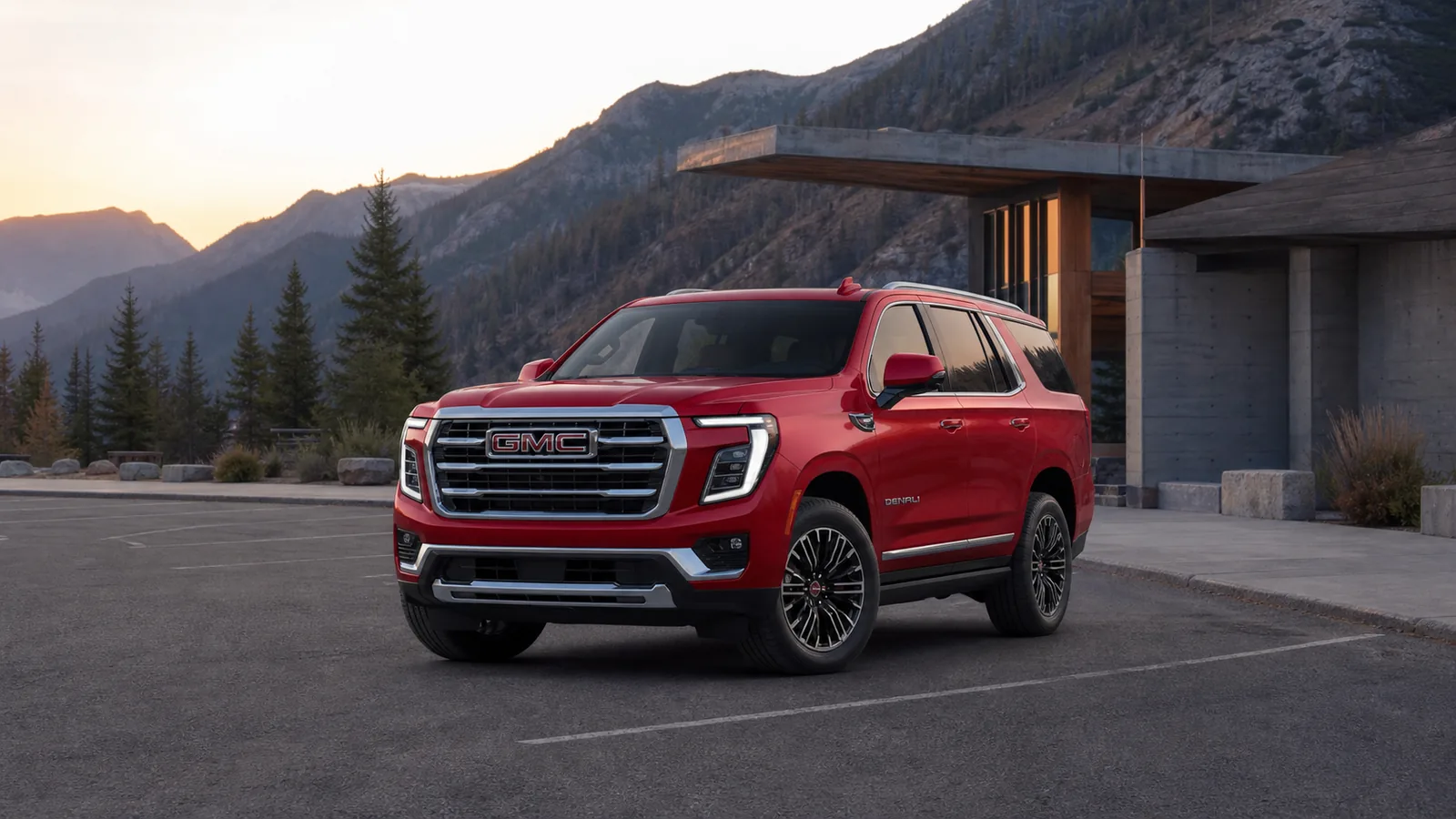
Move to a Yukon when eight people and their luggage overwhelm the Acadia, when a heavier trailer exceeds its suitable capacity, or when truck-based durability and equipment are required. Accept the Yukon’s higher purchase price, fuel use, tire cost, and parking burden before taking that step.
Cross-shop other large crossovers when powertrain choice matters.
Hybrid options can reduce fuel use in stop-and-go driving, while some rivals offer different second-row layouts, towing packages, or warranty terms. Compare the actual configuration rather than a model-wide headline.
The final dealer test should include every regular passenger, installed child seats, the largest recurring cargo item, a garage fit, a rough road, a highway merge, and a VIN recall check. A configuration that fails one of those tests will not improve after the first payment.
The 2026 Acadia is worth buying for families that genuinely need its restored size. If the third row, cargo volume, or towing capacity remains unused, the same size becomes cost and inconvenience rather than value.