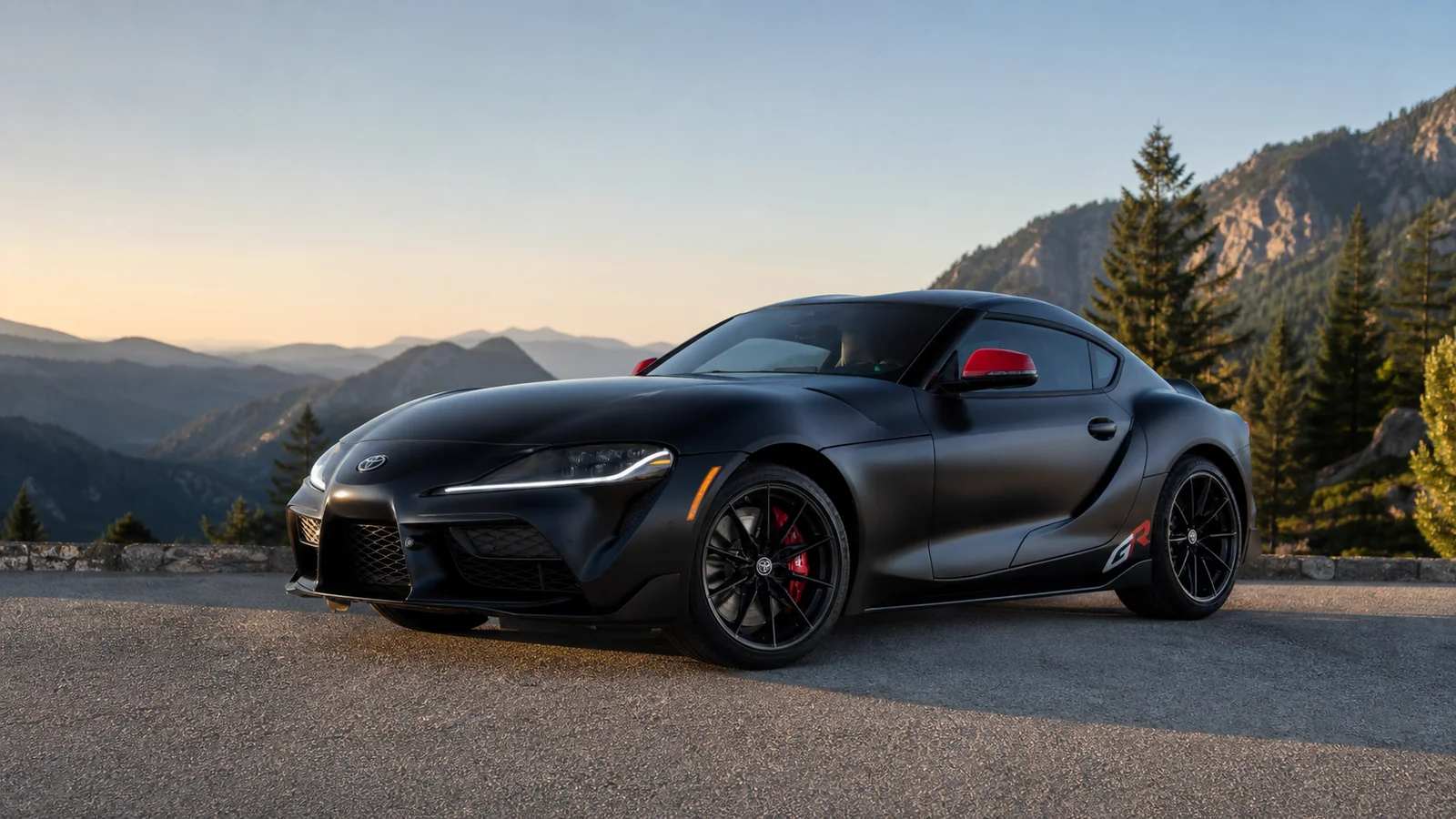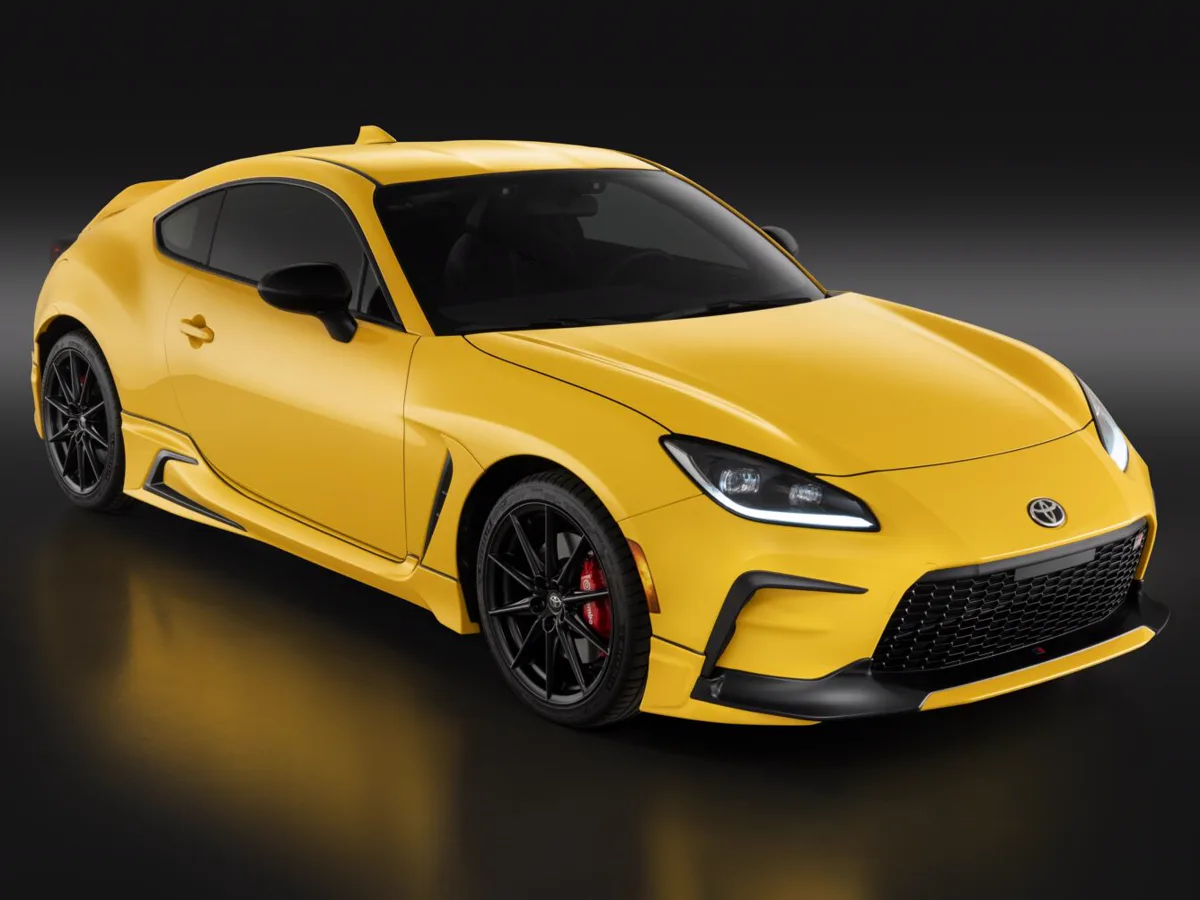
GR86 can commute every day when two seats are enough
The 2026 Toyota GR86 is a compact rear-drive coupe with a 228-hp naturally aspirated engine and a choice of six-speed manual or automatic.
It can serve as an everyday car for one or two people. Its low entry, small rear seats, firm ride, road noise, and tire cost become the practical limits.
A short test drive on a smooth road misses the main questions. Enter and exit several times, park beside a tall SUV, cross the roughest normal street, sit in traffic, merge onto a highway, and remain in the seat for an hour.
Check whether the low roof and seat bolsters work with clothing, mobility, and the household garage.
The GR86 should also be compared with the Mazda MX-5 Miata and Toyota Corolla.
The Miata gives open-air two-seat focus. The Corolla gives easy access and low running costs.
The coupe must earn its compromise through steering, balance, and driver involvement.
GR86 works as a daily car when one or two people value its chassis enough to accept low access, limited rear space, and sports-car ownership costs every day.
The 2.4L engine rewards momentum instead of effortless torque
Toyota's 2.4L boxer four-cylinder makes 228 hp and 184 lb-ft. It is naturally aspirated, so response builds with engine speed rather than arriving as a large turbo surge.
Toyota estimates the manual reaches 60 mph in 6.1 seconds. The point is balanced response and control, not winning a horsepower comparison.
Drive from low speed in a high gear, then repeat with the engine in its stronger range.
Check whether the response feels usable on the regular merge without constant aggressive driving.
Listen at cold start, full operating temperature, steady highway speed, and deceleration. A sporty engine can be audible without having an abnormal knock, rattle, leak, or warning.
The low boxer layout helps the center of gravity. Rear-wheel drive keeps steering and propulsion duties separate.
Those choices support balance, but they also make tire condition important. A throttle input that is easy on dry pavement may require restraint in rain or cold.
Compare a coupe and a rear-wheel-drive car on the same route. Buy the GR86 for predictable response and chassis balance, not because 228 hp is the largest number near its price.
Manual and automatic change the daily experience more than the MPG
The six-speed manual gives the driver direct control of clutch engagement and gear selection.
The six-speed automatic reduces work in congestion and includes manual controls. Toyota lists 20 city and 26 highway mpg for the manual, while the automatic is rated 21 city and 30 highway.
| Question | Manual | Automatic |
|---|---|---|
| Traffic | Repeated clutch work | Easier creeping |
| Driver involvement | Direct shift and clutch control | Paddle and selector control |
| Fuel estimate | 20 city, 26 highway | 21 city, 30 highway |
| Used inspection | Clutch, synchros, modification history | Fluid history, shift quality, heat |
| Best fit | Driver wants the process | Driver values traffic ease |
Drive both on the actual commute. In the manual, start on a grade, creep in traffic, execute a clean first-to-second shift, and check clutch take-up hot and cold.
In the automatic, test low-speed smoothness, a normal downshift, a highway pass, manual commands, and behavior after full warm-up.
Do not choose automatic only because its highway estimate is four mpg higher.
Annual miles, traffic, driving style, insurance, and transaction price matter more. Do not choose manual to satisfy another person's idea of a sports car if the daily route makes it frustrating.
The sports-car guide can frame alternatives, but the transmission decision remains personal and repeatable. Choose the gearbox that improves the real commute because the wrong transmission can make a good chassis feel like a daily obligation.
The driving position must work before the first corner
GR86 places the driver low with a short hood view, compact cabin, and supportive seat.
That can create excellent control and a clear sense of the car's movement. It can also make entry difficult for a driver with limited hip, knee, back, or shoulder mobility.
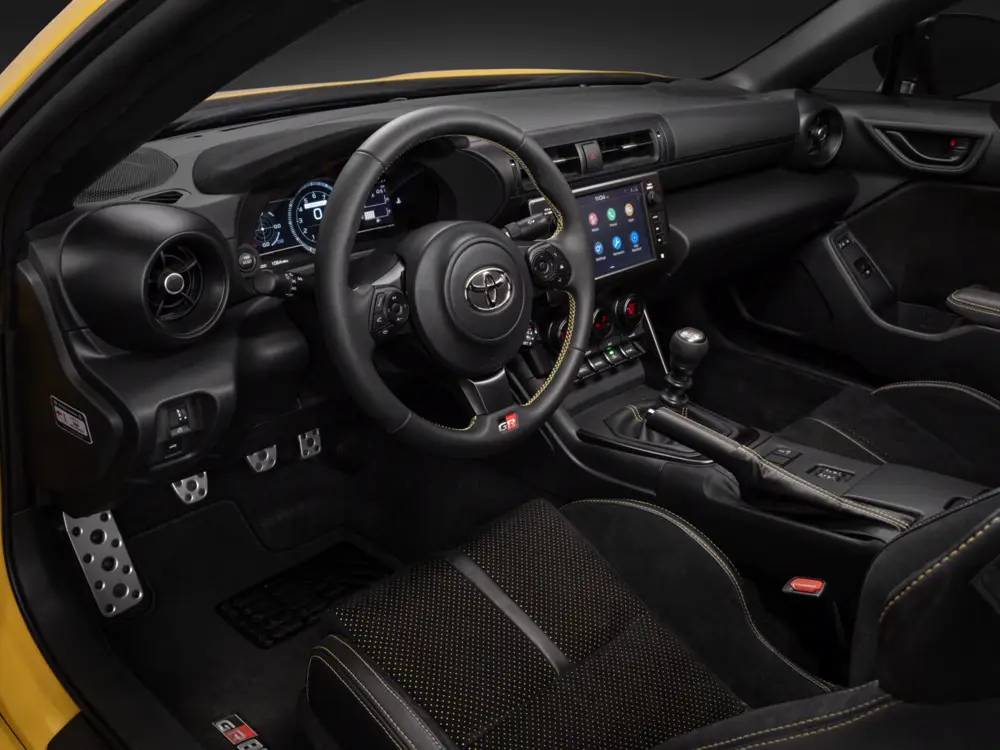
Enter without pulling hard on the steering wheel. Set distance so the brake or clutch can be fully pressed with a bent knee.
Adjust the wheel so shoulders remain supported during a turn. Check helmet clearance only if track use is planned, and do not assume a normal seating position leaves enough room.
Manual drivers should test clutch travel, dead-pedal space, heel position, and shifter reach without twisting the torso.
Automatic drivers should confirm brake-pedal comfort and paddle reach. Everyone should check mirror coverage, rear-quarter visibility, screen glare, climate controls, cup holders, phone storage, and door clearance in the normal parking spot.
Drive for at least an hour because a pressure point can appear late. Stop the purchase when the seat, pedals, roof, mirrors, or entry require a painful compromise because chassis feel cannot repair poor physical fit.
The back seat is a luggage tool before it is adult seating
Toyota describes GR86 as a four-seat coupe, but the rear area has very limited legroom and access.
It can work for small passengers on short trips when the front occupants can move forward. For many owners, its strongest use is carrying bags, coats, or equipment and extending the trunk with the seatbacks folded.
Set the front seats for the regular driver and passenger, then attempt rear entry. Check feet, knees, head clearance, belt access, and the ability to exit without help.
Never assume a child restraint fits because the car has anchors. Follow Toyota and seat-maker instructions, confirm front-seat clearance, and consider whether loading a child through a long coupe door is practical.
Load groceries, work bags, a suitcase, sports gear, or a set of wheels in the exact arrangement needed.
Keep any required rear passenger position usable. Check the trunk opening, pass-through, seatback release, visibility, and whether loose items can move during a hard stop.
A five-seat sedan is the better answer for regular rear adults. Buy GR86 as a two-person car with useful overflow space, then treat any successful rear-passenger trip as occasional capacity rather than the daily plan.
Base, Premium, and Yuzu Edition change tires and cost
The 2026 base manual starts at $31,400 before the processing and handling fee. Premium starts at $34,000 with the manual, while the limited Yuzu Edition manual starts at $36,365.
Automatic versions cost more. All keep the same 228-hp engine.
Base uses 17-inch wheels and Michelin Primacy HP tires. Premium moves to 18-inch wheels and Michelin Pilot Sport 4 tires.
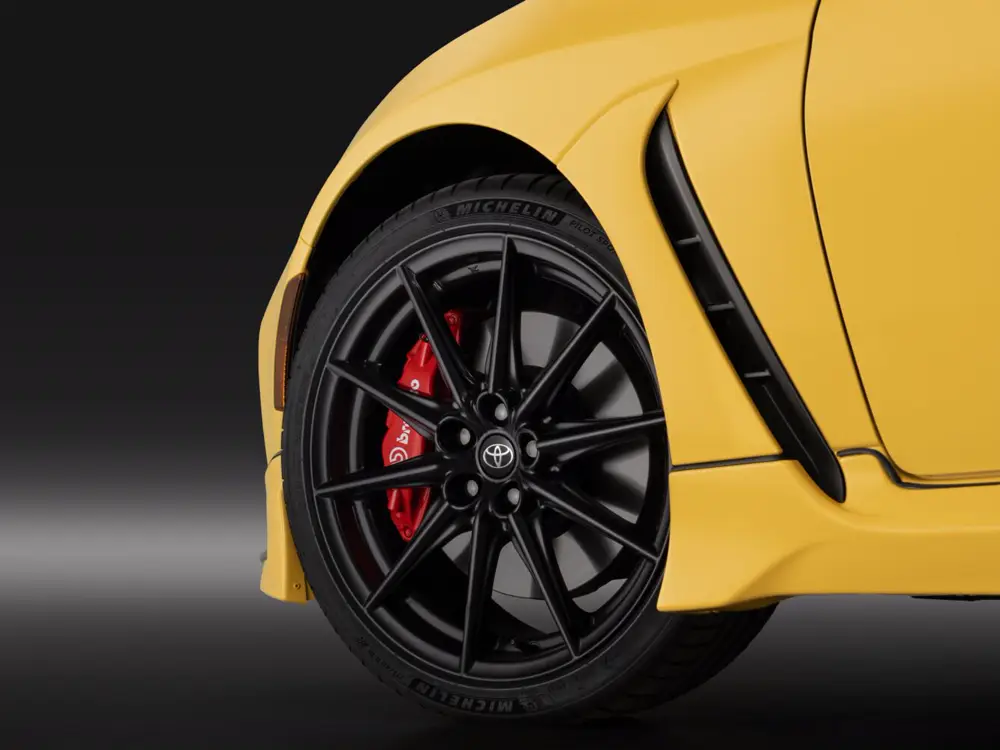
Yuzu adds its special color and includes Brembo brakes and Sachs dampers.
Toyota limits Yuzu Edition production to 860 units for North America.
Trim hardware
- Base
- 17-inch wheels and lower starting price
- Premium
- 18-inch Pilot Sport 4 tires and added cabin equipment
- Yuzu Edition
- Brembo brakes, Sachs dampers, special color
- Engine
- 228 hp on every grade
- Transmission
- Manual or automatic available
Price a full tire set for each grade. The grippier 18-inch package can improve response in suitable temperatures, but it costs more and needs seasonal planning in cold climates.
Brembo brakes can provide heat capacity, while pads and rotors may cost more.
A limited color does not make a car affordable. Keep the mainstream price hub in view and get insurance quotes.
Base is the value choice, Premium needs an equipment and tire reason, and Yuzu needs repeated use for its brake and damper hardware.
Performance tires need a winter plan before the first freeze
Rear-wheel drive is enjoyable because throttle can help adjust the car's balance. That same layout requires suitable tires and measured inputs in cold, wet, or snowy conditions.
Summer performance tires lose effectiveness as temperatures fall and are not substitutes for winter tires.
Follow the tire maker's temperature guidance.
- Price four compatible winter tires and wheels
- Confirm load, speed, and size specifications
- Store the unused set correctly
- Check pressure as temperatures change
- Practice smooth inputs in a safe controlled setting
- Leave electronic stability systems active on public roads
- Carry the equipment required for local winter travel
AWD is not mandatory for winter, but ground clearance and tire grip remain hard limits.
Deep snow can reach the low bumper and underbody. A Subaru vehicle may provide AWD and more clearance, while still requiring proper tires.
Inspect a used car for mismatched brands, uneven tread, old date codes, heat cycles, repairs, sidewall damage, and bent wheels.
A cheap tire can change the steering and braking behavior that justified buying the car.
Ask whether a second wheel set is included and inspect it separately.
A GR86 winter plan starts with four correct tires and enough ground clearance for the route, not with electronic aids or driver confidence.
IIHS publishes partial 2026 evidence, not a complete crash score
The IIHS page for the 2026 GR86 publishes headlight and front-crash-prevention information, but it does not show a complete current set of crashworthiness results for this model year. Available headlights earn Good ratings in listed configurations, and the daytime pedestrian front-crash-prevention evaluation is Superior.
Those positive results should not be expanded into a broad claim that IIHS rated every aspect of the car Good.
Missing data is not a failing score, but it is still a limit on what can be concluded.
NHTSA and IIHS pages should be checked again because testing and campaigns can change.
GR86's low roof, small cabin, tire choice, and possible track use make condition inspection important.
Check belts, anchors, airbags, seats, glass, lamps, tires, wheels, alignment, structure, and collision records.
Require calibration invoices after windshield, bumper, suspension, or body repair.
Driver-assistance equipment supports observation and control. It cannot overcome excessive speed, cold tires, standing water, or blocked sensors.
The GR86 has useful positive IIHS headlight and avoidance evidence, while buyers must keep the missing full crashworthiness picture visible.
Recall 23V609 belongs in every 2022 VIN check
NHTSA recall 23V609 covers certain 2022 Toyota GR86 vehicles. The rear combination lamp connector can lose contact, which may make one or both rear turn signals inoperative.
A failed turn signal can prevent other road users from seeing an intended direction change.
Operate all exterior lights with another person observing. Check left and right turn signals, hazards, brake lamps, reverse lamps, tail lamps, and warning indicators.
Inspect the lamp area and trunk for water, collision work, nonfactory wiring, or replacement parts.
Do not assume every lamp fault has the recall cause.
Model year alone cannot prove inclusion, and a 2023 or newer car still needs a complete VIN search for later campaigns.
Recall databases can change after publication. Check on the day money changes hands.
A seller's statement that a campaign was completed has little value without dealer or manufacturer confirmation.
The free recall repair should not be replaced with an undocumented wiring modification.
Do not close a 2022 GR86 purchase until the VIN record and repair paperwork agree on rear-lamp campaign status.
Track use changes the inspection even when the car looks stock
GR86 is designed to make performance driving accessible, and some cars attend autocross or track events.
Track use is not automatic damage. It does increase heat and load on oil, coolant, brakes, tires, wheel bearings, clutch, differential, and body attachments.
A stock appearance cannot prove an easy life.
Start cold and scan all modules. Verify oil level, grade, change records, coolant, leaks, smoke, noises, and pressure warnings.
Drive until fully warm, then test clutch or automatic operation, differential noise, wheel bearings, steering, brakes, and temperature stability.
Inspect the underbody, tow points, pinch welds, wheel wells, and bumper edges.
- Measure pad and rotor condition
- Read tire date codes and wear across every tread
- Look for melted weights, heat marks, or heavy pickup
- Check wheels for bends and repeated mounting damage
- Identify suspension, exhaust, intake, tune, and brake changes
- Require original parts and invoices where represented
- Get a compression or deeper engine test when symptoms justify it
The planned GR86 reliability guide can track model-year evidence. A used GR86 should be priced from diagnostic, fluid, tire, brake, underbody, and modification evidence rather than the seller's description of how it was driven.
The 2027 update is real, but it does not erase the 2026 car
Toyota announced the 2027 GR86 in June 2026 with arrival planned for summer. The 2.4L engine remains rated at 228 hp and 184 lb-ft.
Toyota describes changes to throttle mapping and automatic shift control, plus model-year equipment updates.
- 2022GR86 name and second-generation 2.4L layout arrive
- 2026Base, Premium, and limited Yuzu Edition
- June 2026Toyota announces 2027 updates
- Summer 2026Toyota plans 2027 arrival
A buyer shopping during the transition should get written prices for both years. A discounted 2026 may offer better value when its transmission, color, and equipment fit.
A 2027 may be worth waiting for when the revised control behavior or exact new equipment matters.
Do not pay for an imagined horsepower increase because Toyota lists the same output.
Compare production date, warranty start, financing, insurance, options, dealer products, and resale assumptions. A model-year discount can disappear if the loan rate is worse or the car includes unwanted accessories.
The 2026 Yuzu Edition may attract collectors, but its 860-unit North American limit does not guarantee appreciation.
Drive and budget it as a car.
Choose between 2026 and 2027 using real transaction terms and the announced control changes, not a false power increase or promised future value.
The low purchase price does not make track consumables cheap
GR86 starts near the price of a well-equipped compact car, but ownership includes sports-car insurance, performance tires, brakes, fuel, winter equipment, and possible track consumables. The same low weight and simple layout that support value do not prevent a careless driver from using a set of tires quickly.
| Cost | What to price |
|---|---|
| Purchase | Final car, options, fees, dealer products |
| Finance | Total interest with the actual term |
| Insurance | Exact VIN, driver, use, and mileage |
| Fuel | Manual or automatic estimate and actual route |
| Tires | Street set plus winter or track set where needed |
| Brakes | Street parts and any event-related wear |
| Maintenance | Oil, filters, fluids, alignment |
| Repairs | Deductible and post-warranty reserve |
| Track use | Entry, instruction, inspection, fluids, pads, tires |
Tell the insurer how the vehicle will be used. A normal road policy may exclude timed events or track damage.
Read the contract before attending. Keep track spending outside the money needed for transportation and emergency repairs.
Compare with a sedan or hatchback using the same five-year period. The GR86 can still be affordable when the driver buys the base trim and controls consumables.
Budget the GR86 as a sports car with a low entry price, not as a compact commuter that happens to look fast.
Choose the base car after a full-route and full-budget test
GR86 gives a driver rear-wheel-drive balance, a responsive naturally aspirated engine, clear controls, and a manual option at a reachable price. It asks for low entry, small rear seats, firm road manners, careful tire selection, and more ownership planning than an ordinary compact.
Pros
- Balanced rear-drive chassis
- Manual and automatic choices
- Strong base-trim value
- Fold-down rear seat adds cargo flexibility
Cons
- Very small rear passenger space
- Low cabin and audible highway ride
- Performance tires and brakes raise cost
- Complete current crashworthiness data is not published
Use the Toyota brand hub, coupe hub, rear-drive hub, and two-seat vehicle hub to compare purpose, even though GR86 has two small rear positions.
Buy the base GR86 in the transmission that improves the actual commute, after its seating, cargo, insurance, tires, and winter plan all fit the household.