What the 2027 refresh changed, and what carried over
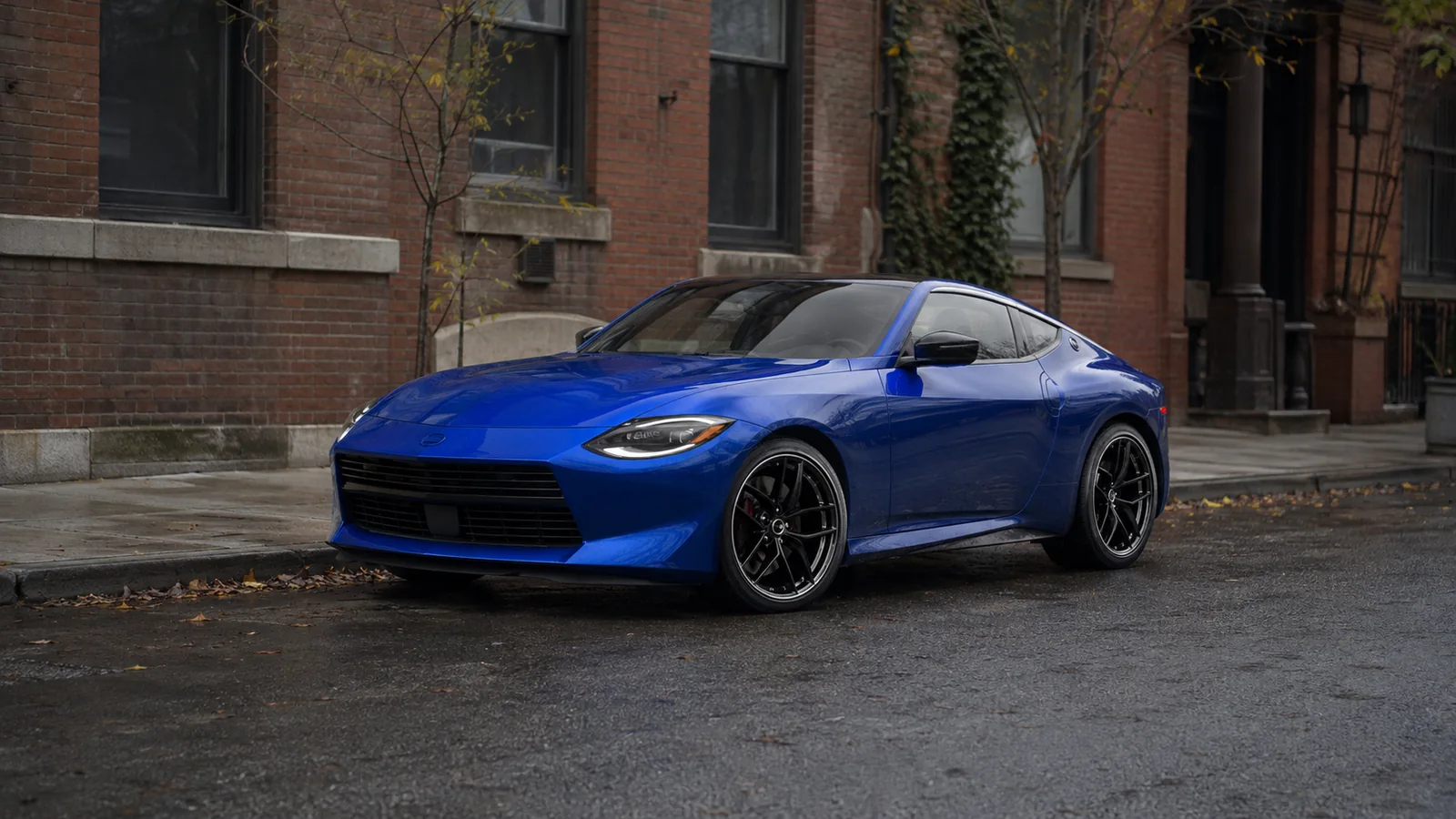
The Nissan Z is a two-seat, rear-drive coupe that has been on sale in the United States since 2023, and it is still in production. For 2027 it gets the most thorough revision of this generation, which reaches dealerships in summer 2026.
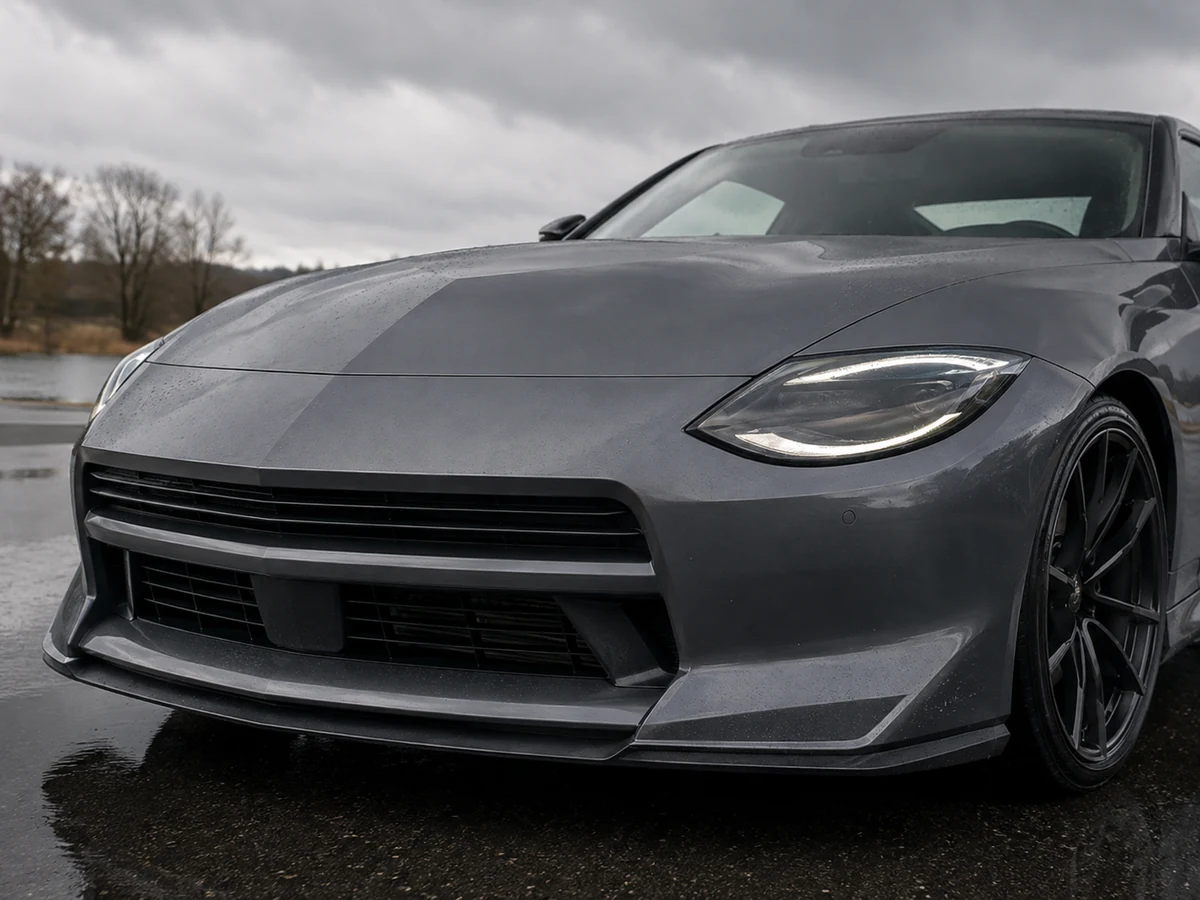
Sport and Performance wear a restyled front bumper and grille, with a body-colour bar across the opening and a Z emblem replacing the Nissan logo on the nose. Nissan shaped the ducting behind it to cut lift and drag rather than only to look different.
The rest of the changes are chassis work. Performance gains larger-diameter monotube shock absorbers, NISMO gains two-piece iron-and-aluminium front rotors derived from the GT-R that save 19 pounds, and every grade gets a redesigned fuel tank that holds fuel around the pump during sustained cornering.
What did not change is the important part. The engine, the platform, the layout and the cabin architecture carry over, so a 2027 car is a better-damped and better-braked version of what came before rather than a new machine.
Read the refresh as suspension, brakes and fuel delivery, because that is where the money went, and none of it appears in a spec sheet as more power.
Nissan charges the same for the manual and the automatic
Nissan's 2027 price list has six rows: three grades, each offered twice, once with the nine-speed automatic and once with the six-speed manual. The two rows for each grade carry the same number.
That is unusual enough to state plainly. On most performance cars the automatic is an option with a price on it, and here the six-speed manual is standard equipment while the automatic is a no-cost alternative.
Taking price out of the decision is what makes the rest of it readable. Whatever the automatic is worth to you, it is not worth money, so the choice comes down to what each gearbox brings and takes away.
Budget for a grade rather than a gearbox, because the only thing your transmission choice changes on the invoice is nothing.
The automatic returns 2 mpg and takes away a carbon driveshaft
The automatic is the more economical car by a clear margin. EPA rates the six-speed manual at 20 mpg combined and the nine-speed automatic at 22, and the highway gap is wider still at 24 against 28.
It is also the heavier car. A Sport weighs 3,486 pounds with the manual and 3,549 with the automatic, and a Performance runs 3,536 against 3,602.
That is 63 pounds on a Sport and 66 on a Performance, carried high in the driveline rather than low in the floor.
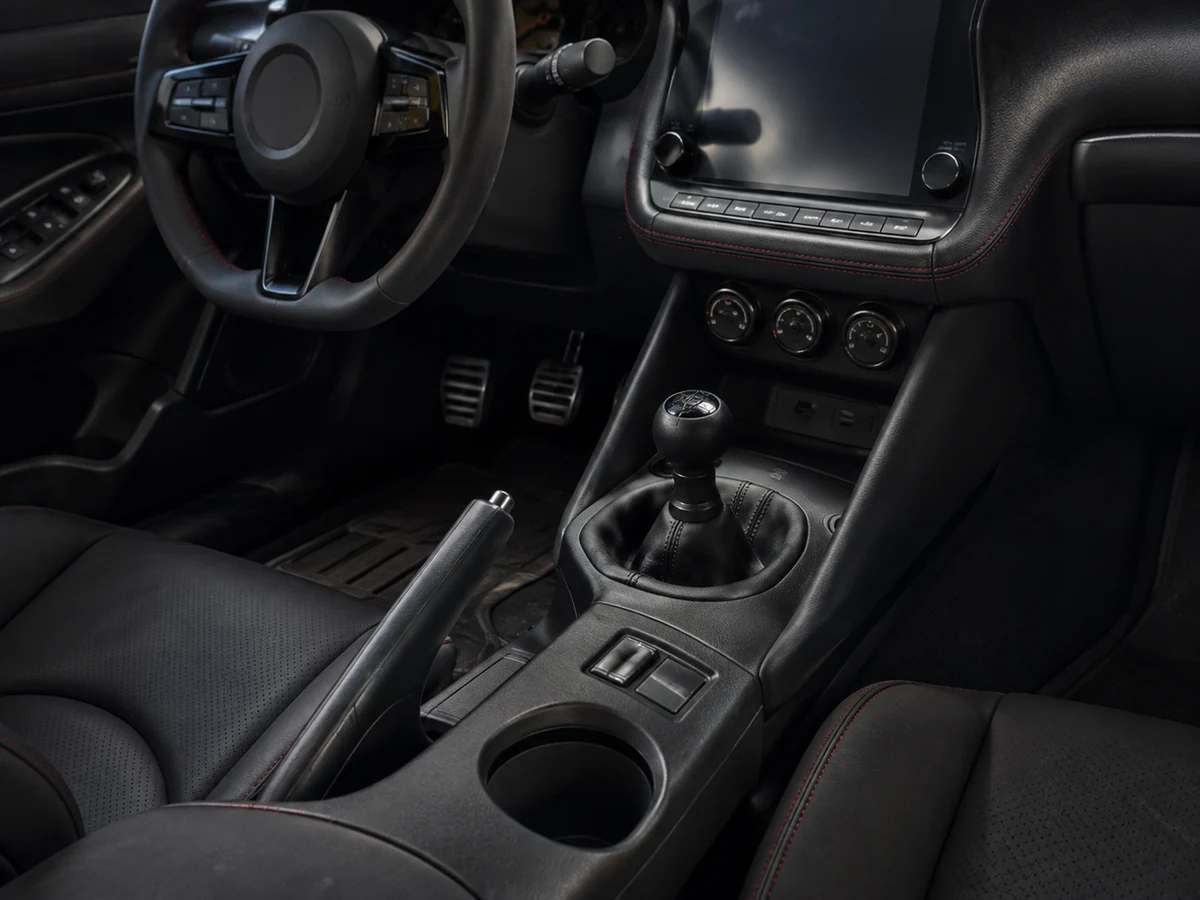
Then the hardware splits in both directions, which is where the usual assumption breaks. The manual is the only way to get the carbon-fibre composite driveshaft, and it carries an EXEDY high-performance clutch and SynchroRev Match rev matching.
The automatic answers with equipment of its own. It brings paddle shifters, a sport-grade muffler in place of the standard one, Downshift Rev Matching, and on a Sport it is the only way to get launch control at all.
| Item | Six-speed manual | Nine-speed automatic |
|---|---|---|
| Price | Same on every grade | Same on every grade |
| Combined mpg | 20 | 22 |
| Highway mpg | 24 | 28 |
| Curb weight, Sport | 3,486 lb | 3,549 lb |
| Drive shaft | Carbon-fibre composite | Steel |
| Exhaust | Dual, standard muffler | Dual, sport-grade muffler |
| Launch control on Sport | Not available | Standard |
Read that table on a Sport and the tidy story falls apart. The cheapest way into a Z with launch control is the automatic, and the only way into a Z with a carbon driveshaft is the manual, so neither gearbox is simply the keener order.
Performance and NISMO settle part of it for you, because launch control is standard on both regardless of transmission. On those two grades the decision really is about the driveshaft, the clutch and the 2 mpg.
Order the manual if you want the lighter driveline and will spend the 2 mpg to get it, and the automatic if you drive enough highway miles for 28 to matter or want launch control on the cheapest Z.
400 hp and rear drive: the part of the Z that never varies
Every Z uses the same engine. The cheap one is not running a detuned version of it.
The VR30DDTT 3.0-litre twin-turbocharged V6 has an aluminium block and head and sits behind the front axle line driving the rear wheels.
Sport and Performance make 400 hp at 6,400 rpm with 350 lb-ft available from 1,600 all the way to 5,600 rpm. NISMO lifts that to 420 hp and 384 lb-ft, delivered from 2,000 to 5,200 rpm.
The torque band is the number that shapes how the car feels. Peak pull arrives at 1,600 rpm and holds for four thousand more, so the Z pulls from low revs rather than asking to be wrung out.
Shared by every Z
- Engine
- 3.0-litre twin-turbo V6
- Output
- 400 hp, or 420 hp on NISMO
- Torque
- 350 lb-ft, or 384 lb-ft on NISMO
- Layout
- Front engine, rear-wheel drive
- Fuel
- Premium unleaded required
Maximum engine speed is 6,800 rpm, which is modest for a sports car and consistent with an engine built around boost rather than revs. Premium fuel is a requirement rather than a recommendation, and that belongs in the running-cost sum rather than the specification sheet.
The base car is not the slow car, so choose a grade for its differential and tyres and not for the badge on the engine cover.
Sport, Performance or NISMO: where the extra money goes
The gap between Sport and Performance is $10,000, and almost none of it is cabin equipment. The single most consequential item is the one Sport does without: a mechanical clutch-type limited-slip differential, which Performance and NISMO both carry.
A limited-slip differential is what lets a rear-drive car put power down cleanly out of a corner instead of spinning the unloaded wheel. On a 400 hp car that is a driving-behaviour difference rather than a specification line.
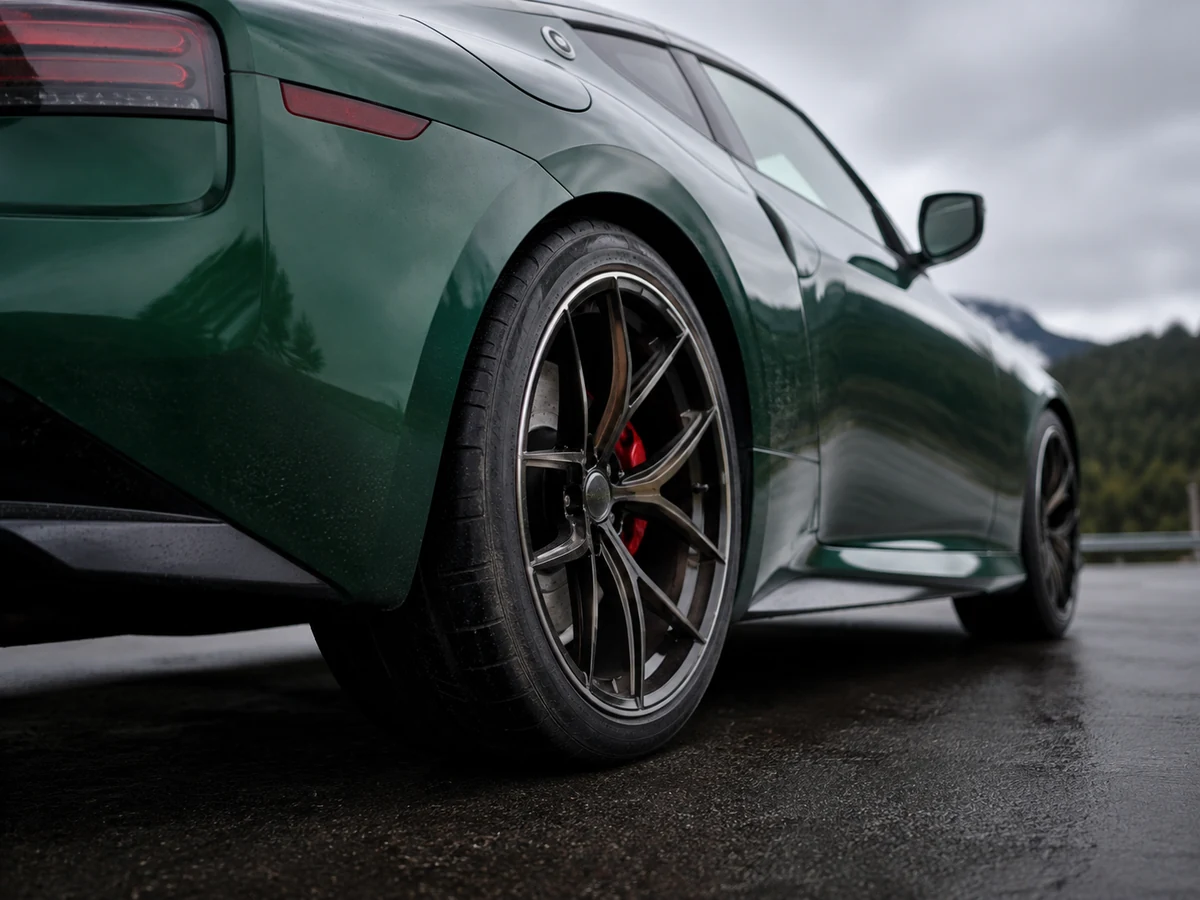
Tyres follow the same pattern. Sport runs 18-inch alloys with Yokohama ADVAN Sport 245/45R18 at both ends, Performance moves to RAYS forged 19s with Bridgestone Potenza S007 at 255 front and 275 rear, and NISMO goes wider again on Dunlop SP Sport Maxx GT600 at 255 and 285.
What each step actually buys
Z Sport, $44,480
400 hp, 18-inch wheels, matching tyres front and rear, and no limited-slip differential
Z Performance, $54,480
The limited-slip differential, forged 19-inch wheels and staggered Bridgestones, plus larger monotube shocks for 2027
Z NISMO, $67,260
420 hp, wider forged wheels on Dunlops, a 73.6-inch body and two-piece GT-R-derived front rotors
NISMO is a wider car as well as a faster one, at 73.6 inches against 72.6 for the other two. Its 2027 front rotors are two-piece iron and aluminium taken from the GT-R, which shed 19 pounds and let Nissan retune the suspension and steering around the lighter nose.
Performance is the step that changes how the car drives, because a differential and a wider contact patch do more for a rear-drive coupe than twenty more horsepower ever will.
How the Z drives, and whether two seats can be your only car
The Z is a small car built around a long bonnet. It sits on a 100.4-inch wheelbase, runs 173.2 inches nose to tail and stands 51.8 inches tall, which puts the driver low and well back in the body.
Nissan describes the layout as a mid-mounted front engine, meaning the V6 sits behind the front axle line rather than over it. Pushing that mass rearward is what stops a long-nosed coupe from feeling like it pivots around its own bonnet.
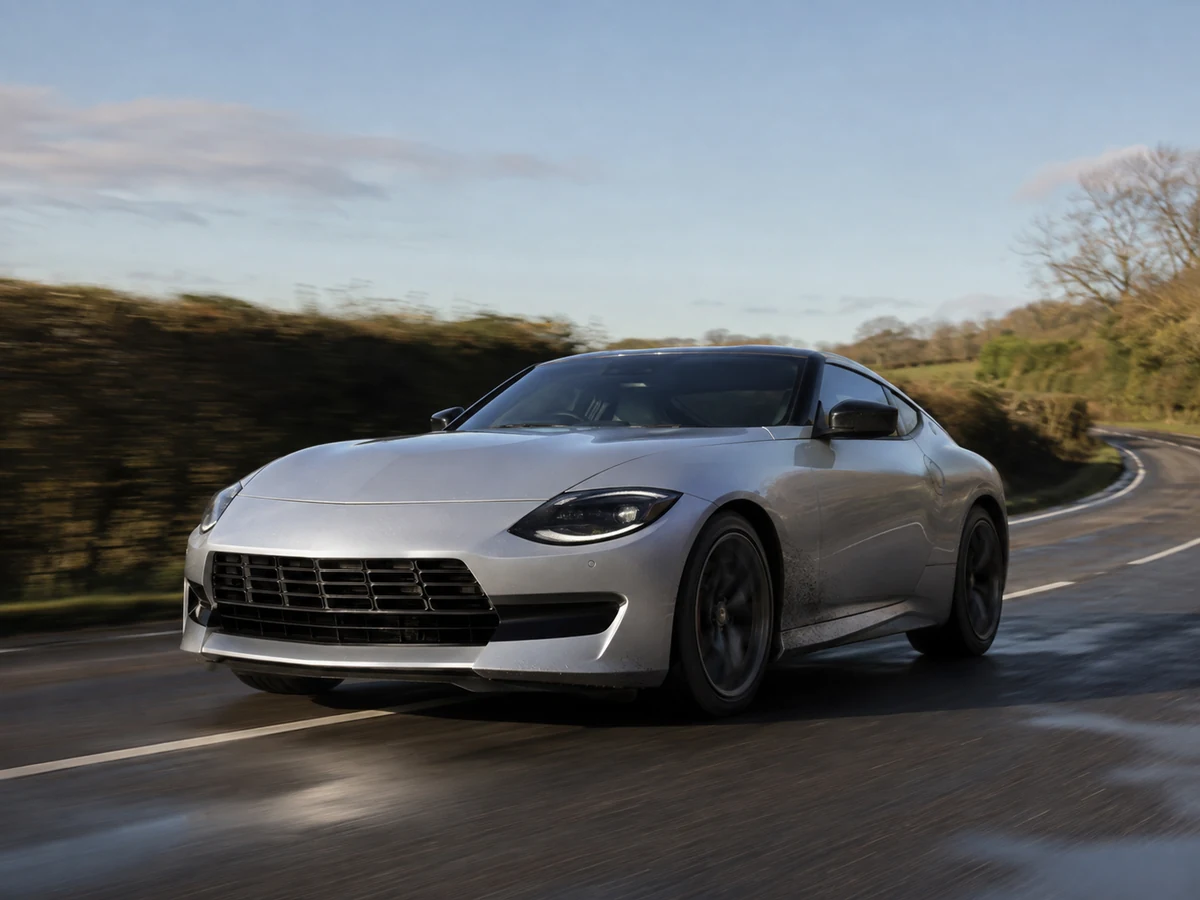
The track figures say something too. A Sport measures 61.6 inches across the front and 62.8 across the rear, so the car is planted wider at the end that puts the power down.
Weight is where expectations need adjusting. At 3,486 pounds a manual Sport is not a light car by two-seat standards, and the 350 lb-ft available from 1,600 rpm is what disguises that rather than any lack of mass.
Nissan builds the shell from corrosion-resistant high-strength steel but hangs aluminium hood, doors and rear hatch on it. Keeping weight out of the extremities matters more to how a car changes direction than the total on the scale suggests.
For 2027 the Performance gets larger-diameter monotube shock absorbers, which Nissan says improve vibration damping for smoother ride quality and more predictable handling. That is Nissan describing what it set out to achieve, and it is the claim a test drive has to confirm for you.
Inside there are two seats and no pretence of more. Head room is 38.2 inches and leg room 42.9, which reads generously for the class, though the low roof means a tall driver should sit in one before trusting the figure.
Ground clearance is 4.8 inches, rising to 4.9 on NISMO. Steep driveways, speed tables and unlit country lanes all become things you plan for rather than things you ignore.
Nissan publishes no cargo volume for the Z on its 2027 specification sheet. An aluminium rear hatch covers a load area, but a maker declining to give that area a number is itself an answer about whether this is a sensible only-car.
Take the car to your own garage, your own supermarket and your own commute before deciding two seats are enough, because the figure that would settle it is one Nissan does not publish.
Every used Z NISMO is an automatic
For 2027 the Z NISMO gains a six-speed manual, and that single change rewrites the used market for anyone who wants three pedals. Every NISMO built before 2027 is an automatic.
There is no way around it in a listing search. A used NISMO with a manual does not exist, so a buyer who wants both the 420 hp car and a clutch pedal is waiting for the refreshed car rather than shopping.
- 2023Seventh-generation Z arrives; Sport and Performance offer the manual, NISMO is automatic only
- 2024NISMO continues automatic only; both recall campaigns cover cars from these two years
- 2027NISMO gains a six-speed manual with its own clutch and shift ratio, on sale from summer 2026
The NISMO manual is not the Sport gearbox bolted into a faster car. It uses an upgraded clutch.
A new shift lever ratio gives a much shorter throw than the one in the cheaper grades.
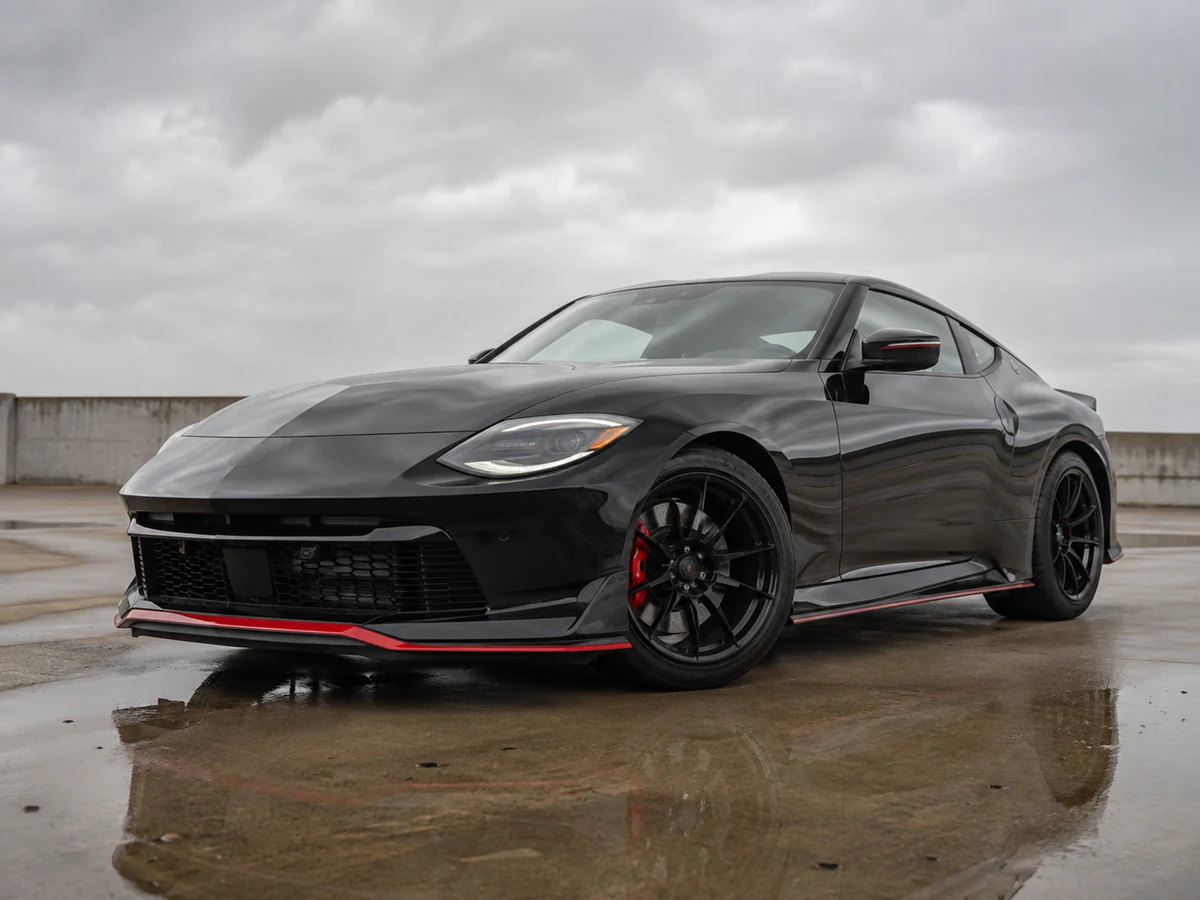
Nissan also retuned the engine for it, adjusting throttle and ignition timing for sharper response and more sustained torque, and retuning the Active Sound Enhancement to suit a driver changing gear themselves. Those are the changes that make it a NISMO manual rather than a NISMO with a manual.
If you want a manual NISMO you are buying new, so decide whether the wait is worth it before you start filtering used listings you cannot use.
Nobody has crash-tested the Nissan Z
No crash rating exists for this car. NHTSA lists the 2025 Z and returns Not Rated for overall, frontal, side and rollover, which means the agency has not run the tests rather than that the car did badly in them.
The Insurance Institute for Highway Safety has published nothing either, across 2023 through 2026. Two independent bodies, no results.
Low-volume sports cars are frequently skipped, because crash programmes prioritise the vehicles most people buy. The Z sells in numbers that put it well down that queue, so the silence is about volume rather than about the car.
What remains is equipment. The list itself is a reasonable one.
Automatic emergency braking with pedestrian detection, blind spot warning, lane departure warning and rear cross traffic alert are all standard.
That is an uncomfortable position to leave a buyer in, and inventing comfort would be worse. A reader who needs a tested structure should know that the evidence is not merely thin here but absent.
Decide whether you can buy a car with no published crash result, because on the Z that is the actual question rather than how the ratings compare.
Both Z recalls are about a hood that lifts for pedestrians
The Z's defect record is unusually small. NHTSA holds four complaint filings in total, two against the 2023 car and two against the 2024, and lists no recall campaign at all for the 2025 or 2026 model years.
Two campaigns exist. Both cover 2023 and 2024 cars.
Campaign 23V725 addresses fasteners in the left-side front bumper reinforcement clip that may loosen, and campaign 24V798 addresses pedestrian detection sensor connectors that may be reversed in the front bumper harness.
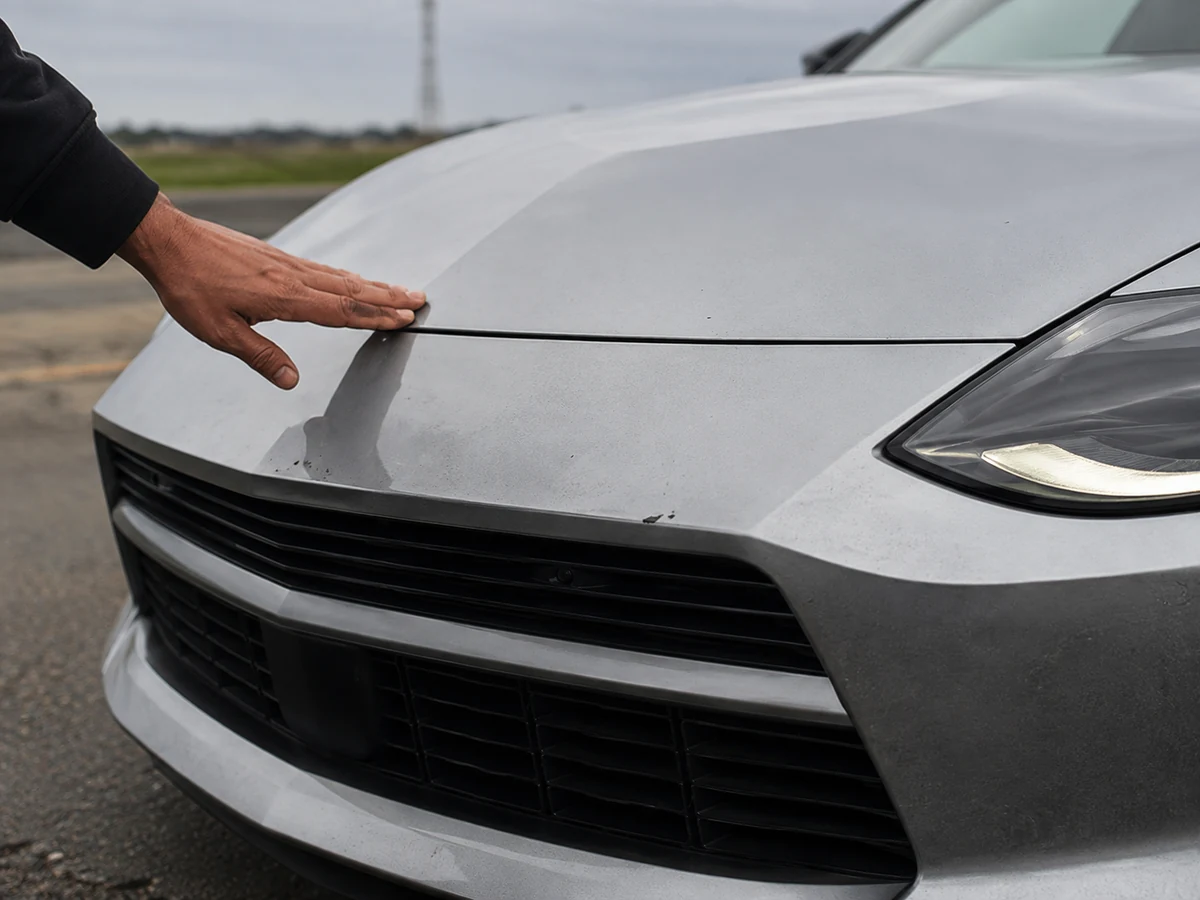
They are the same failure in two forms. Each one can stop the pop-up engine hood from raising in a pedestrian impact, which is a pedestrian-protection system rather than anything the driver would feel.
The remedies differ and both are free. One is a fastener tightening, the other a replacement front bumper harness, and they were notified a year apart in December 2023 and December 2024.
Four filings cannot support a reliability verdict and this article will not pretend otherwise. What the record does support is narrower and more useful: nothing on it concerns the engine, the turbochargers or either gearbox.
Before you buy a used Z
- Run the VIN against campaign 23V725 and get the completion date in writing
- Run the same VIN against campaign 24V798, which is a separate job a year later
- Confirm both were done, because a car can have had one and not the other
- Ask for the service history rather than a verbal assurance from the seller
- Check the front bumper for repair evidence, since both campaigns are behind it
Treat the small record as an absence of evidence rather than evidence of absence, and let the two campaign numbers do the work a reliability score cannot.
What a Z costs to keep, and which one to buy
Fuel is the running cost you feel first. Premium unleaded is required, and combined economy runs from 19 mpg in a NISMO automatic to 22 in a Sport or Performance automatic, so the fuel bill varies by build as much as by driving style.
Work it out on your own mileage rather than on an average, because a car driven eight thousand miles a year and one driven twenty thousand are different propositions on the same forecourt.
Estimate your annual fuel cost
Tyres are the next line, and they are grade-dependent in a way that catches people out. Performance and NISMO run staggered fitments, wider at the back than the front, so fronts and rears wear at different rates and cannot be rotated to even them out.
Insurance is estimated near $2,968 a year across the model. That figure comes from an aggregator rather than from a quote, so treat it as an order of magnitude and get a VIN-specific number before you commit.
The car gives some of it back. Kelley Blue Book puts a 2023 Z at a $28,600 resale value and $25,800 trade-in today, having shed $2,273 over the last twelve months, and places it mid-pack among 2023 coupes for depreciation.
Warranty cover is ordinary rather than generous. Basic cover runs three years or 36,000 miles and powertrain cover five years or 60,000, which is the standard Nissan arrangement and no more.
Cost a Z before you commit
- Quote the exact carInsurance varies more by VIN and driver than by grade, so get a real number rather than an average
- Price one tyre setAsk for fitted prices front and rear separately, because Performance and NISMO run different sizes at each end
- Run your own fuel figureUse your real annual mileage and local premium price, not the EPA combined number
- Then compare gradesPut those three totals beside the $10,000 step to Performance and decide what the differential is worth
So which one. For most drivers the answer is a Performance with the manual: it has the limited-slip differential that changes how the car drives, the forged wheels and wider tyres, and the carbon driveshaft, and it gives up 2 mpg to get there.
Take the automatic instead if your week is mostly highway, where 28 mpg and a ninth gear are worth more than a lighter driveshaft. Take the Sport if the differential does not matter to you, and accept that launch control then requires the automatic.
Buy the Performance manual unless your mileage is mostly motorway, and go into it knowing that no crash rating exists and that both open campaigns belong to the 2023 and 2024 cars.