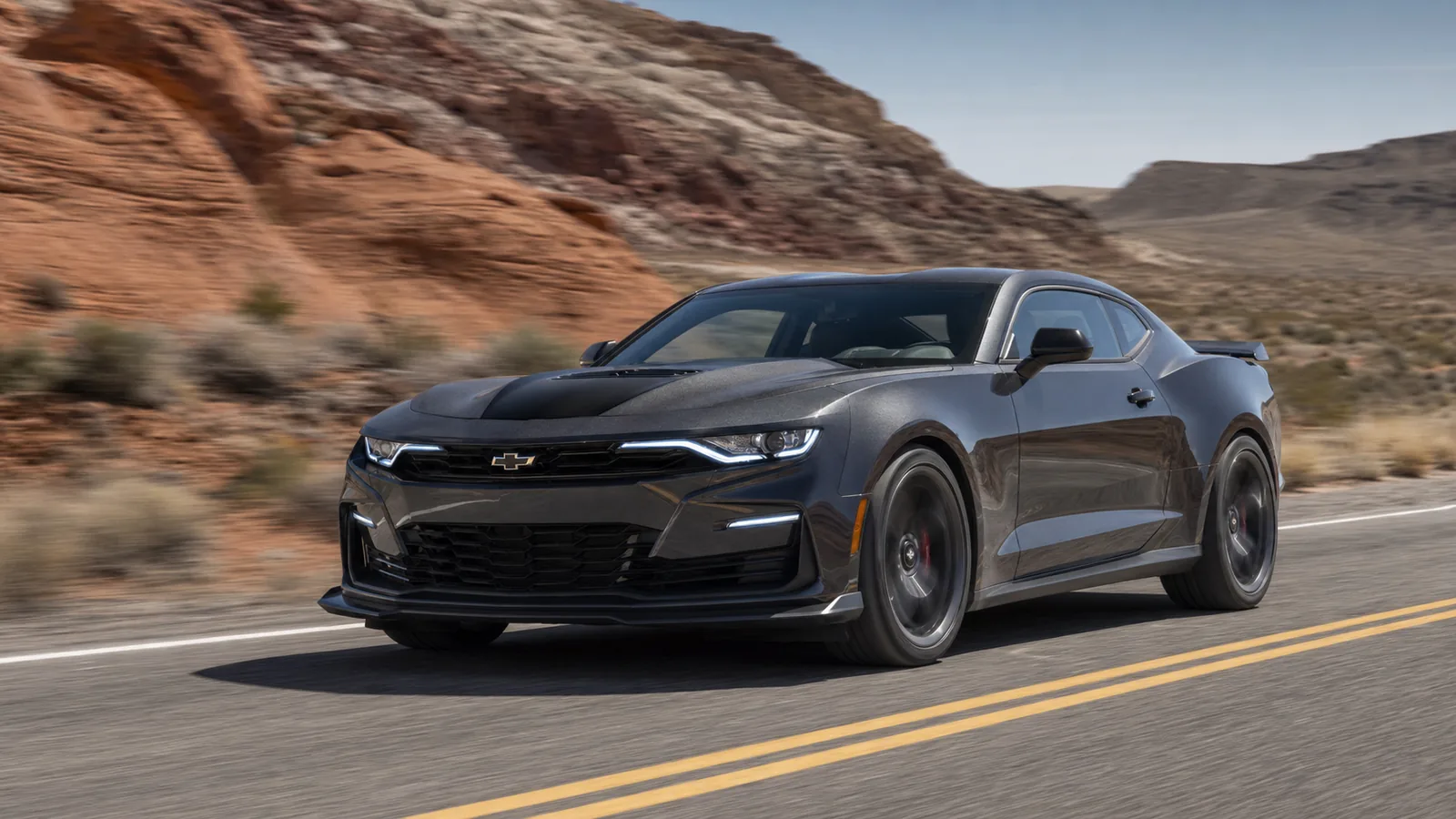
What is the Chevrolet Camaro, and which sixth-generation version should you buy?
The Chevrolet Camaro is a front-engine, rear-wheel-drive performance car sold as a coupe or convertible. This review focuses on the sixth generation sold from 2016 through 2024, including the turbo four-cylinder, V6, LT1, SS, and ZL1 versions.
The 2020 to 2023 Chevrolet Camaro LT1 is the first version most used V8 shoppers should price. It pairs the 455 hp 6.2-liter V8 with a lower equipment level than the SS, while a closely priced SS earns the difference through larger Brembo brakes, extra cooling, and wider performance tires.
The distinction is use, not status. An LT1 supplies the sound and response that make the V8 special on the street, while an SS supports repeated hard driving and long descents without asking standard hardware to do the same work.
Both versions came with a six-speed manual or ten-speed automatic. The manual makes each shift part of the experience, while the automatic suits traffic and delivers consistent acceleration.
Once the manual or automatic is chosen, the LT1's tire and calibration condition should control the deal because Chevrolet positioned it as the accessible V8 trim, not a reason to pay extra for an unverified production story.
A low-mile car with old tires, incomplete fluid history, or unknown calibration can cost more to correct than a higher-mile stock car with invoices. Modifications also make emissions compliance, insurance, diagnosis, and resale harder to predict.
Get an insurance quote for the exact VIN before deciding that a cheaper trim is cheaper to own. Theft losses, driver age, location, annual mileage, and coverage can move the premium more than the badge.
That insurance and condition evidence should lead to a stock, documented LT1 for street use or an SS whose extra hardware solves a job you will actually give it.
Chevrolet Camaro specs: four engines from 275 to 650 hp
The sixth-generation Camaro offered four engines across its 2016 to 2024 run. Their outputs ranged from 275 hp to 650 hp, but the right choice depends on the experience and annual cost you want rather than the largest number.
The 2.0-liter turbo four-cylinder makes 275 hp and 295 lb-ft. It keeps weight off the nose, provides serious pace for an entry engine, and can be a satisfying back-road car with the manual transmission.
Its case weakens when a buyer expects classic Camaro sound or plans to modify the car until it behaves like a factory V8. A cheaper purchase can become an expensive compromise after tuning, exhaust work, tires, and resale uncertainty.
The 3.6-liter V6 makes 335 hp and needs no turbocharger to deliver its power. It sounds more distinctive than the four-cylinder, revs cleanly, and suits a driver who wants useful speed without V8 purchase and insurance pressure.
Chevrolet rated the final V6 automatic coupe at 18 mpg city and 29 mpg highway versus 16 city and 26 highway for the manual, so transmission choice and driving pattern can change the fuel argument.
The naturally aspirated 6.2-liter V8 makes 455 hp in LT1 and SS models, and that output marks the step between the everyday Camaro engines and the ZL1's forced-induction hardware. Its immediate response and broad torque deliver the Camaro experience many shoppers expect without the ZL1's added cooling demands, tire appetite, and fuel use.
The 650 hp supercharged ZL1 brings stronger cooling, braking, tire, and chassis hardware while turning tires, brakes, fuel, insurance, theft exposure, and repairs after track use into performance-car costs, and those expenses continue even when the car spends most of its time on public roads.
| Engine | Best fit | Main compromise | Buyer check |
|---|---|---|---|
| 2.0L turbo, 275 hp | Light-feeling, lower-cost coupe | Less traditional sound and response | Boost delivery, cooling, and tune history |
| 3.6L V6, 335 hp | Daily use with real pace | Neither lowest cost nor V8 experience | Cold start, oil history, and full-throttle pull |
| 6.2L V8, 455 hp | Street performance and sound | Fuel, tire, and insurance cost | Stock calibration, oil pressure, and driveline |
| 6.2L supercharged V8, 650 hp | Experienced owner with a performance budget | High purchase and consumable cost | Track history, cooling, brakes, and tires |
Drive the engine you think you need on the roads you use. A V6 can feel more complete during a commute than a V8 whose owner cannot afford tires or fuel, while an LT1 can be more rewarding than a modified four-cylinder built around regret.
Choose the lowest-output engine that already gives you the sound, response, and pace you want in factory form.
How the Alpha platform makes the Camaro feel smaller than it looks
The sixth-generation Camaro feels smaller from the driver's seat than its long hood suggests. The Alpha platform gives it quick steering, strong front-end response, and the kind of body control that lets you place the car accurately instead of waiting for the engine to overpower the road.
The turbo four and V6 keep less mass over the nose, so they change direction with an eagerness that makes a modest-output Camaro feel like a genuine sports car rather than an entry-level compromise. The 455 hp V8 adds the sound and corner-exit force most buyers expect, but it does not erase the chassis underneath.
An SS earns its price during repeated hard driving because its larger brakes, extra cooling, wider tires, and supporting hardware remain consistent after several fast corners. On an ordinary road, an LT1 delivers the same V8 output while asking the standard chassis to manage heat and grip.
Magnetic Ride Control gives equipped cars a wider spread between a settled road ride and tighter body control, whereas passive dampers are simpler to replace and worn adaptive dampers can make an expensive option feel worse than a healthy base setup.
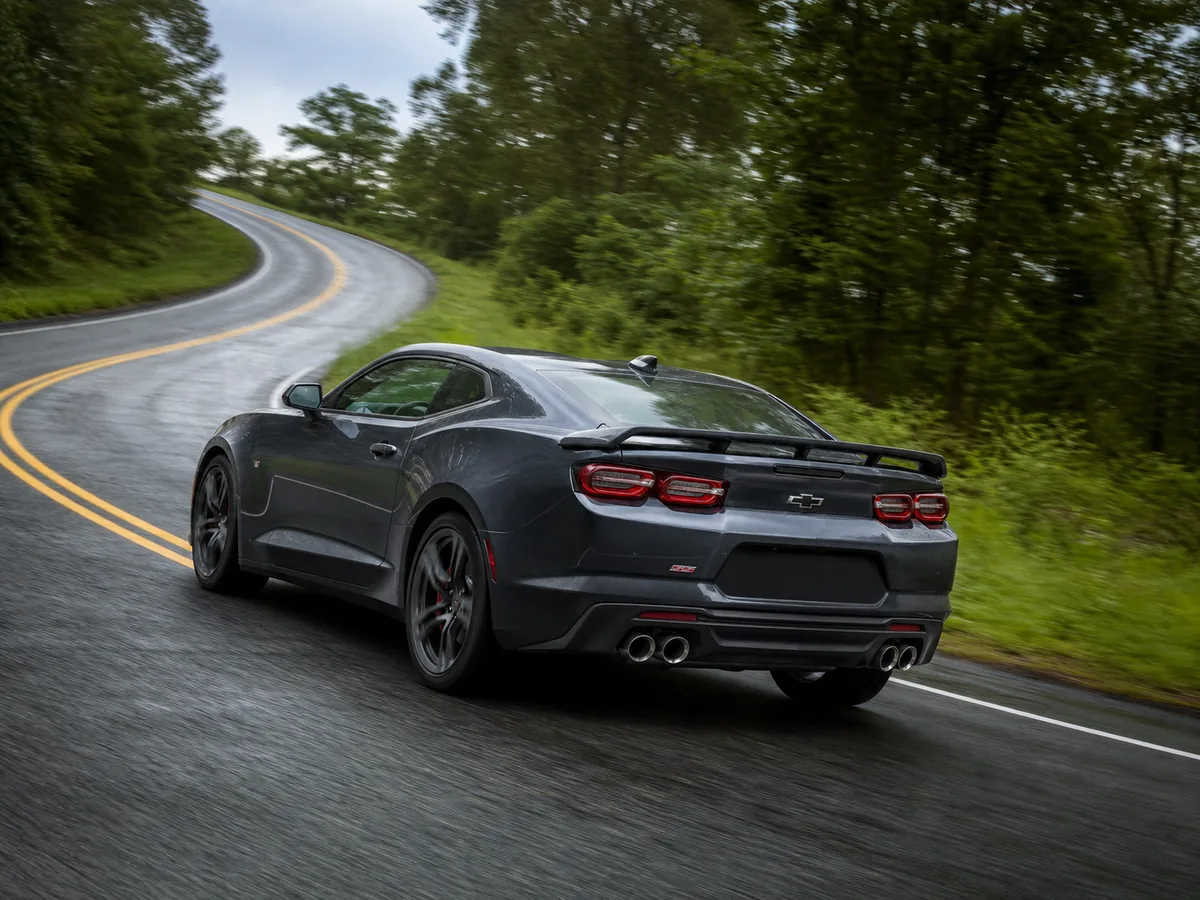
Tires can change the car more than a drive-mode button. Matching performance tires make the steering and braking feel coherent in warm weather, while old, mixed, or cold summer tires turn the same Camaro nervous and inconsistent.
Those tire and damper choices are easiest to appreciate in the coupe because its fixed roof preserves rigidity and keeps weight down. A convertible trades some precision and trunk space for open-air driving, which is worthwhile only when lowering the roof is central to the experience.
Can a Camaro handle daily driving with a 9.1-cu-ft trunk?
The Camaro can work as a daily car for one or two people, but the low roof, high beltline, thick rear pillars, and short side glass never disappear. The view forward feels dramatic on an empty road and restrictive when a van fills the next parking space.
Seat height and mirror position make a real difference, so raise the seat enough to judge the front corners and angle the side mirrors outward until they cover the lanes beside the car instead of repeating the center mirror.
The coupe has 9.1 cubic feet of trunk space versus 7.3 in the convertible. Volume is only half the story because the narrow opening can reject a hard suitcase, stroller, helmet bin, or grocery crate that would fit once inside.
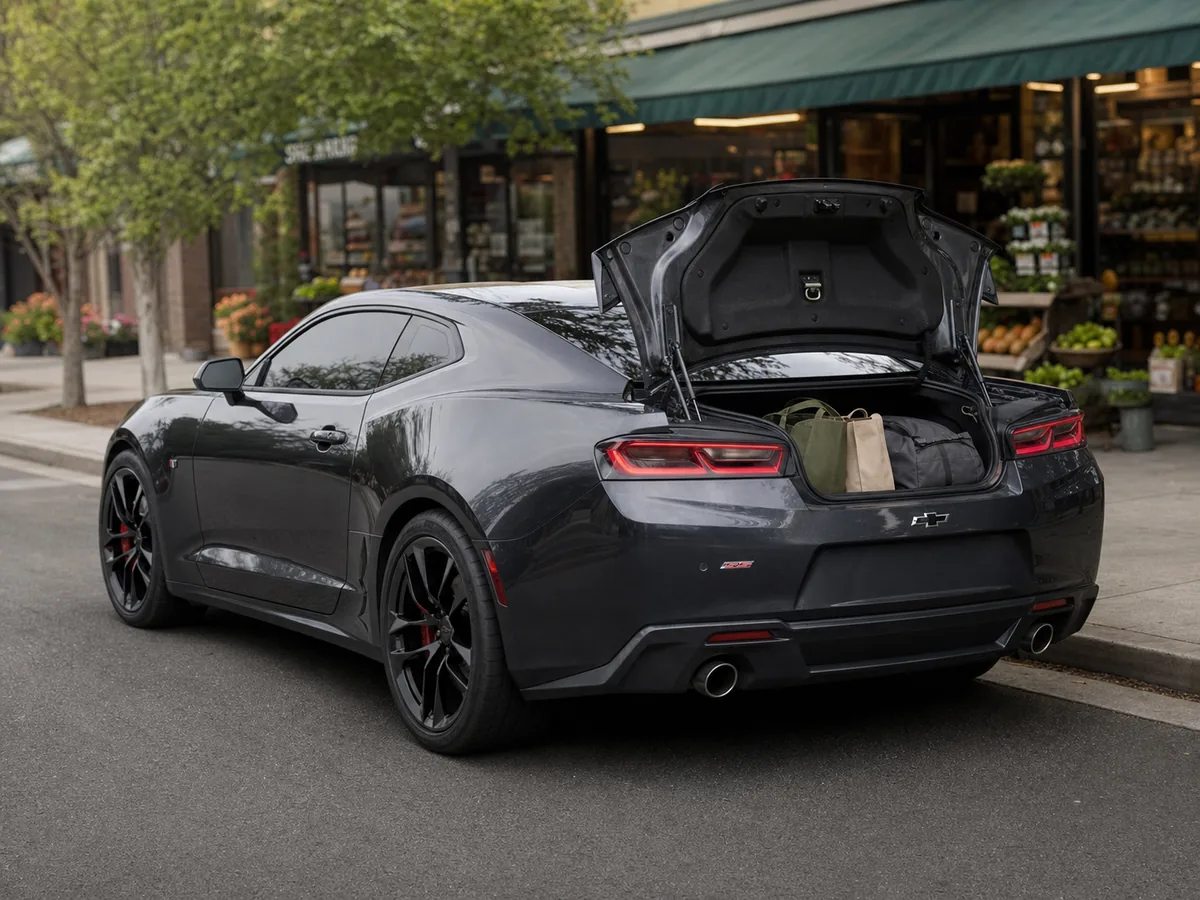
The rear seats work better as occasional passenger space or a padded extension of the luggage area. IIHS found two complete rear LATCH positions but rated their ease of use Marginal, so a child seat needs a physical trial with the normal front-seat position restored.
Rear Cross Traffic Alert, Side Blind Zone Alert, and the reversing camera help on equipped cars without fixing the underlying sightlines. Final-year models also offered wireless Apple CarPlay and Android Auto, while earlier cars may require a cable.
Winter brings a different compromise. Correct winter tires make rear-wheel drive manageable, but limited clearance, cold-sensitive performance rubber, road salt, and poor rear-quarter visibility can still make the Camaro a seasonal car.
If the Camaro is difficult to see out of or load during an ordinary errand, more horsepower will not make it easier to live with.
Is the Chevrolet Camaro reliable? Test the eight-speed automatic
Some 2016 to early 2019 Camaros with the 8L45 or 8L90 automatic can develop torque-converter clutch shudder. GM described the symptom as a shake during light-throttle acceleration between 25 and 80 mph while the transmission is holding a steady gear.
Drivers often compare the sensation with crossing rumble strips or rough concrete. It can be missed during a short test drive filled with hard acceleration because the condition appears under light, steady load.
GM's bulletin called for the appropriate fluid exchange on applicable vehicles and distinguished cars built after February 1, 2019, so require an invoice showing the fluid used, service date, and whether the symptom returned.
A fluid exchange is not proof that every later vibration is harmless. Tire imbalance, driveline wear, wheel damage, engine misfire, and internal transmission damage can create different sensations that require a proper diagnosis.
Check engagement from Park into Drive and Reverse when the car is cold. Then use light throttle, moderate throttle, and manual shift control while watching for delayed engagement, flare, harsh shifts, warning messages, or inconsistent converter lockup.
A manual-transmission car avoids torque-converter shudder but needs its own check of clutch take-up, high-gear acceleration, synchro behavior, gear noise, fluid leaks, and any short-shifter or clutch change.
Ask whether the car has been tuned. Eight-speed transmission calibration changes can raise line pressure, alter shift timing, hide a symptom during a brief drive, or complicate the dealer's ability to apply factory procedures.
Do not buy an eight-speed Camaro with unexplained steady-speed shudder, even when it accelerates cleanly at full throttle.
Camaro ownership costs include V8 consumables and theft exposure
Engine choice changes the Camaro's fuel, tire, brake, and insurance costs before a repair enters the calculation. The 455 hp and 650 hp versions need performance tires and stronger consumables, while location and storage can make comprehensive insurance the largest difference between two otherwise similar cars.
HLDI found that theft claim frequency rose sharply for 2016 to 2024 Camaros during 2023 and 2024. In 2024, the studied sixth-generation model years ranged from 5.06 to 8.82 times the 2015 Camaro baseline.
That comparison describes insurance claims across groups of insured vehicles. It does not mean one Camaro has a fixed chance of being stolen, but it is strong evidence that location and security belong in the buying decision.
Request comprehensive insurance quotes for the exact VIN, address, annual mileage, drivers, deductible, and overnight parking arrangement because a national average cannot price the theft pattern on your street or the premium difference between a V6 and ZL1.
Secure storage is more than a locked door. A well-lit garage, controlled key access, layered immobilization, and a plan for travel parking reduce exposure without pretending any device makes the car impossible to steal.
Inspect aftermarket alarms, trackers, remote-start modules, and wiring with the same suspicion as engine modifications. Loose splices, hidden battery drains, disabled factory functions, and undocumented modules can create faults or leave the next owner unable to service the system.
Keep keys away from exterior doors, leave no title or spare key in the vehicle, and store the VIN and photographs privately so an insurer and police report can identify the car and its equipment.
A high comprehensive premium can erase the apparent bargain in a cheaper Camaro. Add the annual difference over the planned ownership period, plus any garage or security cost, before comparing it with another car.
If the Camaro cannot be stored and insured at a cost the household can sustain, the right purchase price is zero.
Camaro safety: good crashworthiness, limited automatic braking
IIHS gave the 2016 to 2023 Camaro Good ratings in the driver-side small-overlap and original moderate-overlap front tests. The tested structure maintained useful occupant space, and head restraints also earned a Good result.
The roof-strength rating was Acceptable rather than Good. LATCH ease was Marginal, which reinforces the need to install the actual child seat before deciding that the two rear anchor positions solve family use.
Crash avoidance is the larger gap because the optional vehicle-to-vehicle system earned only a Basic rating and pedestrian front crash prevention was not available in the cited 2023 evaluation.
Forward Collision Alert can warn the driver on equipped cars, but a warning is different from automatic braking. Trim, model year, and option content must be verified from the vehicle rather than inferred from an RS badge or a seller's feature list.
The Camaro's sightlines make avoidance equipment particularly relevant in parking lots and dense traffic. A newer performance car with standard automatic emergency braking, better outward visibility, and stronger pedestrian detection may reduce stress even when its engine feels less dramatic.
Camaro safety ratings have model-year limits, so read the exact test notes and check tires, brakes, lights, glass, belts, airbags, and open recalls on the vehicle being inspected.
Use the Camaro's good tested crashworthiness as one piece of evidence, while pricing its limited avoidance technology as a real tradeoff.
What should you check before buying a used Chevrolet Camaro?
Start every used Camaro inspection with a cold engine and a stock-condition question. A seller who warms the car before arrival can hide startup noise, smoke, battery weakness, rough idle, delayed oil pressure, or cold transmission behavior.
Compare the engine bay, intake, exhaust, suspension, wheels, brake hardware, and calibration with the factory configuration for that VIN. A modification is not automatically harmful, but it needs parts receipts, installation records, calibration details, and an explanation of how the car was used.
Look for fresh paint, overspray, uneven panel gaps, mismatched glass dates, crushed lift points, and scraped underbody braces because a clean history report cannot reveal every hard use or unreported repair.
Inspection evidence
- Powertrain
- Cold start, fluid leaks, scan data, calibration, clutch or converter behavior, differential noise
- Chassis
- Matched tires, inner-edge wear, wheel damage, alignment, dampers, bushings, brakes, underbody contact
- Body and cabin
- Paint depth, roof operation, water entry, cameras, airbags, seat belts, glass, warning lights
- Records
- Oil service, brake fluid, coolant, transmission work, recall completion, modification invoices, both keys
Tire evidence deserves time because a Camaro can wear the inside shoulders while the outer tread looks legal. Confirm all four sizes against the door label and option package, then price the correct replacement set before negotiating.
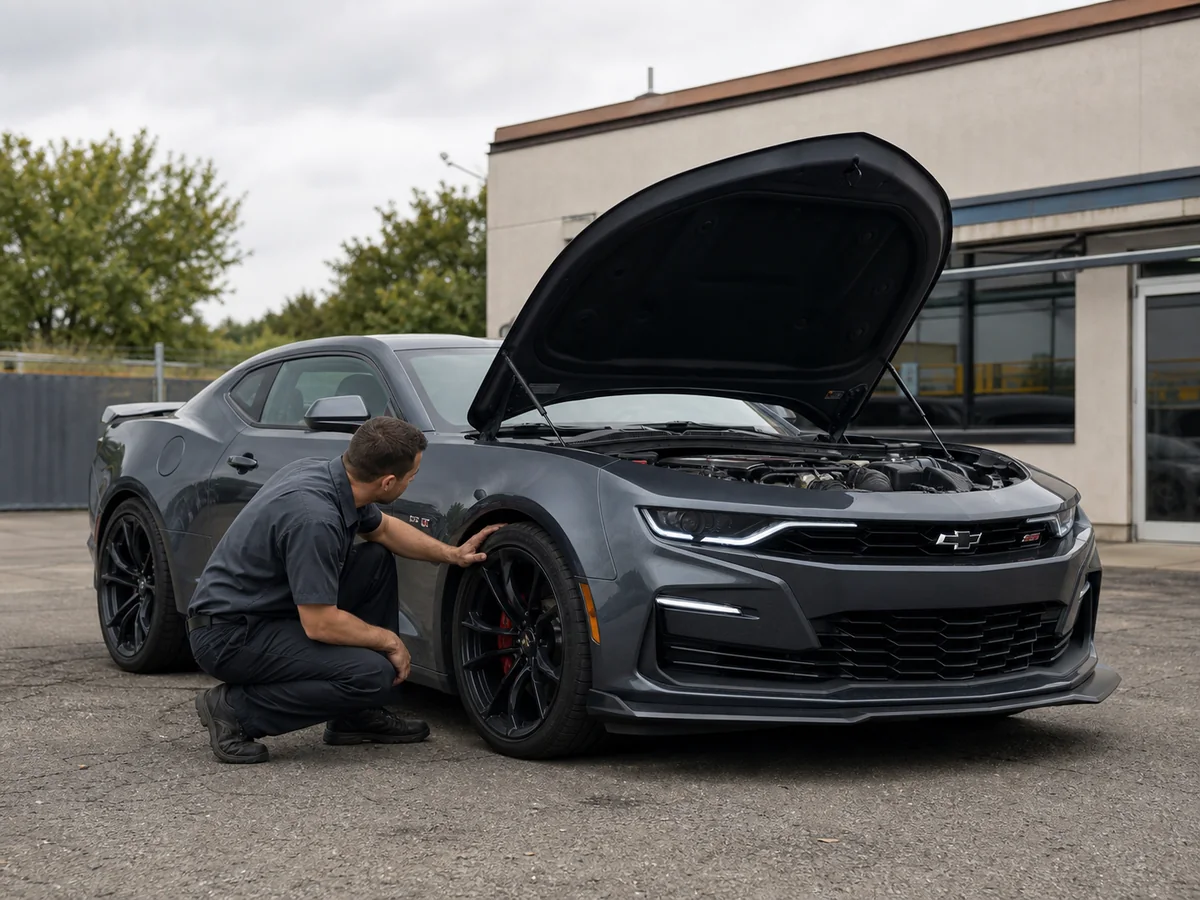
Tire and brake evidence tell the same hard-use story through heat-checked rotors, deep lips, scoring, color change, and uneven wear. Those brake findings belong in the full-module inspection even when performance pads explain normal noise and dust.
Run a full-module scan because permanent codes, recently cleared monitors, airbag faults, chassis messages, and communication errors can reveal work that a dashboard with no warning lights does not.
The ten-speed recall does not cover every Camaro from those years, and a completed remedy does not prove the rest of the transmission is healthy. It confirms only that the specified recall action was performed on an eligible VIN.
Pay an independent technician who understands GM performance cars to inspect the vehicle on a lift and review scan data. A seller's preferred shop or a quick state inspection cannot provide the same conflict-free assessment.
Use the inspection findings to adjust the offer only when the car remains fundamentally sound, because unknown tuning, structural repair, persistent shudder, airbag faults, mixed tires, or blocked access are reasons to leave.
A stock Camaro with ordinary mileage and complete records is worth more than a low-mile modified car whose history depends on the seller's confidence.
The Camaro fits one or two people who put driving first
Buy a sixth-generation Camaro when one or two people will use it most, steering feel and engine response matter every trip, and the household can support rear-wheel-drive tires, insurance, fuel, secure storage, and professional inspection.
The LT1 is the street-focused V8 answer for many buyers. A V6 is the stronger daily-driver choice when lower fuel and insurance pressure matter more than V8 sound, while the turbo four makes sense for a driver who values chassis balance and a lower entry cost.
The V8 choice moves to an SS when repeated hard driving will use its brake and cooling equipment, while a ZL1 fits only when 650 hp and its supporting hardware are the point of the purchase.
Those performance choices still fail when adults need the rear seats, winter access requires more clearance, or modern crash-avoidance technology is a priority. A Camaro that stays parked because it does not fit ordinary life is an expensive ornament.
Run the Camaro purchase in a fixed order by choosing the engine, getting the insurance quote, confirming storage, driving the car cold and warm, inspecting it independently, checking the VIN, and negotiating only after the evidence agrees.
The Camaro is worth owning when its compromises are already acceptable before the V8 starts, not after excitement talks you around them.