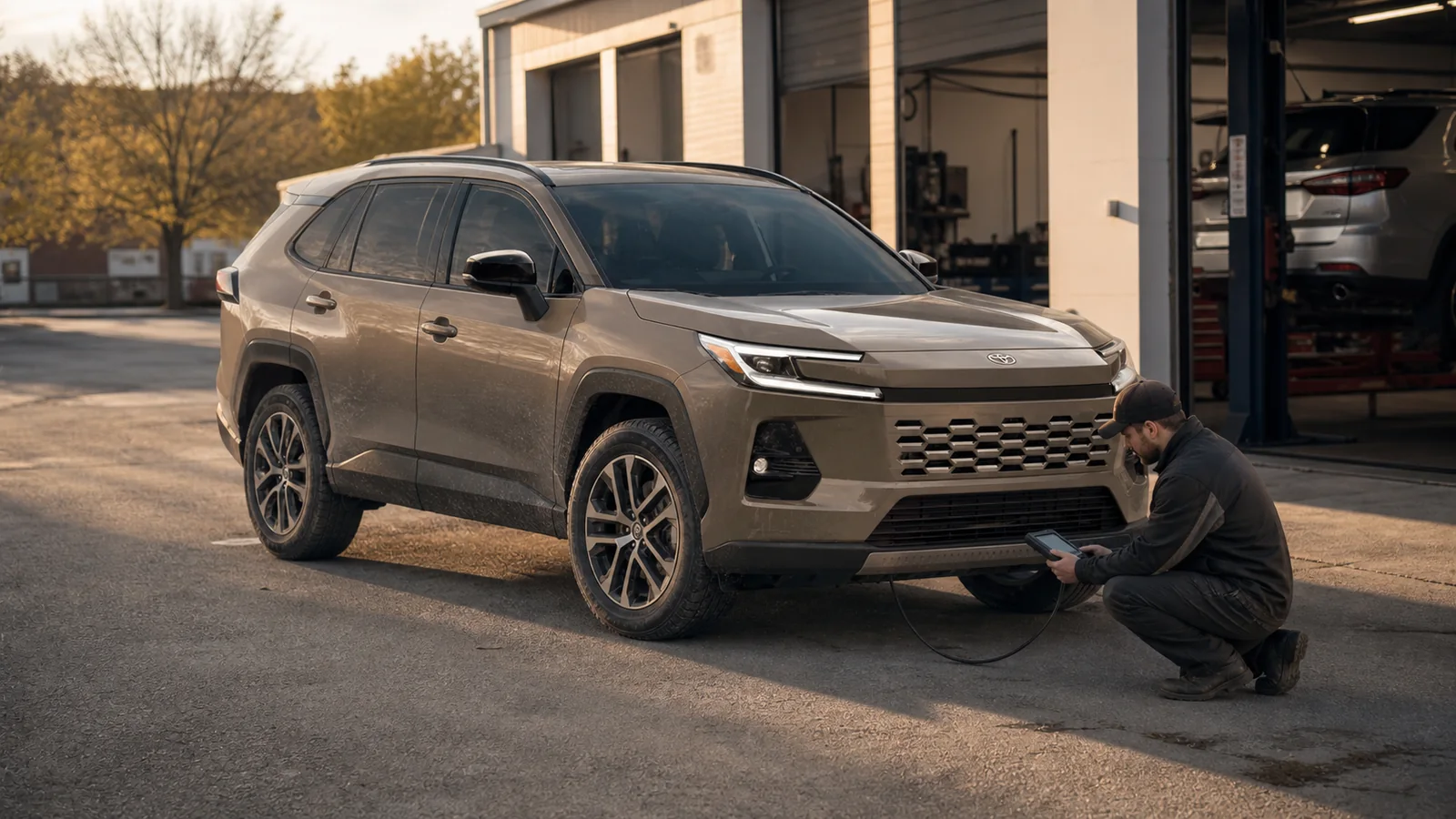
Gas RAV4 risk moves across three powertrains
The RAV4's overall record is strong, which is exactly why the bad years catch buyers out. RepairPal rates it 4.0 out of 5.0 and ranks it 3rd of 26 compact SUVs, with an average annual repair cost near $429.
That reputation makes shoppers assume any RAV4 is a safe bet, and CarComplaints shows why that assumption is risky: the trouble is not spread evenly, it clusters in specific years with a different failure each time.
- 2001-2003First-gen automatic surges and shifts harshly from a faulty engine control module
- 2006-20082.4L 2AZ-FE burns oil as the pistons and oil control rings carbonize
- 2013-2015Fourth-gen settles in with the 2.5L 2AR-FE and a proven six-speed automatic
- 2016-2018The most trouble-free fourth-gen years to target on a used lot
- 2019New 8-speed automatic hesitates and lurches at low speed, the worst-rated year
- 2021+Fifth-gen sorted after the 2019 launch bugs
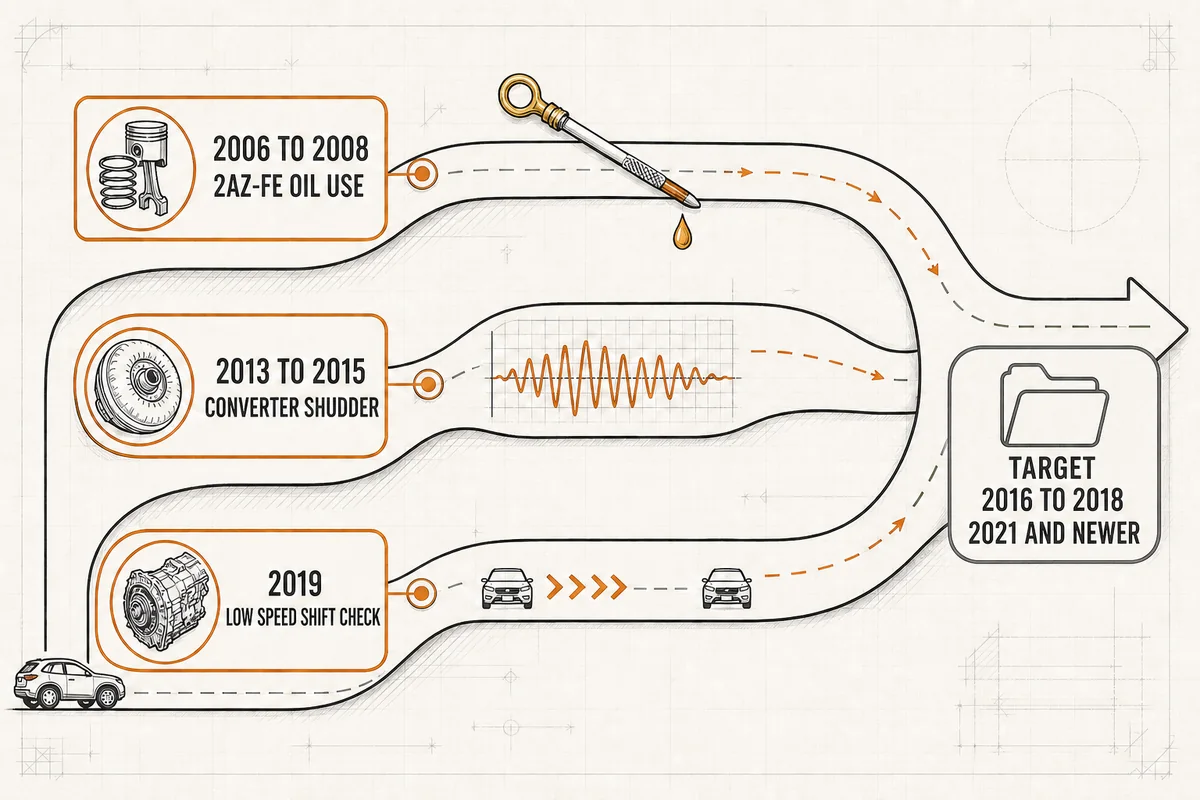
The 2AZ-FE and six-speed shudder need different proof
The 2006-2008 oil consumption is the fault that can destroy the engine. The 2.4L 2AZ-FE in these years was built with pistons and oil control rings that carbonize early, and once they do the engine drinks oil between changes.
Owners have reported burning a quart every 1,200 miles or less, and a car that runs low unnoticed can spin a bearing or seize.
Toyota published a repair procedure that replaces the pistons and rings, but the powertrain warranty that covered it expired years ago.
| Year or group | Starting verdict | Evidence | Required check |
|---|---|---|---|
| 2001-2003 | Inspect carefully | ECM-related harsh shifting and surge history | Shift quality and ECM repair invoice |
| 2006-2008 2.4L | Avoid active oil burners | 2AZ-FE piston and ring history | Cold oil level, smoke, and consumption records |
| 2009-2012 | Consider | Later third-generation cars avoid the launch issues | Age, oil use, and AWD service |
| 2013-2015 | Inspect for shudder | Toyota documented torque-converter flex lock-up shudder | Steady-speed road test and converter record |
| 2016-2018 | Target | Mature fourth-generation years | Battery recall, AWD fluids, and normal wear |
| 2019-2020 | Inspect carefully | Fifth-generation launch, shift behavior, and production campaigns | VIN lookup and low-speed drive test |
| 2021+ | Consider by VIN | Later production reduces early launch concerns | Current recall and service status |
The gas RAV4 table keeps engine and transmission faults attached to the right generation.
It does not describe the odds for every SUV.
Move a vehicle forward only when its VIN, repair history, and physical condition support the row.
2019 adds launch-year shift and campaign checks
The 2019 RAV4 is the other year to skip, and CarComplaints rates it the worst overall despite the older cars having more total complaints.
The reason is the brand-new 8-speed automatic, which hesitates and then lurches when you pull away from a slow roll or a stop, most noticeable in city traffic.
Toyota traced it mostly to software and issued a technical service bulletin that reflashes the transmission control module.
A 2019 with that update applied drives far better, so confirm the TSB reflash was done before you buy a 2019, and take a long low-speed test drive through stop-and-go streets.
A 2020 or later of the same generation sidesteps most of the first-year risk.
One older year is worth flagging for anyone shopping cheap first-generation RAV4s. The 2001-2003 cars use a four-speed automatic that can surge, flare, and shift harshly because of a faulty engine control module.
Toyota extended the warranty on the affected cars at the time, but that coverage is long gone, and a slush-box that already acts up is a gamble on a twenty-year-old SUV.
On the Toyota brand as a whole this is an outlier, so treat any first-gen with erratic shifting as a car to pass on rather than a project to fix.
The 2016-2018 gas models remain the clean target
A gas RAV4 verdict depends on engine, gearbox, and VIN campaigns, not an all-model score.
Separate gas and hybrid histories before using the buy filter.
Later gas RAV4 years make sense when the transmission and campaign history stay clean. The 2016-2018 cars use the well-sorted 2.5L 2AR-FE with the proven six-speed automatic and carry the fewest reported problems of the whole fourth generation.
The 2021-and-newer fifth-gen cars arrived after the 2019 transmission bugs were fixed, and they add a stronger safety suite and better refinement.
Both generations hold their value better than almost any rival, and Toyota parts are cheap and stocked at every independent shop, which keeps repair bills among the lowest in the compact SUV class.
For a family buyer, a clean 2017 or 2018 with full service records is one of the safest used picks on the best family SUVs shortlist.
If you want strong mileage without the fuel bill, the RAV4 Hybrid from the same recent years is a dependable pick, and it is worth cross-shopping the CR-V against the RAV4 Hybrid before you sign.
Oil, converter, battery, and AWD checks
Separate the gas RAV4 from the hybrid before using a model-year warning. The gas 2AZ-FE oil issue and six-speed shudder do not describe the hybrid cable and fuel-tank history.
Toyota's RAV4 torque-converter bulletin covers certain 2013-2015 vehicles and lists production changes. The 2013-2018 battery recall also makes battery size and hold-down fit a VIN-level safety check.
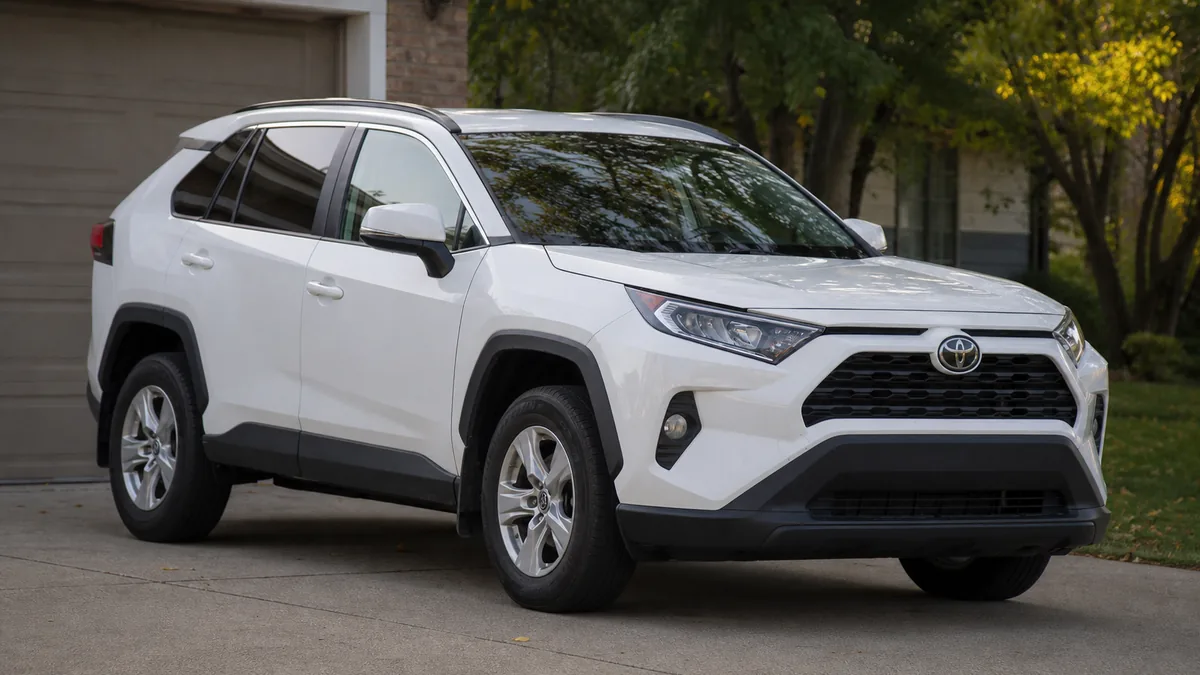
The gas RAV4 profile identifies the engine and transmission before the model-year checks begin. On AWD cars, verify matching tires and ask for rear differential and transfer-case service.
Binding in a tight turn, uneven tread, or fluid leaks adds a separate cost beyond the engine and converter concerns.
Use the gas powertrain field when comparing later RAV4s. A hybrid may share the body and year while carrying a different inspection list, so price and reliability claims must stay attached to the actual powertrain.
Work from powertrain identity to road test:
- Check cold oil level and exhaust smoke on every 2.4L car
- Hold steady light throttle to expose converter shudder
- Verify the battery size, hold-down clamp, and recall remedy
- Scan engine, transmission, AWD, ABS, and airbag modules
- Compare the gas model with the RAV4 Hybrid and the wider SUV field
Missing paperwork does not prove that a repair was unnecessary. Pass when the powertrain, battery remedy, or AWD condition cannot be confirmed.
A repair invoice must identify the failed part and the remedy
A seller may say the RAV4 was fixed without showing whether the work addressed the fault tied to that year.
For a 2006-2008 2.4L car, useful proof names pistons, rings, cylinder inspection, and the mileage at repair.
An oil change receipt does not answer the consumption question. Check the dipstick before the test drive, return to it after the engine rests, and compare the reading with the seller's claimed top-up interval.
For a 2013-2015 shudder complaint, the paperwork should identify the torque converter or the Toyota bulletin procedure.
A transmission fluid service may improve shift feel without correcting a worn converter. On a 2019, ask for the repair order that records the control-module calibration update, then confirm the behavior from a slow roll and during a gentle uphill start.
Paperwork narrows the risk, but the road test confirms the result.
Evidence that changes the verdict
- 2AZ-FE
- Piston and ring repair plus stable oil level
- 2013-2015 six-speed
- Converter repair or clean steady-speed test
- 2019 eight-speed
- Calibration record plus smooth low-speed response
- 2013-2018 battery campaign
- Correct battery dimensions and secure hold-down
Treat an open safety recall or an unsecured replacement battery as a stop sign until the remedy is complete.
Set the purchase budget from the unresolved risk
A low asking price cannot make an active oil burner cheap. Price the car only after identifying the engine, transmission, and open campaigns.
A clean 2016-2018 may deserve more money than a newer 2019 that hesitates, has incomplete campaign work, or wears four mismatched tires.
Condition matters more than the odometer once the vehicles fall into different risk groups.
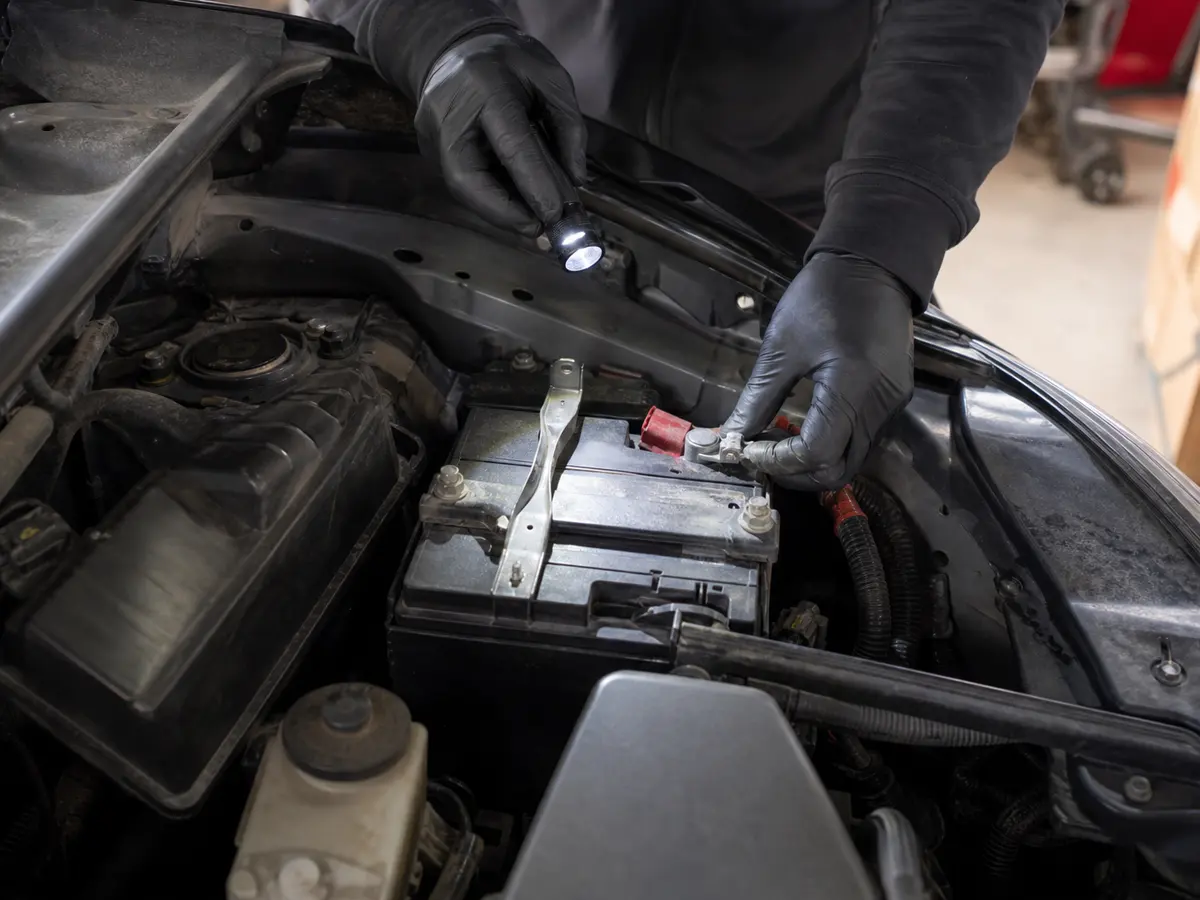
Build a reserve for ordinary used-SUV wear too. Tires must match closely on an AWD model, and neglected differential or transfer-case fluids can turn a good model year into an expensive example.
Brake wear, wheel-bearing noise, coolant leaks, and a weak 12-volt battery are reasons to lower the offer or require repair before delivery.
The strongest purchase combines a lower-risk year with a clean cold start, stable fluids, a full-module scan, and records that match the VIN.
Put the vehicle on a lift and let the drive include city traffic, steady highway speed, and tight parking-lot turns.
That sequence exposes faults that a five-minute loop can hide.
Save the RAV4 inspection as a short evidence package:
- VIN, engine, transmission, drivetrain, and battery campaign status
- Cold dipstick level and any top-up history on a 2.4L engine
- Steady-speed converter behavior on 2013-2015 cars
- Low-speed response and calibration record on a 2019
- Battery dimensions, terminal clearance, and hold-down security
- Tire match, AWD fluid history, full scan, and underbody condition
If oil use remains disputed, a measured consumption test is more useful than an argument over exhaust smoke.
If shudder appears, diagnose the converter before accepting a fluid service as the answer.
If the battery is loose or incorrectly sized, require the safety remedy first.
A recommended RAV4 year still needs evidence that its individual engine, gearbox, battery, and AWD system are sound.
Use a second RAV4 visit to verify changing fluid evidence
Oil level, coolant residue, and transmission behavior can look different after the seller prepares the vehicle. A second visit is useful when the first inspection raises a concern that cannot be confirmed immediately.
Photograph the cold dipstick and battery installation, record mileage, and return after normal use if the seller agrees.
Compare the new evidence with top-up claims and repair records.
For a 2AZ-FE oil-use concern, a measured consumption process is stronger than watching for smoke once.
For converter shudder, repeat the same steady-speed condition after full temperature. For a 2019 shift complaint, repeat low-speed stops, rolling starts, and a gentle grade rather than relying on a software invoice alone.
The second check should confirm:
- Fluid levels remained consistent with stated use
- No warning codes appeared after a complete drive cycle
- Battery hardware stayed secure and correct
- The same transmission symptom did or did not return
- Repair paperwork matches the VIN and installed parts
A seller is not required to allow an extended process, but the buyer is not required to accept uncertainty.
Repeated evidence is valuable when the fault is intermittent or consumption-based.
If the vehicle cannot be verified within the purchase timeline, choose a RAV4 whose condition is easier to prove.