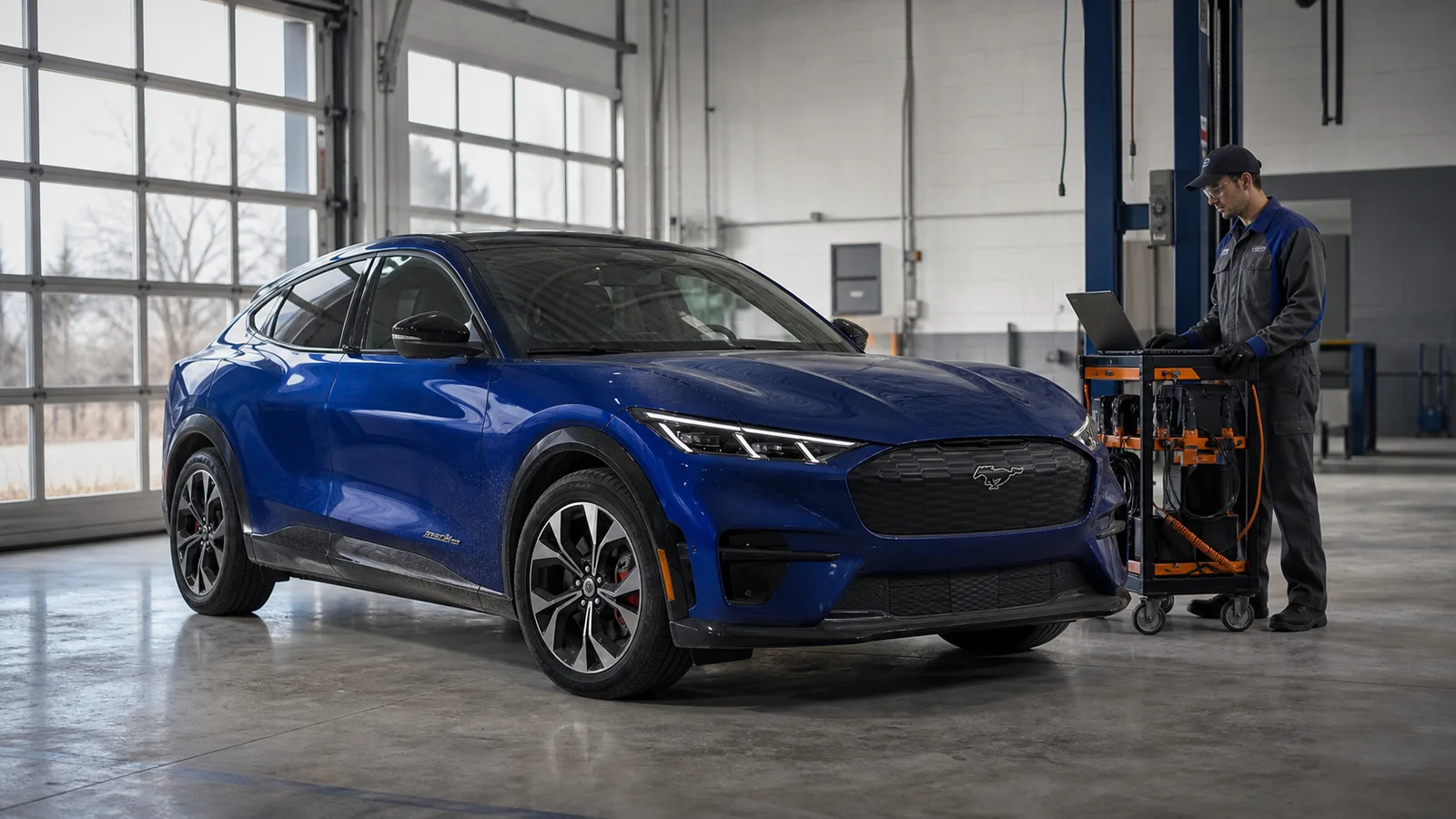
Build date and battery configuration control the risk
The Mach-E launched for the 2021 model year. First-year cars can be appealing because depreciation makes them cheaper, but their recall file is longer and the most important campaign concerns loss of drive power.
CarComplaints has only a small Mach-E sample. Its 2021 page lists two submissions, including one for the high-voltage battery junction box.
The 2022 page lists four submissions. Those counts cannot rank reliability, but they point toward systems that already have primary-source campaign records.
| Model year or build | Starting verdict | Evidence that changes the choice | Required check |
|---|---|---|---|
| 2021 extended range | Avoid without replacement proof | HVBJB replacement recall plus roof and windshield campaigns | VIN campaigns, junction-box remedy, glass adhesion, and charging |
| 2021 standard range | Inspect closely | Different HVBJB exposure, but first-year glass and software checks remain | VIN, glass, battery, charging, and service history |
| Early 2022 extended range | Avoid without replacement proof | HVBJB population continues through May 24, 2022 builds | Build date, battery size, replacement record, and alerts |
| Later 2022 | Consider by VIN | Outside stated HVBJB build period when correctly identified | VIN confirmation, charging, tires, software, and collision history |
| 2023 | Target by condition | Later production with fewer launch-period campaigns | Battery, charging, cameras, tires, and current recalls |
| 2024-newer | Consider, history still short | Newer hardware and less long-term evidence | Exact configuration, warranty, repair file, and VIN campaigns |
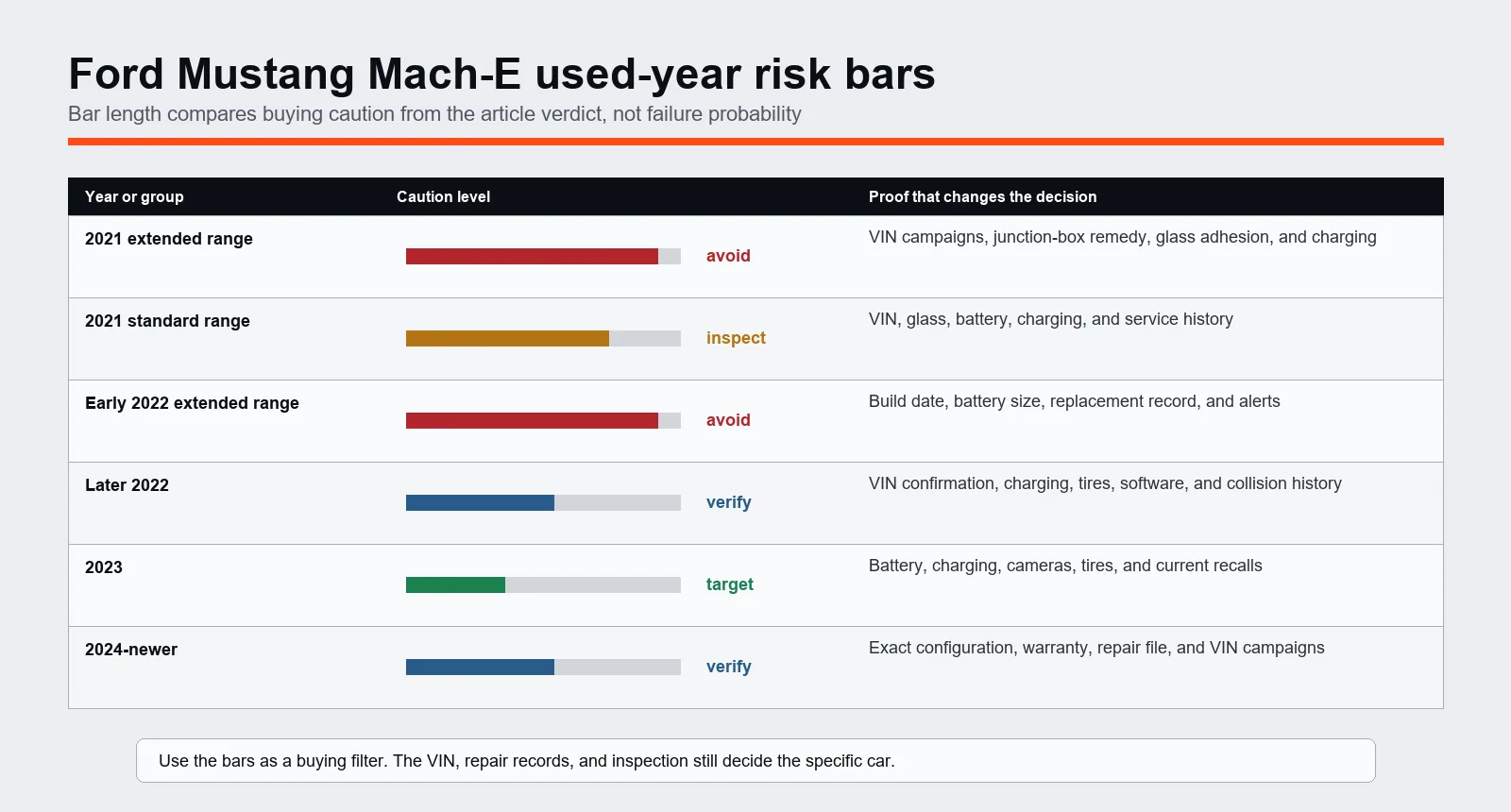
A model year can contain cars built before and after a hardware cutoff. Photograph the door-jamb build date and decode the battery before accepting a later-year claim.
The high-voltage junction box is the deciding 2021-2022 check
NHTSA recall 23V-687 covers certain 2021 and 2022 Mach-E vehicles with the extended-range battery. The high-voltage battery main contactors can overheat, which can cause loss of drive power and raise crash risk.
The NHTSA acknowledgement lists 34,762 potentially affected vehicles and states that dealers replace the high-voltage battery junction box free of charge. It also says cars previously repaired under recall 22V-412 need the new remedy.
Ford's dealer bulletin lists affected build dates from May 27, 2020 through December 23, 2021 for 2021 vehicles and August 16, 2021 through May 24, 2022 for 2022 vehicles. The U.S. population in that bulletin is 30,000.
A past "Stop Safely Now" or powertrain-malfunction alert needs the diagnostic code, date, mileage, and repair. Clearing the message or updating unrelated software does not identify the failed part.
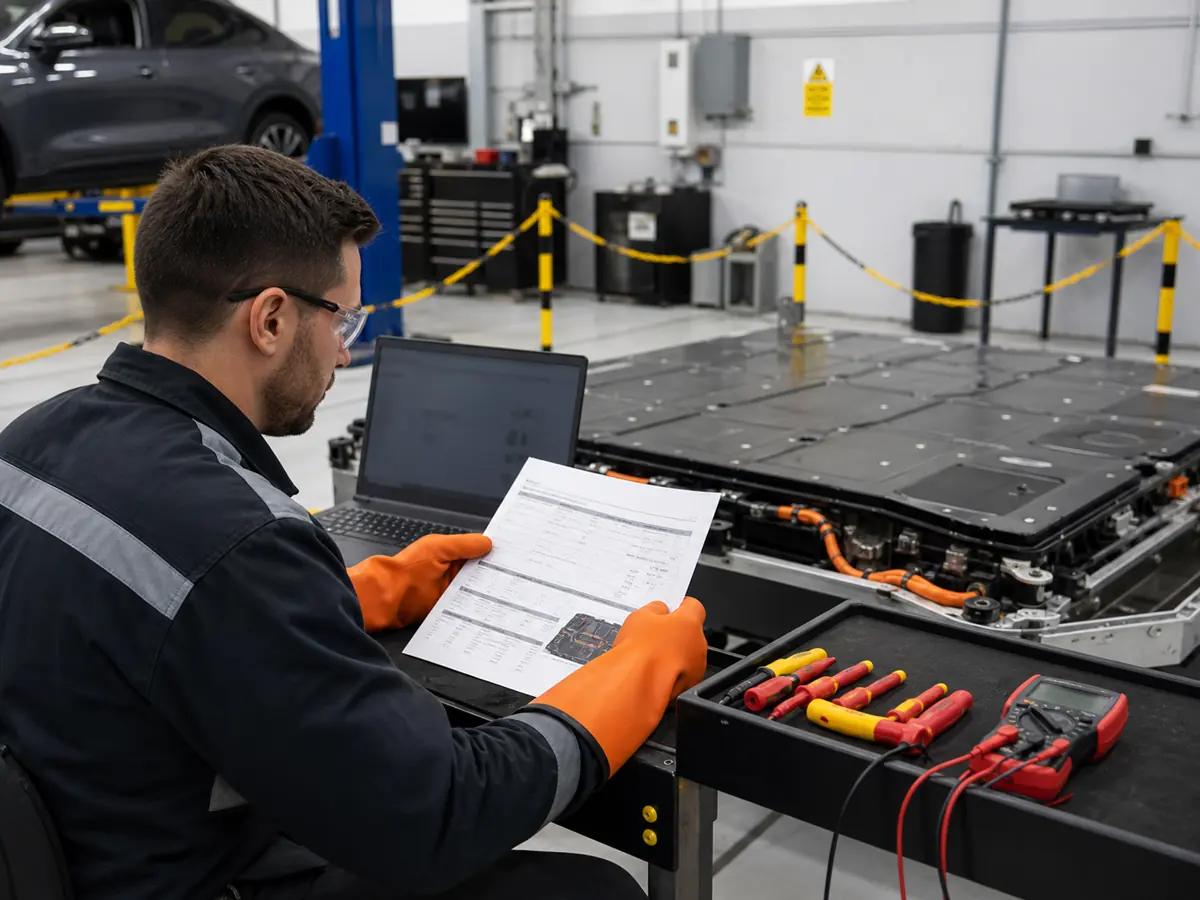
During the road test, use moderate acceleration only after the recall status is clear.
Confirm normal power, no warnings, and clean AC and DC charging.
Do not road-test a car with an open high-voltage contactor recall.
The 2021 roof and windshield need campaign and leak evidence
Ford recall reminder 21V-712 describes inadequate urethane adhesion of the 2021 Mach-E panoramic roof glass. The panel can loosen, create wind noise or water leaks, and potentially detach.
The same Ford reminder identifies windshield adhesion campaign 21C22. An inadequately adhered windshield may detach in a crash and does not meet the cited federal mounting requirement.
Campaign completion is the first check.
Physical condition is the second. Inspect roof and windshield edges for uneven sealant, lifted trim, wind noise, water marks, and signs of later glass replacement.
Test the cabin after rain or a controlled water check when the seller permits it. Inspect the headliner, A-pillars, overhead console, cargo trim, floor, and electrical connectors for moisture or staining.
Use a glass inspection sequence:
- Match the VIN to roof campaign 21S42 and windshield campaign 21C22
- Compare glass markings and installation dates
- Inspect urethane edges and surrounding trim
- Drive at highway speed for abnormal wind noise
- Check headliner, pillars, cargo area, and floor for water evidence
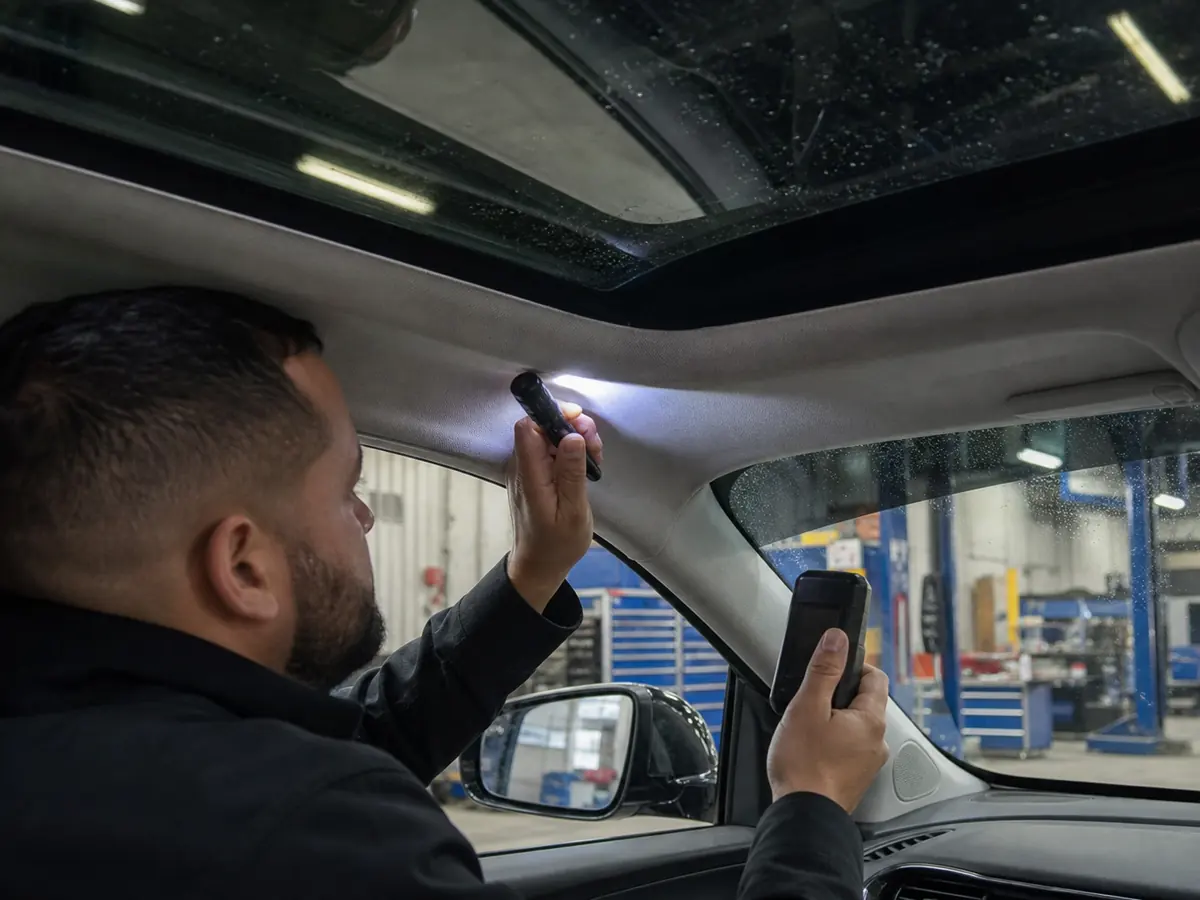
Open glass campaigns or unexplained water marks remove a 2021 car from consideration.
A small 2022 halfshaft population still needs VIN verification
Ford campaign 22S55 concerns certain 2022 Mach-E vehicles with a rear-right halfshaft whose outer race may have insufficient wall thickness. The Ford chronology states that 504 suspect-lot halfshafts reached the assembly plant and describes two broken parts found before customer delivery.
Ford reported no warranty or field reports, crashes, or injuries related to that concern at the time of the filing.
That narrow scope is important. It supports a VIN check, not a claim that all 2022 halfshafts are weak.
Confirm remedy status, then inspect boots, joints, fasteners, and rear underbody. During a safe road test, listen for clicking, clunking, or vibration under light acceleration and tight turns.
Tire or wheel damage can create similar vibration, so diagnosis should name the source.
Evidence by Mach-E system
- HVBJB
- VIN inclusion, replacement entry, diagnostic history, and current alerts
- Roof and windshield
- Campaign completion, seal condition, noise, and water evidence
- Rear halfshaft
- VIN status, physical inspection, and road-test behavior
- Battery enclosure
- Underbody condition, lift points, and repair history
The narrow halfshaft campaign should not erase the broader checks. A clear VIN still needs normal driveline behavior and an undamaged underbody.
Charging tests separate the car from the station
A Mach-E charging complaint can come from the vehicle, cable, home unit, public station, account, temperature, or software. Use more than one known-good source before blaming the car.
Start with AC charging. Confirm the port door, connector lock, charge indicator, scheduled charging, and mobile-app status.
Then use a compatible DC fast charger when practical. Record starting state of charge, battery temperature context, peak rate, interruptions, and alerts.
A low rate at a cold battery or high state of charge may be normal.
Repeated session failures across known-good stations are not. Ask for any charge-port, onboard charger, battery-control, or software repair invoices.
Check the portable cable and adapters that come with the sale.
Missing or damaged equipment changes the real purchase price. Verify that the home electrical plan fits the charging load before buying the car.
The EV charging basics explain AC and DC differences. Compare charging access with the Tesla Model Y and the fast-charging Hyundai Ioniq 5.
Approve the car only after it completes repeatable charging without unresolved alerts.
Battery protection, tires, and collision repair drive the hidden cost
The displayed range is not a complete battery-health report. Temperature, recent driving, software estimates, wheel size, state of charge, and battery calibration all affect it.
Confirm the exact standard-range or extended-range battery, motor layout, warranty start date, and repair history. Inspect the battery enclosure, aero shields, lift points, rocker panels, cooling area, and front and rear subframes.
A scraped shield can be cosmetic. A dented enclosure, torn mounting point, missing fastener, fresh sealant, or damaged lift point needs an EV-qualified inspection.
Collision repair can also affect cameras, radar, glass, charging, suspension, and water sealing.
Record these items:
- Battery size, motor layout, trim, and build date
- High-voltage and low-voltage repair history
- AC and DC charging results
- Underbody and battery-enclosure condition
- Tire brand, size, tread depth, and alignment
- Camera, driver-assistance, and restraint-system scans
Large wheels and strong torque can consume expensive tires. Inspect inner and outer tread, sidewalls, wheel bends, and matching specifications.
Use the tire-pressure check with the door label.
The electric-car field helps compare range and tire tradeoffs. Battery protection and collision evidence matter more than a polished screen or fresh detail.
Software alerts need named hardware or calibration findings
Mach-E updates can arrive over the air or through a dealer.
Updates may improve charging, infotainment, driver assistance, or control modules. They do not turn every mechanical or electrical fault into a software issue.
Review alert history and service invoices. A useful record names the code, affected module, software version, test, and repair.
A line stating "updated vehicle" does not explain a repeated power-loss or charging complaint.
Test cameras, parking sensors, phone pairing, navigation, charging route planning, BlueCruise equipment when fitted, climate control, seat functions, windows, locks, and powered hatch. Check that driver-assistance features are available without persistent calibration messages.
CarComplaints' 2022 page lists four submissions, two under steering. The sample is too small to generalize, but steering feel and driver-assistance behavior still deserve a road test.
Ford campaign history must separate recalls from ordinary repairs
A Mach-E service file can contain recall work, software updates, warranty repairs, charging complaints, glass work, and routine maintenance.
Read it in date order and group entries by symptom. The goal is to prove that each serious condition received the current remedy, not to reward the car for having many dealer visits.
Start with Ford's VIN campaign record. Write down every open and completed field action, the completion date, and mileage.
For an included extended-range car, the entry for 23V-687 or 23S56 should show the current high-voltage battery junction-box replacement.
An earlier 22V-412 software action is different work.
Then compare the physical vehicle with the record. Photograph the certification label, build date, charging port, wheel and tire size, underbody, and windshield markings.
A registration date cannot replace the factory build date when a campaign uses a production cutoff.
Glass entries need more than a completed campaign line. Check whether the roof or windshield was resealed or replaced, whether surrounding trim was renewed, and whether camera calibration was performed when required.
Highway wind noise, water marks, or loose trim after campaign work needs diagnosis.
Software history should name the module and reason. Updates are normal on an EV, but repeated updates for the same power-loss, charging, camera, or driver-assistance symptom need a final result.
A newer software number does not prove that a contactor, halfshaft, seal, or damaged sensor is healthy.
Organize the file into five groups:
- Safety recalls and field actions with campaign numbers
- High-voltage and low-voltage repairs with diagnostic codes
- Charging and thermal complaints with station tests and named findings
- Glass, body, and collision repairs with calibration records
- Tires, alignment, brakes, filters, and normal wear
Repeated 12-volt battery replacements can point to a battery problem, sleep issue, module draw, or long storage.
Confirm the current battery date and normal wake behavior after the car sits. Test keys, app access, locks, hatch, windows, charge port, cameras, and climate control before and after the road test.
Ownership transfer also needs preparation. Confirm that the seller has every key and can remove the car from the old Ford account.
Verify that connected services, charging features, and any driver-assistance subscription are described accurately.
Do not value a trial or expired subscription as permanent equipment.
Ask a Ford EV technician to preserve alert history before clearing codes.
A clean dashboard after a reset is weak evidence. The diagnostic report should identify current, pending, and historical faults in the battery, charging, restraint, chassis, camera, and driver-assistance systems.
Price every unresolved item before negotiating. A missing mobile charger, damaged wheel, worn tire set, cracked glass, failed camera, weak low-voltage battery, or incomplete campaign can erase the discount on an early car.
The service history passes only when the VIN campaigns, installed parts, alert record, and road behavior all support the same conclusion. If the paperwork says repaired while the symptom remains, the symptom wins.
One-pedal driving cannot hide brake, tire, or thermal faults
A Mach-E road test should use both regenerative and friction braking. One-pedal driving can make the car feel smooth while the brake rotors receive little normal use.
Begin at low speed and make several controlled friction-brake stops. The pedal should remain firm and the vehicle should stop straight without scraping, pulsing, or pulling.
Inspect rotor faces through the wheels. Surface rust after rain can clear with use, but deep scoring, heavy lips, uneven contact, or one hot wheel needs service.
Ask whether the brakes were cleaned and lubricated during routine maintenance.
Regeneration depends on battery charge, temperature, drive mode, and settings.
Note those conditions before judging deceleration. A powertrain warning, abrupt reduction, or inconsistent transition between regeneration and friction braking needs a scan.
Use a highway section to test wheel balance, steering, wind noise, and driver-assistance availability.
A steering-wheel vibration can point to a front wheel or tire.
A floor vibration may come from the rear. Do not label either one normal EV behavior without inspection.
Thermal behavior matters during charging and repeated acceleration. After the HVBJB record is clear, use moderate acceleration and watch for powertrain alerts or reduced power.
Complete a known-good charging session and note interruptions, fan noise, and temperature context.
Finish by checking tire and wheel temperatures safely, then inspect the charge port and underbody again.
One hot corner can expose brake drag or bearing trouble. Fresh underbody contact marks after the drive require an explanation.
Record the route, weather, state of charge, climate use, drive mode, and tire pressure. Those facts make energy use and charging results comparable instead of anecdotal.
A sound Mach-E should brake straight, regenerate consistently, hold highway speed without vibration, charge without interruption, and show no new powertrain alerts.
Why later 2022 and 2023 are cleaner starting points
A later-build 2022 Mach-E can fall outside the stated May 24, 2022 end date for the 23V-687 population.
The door label and Ford VIN result must prove that point.
Do not infer it from registration date.
A 2023 Mach-E is the simpler starting point for shoppers who want to avoid the first two model years.
It still needs current campaigns, charging, battery, tires, software, collision, and underbody checks.
Its shorter long-term history is a limitation.
CarComplaints currently lists one 2023 submission and calls the year worst based on a wiring-damage report.
One rodent-related report cannot support a year-wide avoid verdict. This is why the recall file carries more weight than a thin ranking.
The Ford EV profile covers range and trims, while the Ford model range provides service and vehicle alternatives. Use the SUV field to decide whether the added weight and charging routine fit the family job.
Keep the Ford VIN report, junction-box entry, glass campaigns, scan, charging notes, tire measurements, and repair invoices. The new versus used checklist covers title, lien, and seller evidence.