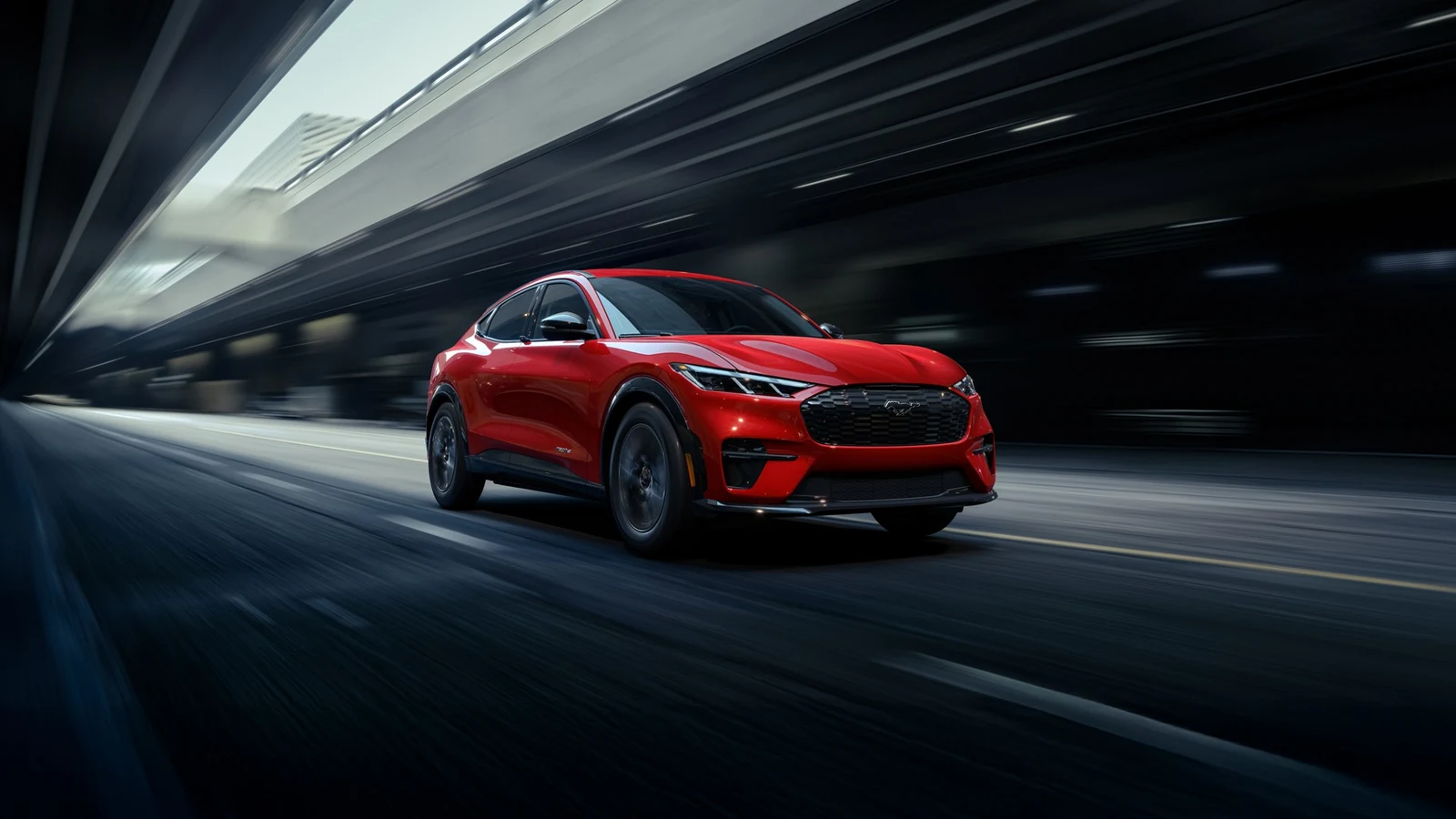
The Mach-E can be reliable after one early hardware risk is resolved
The Mach-E uses one or two electric motors, a high-voltage battery, and single-speed reduction gearing. This removes engine oil, exhaust hardware, spark plugs, and conventional automatic-transmission service from the ownership schedule.
The largest early reliability concern sits in the high-voltage battery junction box, commonly shortened to HVBJB. Its contactors connect the traction battery to the rest of the propulsion system, and overheating can cause warning messages or a loss of drive power.
Later production and repaired early cars can avoid that specific unresolved risk. They still need normal proof for battery health, charging, low-voltage behavior, software, tires, suspension, body condition, and campaign status.
The Ford dealer network can be useful, but EV experience varies by location. Before buying, confirm which nearby dealer can diagnose high-voltage concerns and whether the vehicle's service history follows it across dealers.
The Mach-E earns a positive verdict only after the VIN proves that the correct junction-box remedy is complete.
High-load driving exposed the original junction-box contactors
The HVBJB contains contactors that close when the vehicle is ready to drive or charge. Current passing through undersized or overheated contact surfaces can generate heat, damage the contactors, and interrupt power flow.
Ford identified risk under repeated high-load conditions such as wide-open acceleration and DC fast charging. These are normal capabilities of the vehicle, which is why the condition became a safety recall rather than an instruction to avoid using the performance.
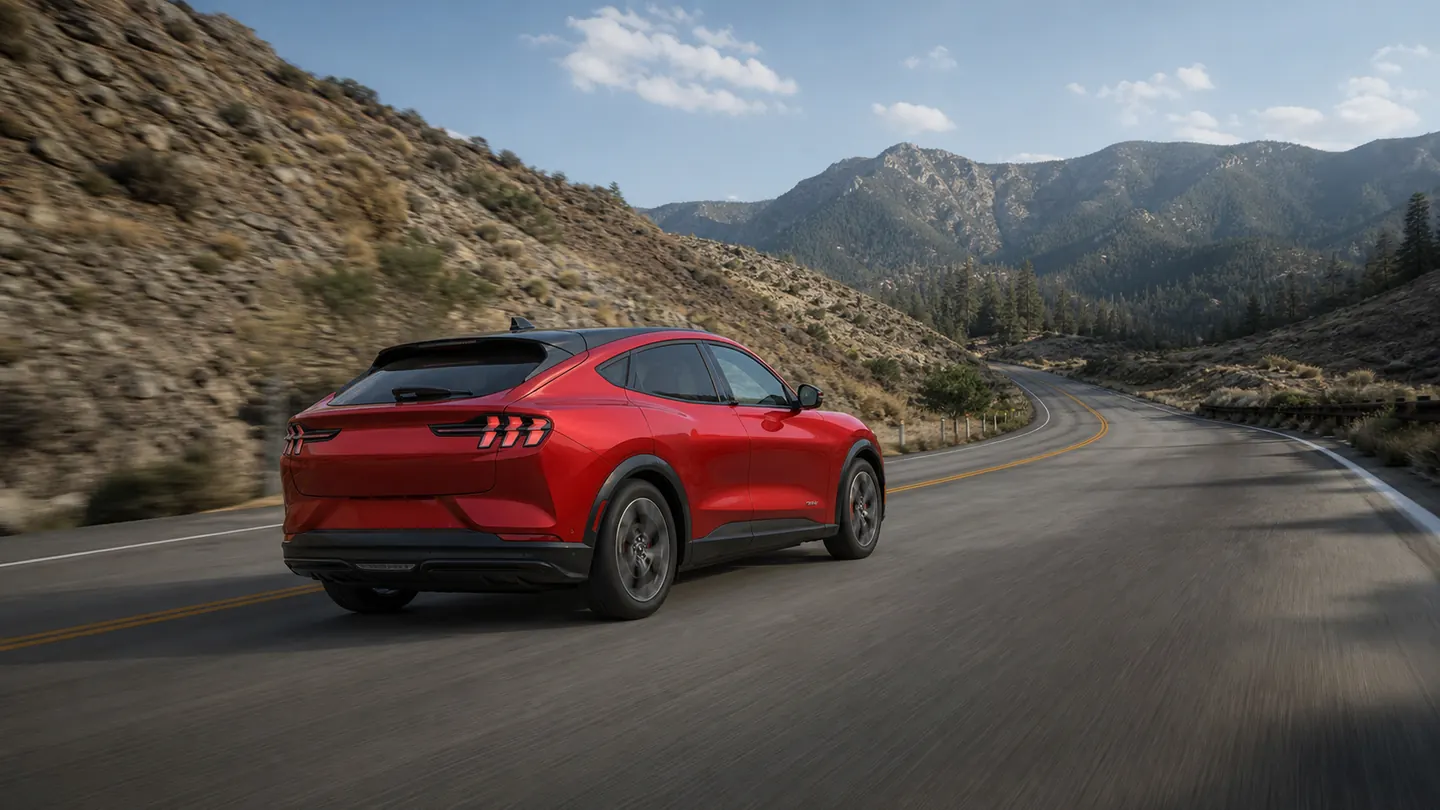
Drivers may see a powertrain-malfunction warning or a Stop Safely Now message. A loss of drive power raises crash risk even when steering and braking remain available, so any unresolved warning needs transport and diagnosis rather than another test drive.
Heat exposure does not provide a visible driveway inspection of the contactors. The buyer needs VIN campaign status, repair documentation, and a clean module scan, not a judgment based on how quickly the car accelerates during ten minutes behind the wheel.
A car that completed the correct hardware remedy should still be driven normally. The repair exists so owners can use charging and acceleration without carrying the known defect forward.
The HVBJB failure mechanism is distinct from ordinary battery degradation. Contactors act as high-current switches between the pack and the rest of the vehicle, so damaged contact surfaces can interrupt propulsion even when the battery cells still store normal energy.
Repeated fast charging or hard acceleration did not make normal use improper. Those conditions exposed insufficient thermal durability in the original hardware, which is why repair status matters more than asking whether a previous owner drove gently.
Recall 23S56 requires proof of the hardware remedy
Ford's earlier 22S41 campaign used software to monitor the condition and reduce power when necessary. That action was different from the later 23S56 recall, which required replacement of the HVBJB for affected vehicles and updated several control modules.
NHTSA campaign 23V687 covered certain 2021 and 2022 Mach-E vehicles equipped with the extended-range battery. Ford's dealer bulletin listed production through May 24, 2022 for the affected population, with exact applicability determined by VIN.
- June 2022Recall 22S41 introduced a software-based response
- October 2023Recall 23S56 announced a hardware remedy for affected vehicles
- December 2023Ford dealer instructions detailed HVBJB replacement and updates
- Before purchaseVIN status and the completed repair order must agree
Ask for the repair order and look for junction-box replacement, not only reprogramming language. Vehicles repaired under the earlier action could still require the newer remedy, as NHTSA's recall notice explicitly states.
The build date narrows the question but cannot replace the VIN lookup. A dealer or NHTSA check should show whether the campaign is open, closed, or inapplicable to the exact car.
The repair order should identify the campaign number, completion date, mileage, replaced junction-box part, and control-module updates. Compare those details with the VIN record because a generic software invoice may belong to the earlier monitoring action rather than the later hardware remedy.
After documentation is confirmed, scan the vehicle for stored high-voltage and communication faults and complete a normal road test. The recall record resolves the defined defect, while the scan and drive establish whether the repaired car has a separate current problem.
Battery capacity must be separated from junction-box condition
The traction battery stores energy, while the HVBJB connects that energy to the vehicle. A junction-box recall does not state that the battery cells have lost capacity, and good range does not prove that the junction-box remedy is complete.
Ford covers electric-unique components for 8 years or 100,000 miles and states a 70 percent battery-capacity retention term for the Mach-E, subject to the written warranty. Record the original in-service date because both time and mileage determine remaining coverage.
| Evidence | What it answers | What it cannot prove |
|---|---|---|
| Warranty record | Remaining time and mileage | Present battery capacity |
| Comparable energy use | Efficiency and range trend | HVBJB remedy status |
| Charging session | Port and thermal behavior | Cell capacity by itself |
| Diagnostic data | Fault and pack information | Future life guarantee |
| Repair order | Parts replaced during campaign | Unrelated chassis condition |
Displayed range changes with temperature, speed, elevation, wind, wheel choice, climate use, and recent driving. Compare similar trips and charging sessions rather than reading one full-charge estimate as a capacity test.
Ask about thermal warnings, charge interruptions, isolation faults, and any pack or drive-unit work. Frequent fast charging is a use pattern to understand, not automatic proof that the pack has been damaged.
The battery can remain healthy for high mileage, but no honest inspection can promise one lifespan. Current data, warranty, use history, and price provide a stronger decision than an unsourced mileage guarantee.
Record starting charge, ending charge, energy use, outside temperature, speed, elevation, and climate setting on a meaningful route. This does not replace Ford diagnostic data, but it creates a repeatable range observation instead of relying on one displayed estimate.
Ask whether the vehicle sat for long periods at very high or very low charge and whether charging interruptions produced alerts. Storage history is supporting context, while present thermal, isolation, and charging evidence should carry the diagnosis.
Twelve-volt health and software state can imitate larger faults
The Mach-E relies on a 12-volt system to power controllers and prepare the high-voltage system for operation. A weak support battery can cause no-start behavior, communication faults, screen trouble, or warning messages without a failed traction battery.
SYNC software, phone connectivity, navigation, cameras, charging controls, and driver-assistance modules add other possible sources of electronic frustration. Read every module instead of limiting the scan to propulsion codes.
Warning evidence
- No-start or wake fault
- Test 12-volt battery and charging support
- Powertrain message
- Read exact high-voltage and drive codes
- Screen or phone issue
- Confirm software and repeatable behavior
- Multiple module codes
- Check voltage history before replacing modules
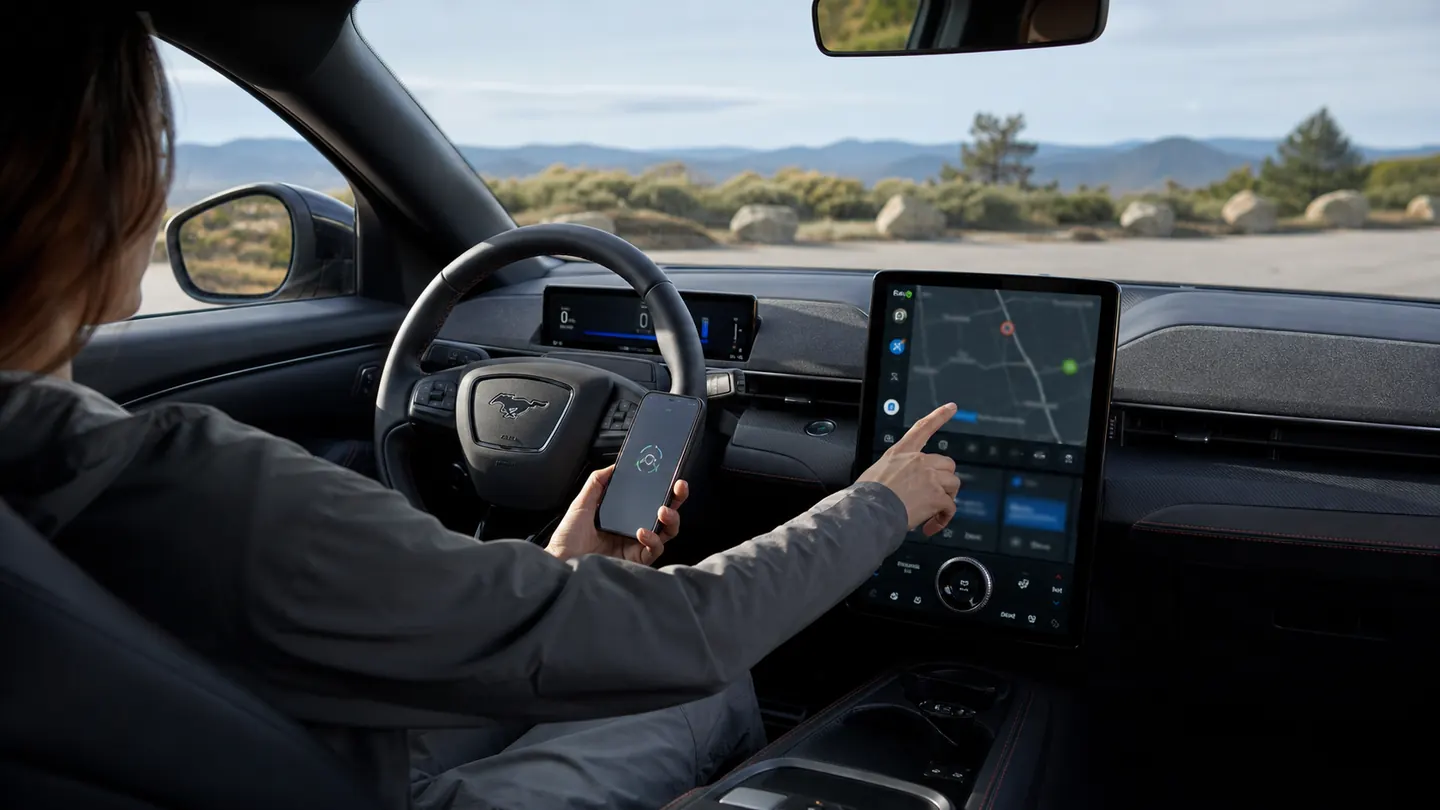
Test the car from a cold start and allow it to sleep before a second wake-up when possible. A freshly charged 12-volt battery can hide a weakness that reappears after the vehicle sits.
Document software version and campaign completion, then judge each remaining symptom by repeatability. Updates can repair control logic, while a damaged sensor, battery, connector, or module still needs physical work.
A charging test should include home speed and a fast charger
Most owners rely on Level 2 charging at home, so the inspection should begin on known working AC equipment. Confirm that the connector locks, the session begins, the scheduled-charge settings respond, and no warning interrupts the session.
DC fast charging exercises different hardware and thermal management. Begin with enough battery room to accept useful power, because a nearly full or cold pack may charge slowly without a defect.
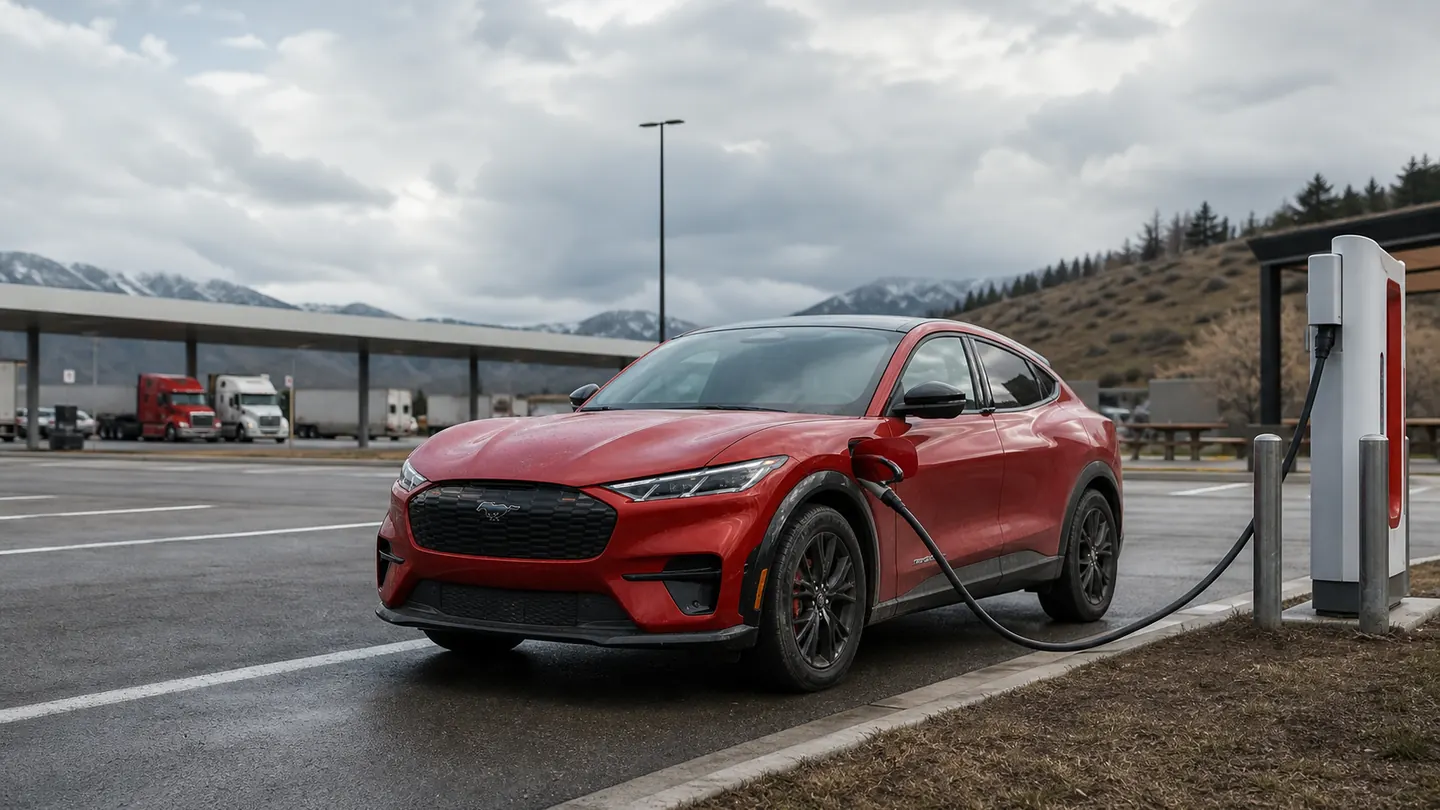
Do not demand one advertised peak rate under every condition. Charger sharing, site limits, battery temperature, state of charge, and the car's charging curve all affect the displayed number.
Look for repeated session failures, port-lock trouble, charging-service warnings, damaged pins, or heat damage around the inlet. Review invoices and app records when the seller reports that a previous issue was corrected.
Home and public charging both belong in the ownership plan. A car that charges cleanly can still be a poor fit when the buyer lacks reliable home access or practical fast-charging options on common trips.
Inspect the inlet for damaged pins, debris, heat discoloration, or a loose door without touching energized contacts. Then review session records for repeated failures at different sites, since one bad public charger should not be mistaken for a vehicle fault.
Home equipment should be priced before the vehicle is judged cheap to operate. Panel capacity, cable route, permit work, parking position, and utility rates can change both installation cost and how easily the Mach-E starts each day with the desired charge.
GT performance shifts cost toward tires and suspension
GT and Rally versions deliver stronger acceleration and use performance-focused wheel, tire, brake, and suspension hardware. That capability does not make them defective, but weight and torque make tire condition financially important.
Measure tread across each tire, check production dates, inspect sidewalls and wheels, and drive on smooth and rough pavement. Inner wear, vibration, pull, clunks, or a hum that changes with cornering load needs diagnosis.
MagneRide-equipped versions add adaptive dampers that should respond consistently without warnings or fluid leakage. Replacement cost and local parts availability belong in the offer when the car is outside basic coverage.
Regenerative braking can reduce pad use, yet friction brakes still corrode or wear. Inspect rotors, pads, fluid condition, and caliper movement, especially where salted roads encourage corrosion.
A Premium or Select trim may deliver the same practical EV benefits with lower tire and insurance exposure. Buy the GT because its performance is worth the added operating cost, not because the used price has fallen fastest.
Later builds reduce one risk but still need campaign checks
Early 2021 vehicles carry the greatest need for a careful recall and repair review. Their longer age also makes tires, 12-volt history, suspension, charging, and basic-warranty expiration more relevant.
The May 24, 2022 production boundary in Ford's 23S56 bulletin helps identify the population described by that action. VIN status remains the controlling evidence because production dates and battery configurations can narrow but not settle applicability.
Cars produced after the affected window avoid that specific recall population, while they can still have unrelated software, charging, tire, or body concerns. Later does not mean inspection-free.
2023 and newer examples may offer more production maturity and remaining coverage. They also cost more, so compare the price difference with the actual repair and warranty position of a corrected early car.
Charging access has improved as Ford integrated additional networks and adapters. Network convenience affects ownership, while it does not rewrite the mechanical history of the vehicle being inspected.
Buy only when the VIN, charging test, and road test agree
A strong Mach-E combines closed 23S56 status where applicable, stable charging, a clean full-module scan, even tires, quiet suspension, sound climate operation, and clear battery coverage. The evidence should agree rather than relying on one clean acceleration run.
The Tesla Model Y offers a more integrated charging and software ecosystem, but its family-use checks lean toward tire wear, suspension, glass, and hatch condition. It does not share the Mach-E junction-box campaign.
The Hyundai Ioniq 5 uses an 800-volt charging platform that can accept high power on suitable equipment. Its cabin and charging strengths create a different decision from verifying the Mach-E's Ford campaign history.
The Toyota RAV4 Hybrid keeps gasoline range and removes the need for daily plug access. It introduces engine, fuel-system, and hybrid-cable questions instead of DC charging and HVBJB evidence.
An early repaired car can be a rational value, and a later car can be poor when its condition is neglected. Buy the Mach-E whose VIN record, hardware remedy, charging behavior, and road condition all support the same conclusion.
Sources
- NHTSA campaign 23V687 for the Mach-E high-voltage contactor recall
- Ford dealer bulletin 23S56 with affected dates and repair instructions
- Ford Mustang Mach-E warranty and specifications
- Ford electric-vehicle battery warranty guidance