The drive unit is strong, but the rest of the car sets the verdict
The Model 3 eliminates engine oil, spark plugs, exhaust hardware, and a stepped transmission. Its drive units use a single-speed reduction gear, and regenerative braking can reduce friction-brake use during normal driving.
That mechanical simplicity supports good long-term potential. It does not remove control arms, wheel bearings, climate equipment, pumps, cameras, power accessories, low-voltage hardware, glass, seals, or tires from the ownership equation.
Tesla's basic new-vehicle warranty runs for 4 years or 50,000 miles in the United States. Battery and drive-unit coverage lasts longer, so a used car can have propulsion protection after most body, suspension, and cabin components have left basic coverage.
Build quality also varies by individual car and repair history. Panel alignment alone is not a reliability score, but water entry, wind noise, damaged glass, or poor collision work can create recurring daily problems.
The Model 3 earns confidence when battery data, chassis behavior, tire wear, and body condition support the same verdict.
Battery health needs a trend, not one displayed range number
Tesla currently covers the battery and drive unit for 8 years, with mileage limits that vary by Model 3 version. Covered cars also carry a minimum 70 percent battery-capacity retention term during the warranty period, subject to the written conditions for that vehicle.
The range number on the screen is an estimate, not a laboratory capacity test. Temperature, wheel and tire choice, recent energy use, speed, wind, elevation, cabin heat, and software calculations can change what the driver sees.
Compare energy consumption across similar trips and conditions. A repeatable decline under controlled use is more meaningful than comparing a winter highway estimate with a summer city estimate from another car.
| Evidence | What it can show | Main limit |
|---|---|---|
| Warranty screen | Time and mileage remaining | Does not measure present capacity |
| Comparable trip data | Real energy use trend | Weather and speed must be similar |
| Full-charge estimate | A useful trend point | Not a standalone capacity test |
| Charging session | Port and thermal behavior | Charger can limit the result |
| Diagnostic report | Pack and fault evidence | Quality depends on test method |
Ask about repeated low state-of-charge storage, charging faults, thermal warnings, and any pack or drive-unit work. Frequent DC charging is not automatic proof of damage, yet the use pattern belongs in the same evidence set as temperature and mileage.
A car outside basic coverage but still inside battery coverage can be a rational purchase. The offer should still reserve money for suspension, tires, climate equipment, glass, and electronics that the longer battery warranty does not cover.
Capture the starting state of charge, outside temperature, route, speed, elevation, climate setting, distance, and energy used during the test. Repeatable data makes the seller's range claim testable and gives a Tesla service center or independent EV specialist something more useful than a photograph of the display.
Check whether the car charges normally at both a common daily level and a public fast charger when practical. Stable charging does not measure total pack capacity, but repeated interruption, thermal alerts, or a port that will not lock identifies a separate system that needs diagnosis.
Battery degradation should be priced as a range and warranty question rather than treated as an immediate replacement verdict. A buyer whose daily route uses a small share of the pack can accept a different result from someone who regularly depends on winter highway range.
Control-arm noise and tire wear reveal chassis condition
Drive over patched pavement at low and moderate speed with the cabin quiet. A clunk, creak, steering knock, or humming noise provides a location to investigate, but no single sound proves which joint or bearing has failed.
Some Model 3 owners have needed front control-arm or ball-joint work. Inspect boots, play, fasteners, and alignment evidence rather than approving a repair based on noise alone.
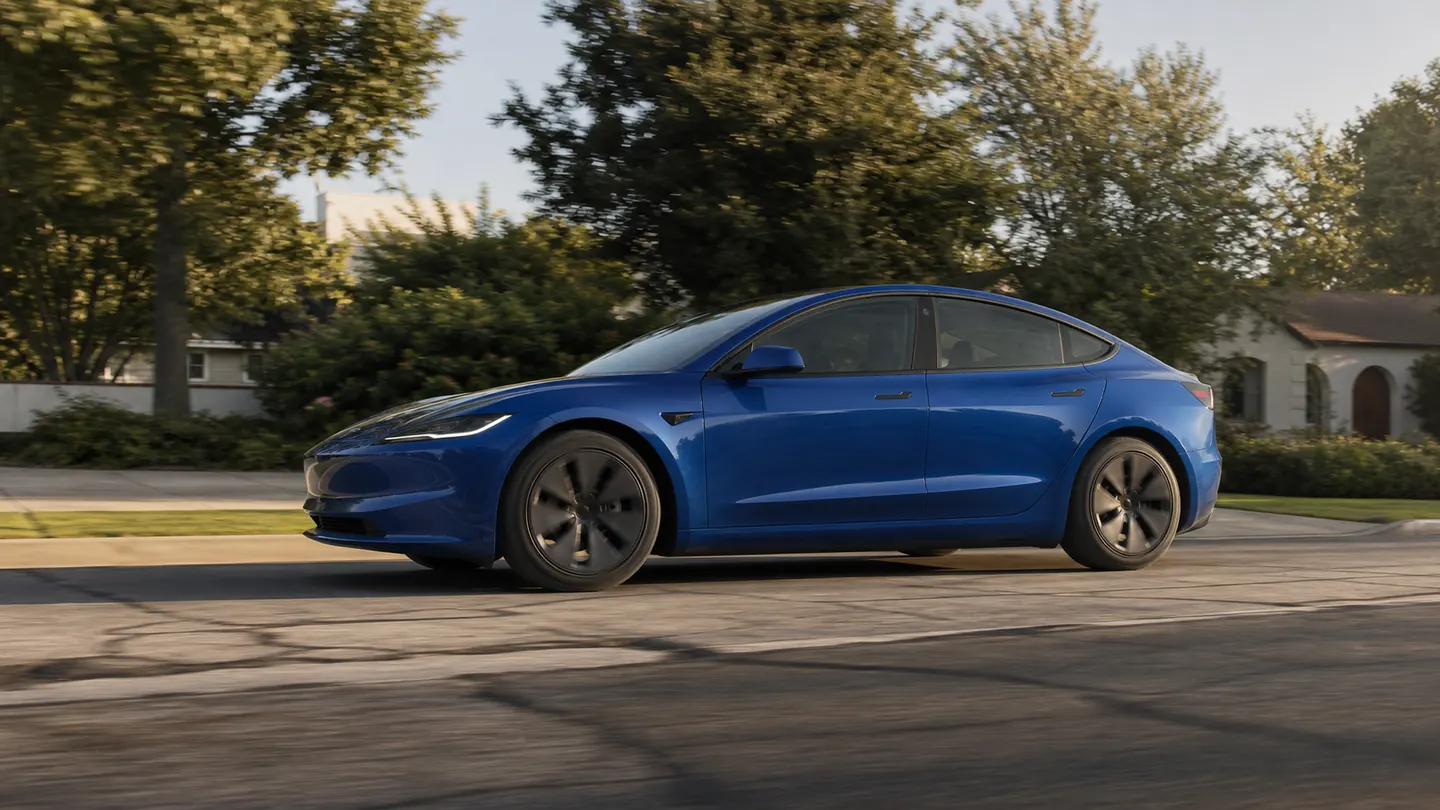
Measure tread at the inner, center, and outer part of all four tires. Inner-shoulder wear can remain hidden when a buyer only looks at the outside edge, and mismatched tread can affect wet grip and road noise.
Steering should remain centered on a level road without a persistent pull. Vibration can come from tires or wheels, while a changing hum during a gentle lane transition may point toward a wheel bearing.
Price the exact wheel size before agreeing on value. Larger and staggered performance setups can cost more, limit rotation options, and magnify the financial effect of poor alignment.
Ask for the last alignment printout and compare its date with the tire date codes. New tires can hide the wear pattern that prompted their replacement, while an old alignment sheet cannot prove that a curb strike or suspension repair did not change the geometry later.
Use a lift when underbody damage, an incorrect jack point, or a bent wheel is visible. The battery shield, suspension pickup points, brake hoses, and aero panels should be inspected as one chassis system because an impact can affect several items without producing a dashboard alert.
Heat-pump performance must be tested in the weather you use
Tesla added a heat pump to the Model 3 around the 2021 model-year transition. The system can use energy more efficiently than resistive heat in many conditions, but it also adds valves, sensors, pumps, and software-controlled behavior.
Test the car after a cold soak when winter operation matters. The cabin should heat, the windshield should clear, and the system should operate without repeated climate or vehicle alerts.
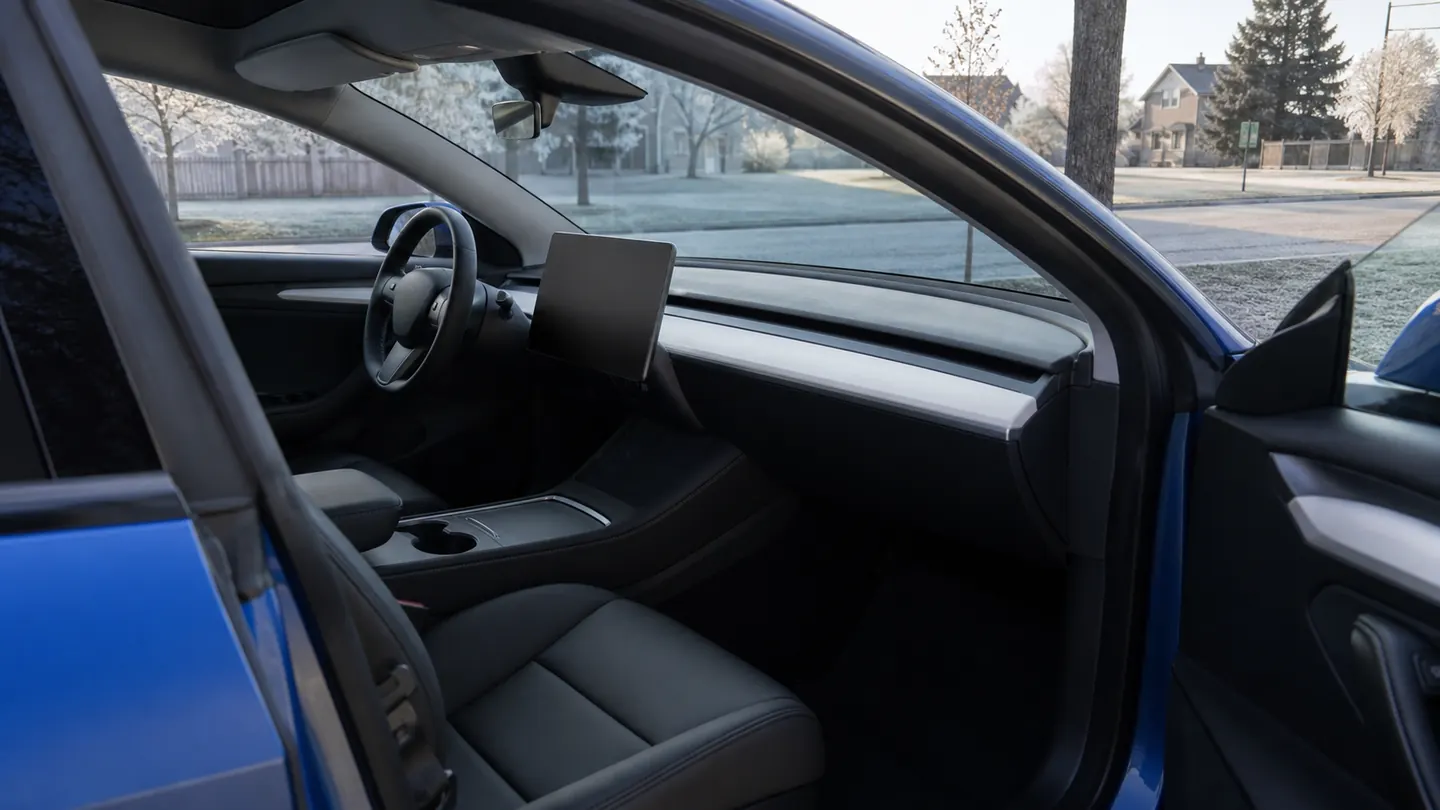
Short trips in cold weather can show high energy use because the car repeatedly warms the battery and cabin. That normal demand differs from weak heat, poor defrost, loud repeated cycling, or a stored climate-system fault.
Review any heat-pump, refrigerant, sensor, or coolant work and confirm current operation. A software update can change control behavior, while a leaking or failed physical component still requires repair.
Run heat, defrost, seat heating, and airflow long enough to reach a stable cabin result. Note compressor noise and alert history, then repeat the check after a drive because an intermittent valve or sensor problem may behave differently once the thermal system is warm.
Climate performance also affects safety and trip planning. A weak heater can consume time at charging stops, reduce usable winter range, and leave the windshield difficult to clear even when the car still drives normally.
The 2024 Highland refresh creates a clear parts boundary
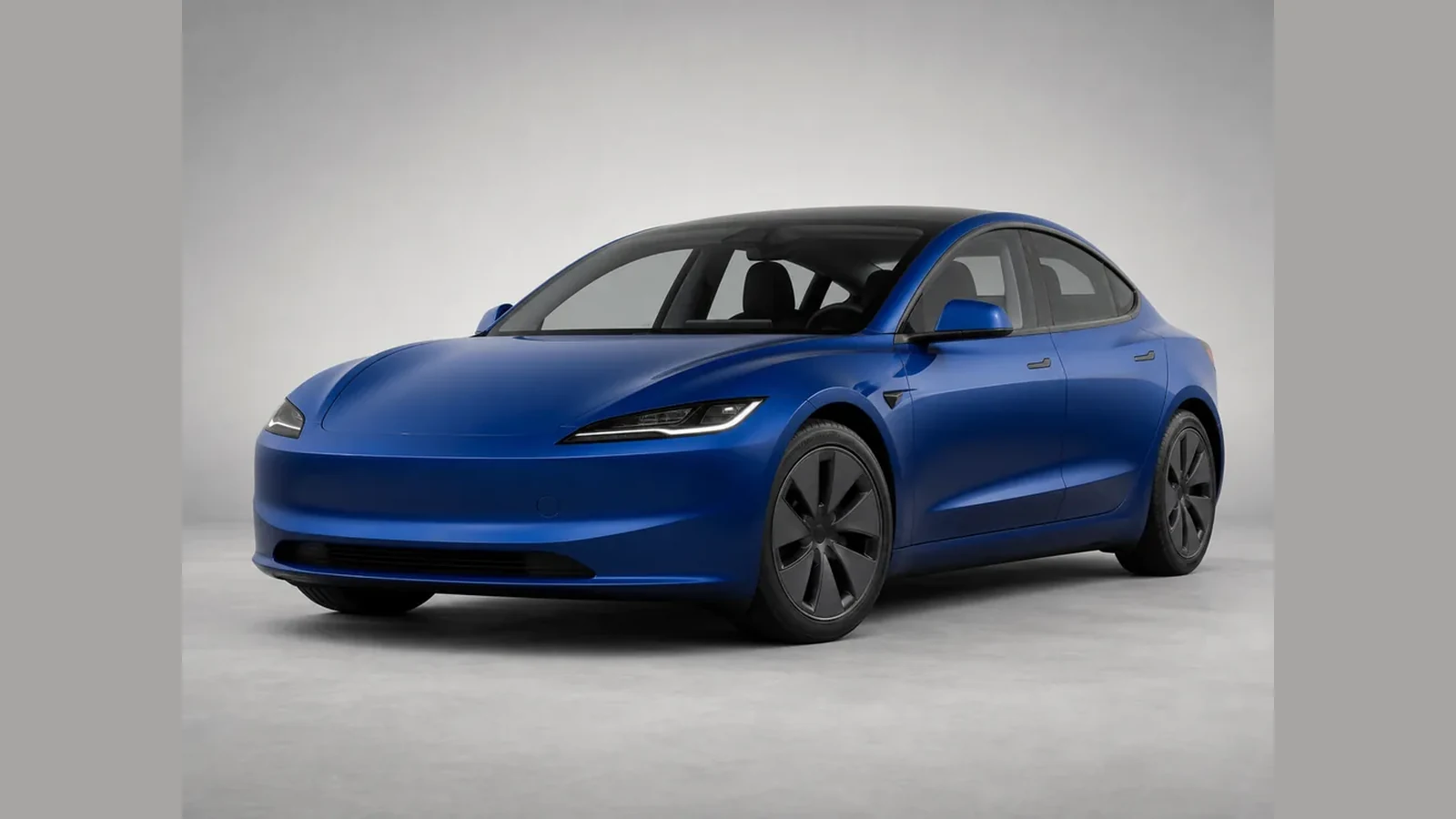
The 2024 Model 3 refresh, commonly called Highland, revised the suspension tuning, cabin, seats, glass, lighting, and controls. It can feel quieter and more refined than an older car, but its newer parts also have a shorter long-term record.
- 2017-2020Early production, resistive cabin heat, inspect age and suspension
- 2021-2023Heat-pump era and continuing production revisions
- 2024Highland refresh changed cabin, chassis tuning, and controls
- 2025-newerMore refresh production history, still verify VIN campaigns
The stalkless turn-signal controls and screen-selected gear interface are usability questions as well as technology changes. Try them in traffic, parking, and roundabouts because a control layout that distracts the buyer will not improve with a reliability rating.
An older car benefits from a deeper parts and service history. A refreshed car may deliver better comfort and remaining warranty, while the buyer accepts less evidence about how every revised component ages.
Choose between maturity and refinement after condition is compared. A clean 2022 can be a better purchase than a damaged 2024, and the reverse is equally possible.
Tire rotation is a reliability task on a quick EV
Instant torque, vehicle weight, wheel alignment, tire pressure, and acceleration habits all affect Model 3 tire life. Performance does not force rapid wear, but repeated hard launches and an unchecked alignment can consume expensive tread quickly.
Tesla recommends rotation every 6,250 miles or when tread-depth difference reaches 2/32 inch, whichever comes first, when the wheel setup permits it. Staggered tires cannot use the same front-to-rear rotation pattern as four equal-size tires.
Tire thresholds
- 6,250 miles
- Recommended rotation interval
- 2/32 inch
- Tread difference that triggers rotation
- 4/32 inch
- Tesla replacement guidance in service information
- Rear axle
- Location for the deeper pair when only two tires are replaced
Check service records against measured tread rather than assuming the reminder was followed. Record inner and outer readings, production dates, repairs, sidewall damage, and whether all four tires are the correct type and load rating.
Regenerative braking can reduce pad use, yet friction brakes still need inspection and periodic operation. In salted regions, Tesla recommends cleaning and lubricating brake calipers every year or 12,500 miles.
An over-the-air remedy cannot fix bent metal or bad glass work
Tesla can complete many recall remedies through software, which reduces dealer visits and can correct the defined issue quickly. A completed update should be confirmed in the vehicle record rather than assumed from the current software version.
NHTSA campaign 24V554 included certain 2021 through 2024 Model 3s because the hood latch might not report an open condition correctly. The remedy used software to improve detection, but the hood, latch, hinges, and front structure still need a physical check after any collision or repair.
Windshield replacement also deserves documentation because forward cameras support driver-assistance features. Normal operation and calibration records are stronger evidence than a warning-free screen immediately after faults were cleared.
Inspect glass edges, roof glass, underbody shields, jacking points, paint transitions, door seals, and trunk wells. A propulsion warranty does not cover poor body repair or water damage from an incorrectly fitted panel.
Recall count is not a failure rate. Treat each campaign by VIN, remedy type, and completion status, then judge unrelated hardware on its own condition.
Charging history and service access belong in the price
Test the charge port on equipment that is known to work. The connector should lock and release correctly, the session should begin without repeated interruption, and the car should show no charging or thermal warning.
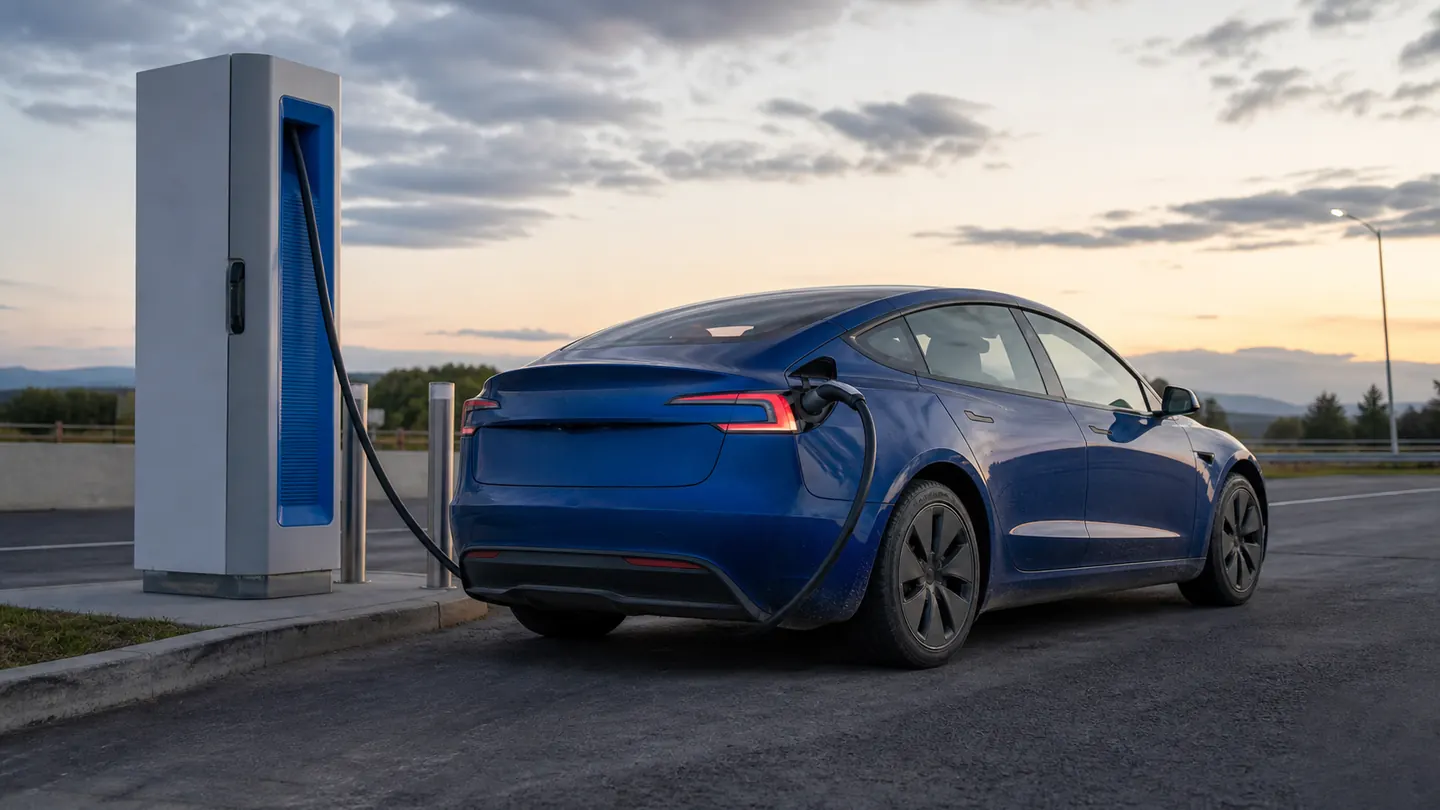
Home charging usually handles daily energy at lower power, while DC fast charging tests different hardware and thermal behavior. One low rate cannot diagnose the car because charger sharing, pack temperature, state of charge, and site limits affect speed.
Ask about low-voltage battery replacement, phone-key reliability, repeated screen resets, and service visits that could not be completed by mobile service. These issues may be smaller than a drive-unit fault but can create more frequent inconvenience.
Confirm that both key access and a backup entry method work before the sale. A phone that was freshly paired for the test should not substitute for checking owner transfer, cards, account access, charging records, and the ability to receive vehicle alerts.
Collision history changes the repair-access question because aluminum and high-voltage safety procedures narrow the shop pool. Verify who repaired the car, which parts were replaced, and whether sensors and restraints were calibrated.
Measure distance to practical service before buying outside basic coverage. A lower purchase price loses value when every minor diagnosis requires a long trip or extended wait.
A sound Model 3 proves battery, chassis, and body condition separately
The best used Model 3 combines a stable energy trend, remaining warranty or a sensible reserve, even tires, quiet suspension, strong heat, complete campaigns, and documented body history. No single clean screen can substitute for that agreement.
The Tesla Model Y adds cargo room and a higher seating position, but its extra mass and family load make rear tires, suspension, and hatch condition more prominent. The lighter Model 3 remains the cleaner choice when sedan space is enough.
The Hyundai Ioniq 5 uses a different 800-volt charging architecture and a more conventional hatchback cabin.
That alternative can suit buyers who prioritize charging speed and interior space over Tesla's tightly integrated controls.
Battery fear should not force a buyer away from a well-supported car, and drivetrain confidence should not excuse an abused chassis. Buy the Model 3 whose four systems can each prove their condition.