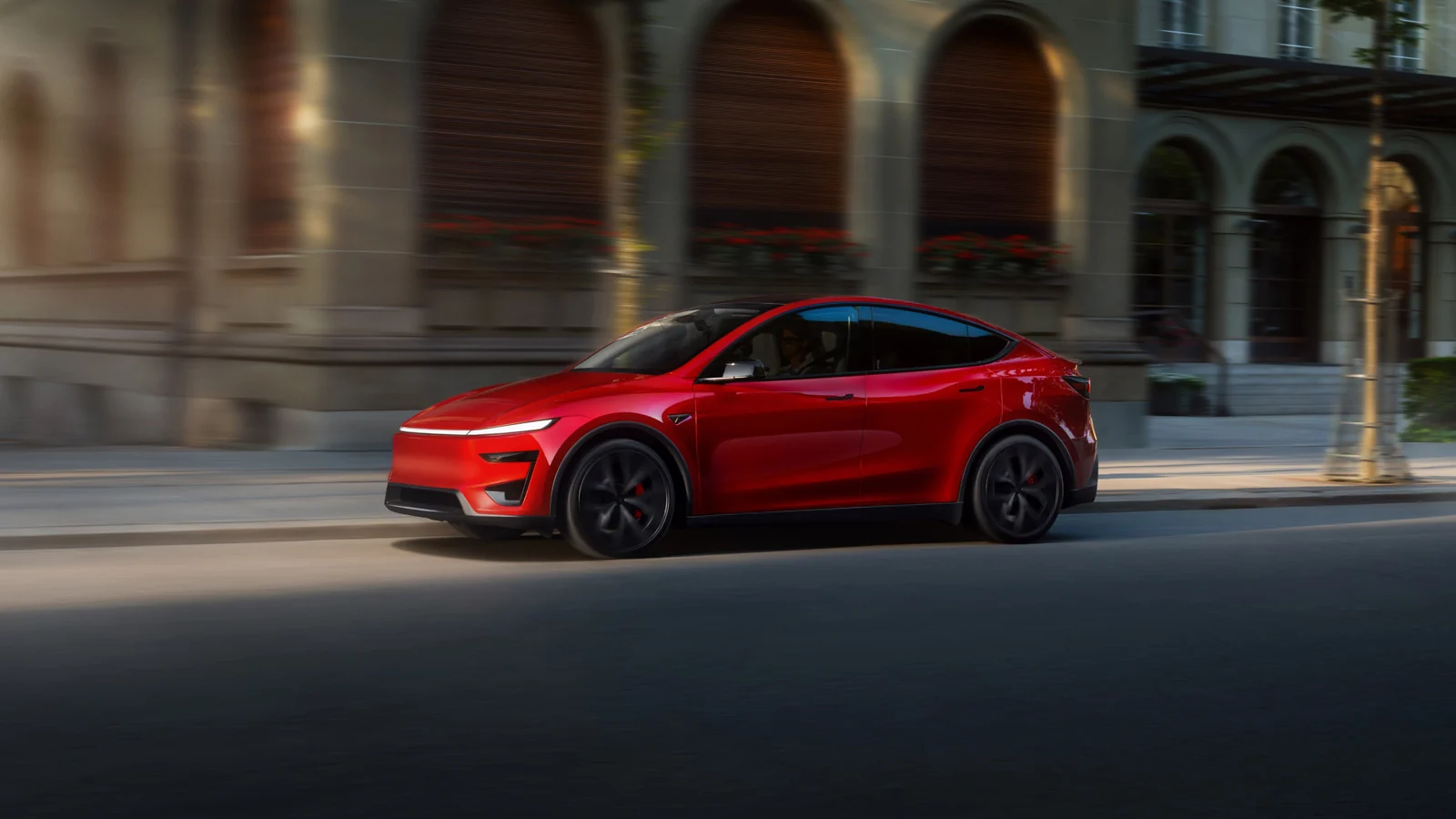
The Model Y drivetrain is durable, but family use exposes the chassis
The Model Y avoids engine oil, exhaust components, ignition service, and a conventional automatic transmission. Its electric motors and single-speed reduction gears provide a comparatively simple propulsion path.
Family duty adds another layer. Passengers, a stroller, luggage, roof accessories, rough roads, and repeated short trips ask more of rear tires, suspension, climate control, doors, seats, and the powered liftgate.
Tesla's basic warranty covers 4 years or 50,000 miles in the United States. Battery and drive-unit coverage extends for 8 years with a mileage limit that varies by version, so many used cars retain propulsion protection after chassis and cabin parts leave basic coverage.
Reliability therefore has two clocks. The battery warranty can continue while tires, suspension joints, glass, climate hardware, seals, and powered features become the owner's responsibility.
A dependable Model Y is a sound family crossover with a protected drivetrain, not merely a battery pack that shows no warning.
The high-voltage pack and low-voltage system fail differently
The high-voltage pack stores energy for propulsion and cabin systems. A separate low-voltage battery and network wake computers, close contactors, operate controls, and let the vehicle prepare the main pack for driving.
A weak low-voltage battery can create a no-start condition, warning messages, failed locks, or strange electronic behavior. These symptoms do not by themselves prove that the traction battery has lost capacity or needs replacement.
| System | Typical evidence | Correct next step |
|---|---|---|
| High-voltage pack | Capacity trend, thermal or isolation faults | Review warranty and diagnostic data |
| Low-voltage battery | Wake-up faults, age, voltage history | Test the low-voltage system |
| Drive unit | Noise, propulsion alerts, stored codes | Diagnose the exact axle and fault |
| Charging system | Port, session, or thermal warnings | Test known AC and DC equipment |
Review the car's alerts and service history, then test the low-voltage system when the symptoms fit. Replacing the inexpensive support battery is a very different decision from diagnosing a high-voltage isolation fault.
Battery range also needs controlled evidence. Temperature, wheel choice, speed, wind, cabin heat, load, and recent energy use can alter the displayed estimate without representing permanent capacity loss.
Use comparable trips and charging data to establish a trend. A single full-charge number from an unfamiliar car is too weak to carry the purchase decision.
Record outside temperature, passenger load, route, speed, climate setting, starting charge, ending charge, and energy use during the test. Those details make a later comparison useful and prevent a heavily loaded winter drive from being judged against an unloaded warm-weather estimate.
Warranty evidence should include the original in-service date and current mileage, not only the model year. The high-voltage warranty can remain active after basic coverage ends, leaving suspension, climate, glass, seats, powered closures, and low-voltage faults with the owner.
Test AC charging where the vehicle normally parks and use a public fast charger when road trips matter. A stable session cannot prove remaining capacity, but it can expose port, communication, thermal, or payment setup problems before the household depends on the car.
Cabin heat and defrost must work before winter range is judged
Model Y family use depends on heating more cabin volume and keeping a large glass area clear. Cold short trips can consume substantial energy because the vehicle repeatedly conditions the battery and warms the cabin.
Test after a real cold soak when winter operation matters. The front and rear cabin should warm, the windshield should clear, and the system should run without repeated alerts or weak airflow.
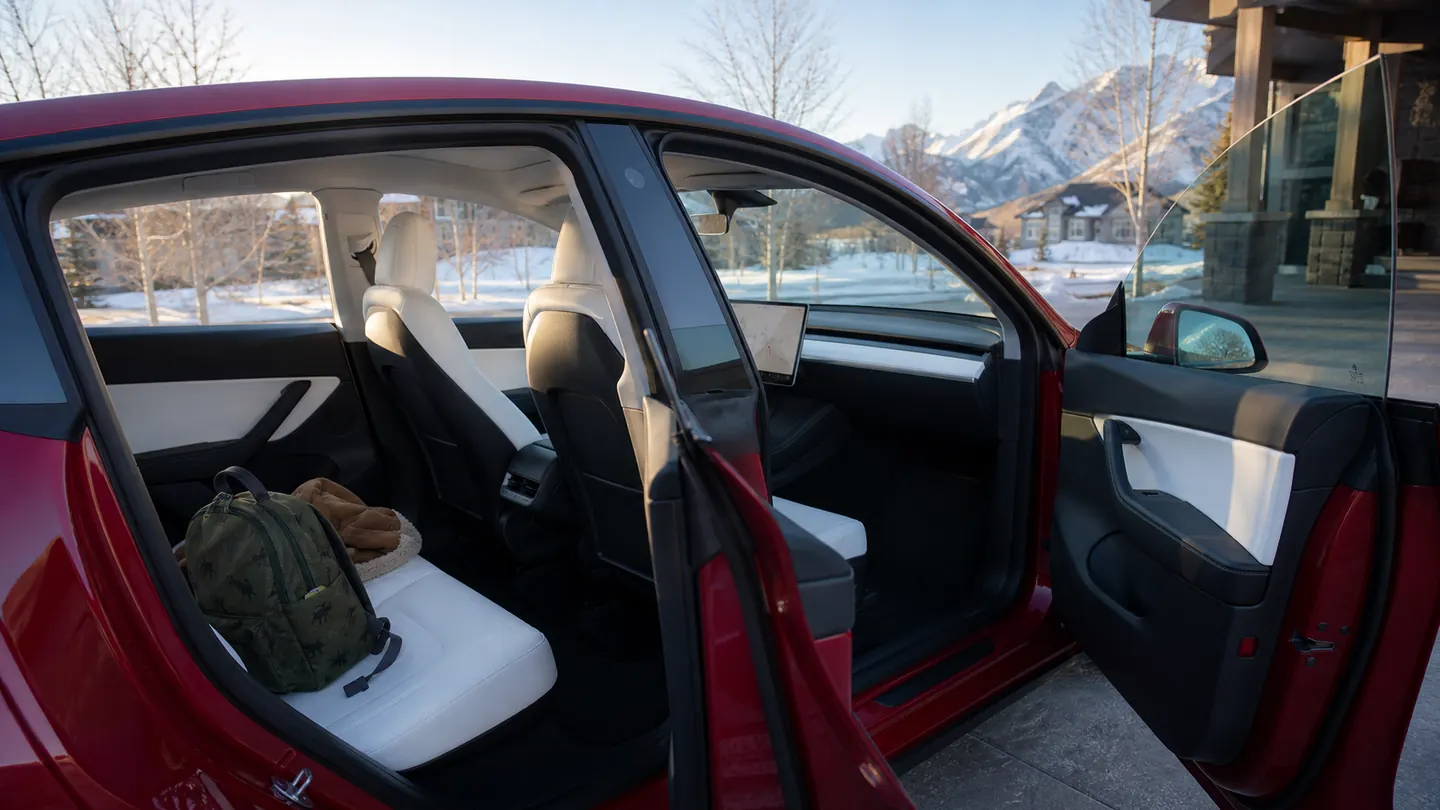
Normal cold-weather energy use is not the same as a climate-system fault. Poor heat, a windshield that will not clear, loud repeated cycling, coolant warnings, or a stored heat-pump code needs diagnosis.
Filter service also affects airflow and odor. Tesla recommends replacing the cabin air filter every 2 years and the HEPA and carbon filters every 3 years when the vehicle is equipped with them.
Load passengers during the test rather than judging the front seat alone. A system that feels acceptable with one person may leave the rear cabin slow to warm during the school run that defines the purchase.
Repeat the test with the vehicle stationary and then moving because airflow, compressor demand, and glass clearing can change. Listen for repeated cycling, note odors and weak vents, and review alert history instead of accepting a freshly cleared screen.
A cold-weather family route may combine cabin heating, several door openings, short stops, and little time for the battery to warm. That pattern can be normal and energy intensive, while weak heat or recurring warnings remain defects that need a named repair.
Rear-tire wear can reveal alignment and suspension trouble
The Model Y is heavier and taller than the related Model 3, and family cargo can add meaningful rear-axle load. Strong torque and large wheels increase the cost of ignoring pressure, alignment, rotation, or a developing suspension problem.
Measure tread across the inner, center, and outer part of all four tires. Inner-edge wear may be hidden from a standing glance, while a large front-to-rear difference can show that rotation was skipped or the setup cannot rotate normally.
Tire and chassis evidence
- 6,250 miles
- Typical Tesla rotation recommendation
- 2/32 inch
- Tread difference that triggers rotation
- Inner shoulder
- Area most easily missed during a quick look
- Rough-road noise
- Requires joint, bearing, and fastener diagnosis
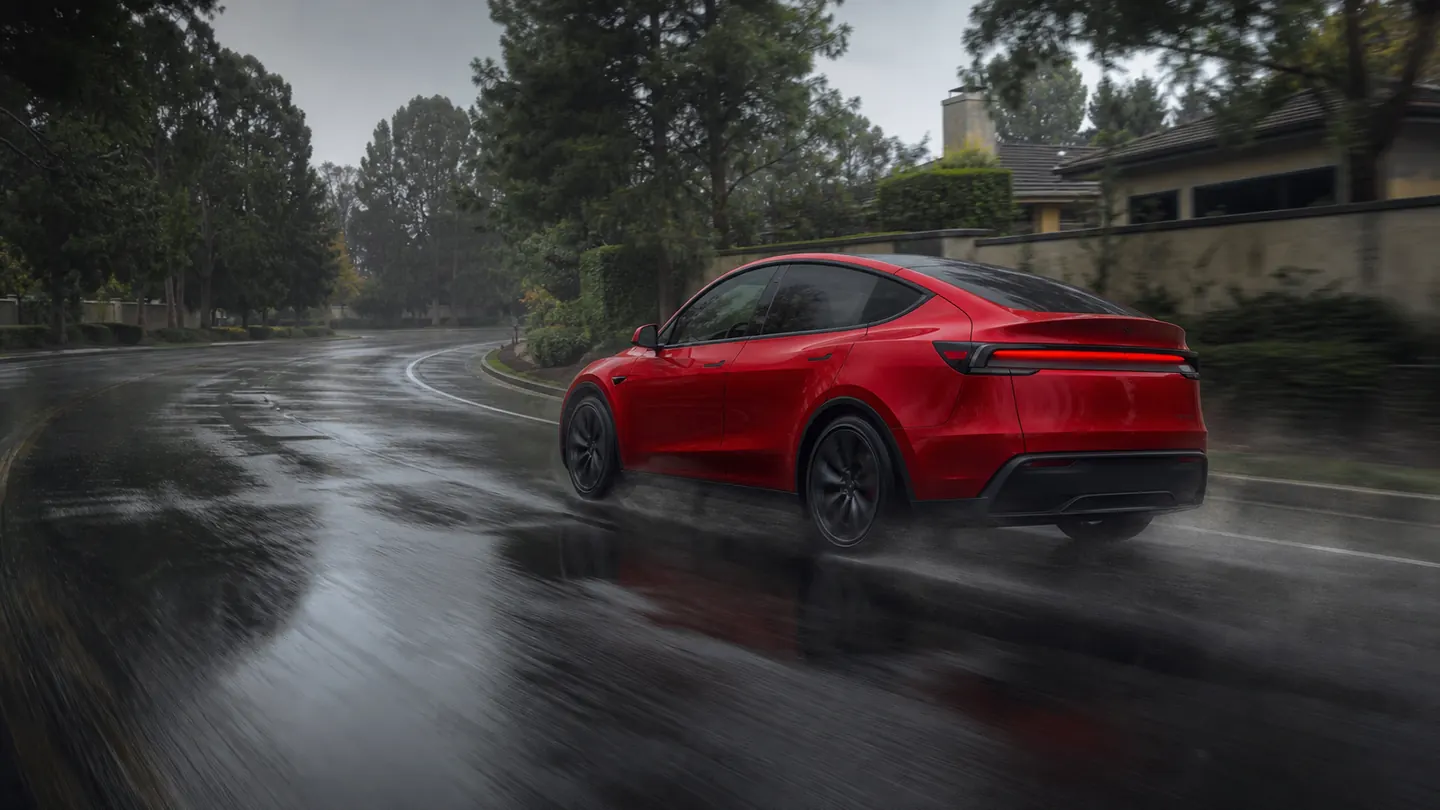
Drive on a level highway and through patched pavement. The vehicle should track consistently, absorb one bump without repeated movement, and avoid clunks, creaks, wheel vibration, or a hum that changes as cornering load shifts.
Aggressive acceleration can shorten tire life, but rapid wear is not proof of abuse by itself. Wheel alignment, pressure, rotation access, tire compound, and road surface all belong in the explanation.
Price the exact wheel and tire package, then add any alignment or suspension diagnosis. A tempting Performance or large-wheel example can lose its price advantage through one set of tires.
Hatch, glass, and seals decide whether the cabin stays dry
The panoramic roof, powered liftgate, rear glass, side glass, and door seals create a large weather boundary. A leak can begin as a faint odor, fogged glass, damp sound insulation, or moisture below the cargo floor.
Open and close the liftgate several times, watch its alignment, and listen for rubbing or an uneven latch. Load bulky gear to confirm that the opening height, powered movement, and cargo-floor structure fit the family's real use.
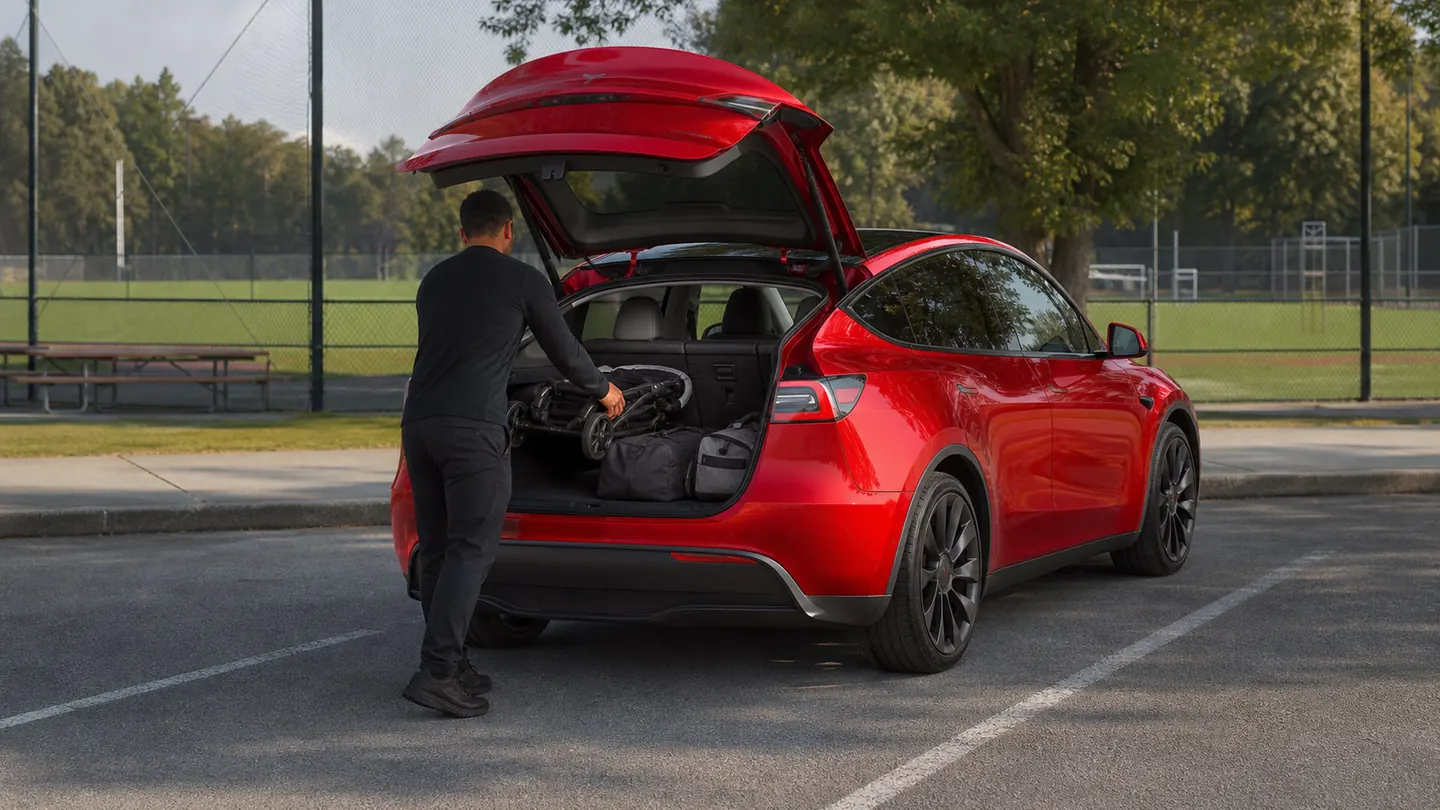
Lift the removable floor panels and check the lowest storage areas after rain or a wash. Water can reach wiring and connectors before the upper carpet feels wet, so dry surface trim is not complete proof.
Inspect glass edges, roof trim, weather seals, rear camera operation, taillights, and paint transitions for signs of previous repair. A body invoice should identify the shop, parts, calibration work, and water test where applicable.
The liftgate and cargo area are not cosmetic details on a family crossover. Recurring misalignment, water entry, or damaged rear structure can affect every grocery run and weekend trip.
Check the third-row area on a seven-seat configuration and confirm that seat belts, latches, trim, ventilation, and cargo-floor panels operate correctly. The extra seating package changes how the rear compartment is used, so a five-seat inspection cannot simply be copied onto it.
Software remedies do not replace a physical inspection
Tesla can complete many recall remedies through software, and that capability can restore compliance without a workshop visit. Verify completion in the vehicle record because a current version number alone may not explain every VIN-specific campaign.
NHTSA campaign 24V554 covered 2020 through 2024 Model Y vehicles whose hood latch might not identify an open condition correctly. The software remedy improved detection, while the physical hood, latch, hinges, and front structure still need inspection after damage or repair.
Camera and driver-assistance behavior also depends on clean glass, aligned hardware, calibration, and current software. Test every camera and warning function rather than treating a blank recall screen as proof that the system is healthy.
Recall totals do not state the probability that one vehicle will fail. Use each campaign to identify its exact condition and remedy, then return to the individual car's physical evidence.
Early cars and later builds carry different kinds of uncertainty
The Model Y launched for the 2020 model year, which gives early cars the longest field history and the greatest chance of being outside basic coverage. Launch-year condition, repair quality, suspension behavior, and water evidence deserve close attention.
Later cars received continuing production changes, including low-voltage battery revisions and updates to cabin or chassis details. A change can solve one concern while adding a new parts boundary, so production maturity is useful context rather than a guarantee.
- 2020Launch-year cars, inspect body fit, suspension, and campaign history
- 2021-2023Larger used supply and continuing hardware revisions
- 2024More remaining coverage on many examples, still verify physical condition
- 2025-newerRefresh-era design changes with less long-term evidence
Factory location should not become a substitute for inspection. Measure the individual car's panel fit, tire wear, road behavior, moisture, energy use, and service history instead of assuming one plant always builds a better vehicle.
An early car with documented repairs and stable condition can be a strong value. A later car may provide more warranty and refinement, while the buyer accepts a shorter record for revised hardware.
Low energy cost can be erased by tires, glass, and insurance
Home charging can make the Model Y inexpensive to energize.
That advantage is especially relevant for a family replacing a gasoline crossover. Electricity is only one part of the monthly and first-year cost.
Large tires, wheel damage, panoramic glass, collision repair, insurance, suspension work, filters, and service travel can outweigh several months of energy savings. Quote insurance by VIN and price the installed tire size before deposit.
| Cost area | What changes it | Evidence to collect |
|---|---|---|
| Electricity | Home rate, speed, climate, mileage | Real household charging plan |
| Tires | Wheel size, alignment, driving, rotation | Four tread readings and prices |
| Glass and body | Coverage, repair network, calibration | Insurance and repair invoices |
| Climate service | Filters, heat-pump condition, use | Cold test and service history |
| Downtime | Distance to service and parts | Local appointment availability |
Family load also affects consumption. Passengers, cargo, roof racks, cold weather, high speed, and frequent short trips can produce an energy result that differs sharply from an unloaded warm-weather commute.
Build the budget from the exact car and household. A lower electricity bill does not make an example with four worn tires, weak heat, a wet cargo floor, and expensive insurance the cheaper choice.
Add a downtime reserve when the nearest qualified body or service center is far away. A minor sensor, glass, or collision-repair issue can become a larger ownership burden when parts, calibration, transport, or appointments keep the family vehicle unavailable.
Compare insurance using the VIN because wheel size, trim, repair history, driver profile, and location can change the quote. The correct budget places that premium beside tire replacement, home charging installation, registration, and expected service travel before monthly savings are claimed.
The right Model Y remains quiet, dry, aligned, and covered
A dependable Model Y proves its high-voltage condition, low-voltage health, tire geometry, suspension behavior, climate performance, water resistance, campaign completion, and repair history independently. Family use then tests whether those systems work together.
The Tesla Model 3 is lighter and less expensive to re-tire in many configurations, but it gives up the liftgate and crossover cargo shape. Choose it when the family does not need the Model Y's rear volume.
The Ford Mustang Mach-E offers more familiar cabin controls and access to Ford dealers, while its early high-voltage junction-box campaign requires its own VIN proof. A clean Model Y does not inherit that hardware question.
The Toyota RAV4 Hybrid avoids dependence on home charging and fast-charger availability. It adds gasoline-engine and hybrid service instead, which can be the easier trade when the household cannot install reliable charging.
The battery should not be the only reason to buy or reject the vehicle. Choose the Model Y that behaves like a complete, well-maintained family crossover.