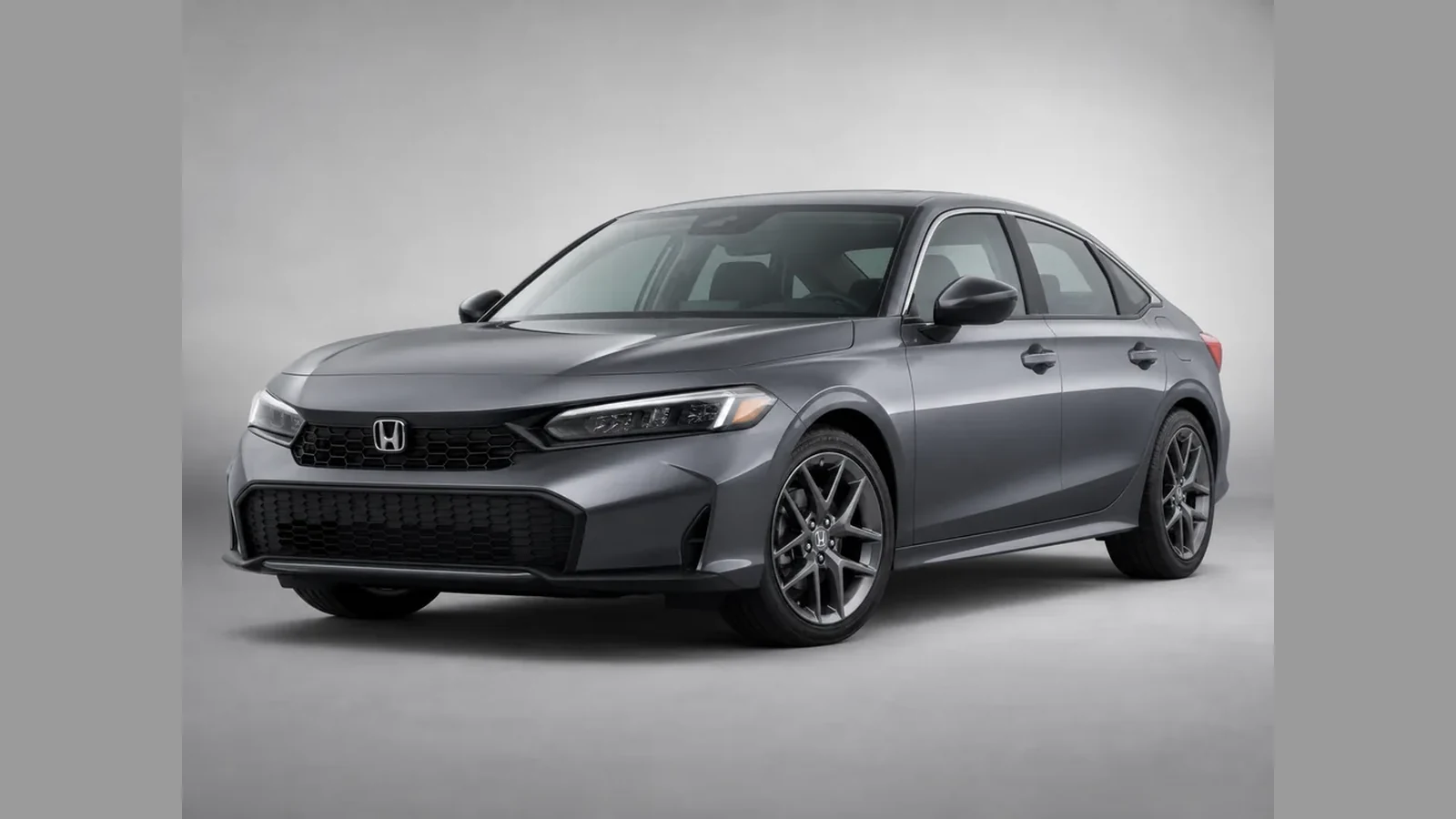
Yes, but the badge is not what you are buying
The Honda Civic earns its reputation. It has been sold since 1972, its core mechanical package is deliberately conservative, and almost any independent shop can work on one without special training.
If you are asking whether the model as a whole is a safe used bet, the answer is yes.
That answer stops being useful the moment you stand in front of a specific car. The reputation is an average across decades of Civics, most of which nobody is shopping for now, and averages hide the two things that actually decide what you are buying.
The first is which engine is under the hood.
A 2016 to 2021 Civic could leave the factory with a simple 2.0-liter naturally aspirated four or a 1.5-liter turbo, and those two cars carry different risks despite sharing a model year, a badge, and often a price.
The second is what the last owner did.
A Civic is one of the few mainstream cars where previous-owner behavior can matter more than the model year, because the model attracts buyers who modify and drive hard alongside buyers who commute and change the oil.
Sorting the reputation from the individual car means working through both variables in order, and the engine is where it starts.
The 1.5-liter turbo's oil dilution is the Civic's one real engine story
The 1.5-liter turbo arrived with the tenth generation in 2016 and brought one genuine defect with it.
On short trips in cold weather, the engine can finish the drive before it reaches full operating temperature, and unburned fuel works past the piston rings into the crankcase instead of evaporating out.
The oil thins as fuel accumulates in it, which is the opposite of what oil is supposed to do under load.
Two conditions concentrate the problem, and both are ordinary rather than exotic.
Cold climates give the engine less chance to warm through, and short commutes end the trip before the warm-up finishes, so a car that spent its life doing ten-minute winter errands is a very different proposition from one that did an hour of highway each day.
That is why owner reports clustered geographically rather than spreading evenly across the country.

Honda took it seriously. It issued software updates under service bulletins 19-037 and 19-038 and extended the powertrain warranty on affected 2016 to 2018 turbo cars to six years with unlimited miles.
The update lets the engine and transmission warm up faster, which reduces how much fuel reaches the oil in the first place.
What it cannot do is undo wear on a car that ran diluted oil for years before anyone applied the fix, and that is the part a used buyer inherits.
So the turbo is not an engine to rule out, but it is an engine to verify. A 2016 to 2018 turbo car with documented update work and highway miles behind it can be a sound purchase.
The same car with a blank service file and a cold-climate address is a gamble you are being asked to take without the information.
Which engine and which years carry which risk
Read the map below by engine first and year second, which is the reverse of how most year-ranked reliability tables are built. The generations set the boundaries: the tenth generation runs from 2016 to 2021 and the eleventh from 2022 onward, and the engine choice within each generation matters more than the position of a year inside it.
| Engine and years | What the risk actually is | What to do about it |
|---|---|---|
| 2.0L naturally aspirated, 2016-2021 | Lowest risk in the range, no forced induction and a long service record | Inspect as a normal used car and prioritize records |
| 1.5L turbo, 2016-2018 | Oil dilution on short cold trips, worst where winters are long | Verify the service update and check oil level and smell |
| 1.5L turbo, 2019-2021 | Same engine after the update reached production | Still check the oil, but treat records as the deciding factor |
| 2.0L naturally aspirated, 2022-present | Simple engine in a newer body, the safest current used pick | Normal inspection, focus on accident repair quality |
| Hybrid, current cars | Newest powertrain in the range, rated up to 50 mpg city and 47 highway with 200 hp | Judge as a hybrid ownership decision rather than a reliability gamble |
The row people misread is the 2019 to 2021 turbo.
Buyers see that the fix exists and assume the year alone clears the car, but the update had to actually be applied to that individual vehicle, and a car that changed hands twice may never have been near a Honda dealer.
The year narrows the odds.
Only the service record settles them.
The CVT is not the weak point most shoppers expect
Almost every Civic shopper arrives having read that the transmission is the thing to worry about. It is an understandable fear, because continuously variable transmissions earned a poor reputation across the industry in the 2000s and the internet has a long memory for that kind of thing.
The Civic's record does not support the fear at the level people hold it.
The CVT has held up well in normal service, and the failures that do get discussed tend to trace back to skipped fluid changes or a hard life rather than to a design that was going to fail regardless.
That distinction matters when you are looking at one car, because a neglected example will show you the neglect if you test for it.
The fluid record is where that neglect becomes visible.
Honda's maintenance minder calls for the transmission fluid when the car's own use pattern warrants it rather than on a fixed odometer figure, so a service file showing the fluid changed when the system asked tells you the previous owner followed the car instead of guessing.
A file with no transmission entry at all on a high-mileage example is the gap worth pricing in.
What that means in practice is a redirection of effort.
Judder at low speed, slipping under acceleration, or a shudder that arrives as the car warms up are all worth taking seriously, but read them as evidence about this car's history rather than as proof about the model.
The manual cars invert the concern entirely.
An Si with a six-speed carries clutch wear as its main transmission risk, and clutch wear is a direct record of how the previous owner drove, which brings the question back to the person who owned it.
The problems owners actually report are mostly annoyances
Ask what goes wrong with a Civic and you will get a list, but the list is worth sorting by consequence before you let it change your decision.
Most of what owners report costs comfort or patience rather than the engine, and a few items cost real money.
Treating those two groups the same way is how a shopper talks themselves out of a sound car.
- Cabin noise. The Civic is louder on coarse pavement than an Accord or a Camry, which is a consequence of size and price rather than a fault. Good tires narrow the gap without closing it.
- Infotainment on early tenth-generation cars. The 2016 to 2018 system drew complaints for slow response and for dropping the physical volume knob, which Honda restored for 2019. Test phone pairing and the screen from a cold start rather than after the car has been idling.
- Air conditioning performance on 2016 to 2018 cars. Cracked condensers were common enough that Honda extended the condenser warranty on these cars to ten years, which tells you both that the failures were real and that a documented repair exists. Run the air conditioning hard in traffic during the test drive and ask whether the condenser was already replaced.
- Electrical oddities on early cars. Battery drain and intermittent warnings show up in owner reports on the first years of the generation, and both are cheaper to diagnose before purchase than after.
The pattern in that list is worth naming.
None of those items is an engine or transmission failure, which is where a reliability decision should actually be made, and a car that has already had the condenser or the infotainment attended to is arguably a better buy than an untouched one.
Sort reported problems by what they cost you if they happen, not by how often they appear in a forum thread.
A modified Civic is a different purchase from a stock one
Very few mainstream cars attract modification the way the Civic does. Sport, Si and Type R trims sell to people who want the car to do something, and a meaningful share of those cars get tuned, lowered, re-wheeled, or driven the way the marketing implied.
That is not a moral problem, but it is a mechanical one when the car reaches the used market and gets listed at the same price as the commuter version.
The changes matter for reasons beyond the parts themselves. A tune alters how the engine loads its components, an aftermarket intake changes what the engine ingests, and lowered suspension changes how every bushing and tire wears.
Each of those also affects where you stand if something fails under warranty, so a modified car can carry both a higher chance of a repair and a weaker claim to someone else paying for it.
The listing usually tells you more than the seller does.
- Cheap tires on an enthusiast trim. Someone spent money on the fun parts and saved on the ones that stop the car, which rarely stops at tires.
- Aftermarket wheels with the originals nowhere in the photos. Ask where they went and whether anything else was swapped at the same time.
- An exhaust or intake note in the description. Treat it as a prompt to ask what else was changed, including anything not visible.
- Photographs taken at an angle that hides ride height. Compare against a stock car of the same trim before you drive out to see it.
None of this makes a modified Civic worthless. It makes it a different transaction, one where you are buying a specific owner's decisions along with the car, and it should be priced that way rather than at the commuter car's number.
What the inspection has to prove, not just check
An inspection on this model is not a walk-around. Everything above narrows to a short list of things that have to come back with an answer, and a check that produces a shrug is a failed check rather than a neutral one.
- Oil level and oil smell on any 1.5-liter turbo car. Above the full mark or smelling of fuel is a stop, not a note.
- Service records against mileage. On a Civic, a documented 90,000-mile car beats an undocumented 50,000-mile one, because the failure modes that matter here are maintenance-driven.
- Service update work by VIN. A Honda dealer can confirm what was completed on that exact vehicle, which is the only version of this answer worth having.
- CVT behavior from cold, then warm. Drive it before it has warmed through, then again after, because the symptom often only appears on one side of that line.
- Accident repair quality on newer cars. Panel gaps, paint texture and mismatched glass tell you what the history report may not.
One result ends the deal on its own: a turbo car with diluted oil and no service history.
Everything else on the list is a negotiation, but that combination is a walk.
The rest of the checks are there to tell you what you are paying to fix, not whether to buy at all.
How long a well-kept Civic lasts, and what keeps it there
A Civic that passes the checks above is a long-horizon car. Well-maintained examples commonly pass 200,000 miles, and plenty go further, which is the real reason the model holds its reputation and its resale value at the same time.
That number comes with conditions attached, and they are not dramatic ones.
Read those as the price of the mileage rather than as general advice. A Civic reaches 200,000 miles because someone spent modest amounts of money on time, and a car that skipped those services is not a Civic that will do it more cheaply.
It is a Civic that already spent the margin.
It is also worth knowing what usually ends a Civic, because it is rarely the engine.
Cars in salted climates tend to lose the fight to corrosion in the subframe, brake lines and rear arches while the powertrain is still healthy, which is why a rust inspection on a northern car deserves more of your attention than the odometer does.
The other common ending is arithmetic rather than mechanical: a mid-size collision on a car worth a few thousand dollars gets written off by the insurer even though the repair is entirely possible.
Both of those endings reward the same habit.
The Civic that lasts is the one whose owner treated maintenance as scheduled spending rather than as a response to symptoms, and that owner is exactly the one who kept the paperwork you are asking to see.
The records are not just evidence about the past, they are the closest thing you have to a prediction.
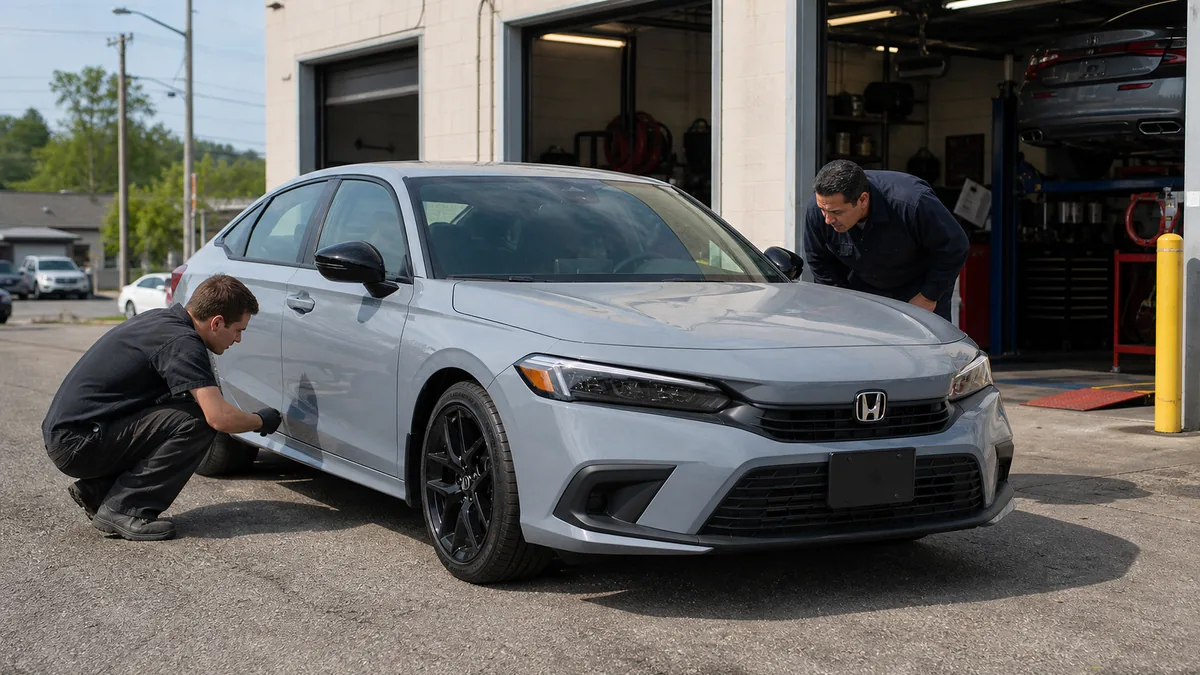
If you want the shortest route to a low-risk purchase, take a documented 2.0-liter sedan and pay the small premium a full service file commands. If the car in front of you is a turbo or an enthusiast trim, the decision is not different in kind, only in what you have to prove first.
Sources
- Honda oil dilution warranty extension and service bulletins 19-037 and 19-038, reported by Consumer Reports and CarComplaints.
- Honda Civic air-conditioning condenser warranty extension (TSB 19-091) covering 2016 to 2018 cars, documented by CarComplaints.
- Recall and complaint records by model year at NHTSA, and fuel-economy ratings at FuelEconomy.gov.