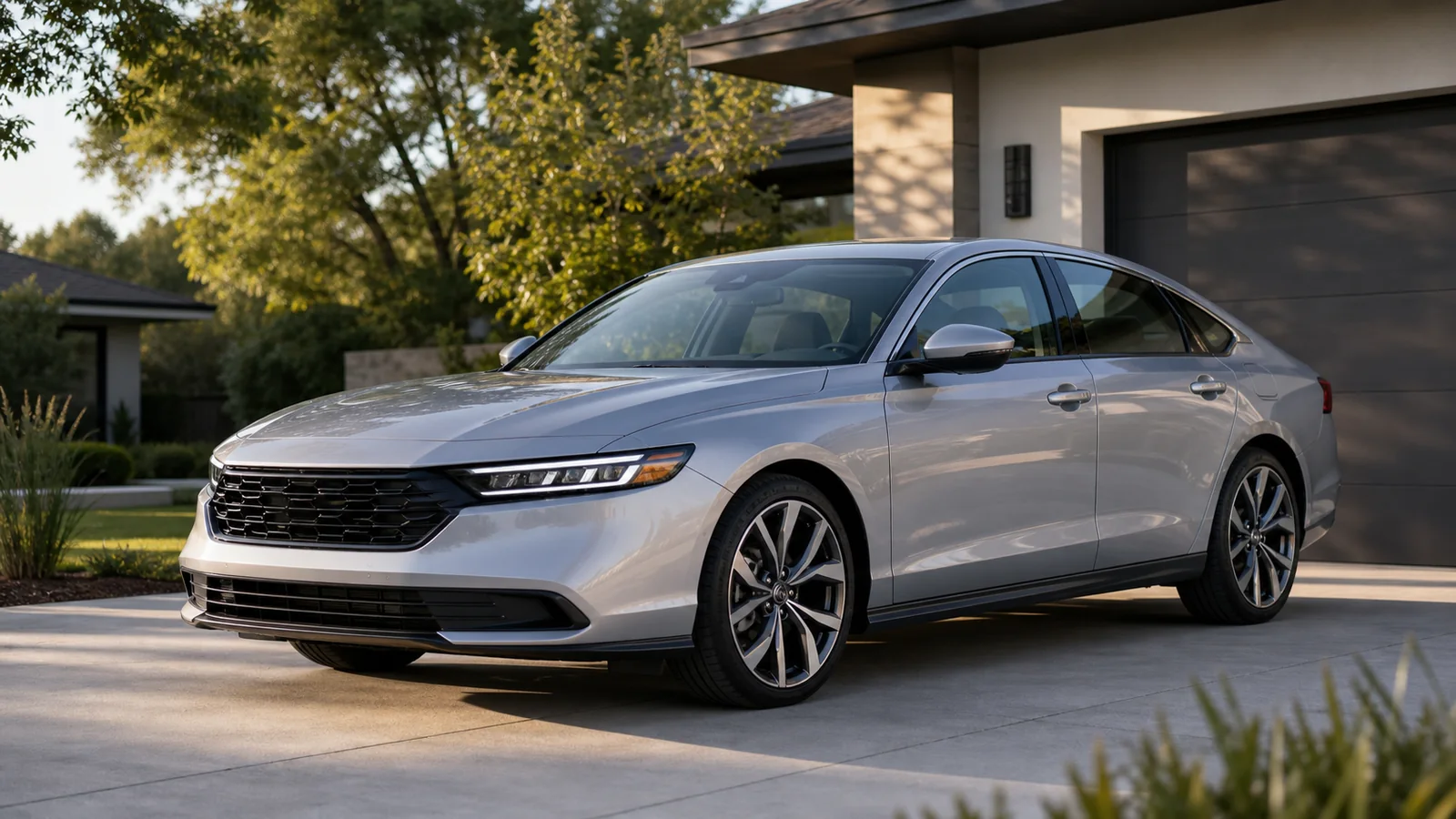
The Accord is reliable, but its weak point changes with the powertrain
The Honda Accord has been sold in the United States for decades because it combines efficient engines, widely available parts, and a chassis most independent shops understand. RepairPal reports an average annual repair cost of about $400, which is low for a midsize car, but that average blends simple four-cylinder sedans with V6, turbo, and hybrid models.
A 2004 V6 automatic, a 2013 four-cylinder CVT, and a current hybrid share a name while carrying different mechanical questions. The sensible first step is to identify the engine, transmission, model year, and completed campaigns before giving the car credit for the Accord reputation.
The naturally aspirated four-cylinder cars usually present the simplest long-term proposition. V6 cars can be durable too, but cylinder deactivation and the history of some early automatics make documentation more valuable than a low odometer reading.
The Accord is a reliable model, but the safest purchase is the powertrain whose known weak point has already been ruled out.
Why the 2003 to 2004 automatic still affects used Accord pricing
Automatic-transmission complaints are concentrated in early seventh-generation cars, especially 2003 and 2004 examples paired with the V6. Heat and internal wear can produce delayed engagement, a flare between gears, slipping under acceleration, or a harsh shift once the unit is warm.
A clean test drive does not erase the history, but it changes the evidence in front of you. Start the car after it has sat overnight, select reverse and drive, then note whether engagement is immediate and controlled rather than delayed or abrupt.
Honda recalled certain 2003 and 2004 Accord V6 automatics because heat could damage the second-gear set. The factory remedy called for added lubrication on low-mileage units and gear inspection, with transmission replacement when heat damage was found, so a VIN completion record and repair invoice carry more weight than a seller saying the car was checked.
- 2003-2004Highest automatic-transmission caution, especially with the V6
- 2005-2007Later seventh-generation cars, still inspect shift quality carefully
- 2008-2012New generation, VCM oil-use evidence becomes the larger V6 question
- 2013First year for the four-cylinder CVT, verify updates and road behavior
Service invoices matter because a replacement transmission is only reassuring when the invoice identifies what was installed and when. A seller saying the transmission was done without paperwork leaves you unable to judge the quality or mileage of the unit.
These cars can still make sense as inexpensive transportation when the shift test is clean, the fluid is not burnt, and the price leaves room for age-related work. Repeated slipping, a flashing transmission warning, or an unexplained replacement story is enough reason to keep shopping.
VCM oil use and the 2013 CVT leave different evidence
Honda's Variable Cylinder Management system allows some V6 Accords to deactivate cylinders under light load. On affected cars, oil consumption can contribute to fouled spark plugs, misfires, deposits, and a pattern of oil top-ups between services.
A VCM concern therefore leaves engine evidence. Look for low oil, repeated plug replacement, misfire codes, uneven running after a cold start, or invoices that mention piston rings and oil consumption.
The 2013 four-cylinder car introduced a CVT, so its evidence is found during driving rather than on the dipstick. A healthy unit should pull away smoothly, hold engine speed predictably, and respond without shudder, flare, or a long delay when drive is selected.
| Powertrain | Evidence to request | Buyer response |
|---|---|---|
| 2003-2004 V6 automatic | Cold engagement and replacement records | Leave if it slips or the history is vague |
| 2008-2012 V6 with VCM | Oil level, plug history, misfire records | Price documented repairs, reject active oil loss |
| 2013 four-cylinder CVT | Software history, fluid service, cold and warm drive | Diagnose any shudder before purchase |
| Later 1.5T | Frequent oil service and long-trip use | Avoid neglected short-trip examples |
| Hybrid | Cooling intake, warning scan, smooth transitions | Favor complete dealer and independent records |
The distinction prevents two common mistakes. A good-shifting V6 can still consume oil, while a four-cylinder CVT can have perfect oil level and poor transmission behavior.
Turbo and hybrid Accords move the inspection to heat, fuel, and cooling
Recent Accords replace the old V6 questions with a 1.5-liter turbo or a two-motor hybrid system. The turbo rewards prompt oil changes and enough sustained driving to reach full operating temperature, while the hybrid adds a traction battery, power electronics, and a battery cooling path.
Short cold trips can allow fuel contamination to remain in engine oil longer than a highway commute would. Check the oil level and smell, ask how the car was used, and treat repeated extended oil intervals as a larger concern than a single cosmetic flaw.
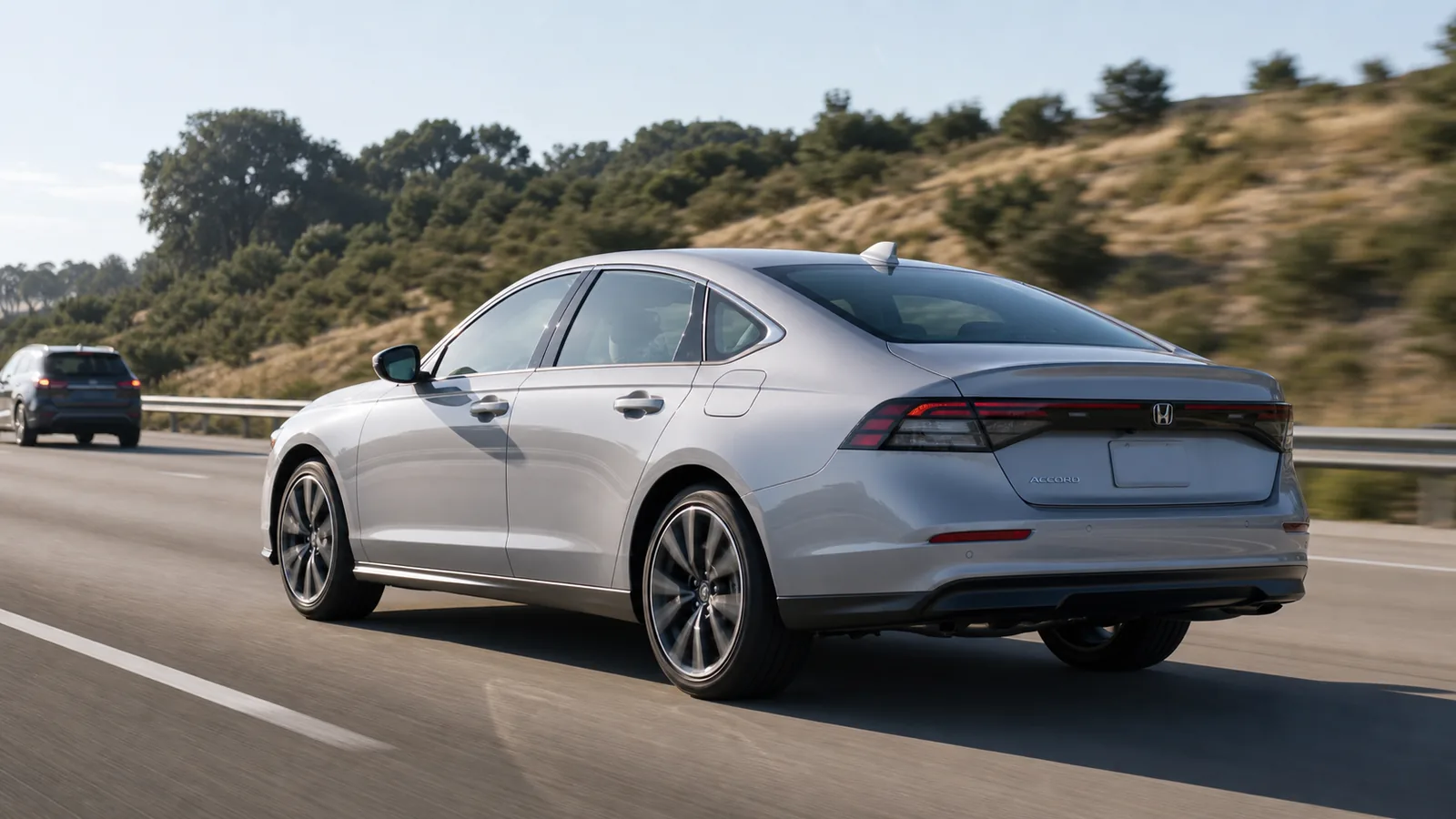
The hybrid should start without warning messages and move between electric and gasoline power without a harsh event. Its battery is not a routine short-interval replacement, but a blocked cooling intake, unresolved diagnostic codes, or a weak 12-volt battery can create symptoms that deserve a proper scan.
Evidence by recent powertrain
- 1.5-liter turbo
- Oil level, oil smell, service frequency, trip pattern
- Hybrid
- Battery cooling path, warning history, smooth power handoff
- Both
- Clean coolant, completed campaigns, no modified software
A newer model removes the early automatic risk, but it does not remove the need to understand how the car was used. The best recent Accord is the one with ordinary service records and no unexplained warning history.
What a $400 annual repair average can and cannot tell you
RepairPal's roughly $400 annual average describes a broad population, not the next invoice for the car you are considering. It is useful because it shows that routine Accord ownership tends to be affordable, but it cannot average away a slipping transmission or an engine that uses oil.
Age also changes the budget. A fifteen-year-old Accord may need engine mounts, struts, wheel bearings, hoses, a starter, or an air-conditioning repair even when its engine and transmission remain healthy.
Keep a first-year reserve for tires, brakes, fluids, and one age-related repair. That reserve should be larger for a cheap V6 with incomplete records than for a later four-cylinder car that has invoices from the same shop for years.
A cold shift test and a complete oil record decide the individual car
Arrange to see the Accord before the seller warms it. A cold start exposes delayed transmission engagement, timing noise, weak batteries, rough idle, smoke, and warning lights that can disappear after the car has been running.
Drive slowly first, then accelerate onto a faster road and repeat the test after the drivetrain is warm. The automatic or CVT should respond consistently during parking moves, rolling acceleration, steady cruising, and deceleration.
Check the dipstick on level ground and compare the current mileage with oil-change invoices. A V6 with repeated plug work or a turbo car whose level sits above full needs an explanation supported by diagnostic paperwork.
- Confirm the VIN has no open safety recall
- Verify the engine and transmission, not just the trim name
- Read stored and pending diagnostic codes
- Test the air conditioning, cameras, windows, and driver aids
- Inspect tires for matching size and even wear
A pre-purchase inspection should verify the exact concern the model year raises. A generic clean bill of health is less useful than compression, fluid, scan, and road-test evidence tied to that powertrain.
Which Accord powertrain is the safest long-term purchase?
For the simplest used ownership, a documented naturally aspirated four-cylinder Accord remains the conservative choice. It avoids the early V6 automatic combination, VCM hardware, and turbo heat while retaining broad parts and service support.
A well-kept hybrid is a strong alternative for drivers who cover enough city miles to benefit from its efficiency. Ask for a hybrid-system scan and cooling-path check rather than guessing battery condition from age or mileage.
The 1.5-liter turbo can also be a sound buy when oil changes were prompt and the car was not used only for short cold trips. Its advantage is accessible low-speed torque and fuel economy, while its condition depends more visibly on past service habits.
Choose the Accord whose records resolve its specific weak point, even when that car has more miles than a cheaper example with no history.
Mileage, equipment, and collision history shape the late-life bill
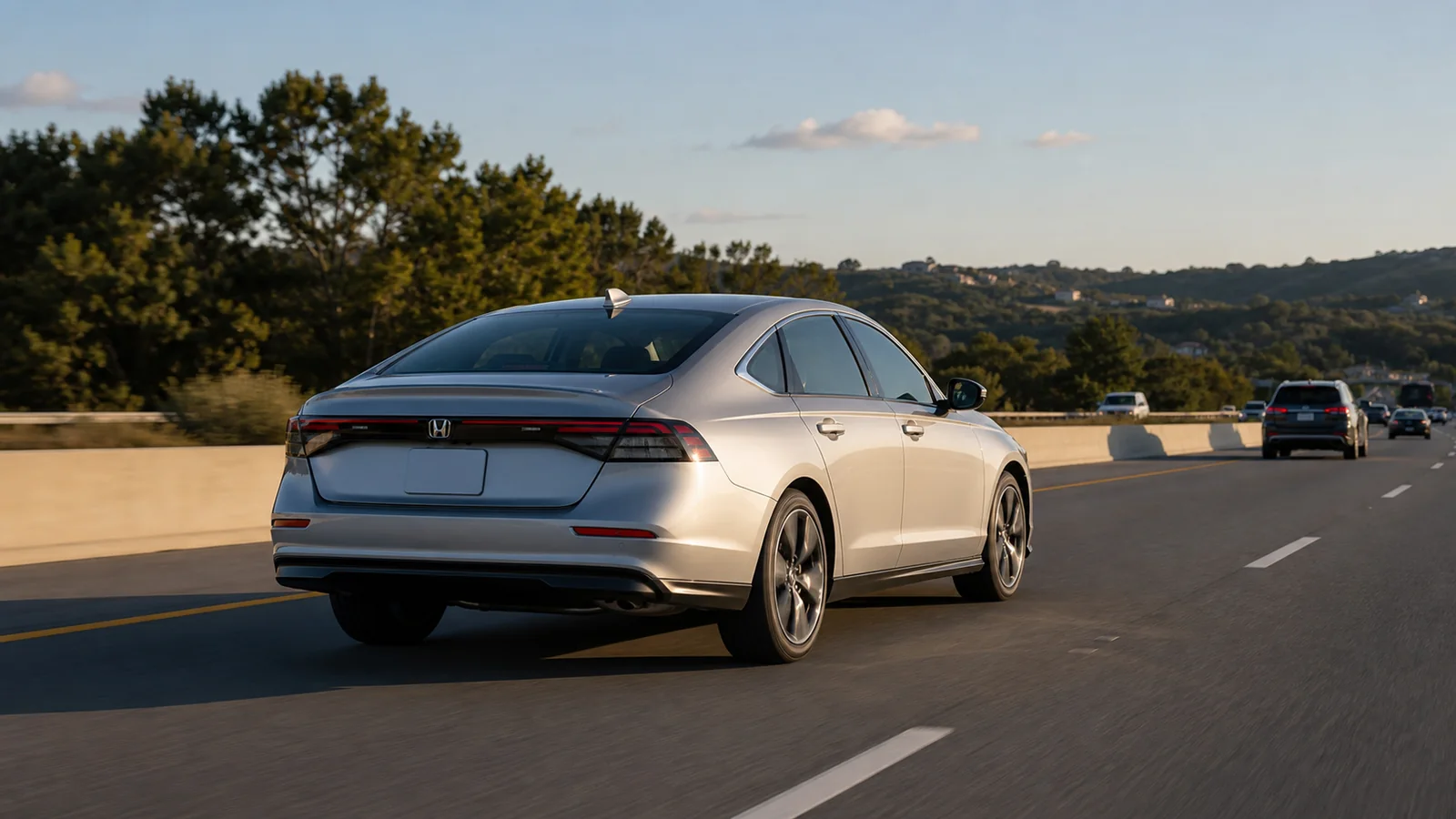
Ownership history also changes what 200,000 miles means. An Accord that accumulated steady highway mileage can show less seat, brake, and cold-start wear than a lower-mile car used for delivery work or repeated short trips.
Ask for dates as well as odometer readings because long gaps expose the intervals when oil, coolant, brake fluid, or transmission service may have been ignored. A consistent file also shows whether one symptom kept returning after temporary repairs.
Insurance and tire costs belong in the decision even though they are not reliability failures. Larger wheels use more expensive low-profile tires, and an enthusiast trim can cost more to insure than a basic sedan with the same core engine.
A clean body deserves equal attention because poor collision repairs can create water leaks, alignment trouble, sensor faults, and uneven tire wear. Compare panel gaps, paint texture, glass dates, and driver-assistance operation before treating a clean history report as complete proof.
Model-year value also depends on whether the trim adds equipment that can age independently of the powertrain. Adaptive dampers, larger wheels, a sunroof, extra driver-assistance hardware, and premium audio can turn a mechanically sound Accord into a more expensive car to restore.
Check every feature before assigning a reliability premium to a high trim. A basic car with complete maintenance may deliver more predictable ownership than a better-equipped example whose comfort and safety systems have several unresolved faults.
Road behavior and service chronology expose unresolved patterns
Long highway drives should also include a steering and brake assessment. Vibration through the wheel, a pull under braking, or tire noise that changes with direction can expose wheel, bearing, alignment, or collision issues hidden during a slow neighborhood loop.
Wheel size changes the cost of keeping an Accord tight and quiet. A car on 19-inch wheels has less tire sidewall to absorb potholes, and replacement tires usually cost more than the smaller sizes fitted to lower trims.
Test adaptive cruise, lane support, climate control, heated seats, cameras, and the infotainment system during the same drive. These faults may not strand the car, but several unresolved features can erase the price advantage of a high trim.
Check the trunk floor and rear body seams for water or collision work, then inspect the front glass and bumper history where driver-assistance sensors depend on calibration. A mechanically healthy sedan can still become an expensive ownership problem when poor body repairs cause leaks, tire wear, or recurring sensor faults.
A long highway history should still include evidence for coolant, brake fluid, transmission fluid, and tire replacement because low engine stress does not preserve every component. Dates and mileage on those invoices show whether the owner serviced the whole car or only changed engine oil.
Compare the four tire date codes and brands because one recent replacement can hide an alignment, wheel, or suspension event. On cars with driver-assistance features, verify that steering, braking, and camera functions operate normally after any windshield or front-body repair.
Confirm that both keys work because replacing and programming a modern smart key can add an avoidable first-year expense.
Finally, compare the seller's explanation with the chronology in the invoices. Dates that show the same misfire, transmission complaint, or warning light returning after several visits indicate an unresolved pattern rather than a completed repair.
Sources
- Repair-cost and reliability averages from RepairPal.
- Model-year complaints from CarComplaints.
- Honda V6 service information in Honda service bulletin 13-078.
- Recall status should be checked by VIN at NHTSA.