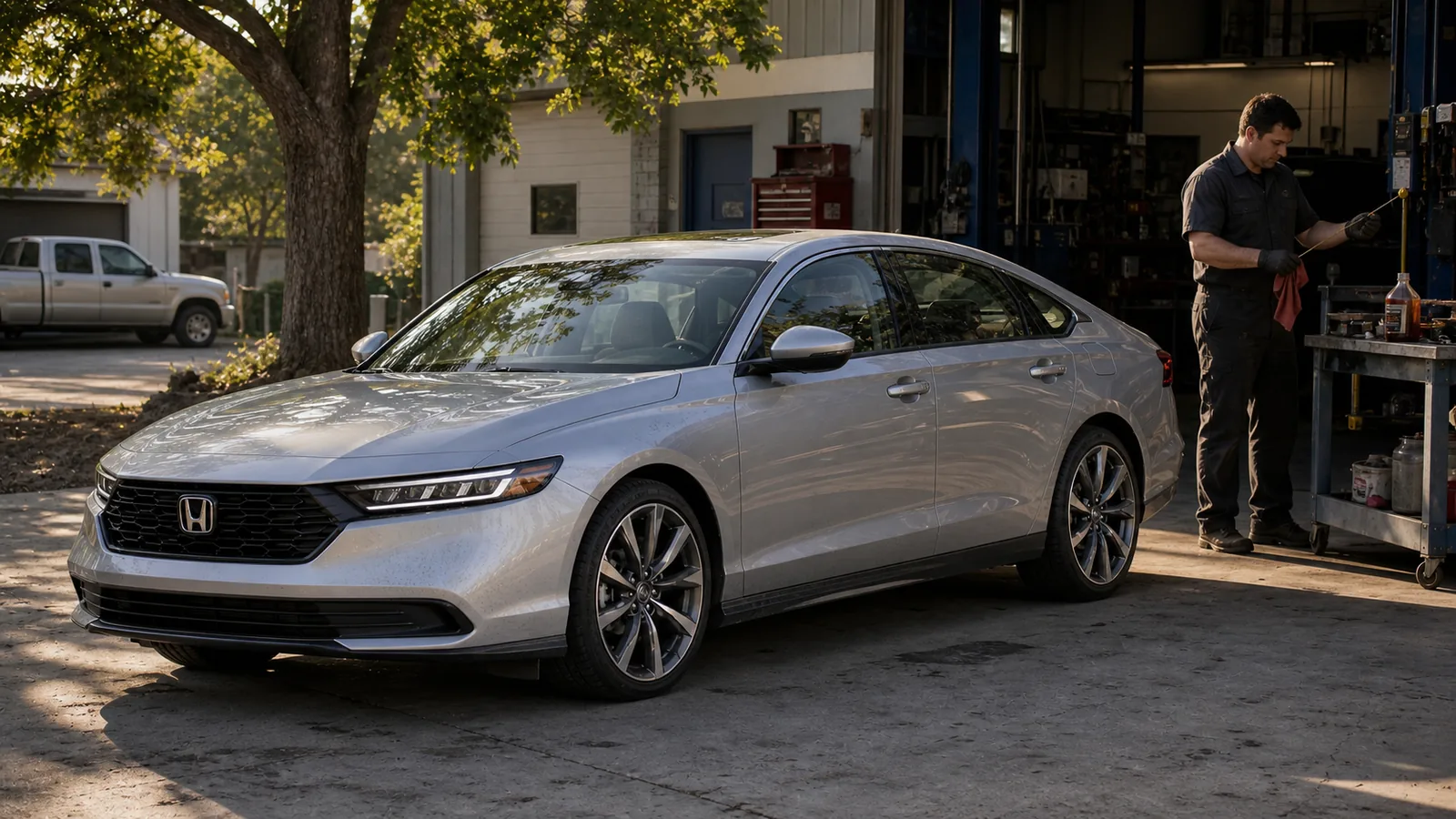
Accord trouble moves from automatics to VCM and CVT
The Accord's reputation is the trap. CarComplaints and RepairPal both rank it near the top of the midsize class over its life, so buyers assume any Accord is a safe used bet.
That assumption is what turns a cheap listing from a bad year into a repair bill worth more than the car.
The trouble sits in three separate generations, and the failure is different each time:
Model-year risk map
- 2003-2004
- Automatic transmission slips and fails, frequently near 90,000 miles
- 2008-2010
- V6 with Variable Cylinder Management burns oil, rear brakes wear out early
- 2013
- First-year CVT shudders and hesitates, the dual-screen infotainment glitches
- 2011-2012
- The last, best years of the reliable eighth generation
- 2019+
- The settled tenth-generation years to target on a used lot
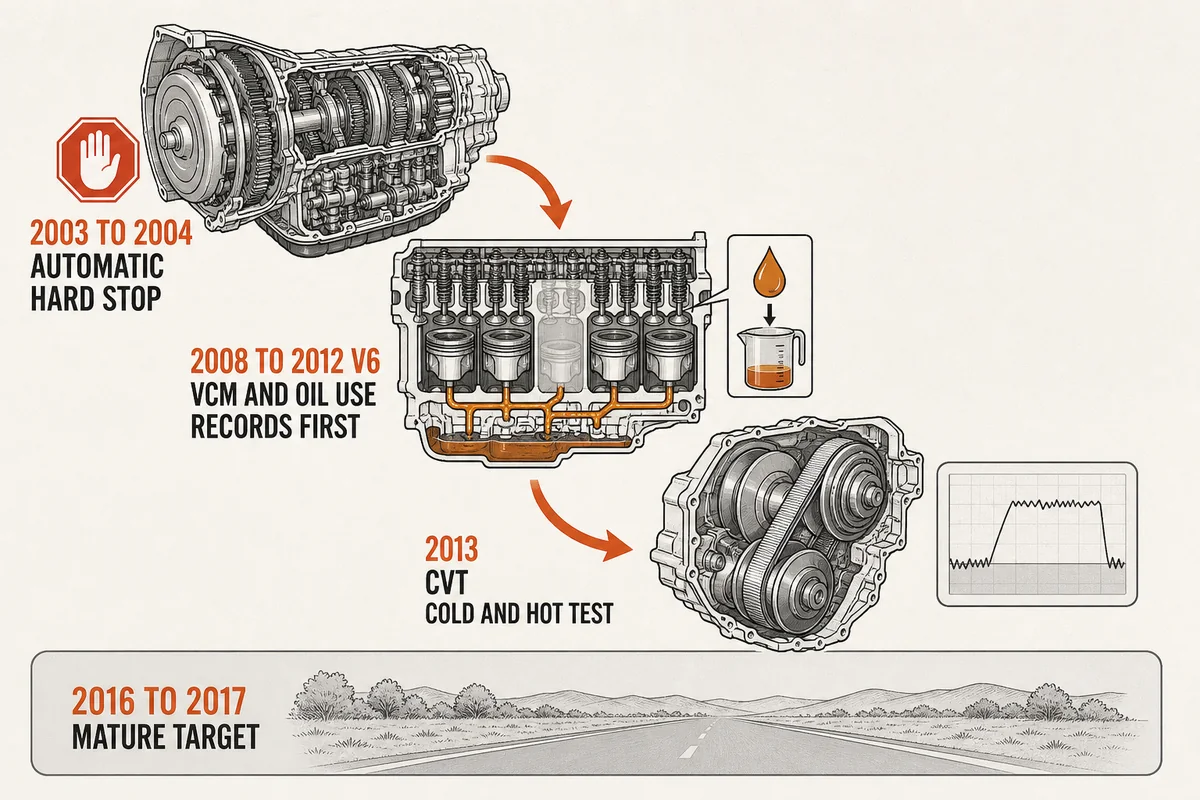
The 2003-2004 automatic is the hard stop
The 2003-2004 transmission is the one to fear most. The five-speed automatic in these cars, especially behind the V6, is a known failure point where the torque converter burns up the fluid and destroys the unit.
CarComplaints logs the 2003 as one of the worst Accords ever built for this, with hundreds of owners reporting a slipping transmission that needed a rebuild costing well over $2,000.
Honda recalled roughly a million vehicles over the defect and extended coverage on some years, but that help is long gone.
Treat a rebuilt or replaced transmission as a requirement, not a bonus on any 2003 or 2004, and walk away from any slip or hard shift on the test drive.
| Year or group | Starting verdict | Evidence | Required check |
|---|---|---|---|
| 2003-2004 | Avoid weak automatics | V6 transmission failures and a transmission recall | Shift quality, recall completion, and replacement records |
| 2008-2010 V6 | Inspect carefully | VCM-related misfire and oil-use history | Cold oil level, plug codes, and repair invoice |
| 2011-2012 | Target | Mature eighth-generation years | Timing-belt history on V6 cars and normal wear |
| 2013 | Inspect carefully | First CVT year and new infotainment layout | Low-speed CVT behavior and screen operation |
| 2014-2017 | Consider | Later ninth-generation cars have a more settled record | CVT service, starter, and electrical checks |
| 2019+ | Consider by powertrain and VIN | Lower complaint concentration does not clear every recall | Fuel-pump, seat-sensor, and hybrid software status |
The Accord table separates problems that share a badge but not a powertrain.
Report volume does not equal the odds of failure.
Move a vehicle forward only when its VIN, repair history, and physical condition support the row.
V6 oil use and the 2013 CVT need different evidence
The 2013 Accord is a softer warning. It launched the ninth generation with a new CVT that many owners found unrefined, with shudder and hesitation when accelerating gently at town speeds, and a two-screen infotainment stack that froze and dropped Bluetooth.
Honda improved both through software by 2016, so a later ninth-gen car sidesteps most of the first-year risk.
A 2013 with the updates applied is usable, but a 2016 or 2017 of the same generation is the smarter pick.
Choose the powertrain before choosing the year
A single Accord score hides the difference between four-cylinder, V6, CVT, and hybrid cars.
Use the filter only after identifying the engine and transmission.
A lower-risk Accord earns its price through powertrain-specific records. The 2011-2012 cars close out the eighth generation with the bugs worked out, and the four-cylinder versions dodge the V6 oil-consumption pattern entirely.
The 2019-and-newer tenth-generation cars had the early turbo and infotainment kinks sorted, so they are the safest modern buy.
Both hold value well, and Honda parts stay cheap and stocked at every independent shop, which keeps repair costs among the lowest for a midsize sedan.
If you want a smaller Honda, the same buying logic applies to the Honda Civic, and the Accord against the Camry is worth a cross-shop before you commit.
A cold shift test and V6 paper trail
A V6 Accord needs two paper checks before the road test. Confirm the timing belt service and look for invoices tied to oil use, fouled plugs, or piston-ring work.
Honda's VCM warranty notice covered certain 2008-2012 Accord V6 misfire repairs for eight years with unlimited miles. The old coverage is not a free repair today, but it tells you which codes and records deserve attention.
Newer does not mean recall-free either. Certain 2023-2025 Accord Hybrids received a software recall for possible loss of drive power, so verify the exact powertrain and VIN rather than extending a gasoline-car verdict to every Accord.
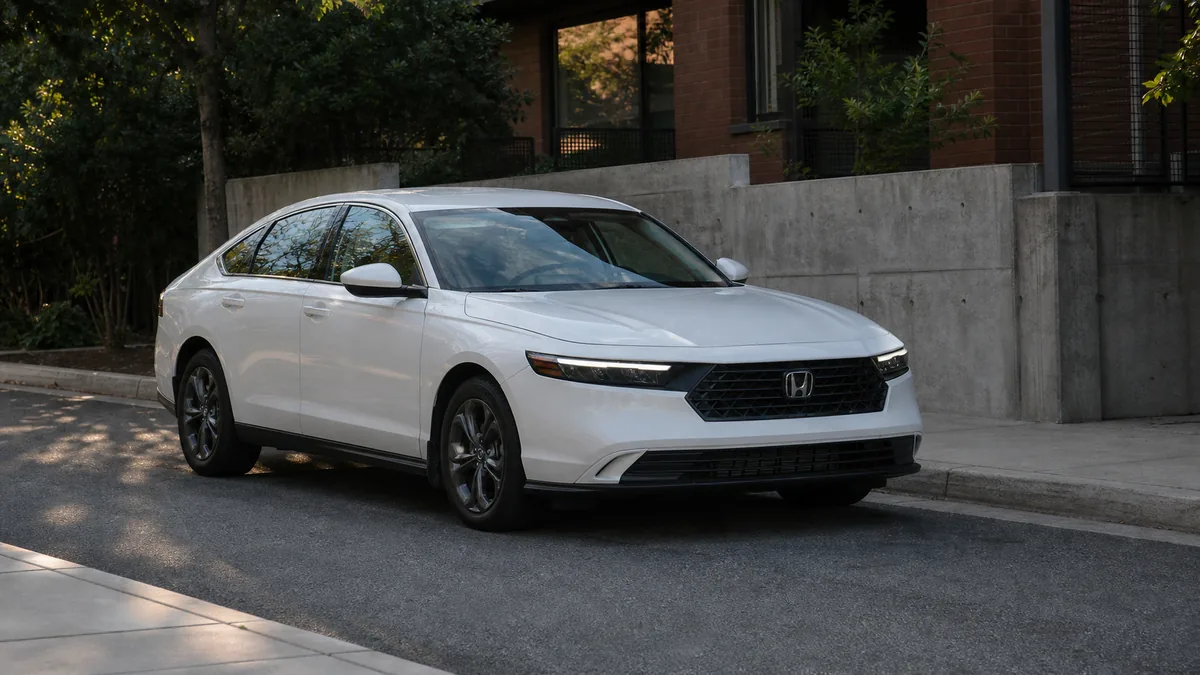
Start by separating four-cylinder, V6, and hybrid cars. A four-cylinder 2011 needs a different inspection from a V6 of the same year because the V6 adds VCM behavior and a timing belt.
A hybrid adds battery, power electronics, software, and model-specific recalls.
The Accord profile helps identify the powertrain before the road test.
On an older automatic, shift from Park to Reverse and Drive while the car is cold, then repeat after the fluid warms.
Delay, a hard engagement, rpm flare, or a shudder at light throttle matters more than a smooth full-throttle run.
On a V6, remove decorative covers only if the seller permits it and look for oil leaks or signs of recent cleaning around the bank that carries the affected cylinders.
Price should follow evidence. Check brake-pedal feel and rear-pad thickness too, because the 2008-2010 rear-brake pattern can add immediate cost even when the engine and transmission pass.
A complete timing-belt invoice, stable oil level, clean scan, and a documented transmission repair can justify considering a car from a caution year.
A low-mile car with no records cannot. Cross-shop a clean Toyota Camry before paying a premium based only on the Accord badge.
Check the Accord in this sequence:
- Check the dipstick before the seller starts the engine
- Drive a CVT car at parking-lot speed and under steady light throttle
- Scan for misfire, transmission, airbag, and hybrid control codes
- Verify timing-belt service on every V6
- Use the Honda sedan lineup and used-car checklist to judge price and paperwork
Missing paperwork does not prove that a repair was unnecessary. Do not buy when the powertrain identity, VIN history, and invoices leave different answers.
Which Accord repair records deserve weight
For a 2003-2004 automatic, the strongest record names the transmission replacement or internal repair, its mileage, and the unit installed.
A fluid-change receipt does not show that a slipping clutch pack or failed gear was repaired. Check whether the current transmission is original, rebuilt, or replaced, then make the drive long enough to include cold engagement and fully warm shifts.
A clean ten-minute drive is weak evidence on a fault that can worsen with heat.
For a V6 with VCM-related oil use, useful records show oil level between services, spark-plug replacement by cylinder, misfire diagnosis, and any piston-ring work.
Honda's bulletin cited above describes a specific repair path. It should be matched to the VIN and symptoms rather than treated as proof that every V6 received the work.
On a 2013 CVT, service history should identify the correct fluid and interval, followed by a smooth pull from low speed.
Records that answer the risk
- 2003-2004 automatic
- Replacement unit, repair mileage, and warm shift result
- VCM V6
- Oil history, plug condition, misfire data, and ring repair
- 2013 CVT
- Correct fluid service and clean low-speed acceleration
- Later Accord
- VIN campaigns and complete maintenance history
Separate repair risk from normal used-sedan wear
An Accord may pass the powertrain test and still need tires, brakes, engine mounts, suspension bushings, or air-conditioning work.
Price those items independently. They are visible, measurable costs, unlike a transmission with no history.
A pre-purchase inspection should scan every module and inspect fluid leaks from below. It should also verify that all four tires match closely enough for stable braking and steering.
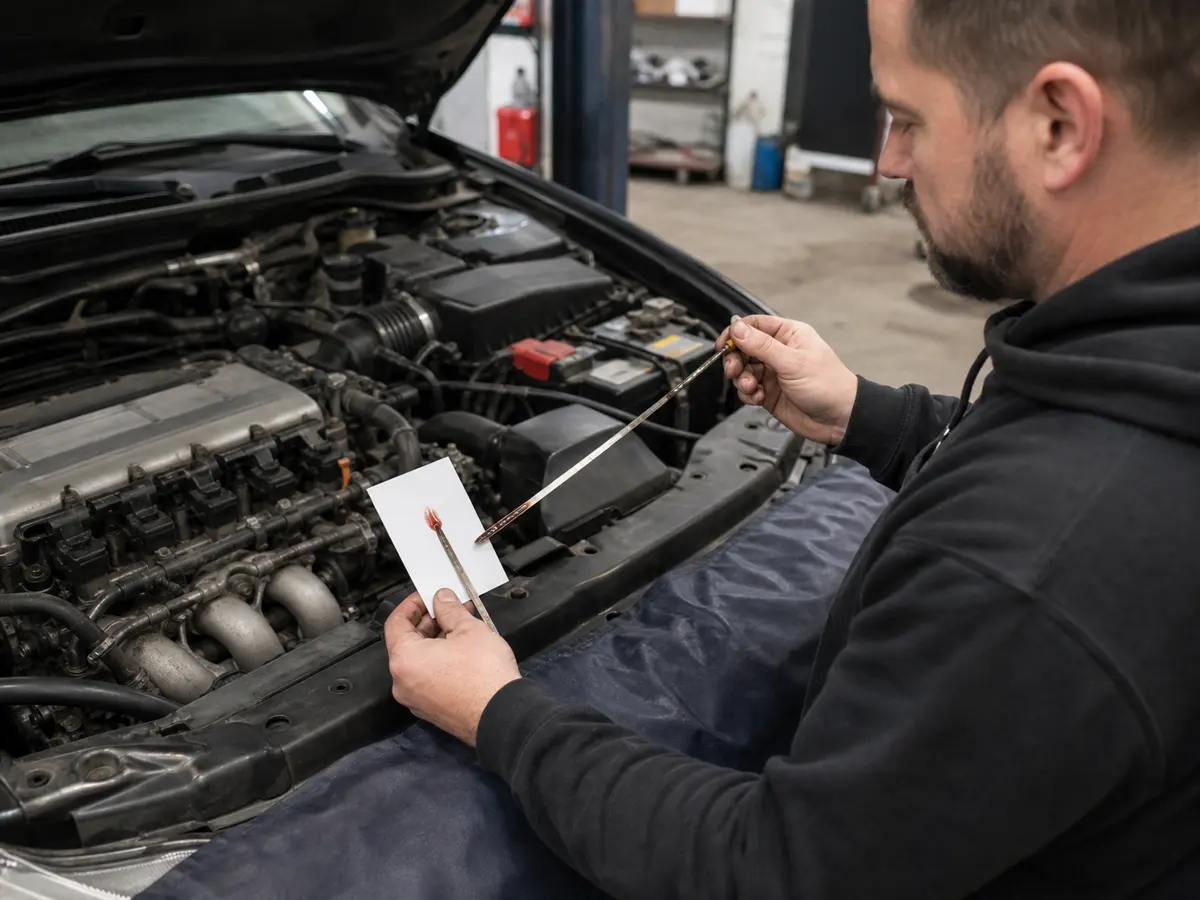
Use two stages on the road. Start with gentle throttle and normal shifts, then repeat acceleration after the drivetrain is hot.
On a V6, watch oil level and misfire data. On an automatic, note flare, harsh engagement, or a delayed move into reverse.
On a CVT, reject judder, engine-speed surging, or warning lights.
Pay more for a documented powertrain, not for cosmetic preparation that hides an uncertain one.
Before making an offer, turn the drive into written observations:
- Time cold engagement into Drive and Reverse without repeated attempts
- Note each flare, bang, vibration, or delayed shift after warm-up
- Check V6 oil level, plug history, and any cylinder-specific misfire data
- Confirm CVT fluid specification and service dates on later cars
- Test A/C, steering, brakes, and mounts after the powertrain checks
- Match every major repair invoice to the VIN and current mileage
A specialist inspection is justified when the older automatic shows even mild slip, because the purchase decision depends on the unit's condition.
For a V6 with unexplained oil loss, compression, leak-down, and plug inspection can separate external leaks from internal consumption.
These are targeted tests, not a guarantee.
They give the buyer enough evidence to price the risk or leave it with the seller.
An independent Honda or transmission specialist should also check mounts and axle condition before blaming every vibration on the gearbox.
A torn mount can create a hard engagement sensation, while an inner CV joint may shake under load.
Those repairs differ sharply from an internal automatic failure. Ask the inspector to reproduce the symptom and name the system that causes it.
That written diagnosis helps the buyer compare the Accord with another candidate on equal terms and prevents a cosmetic discount from replacing a mechanical answer.
Use symptom-led testing before condemning the Accord
The Accord's warning signs overlap with cheaper faults. A worn engine mount can make engagement feel harsh.
An inner axle can shake under load. Ignition trouble can create a V6 misfire without proving that piston rings have failed.
The shop should reproduce the symptom, isolate the system, and then choose the next test.
For an older automatic, that may mean checking fluid condition, codes, engagement time, shift flare, and line-pressure evidence.
For VCM oil use, it may include plug inspection by cylinder, compression or leak-down testing, external leak inspection, and a measured consumption record.
For a CVT, the emphasis shifts to correct fluid, pressure-related data, and behavior after heat.
Ask the inspector to classify the result:
- Normal operation with routine maintenance due
- A smaller fault that can be priced, such as a mount or axle
- A major transmission or internal engine concern
- Insufficient evidence because the seller blocked a cold or warm test
This structure prevents a reputation-based verdict. The model year tells the shop where to look first, while the tests identify what this Accord actually needs.
Reject the car when the expensive symptom remains reproducible but its cause and repair history stay unclear.