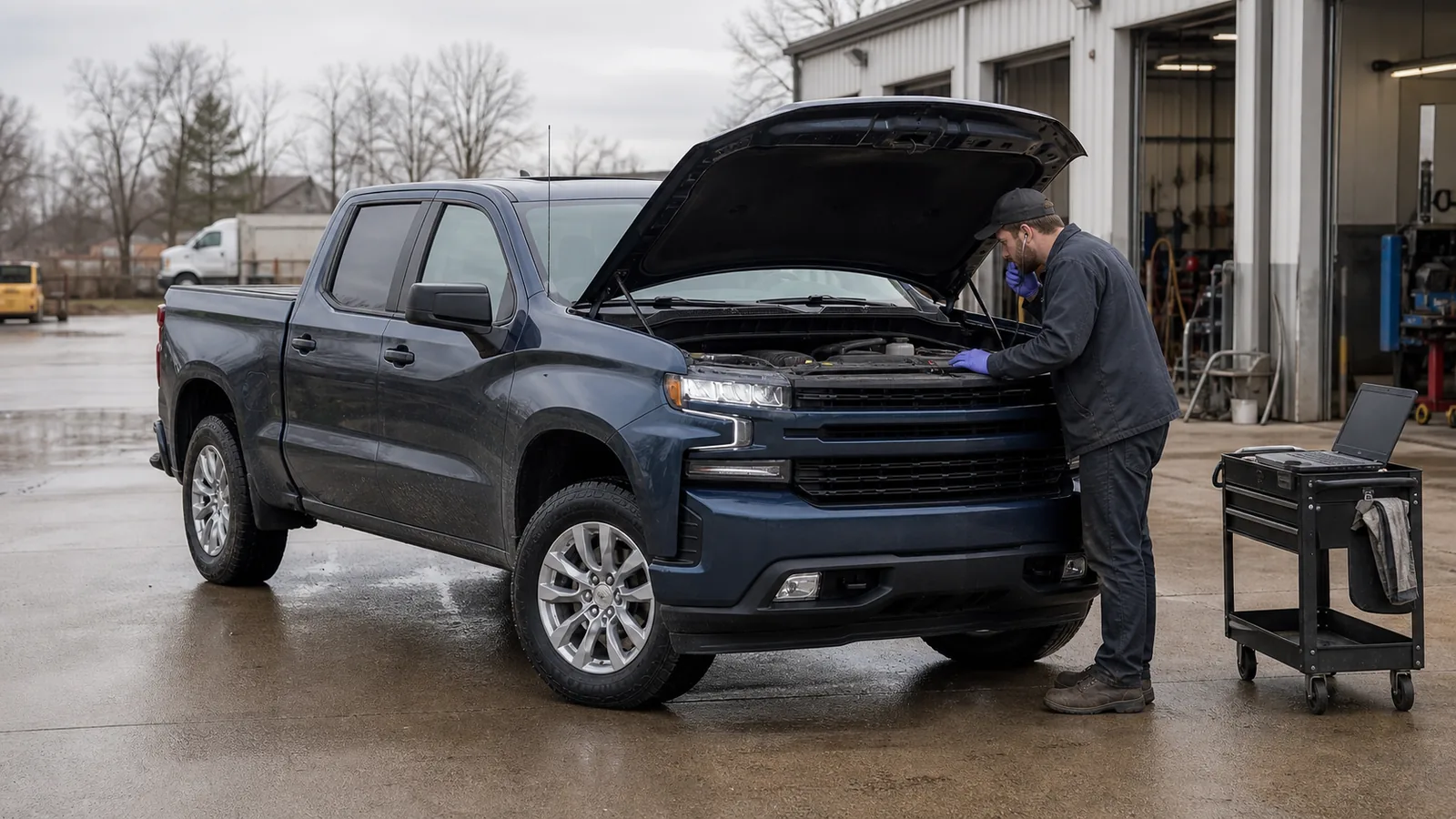
AFM years, K2XX shifts, and L87 recall risk
The Silverado's reputation as a tough work truck is deserved, which is exactly why the bad years catch people out.
CarComplaints logs the 2014 truck with the most complaints of any year, and RepairPal rates the line about average for a full-size pickup.
A buyer assumes any Silverado is a safe bet, and that assumption is what turns a cheap listing from a bad year into a four-figure repair.
The trouble runs across two generations, and the story is the same 5.3L V8 each time:
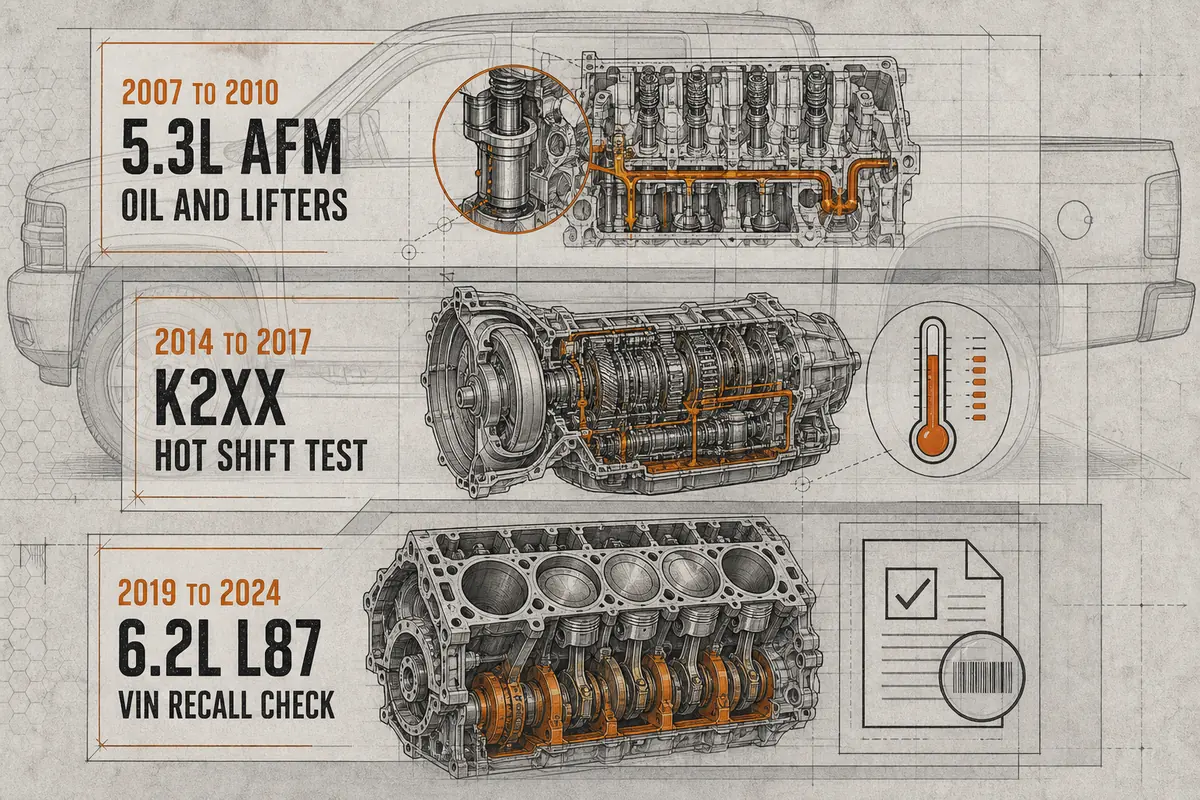
- 2007-2010First AFM 5.3L: cylinder deactivation lifters collapse, misfires, heavy oil consumption
- 2011-2013Last of the older trucks, more sorted, but AFM oil burn still needs watching
- 2014New EcoTec3 5.3L launches: AC condenser fails near 60,000 miles, oil consumption, jerky shifts
- 2015-2017Transmission surge and jerk complaints, worst reported on the 2017 around 22,000 miles
- 2018Late K2XX year, but AFM and transmission history still matter
- 2019-2024 6.2LL87 bearing-failure recall and investigation records require a VIN check
Oil level and lifter noise decide the 2007-2013 trucks
The AFM oil consumption is the fault to understand before anything else. Active Fuel Management shuts off four of the eight cylinders during light driving to save fuel, and the special lifters that make that happen are prone to collapsing.
The system also pulls oil past the rings during deactivation, and defective piston rings on many 5.3L engines make it worse.
Owners report adding a quart every 1,000 to 2,000 miles, and GM itself treated up to a quart per 2,000 miles as acceptable under warranty.
A class-action settlement covered the 5.3L piston-ring defect on 2011-2014 trucks, which tells you how common the problem was.
| Year or group | Starting verdict | Evidence | Required check |
|---|---|---|---|
| 2007-2010 5.3L AFM | Avoid active oil burners | AFM oil use, fouled plugs, and lifter collapse | Dipstick, cold tick, misfire scan, and repair invoice |
| 2011-2013 | Consider carefully | Later GMT900 years are more settled but still use AFM | Oil history, lifter noise, rust, and transmission service |
| 2014 | Avoid weak examples | Launch-year A/C condenser, oil-use, and shift complaints | A/C, fluid temperature, shifts, and VIN campaigns |
| 2015-2017 | Inspect carefully | Surge, shudder, and harsh-shift reports | Long hot road test and transmission records |
| 2018 5.3L | Consider | Late K2XX year with known history | AFM, converter, and cooling checks |
| 2019-2024 6.2L L87 | Check current recall status | NHTSA documented bearing-failure reports and recall review | VIN, engine inspection, oil, and dealer record |
| 2019+ other engines | Consider by configuration | Risk differs sharply by engine and gearbox | Exact RPO codes, service, and campaign lookup |
Use the Silverado matrix to set the inspection order. It does not turn complaint volume into a failure probability.
Move a vehicle forward only when its VIN, repair history, and physical condition support the row.
A hot transmission test matters on 2014-2017
The 2014 truck is the one to skip outright.
It launched the current-style EcoTec3 5.3L and drew the highest complaint volume of any year, led by an AC condenser that commonly fails near 60,000 miles, the same oil consumption, and a transmission that surges and jerks.
The 2015 through 2017 trucks carry the transmission complaints forward, and CarComplaints flags the 2017 as its worst-rated year because the surge-and-jerk problem shows up early, often around 22,000 miles, with repair estimates near $4,100.
If you cross-shop, a Ford F-150 or Ram 1500 from the same years is worth a look before you commit.
Engine and gearbox codes matter more than the Silverado badge
A Silverado verdict begins with the RPO label, then the oil and transmission history.
Apply the buy and skip signals only after decoding the engine and gearbox.
A lower-risk Silverado still has to prove how its V8 and transmission were maintained.
The 2011-2013 trucks are the most sorted of the older body style, and while they still run AFM, an example with a clean oil-burn record and regular changes is a durable, cheap-to-fix buy.
The 2018-and-newer trucks had the AC condenser and the early EcoTec3 bugs addressed, and the newest ones move to a refined engine family that manages cylinder deactivation better.
A truck from these years still deserves an oil-burn check, but the odds of a first-year defect are far lower.
Across the range, parts are cheap and stocked at every independent shop, which keeps repair bills reasonable for a full-size pickup, and the 5.3L is simple enough that most shops can service it.
Read the full-size pickup landscape and the F-150 reliability notes before you settle on a Silverado.
Read the hitch, bed, fluids, and RPO label
Match the truck to its RPO codes before applying a year-wide verdict. A 5.3L AFM truck, an 8-speed truck, and a 6.2L L87 truck can share a model year while carrying different failure checks.
GM's AFM oil-consumption bulletin covers the older V8 pattern. NHTSA later reported 1,002 L87 engine-failure reports in its 2019-2024 investigation material, so newer does not automatically mean lower risk.
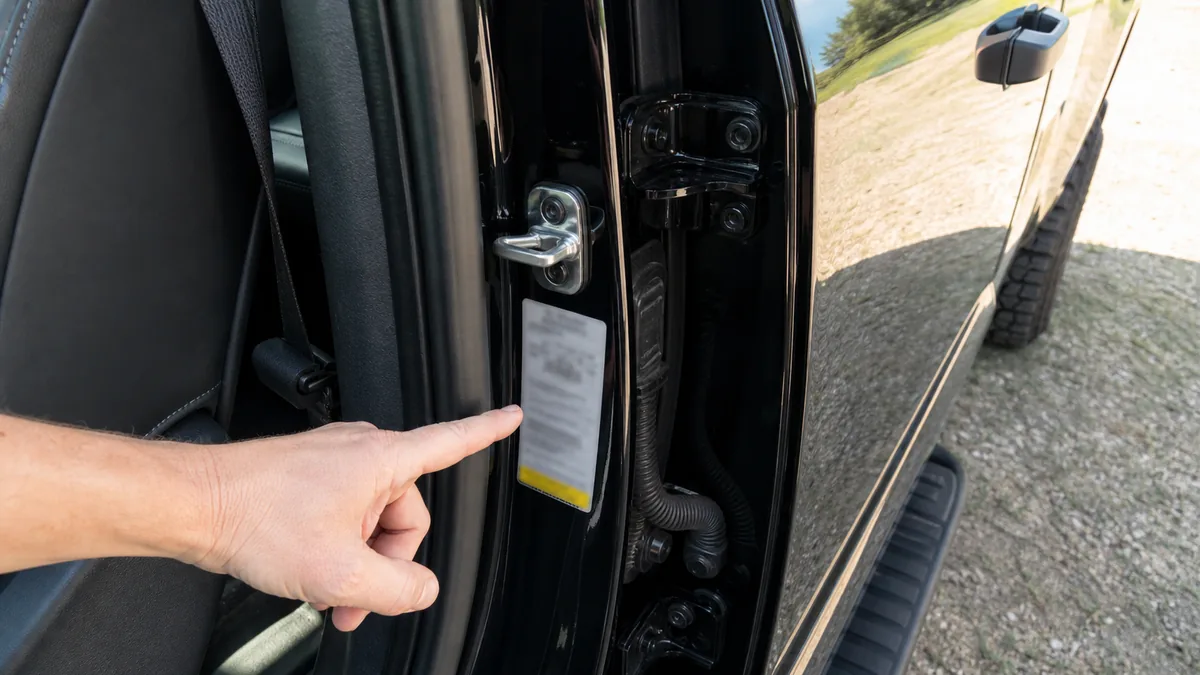
The Silverado profile shows why engine and transmission choice matters more than a single year label. Check cold oil pressure, listen at both valve covers, and hold light throttle long enough to expose a converter shudder after the fluid warms.
A recently cleared warning light or a fresh oil change without earlier invoices should slow the deal.
Work history changes the price too. A clean cabin can sit above a worn hitch, overloaded rear springs, mismatched load-rated tires, or a bed repaired after commercial use.
Compare gasoline configurations in the gas powertrain field and reserve the final decision for the exact RPO codes and inspection findings.
Work through the truck in this order:
- Decode the engine, transmission, axle, and build date from the VIN and RPO label
- Check cold oil level and listen for lifter tick
- Repeat shifts after the transmission reaches operating temperature
- Inspect hitch, bed, differential, and tires for towing or fleet use
- Compare the truck in the pickup field and review the Chevrolet lineup
Missing paperwork does not prove that a repair was unnecessary. Leave when the RPO codes, service invoices, and mechanical condition do not agree.
Which records change the Silverado decision
A receipt matters only when it names the engine, failed part, and completed repair. On a 2007-2013 truck with AFM-related noise, an oil-change invoice does not prove that a collapsed lifter or damaged camshaft was corrected.
Ask for the engine RPO, repair mileage, parts list, and oil-pressure findings.
A vague "top-end repair" description leaves too much unanswered.
The same rule applies to the 2014-2017 transmission. Fluid service is maintenance, while a converter, valve-body, or complete transmission invoice identifies a different level of work.
Compare the repair date with the current mileage, then repeat the hot road test. For an L87-equipped 2019-2024 truck, use the NHTSA investigation document already cited above as context and check the VIN for the current remedy status.
An open campaign or a cold-start knock deserves resolution before money changes hands.
Proof worth keeping
- AFM engine
- RPO code, oil-pressure test, lifter and cam parts invoice
- Six-speed automatic
- Hot diagnosis and named converter or valve-body work
- L87 V8
- VIN campaign status and documented remedy
- Tow vehicle
- Transmission temperature history and fluid service
Price the truck after the load-history inspection
A Silverado can come from a good year and still carry hard miles. Inspect the receiver hitch, trailer-plug wear, bed floor, rear springs, axle seals, and tire load ratings.
Fresh paint on the hitch is less useful than straight frame rails and even rear-tire wear. A scan should cover engine, transmission, ABS, airbag, and four-wheel-drive modules, since clearing the check-engine light does not clear every stored fault.
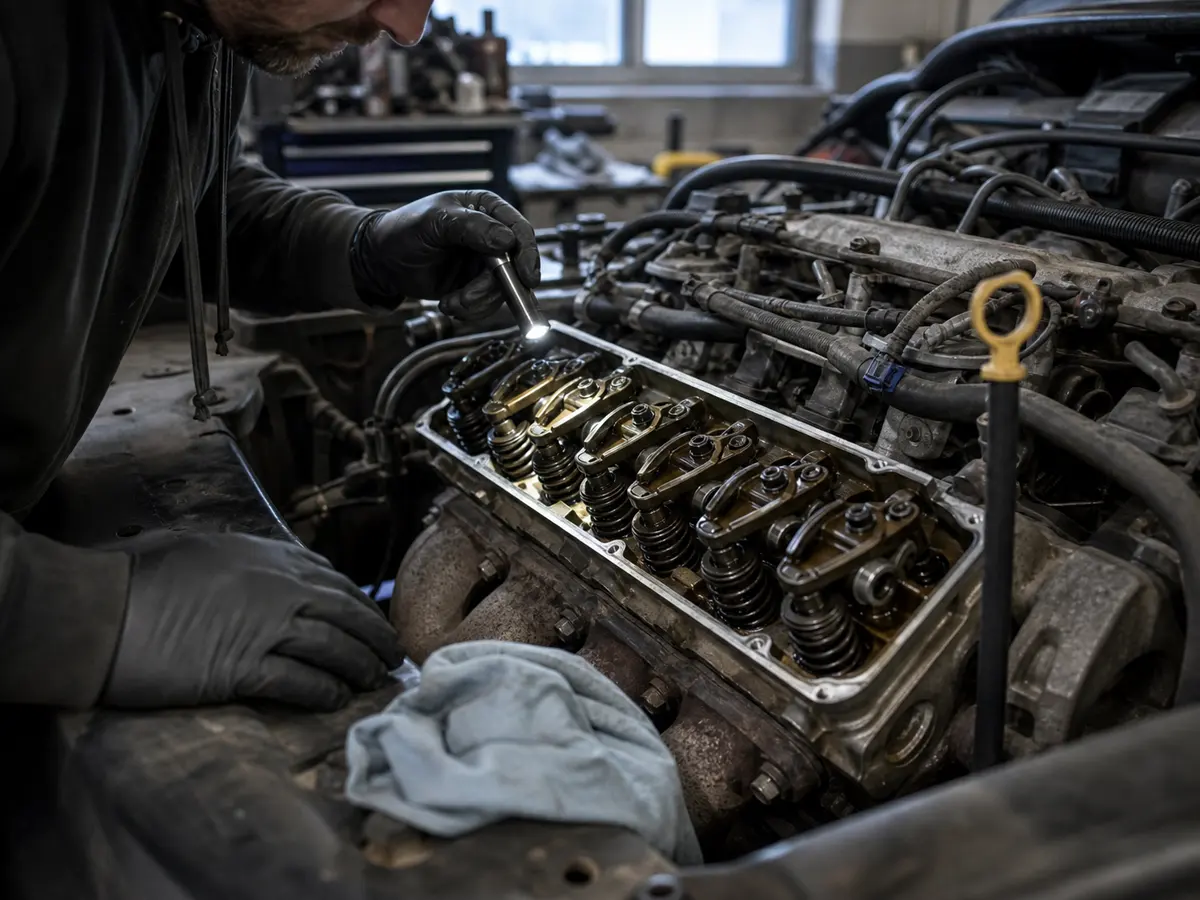
Budget from the unresolved item, not from the badge on the grille. A truck with complete engine work, a clean hot shift test, and modest tow wear can justify a higher price than a lower-mile example with no records.
Brake rotors, all-terrain tires, shocks, wheel bearings, and driveline fluids also cost more on a full-size pickup than on a sedan.
Keep those normal wear items separate from the model-year fault. That prevents a worn truck from being called reliable only because its engine starts quietly.
Use the inspection findings to write a condition-adjusted offer:
- Record the RPO codes before pricing engine or axle risk
- Photograph cold oil level and note any start-up tick or knock
- Drive until transmission temperature is stable, then repeat light and firm shifts
- Check four-wheel-drive engagement without forcing the system on dry pavement
- Measure tire tread and confirm matching load ratings on each axle
- Put any open campaign, fluid leak, or missing repair proof in writing
A compression or leak-down test is reasonable when valvetrain noise, misfire, or oil use remains unexplained. A transmission specialist is worth the added inspection cost when the hot drive shows flare, harsh downshifts, or delayed engagement.
Those tests cost little compared with guessing about a V8 or automatic gearbox.
If the seller wants a premium price, the truck should supply premium evidence.
When a Silverado needs a specialist instead of another test drive
A normal pre-purchase inspection can identify leaks, scan faults, tire wear, and obvious shift problems. It cannot confirm the condition of an AFM lifter hidden inside the engine or the remaining life of a slipping transmission.
Escalate to an engine specialist when cold tick continues after oil pressure stabilizes, misfire data points to one cylinder, metal appears in the oil filter, or the seller reports repeated lifter work.
Ask the shop to state which test supports its conclusion.
Use a transmission specialist when the truck flares, bangs, shudders, delays Reverse, or stores pressure and ratio faults after warming.
The specialist should reproduce the symptom before recommending parts. That matters because driveline lash, mounts, tires, and converter behavior can feel similar from the driver's seat.
The buyer should leave with one of three outcomes:
- Major systems test normally and the offer can reflect ordinary wear
- A named repair is needed and the seller completes it before sale
- The fault remains uncertain and the truck is rejected
Do not let the inspection end with "common for these trucks." Common does not mean harmless, and it does not estimate the cost on this truck.
Uncertainty stays with the seller unless the price and the buyer's repair capacity can absorb it.