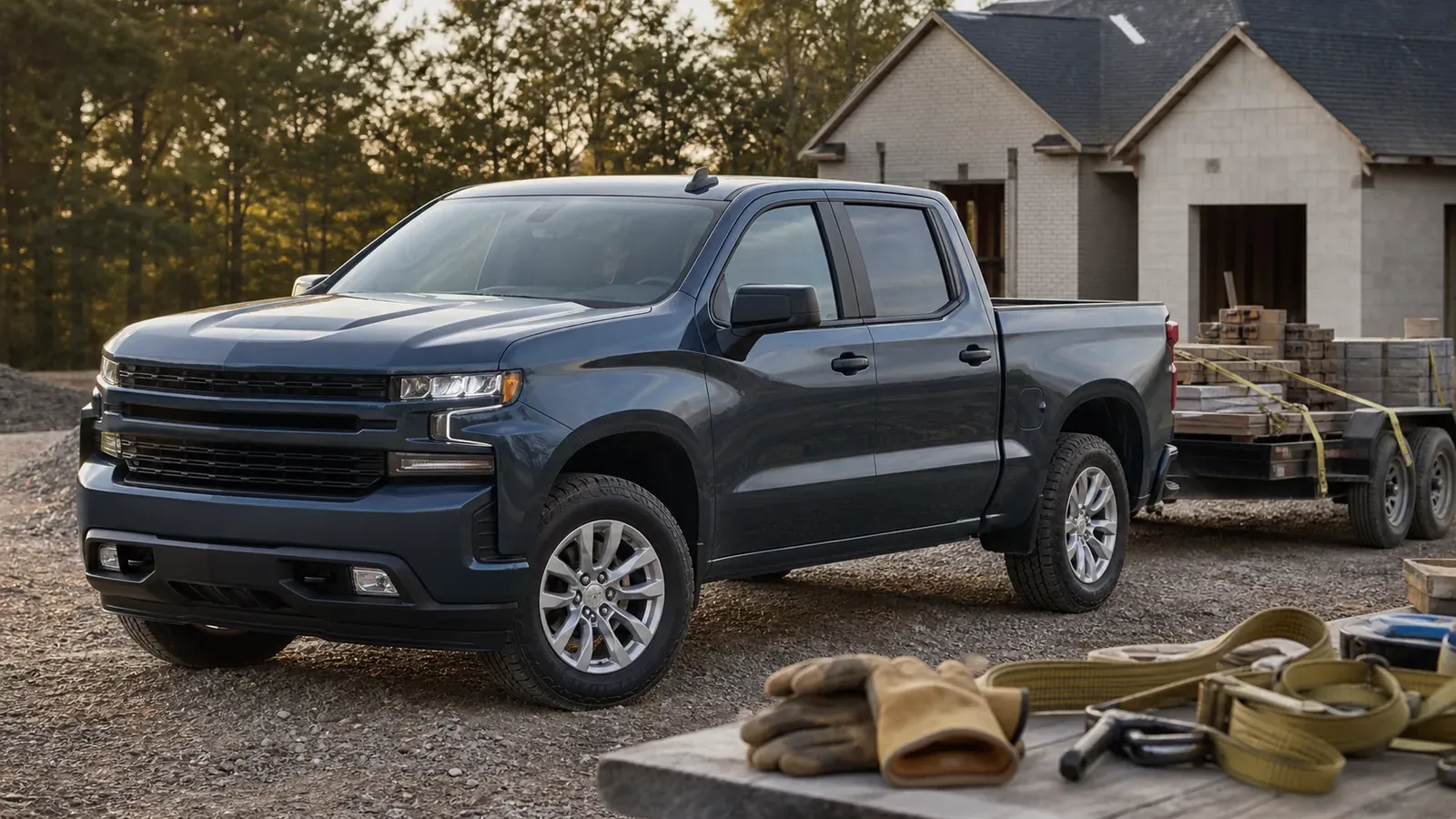
The Silverado is dependable only after the engine is identified
Silverado reliability cannot be reduced to one rating because Chevrolet has sold the half-ton pickup with four very different engines. The 2.7-liter TurboMax, 5.3-liter V8, 6.2-liter V8, and 3.0-liter Duramax diesel have different service needs and failure exposure.
The overall reliability verdict is positive for a correctly identified and maintained configuration. It turns negative when recall status, engine evidence, or workload history remains unresolved.
The 5.3-liter V8 has the deepest service history and remains the familiar middle choice. Its cylinder-deactivation hardware deserves attention, but a quiet cold start, clean scan, stable oil level, and regular service can support a strong purchase.
The 6.2-liter V8 supplies more power, yet certain 2021 through 2024 engines fall within a major safety recall. The diesel can deliver excellent highway range, while its emissions equipment makes repeated short trips a poor match.
Configuration also changes how hard the truck works. A crew-cab four-wheel-drive truck with large wheels, a low payload sticker, and frequent trailer use may age faster than a simpler rear-drive truck with higher mileage.
A Silverado becomes a credible long-term buy only when its engine identity and duty history are documented.
The 6.2-liter L87 recall changes the 2021 to 2024 decision
General Motors recalled certain 2021 through 2024 Silverado 1500s equipped with the L87 6.2-liter V8 because manufacturing defects could damage the crankshaft or connecting rods. An engine failure while driving can cause a sudden loss of propulsion, so this is a safety issue rather than ordinary wear.
NHTSA campaign 25V274 does not mean every 6.2-liter Silverado will fail. It means the VIN must be checked and the prescribed inspection or remedy must be documented before the truck is treated like an unaffected example.
The remedy path can differ according to the inspection result. Some engines receive an oil change with a higher-viscosity oil and a new cap, while engines that fail the dealer inspection require repair or replacement under the campaign instructions.
A replaced engine is not automatically a bad purchase when the invoice, mileage, and warranty position are clear. An open recall, unexplained bearing noise, low oil pressure warning, or metal found during service is a reason to pause until a Chevrolet dealer confirms the next step.
This issue belongs specifically to the recalled L87 population. It should not be transferred to the TurboMax, 5.3-liter V8, or Duramax merely because they share the Silverado badge.
A 5.3-liter tick needs evidence, not an instant diagnosis
The 5.3-liter V8 can make several noises that owners describe as a tick. Fuel injectors produce a regular clicking sound, an exhaust manifold leak is often loudest when cold, and internal lifter or cam wear may be accompanied by a misfire or a noise that does not fade normally.
Listen before the first start of the day because a warmed engine can hide an exhaust leak. Note whether the sound comes from the side of the cylinder head, whether it changes as the manifold heats, and whether the idle remains smooth.
Tick evidence
- Cold-only sound
- Inspect manifold fasteners and leakage
- Persistent top-end noise
- Check oil pressure and valvetrain
- Rough idle
- Read cylinder misfire counters
- Repair claim
- Require an invoice with parts and diagnosis
Dynamic Fuel Management uses lifters that can disable cylinders under light load. A stored or active misfire on one cylinder, repeated plug replacement, metal in the oil, or a documented camshaft repair carries more weight than a phone recording labeled lifter tick.
Oil history matters because dirty, low, or incorrect oil can worsen valvetrain wear. Ask for intervals, oil grade, and any record of consumption between services instead of relying on a recently cleaned dipstick.
A properly diagnosed exhaust repair and an internal valvetrain repair have very different costs. The offer should reflect the confirmed cause, and an uncertain noise should remain the seller's diagnostic problem.
Transmission behavior must be tested across temperature and load
Silverado 1500s have used eight-speed and ten-speed automatics, and neither can be judged during one lap around a dealership. Begin with a cold start, select reverse and drive, and note any long delay, hard engagement, or engine flare before the truck moves.
Continue through light urban acceleration, steady suburban speed, a firm merge, and a fully warm highway cruise. A mild adaptation after a battery disconnect differs from repeated banging, shudder, slipping, or a shift that becomes worse as the fluid heats.
| Condition | Acceptable evidence | Stop condition |
|---|---|---|
| Cold selection | Prompt, controlled engagement | Long delay or hard slam |
| Light throttle | Predictable upshifts | Repeated flare or hunting |
| Steady cruise | Smooth converter lockup | Persistent shudder |
| Warm acceleration | Clean downshift and pull | Slip, warning, or harsh bang |
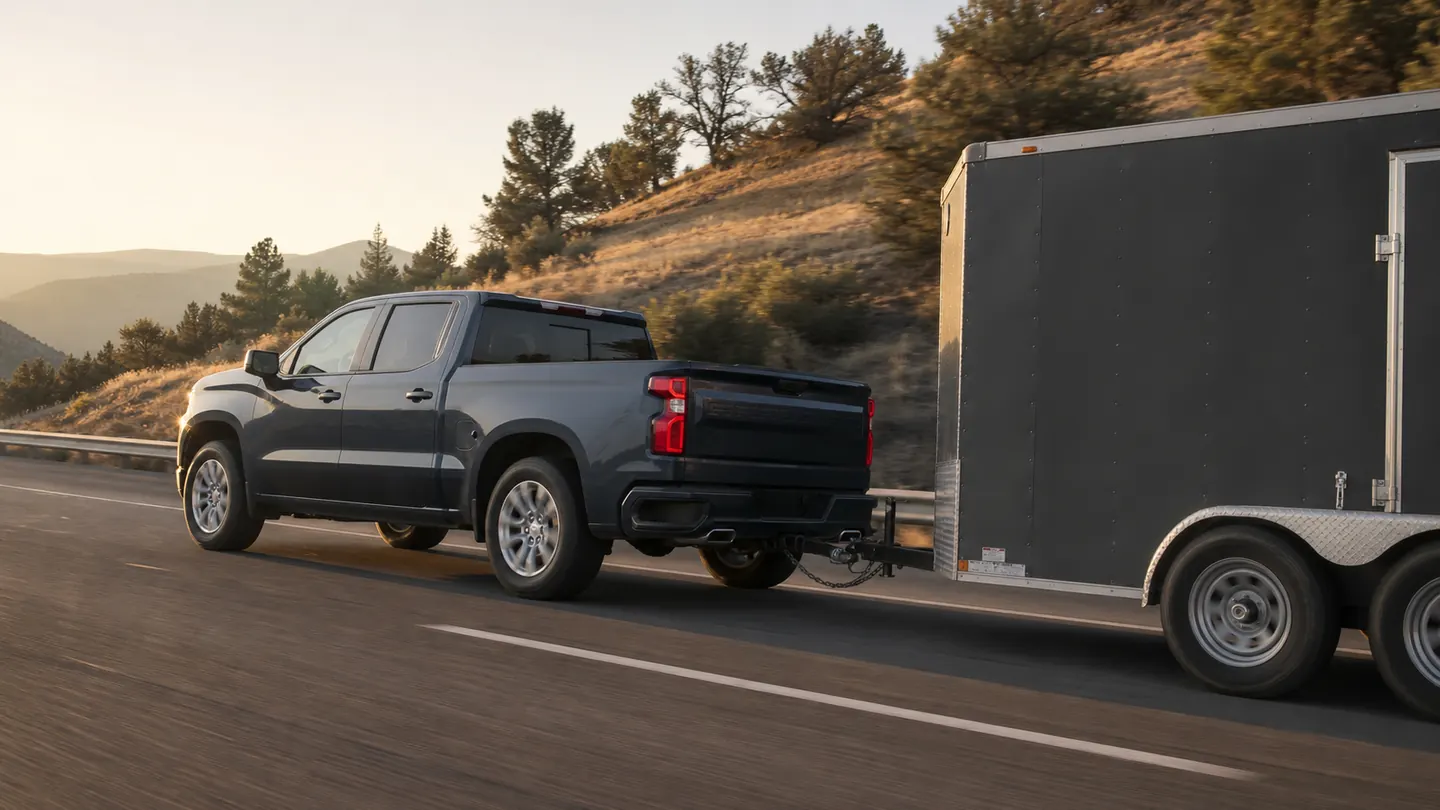
Trailer use raises fluid temperature and asks more of the converter, cooling system, axle, and brakes. Hitch wear, a brake-controller history, and trailer wiring justify a longer loaded test or a shop inspection when the seller can arrange one safely.
Fluid service must match the transmission and manufacturer procedure. A vague claim that it was flushed last year is weaker than an invoice listing the correct fluid, mileage, and work performed.
Ask the shop to compare commanded gear, input speed, output speed, converter slip, and fluid temperature while the symptom occurs. That evidence separates a repeatable hydraulic or converter problem from a vague impression that the truck shifted differently once.
The road test should end only after the gearbox is fully warm because a worn converter or pressure-control fault may remain quiet early in the drive. Repeat light acceleration and a gentle grade after highway running, then check for leaks and overheated fluid odor without touching hot components.
Do not excuse a repeatable symptom as normal truck behavior. A healthy truck may shift firmly under load, but it should remain controlled and consistent from cold engagement through the end of the drive.
The 3.0-liter Duramax trades fuel range for emissions complexity
The LM2 and later LZ0 Duramax diesels suit drivers who cover long highway distances, tow regularly, and value range between fuel stops. Their strong low-speed torque also lets the truck move a trailer without frequent high-rpm operation.
That benefit arrives with diesel exhaust fluid, a particulate filter, exhaust sensors, and regeneration events. These systems need operating heat, so a truck used mostly for short errands may accumulate soot or experience more interrupted regenerations than a highway truck.
Ask how the truck was driven and review diesel-specific service rather than only oil changes. Fuel-filter records, DEF warnings, emissions repairs, coolant condition, and complete scan results help distinguish a working diesel from one that has been clearing lights before sale.
The diesel is not automatically the reliability winner because it achieves better highway fuel economy. A buyer who drives 8 miles at a time may get a simpler ownership experience from the 5.3-liter V8 or TurboMax even when fuel consumption is higher.
Long-trip use can be favorable when the truck received correct oil, filters, and warm operation. Short-trip use is not an automatic failure, but it raises the value of soot-load data and a complete emissions-system scan.
Model year matters less than powertrain and completed campaigns
The 2014 through 2018 K2XX generation provides a simpler cabin and a long used-market record. Age now makes corrosion, cooling components, transmission condition, and deferred maintenance as important as the original design.
The redesigned 2019 T1 truck introduced new electronics, updated transmissions, and a broader engine mix. Early production deserves a careful scan and road test, while condition still separates two trucks more than the calendar alone.
- 2014-2018Mature K2XX trucks, inspect age and cylinder-deactivation history
- 2019-2021T1 launch years, verify transmission behavior and campaigns
- 2022-2023Interior refresh reached many trims, test added electronics
- 2021-2024L87 6.2-liter recall status becomes mandatory evidence
The refreshed cabin adds screens, cameras, and driver-assistance hardware that should all be tested. A completed software update can correct a known campaign, but it cannot prove that a damaged camera, wet connector, or failing module is healthy.
There is no single model year that cancels engine choice and maintenance history. A documented older truck can be more predictable than a newer example with an open recall, harsh transmission, mismatched tires, and no engine-hour record.
Workload explains mileage better than the odometer alone
A maintained Silverado can pass 200,000 miles, but the odometer does not record the weight it moved or the time it spent idling. Engine hours, average speed, trailer history, payload, and terrain explain wear that mileage misses.
A contractor's truck may idle for heating, cooling, or jobsite power while adding few miles. A travel-trailer truck may spend most of its life at highway speed but place sustained heat into the engine, transmission, axle, tires, and brakes.
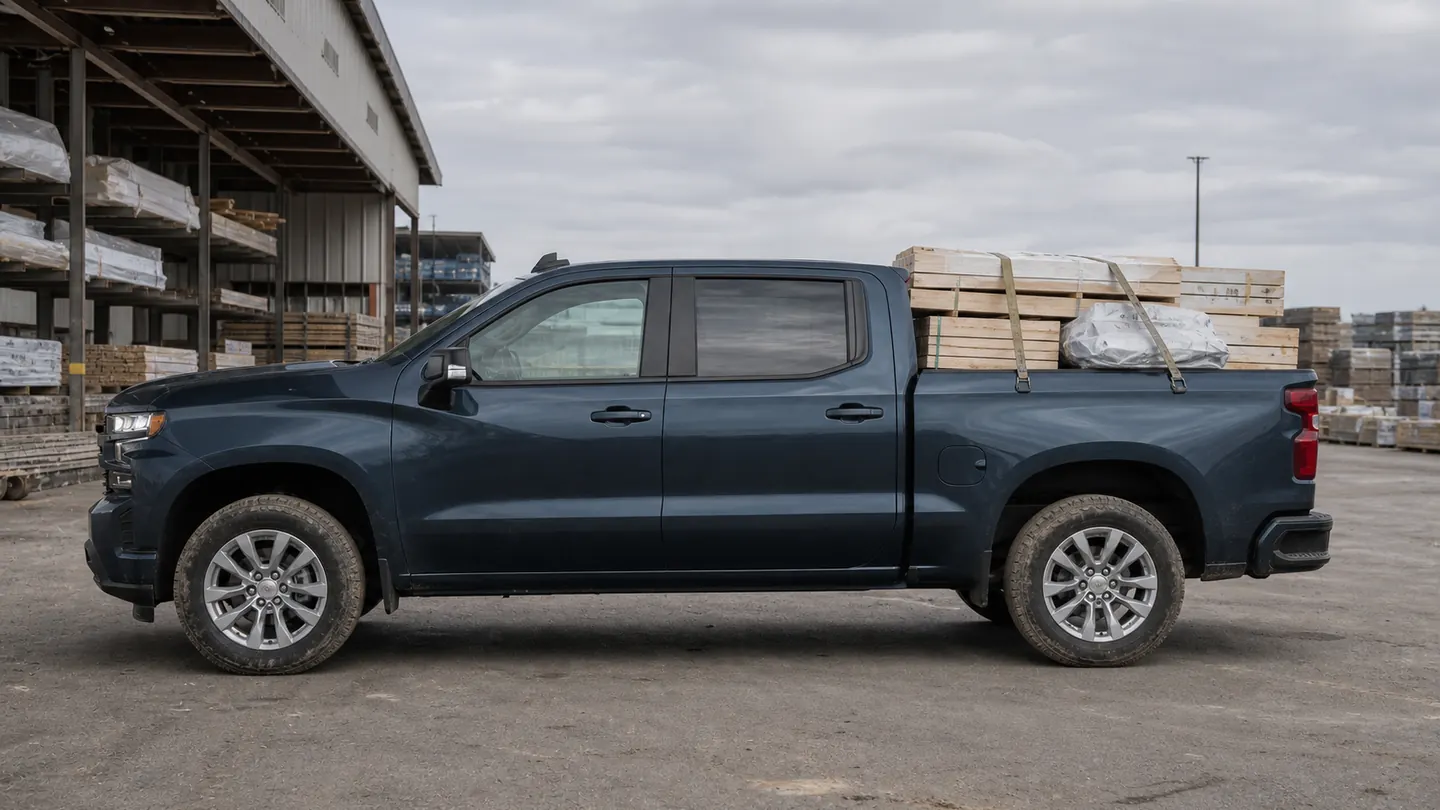
Read the door-jamb payload label on the exact truck. Passengers, bed cargo, accessories, and trailer tongue weight all use that capacity, and a highly optioned crew cab may carry less than its size suggests.
Look across the full side profile on level ground for rear sag, mismatched ride height, or a tire that appears overloaded. Underneath, inspect the receiver, spring mounts, shocks, axle seals, skid plates, and frame for wear that fits the seller's story.
High mileage with consistent service and moderate highway use can be reasonable. Lower mileage paired with high engine hours, heavy hitch wear, overdue fluids, and uneven tires may represent the harder life.
Divide odometer mileage by engine hours when both values are available. A very low average speed can indicate extensive idling or slow work, which changes oil, cooling, charging-system, and accessory wear even when the body looks lightly used.
Payload history also appears in components that sellers may call ordinary wear. Cracked bump stops, polished hitch surfaces, uneven rear tires, tired shocks, or repeated brake replacement can support a story of regular loading and should affect the maintenance reserve.
A useful inspection recreates the truck's real job
Start by confirming the VIN, engine RPO, axle, drivetrain, and payload label. These details determine which recall, fluid, towing, and service questions apply, so the inspection should not begin with a generic checklist.
Arrive before the engine is warmed, read all modules, and record pending as well as active codes. Check oil level and pressure behavior, coolant condition, battery voltage, cold engagement, four-wheel-drive operation, and every camera.
Drive the truck through the speeds and loads it will encounter after purchase. A towing buyer needs controlled shifts, stable coolant temperature, straight braking, and no driveline vibration when the truck is warm.
| Evidence | What it resolves | Buyer response |
|---|---|---|
| Engine RPO and VIN | Recall and powertrain identity | Verify before valuing the truck |
| Engine hours | Idle time hidden by mileage | Compare hours with odometer |
| Hitch and payload label | Towing and loading history | Rebuild real payload math |
| Full-module scan | Cleared or stored faults | Diagnose before deposit |
| Cold-to-warm drive | Engine and transmission behavior | Price any repeatable symptom |
Service invoices should support the condition seen during the inspection. A stack of receipts is useful only when the dates, mileage, engine, fluid, and repairs match this VIN.
Save the pre-purchase scan before codes are cleared and compare it with the dealer campaign record. Pending misfires, transmission adaptation limits, low-voltage history, or repeated communication faults can explain behavior that never turns on a warning lamp during the appointment.
An independent shop should photograph leaks, corrosion, damaged hardware, and tire measurements. That record makes the negotiation specific and provides a baseline for later maintenance.
Buy the evidence, not the Silverado reputation
The strongest used Silverado is not necessarily the newest or lowest-mile truck. It is the configuration whose recall status, cold start, scan, transmission behavior, workload clues, and invoices tell one consistent story.
The Ford F-150 offers a wider powertrain range and aluminum body, so corrosion and engine questions differ even when towing use is similar. Its individual payload and service history still matter more than the badge.
The Ram 1500 prioritizes ride comfort through rear coils and optional air suspension. That makes suspension evidence more important there, while the Silverado decision leans harder on engine RPO and transmission behavior.
The GMC Sierra 1500 shares much of the Silverado's underlying hardware. A different trim or interior cannot remove a VIN-specific engine recall, so the same powertrain proof applies across the related trucks.
A clean inspection can justify buying an older truck, while one major unresolved condition can erase a price advantage. Pay for verified condition and the right engine, not for the Silverado name alone.
Sources
- NHTSA recall documents for campaign 25V274 and the L87 engine investigation
- General Motors dealer recall instructions for affected 2021 through 2024 6.2-liter vehicles
- Chevrolet Silverado specifications and owner resources
- EPA vehicle fuel-economy records