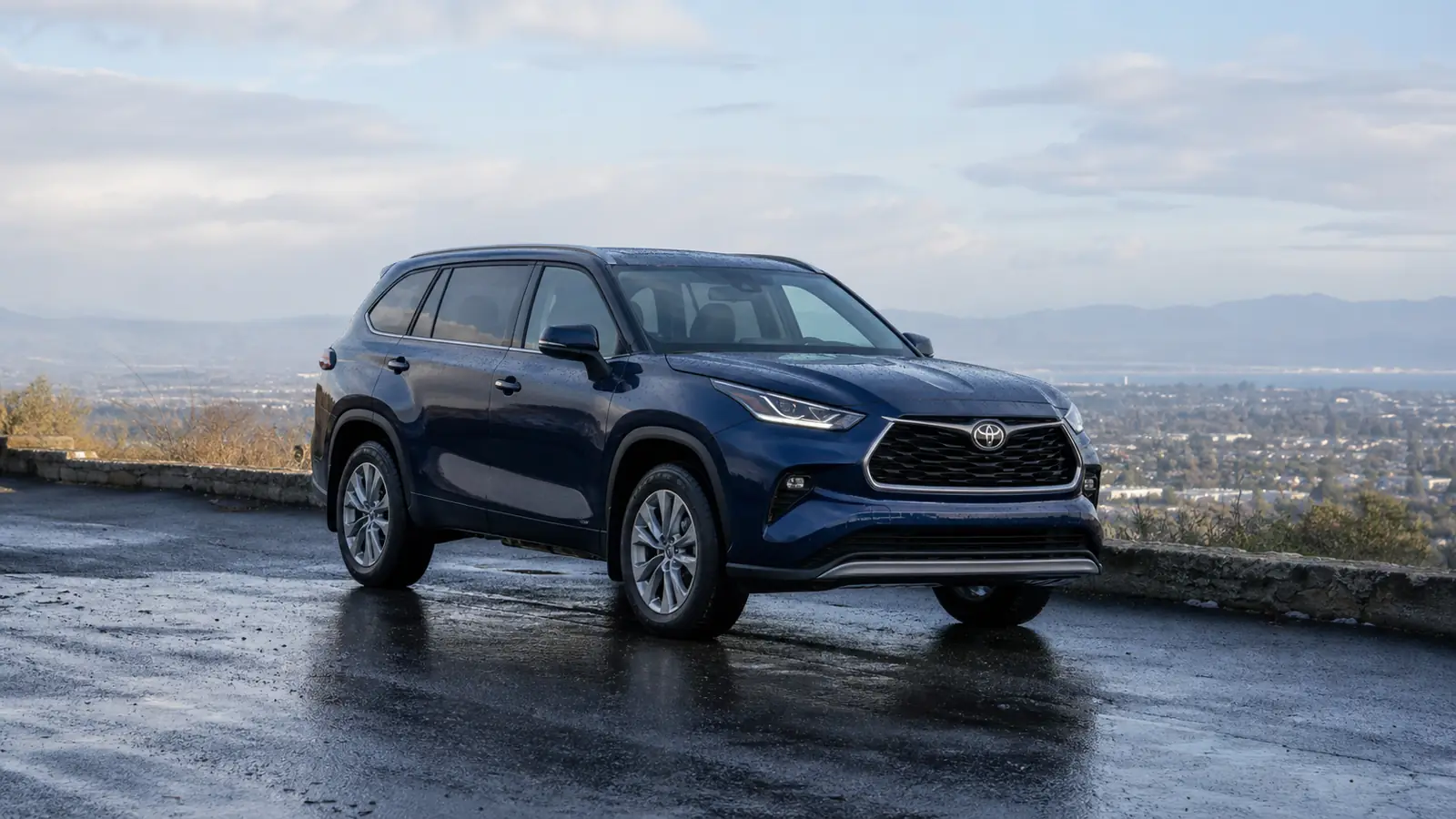
The Highlander is dependable, but the powertrain changes the confidence level
The Highlander earns its reputation through practical packaging, widely supported Toyota hardware, and many older examples that remain in service. That reputation is useful context, but it cannot collapse the V6, hybrid, and turbo four into one reliability answer.
Gas Highlanders used the 3.5-liter V6 through the 2022 model year. Toyota replaced it with a 265-horsepower 2.4-liter turbo four for 2023, while the current hybrid uses a 2.5-liter engine, electric motors, and an electronic power-split transaxle.
| Powertrain | Strongest evidence | Main uncertainty | Best fit |
|---|---|---|---|
| 3.5L V6 | Long service history and broad repair familiarity | Age, leaks, cooling, and prior towing | Conservative used buyer |
| 2.5L hybrid | Long Toyota hybrid experience and substantial battery coverage | Battery age, cooling, and exact warranty terms | High-mile driver |
| 2.4L turbo | Newer vehicle age and strong low-rpm torque | Shorter extreme-mile record | Buyer keeping detailed service |
A long record helps the V6, yet the oldest examples also carry more heat cycles, rubber aging, corrosion, and accumulated repair work. The turbo has less history because time has not produced it, which is different from evidence that it will fail.
The hybrid removes a conventional starter and uses regenerative braking, but it adds a traction battery, inverter, electric cooling needs, and model-specific AWD hardware. Those systems should be inspected separately.
Start with the powertrain that suits the driving pattern, then let exact-car evidence raise or lower the confidence.
Why the older V6 remains the conservative used choice
The 3.5-liter 2GR engine family has powered several Toyota and Lexus vehicles, giving independent shops a long repair history and used buyers many high-mileage examples to study. Smooth cold operation, stable fluids, clean cooling history, and regular oil service still matter more than the engine code alone.
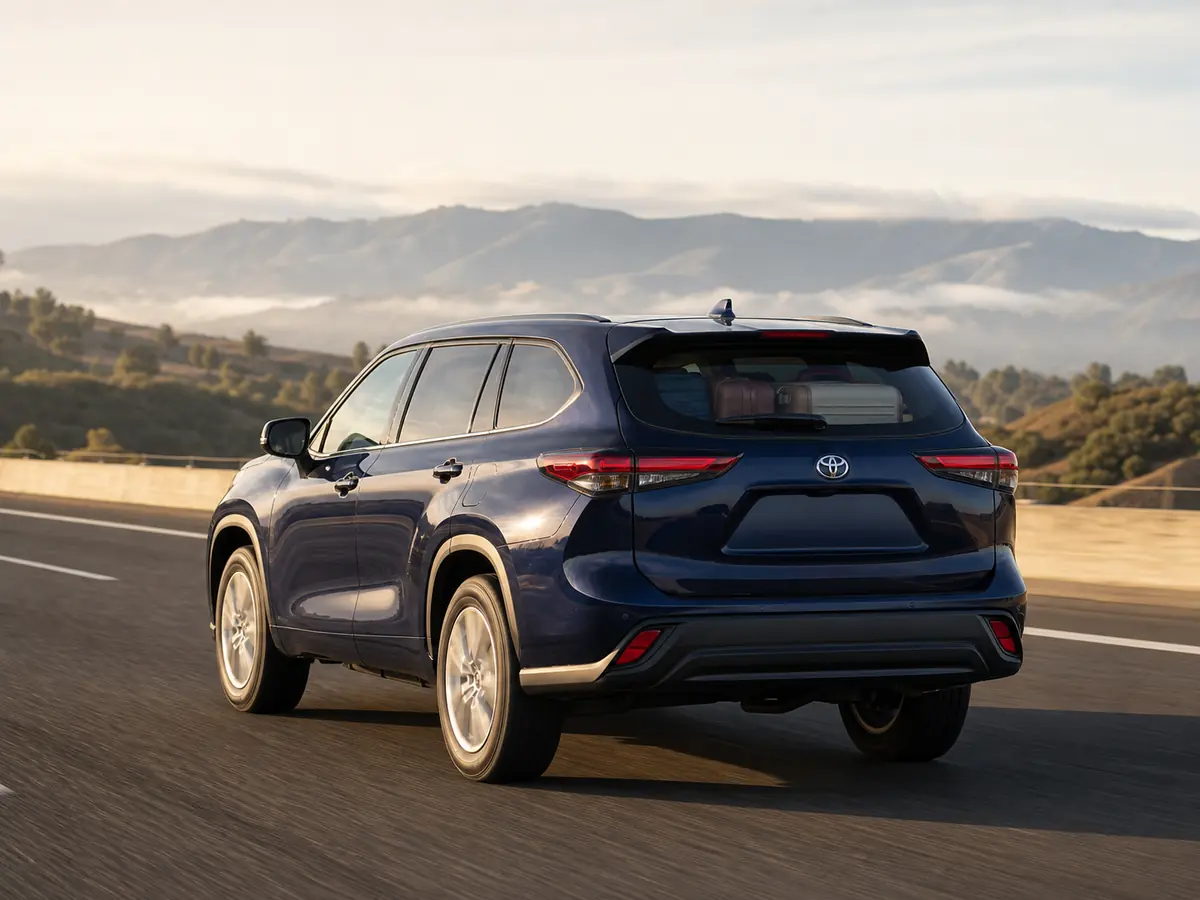
Toyota bulletin T-SB-0201-11 addresses oil cooler pipe leakage on certain 2008 through 2011 V6 Highlanders with a towing package. The bulletin identifies production changes and a defined repair rather than condemning every V6.
A separate Toyota campaign covered an oil cooler pipe condition on certain 2017 through 2019 Highlander Hybrids. Continuous operation with the leak could lead to low oil warnings and engine damage.
Check below the engine and along the cooler plumbing for fresh oil, damp residue, or a recently cleaned surface. Compare the dipstick, underbody, service invoices, and oil-pressure warning history before deciding that a stain is harmless.
Older V6 cars also need cooling-system, water-pump, engine-mount, transmission-fluid, and ignition history appropriate to their mileage. A durable engine can still sit inside an SUV with a large deferred-maintenance bill.
The V6 remains attractive for towing and for buyers who prefer a long record over maximum fuel economy. Its advantage is documented familiarity, not immunity from age.
The 2023 turbo four has less history, not a guilty verdict
Toyota's 2.4-liter turbo four produces 265 horsepower and 310 pound-feet of torque through an eight-speed automatic. It replaced the naturally aspirated V6 in gas Highlanders starting with the 2023 model year.
Turbocharging, direct injection, variable cooling, and a fully variable oil pump create a different maintenance context. Correct oil specification, sensible oil intervals, stable coolant, clean intake plumbing, and proper warm-up after a cold start deserve careful records.
The engine's short time in the Highlander limits claims about fifteen-year durability. That limit should be stated plainly instead of converted into a prediction of failure.
A loaded road test should produce smooth boost, predictable shifts, and stable temperature without hesitation, smoke, surging, or warning messages. Scan current, pending, and history codes after the drive, not only before it.
Buyers planning to tow near the gas model's 5,000-pound rating should inspect hitch installation, transmission behavior, cooling condition, rear suspension, and brake wear. Towing capacity describes an operating limit, not proof that every previous load was handled well.
A newer turbo Highlander may have less age exposure and more remaining factory coverage than an older V6. Price the shorter record honestly, but do not invent a defect that the evidence does not show.
Can the Highlander Hybrid be the reliability-first choice?
Yes, the Highlander Hybrid can be the reliability-first choice for a high-mile driver when the fuel savings are useful and the hybrid systems test cleanly. Its electronic transaxle does not use the belt and variable pulleys found in a conventional belt-driven CVT.
Toyota covers the traction battery on model-year 2020 and newer hybrids for ten years or 150,000 miles, whichever comes first. Other named hybrid components generally carry eight years or 100,000 miles under Toyota's hybrid system warranty.
Highlander Hybrid evidence
- Traction battery
- Check in-service date, scan data, cooling airflow, and warranty
- Hybrid components
- Confirm inverter and control coverage in the exact warranty guide
- Electronic transaxle
- Listen for bearing noise and verify fluid and leak history
- Electric rear AWD
- Check rear motor operation, codes, tires, and collision repair
- 12-volt battery
- Test separately when warnings or no-start symptoms appear
Warranty terms can vary with model year, sale state, registration, emissions rules, and component definition. Read the booklet for the VIN instead of relying on a general hybrid promise.
A hybrid scan should include battery block behavior, temperature, cooling-fan operation, inverter data, and stored codes. State-of-charge movement on the dashboard is supporting evidence and cannot replace module data.
The rear electric motor provides AWD without a mechanical driveshaft on current hybrid models. Four compatible tires, even wear, and clean rear collision history still matter because stability and traction systems rely on credible wheel-speed information.
The hybrid's lower fuel use is most valuable over frequent urban or mixed driving. A low-mile household that tows often may prefer the gas powertrain's higher 5,000-pound rating over the hybrid's 3,500-pound limit.
Choose the hybrid when measured fuel savings, battery evidence, warranty status, and towing needs all point in the same direction.
Fuel-pump and bumper recalls require a VIN answer
Toyota's low-pressure fuel-pump campaign includes certain 2017 through 2019 Highlanders. The pump could stop operating, which may produce rough running, warning lights, a stall, or a no-restart condition.
A large campaign population does not tell you whether one VIN remains open. Ask for the campaign record and confirm current status through Toyota or the NHTSA recall lookup.
Toyota also recalled certain 2020 through 2023 Highlanders for lower front bumper retention. After a minor impact, mounting tabs could detach and allow the lower cover, under cover, or fender liners to become a road hazard.
Inspect the lower bumper and fasteners for poor alignment, missing clips, road rash, or collision repairs even after campaign completion. The VIN record answers recall status, while the physical inspection answers present condition.
Three-row duty shows up in brakes, tires, and rear suspension
A Highlander carrying seven or eight people can add well over 1,000 pounds once luggage and accessories are included. Acceleration takes longer, braking distances grow, and the transmission may hold lower gears on grades.
Those responses are normal under load. Persistent vibration, overheating, brake pulsation, steering pull, sagging ride height, fluid odor, or unstable shifts deserve inspection.
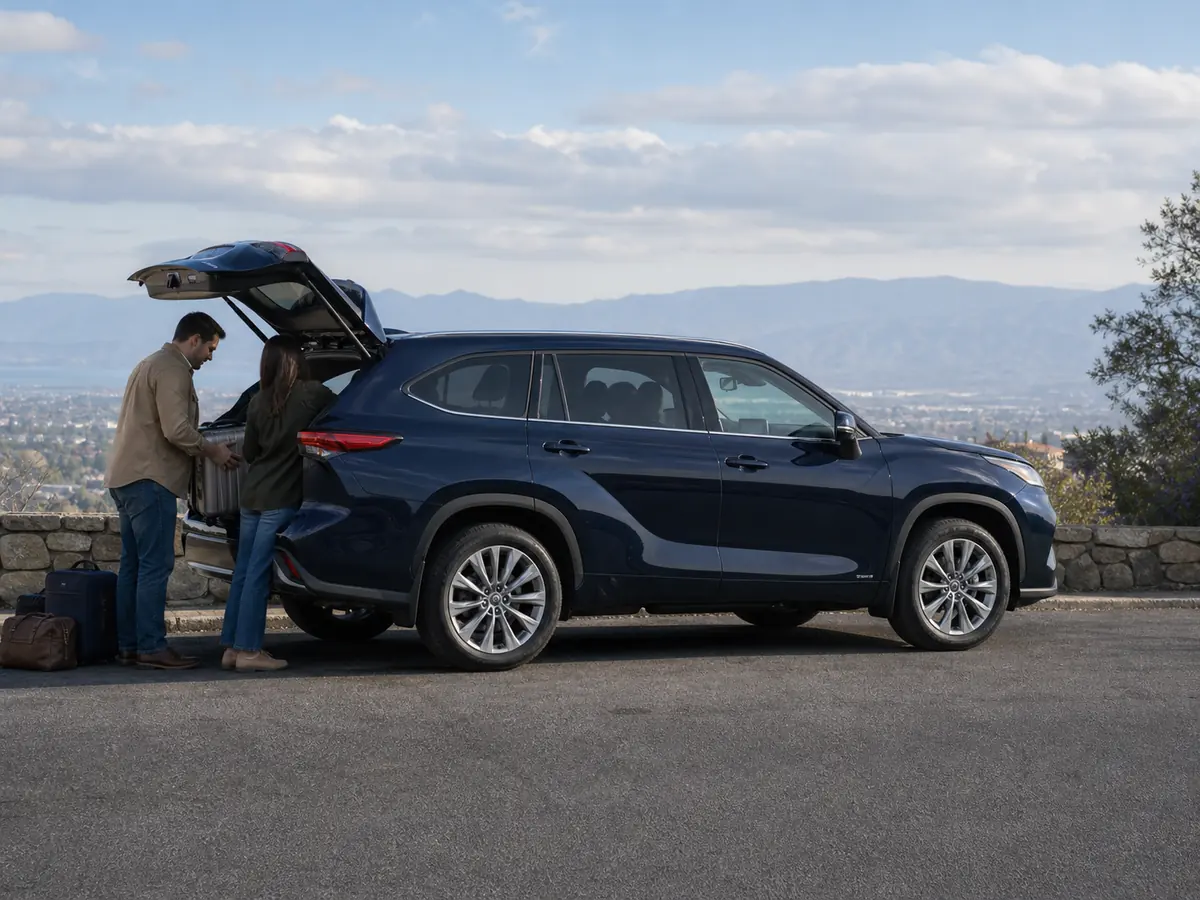
Look at the outer and inner tire shoulders, not only the visible center tread. Uneven rear wear can point toward alignment, worn suspension, frequent load, or repaired collision damage.
Brake pad thickness tells only part of the story. Rotor condition, caliper movement, fluid age, parking-brake operation, and the feel of repeated stops reveal whether the three-row workload was maintained.
A receiver hitch should have clean mounting points, intact wiring, and no improvised holes or crushed panels. Ask what was towed, over which terrain, and whether the owner followed the severe-use fluid schedule.
Cabin condition can corroborate the use story. Heavy third-row, door, cargo-floor, and seat-track wear beside very low mileage requires an explanation.
Normal load behavior is acceptable, but wear that contradicts the records should change the price or end the purchase.
How many miles can a Toyota Highlander last?
A maintained Highlander can remain useful after 150,000 miles, but the powertrain and family-use history determine whether that mileage represents value. The V6 has the longest record, the hybrid adds separate battery and cooling evidence, and the turbo four has less extreme-mile history.
Toyota's 2017 Highlander maintenance guide continues through 120,000 miles and calls for spark plugs, fluid inspections, and additional transmission, transfer-case, and differential service under towing or heavy-load conditions. A seller claiming meticulous care should be able to show work that matches the vehicle's actual use.
Past 100,000 miles, inspect the entire three-row vehicle rather than concentrating on engine reputation. Cooling leaks, motor mounts, struts, wheel bearings, brakes, tires, air conditioning, liftgate hardware, and prior body repairs can arrive in one expensive cluster.
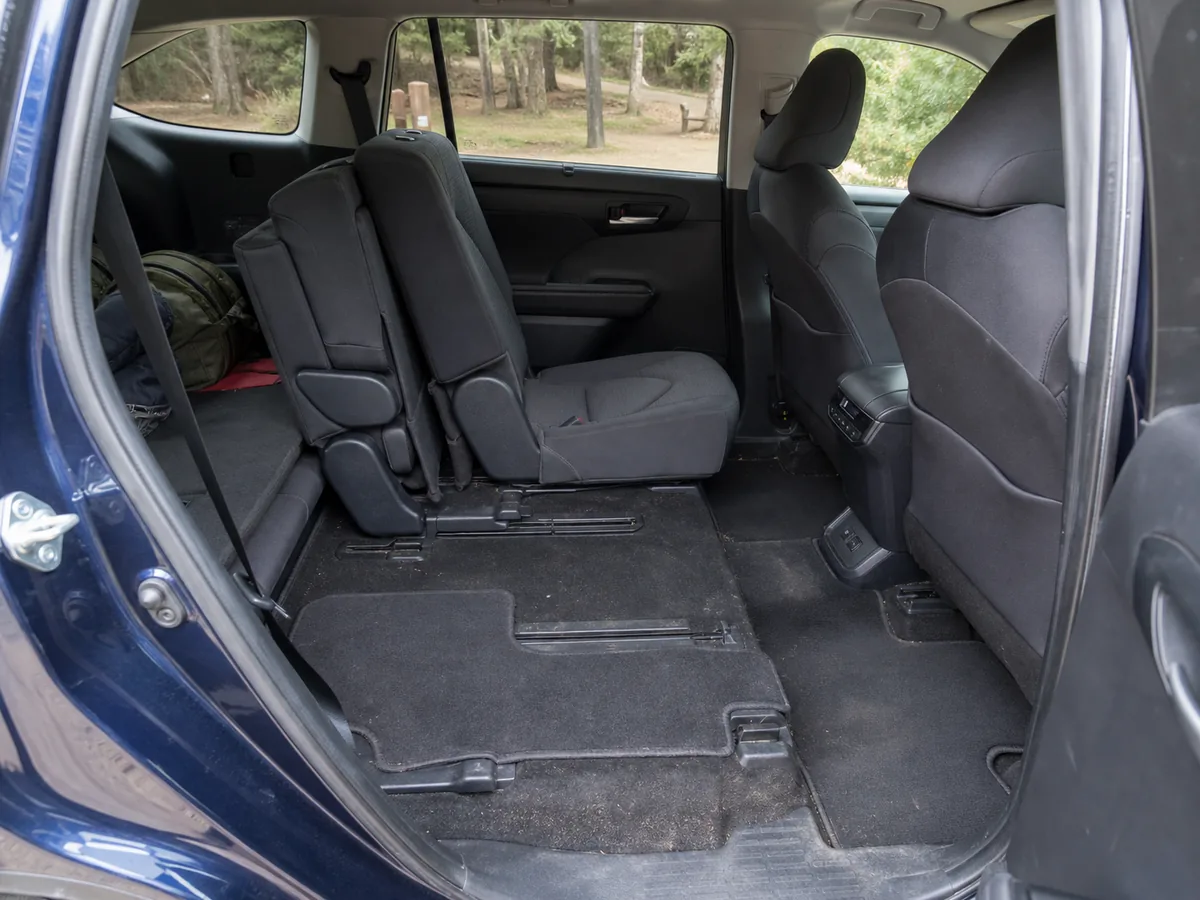
A hybrid battery replacement does not renew the suspension, gasoline engine, brake hardware, or cabin electronics. A V6 with a water-pump invoice is not automatically healthier when the transmission fluid, cooling system, and rear suspension have no history.
There is no useful promise that every Highlander reaches the same odometer reading. Price the next service cycle and repair backlog, then decide whether the remaining family utility justifies the asking price.
Which Highlander should you buy?
A V6 suits the buyer who values the longest mechanical record and accepts age-related work. Favor complete cooling, oil, transmission, and towing records over the lowest odometer.
A hybrid suits frequent driving when its battery and electronics scan cleanly and the fuel savings can be calculated against the actual alternative. Remaining battery coverage should be verified from the original in-service date.
The turbo four suits a buyer who wants a newer vehicle and will preserve detailed oil, cooling, and transmission records. Its price should acknowledge that extreme-mile evidence is still developing.
Toyota's reputation should begin the research rather than finish it. The dependable Highlander is the one whose powertrain, campaign status, load history, and current behavior tell one consistent story.
Sources
- Toyota oil cooler pipe bulletin T-SB-0201-11
- Toyota Highlander Hybrid oil cooler pipe campaign 19TC04
- Toyota low-pressure fuel-pump campaign 20TA02
- NHTSA recall 23V-720 for lower front bumper retention
- Toyota hybrid battery warranty information
- Toyota 2026 Highlander specifications
- NHTSA recall lookup
- Toyota 2017 Highlander warranty and maintenance guide