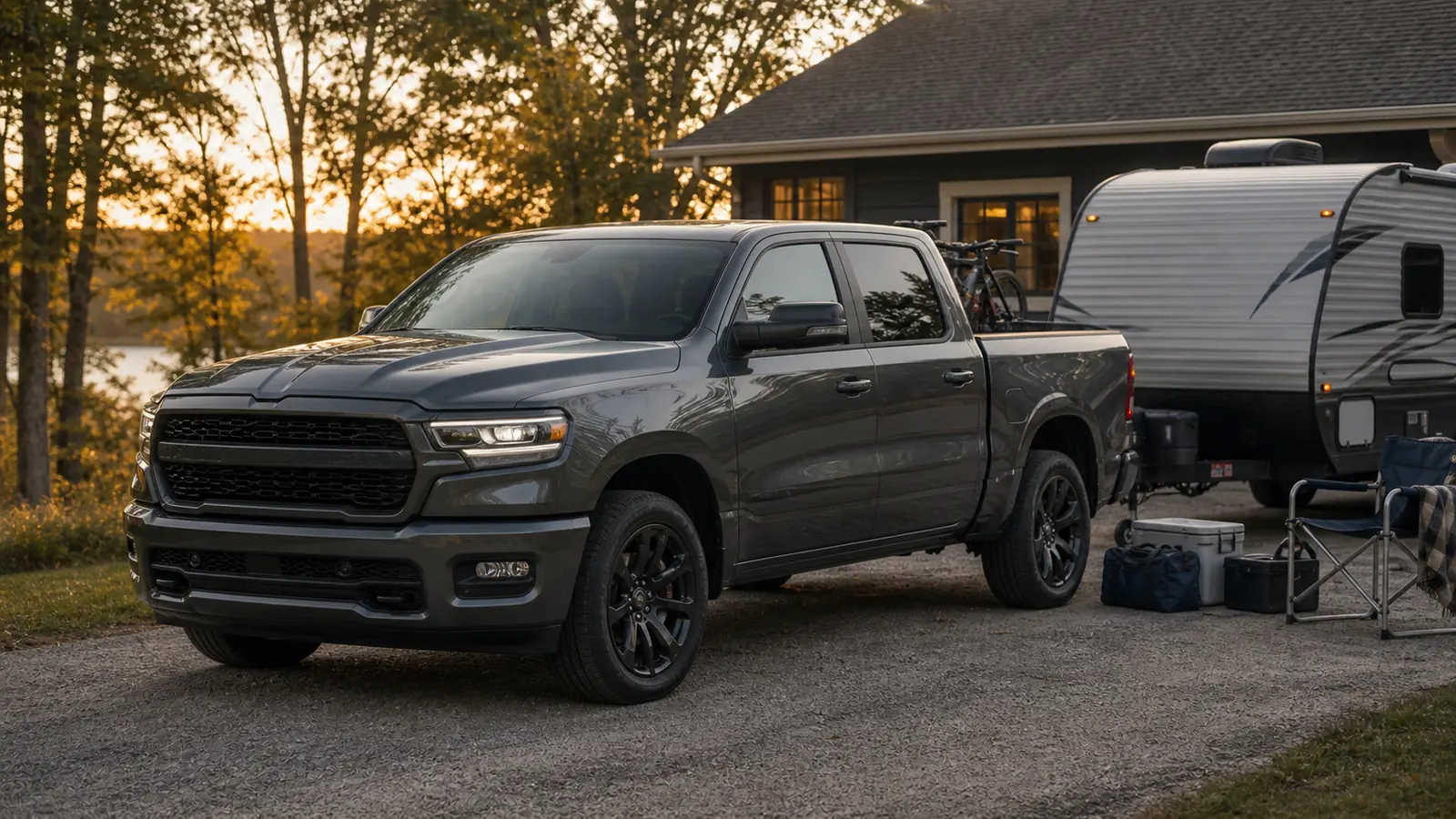
The Ram is reliable when its comfort hardware is healthy
The fifth-generation Ram 1500 pairs a conventional frame and eight-speed automatic with rear coil springs that give it a more settled empty-bed ride than many leaf-spring pickups. That basic layout can serve for high mileage when oil, cooling, transmission, and chassis service stay current.
The overall reliability verdict is favorable when the truck's engine, voltage systems, suspension, sealing, and electronics all pass their own checks. Optional equipment creates more evidence to verify, rather than making every well-equipped Ram unreliable.
Optional equipment creates the larger spread in ownership risk. Four-corner air suspension adds leveling and ride-height control, while eTorque adds a 48-volt motor-generator and battery alongside the truck's 12-volt electrical system.
Higher trims also carry more cameras, powered features, screens, lighting, and expensive interior pieces. None makes the truck unreliable by itself, but every added system needs evidence that it works after the basic warranty ends.
The safest configuration depends on what the buyer uses. A coil-spring V6 or documented Hemi can be easier to keep than a loaded air-suspension truck, while the loaded truck may justify its complexity for towing level and daily comfort.
Ram reliability improves when the buyer chooses only the comfort hardware that provides real weekly value.
A Hemi tick can come from two very different repairs
A 5.7-liter Hemi may tick because exhaust gas escapes around a warped manifold or broken fastener. That sound is often sharper when the engine is cold and may fade as the metal expands with heat.
Internal lifter or cam wear is a different concern. Noise that remains warm, a rough idle, cylinder-specific misfire counts, metal in the oil, or a history of repeated ignition work calls for a deeper diagnosis.
| Evidence | More consistent with | Required proof |
|---|---|---|
| Cold tick that fades | Exhaust manifold leak | Smoke test or visible fastener damage |
| Warm persistent top-end noise | Valvetrain wear | Oil-pressure and mechanical diagnosis |
| Cylinder misfire count | Ignition or internal fault | Coil, plug, compression, and cam checks |
| Detailed repair invoice | Completed known repair | Parts, mileage, and warranty listed |
Do not accept the phrase normal Hemi tick as a diagnosis. Injectors can make ordinary clicking, yet a repeatable exhaust leak or misfire still deserves an estimate before the price is agreed.
Oil level and interval matter because the Multi-Displacement System depends on clean oil and correctly operating lifters. Review service dates and listen before the seller warms the truck, since a fresh oil change alone cannot prove the earlier history.
An exhaust-manifold repair is usually a contained issue. Cam and lifter work reaches much deeper into the engine, so uncertainty between the two should remain a condition of sale rather than a guess paid for later.
eTorque faults start with both battery systems
Ram eTorque uses a belt-driven motor-generator and a 48-volt battery to support engine starting, brief torque assistance, and stop-start operation. The truck still uses a separate 12-volt system to wake modules, power controls, and operate familiar accessories.
A weak 12-volt battery can create warning messages, failed stop-start behavior, communication codes, or an apparent no-start without proving that the 48-volt system is defective. Testing only one battery can therefore send the diagnosis in the wrong direction.
Electrical evidence
- 12-volt battery
- Load test, age, and terminal condition
- 48-volt system
- Stored codes and motor-generator operation
- Stop-start event
- Smooth restart without warning messages
- Module scan
- Low-voltage history across every controller
Ask whether either battery has been replaced and whether the truck received software updates for its exact VIN. A cleared dashboard immediately after charging or battery replacement is weaker evidence than several normal cold starts and a clean scan.
Record resting voltage before the first start, voltage during wake-up, and charging behavior after the engine runs. When several modules store low-voltage or communication codes at the same time, establish battery and connection health before approving an expensive module or motor-generator diagnosis.
Inspect the belt, tensioner, high-current connections, battery terminals, and evidence of water or aftermarket electrical work. A truck with added lighting, audio equipment, or a trailer-power modification needs a clearer wiring explanation because voltage trouble may not begin in a factory component.
The 48-volt system adds complexity, but it also reduces the work performed by a conventional starter. Choose it for the efficiency and response it provides, then keep both voltage systems in the inspection and maintenance plan.
Air suspension must prove itself after an overnight park
The optional four-corner air suspension can level a trailer, lower the truck for entry, and raise it for ground clearance. These benefits are useful, but the system adds air springs, lines, valves, sensors, a reservoir, and a compressor.
Inspect the truck after it has sat overnight on level ground. One low corner, a nose or rear that has settled unevenly, or a compressor that runs for an extended period after startup can point toward leakage or a system struggling to restore height.
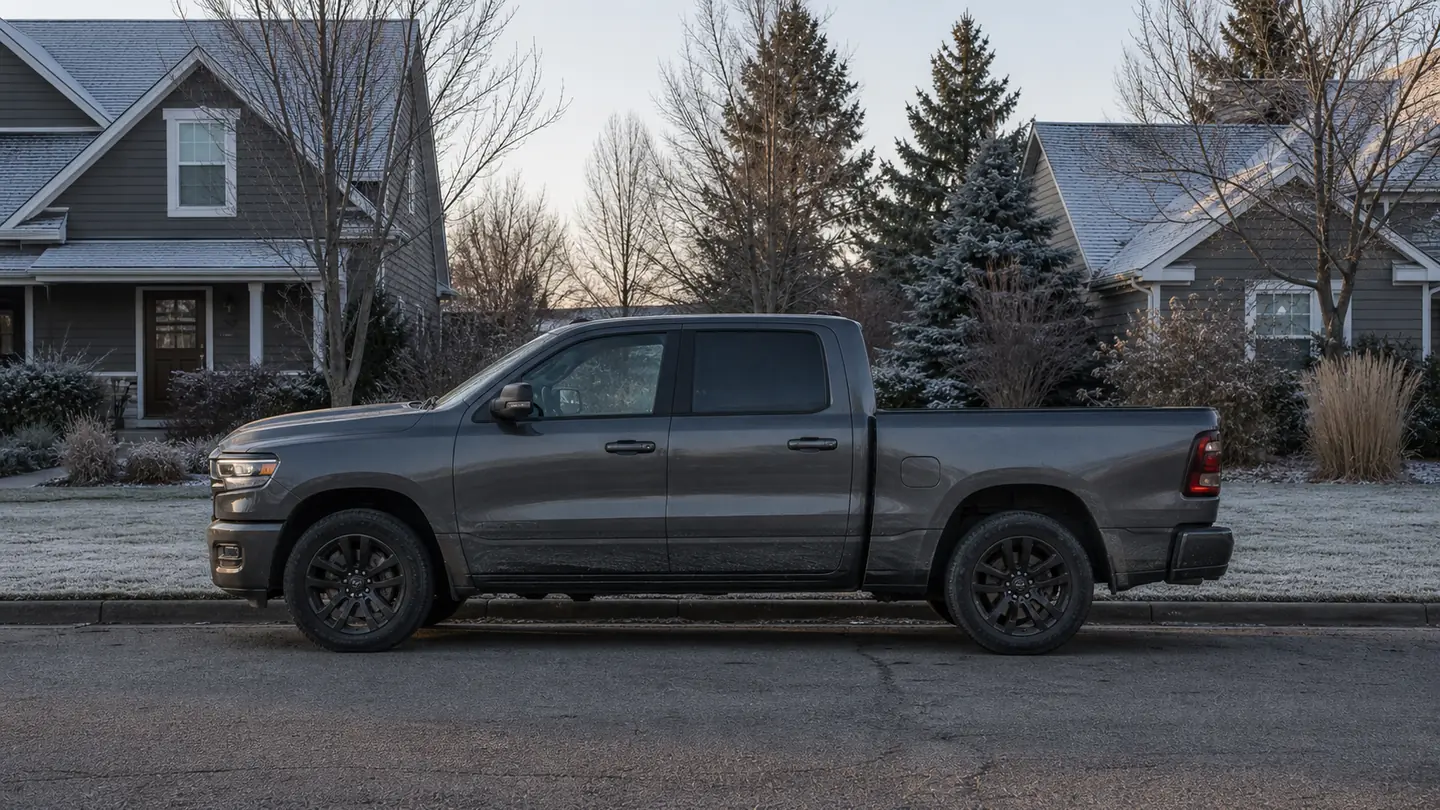
Cycle every height setting and watch all four corners move in a controlled way. A warning, slow response, repeated compressor operation, or refusal to reach one mode needs diagnosis before towing or purchase.
Cold weather can slow operation and expose marginal seals, so a warm showroom demonstration is incomplete for a truck that will live through winter. Review any compressor, air spring, or valve-block invoice and confirm that the present stance supports the claimed repair.
Measure wheel-center height at all four corners before startup and again after cycling the modes. This simple record shows whether one corner loses height, the whole truck settles, or the compressor repeatedly corrects a leak that a quick visual check would miss.
Coil springs remain the simpler long-term choice when automatic leveling and adjustable height provide little value. Air suspension can still be rational when its function is tested and the buyer budgets for its additional parts.
The eight-speed earns confidence through service and behavior
The Ram's ZF-designed eight-speed automatic has a strong general reputation and suits both the Pentastar and Hemi. A good design can still be damaged by heat, low fluid, improper service, tuning, or repeated heavy towing.
Start cold and check reverse and drive engagement before driving through light throttle, steady cruise, and a firm merge. The transmission should shift predictably and lock the converter without repeated flare, shudder, or a harsh bang.
Service language matters because these units require the correct fluid and procedure. An invoice that lists fluid, pan or filter work, mileage, and the shop is stronger than a seller's claim that every fluid was changed.
Towing history should trigger inspection of the hitch, brake controller, cooling system, axle, and transmission behavior when fully warm. A smooth unloaded cruise cannot reproduce the heat created by a camper on a long grade.
A minor software adaptation after battery service may settle with normal driving, but persistent symptoms need a scan and diagnosis. Do not let the transmission's good reputation override what the individual truck does.
Water around the rear window can become an electrical problem
Water can enter some Ram cabins around the rear window frame, third brake lamp, roof trim, or a previous body repair. The first evidence may be a faint headliner stain, damp carpet, fogged glass, or a musty odor rather than water visibly dripping.
Inspect after rain or a wash and press clean paper towels into the rear corners, under the seat, and along the floor. Look at the headliner edge and rear-wall trim under natural light because dark upholstery can hide older marks.
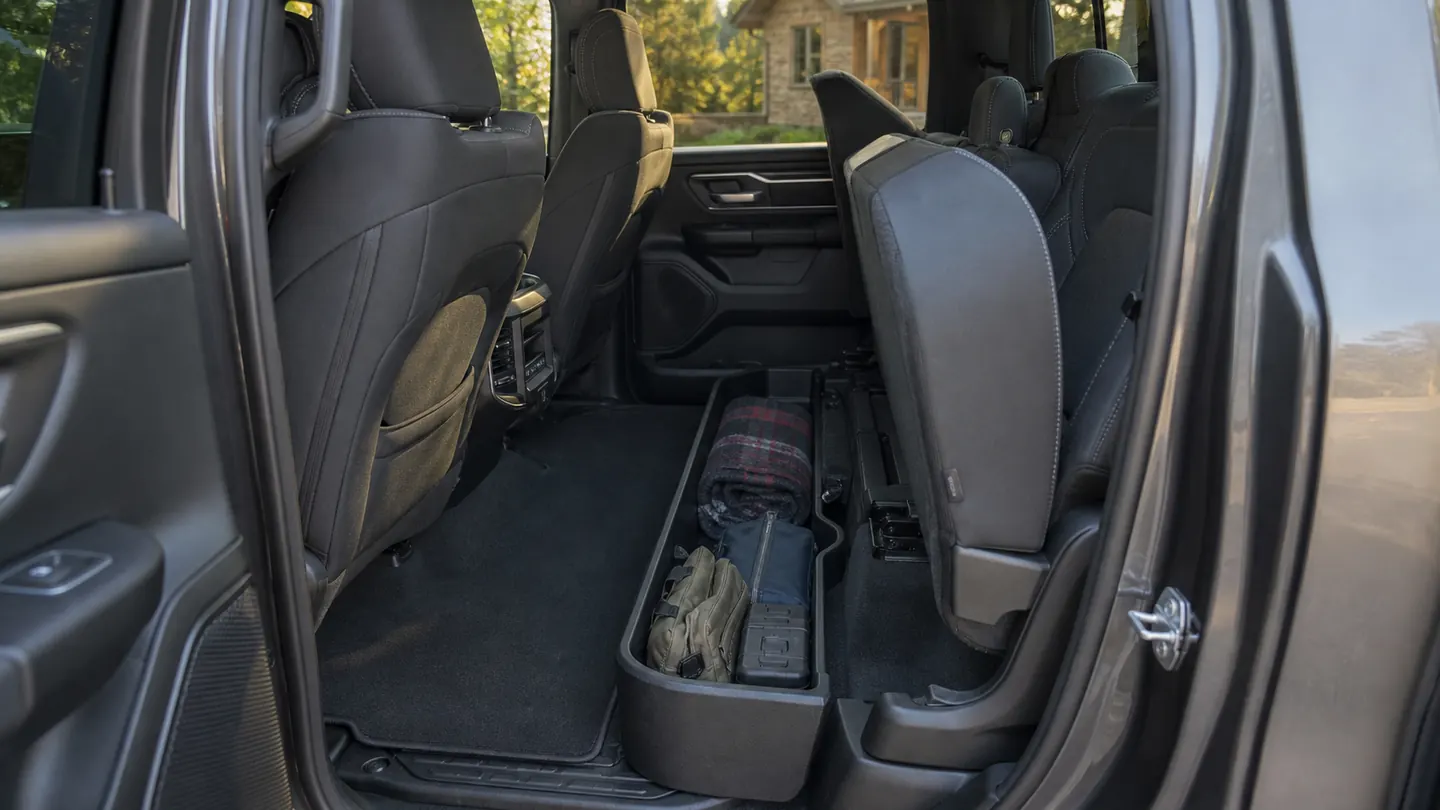
Moisture matters beyond smell. Connectors, audio equipment, powered seats, lighting, and other modules can develop intermittent faults when water reaches them, while trapped dampness encourages corrosion and mold.
Ask what was sealed or replaced and how the shop confirmed the repair. A dry cabin during one sunny visit is not enough when the invoice lacks a water test or the trim still carries stains.
Use a moisture meter where practical and inspect nearby connectors for residue or green corrosion. A resealed opening can stop new water while older moisture remains under insulation, so drying and electrical inspection belong with the sealing invoice.
Rear-window damage can also follow body or glass work rather than a factory seal. Compare trim fit, glass markings, paint edges, and the repair date before assigning the cause, then require a controlled water test that follows the shop's stated repair.
The crew cab is central to the Ram's family appeal, so use the rear seat during the inspection. Fold seats, move storage panels, check belts and child-seat anchors, and confirm that comfort has not hidden water or repair damage.
Camera recalls and screen faults need different responses
Some Ram campaigns have addressed rearview-camera behavior through software updates. NHTSA campaign 20V191 covered certain 2019 and 2020 vehicles whose camera image could remain displayed after shifting out of reverse, and later campaigns covered other rear-camera display faults.
A completed campaign resolves the defined noncompliance for that VIN. It does not guarantee that the camera, wiring, screen, or connector cannot develop an unrelated hardware problem.
- 2019-2020Rearview image campaign affected certain display-equipped trucks
- 2022Some vehicles received later rear-camera software remedies
- Any yearVIN completion and a live camera test remain separate evidence
Test the camera from a cold start, change views, move the tailgate if equipped with cameras, and wait for the display to return to its normal screen. Check navigation, audio, climate controls, phone pairing, and driver-assistance warnings during the same drive.
An over-the-air or dealer update can be a clean repair when records show completion and the function works. A recurring black screen, reboot, missing camera view, or water-related fault still needs a diagnosis.
Hurricane power brings less long-term history
The 2025 Ram 1500 moved its higher-output choices to the 3.0-liter Hurricane twin-turbo inline-six, while the 3.6-liter Pentastar remained available. The 2026 lineup brought the 5.7-liter Hemi back, leaving buyers with mature and newer designs under one badge.
The Hurricane delivers strong torque and acceleration, but used-market evidence is naturally shorter than it is for the Pentastar or Hemi. Early ownership should be judged through oil history, cooling condition, software updates, boost behavior, and remaining warranty rather than confident predictions.
Ram advertises a longer powertrain limited warranty for eligible 2026 trucks. That current coverage should not be applied backward to a 2025 or older used truck without reading the warranty attached to its VIN and original sale date.
A newer engine can be a sensible choice when performance matters and warranty coverage is strong. A buyer who values the deepest service history may prefer a simpler Pentastar or a documented Hemi instead of paying for high output.
Choose the simplest Ram that still does the job
A dependable Ram does not need to be stripped of every feature. It needs an engine, suspension, cab, and electrical package whose benefit is worth the maintenance exposure and whose current condition can be proven.
The Chevrolet Silverado 1500 uses a different suspension and engine strategy, so its strongest used evidence centers on powertrain RPO, payload, and transmission behavior. A Ram buyer should not borrow that checklist and skip the air system or rear cabin.
The Ford F-150 offers more powertrain and work-configuration breadth. Its exact build may carry more payload, while the Ram can justify its choice through a smoother empty-bed ride and a cabin that remains quiet and dry.
The GMC Sierra 1500 is closer to the Silverado mechanically than it is to the Ram. Comparing all three makes clear that the Ram's reliability premium comes from optional comfort systems rather than the basic need for a sound engine and transmission.
Use the overnight stance, cold start, full-module scan, water check, and warm road test together. The best Ram is the simplest configuration that still delivers the comfort and capability you will use.
Sources
- NHTSA campaign 20V191 for rearview-camera display behavior
- NHTSA campaign 24V436 for later rear-camera software remedies
- Ram 1500 specifications and current warranty information
- Ram warranty coverage details