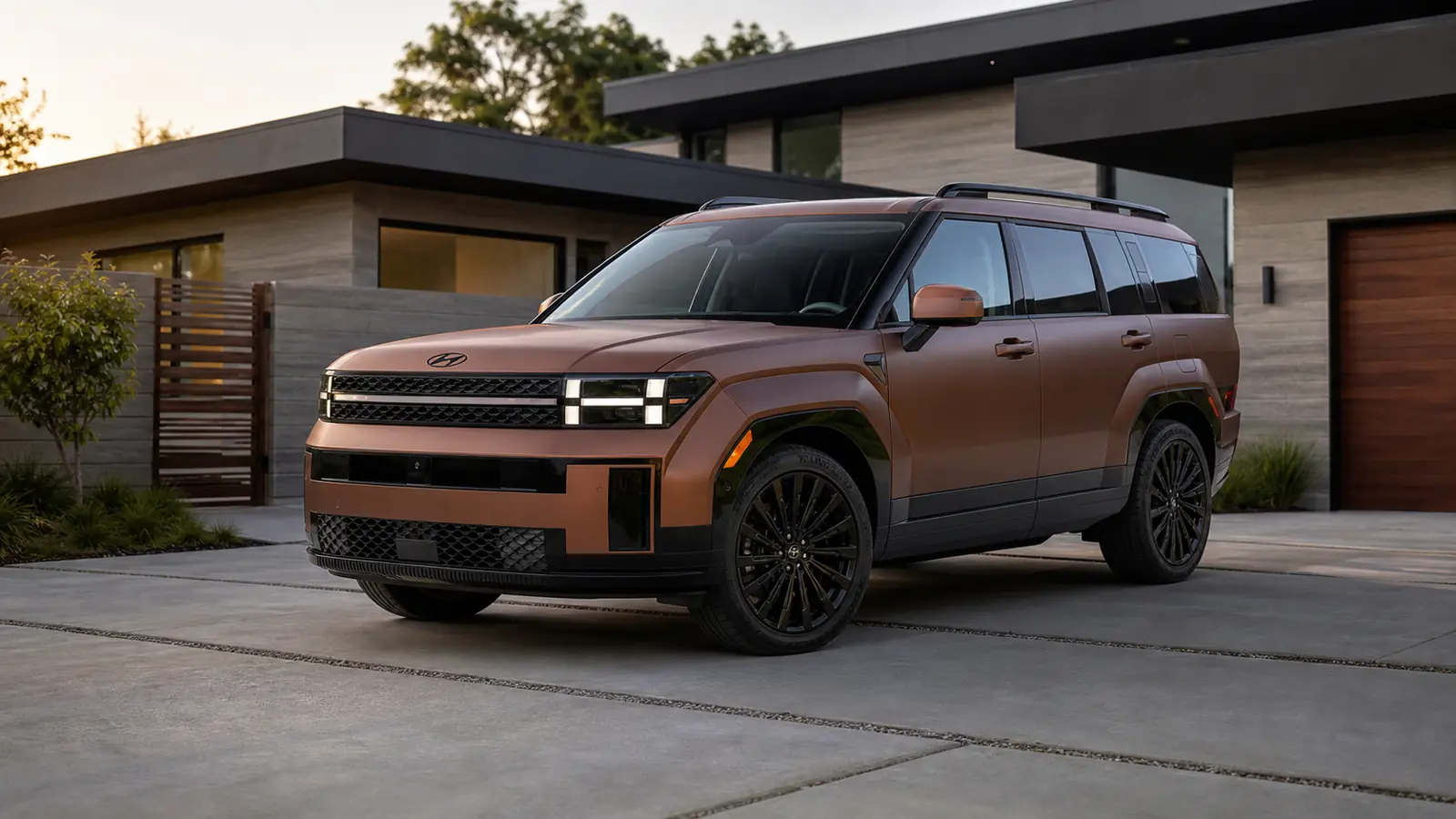
Is the Hyundai Santa Fe reliable?
Yes, a carefully selected Hyundai Santa Fe can be dependable. The catch is that the Santa Fe name covers older two-row Sport models, long-wheelbase V6 models, 2019 to 2023 gas models, hybrid versions, and the redesigned 2024 and newer gas model.
That spread makes a single verdict too blunt. The older four-cylinder GDI engines need engine-record proof, several years need ABS or tow-hitch fire-risk checks, and some 2021 to 2022 vehicles need eight-speed DCT recall evidence.
iSeeCars gives the Santa Fe a 7.2 out of 10 reliability score and lists the 2019 to 2023 generation at 8.3. It lists the 2013 to 2018 generation at 8.1 and marks 2024 to 2026 as unavailable because there is not enough long-term data yet.
Those scores support putting the Santa Fe on the shopping list. They do not prove that an individual used SUV has stable oil pressure, completed fire-risk work, healthy transmission behavior, clean modules, or warranty coverage that belongs to the next owner.
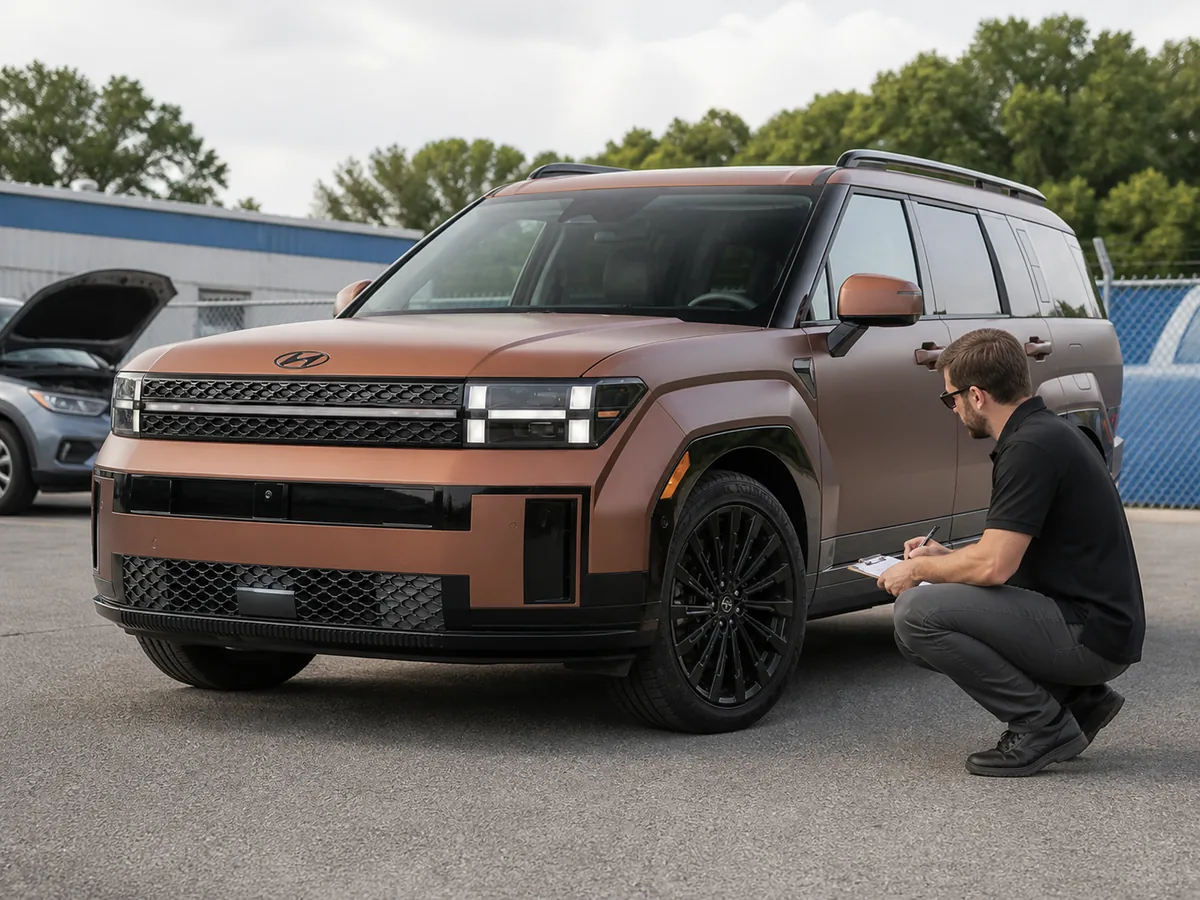
A recall proves scope and remedy for a defined vehicle population. It is not a failure rate, and it does not prove the rest of the vehicle is healthy.
The best candidate starts cold, has a current VIN recall printout, carries invoices that name the performed work, behaves consistently after a full warm drive, and passes a complete scan plus physical inspection. The Santa Fe is reliable enough to shortlist when the exact vehicle's evidence is stronger than the reputation attached to the badge.
The older turbo concern is really an engine-family question
The title concern for older Santa Fe reliability is not just turbocharging. It is the four-cylinder GDI engine family used in the Santa Fe Sport and the records that show whether the specific engine was inspected, updated, repaired, or replaced.
Hyundai's campaign 162 service document covers certain 2013 and 2014 Santa Fe Sport vehicles with 2.4-liter and 2.0-liter turbo GDI engines. The procedure checks for excessive connecting-rod bearing wear and can lead to a pass result, a retest, or engine replacement.
That distinction matters because a pass inspection, a knock-sensor software entry, and an engine replacement are different records. A seller saying the engine recall was done is not enough unless the invoice states the campaign, date, mileage, result, and installed parts.
The 2013 launch also split the Santa Fe line into two mechanical branches. Hyundai's 2013 introduction described the Santa Fe Sport with 2.4-liter and 2.0-liter turbo four-cylinder engines, while the longer Santa Fe used a 3.3-liter GDI V6.
| Vehicle branch | Main reliability question | First proof to request |
|---|---|---|
| 2013-2014 Santa Fe Sport 2.4L GDI | Bearing-wear inspection and campaign 162 result | Dealer campaign printout, pass or no-pass result, oil history, cold noise, and current scan |
| 2013-2014 Santa Fe Sport 2.0T GDI | Same bearing evidence with turbo hardware and higher heat load | Campaign result, engine replacement branch if any, turbo oil-leak check, cold and hot road test |
| 2015-2018 Santa Fe Sport four-cylinder | Extended engine-watch evidence and service history | VIN history, knock-sensor or engine records, oil-level stability, and replacement documentation |
| 2013-2018 Santa Fe or Santa Fe XL 3.3L V6 | Age, cooling, leaks, transmission behavior, AWD, and service chronology | Cold start, fluid checks, full scan, lift inspection, and coherent invoices |
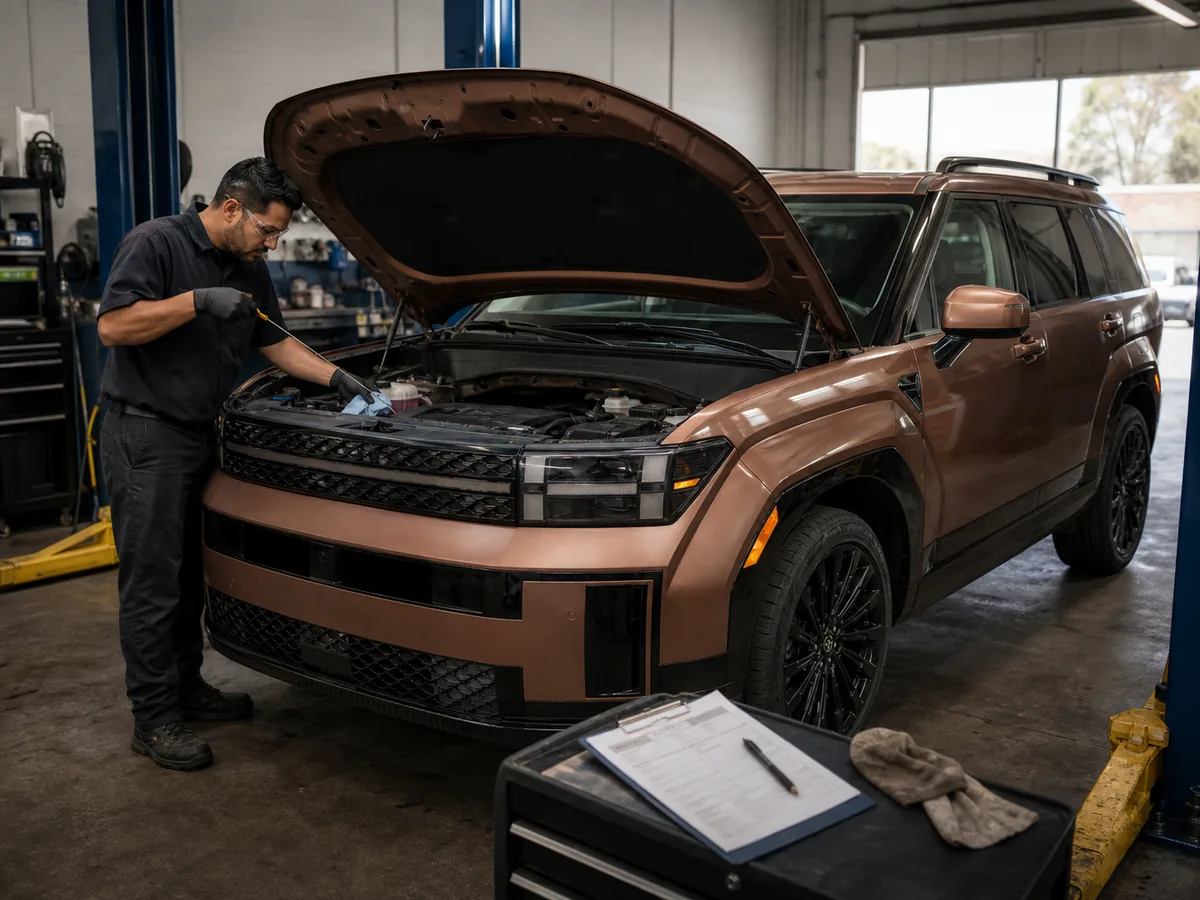
Start an older Sport completely cold and on level ground. Check the oil level before startup, listen for knock that follows engine speed, watch the oil-pressure and malfunction lamps, then repeat the scan and leak inspection after a warm road test.
Do not accept a warmed engine, thick oil, a fresh battery disconnect, or a clean dashboard as proof. Those conditions can hide noise, erase readiness evidence, or shorten the test before oil temperature and load reveal the problem.
A replacement engine can strengthen the case when the record is traceable. It should identify why the engine was replaced, what assembly was installed, the mileage, the warranty on that work, and the maintenance after installation.
The older turbo Santa Fe is not automatically a bad buy, but it is a records-first buy. Without engine identity, campaign detail, and present-condition proof, the price should reflect an unresolved powertrain question.
Fire-risk records are separate ABS and hitch-harness checks
Two Santa Fe fire-risk records can sound similar in a seller's description, but they come from different hardware. An ABS module concern does not clear a tow-hitch harness concern, and a hitch-harness invoice does not clear the ABS circuit.
In November 2022, NHTSA said certain 2018 Santa Fe owners should park outside until repaired because the ABS module could short and cause an engine-compartment fire while parked or driving. NHTSA also said the action was in addition to an earlier 2016 to 2018 Santa Fe recall for the same safety defect.
The repair evidence should name the ABS campaign and the performed operation. A generic brake-system note or an inspection line with no campaign number does not prove the correct fuse or ABS remedy was completed.
The tow-hitch harness action is separate. NHTSA recall 23V181 covers 2019 to 2023 Santa Fe gas vehicles, 2021 to 2023 Santa Fe Hybrid vehicles, and 2022 to 2023 Santa Fe Plug-in Hybrid vehicles when equipped with the affected accessory tow-hitch harness.
The report says water can enter through the 4-pin tow-hitch harness connector and short the module. Hyundai recommended parking affected vehicles outside and away from structures until the remedy was completed.
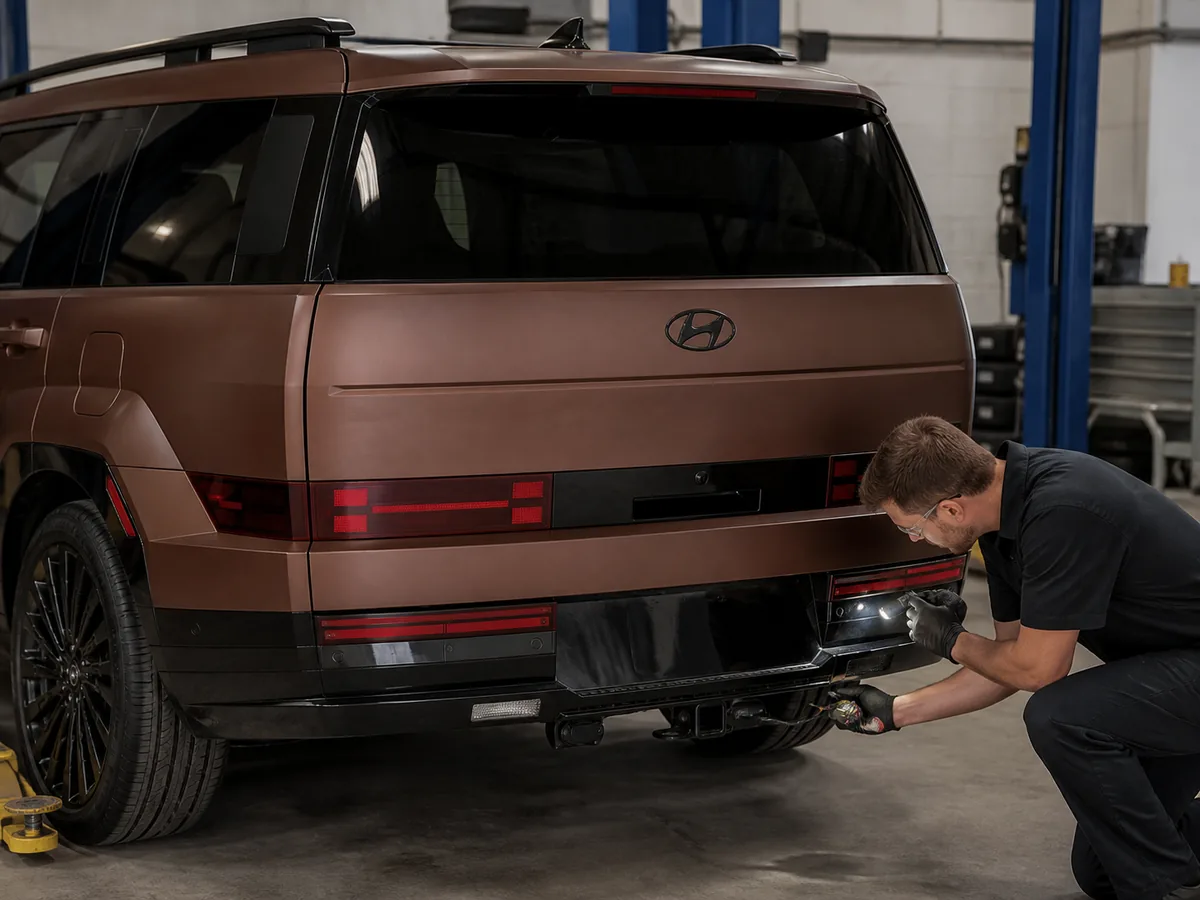
A hitch receiver alone does not prove the recalled electrical kit is present. You need the VIN result, accessory history, harness inspection, fuse or wire-extension record, and any replacement module documentation.
After any fire-risk remedy, inspect for overheated wiring, melted insulation, warning lamps, stored brake or stability-control faults, and nonstandard splices. A completed campaign record cannot turn current heat damage into normal wear.
Clear the ABS path and the rear tow-hitch path independently. They share a possible fire consequence, but they do not share proof.
The 2021 to 2022 DCT needs proof, not panic
Some Santa Fe transmission searches point to Hyundai campaign 236. Hyundai's recall site says the action covers certain 2021 to 2022 Santa Fe vehicles with the eight-speed dual-clutch transmission, along with several other Hyundai models.
The remedy is not just a label on the service history. Hyundai says dealers reprogram the transmission control unit with updated fail-safe software, inspect the transmission, and replace it when necessary.
That means a useful record should state the campaign, software work, inspection result, and replacement decision. A transmission replacement can be positive evidence, but only when the invoice also shows the current unit, mileage, and post-repair verification.
This wet DCT should not be confused with the older dry dual-clutch transmission used in some smaller Hyundai Motor Group products. The Santa Fe question is whether this vehicle has the affected eight-speed DCT, whether the recall was completed, and whether the transmission behaves correctly now.
DCT proof ladder
- Campaign 236 VIN status
- Shows whether the Santa Fe is included and whether the remedy is open or complete
- TCU update
- Shows the fail-safe software was installed, not that every mechanical concern is gone
- Transmission inspection
- Shows the dealer evaluated the unit under the campaign path
- Replacement record
- Identifies a renewed transmission, but still needs current scan and road-test proof
- Cold-to-hot road test
- Shows present engagement, shift quality, warning status, and repeatability under heat
Test it from a true cold start. Select Reverse and Drive, use parking-speed maneuvers, include stop-and-go traffic, accelerate moderately, cruise steadily, then repeat low-speed engagement after full warm-up.
Delayed engagement, warning messages, limp behavior, repeatable flare, harsh shift shock, loss of drive, or a recently cleared transmission module should stop the negotiation until diagnosis. A five-minute loop around the block is too short for this powertrain question.
Buy a DCT-equipped Santa Fe when the campaign record and the current behavior agree. If either side is missing, the transmission risk belongs in the repair estimate, not in the buyer's hope.
The newest Santa Fe has less history and one crash-fire recall
The redesigned 2024 and newer gas Santa Fe changes the evidence again. Hyundai's 2024 model information lists a 2.5-liter turbocharged engine with 277 horsepower and 311 pound-feet of torque, paired with an eight-speed dual-clutch transmission.
That powertrain is different from the older 2013 to 2018 four-cylinder GDI concern, and the body is new enough that high-mileage evidence is still thin. iSeeCars marks the 2024 to 2026 generation as unavailable for generation reliability because there is not enough data.
The current generation also has its own safety record. NHTSA recall 25V659 covers 135,386 certain 2024 and 2025 Santa Fe vehicles with 2.5-liter turbo engines because the starter motor B+ terminal cover may not be fully seated.
The report says the exposed terminal could contact the cooling fan assembly in certain crash scenarios and create an electrical short. It also says an electrical short can increase fire risk, with no warning before the condition.
Current Santa Fe proof
- 2.5T DCT identity
- Confirms the vehicle is the current gas powertrain, not an older GDI Sport or hybrid setup
- Recall 25V659 status
- Shows whether the starter-cover inspection and reinstallation applies to the VIN
- Long-term history
- Remains less mature than the 2013-2018 and 2019-2023 generations
- Warranty status
- Depends on original in-service date, ownership category, mileage, use, and exact handbook terms
Hyundai's warranty page describes long powertrain coverage for original owners, but it also states that second or subsequent owners receive powertrain components coverage under the 5-year or 60,000-mile new vehicle limited warranty. Certified pre-owned coverage and model-year handbooks can change the details, so the VIN and sale category matter.
A newer Santa Fe therefore has a cleaner age profile, not a proven long-life record. Confirm recall 25V659, DCT behavior, software status, service history, and transferable coverage before paying a late-model premium.
The newest Santa Fe is promising, but it is not old enough to borrow the confidence of older high-mileage examples. Judge it on its own recall, transmission, and warranty evidence.
How many miles can a Hyundai Santa Fe last?
A Santa Fe can reach high mileage, but no trustworthy source can promise a fixed lifespan for one used vehicle. Population data helps set expectations, while inspection evidence decides the vehicle in front of you.
iSeeCars estimates the Santa Fe's average lifespan at 136,064 miles and reports a 10.2 percent chance of reaching at least 200,000 miles. It also lists typical first-decade use at 11,730 miles per year.
Those numbers mix engines, generations, climates, owners, repairs, and duty cycles. They do not tell you whether a specific engine is quiet cold, whether the DCT was updated, whether an ABS action is open, or whether a tow-hitch module has water damage.
Survival is also different from low-cost ownership. A vehicle can remain running after an engine, transmission, or electrical repair that another owner would consider too expensive.
For a 2013 to 2018 Santa Fe Sport, useful life starts with engine identity, oil stability, campaign history, replacement records, and present noise evidence. For a 2019 to 2023 model, add ABS, tow-hitch, hybrid, transmission, and warranty checks by VIN.
For a 2024 or newer gas model, the main limitation is time. Clean early service, a completed starter-cover action where applicable, normal DCT behavior, and transferable warranty coverage are useful proof without creating 150,000-mile history.
All-wheel drive adds tire and driveline evidence at every age. Four tires should match the specified size and stay close in tread depth, and tight low-speed turns should not bind, clunk, or shake.
Build a service chronology by date and mileage. Oil services, coolant work, transmission diagnosis, brake fluid, tires, battery history, campaign work, and major repairs should form a plausible sequence rather than a stack of undated receipts.
Judge remaining life by the systems that are still healthy and the repairs the vehicle still needs, not by a mileage number in an ad.
Let the exact Santa Fe decide the purchase
Start with identification. Record the VIN, model year, build date, engine, transmission, drivetrain, hybrid status, tow-hitch wiring, original in-service date, ownership category, and whether the vehicle is a Santa Fe Sport, Santa Fe XL, or current Santa Fe.
Then run the VIN through the NHTSA recall lookup and ask a Hyundai dealer for the campaign printout. Match every open or completed item to an invoice that names the campaign number, date, mileage, performed operation, software, and installed parts.
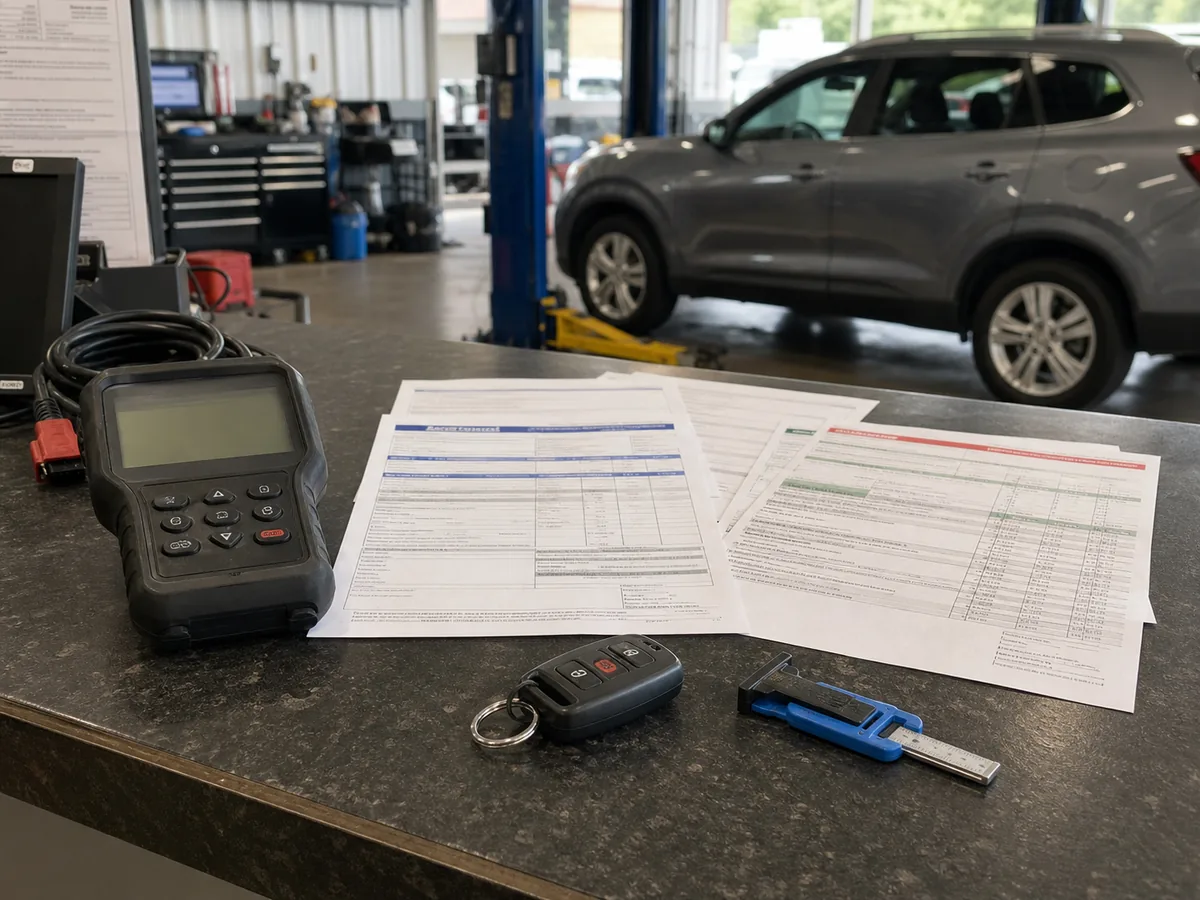
Arrange a true cold start, full-module scan, complete warm-up, varied road test, post-drive scan, fluid inspection, underbody inspection, and tire check. The paperwork and the vehicle should agree after the test, not only before it.
Safety blockers come first. Open fire-risk work, starter-cover fire risk, engine knock, oil-pressure warning, loss of drive, overheated wiring, smoke, major structural corrosion, or a seller who blocks a cold inspection should stop the purchase until the uncertainty is resolved.
Ordinary wear can be priced afterward. Tires, brakes, a weak 12-volt battery, scheduled fluids, worn dampers, and cosmetic damage can support a lower offer when the engine, transmission, structure, electronics, and campaign record are sound.
Do not pay extra just because a major part was replaced. The invoice should name the original failure, diagnosis, installed part, warranty, and test that confirmed the symptom did not return.
The best-practice pick is a documented Santa Fe whose exact hardware has already passed the evidence that applies to it. A newer or lower-mileage Santa Fe is not the safer one until its VIN history and current condition prove it.