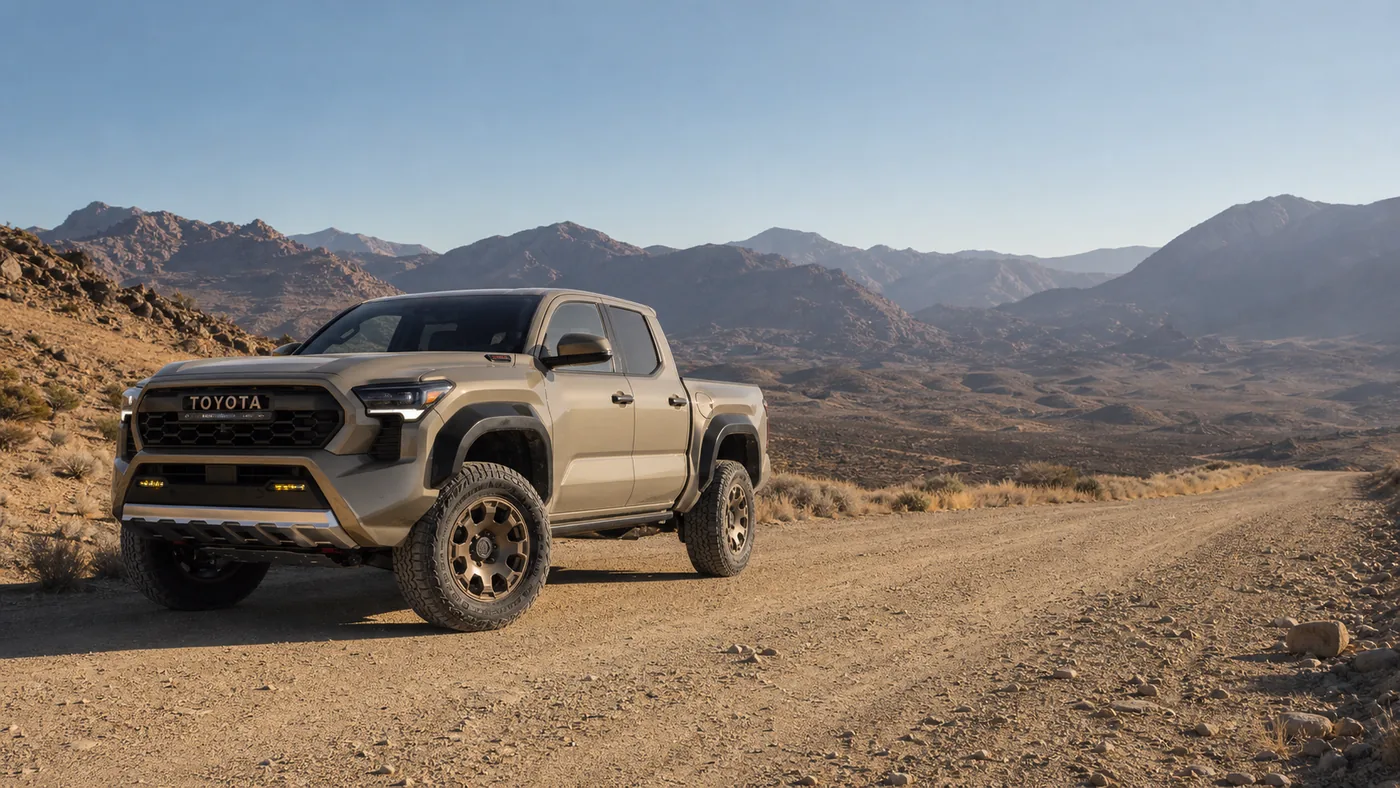
Two reliability services rank the Tacoma first and last
iSeeCars scores the Toyota Tacoma 8.2 out of 10 and calls it the most reliable midsize truck, first of the seven it ranks. RepairPal scores it 3.5 out of 5.0 and places it seventh of seven in the same class.
Both publish their basis, and the bases are different. iSeeCars models how long a vehicle survives before it leaves the road, while RepairPal builds a composite from how much repair work costs, how often it is needed and how severe it tends to be.
| Source | Score | Rank in class | What the number measures |
|---|---|---|---|
| iSeeCars | 8.2 out of 10 | 1 of 7 midsize trucks | Modelled service life before the vehicle leaves the road |
| RepairPal | 3.5 out of 5.0 | 7 of 7 midsize trucks | Cost, frequency and severity of unscheduled repair during ownership |
A truck can be the last one still running at 200,000 miles and still be the one that visits a workshop most often on the way there. Those are not competing claims about the same thing.
The segment size sharpens the disagreement further. Seven trucks means last place is a narrow margin rather than a collapse, and RepairPal's own $478 average annual repair cost for the Tacoma is described as lower than average.
Weight the survival model if you intend to keep the truck past 150,000 miles, and weight the repair composite if you plan to sell it inside five years. The two ratings answer different ownership horizons.
Where the complaints actually sit, model year by model year
The generation everyone recommends is 2016 to 2023, and iSeeCars scores it 9.21, above the model's own overall figure. That score covers eight model years whose federal complaint records look nothing alike.
The 2016 truck holds 323 complaints, led by power train at 102. The 2017 truck holds 238, again led by power train, at 46.
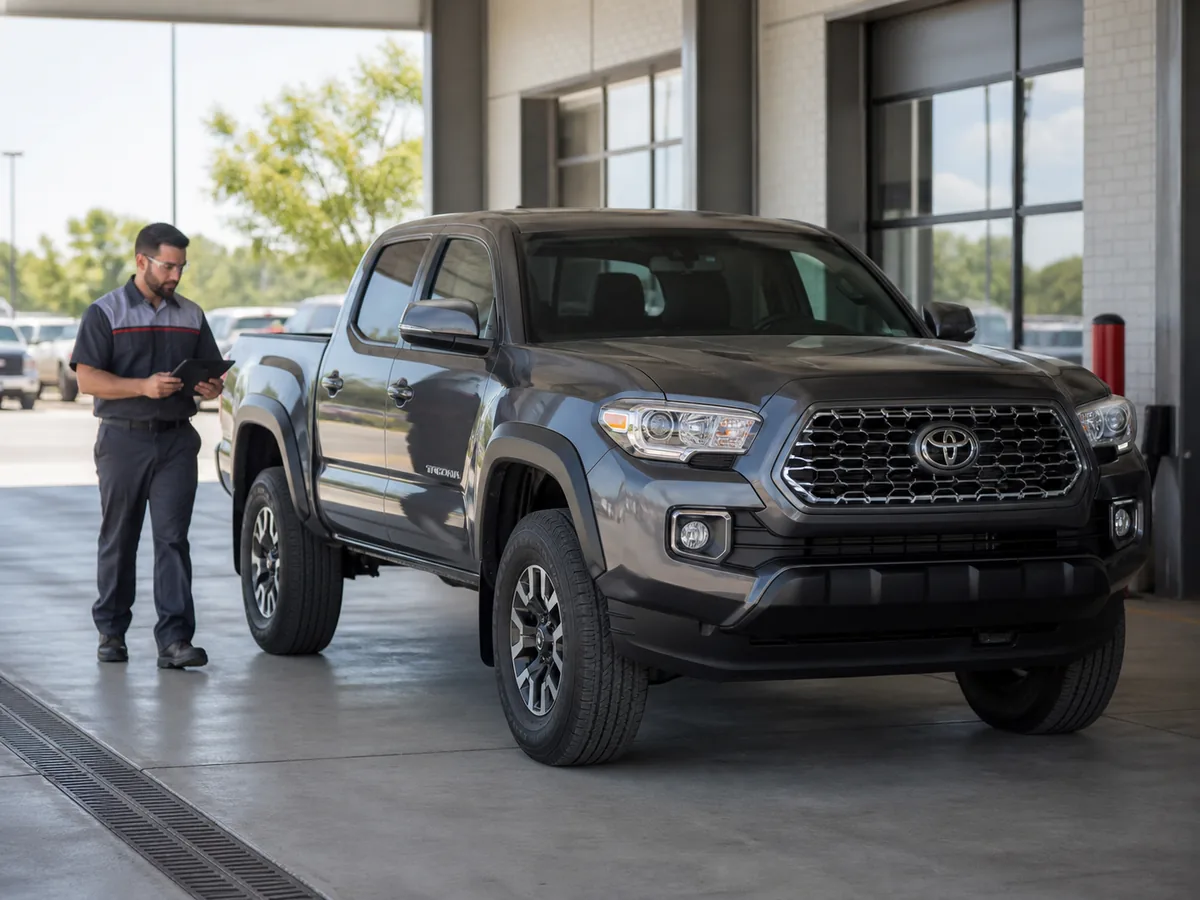
Then it settles. By 2020 the annual total is 87, and the 2021, 2022 and 2023 trucks hold 78, 57 and 52 filings, which is as quiet as any pickup record gets.
The 2024 truck breaks the run at 143 filings, led by power train at 42, which is what a new generation of pickup looks like in its first year on the road.
Tacoma model-year groups
2016 to 2017
Launch of the current used generation. Power train leads both years and two campaigns exist to explain it.
2018 to 2019
Volume falls to around 200 a year, led by fuel and propulsion items and brakes rather than the driveline.
2020 to 2023
The settled stretch, between 52 and 87 filings a year, with no dominant component.
2024 onward
A new truck with its own campaigns, 143 filings in its first model year, and no published durability score yet.
A generation score averages the launch years against the settled ones. The number that recommends the generation is partly earned by the years you should inspect hardest.
Shop the back half of a generation and inspect the front half harder. That single move does more for a Tacoma purchase than any amount of reputation.
The 2016 and 2017 trucks carry the generation's real defects
The power train complaints on those two model years are not vague. Toyota issued two campaigns covering them, and both describe failures with real consequences.
Campaign 17V285 covers oil leaking from the point where the rear differential carrier is assembled to the rear axle housing. Toyota's own statement is that running the differential with insufficient oil can cause it to seize, which can lose control of the vehicle.
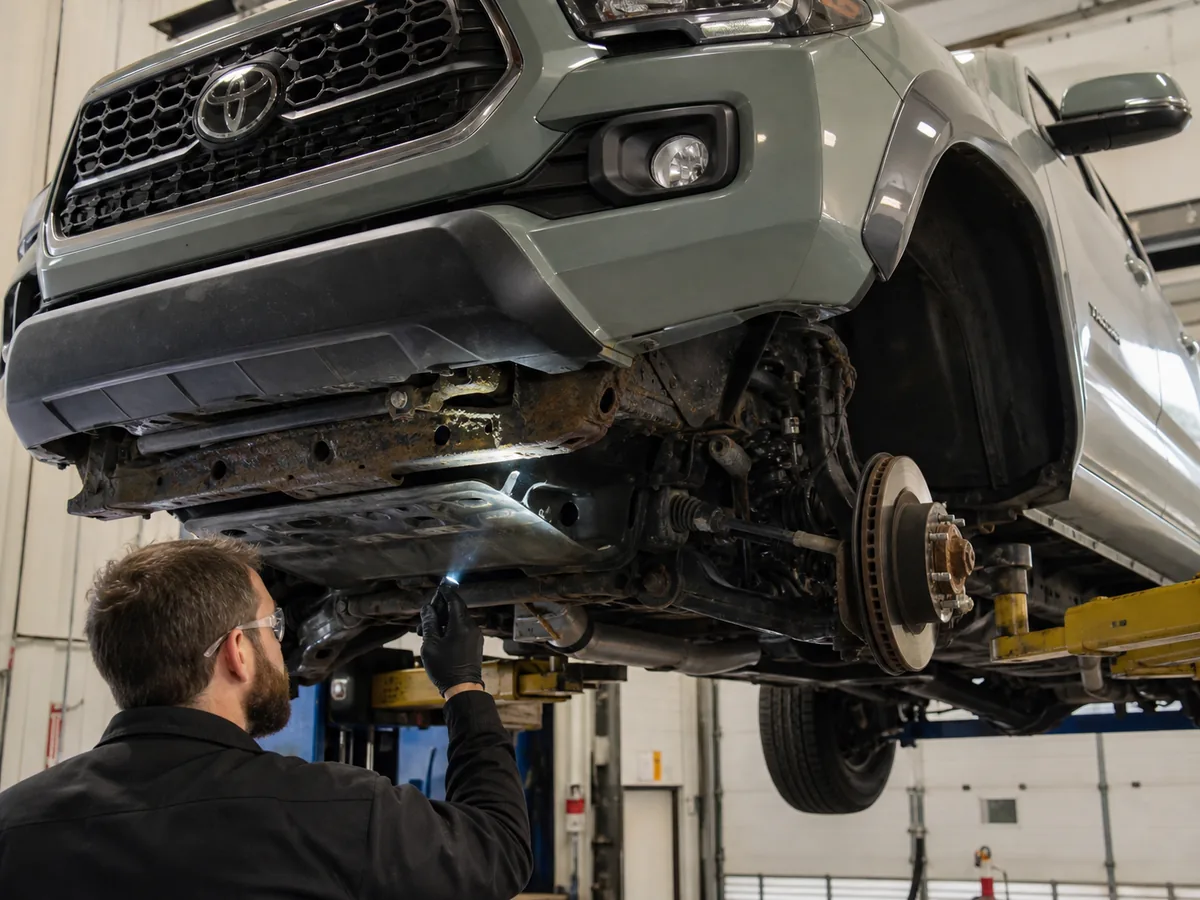
The remedy scaled with what the dealer found. Some trucks needed the fastening nuts tightened, others needed nuts and gasket replaced, and the worst cases needed differential components replaced.
Campaign 17V356 covers six-cylinder 2016 and 2017 trucks with a crank position sensor that can malfunction and stall the engine. That recall began on 26 July 2017 and replaced the sensor with an improved design.
Both are old enough that most affected trucks have been through a dealer, which is exactly why the physical check still matters. A campaign closed nine years ago says nothing about whether the seam is dry today.
Launch-year Tacoma evidence
- Rear differential campaign 17V285
- Look for fresh or crusted oil at the carrier-to-housing seam, and check the differential fluid level and condition
- Crank sensor campaign 17V356
- Confirm the repair on the VIN record, then start the truck cold and watch for stumbling or a stall at idle
- Power train complaint volume
- Drive long enough to reach full operating temperature and listen for driveline noise on and off throttle
A launch-year Tacoma is not a bad truck. It is a truck where two specific things went wrong and where you can still see whether they were dealt with properly.
Everything recalled on the 2024 Tacoma sits underneath it
Buyers approaching the new generation tend to brace for an engine story, because that is what has happened at other truck makers recently. The Tacoma's new-generation campaigns are all chassis and driveline items.
Campaign 25V058 covers 2024 and 2025 four-wheel-drive trucks whose rear brake hoses can be damaged when mud and dirt build up inside the rear wheels. The consequence is a brake fluid leak and reduced braking ability, and owner letters went out on 1 August 2025.
Campaign 25V656 covers 2025 Tacoma and Tacoma Hybrid trucks whose front driveshaft constant-velocity joint may deform and break. Toyota states that a broken driveshaft can impair steering, and that a full-time four-wheel-drive truck may roll away when parked without the parking brake applied.
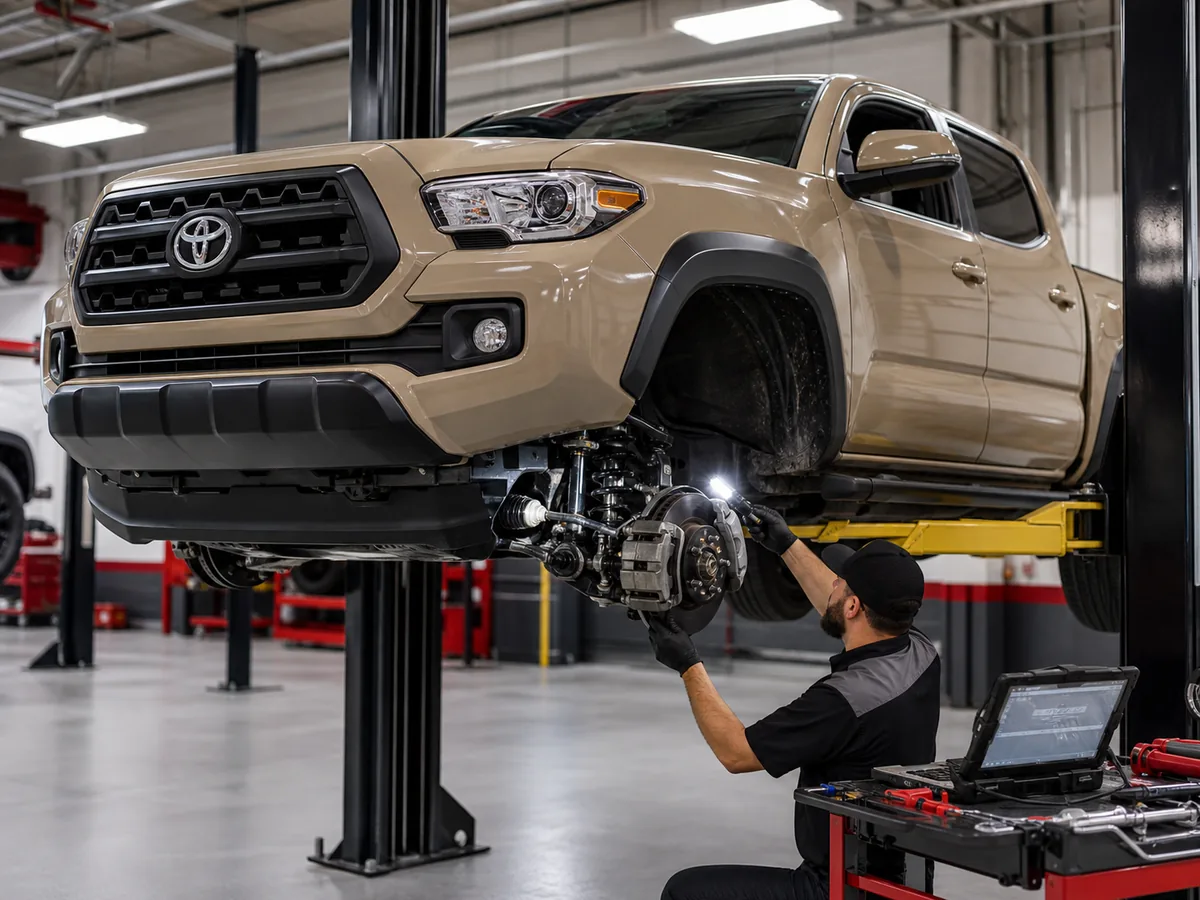
The third one has not reached owners yet. Campaign 26V514 covers 2024 and 2025 trucks whose front and rear shock absorber flanges can corrode and fail, letting the external oil reservoir detach and become a road hazard.
Toyota expects to mail owner letters for that campaign on 21 September 2026. A buyer running a VIN lookup before then can get a clean result on a truck that is already inside the affected population.
None of this makes the new Tacoma a poor truck, and all three campaigns are free repairs. It does mean the inspection belongs at the wheels, the hoses and the driveshafts rather than under the hood.
What a 9.3 value-retention score costs the person buying
iSeeCars models an average Tacoma lifespan of 195,358 miles, about 15.6 years, which is the longest in its class. That is the figure behind every claim you have read about these trucks.
Longevity produces resale value, and the same source scores the Tacoma 9.3 out of 10 on value retention.
Read that from the buying side. A 9.3 value-retention score means the market has already priced in the truck's durability, so you pay for the reputation at purchase and only find out afterwards whether the specific truck deserved it.
The running cost partly offsets it. At $478 a year in average repair spend, a Tacoma owner keeps some of the premium back over a long ownership, which is precisely why the survival rating matters more to a long-term keeper than to someone flipping the truck in three years.
That premium is rational on one condition, which is that the individual truck carries the evidence the reputation assumes. A rough Tacoma with no records is priced as though it has them.
Which Tacoma generation is worth your money
Start from how much evidence you need rather than from the model year you can afford.
The 2020 to 2023 trucks are the strongest default. They sit inside the 9.21-rated generation, their complaint totals run between 52 and 87 a year, and enough of them exist with full service records that you can afford to reject the ones without.
The 2005 to 2015 generation scores 9.05 and costs a great deal less, and its defining defect is one the complaint record makes impossible to miss. The 2005 truck alone holds 707 filings, 260 of them logged under structure, which on this truck means frame corrosion.
The concentration thins as the generation goes on. Structure filings fall to 108 on the 2007 truck, 54 on the 2009, and 11 by 2013.
Toyota did stand behind it for a long time. The company extended frame corrosion coverage on the 2005 to 2010 trucks to fifteen years with no mileage limit, inspecting and replacing frames at no charge to the owner.
That safety net has now closed. Fifteen years from an in-service date in 2010 has already passed, so anyone buying one of these trucks today carries the frame entirely at their own risk.
On a 2005 to 2010 Tacoma the underbody is the purchase decision, not a step in it. Everything else about these trucks is durable enough that a rotten frame is usually the thing that ends them.
The 2024-onward truck is a warranty purchase. It carries three open chassis campaigns, has no published durability score, and its first model year is the busiest complaint record the nameplate has produced since 2019.
None of those is the wrong answer. They ask you to accept different things, and the mistake is comparing all three at once and buying whichever listing looks cleanest.
Buy it, reprice it, or walk
A Tacoma earns its asking price by proving the reputation on paper and underneath. Everything else is a negotiation.
What qualifies a truck is unglamorous. Campaign records that match the VIN, a service file with dates and mileages, a dry differential seam, matched tires, a frame without structural corrosion and a drive long enough to reach operating temperature.
What should reduce the price is equally specific. Missing records on a launch-year truck, unresolved campaigns on a new-generation truck, mismatched or oversized tires, lift work with no alignment history, and any modification the seller cannot document.
Pros
- A 2020 to 2023 truck with campaign proof, a full service file and a clean underbody earns the full asking price
- A launch-year truck with documented differential and crank sensor work is a good buy at a lower price than a settled-year truck
- A new-generation truck under warranty is reasonable once the three chassis campaigns are checked and re-checked
Cons
- Structural frame corrosion is worth more than a discount, because it decides the truck's remaining life
- Undocumented lift, wheel and tire changes shift steering, braking and driveline load in ways the seller cannot price for you
- A seller who will not allow an underbody inspection has told you what the underbody looks like
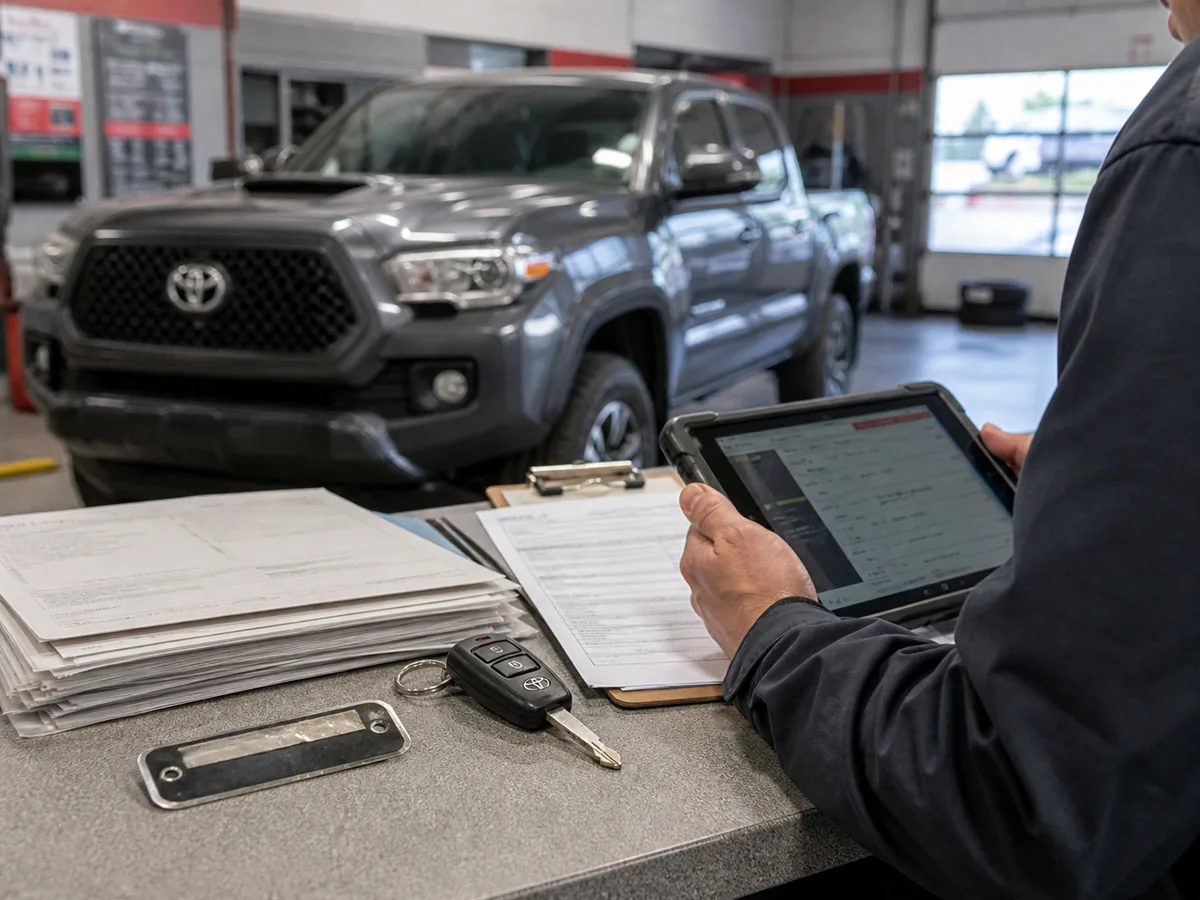
One check outranks the rest, whatever the model year. Get the truck on a lift before you agree a price, because everything that decides a Tacoma's remaining life is visible from underneath and invisible from the driver's seat.