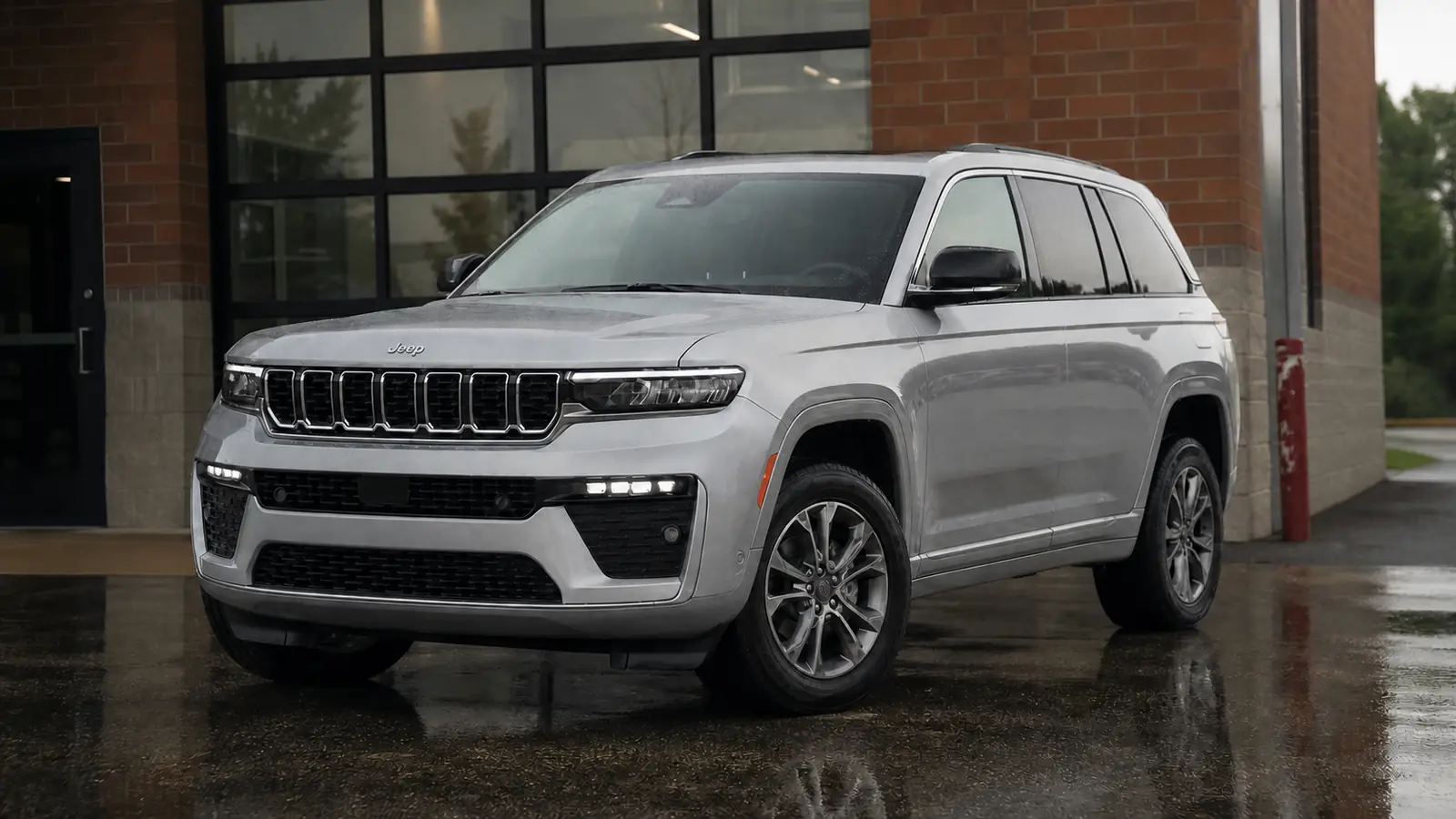
Is the Jeep Grand Cherokee reliable?
Yes, a carefully chosen Jeep Grand Cherokee can deliver dependable long-term service. The badge alone does not establish that verdict because the range includes two generations, five major powertrain families, and two fundamentally different suspension designs.
A steel-spring 3.6-liter gas model avoids the diesel emissions system, high-pressure diesel fuel system, air springs, compressor, high-voltage battery, and hybrid controls found on more complex versions. That does not make the V6 fault-free, but it gives a buyer fewer expensive systems to verify.
The 2011 to 2021 WK2 has the deepest age and mileage history.
It also carries a long list of configuration-specific safety campaigns that can follow a vehicle long after its first owner.
The newer WL arrived as the three-row Grand Cherokee L for 2021 and as the two-row Grand Cherokee for 2022. Its shorter history cannot support the same longevity confidence, while early suspension, camera, restraint, and software actions make a current VIN lookup important.
The 4xe needs its own answer. Its propulsion-battery and hybrid-control campaigns do not describe the gas Grand Cherokee, and a clean gas-model record cannot be used to clear a plug-in hybrid.
WK2 and WL reliability are different questions
The WK2 is easier to judge through age. A 2011 model can now show what years of heat cycles, winter salt, towing, and deferred service do to its cooling system, suspension, driveline, wiring, and interior electronics.
That mature evidence cuts both ways. Independent shops know the 3.6-liter V6, 5.7-liter Hemi V8, eight-speed automatic, and Quadra-Lift system well, but a neglected example has had enough time to accumulate several overlapping faults.
The WL has newer architecture, more networked electronics, and less high-mileage evidence.
A low odometer reading on a 2022 model does not prove that early production hardware and software work has been completed.
| Version | Evidence available | Main exposure | First proof to request |
|---|---|---|---|
| 2011-2021 WK2 gas | Mature age and mileage history | Campaign completion, cooling, oil leaks, electronics, and optional air suspension | VIN history, cold start, module scan, and suspension type |
| 2014-2020 WK2 EcoDiesel | Mature history plus several diesel-specific campaigns | EGR cooler, crankshaft tone wheel, high-pressure fuel pump, and emissions hardware | Diesel campaign receipts, coolant stability, fuel-system work, and emissions scan |
| 2021 or 2022 onward WL gas | Shorter ownership history and several early campaigns | Suspension hardware, cameras, restraint software, oil-leak diagnosis, and optional Quadra-Lift | Current VIN result, full scan, underbody inspection, and height-cycle test |
| 2022-2026 WL 4xe | Limited long-term evidence with active safety relevance | High-voltage battery, hybrid controls, charging system, and gas engine | Current VIN status and proof of the newest battery remedy |
The table is a starting filter, not a model-year ranking. A later WL can be the better vehicle when its campaigns and repairs are documented, while an older WK2 can be the better value when its simpler hardware and maintenance record are unusually clear.
Two-row and three-row vehicles must also stay separate. A campaign may name Grand Cherokee, Grand Cherokee L, or both, and the production dates can narrow the population further.
Use the exact VIN and installed equipment before applying any reliability claim. A seller's listing can misidentify the engine, suspension, or even the two-row and L body style.
Which Grand Cherokee engine is the safer long-term choice?
For most used buyers, the naturally aspirated 3.6-liter Pentastar V6 is the sensible baseline. It is widely serviced, avoids forced induction on earlier models, and removes the diesel and high-voltage systems that make the other powertrains harder to evaluate.
The V6 still needs a cold start, oil-level check, cooling-system inspection, and scan. On the WL, oil near the filter housing must be traced to its actual source rather than assigned to a complete assembly by sight.
The 5.7-liter Hemi V8 offers useful torque and a character the V6 cannot match.
It also uses more fuel and adds an engine-specific sound check, cooling inspection, and evidence around oil service and cylinder-deactivation operation.
A cold exhaust-manifold leak can tick and become quieter as the metal warms. A valvetrain concern may remain when hot, follow engine speed, add a misfire, or leave metal in the oil filter, so a shop should diagnose the source before a buyer accepts either a small gasket estimate or a large engine estimate.
The 3.0-liter EcoDiesel suits long highway use and towing, but it is not the low-complexity choice. Its EGR cooler, emissions equipment, crankshaft signal hardware, and high-pressure fuel system have each required separate campaign attention.
The 4xe combines a turbocharged gas engine with motors, power electronics, a large battery, and charging hardware. Its ability to drive on electricity is useful only when the battery and hybrid campaigns are current and the vehicle can be charged under the instructions that apply to its VIN.
The 2026 gas model's turbocharged four-cylinder is too new for a long-term conclusion. Specifications and early campaign records can be checked now, but years of heat, load, and mileage evidence do not yet exist.
Evidence required by powertrain
- 3.6-liter gas V6
- Stable oil and coolant levels, clean cold start, located leaks, smooth shifts, and complete VIN campaigns
- 5.7-liter Hemi V8
- Cold and hot sound comparison, misfire data, cooling condition, oil history, and drivetrain test
- 3.0-liter EcoDiesel
- EGR, tone-wheel, and fuel-pump campaign proof plus coolant, fuel, and emissions-system evidence
- 4xe plug-in hybrid
- Current battery and hybrid-control campaign status, charging history, scan results, and high-voltage inspection
- 2026 turbo gas four
- Warranty status, current campaigns, early service history, and acceptance of limited long-term evidence
Choose the engine that fits the work, then demand the evidence unique to it.
Buying extra capability without budgeting for its extra systems is the most avoidable Grand Cherokee reliability mistake.
Which documented WK2 problems change a used-car inspection?
Several important WK2 concerns are documented safety campaigns, not internet folklore. They still cannot be applied to every vehicle because engine, shifter, build date, and prior repair determine inclusion.
NHTSA campaign 19V813 covers certain 2011 to 2013 Grand Cherokees with 3.6-liter, 5.7-liter, or 6.4-liter engines. An external fuel-pump relay installed during an earlier action could become contaminated and fail, causing a stall or no-start condition.
The later remedy replaced the external relay and associated wiring.
A receipt that only says "fuel system checked" does not identify whether the campaign repair was completed.
Certain 2014 and 2015 vehicles with the eight-speed automatic and monostable electronic shifter fall under NHTSA campaign 16V240. The design could leave a driver believing Park was selected when the vehicle remained in gear.
The remedy added Auto Park software, and FCA later identified some vehicles that had not received the complete update during the first repair attempt.
Verify completion, demonstrate Park engagement on level ground, and use the parking brake before leaving the driver's seat.
EcoDiesel buyers have three distinct campaign mechanisms to separate. Campaign 20V699 addresses EGR coolers that can crack internally, introduce heated vaporized coolant into the intake, and increase fire risk.
Campaigns 20V475 and 23V411 concern crankshaft tone-wheel delamination that can interrupt the position signal and stall the engine. Campaign 22V406 addresses a high-pressure fuel pump that can shed debris, restrict fuel delivery, and require inspection of additional fuel-system parts.
A current NHTSA recall lookup is stronger than a printed listing created months earlier. The result for one VIN should be saved with invoices that name the campaign, repair date, mileage, and installed parts.
These campaigns also shape the road test. Start the vehicle cold, scan before codes can be cleared, confirm stable idle, test hot restarts, feel every shift, and check whether any powertrain or shifter message returns after a complete drive.
An open stall, rollaway, or fire-risk campaign should be resolved before delivery.
A discounted price does not replace a free safety remedy.
What does a 3.6-liter oil leak actually require?
Oil around the top of a 3.6-liter engine often gets described as an oil-filter housing failure before the area is cleaned or tested. That shortcut can quote the wrong part and leave the original leak in place.
FCA technical service bulletin 09-003-25 applies to certain 2022 to 2025 WL Grand Cherokee and Grand Cherokee L vehicles with the 3.6-liter V6. It tells technicians to diagnose oil found under the engine or code P06DD and notes a high rate of unnecessary oil-filter assembly replacement.
The first branch checks the filter, cap, and cap O-ring. An incorrectly installed seal, damaged cap, or unsuitable aftermarket filter creates a different job from a leak at the valve cover or at a mating surface.
When the source is not obvious, the bulletin calls for cleaning the area, adding ultraviolet dye, operating the engine, and tracing the first fresh oil. That procedure turns a stained engine valley into a located fault.
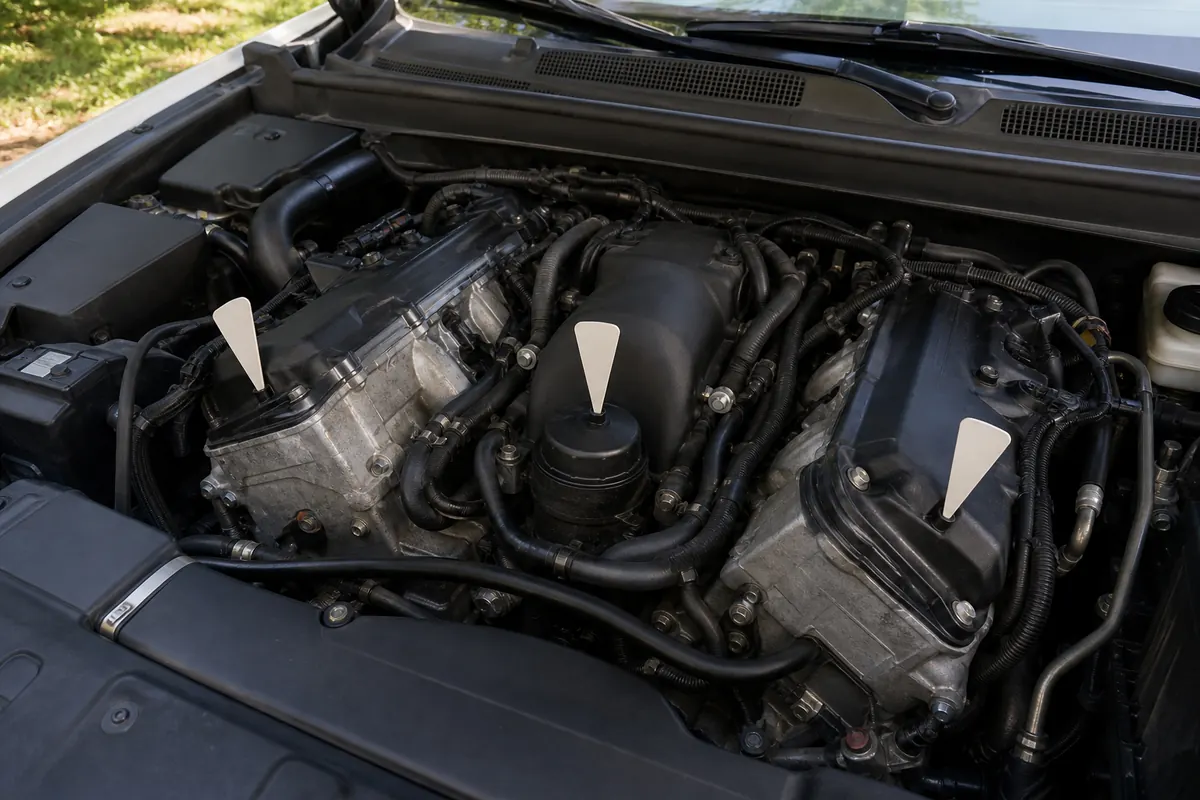
Ask the shop to photograph the first wet point and name the sealing surface.
A broad note such as "oil leak at housing" is incomplete when the cap, filter, O-ring, valve cover, and lower mating area have not been separated.
An old stain is not proof of an active leak either. Clean the area, drive until fully warm, inspect again, and check the oil level after the engine rests.
Pay for the located leak, not the most familiar parts bundle. This is one place where a careful diagnosis can lower both the immediate bill and the chance of a repeat visit.
Should you avoid Quadra-Lift air suspension?
You do not have to avoid Quadra-Lift, but you should buy it only when you value its adjustable height and accept the additional hardware. Conventional steel springs are the better default when long-term simplicity matters more than selectable ride height.
Quadra-Lift adds air springs, a compressor, valves, lines, height sensors, and a control module. A warning can come from pressure loss, damaged plumbing, a sensor, electrical supply, calibration, software, or the compressor, so the loudest or most expensive component should not be blamed first.
FCA bulletin 02-007-21 covers defined early WL builds with pinched front air-suspension lines. The listed symptoms include slow height changes, an uneven front suspension, denied height requests, and an inoperative system.
A later 2024 WL control-module bulletin describes software-related symptoms including disabled ride height, a suspension that lowers but will not raise, and a payload message.
These bulletins prove that several diagnostic paths exist, not that every warning has the same cause.
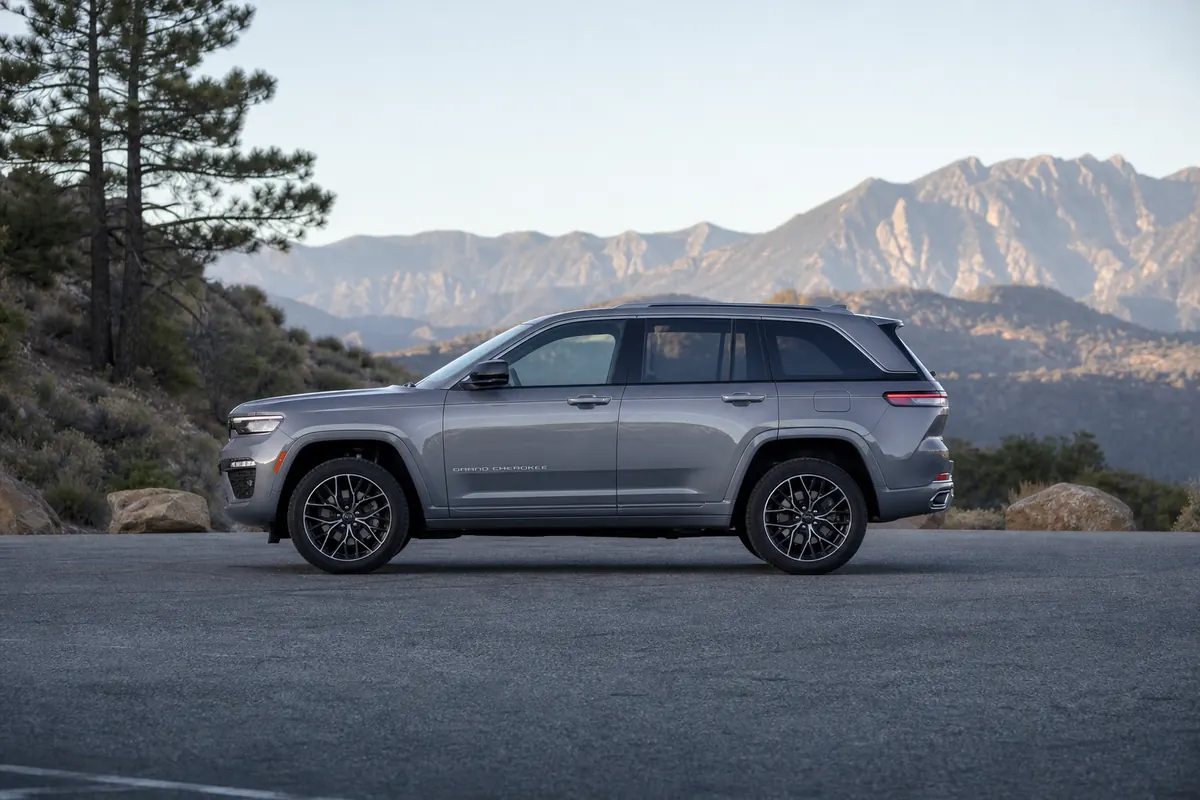
Arrange the inspection before the seller starts or moves the vehicle. Measure each wheel opening on flat ground, photograph the stance, and note whether one corner has settled after sitting.
Start the engine and command every available height in both directions. Movement should be even, the selected height should complete, and the system should not need repeated commands or display a warning.
The road test adds evidence that a stationary cycle cannot. Listen for impact harshness, check whether the body stays level after braking and turning, and scan the suspension module for current, pending, and stored codes.
A working system can still deserve a repair allowance when the vehicle is old and no major components have been renewed.
Choose steel springs when you want the fewest long-term variables, and choose Quadra-Lift only after it proves every height and holds level overnight.
Is the Jeep Grand Cherokee 4xe reliable?
The Grand Cherokee 4xe should not receive the same reliability verdict as the gas model today. Its limited high-mileage history and current battery campaign require a VIN-specific safety check before purchase or charging.
Jeep now says the Grand Cherokee 4xe is no longer in production in the United States, though limited dealer inventory may remain and owner support continues.
NHTSA campaign 25V741 covers certain 2022 to 2026 Grand Cherokee 4xe vehicles because the high-voltage battery may fail internally and cause a fire while parked or driving. The campaign population includes more than 91,000 Grand Cherokee plug-in hybrids.
NHTSA's current campaign record tells owners of included, unrepaired vehicles to park outside and away from structures and not charge until the remedy is complete. The listed remedy uses updated battery software and replaces the high-voltage battery when inspection indicates it is necessary.
The new action matters even when a seller says an earlier battery software recall was completed. NHTSA says vehicles repaired under campaigns 24V720 and 23V787 need the new remedy when their VIN is included because the earlier approach did not resolve the full risk population.
Campaign 25V576 is separate.
It addresses hybrid-control software that can cause a loss of drive power and calls for a control-processor update.
A 4xe inspection should include the current recall report, dealer campaign history, high-voltage battery state, charging records, complete module scan, gas-engine cold start, and a drive in electric, hybrid, and engine-running operation. A standard pre-purchase inspection that ignores the hybrid system leaves the largest difference from the gas vehicle untested.
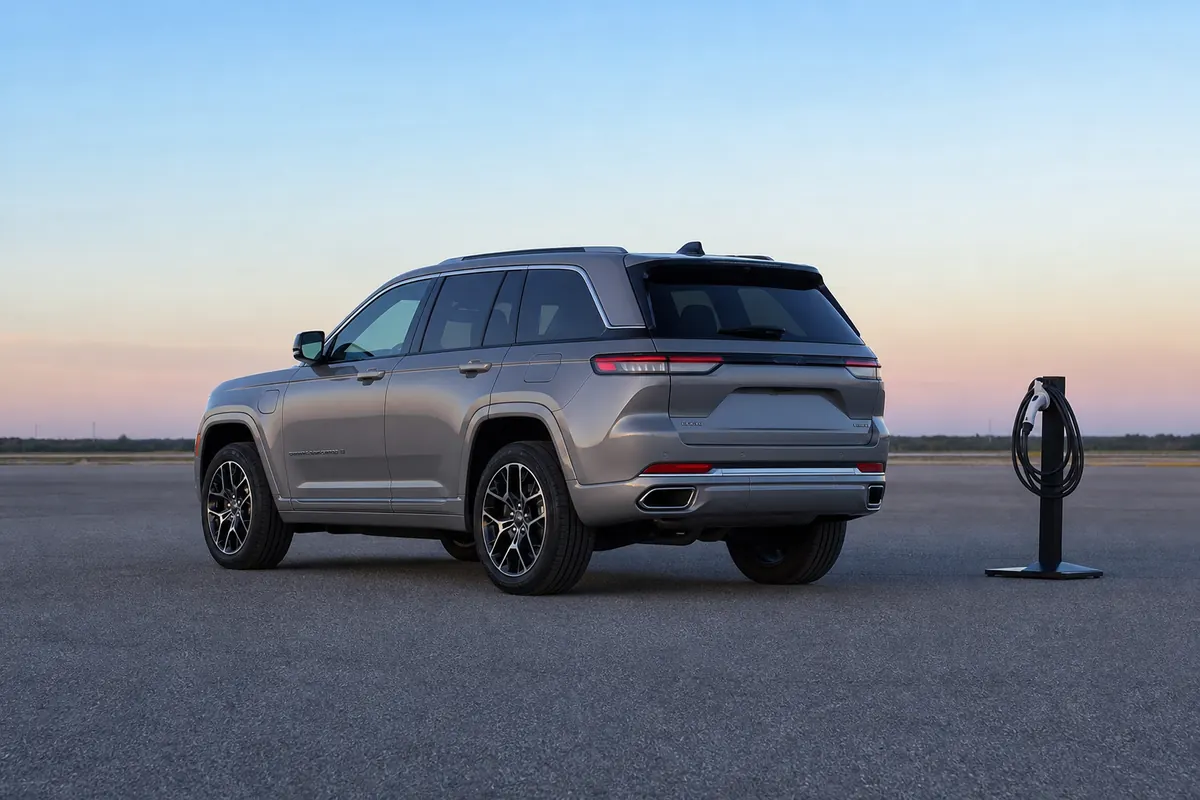
Confirm the repair date and campaign number with a Jeep dealer, not only through a dashboard message. A clear dashboard cannot show whether the newest battery action applies or whether an older software remedy is now superseded.
Do not buy an affected 4xe on the promise that the dealer will sort it out later.
Complete the current safety work first, then judge battery health, charging behavior, and the rest of the vehicle.
How many miles can a Jeep Grand Cherokee last?
A Grand Cherokee can pass 200,000 miles, but that outcome is not the typical guarantee suggested by used-car ads. The stronger question is how much service and repair exposure remains in the exact configuration at its current mileage.
iSeeCars estimates a 12.5 percent chance that a Jeep Grand Cherokee reaches at least 200,000 miles during its usable life. It also reports typical first-decade use of 11,986 miles per year.
Those figures come from a model population rather than one VIN. They do not separate every engine, suspension, drivetrain, climate, duty cycle, or repair history represented in the nameplate.
Survival is also different from low-cost ownership.
A high-mileage Grand Cherokee may remain usable after major suspension, cooling, electrical, diesel, or engine work that another owner would consider uneconomic.
Mileage should therefore be read beside time and configuration. A steel-spring V6 with stable fluids, matching tires, regular drivetrain service, and a clean scan may be easier to own than a lower-mileage air-suspension model with overnight sag and incomplete campaigns.
On an EcoDiesel, verify coolant stability, fuel-system repair, emissions hardware, and the three campaign groups before treating highway mileage as gentle use. On a Hemi, compare cold and hot engine sound, scan misfire data, inspect cooling condition, and account for fuel cost as part of the long-term decision.
A WL with low miles brings less wear but also less long-term evidence. The newest turbo engine needs warranty coverage and updated service records more than an unsupported promise that it shares the lifespan of an older V6.
A 200,000-mile reputation adds context, but the installed systems and their current condition determine whether one Grand Cherokee has useful life left.
Let the installed equipment decide the purchase
Start with identification. Record the VIN, generation, engine, drivetrain, suspension type, wheel and tire setup, and whether the vehicle is a two-row Grand Cherokee or a Grand Cherokee L.
Then match the inspection to that equipment. Every candidate needs a cold start, full-module scan, hot road test, fluid and leak inspection, underbody view, tire check, and current VIN campaign result.
A Hemi adds a cold and hot tick diagnosis. An EcoDiesel adds EGR, fuel-pump, tone-wheel, coolant, and emissions evidence.
Quadra-Lift adds an overnight stance and full height-cycle test. A 4xe adds the newest battery-remedy proof, high-voltage inspection, charging history, and operation in every propulsion mode.
The newer WL also needs current campaign attention.
NHTSA's 2022 model record includes an upper control-arm pinch-bolt action, a replacement rear coil-spring campaign, side-airbag software, and gear-position display software among the items that can apply to defined vehicles.
The rear coil-spring campaign is especially important because 26V051 replaced the earlier 23V413 action. NHTSA says vehicles repaired under the earlier recall need the new remedy when included.
Do not accept a pre-purchase inspection that ends with "seems fine." Ask the shop to name every active leak, stored code, suspension fault, campaign gap, tire mismatch, and near-term service item, then attach a price to each unresolved finding.
The final decision should follow a clear order. Unresolved safety work and a seller who blocks inspection end the purchase first.
Structural damage, overheating evidence, contaminated diesel fuel systems, persistent warm engine noise, and hybrid battery warnings come next.
Ordinary brakes, tires, fluids, and cosmetic faults can be negotiated when the vehicle remains mechanically sound.
Optional complexity should lower the offer when its condition cannot be proved, even if it worked during a short demonstration.
The practical low-risk choice is a documented gas V6 on steel springs, but a more complex Grand Cherokee can still be a sound buy when every added system earns its place with current evidence.