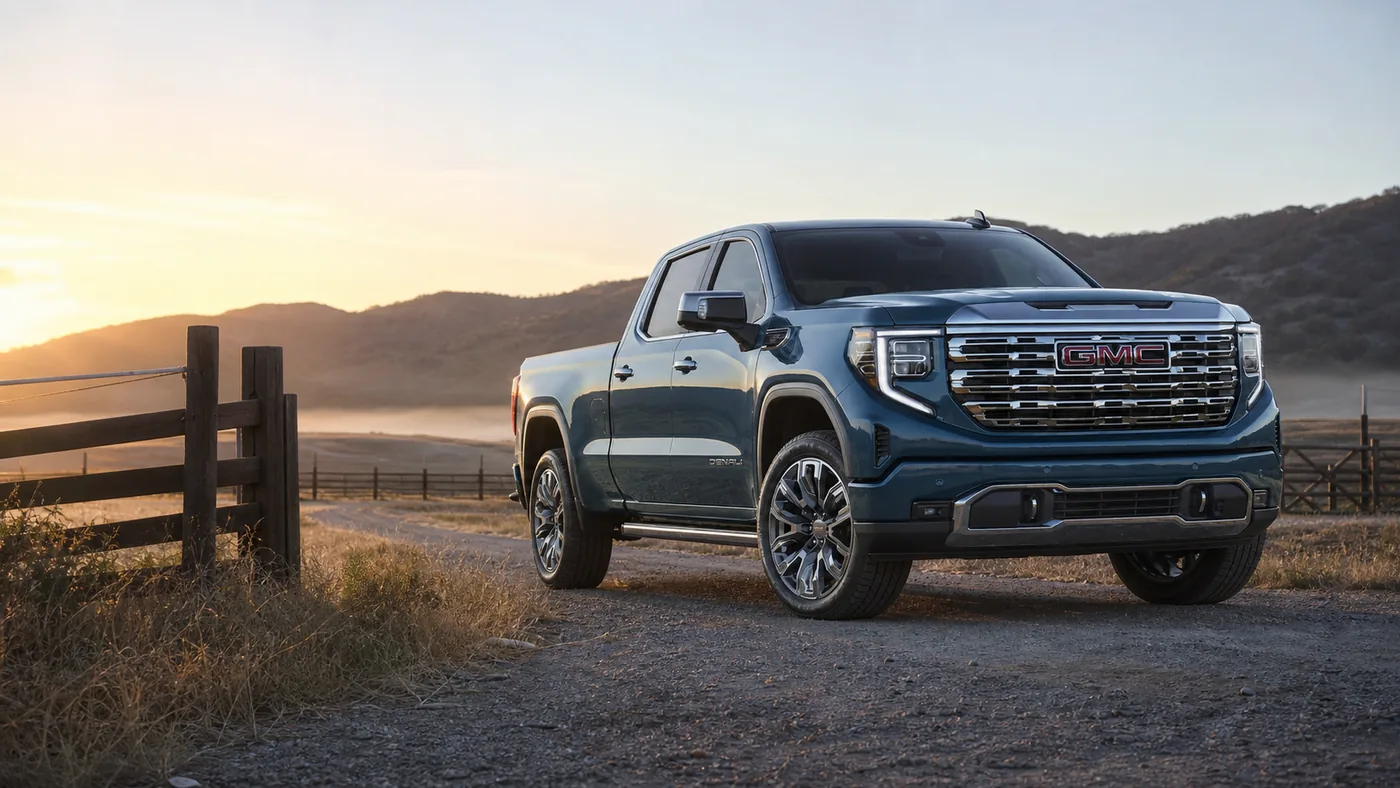
Is the GMC Sierra 1500 reliable?
Yes, on the figures the industry publishes. RepairPal rates the GMC Sierra 1500 at 3.5 out of 5.0 and ranks it third of seventeen full-size trucks, with an average annual repair cost of $727 against a $936 segment average.
Owners take a Sierra in for unscheduled repair about 0.2 times a year, compared with 0.3 across full-size trucks. iSeeCars lands in the same place from different data, scoring the truck 7.4 out of 10 and ranking it fourth of ten full-size pickups.
Those numbers describe a truck that is cheap to keep on the road in an ordinary year.
They do not describe the year a connecting rod fails. An annual average is built mostly from trucks that never see that repair, so the owner who does inherit one pays the entire cost in a single visit rather than $727 at a time.
The rating has a second limit that matters more for a used buyer. It spans a decade of Sierras whose reported failures have almost nothing in common, so it cannot tell a 2015 shopper and a 2022 shopper to inspect different things.
Take the rating as permission to shortlist a Sierra, then treat the engine and the build year as the two facts that can still reverse it.
What Sierra owners report has changed three times since 2014
Owners who file with federal regulators are not a random sample, but the component they file about is a useful signal, and for the Sierra 1500 that component has moved twice in eleven model years.
The 2014 and 2015 trucks are dominated by exterior lighting and brakes. The 2014 model year holds 858 complaints in the NHTSA database, 181 of them about exterior lighting, while the 2015 truck holds 813 with service brakes leading at 192.
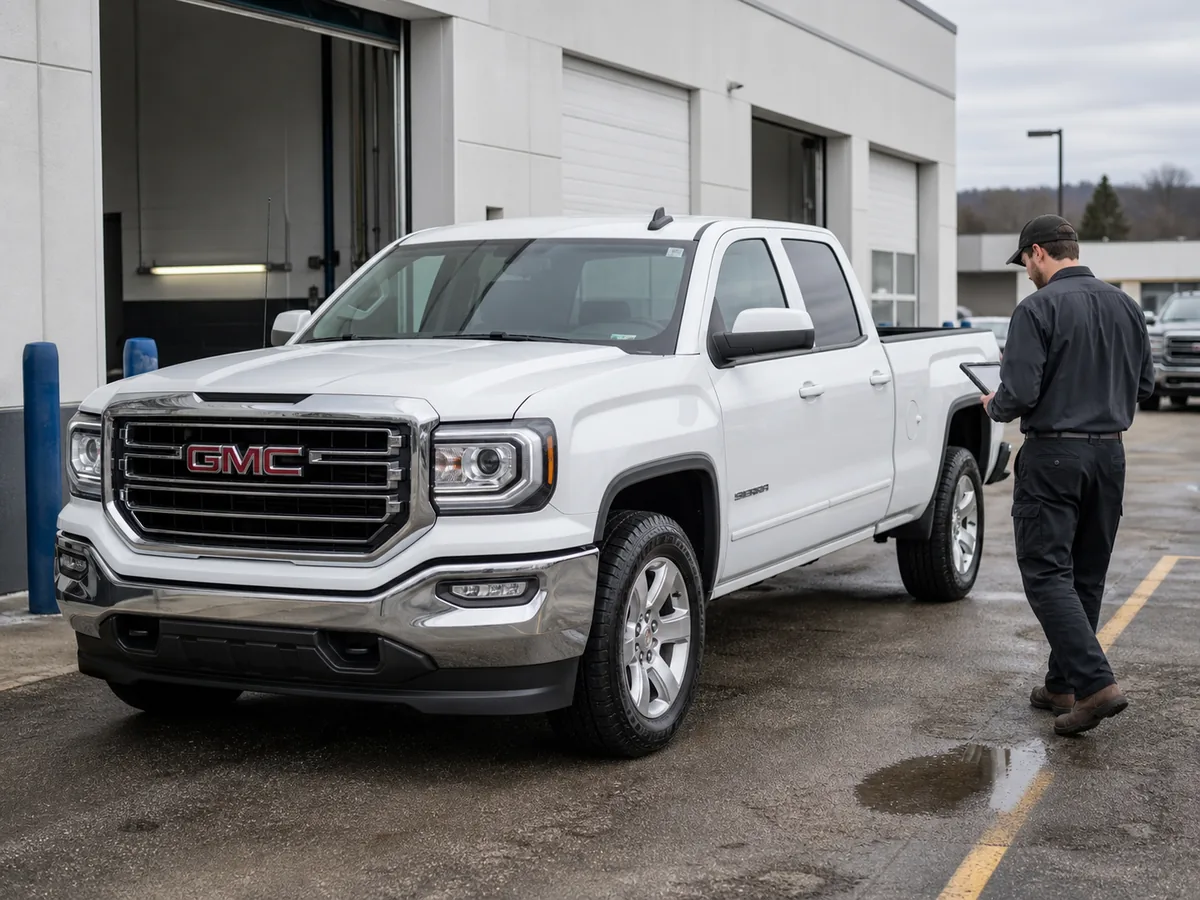
By 2017 the centre of gravity has moved to the driveline. That model year holds 426 complaints with power train leading at 108, against just 36 for the engine, and the 2018 truck repeats the pattern at 85 power train to 30 engine.
Then it inverts and stays inverted. The 2019 Sierra holds 625 complaints with engine leading at 203, and engine has remained the single most-reported component on every model year through 2025.
| Build era | Busiest model year | Most-reported component | What owners were describing |
|---|---|---|---|
| 2014 to 2016 | 2014, with 858 complaints | Exterior lighting, 181 reports | Lamp and headlight hardware, with brakes close behind at 111 |
| 2017 to 2018 | 2017, with 426 complaints | Power train, 108 reports | Shift quality and converter behaviour on the eight-speed automatic |
| 2019 to 2025 | 2019, with 625 complaints | Engine, 203 reports | Internal engine hardware, unbroken as the leading component for seven model years |
The engine era has not tapered off since. The 2020 through 2024 trucks hold 444, 534, 547, 435 and 330 complaints in total, with engine leading every one of those years at 133, 173, 146, 127 and 106 reports.
The 2016 model year breaks the series at 47 complaints, which is a gap in the reporting record rather than a quiet build year, and it should not be read as a recommendation.
None of these totals is a failure rate. They count owners who chose to file, which rises with recall publicity and falls as a model year ages out of the news, so a raw total cannot tell you the odds that one truck breaks.
What the leading component can tell you is where to spend the inspection budget. On a 2014 or 2015 truck the money belongs on lights and brakes, and on anything from 2019 onward it belongs on the engine.
The 6.2L V8 recall can close two very different ways
NHTSA campaign 25V274 covers 2021 to 2024 Sierra 1500 trucks fitted with the 6.2-litre V8, along with the Silverado, Tahoe, Suburban, Yukon and Escalade built on the same engine. GM's internal number is N252494000, and owner letters went out on 18 June 2025.
The defect is in the rotating assembly. Connecting rods or crankshafts may carry manufacturing flaws that lead to engine damage and, eventually, engine failure while the truck is being driven.
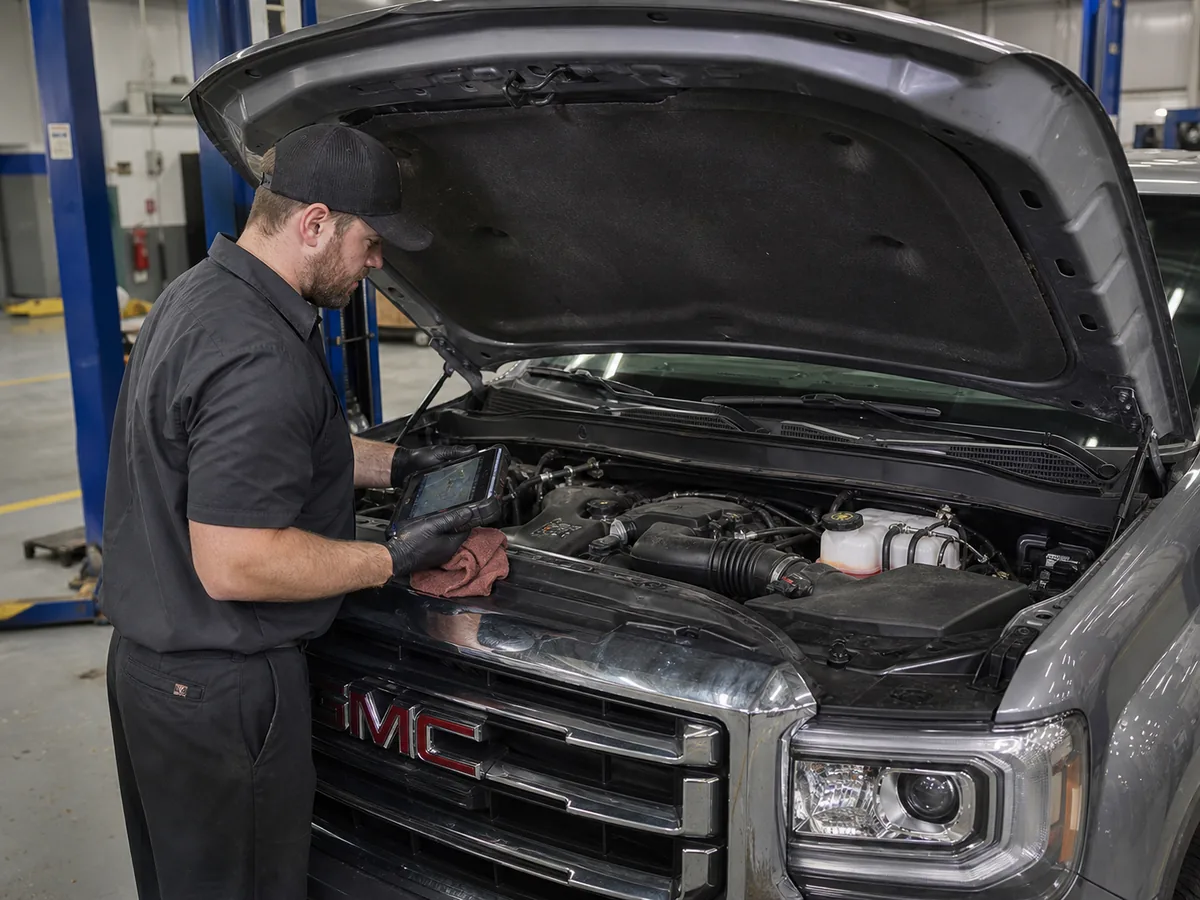
The part most buyers miss is the remedy. Dealers inspect the engine and, if needed, repair or replace it, but a truck that passes inspection keeps its original engine and receives higher-viscosity oil, a new oil filter, a new oil fill cap and an owner's manual update.
Both outcomes are recorded the same way. A vehicle history report or a dealer printout showing 25V274 as complete is consistent with a brand-new long block and equally consistent with an engine that was looked at and sent home on thicker oil.
Those are not the same truck, and they should not be the same price. A replaced engine resets the wear clock on the most expensive part of the vehicle, while a passing inspection leaves you with the original rotating assembly and a revised lubrication strategy.
The recall is now itself under federal review. NHTSA opened Engineering Analysis EA26005 on 20 August 2026, covering 997,743 GM vehicles from the 2021 through 2026 model years, after logging 499 complaints of engine failure on vehicles that had already received the recall remedy.
Twenty-six of those complaints came from owners whose engines had been fully replaced under the campaign. The agency also recorded 191 failure reports on engines built after 31 May 2024, the date the original recall's suspect production window closed.
An engineering analysis is the stage that normally precedes a demand for a wider recall, and the agency has not concluded that a further defect exists. For someone standing in front of a truck this week, the practical reading is simpler than the regulatory one.
A 6.2-litre Sierra built from 2021 onward is an open federal question rather than a closed one, and the asking price should reflect that.
When the recall repair itself gets recalled
GM issued campaign 24V797 for diesel-equipped 2020 to 2022 Sierra 1500, 2500 and 3500 trucks, covering a transmission control valve that can fail and lock a wheel. That is the sort of campaign a buyer is happy to see marked complete.
Then came 26V083, which covers the same trucks where the earlier repair may have been carried out incorrectly.
Read that sequence again, because it is the clearest evidence available that a closed campaign and a fixed truck are different claims. A dealer performed the work, the record closed, and the vehicle needed recalling a second time for the repair itself.
This is why the operation line matters more than the status column on any Sierra, whatever the campaign. The status tells you what was assigned to the vehicle, and the parts and labour lines tell you what a technician actually did to it.
Reading a Sierra campaign record
- Run the VIN yourselfUse the NHTSA recall lookup on the day you inspect, rather than the printout already sitting in the seller's folder
- Ask for the dealer repair orderA history report shows campaign status, and only the repair order shows the operation that was performed
- Read the parts and labour linesPart numbers and labour codes are what separate a component replacement from an inspection and a fluid change
- Check whether a later campaign covers the earlier repairA follow-up campaign such as 26V083 exists precisely because some earlier repairs were not done correctly
- Drive it afterwardsA correctly repaired truck should hold its behaviour through a full warm-up, not just the first few minutes
Re-run the lookup on the day you hand over money. Campaign status changes as manufacturers file, and a clean report from three weeks ago has no authority over what is open today.
Why the engine, not the transmission, dominates recent Sierra complaints
The power train complaints that led the 2017 and 2018 model years were mostly about how the eight-speed automatic behaved. Owners described shudder under light throttle and shift quality that arrived rough once the fluid was hot.
That is a driveability defect. It is unpleasant and it can be expensive, but a fluid change or a torque-converter replacement returns the truck to service.
The complaints that lead every model year from 2019 are a different category of failure. They concentrate on engine internals, first around the cylinder-deactivation hardware and later around the rotating assembly that 25V274 addresses.
Cylinder deactivation is what lets the 5.3-litre V8 run on four cylinders under light load, and the lifters that collapse and reactivate those cylinders are the reported failure point. When one fails it can take the camshaft lobe with it, which turns a top-end job into an engine job.
The numbers show the handover clearly. The 2017 truck logged 108 power train complaints against 36 engine complaints, the 2019 truck logged 203 engine against 78 power train, and the 2022 truck logged 146 engine against 54 power train.
The complaint volume did not rise dramatically, but what those complaints cost to fix did. A shudder is a repair, and a spun bearing is a replacement.
What each failure sounds like on the drive
- Collapsed deactivation lifter
- Cold-start tick that fades as the engine warms, a stored misfire on one cylinder, oil use between services
- Rotating-assembly damage
- Deep knock that comes in under load, low oil pressure at hot idle, metal glitter in the drained oil or filter
- Eight-speed converter shudder
- Light-throttle vibration around 30 to 50 mph, only once the transmission fluid is fully warm
A five-minute drive around the block cannot produce any of these signals. Plan a route that reaches full operating temperature and includes both steady cruise and a loaded pull.
What 172,398 miles means for the truck in front of you
iSeeCars models an average Sierra 1500 lifespan of 172,398 miles, roughly 11.9 years, and puts the chance of any given truck reaching 200,000 miles at 32.5 percent.
Read the fine print underneath that figure. The same source publishes no reliability score at all for the 2014 to 2018 Sierra or the 2019 to 2026 Sierra, citing insufficient data, and the only generation it can score is the 1999 to 2006 truck at 8.72.
So the lifespan estimate is anchored on Sierras that finished their service lives, which by definition are not the ones on the lot. The model also assumes 12,730 miles a year over the first decade, and a truck that tows for a living has spent those miles very differently.
That does not make the number useless. It makes it a way to set inspection depth rather than a prediction about one vehicle.
A 130,000-mile Sierra with an unbroken oil-service file, a documented campaign history and clean scan data is a reasonable purchase. A 60,000-mile truck with a 6.2-litre engine, a vague campaign record and a seller who wants to keep the drive short is not, at any mileage.
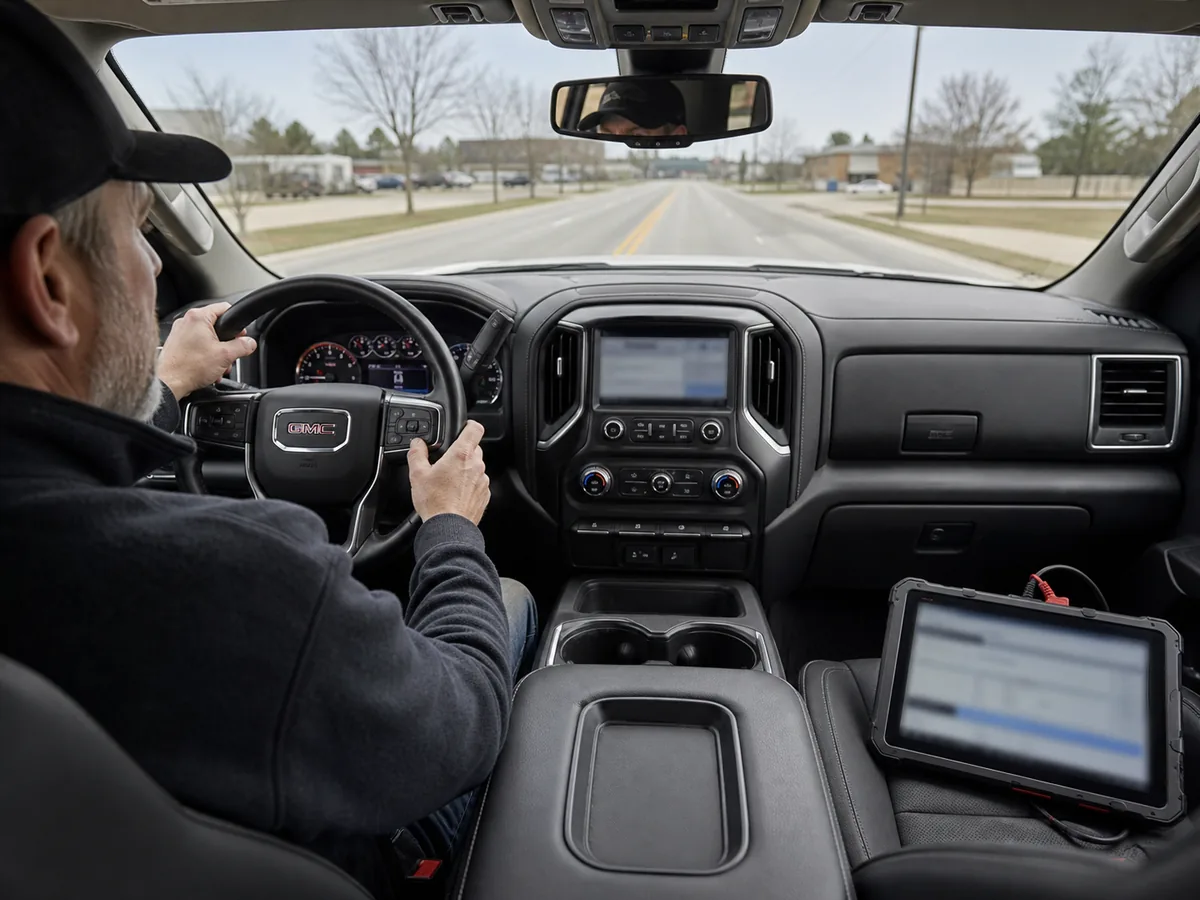
Use the odometer to decide how hard to look, then let the evidence decide the price.
Which Sierra engine matches your workload
Start from the work rather than the output figure, because each Sierra engine carries a different campaign exposure and a different worst-case bill.
The 2.7-litre TurboMax four-cylinder is the only current Sierra engine with neither cylinder-deactivation lifters nor a rotating-assembly campaign against it. It suits commuting, light loads and occasional trailer work, and it needs oil-interval evidence because a small engine working hard is unforgiving about lubrication.
The 5.3-litre V8 is the mixed-duty choice and the one most likely to be sitting on a lot. Its risk is concentrated in the deactivation hardware, so the file you want shows consistent oil intervals and the drive you want is long enough to hear a cold-start tick and read stored misfire counts.
The 6.2-litre V8 is a strong engine and, on a 2021 to 2024 truck, the one that needs a document before it needs a test drive. Without a repair order that names the operation performed under 25V274, you are guessing at which engine you are buying.
The 3.0-litre Duramax only pays for itself on sustained highway and towing mileage. A diesel that spends its life on short errands never reaches the exhaust temperatures its emissions hardware needs, and the resulting repairs erase the fuel saving that justified the premium.
Pick the engine your work actually needs, then make the seller produce the one document that clears it. If that document does not exist, the truck is not necessarily bad, but it is worth less than the one that can prove itself.