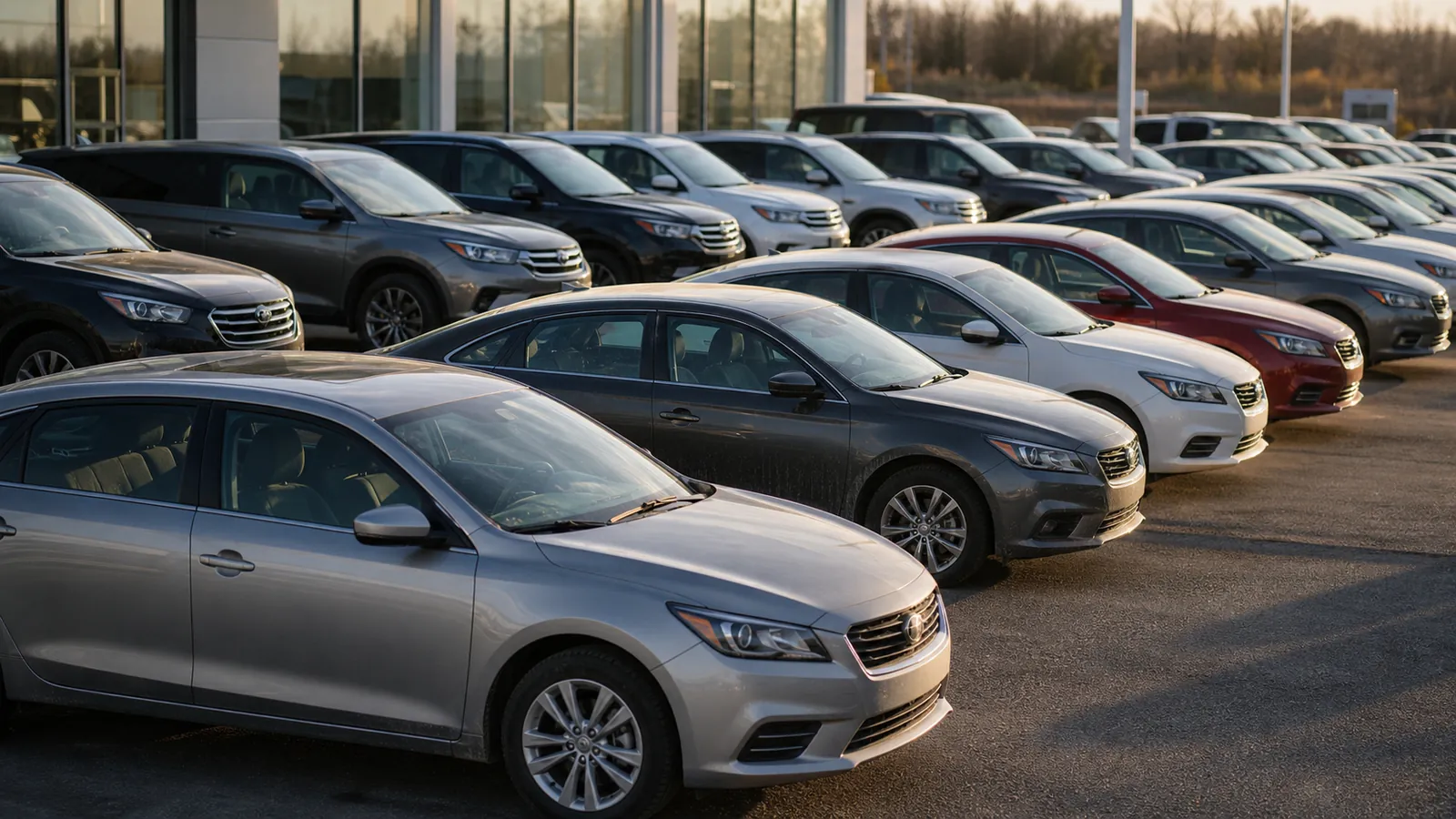
Timing advice promises thousands, and the market it describes has changed. Across 2026 new-car incentives held near 7 percent of the transaction price for thirteen straight months, so the month you walk in moves a mainstream new car very little.
What still moves real money is matching the calendar to what you are buying: the model-year changeover on a new car, a different discount pattern on an electric one, and the spring peak worth avoiding on a used one.
Below are the numbers behind each window, and what the waiting itself costs.
How much does timing actually save on a new car?
Less than most timing advice promises. Across the American new-car market in June 2026, manufacturer incentives came to 7 percent of the average transaction price, and that share has sat at roughly 7 percent for thirteen straight months.
A calendar that barely moves for a year cannot hand a patient shopper a windfall in any single month.
Put the percentage into dollars and the size of the prize becomes clear.
The average new vehicle sold for $49,758 in June 2026 against an average sticker of $51,654, so the gap between what manufacturers ask and what buyers pay ran close to $1,900 before any dealer discount.
Seven percent of that transaction price is about $3,500 in factory support, and that figure covers everything: rebates, subsidized financing, lease subvention, and dealer cash.
The stability matters more than the number. When incentive spending swings hard between months, waiting is a real strategy, because the same car genuinely costs less in one month than another.
When it holds near a flat line for over a year, the month you walk in changes very little, and the variation you do find comes from which specific car is sitting on which specific lot.
Vehicle segment moves price more than the calendar
Segment matters far more than month.
In the same June data, a compact car averaged $27,978 while a full-size pickup averaged $66,427, and the segments moved at different speeds year over year: compact SUVs rose 3.7 percent, compact cars 2.4 percent, midsize SUVs 2.2 percent, and full-size pickups 2.1 percent.
A shopper who drops from a midsize SUV at $49,792 to a compact SUV at $37,707 saves roughly $12,000, which is more than three years of perfect timing could deliver on either one.
Average sticker prices are also rising more slowly than they were, with manufacturer suggested retail up 0.9 percent year over year in June against transaction prices up 0.6 percent.
Those two numbers moving together tell you manufacturers are holding the line on both sides rather than inflating the sticker and discounting back to the same place.
For a buyer, that removes one of the classic timing plays, because there is less artificial headroom in the sticker to wait for.
Prices did peak in December 2025 at $50,609 and have held under $50,000 through 2026, which is the opposite of what the December-is-cheapest advice predicts.
That peak reflects what people bought rather than what they were charged, since December sales lean toward loaded trucks and premium trims.
A month can look expensive in the averages and still be a good month to buy the specific car you want.
The practical reading is that timing is a modifier, not a lever. It can add a few hundred dollars to a deal you were already going to make.
It cannot rescue a purchase where the model is in short supply, the trim is wrong, or the financing does not work.
The model-year changeover still moves price, and it has a date
The one calendar effect that reliably survives is the model-year changeover, because it is driven by inventory rather than by sentiment. When the next model year begins arriving, every remaining car from the outgoing year becomes a unit the manufacturer and the dealer both want gone, and the money behind those cars gets more generous as the weeks pass.
Arrival is staggered rather than fixed. Most mainstream nameplates start landing the new model year from late summer into fall, and a given brand can run a month ahead or behind that window depending on the plant and the model.
The date that matters is not a national one, it is when your specific model's replacement reaches your region's dealers.
- Late springOutgoing model year still sells at normal support, discounts are ordinary
- Late summerFirst new model-year units arrive, outgoing stock starts drawing extra factory cash
- Early fallOutgoing inventory thins, incentives on what remains reach their deepest point
- Late fallSelection on the outgoing year collapses, remaining cars are leftover colors and trims
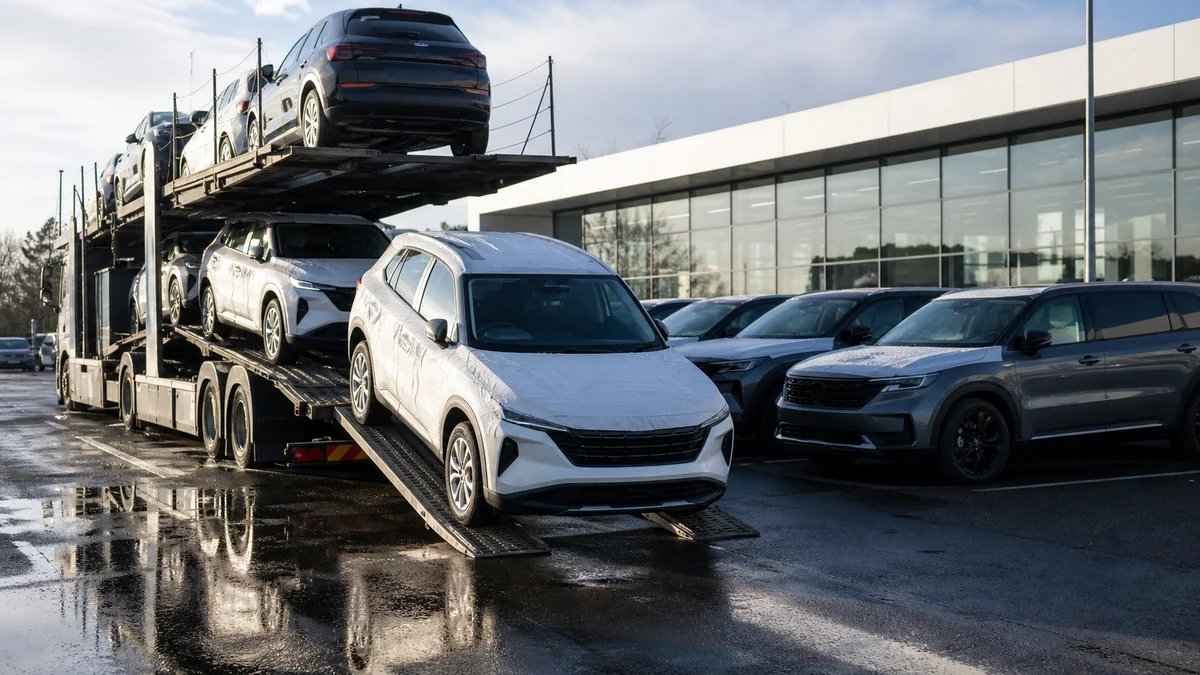
The discount is real, and so is its cost. A car built as an outgoing model year is one year older on paper the moment it is registered, which shows up every time the vehicle is valued, traded, or listed.
The trade you are actually making is a discount now against a lower number later, so the changeover buy works best for someone who keeps a car long enough that the paper year stops mattering.
A redesign makes the outgoing model year a different bet
Redesign years change the math sharply. When a model is fully redesigned rather than carried over, the outgoing generation drops harder and stays cheaper, because buyers can now see the newer shape next to it.
That deeper discount is worth taking when the outgoing generation is the more proven one, which happens often enough that it is worth checking whether the redesign brought a new engine or transmission with it.
Waiting for the changeover has one specific failure mode. The best combinations of trim and color leave first, so a shopper who waits for the deepest discount frequently finds that the car they wanted is gone and what remains is a compromise wearing a good price.
You can find your own changeover date without guessing.
Ask a dealer when the next model year is scheduled to arrive for the exact trim you want, then check whether the manufacturer's build-and-price tool has switched over to the new year, since that switch usually happens weeks before cars reach lots.
A third signal is the incentive page itself, because factory cash on the outgoing year climbs in steps rather than smoothly, and each step tells you the replacement is closer.
The size of the remaining stock decides how much room there is. A dealer with fourteen outgoing units has a problem worth solving with money, and a dealer with two has almost none, since those two will sell to someone eventually.
Asking how many of the outgoing year the store still holds is a more useful question than asking what the discount is, because the answer tells you whether a discount is even available before you start talking about price.
Does the end of the month, quarter, or year still work?
All three still work, but they are not interchangeable, because the money behind each one comes from a different budget. Understanding which budget you are pulling from tells you how much room actually exists.
The end of the month is the weakest of the three and the easiest to reach. It leans on the individual store's volume targets, so it moves the dealer's margin rather than the manufacturer's price.
That is worth a few hundred dollars on a car the store is motivated to move, and close to nothing on a model that sells itself.
The end of the quarter is stronger because manufacturer programs and regional bonuses settle on those dates, which means the pressure reaches beyond one showroom. The end of the year is the strongest window because it stacks three things at once: a manufacturer program closing, a dealer's annual bonus in reach, and outgoing model-year stock that has been sitting for months.
| Window | Whose money moves | Realistic effect | Works best on |
|---|---|---|---|
| End of month | The individual dealer's margin | Small, a few hundred dollars | Slow-selling units already in stock |
| End of quarter | Manufacturer and regional programs | Moderate, program-dependent | Models carrying active factory support |
| End of year | Factory program, dealer bonus, and old stock together | Largest of the three | Outgoing model-year cars still on the lot |
One condition governs all three. A deadline only helps when the seller already has the wrong car in the wrong place, meaning a unit they have been carrying and would rather not carry into the next period.
If you are ordering a car, waiting for an allocation, or asking for a configuration the region is short on, the calendar has nothing to push against and the date on the paperwork will not change the number.
That is also why chasing the last day of December can backfire. Showrooms are busy, the desirable inventory has already moved, and the salesperson has less reason to work hard on a difficult deal when easier ones are walking in.
The deadline is leverage only when the car you want is a problem the seller is trying to solve.
Factory orders do not preserve every deadline deal
Ordering changes the picture completely.
A factory order is priced against the program in force when the car is built or delivered rather than when you sign, so a deadline you timed carefully at the order stage may have expired by the time the vehicle arrives.
Ask which date the incentive is locked to before assuming a quarter-end order captures a quarter-end program, because the answer varies by manufacturer and occasionally by campaign.
The last few days of a period also compress the paperwork.
A finance office working through a queue has less time to explain a rate buy-down, a fee schedule, or an add-on you did not ask for, and a rushed signing is where a hard-won discount tends to leak back out.
If you do use a deadline, do the numbers earlier in the week and let the deadline apply pressure to the seller rather than to yourself.
Electric cars run on a different clock now
The timing rule most EV shoppers still carry in their heads expired.
Federal clean-vehicle credits worth up to $7,500 on a new EV and up to $4,000 on a used one ended for purchases made after September 30, 2025, removed by the One Big Beautiful Bill Act rather than phased out gradually.
Any advice that tells you to time an EV purchase around claiming that credit is describing a rule that no longer exists.
What replaced the credit is a discount pattern rather than a deadline. EV incentives ran 13 percent of transaction price in June 2026, close to double the 7 percent the broader market received, which is manufacturers absorbing part of the gap the credit left behind.
The average EV sold for $56,238, down 4.5 percent year over year, while overall new-vehicle prices rose slightly over the same period.
For a shopper, that changes what patience buys. On a gas car, waiting chases a share of incentive money that has barely moved in over a year.
On an electric car, the discount is already large and is being used competitively, so the meaningful variable is which manufacturer is fighting hardest for your segment this quarter rather than which month you choose.
Checking two or three brands in the same week will usually reveal more spread than checking one brand across three months.
Tesla shows how uneven that competition has become. Its average selling price ran $53,107 in June, down 2.1 percent year over year, a milder decline than the 4.5 percent drop across electric vehicles as a whole.
When one large seller moves less than the segment average, the deeper discounts are concentrated among the brands trying to take share from it, which is where an EV shopper should look first.
The other half of the EV timing question is charging rather than price. A home charger installation has its own lead time, and the federal credit that used to offset part of that cost ended alongside the vehicle credits.
Booking an electrician before the car arrives keeps the install from becoming the reason you cannot use the car you just bought, and it is one of the few genuinely time-sensitive parts of an EV purchase that a buyer still controls.
Used prices invert the calendar
Everything above describes the new market. The used market runs on demand rather than on production schedules, and its worst window for a buyer is the one most people treat as ordinary shopping season.
Used values climb through late winter and peak in spring. Wholesale prices measured by the Manheim Used Vehicle Value Index reached 215.3 in March 2026, up 6.2 percent year over year and the highest reading since the summer of 2023.
By June the index had eased to 212.9, roughly 1 percent below that spring high, and Cox Automotive expects the normal seasonal pattern to hold through the rest of the year.
Used market, 2026
- March index reading
- 215.3, highest since summer 2023
- Year-over-year change in March
- Up 6.2 percent
- June index reading
- 212.9, about 1 percent below the spring peak
- Main driver of the spring rise
- Tax-refund money entering the market
The cause is straightforward once you see it. Tax refunds arrive in late winter and early spring, and a large share of that money becomes down payments on used cars, so demand rises against a supply that cannot expand to meet it.
Dealers buy at auction into that pressure and price their lots accordingly, which is why a used car can cost noticeably more in March than the same car did the previous autumn.
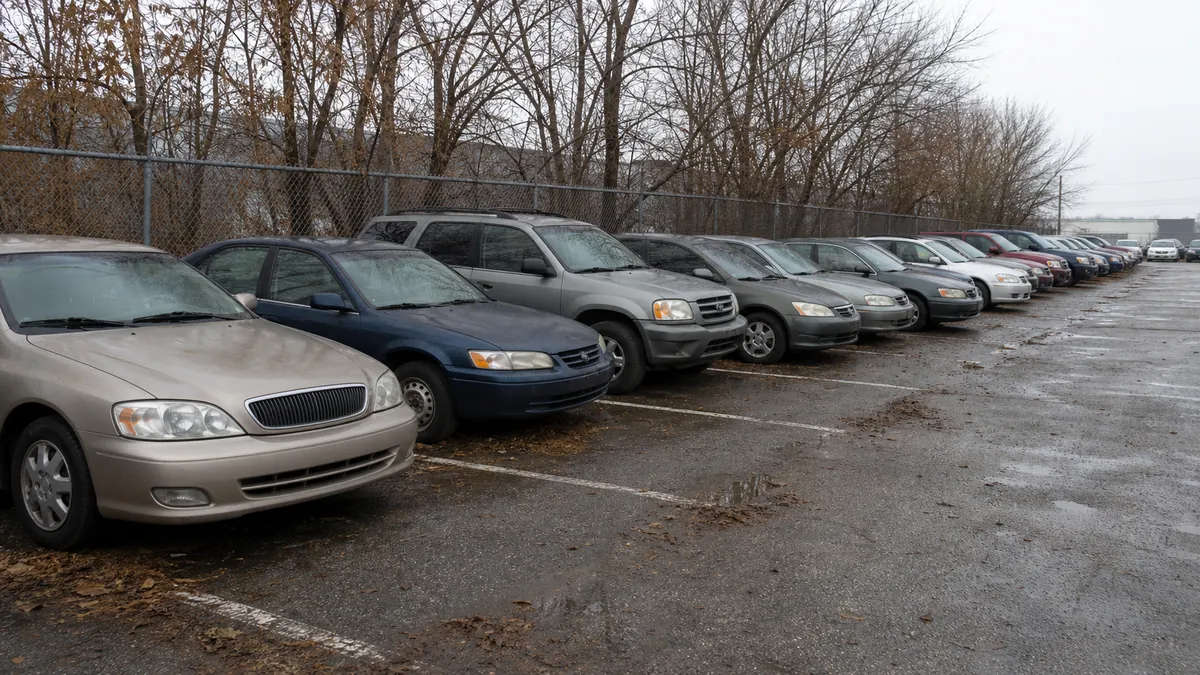
Shopping used in late autumn and early winter puts you on the other side of that curve, with softer wholesale values and dealers who are more willing to move aging inventory before year-end. The used and new calendars point at roughly the same season for different reasons, which is convenient for anyone still deciding between the two.
One caution belongs here. Used electric vehicles are behaving differently from the rest of the used market, holding value better as availability widens and fuel costs stay elevated, so the seasonal discount that shows up on a used gas sedan may not appear on a used EV at all.
There is a second reason the used calendar is worth respecting more than the new one.
The swing is larger.
A 6.2 percent year-over-year move in wholesale values is comparable to the entire incentive budget on a new car, and it reaches every used vehicle in the market rather than only the models a manufacturer chose to support.
On a $25,000 used car, shopping off the spring peak instead of into it is worth more than most new-car deadline strategies can produce.
Wholesale movement reaches retail with a lag, which is the part shoppers miss.
Auction prices feed dealer lots several weeks later, so the softening that began after March does not appear on windshields immediately, and a lot that is still priced against spring acquisition costs will hold that price until the inventory turns.
That lag works in your favor in autumn and against you in spring, and it is why watching listing prices alone can make the used market look calmer than it actually is.
Two tax deadlines now sit inside the decision
A tax rule can make one purchase date genuinely better than another, and one currently does. For tax years 2025 through 2028, a buyer can deduct up to $10,000 of interest paid on a new-vehicle loan, which is a window with a start and an end rather than a permanent feature of the tax code.
Eligibility is narrow enough that it needs checking before you sign rather than at filing time.
- The vehicle must be new, since the original use has to begin with you, so no used or certified pre-owned purchase qualifies
- Final assembly must be in the United States, which you can confirm from the VIN through the National Highway Traffic Safety Administration's decoder
- Gross vehicle weight rating must be under 14,000 pounds, which covers ordinary cars, SUVs, and light trucks
- The deduction phases out above $100,000 of modified adjusted gross income, or $200,000 for joint filers
- It is claimed on Schedule 1-A with your federal return, and it applies to loan interest rather than to the purchase price

Be realistic about the size of it. Most borrowers will deduct far less than the $10,000 ceiling, because a normal auto loan does not generate anywhere near that much interest in a single year.
That figure is closer to what a buyer pays across the entire life of a 72-month loan than what accrues in twelve months.
Treat the deduction as a modest reduction in borrowing cost, not as a reason to buy a car you were not going to buy.
The second deadline is the one already described.
The federal clean-vehicle credits closed on September 30, 2025, so an EV shopper comparing a purchase now against a remembered price from 2024 is comparing against a number that included up to $7,500 of federal money.
Anyone weighing gas against electric should confirm which of these two rules applies to the specific vehicle before the timing question is even worth asking.
Waiting only pays when carrying costs stay lower
Waiting has a price, and the honest way to time a purchase is to compare that price against the discount you expect.
On a $49,758 average new vehicle, the full 7 percent of incentive support is roughly $3,500, and that is the entire prize.
Nobody captures all of it, so a realistic target for waiting from an ordinary month into a strong one is a few hundred to perhaps a thousand dollars.
Now count what the wait costs. Four months of rental days, rideshare fares, or repairs propping up a car you were trying to replace can consume that difference quickly.
A repair bill on the outgoing car does the same in one afternoon.
If you are financing, a rate move during the wait changes the total more than the price does, because a single percentage point on a five-year loan of $30,000 runs to roughly $800 in interest, which can erase a discount you waited a season to collect.
Work one case through and the balance becomes obvious. A shopper waits from June to late September to catch the changeover on a $35,000 crossover and lands an extra $900 off.
Over those three months the old car needed a $600 repair and two weekends of rental cars at $180, so the net gain is about $120.
That is a fair result for someone who enjoyed the process and a poor one for anyone who spent three months worrying about a failing transmission.
The same arithmetic can also favour waiting decisively. A shopper with a sound paid-off car, flexibility on colour, and a target model about to be replaced can hold from spring to autumn at almost no carrying cost and collect the full changeover discount.
The wait is worth it when your current car costs you nothing to keep, and it is a losing trade the moment that stops being true.
The reader who gains most from timing is the one who is not in a hurry, is genuinely open on specification, and is buying an outgoing model year that a dealer wants to clear.
Everyone else should treat the calendar as the last thing they optimize, after choosing the right car and securing the right financing.
Getting those two right is worth more than every month of the year put together.