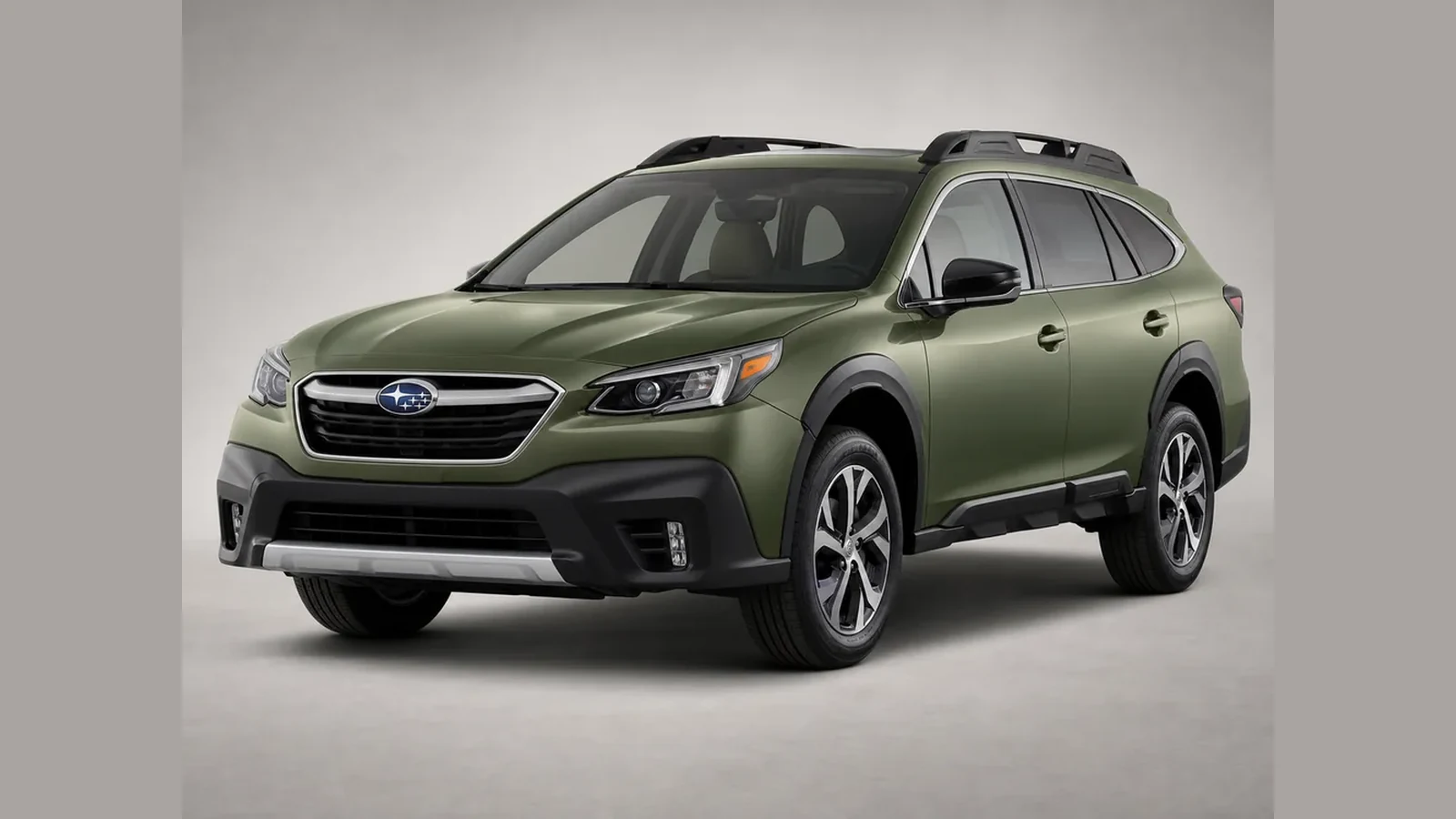
The Outback is reliable when its generation-specific risks are resolved
The Outback combines useful ground clearance, a wagon-shaped cargo area, and standard all-wheel drive with engines that can cover high mileage. Those strengths explain why owners often keep them after the payment ends.
The reliability answer changes sharply by generation. The 2013 and 2014 2.5-liter cars have a documented oil-consumption history, while 2018 through 2020 examples shift attention toward battery, glass, electronics, and campaign work.
The Lineartronic CVT spans several generations and deserves its own evidence. A smooth cold start cannot prove that the transmission behaves correctly after fluid temperature and road load rise.
A fleet-wide rating cannot inspect the car in front of you. It also cannot account for four mismatched tires, a recently installed battery that hides a draw, or a replacement windshield with no camera-calibration record.
The useful verdict is conditional but positive. Keep the Outback on the list, then make the generation choose the inspection.
Oil history means something different on older and newer boxer engines
Subaru service bulletin 02-157-14R covers certain 2013 and 2014 Legacy and Outback models with the 2.5-liter FB engine. It describes an oil-consumption test and short-block replacement for qualifying vehicles that use more than one-third of a quart in 1,200 miles.
That bulletin is strong evidence of a defined issue, not proof that every affected-year car still has it. A documented short-block replacement with the VIN, mileage, date, and shop details can materially improve the case for one individual car.
| Observation | Possible meaning | Proof that matters |
|---|---|---|
| Falling dipstick level | Internal consumption or external loss | Dated level log and leak inspection |
| Blue exhaust smoke | Oil entering combustion chambers | Cold and deceleration observation |
| Wet lower engine | Cam-carrier, cover, pan, or service leak | Cleaned area followed by recheck |
| Short-block invoice | Prior internal engine repair | VIN, mileage, part, and repair date |
| Low-oil warning history | Possible lubrication damage | Scan, compression context, and repair records |
Do not merge oil burning with an external leak. Fresh oil around the cam-carrier seams, timing cover, oil pan, filter, or drain plug leads to a different repair than oil passing the piston rings.
A clean engine bay can be misleading when it was washed for sale. Check the oil cold on level ground, inspect the splash shield and parking area, then compare the seller's top-off story with dated receipts.
Later naturally aspirated and turbo engines do not inherit the 2013 to 2014 bulletin by association. They still need correct oil level, clean coolant, dry sealing surfaces, and a cold start without persistent smoke, knock, or misfire.
A compression or leak-down test helps when the engine runs poorly, while a controlled oil-use record answers a different question. Do not accept one clean dipstick reading as proof of low consumption over an oil-change interval.
A Lineartronic CVT must prove itself cold, warm, and under load
A healthy Subaru CVT can hold engine speed while road speed rises. That behavior differs from a stepped automatic shift and should not be diagnosed as slipping merely because the tachometer stays steady.
Warning behavior is repeatable shudder, delayed engagement, a flare without matching acceleration, whining that grows with temperature, warning lamps, or stored ratio and pressure codes. Fluid seepage and an unknown service product add evidence even when the dashboard is clear.
Subaru issued extended CVT coverage for several model-year groups, including 2010 through 2015 Legacy and Outback vehicles and a separate extension for 2018 models. The 2018 bulletin says the extension was intended to provide added assurance rather than respond to one named condition, so the coverage notice supplies context rather than a diagnosis.
CVT evidence
- Cold selection
- Reverse and Drive engage without a long delay
- Neighborhood speed
- No repeatable judder or surge on light throttle
- Warm highway drive
- Acceleration remains consistent after sustained load
- Tight turns
- No binding, hopping, or driveline protest
- Module scan
- No unresolved pressure, ratio, or chain-slip history
- Service invoice
- Correct CVT and fluid specification are identified
Begin before the seller warms the car. Use light throttle through town, steady highway speed, a moderate grade if available, and a second low-speed loop after the unit is fully warm.
A quick fluid change before sale does not repair worn internal parts. Dark or contaminated fluid, an unexplained replacement transmission, or repeated control-valve work needs a specialist's interpretation and a price that reflects the uncertainty.
Do not tow or load the car beyond safe road-test conditions. A normal drive should still be long enough to show whether heat changes engagement, noise, or acceleration.
Walk away from a repeatable warm shudder or delayed drive engagement until a Subaru-capable shop names the cause and cost.
Four matched tires protect the value of standard all-wheel drive
The Outback's all-wheel-drive system depends on four tires with compatible rolling circumference. Brand, model, size, load rating, wear, and pressure all affect that circumference.
A new pair on one axle and worn tires on the other can create a persistent speed difference through the drivetrain. It can also reveal that the previous owner treated the car like a front-drive vehicle when replacing tires.
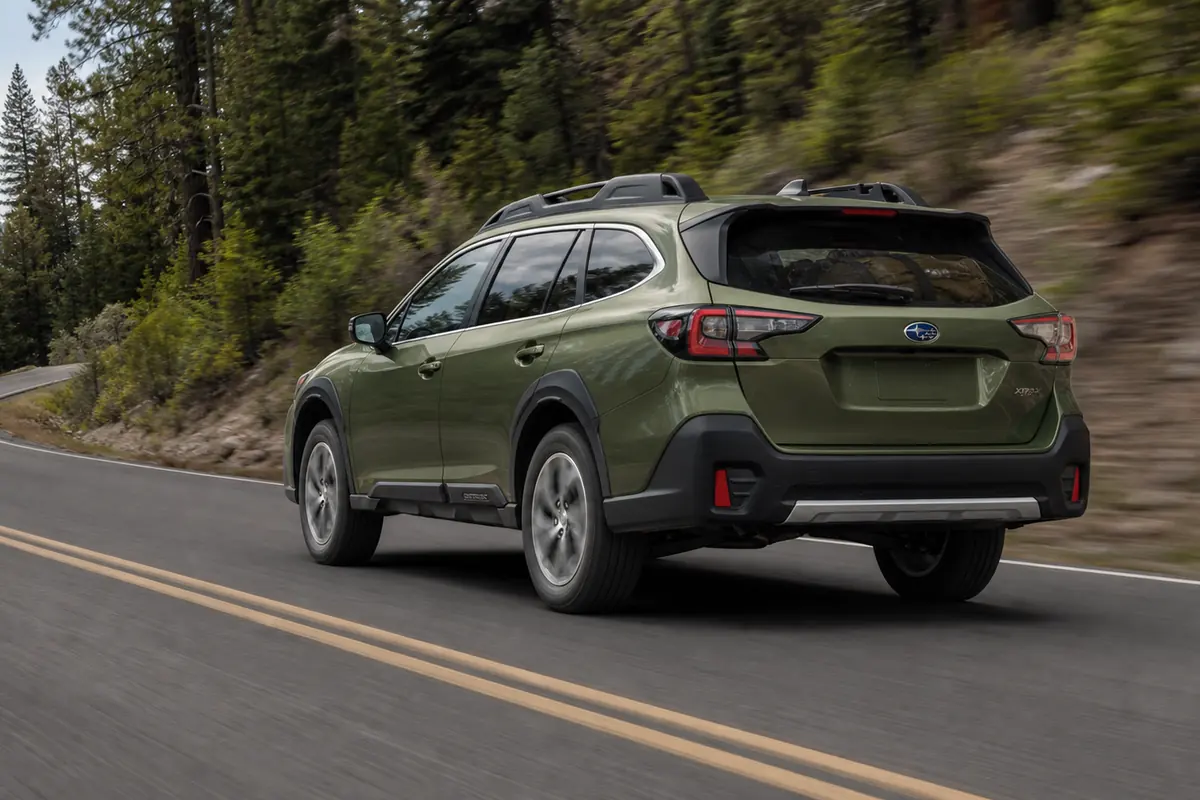
Measure tread at several points on all four tires and compare the sidewalls. Then check front and rear differential service, CV axle boots, wheel-bearing noise, and fluid leakage beneath the car.
A bearing hum often changes when the vehicle is gently loaded left or right on smooth pavement. Tire noise can imitate it, so use more than one road surface before assigning a repair.
Snow-state usefulness brings a second cost. Road salt reaches subframes, suspension mounts, exhaust flanges, brake lines, heat shields, and fasteners that may look acceptable from standing height.
Surface discoloration is not the same as swollen seams or scaling metal. A lift inspection should determine whether corrosion is cosmetic, likely to complicate future repairs, or already affecting structure.
The capability is worth paying for only when the four tires and AWD hardware were maintained as one system.
Battery drain, windshield history, and EyeSight can change a later Outback
The court-supervised Subaru battery settlement included 2015 through 2020 Outbacks. That coverage range makes battery history relevant, while it does not prove that every car suffered a parasitic draw.
Ask how many batteries the car has used and why each was replaced. A larger new battery can postpone another no-start without identifying a module, accessory, charging, or use-pattern cause.
A parasitic-draw test must allow the vehicle's computers to enter sleep mode. Opening a door, waking keyless entry, or measuring too soon can make ordinary module activity look abnormal.
Inspect the windshield edges in clean daylight for chips, long cracks, uneven molding, water marks, and wind noise. Operate the cameras and driver-assistance features without treating a warning-free dashboard as calibration proof.
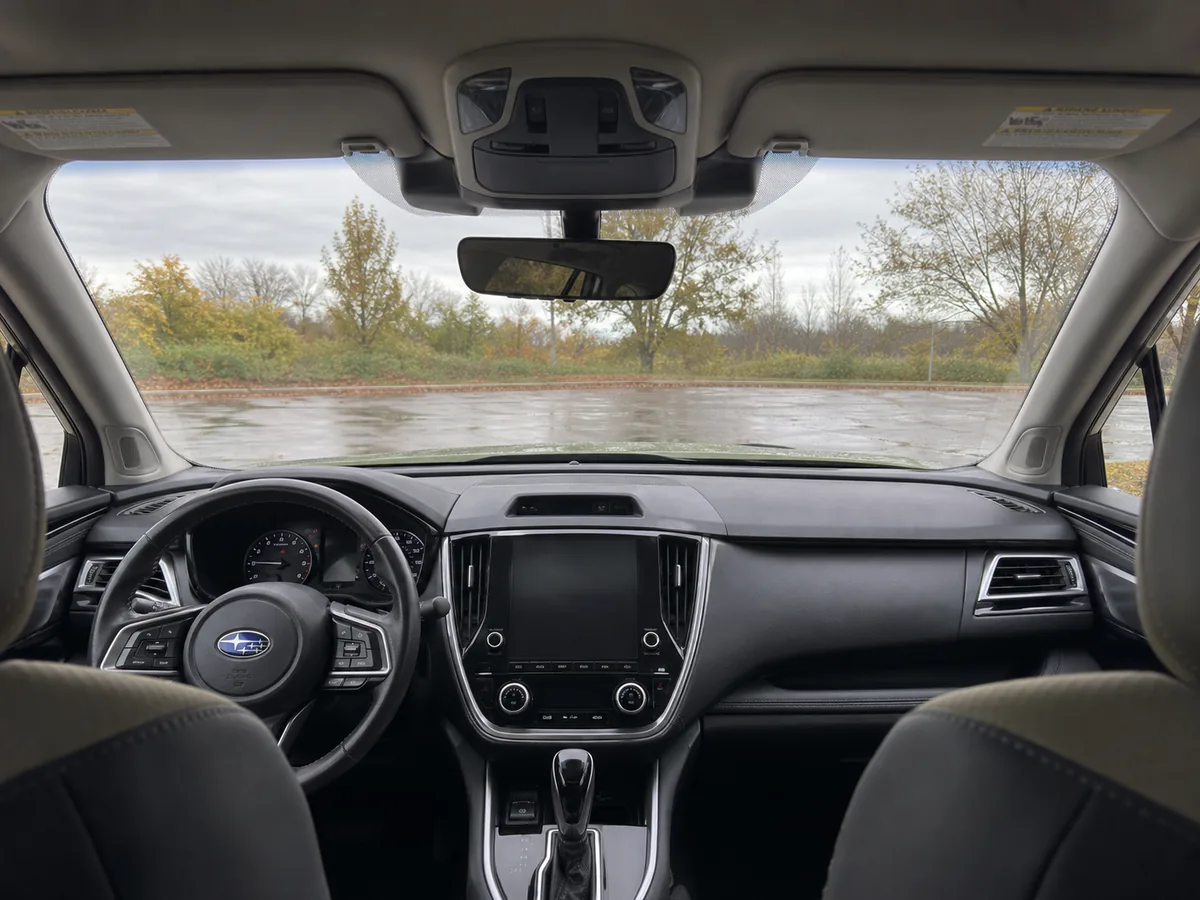
Short trips and long parking periods can stress any 12-volt battery. A car that repeatedly dies after several parked days presents a different pattern from one used for five-minute winter trips.
Remove aftermarket cameras, trackers, and audio equipment from the diagnosis. Their wiring can create a draw that is unrelated to the vehicle's original modules.
A recent battery or clear windshield is reassuring only when the paperwork explains what changed and why.
How long can a Subaru Outback last after 100,000 miles?
An Outback can remain useful well beyond 150,000 miles when oil level, coolant, CVT fluid, differential oil, brakes, and tires received consistent attention. Mileage alone does not reveal whether those systems were maintained together.
Long ownership exposes wheel bearings, control-arm bushings, struts, axle boots, exhaust joints, and cooling components. These repairs are ordinary aging costs when they are identified and priced, but several overdue items can erase the value of a cheaper car.
Past 100,000 miles, the useful question is how much of the next service cycle has already been completed. Ask for dated evidence of spark plugs, coolant, differential fluid, brakes, battery work, and any CVT service that the owner claims.
One large invoice does not reset the entire vehicle. A replacement transmission may be valuable while aging wheel bearings, damp cargo trim, corrosion, and overdue suspension work still determine the next bill.
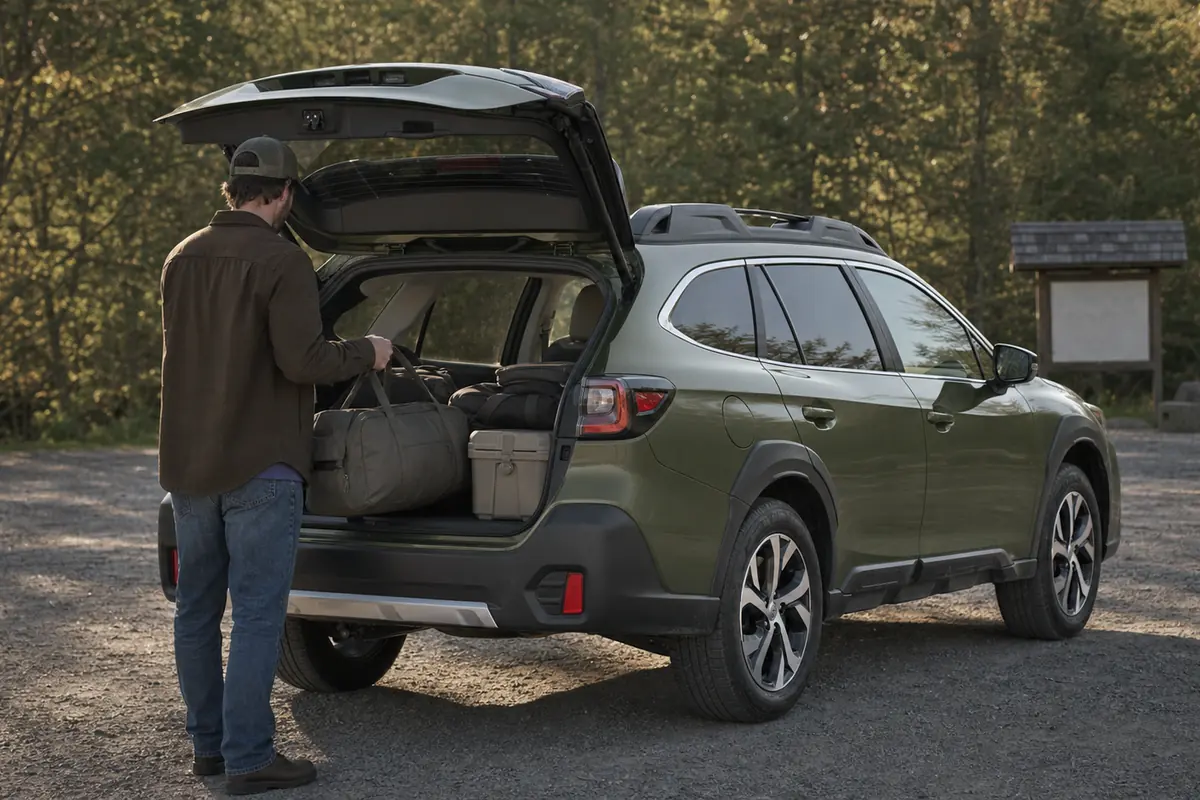
Inspect the spare-tire well and cargo floor for moisture. Water staining, odor, corroded connectors, or a damp headliner can point toward hatch, roof-rail, glass, or body-repair sealing problems.
A high-mileage highway car with dated service records may be easier to judge than a low-mileage car that sat outside and made only short trips. Highway use still consumes tires, bearings, brakes, and suspension, so records must agree with the physical car.
Cooling history matters even when the temperature gauge has never shown hot. Check reservoir level, hose condition, radiator seams, water-pump area, and any invoice for a prior overheat or coolant loss.
The best evidence is consistent rather than dramatic. Oil-change dates, matched tire replacements, differential and CVT invoices, clean fluid levels, and a quiet warm drive should support one another.
There is no honest mileage at which every Outback fails. Condition and repair backlog determine whether the next 50,000 miles will be useful or expensive.
Buy the evidence, not the Outback reputation
A strong used Outback has engine records that fit its generation, clean cold and warm behavior, four compatible tires, completed VIN campaigns, stable battery operation, and an underbody that matches its price. None of those facts can substitute for another.
A newer car with incomplete recall and electrical records can be worse than an older car whose known work is documented. A repaired car can be a sensible purchase when the repair order, present condition, and price agree.
Choose the Outback that proves its reputation one system at a time.