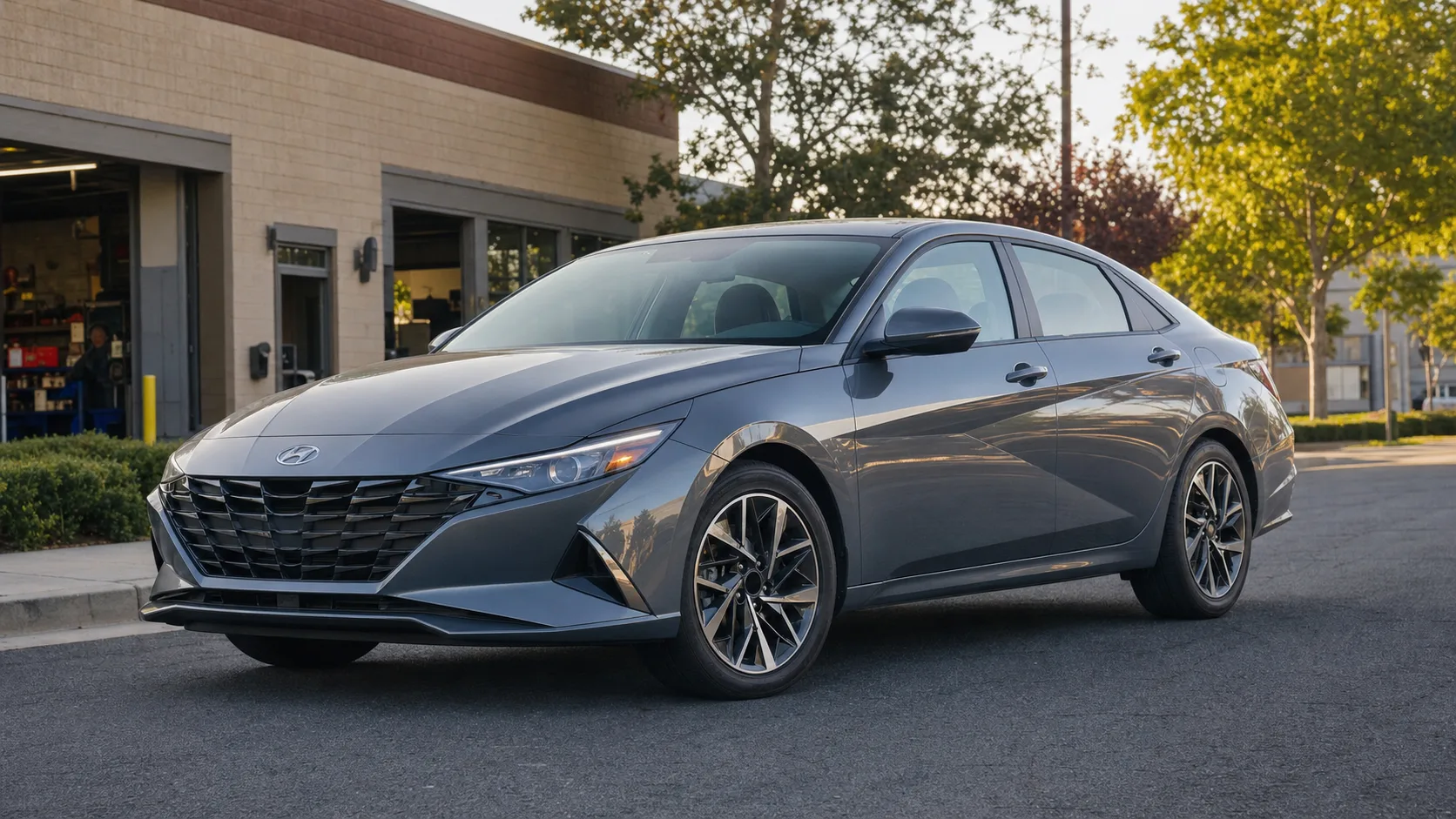
The Elantra is reliable only after the powertrain is identified
The Elantra has delivered simple transportation, good fuel economy, and long warranty coverage across several generations. That broad value case explains why a used example can look unusually attractive beside a Civic or Corolla.
The nameplate average hides several mechanical combinations. Earlier cars may use the Nu 1.8-liter engine, later sixth-generation cars commonly use a Nu 2.0-liter, and the current generation includes Smartstream gasoline, hybrid, turbo, IVT, and dual-clutch configurations.
Elantra identity check
- Nu 1.8-liter
- Verify cold piston noise and any warranty repair
- Nu 2.0-liter
- Check VIN against the oil-ring recall population
- Smartstream 2.0-liter
- Judge current oil, cooling, IVT, and campaign history
- N-Line turbo
- Test dual-clutch behavior fully warm
- Hybrid
- Separate battery, engine, and hybrid-transmission evidence
The VIN and underhood emissions label can resolve a listing that says only four-cylinder automatic. A trim name may narrow the answer, while equipment and market differences still make documentation safer than memory.
A fleet rating cannot tell you whether a replacement engine used the revised part or whether a key-start car will receive affordable comprehensive insurance. Reliability begins with identifying what the buyer will actually own.
Keep the Elantra on the shortlist only after the engine, gearbox, and ownership exposure are named.
The Nu 1.8 and Nu 2.0 histories must not be merged
Hyundai issued extended-coverage information for certain 2011 through 2016 Elantras with the Nu 1.8-liter engine and cold piston-slap symptoms. The bulletin describes a noise concern and a defined diagnostic path for eligible cars in specified cold-weather states.
A separate safety recall, NHTSA 20V746, covers certain 2019 and 2020 Elantras with the Nu 2.0-liter engine. Hyundai said improperly heat-treated piston oil rings could chip, damage the cylinder bore, cause oil consumption, create abnormal engine noise, and in some cases lead to oil leakage and fire risk.
| Evidence | Nu 1.8-liter context | Recalled Nu 2.0-liter context |
|---|---|---|
| Key period | Certain 2011-2016 cars | Certain 2019-2020 cars |
| Defined concern | Cold piston-slap noise | Improperly heat-treated oil rings |
| Proof source | Warranty bulletin and diagnosis | VIN recall record and remedy |
| Current check | Cold noise, oil use, compression context | Oil use, knock, codes, remedy history |
| Main error | Assuming all cold noise is harmless | Assuming every 2.0-liter is included |
A ticking injector, accessory noise, loose heat shield, valvetrain sound, piston noise, and connecting-rod knock require different responses. Record the sound from the first cold start and let a Hyundai-capable technician locate it.
Check the dipstick before startup and ask how much oil is added between changes. Low oil, blue smoke, a damaged catalyst, recurring misfire, or metal in drained oil increases the consequence beyond an annoying sound.
An engine-replacement invoice should name the reason, part or assembly, mileage, installer, related updates, and remaining coverage. A seller who says Hyundai replaced it without producing the record leaves the central question unresolved.
Never apply the 1.8-liter bulletin or the 2.0-liter recall to a car merely because the listing says Nu engine.
Newer Smartstream cars shift the questions toward current condition
The 2021 redesign brought newer Smartstream powertrains, revised electronics, and a different stage of production history. These cars carry less age exposure and may retain more factory coverage than earlier Elantras.
That is a real advantage, not proof of extreme-mile longevity. Newer cars have had less time to accumulate corrosion, heat cycles, high mileage, and owner reports.
- 2011-2016Nu 1.8-liter evidence requires a cold-engine review
- 2017-2020Nu 2.0-liter and generation-specific campaigns require VIN checks
- 2021 onwardSmartstream era shifts weight toward current condition and warranty
- Before purchaseEngine identity and completed campaign record remain decisive
Judge oil level, coolant, cold start, warm idle, acceleration, fuel economy, warning history, and service intervals on the actual car. A recent model still can suffer poor collision work, flood exposure, neglected oil, damaged wheels, or cleared codes.
Hybrid versions add a traction battery and power electronics but remove the same transmission expectations as the IVT and DCT cars. Verify the written hybrid warranty and current diagnostic data rather than treating the battery as either permanent or doomed.
Remaining coverage has value only when the in-service date, mileage, exclusions, and transfer terms are known.
IVT and dual-clutch Elantras should not feel the same
The mainstream IVT varies ratio continuously and may hold engine speed during acceleration. The N-Line dual-clutch transmission uses clutches and stepped gears, so it can feel more deliberate at parking speed and shift more distinctly on the road.
A buyer who expects identical behavior may reject a normal DCT or explain away an abnormal IVT. Test the exact gearbox from cold operation through stop-and-go traffic and a fully warm open-road drive.
| Transmission | Normal trait | Evidence that needs diagnosis |
|---|---|---|
| IVT | Sustained rpm under acceleration | Shudder, flare, delay, warning, ratio code |
| Dual clutch | Noticeable clutch take-up at low speed | Repeated slip, overheating warning, harsh engagement |
| Hybrid transmission | Engine speed may change independently of road speed | Hybrid warning, loss of drive, abnormal vibration |
| Manual | Driver-controlled clutch engagement | Slip under load, noise, poor release |
Creeping a DCT on an incline can create clutch heat because the system must slip the clutch to move slowly. A normal control strategy should not produce recurring warnings or severe shudder during ordinary use.
An IVT should respond consistently after it is warm. A rising engine speed without proportional acceleration, delayed selection, repeated judder, or stored transmission codes requires diagnosis before purchase.
N-Line performance can also mean harder previous use, larger tires, and greater brake expense. Inspect those systems without assuming the badge itself proves abuse.
Judge each transmission against its own design, then reject repeatable symptoms that exceed normal behavior.
Theft exposure and ABS fire recalls can dominate ownership cost
Some key-start Hyundai vehicles lacked an engine immobilizer used to prevent the vehicle from being started without the correct key. Hyundai offered anti-theft software for eligible vehicles and other measures for certain cars that could not receive it.
The practical result varies by VIN, hardware, location, and insurer. A completed software campaign may reduce theft risk, while visible damage, prior attempts, local claim experience, and policy rules can still affect coverage or price.
Get a written insurance quote using the exact VIN before placing a nonrefundable deposit. Ask whether comprehensive coverage, theft deductibles, proof of the Hyundai remedy, or additional hardware changes the terms.
NHTSA recall 23V651 includes certain 2011 through 2015 Elantras because an electrical short in the ABS module could create an engine-compartment fire risk while driving or parked. Hyundai and NHTSA advised owners of unrepaired affected vehicles to park outside and away from structures.
The theft campaign and ABS recall answer different questions. One addresses unauthorized starting exposure, while the other addresses an electrical fire risk in a named population.
A mechanically smooth Elantra can still be a poor financial choice when it cannot be insured at a sensible rate. Price the VIN, not a sample quote for the model name.
How many miles can a Hyundai Elantra last?
There is no single Elantra lifespan because the engine and transmission combinations do not share one risk history. A six-figure odometer reading becomes useful only after the VIN, installed powertrain, campaign work, oil use, and insurance situation are known.
Once engine-specific evidence is resolved, an Elantra ages like a light compact sedan. Cooling components, mounts, wheel bearings, steering parts, suspension, brakes, air conditioning, tires, and body repairs shape daily dependability.
A buyer planning another 50,000 miles should price the neglected systems together. An inexpensive car with overdue tires, brakes, mounts, fluids, and air-conditioning work can cost more than a higher-mileage example whose records show those jobs already completed.
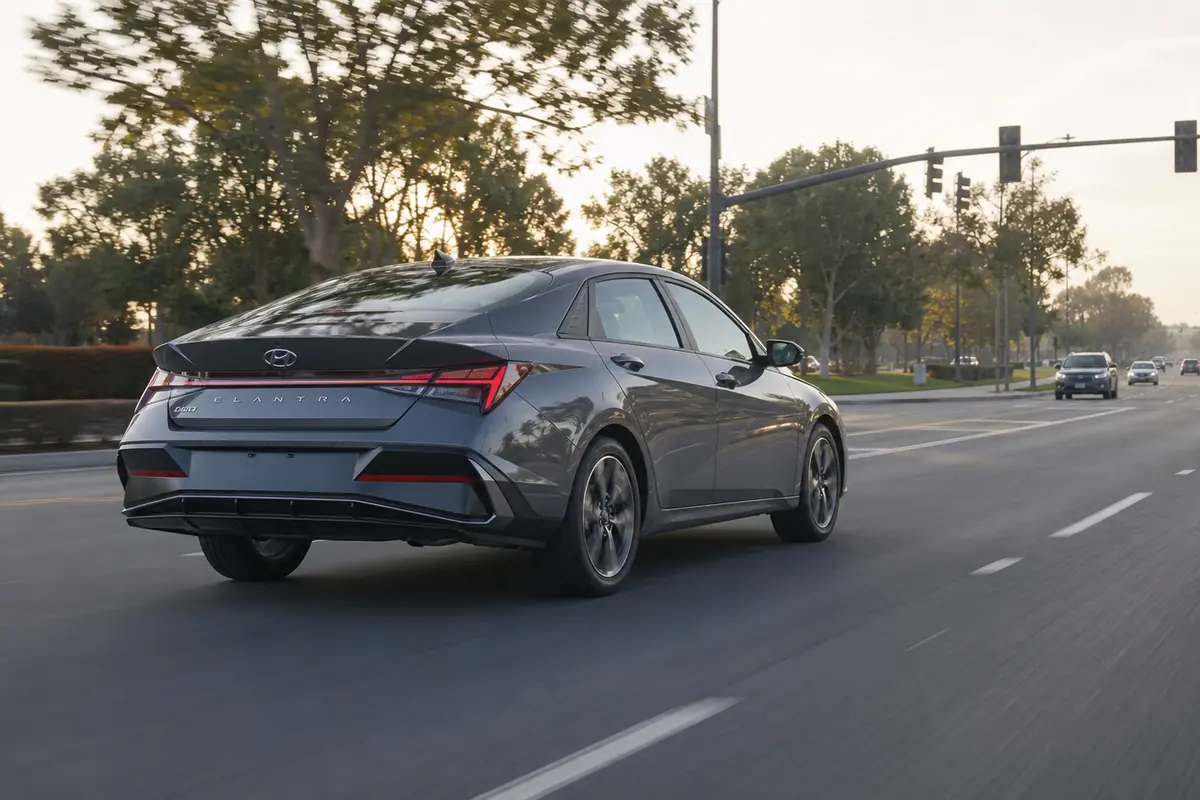
Check oil level repeatedly over ownership rather than relying only on the warning lamp. A low-cost car becomes expensive when oil consumption or leakage is ignored until lubrication damage occurs.
A replacement engine may extend useful life when the cooling system, catalyst, mounts, controls, and related causes were addressed. It does not renew the transmission, suspension, brakes, air conditioning, or body.
Drive on smooth and rough pavement with the cabin quiet. Steering clunks, pull, vibration, bearing hum, brake pulsation, and tire-edge wear deserve prices before the deal.
Inspect the trunk well, door seals, lower body seams, underbody, and previous collision repairs. Flood or structural damage can create electrical and alignment problems that have nothing to do with the engine campaign.
No honest source can promise one lifespan for every Elantra. Consistent oil service, a healthy cooling system, a known powertrain, and a manageable repair backlog support long use better than a low odometer alone.
Buy only when the engine identity, VIN, and insurance quote agree
A strong Elantra has a verified engine and transmission, documented campaign status, clean cold and warm behavior, stable fluid levels, even tires, sound body repairs, and an insurance cost that preserves the value advantage.
Do not buy a complex trim solely because depreciation made it cheap. Choose it when its performance or efficiency is useful and the added systems have evidence.
An Elantra is genuinely inexpensive only when the engine, gearbox, safety work, theft exposure, and insurance cost all support the same conclusion.