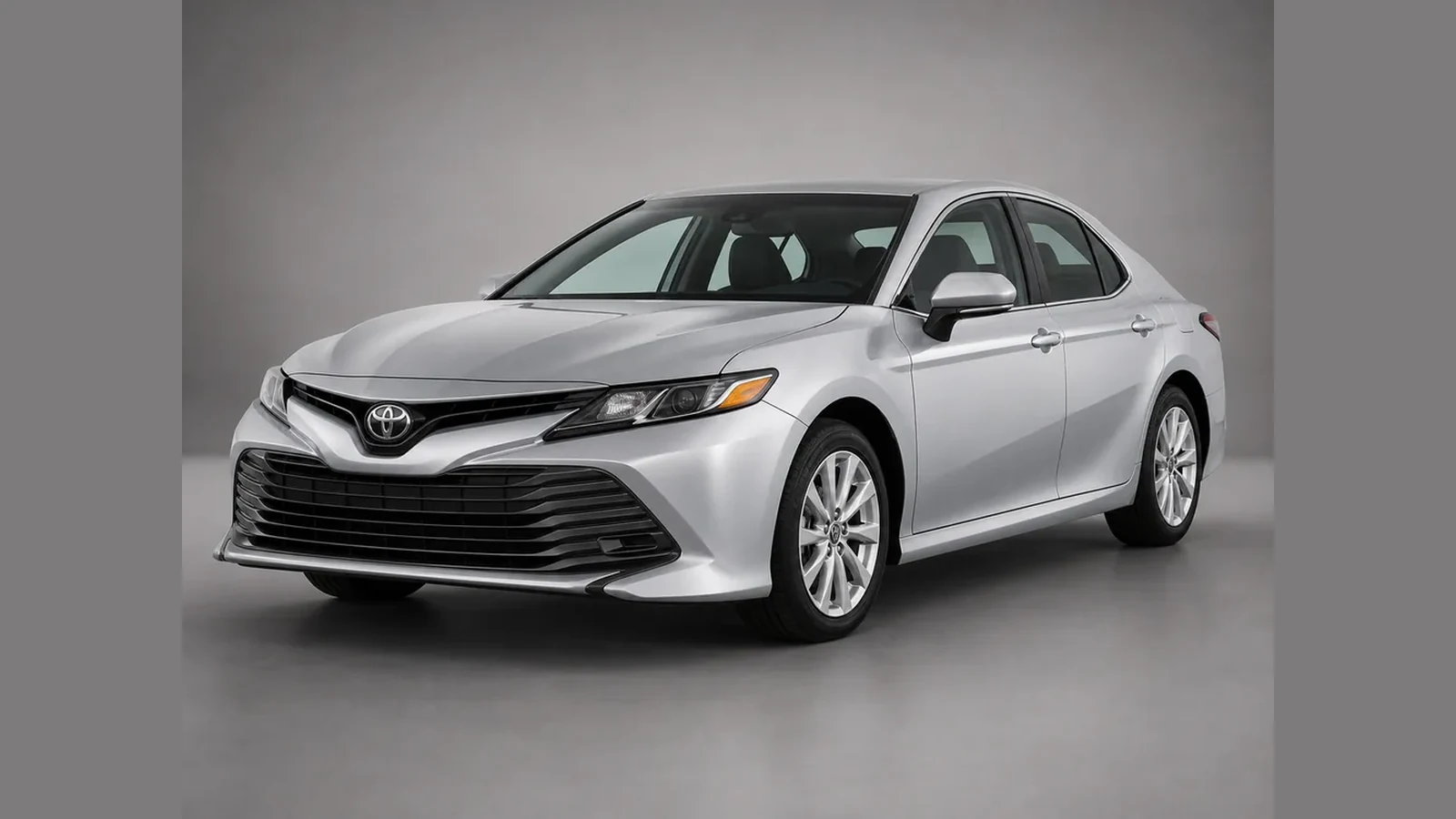
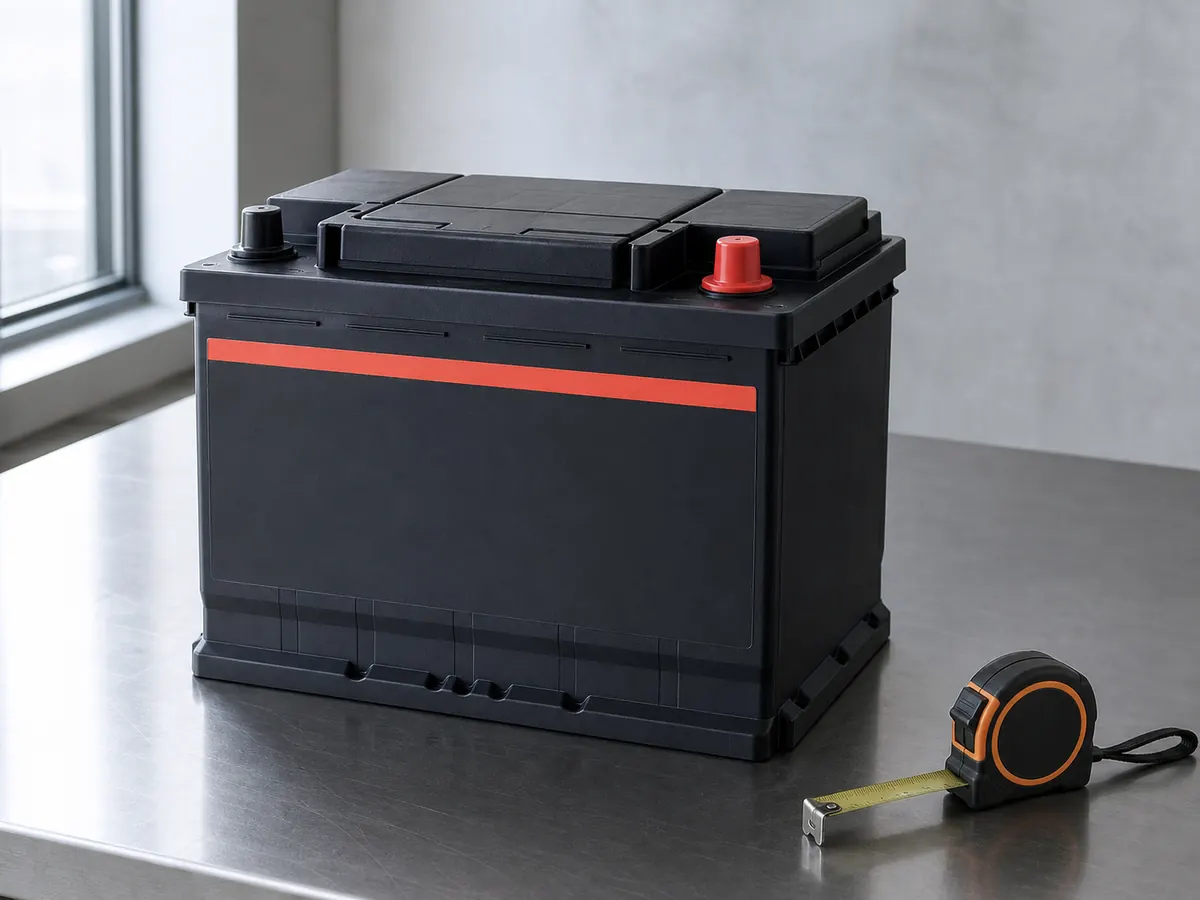
Which battery fits your Camry year, engine, and powertrain?
The correct Camry battery comes from a configuration, not the model name alone. Start with the model year, then separate gas from hybrid and identify whether a gas car has the 2.5-liter four-cylinder or 3.5-liter V6.
Toyota changed the U.S. Camry to a hybrid-only lineup for 2025. That removes the V6 and conventional gas branches from the newest year, but it does not make older hybrid auxiliary batteries interchangeable with the current car.
Interstate's 2023 application guide lists H5 for 2020 to 2023 2.5-liter gas Camrys and for several 2018 to 2023 hybrid configurations. It lists H6 for the 2018 to 2023 V6 and for 2018 to 2019 2.5-liter gas cars.
| Model years | Engine or powertrain | Listed group | Application rating | Required follow-up |
|---|---|---|---|---|
| 2025 | Hybrid only | H5 products currently list fitment | Confirm exact auxiliary code by VIN | Match the installed label and vent arrangement |
| 2020-2024 | 2.5L gas | H5 | 585 CCA baseline through 2023 | Confirm year and terminal layout |
| 2018-2024 | 3.5L V6 | H6 | 605 CCA baseline through 2023 | Use the longer H6 case |
| 2018-2019 | 2.5L gas | H6 | 605 CCA baseline | Do not borrow the later H5 recommendation |
| 2018-2024 | Hybrid | H5 in several guide rows | 345 to 585 CCA depending on configuration | Confirm moonroof and exact application |
| 2012-2017 | 2.5L gas | 24F | 585 CCA baseline | Match 24F case and polarity |
| 2012-2017 | Hybrid | S55D23R or S65D26R | 355 or 450 CCA in guide | Buy only by exact auxiliary code |
Those rows show why the engine field changes the purchase. In 2019, for example, the four-cylinder gas car is listed with H6 while the hybrid uses an H5-family result, so the model year alone still leaves two answers.

Read the certification label on the driver's door jamb and confirm the engine through the under-hood emissions label or VIN-based catalog. Photograph the battery label and tray so the current group, terminal side, vent connection, and hold-down can be compared with the proposed replacement.
A previous owner can install an incorrect case that still starts the car, so the old battery is evidence rather than final authority. When the label and a current catalog disagree, stop and resolve the VIN, engine, production date, and market before ordering.
Why Group 35 is the wrong default for a modern Camry
Group 35 appears in older Camry applications, which likely explains why generic advice keeps repeating it. Interstate's guide shows Group 35 on portions of the early 2000s and 1990s history, but it is not the standard answer for the current generations covered above.
The physical cases make the error visible. H5 is roughly 9.5 inches long and 7.5 inches high, H6 is roughly 10.9 inches long at a similar height, and 24F is roughly 10.9 inches long but about 8.7 inches high in the AGM product used here.
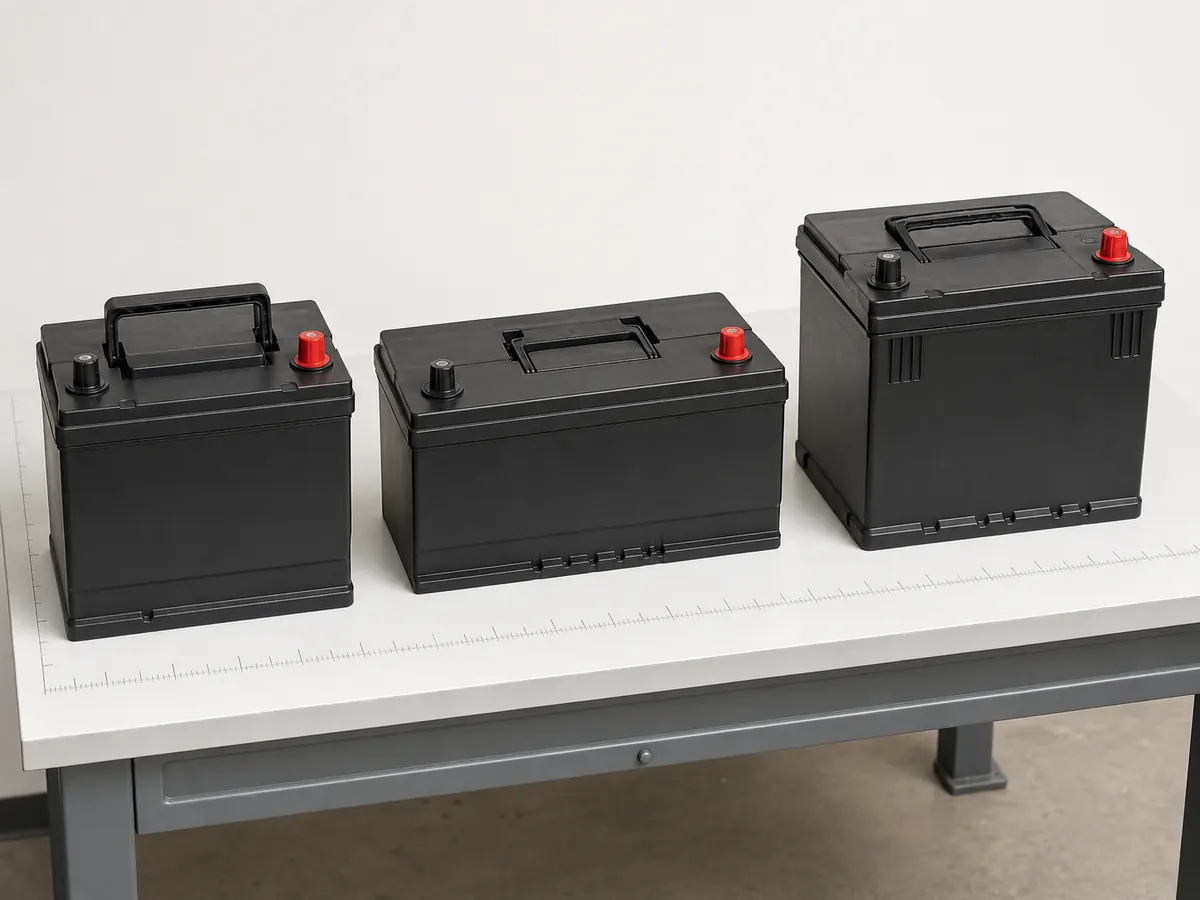
Group 35 is shorter than H6 and taller than H5. A battery can have enough starting power while still sitting incorrectly in the tray, missing the hold-down ledge, placing a post on the wrong side, or bringing the case too close to surrounding hardware.
The correction does not create a new universal H5 rule. H5 is common on later four-cylinder and hybrid configurations, while the V6 and earlier gas generations prove that the engine and year still control the decision.
Best H5 choices for four-cylinder and newer hybrid Camrys
The H5 cards apply only after the fitment lookup identifies H5. That includes many 2020 to 2024 2.5-liter gas cars, several 2018 to 2024 hybrid configurations, and current listings that include the 2025 Camry.
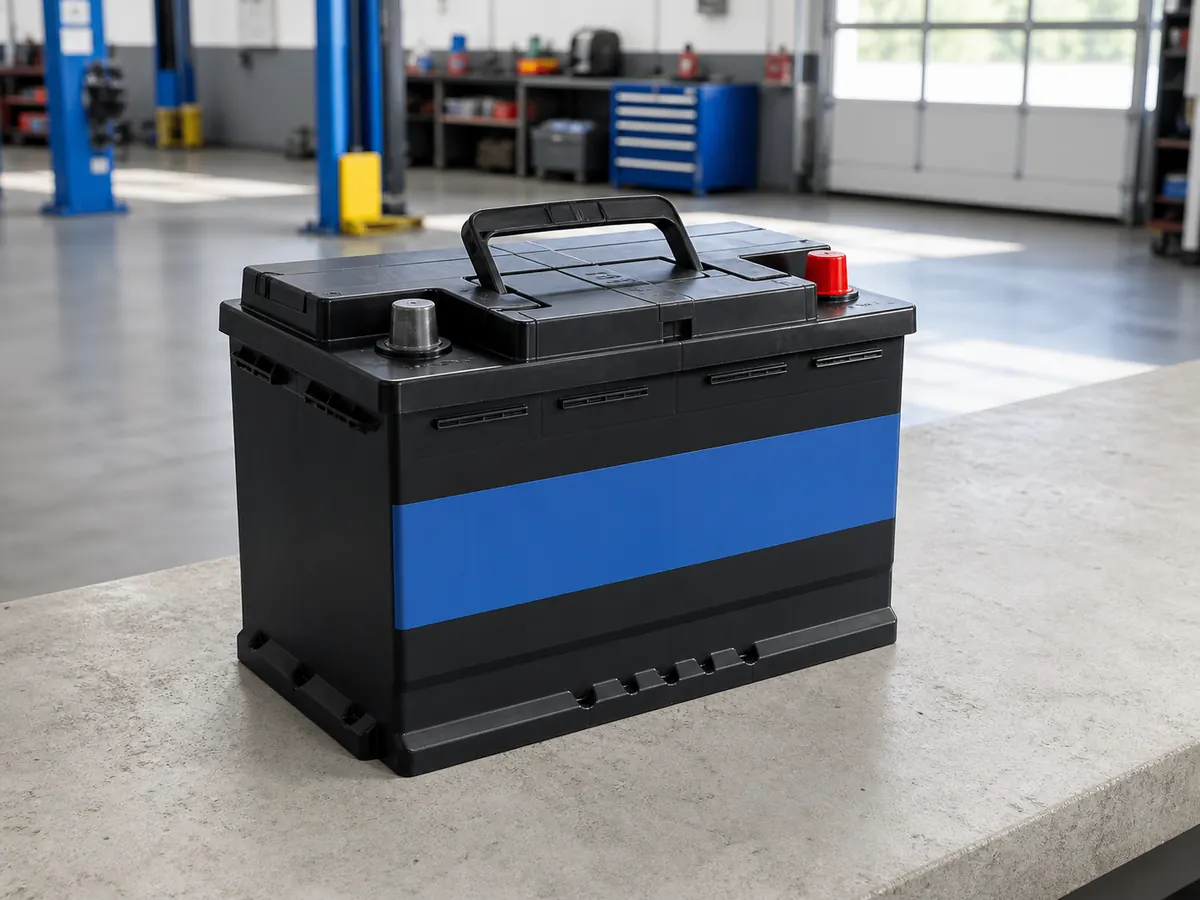
The Interstate MTP-47/H5 is the conventional flooded choice. Interstate publishes 650 CCA, 100 minutes of reserve capacity, a 30-month free-replacement warranty, and a case measuring about 9.5 by 6.875 by 7.5 inches.
The MTX-47/H5 AGM keeps a similar footprint and 650 CCA rating, while adding 60 Ah, AGM construction, and a 36-month free-replacement warranty. It costs more because it is built for stronger cycling tolerance, not because it fits more Camry configurations.
A flooded H5 is the simpler value when the exact application permits it and the car sees normal driving. AGM becomes more attractive for repeated short trips, long parking periods, heavy accessory use, or an application that specifically calls for that technology.
Hybrid owners must still confirm the exact auxiliary-battery row. The word hybrid identifies the electrical system, but the application guide shows different ratings and moonroof-related rows, so chemistry and case code cannot be chosen from the powertrain badge alone.
Buy from a seller that can attach the vehicle year, engine, and powertrain to the invoice or fitment record. That evidence is more useful than a verbal statement that H5 fits most newer Camrys.
The H6 choice for 2018 to 2024 V6 Camrys
The 3.5-liter V6 uses the longer H6 case in Interstate's 2018 to 2023 guide, and current product listings extend H6 fitment into 2024. This branch deserves its own recommendation because an H5 product written for the four-cylinder does not occupy the same tray footprint.
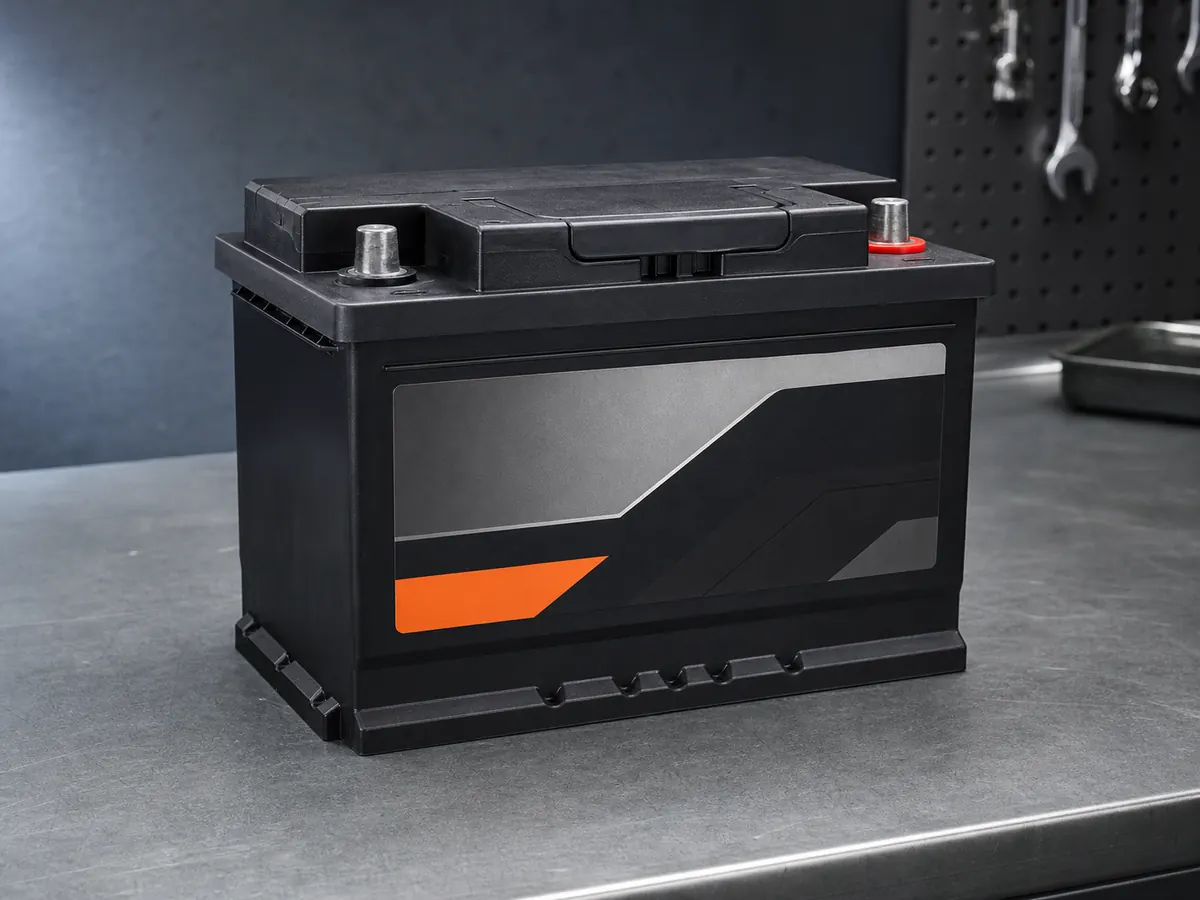
The Interstate MTP-48/H6 publishes 730 CCA, 70 Ah, and 115 minutes of reserve capacity. Its case measures about 10.94 inches long, 6.875 inches wide, and 7.44 inches high.
That 730 CCA rating clears the application guide's 605 CCA baseline without turning the purchase into a number contest. The useful feature is the combination of correct H6 dimensions, top-post layout, and enough starting power for the V6.
The product uses flooded construction and lists a 30-month free-replacement warranty. An AGM H6 may suit a specific use case, but the existing electrical system and current application data should approve the chemistry change.
Check the installed H6 label before purchase, particularly on a used Camry with an uncertain repair history. A smaller case held in place with spacers or an improvised bracket is a defect to correct, not a pattern to copy.
The 24F decision for 2012 to 2017 gas Camrys
Interstate lists Group 24F for the 2.5-liter gas Camry from 2012 through 2017. The same group also appears on the V6 through 2017, which makes 24F the useful starting point for many seventh-generation gas cars.
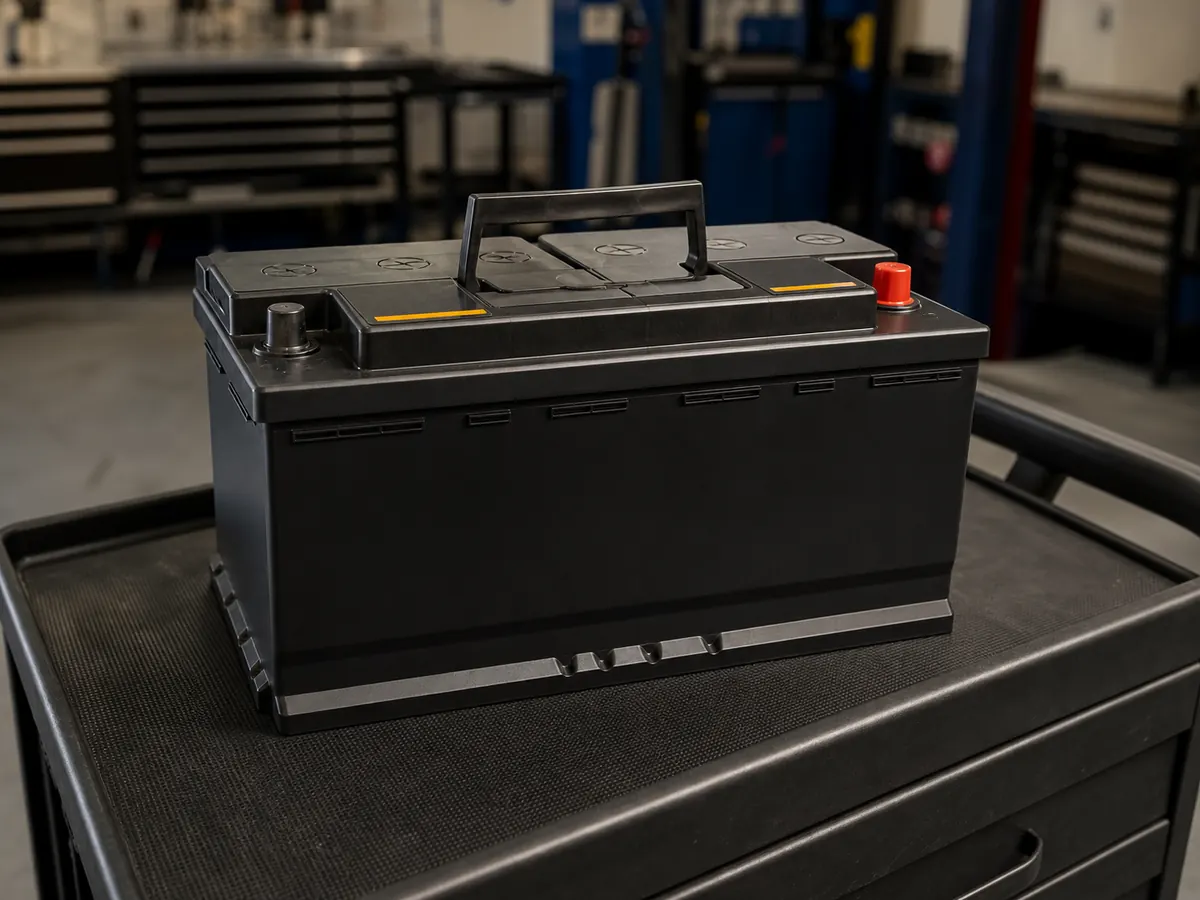
The Interstate MTX-24F AGM provides 710 CCA, 70 Ah, and 120 minutes of reserve capacity. It publishes a 36-month free-replacement warranty and measures about 10.94 inches long, 6.81 inches wide, and 8.69 inches high.
That is a premium choice for an owner keeping the car through another battery cycle. AGM can make sense when the Camry sits, runs accessories with the engine off, or makes repeated short trips that provide limited recharge time.
A compatible flooded 24F can cost less and still serve ordinary commuting. The correct comparison is between compatible 24F products, not between 24F and a physically different Group 35 that happens to be cheaper.
Inspect the tray for old corrosion and the cables for repair before installing a premium case. Spending more on AGM does not restore a damaged clamp, broken hold-down, or charging system that never replenishes the battery.
Camry Hybrid 12-volt batteries need exact-code verification
The Camry Hybrid carries two very different battery systems. The high-voltage traction battery moves the car, while the smaller 12-volt battery powers control electronics and allows the hybrid system to enter READY mode.
A weak 12-volt battery can leave a hybrid unable to wake up even when the traction battery has charge. That symptom does not make the two batteries interchangeable, and this product roundup covers only the serviceable 12-volt unit.
Interstate's guide lists H5-family results for several 2018 to 2023 hybrid configurations. For 2012 to 2017 it lists S55D23R, with S65D26R appearing on moonroof-equipped cars, which proves that one generic hybrid recommendation cannot cover the full nameplate.
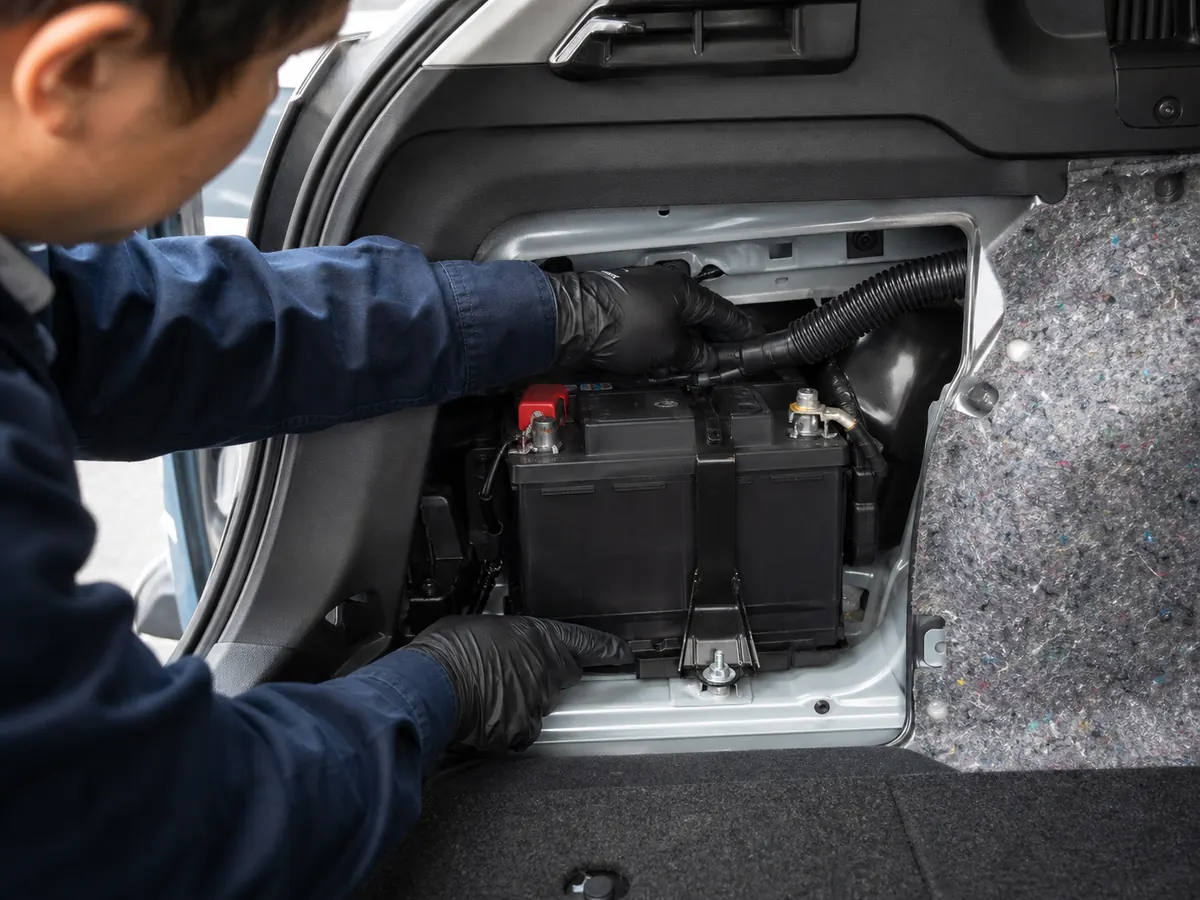
Locate the 12-volt battery using the exact owner's manual because its position and access vary. Record the case code, polarity, technology, vent provision, hold-down, and any temperature or sensor connection before shopping.
An auxiliary battery installed inside the body may use a vent path that routes gases outside. If the existing installation has a tube or vent fitting, the replacement must provide the correct connection and the tube must be restored without kinks.
Do not assume that every hybrid battery is AGM or that any AGM with similar dimensions is acceptable. Match the exact code through Toyota or a current fitment source, then confirm that the seller's product listing names the year and configuration.
The 2025 hybrid-only lineup makes this distinction more important because every new Camry buyer now has a traction battery and a separate 12-volt system. A request for a Camry Hybrid battery must name which system needs service before a part is ordered.
How much CCA and reserve capacity should you buy?
Group size and application come first because an impressive rating cannot repair a physical mismatch. Once those are fixed, CCA and reserve capacity help compare products inside the same group.
Cold cranking amps measure the current a battery can supply at zero degrees Fahrenheit under a defined test. More CCA can provide useful margin in severe cold, but the vehicle still needs correct polarity, dimensions, technology, and charging compatibility.
Reserve capacity describes how many minutes a charged battery can support a 25-amp load before reaching the test cutoff. It matters when accessories run with the engine off or when the charging system stops contributing during an emergency.
What each battery figure decides
- Group size
- Physical case and hold-down fit
- Terminal layout
- Safe cable reach and polarity
- CCA
- Cold-starting margin within the correct application
- Reserve capacity
- Time available under a defined accessory load
The product set shows why one CCA target cannot cover every Camry. The H5 products publish 650 CCA, the H6 product publishes 730, and the 24F AGM publishes 710 because they serve different cases and configurations.
A higher number may bring extra cost, weight, or chemistry that the driver does not need. Select enough starting and reserve performance for the exact application, climate, parking pattern, and accessory use instead of buying the largest figure available.
Test and replace the 12-volt battery safely
Test before replacement when the case is intact and the vehicle can be handled safely. Corroded clamps, loose terminals, an undercharging alternator on a gas car, or an abnormal parasitic load can discharge a battery that still has usable capacity.
Record the battery's label and date code, inspect the cables and hold-down, then obtain a conductance or load test. A low state of charge may require charging and retesting before the tester can distinguish discharge from battery failure.
On a gas Camry, slow cranking can provide an early clue. On a hybrid, the 12-volt battery does not crank the engine in the same way, so failure may appear as weak electronic wake-up, a no-READY condition, or scattered warnings that still require diagnosis.
- Stop if the battery is leaking, swollen, frozen, cracked, or unusually hot
- Keep sparks and open flames away from lead-acid batteries
- Photograph polarity, cables, venting, and retention before disassembly
- Disconnect negative first and positive second
- Compare the old and new cases before placing the replacement
- Reconnect positive first and negative second
The vehicle must be fully off and the key kept away from the work area. Hybrid service adds high-voltage boundaries, so do not touch orange cables, traction-battery components, or any part outside the 12-volt procedure in the owner's manual.
Set the new battery flat, restore the factory hold-down, and confirm that the case cannot move. Reconnect any battery vent, cover, sensor, or insulation exactly as found when the replacement provides the correct matching feature.
After connection, follow the owner's manual for initialization and verify normal lights, windows, locks, clock, audio, and READY or engine-start behavior. Persistent warnings, abnormal charging results, damaged cables, or repeated discharge belong to diagnosis rather than another battery swap.
A shop is the better choice when the hybrid auxiliary battery is hidden behind trim, the installer cannot lift the case safely, or corrosion has damaged the terminal or tray. Correct service preserves the warranty and prevents a low-cost part from causing an expensive electrical mistake.
The Camry battery decision in one pass
For a verified 2020 to 2024 2.5-liter gas Camry, begin with H5. Compare the MTP flooded and MTX AGM choices only after the application confirms which technology is permitted.
For a verified 2018 to 2024 V6 Camry, use H6. The MTP-48/H6 supplies the longer case and published output intended for that branch.
For a verified 2012 to 2017 gas Camry, begin with 24F. Choose the premium MTX-24F when the ownership horizon and use justify it, or select a listed flooded 24F for a lower-cost replacement.
For any Camry Hybrid, including 2025, match the exact auxiliary-battery code, location, technology, and vent arrangement. The gas-car table and the traction-battery warranty do not answer that purchase.
Return the old lead-acid battery to the seller so the core charge is refunded and the battery enters the recycling stream. Keep that receipt with the fitment result because both can simplify an early warranty claim.
Keep the fitment result and receipt with the vehicle records. The next replacement becomes much easier when the household can prove which configuration and product were installed.